

In a trademark dispute regarding similarity between “ACLOTT” and “ALCOTT”, the Japan Patent Office (JPO) found both marks dissimilar and dismissed the opposition claimed by Capri S.r.l.
[Opposition case no. 2025-900047, decided on January 26, 2026]
ACLOTT
HARIZURY Co., Ltd. filed a trademark application for the word mark “ACLOTT” with its Japanese transliteration arranged in two lines (see below) for use on school bags, bags, pouches, leathercloth, and leather items in Class 18 with the JPO on March 1, 2024 [TM App no. 2024-20955].

The mark was registered without any refusal from the JPO examiner [TM Reg no. 6875775]. On December 23, 2024, it was published for a post-grant opposition.
Opposition by Capri
On February 20, 2025, Capri S.r.l., an Italian Fashion House, filed an opposition against the mark “ACLOTT” by citing IR no. 878382 for wordmark “ALCOTT” in Classes 3,14,18, and 25, and claimed the contested mark should be cancelled in contravention of Article 4(1)(xi) of the Japan Trademark Law because of close resemblance to the cited mark “ALCOTT”.
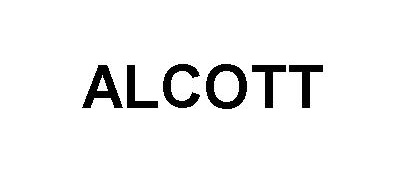
Capri argued that the contested mark looks and sounds similar to the cited mark, since the difference in the second and third letters will not outweigh the commonality of the remaining four letters. Even if a conceptual comparison is neutral since neither mark has any clear meaning, in view of a similar commercial impression of the marks when used on the goods in Class 18, relevant consumers are likely to confuse a source of the goods bearing the contested mark with the cited mark.
JPO decision
The JPO Opposition Board assessed the similarity of the marks in aspects of appearance, sound, and concept.
- Appearance
The contested mark and the cited mark are sufficiently distinguishable in appearance due to the distinction arising from the reversed order of the second and third letter, “C” and “L,” of a relatively short six-letter composition.
- Sound
Comparing respective sounds, the difference in the second and third syllables of a short five-syllable configuration significantly affects the overall phonetic impression. Relevant consumers will be able to distinguish these sounds with ordinary care.
- Concept
As both marks have no specific meaning, a conceptual comparison is neutral.
Based on the foregoing, the Board found that relevant consumers are unlikely to confuse the source of the goods in question with the cited mark, and thus both marks are deemed dissimilar. Consequently, the Board dismissed the entire opposition.