SEGWAY unsuccessful in opposing SWAGWAY mark

The Japan Patent Office dismissed a trademark opposition claimed by an American manufacturer of two-wheeled personal transporters, Segway Inc. against trademark registration no. 5910587 for the Swagway mark in class 12 by finding less likelihood of confusion due to dissimilarity of mark. [Opposition case no. 2017-900114]


Opposed Swagway mark

Opposed mark “Swagway” in standard character was filed by a Chinese business entity on December 2, 2015 by designating the goods of “a two-wheeled, self-balancing personal transporter; automobiles; bicycles; airplanes; water vehicles; railway cars: accessories of aforementioned goods” in class 12.
Going thourgh a substantive examination, the JPO admitted registration on January 6, 2017 and published for opposition on February 7, 2017.


Segway’s Opposition

To oppose against registration of the Swagway mark, Segway Inc. filed an opposition on April 7, 2017.

In the opposition brief, Segway Inc. asserted the opposed mark shall be cancelled in violation of Article 4(1)(vii), (x), (xi), (xv) and (xix) of the Japan Trademark Law by citing the owned famous SEGWAY mark effectively registered over various types of vehicles in class 12 since 2002 (TM Reg. no. 4605474 etc.).
Article 4(1)(vii) prohibits any mark likely to offend public order and morals from registering.
Article 4(1)(x) prohibits to register a trademark which is identical with, or similar to, other entity’s well-known mark over goods or services closely related with the entity’s business.
Article 4(1)(xi) is a provision to refrain from registering a junior mark which is deemed identical with, or similar to, any senior registered mark.
Article 4(1)(xv) prohibits to register a trademark which is likely to cause confusion with a business of other entity.
Article 4(1)(xix) prohibits to register a trademark which is identical with, or similar to, other entity’s famous mark, if such trademark is aimed for unfair purposes, e.g. gaining unfair profits, or causing damage to the entity.


Board Decision

The Opposition Board admitted a certain degree of reputation and popularity of opponent SEGWAY mark in relation to a two-wheeled, self-balancing personal transporter, however, negated similarity of mark between SEGWAY and Swagway totally. The Board assessed, from appearance, difference at the 2nd and 3rd letters gives rise to a distinctive impression in the mind of relevant consumers provided that both marks merely consist of six or seven letters in its entirety. The difference also produces a distinctive impression in sound of the 1st syllable. Besides, both marks are evidently dissimilar in meaning given they are not dictionary words per se.
Based on it, the Board dismissed allegations of Article 4(1)(x) and (xi).

The Board questioned, as long as both marks are distinctively dissimilar, whether relevant consumers are likely to associate or confuse the source of opposed mark with Segway Inc. even if opposed mark is used on a two-wheeled, self-balancing personal transporter.
From the evidences produced by opponent, the Board was unable to find any fact to cause confusion with, or to presume malicious intention to do harm to opponent’ good will and business. If so, it is questionable whether relevant consumers or traders are likely to confuse or misconceive a source of the opposed mark with Segway Inc. or any entity systematically or economically connected with the opponent.
Based on the foregoing, the Board dismissed allegations of Article 4(1)(vii), (x) and (xix) as well.
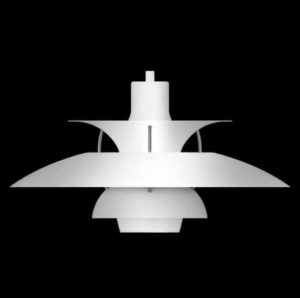
Trademark Dispute over Pendant Lamp Shade

In a decision to the invalidation trial claimed by LUIS POULSEN A/S, a Danish company, the Trial Board of Japan Patent Office (JPO) upheld the petition and invalidated TM registration no. 5643726 for a combination mark containing the pendant lamp shade design (see below) in violation of Article 4(1)(xix) of the Trademark Law.
[Invalidation case no. 2017-890003, Gazette issue date: September 28, 2018]


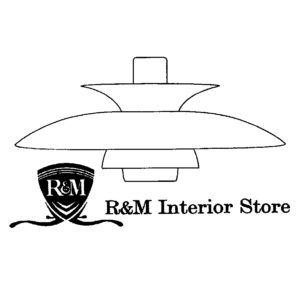
Disputed mark

Disputed mark, consisting of a literal element “R&M Interior Store”, “R&M” logo in the shape of shield and the pendant lamp shade design (see below), was filed on June 14, 2013 by a Japanese business entity, designating wholesale or retail services for lighting apparatus and others in class 35.

Going through substantive examination, the JPO admitted registration on January 17, 2014. Three years after the registration, LUIS POULSEN A/S filed an invalidation action against disputed mark on January 4, 2017.


Invalidation trial

During the invalidation trial, LUIS POULSEN A/S argued disputed mark shall be invalidation based on Article 4(1)(xix) since the applicant filed the mark, confusingly similar to trademark registration no. 5825191 for 3D mark in the shape of unique pendant lamp shade (see below) well-known for “PH5” created by a Danish designer Poul Henningsen, with a malicious intention to damage claimant.

According to supporting evidence produced to the trial, “PH5” lamp was originally designed in 1958. It has been promoted for sale in the marketplace of Japan since 1976. More than 500,000 lamps have been produced and sold around the globe. To bolster its reputation, LUIS POULSEN submitted a written declaration by Danish Ambassador to Japan. Besides, 3D shape of “PH5” lamp shade is successfully registered by finding acquired distinctiveness as a result of substantial use and uniqueness finally to serve as a source indicator (TM Registration no. 5825191).


Article 4(1)(xix)
 prohibits to register a trademark which is identical with, or similar to, other entity’s famous mark, if such trademark is aimed for unfair purposes, e.g. gaining unfair profits, or causing damage to the entity.


Board decision

The Board found that:

  1. 3D shape of “PH5” lamp has become famous as a source indicator of LUIS POULSEN among relevant domestic consumers well before the filing date of disputed mark as a result of continuous marketing activities in Japan since 1976.
  2. In the assessment of trademark similarity, it is unquestionable that the pendant lamp shade design depicted in disputed mark closely resembles “PH5”. From overall appearance, relevant consumers and traders will conceive the portion of the pendant lamp shade design plays a dominant role in disputed mark.
  3. The fact that applicant promoted similar lamp shade as “reproduct” or “generic product” of “PH5” convinces us that applicant has been aware of prospective controversy and causing damage to business interest of LUIS POULSEN.

Based on the above findings, the Board concluded that applicant filed a similar mark to “PH5” well-known for a pendant lamp shade of LUIS POULSEN with a malicious intention to gain unfair profits or cause damage to claimant. Thus, disputed mark shall be invalidated in violation of Article 4(1)(xix) of the Trademark Law.

Straight Wings Emblem Trademark Battle

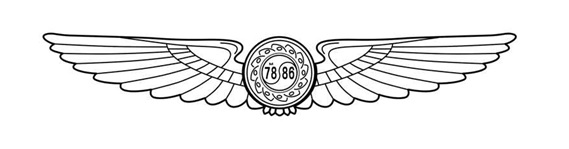
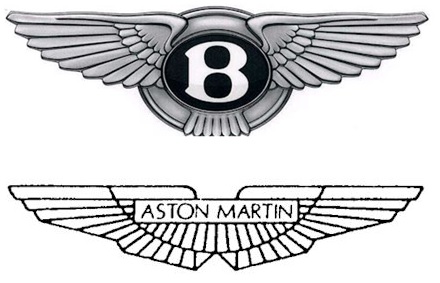
In a recent trademark decision regarding straight wings emblem on automobiles, the Opposition Board of Japan Patent Office (JPO) dismissed an opposition filed by BENTLEY MOTORS LIMITED and ASTON MARTIN LAGONDA LIMITED against trademark registration no. 5962270 for a combined mark consisting of “M78 86” and straight wings device due to unlikelihood of confusion.
[Opposition case no. 2017-900293, Gazette issued date: May 17, 2018]

TM registration no. 5962270

Disputed mark (see below) was applied for registration on December 8, 2016 by designating automobiles and other goods in class 12.

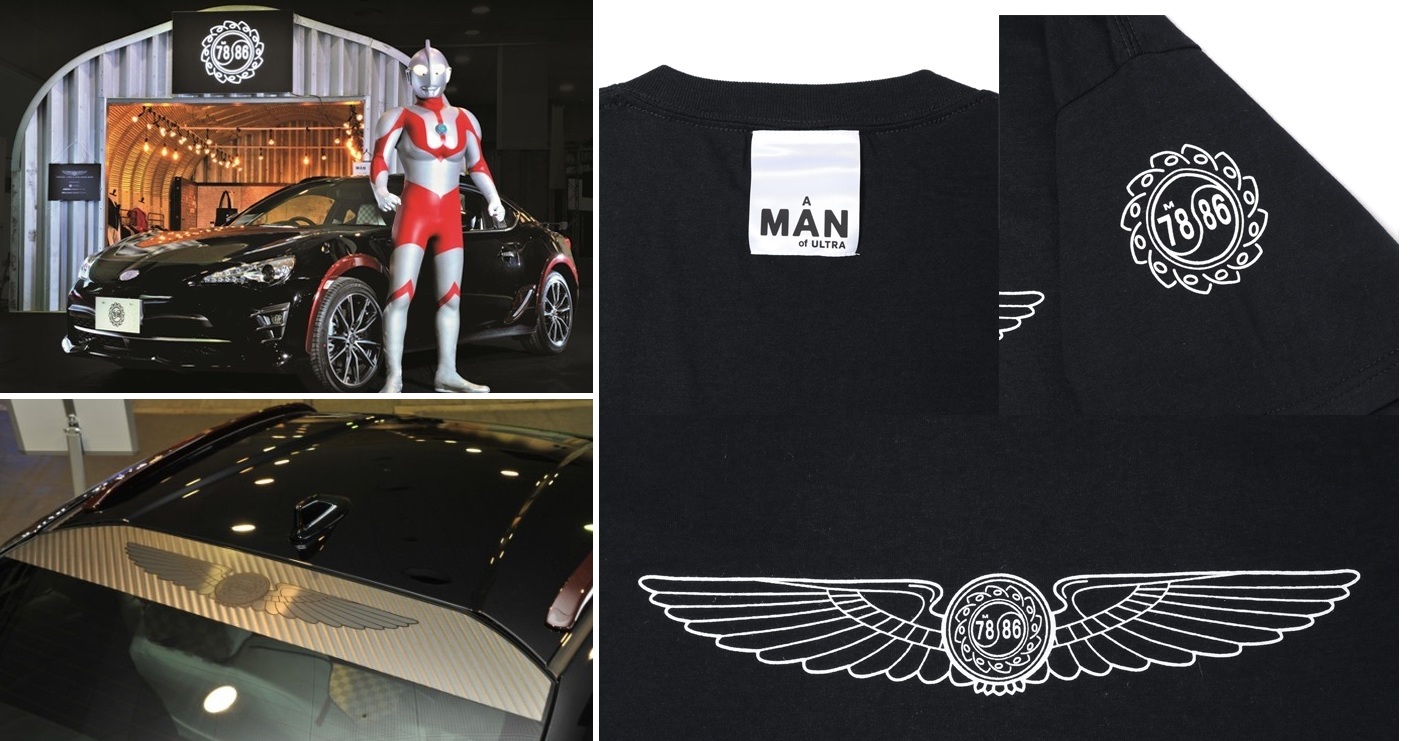
Tsubuyara Productions CO., Ltd, a Japanese company, famous for the creator of Ultraman (Japanese Superhero) is a co-applicant of disputed mark.

A month after the filing, during the Press Conference held at Tokyo Auto Salon 2017, Toyota’s new M78 x 86 concept car was unveiled. Toyota, as a car supplier collaborating with Ultraman, aimed to make people “feel like Ultraman”.

“86” is a name for Toyota sports coupe. “M78” comes from Nebula M78, a home world of Ultraman, thirteen million light years away from the earth.

Disputed mark was created to represent the collaboration between Toyota and Tsuburaya.

Opposition

JPO granted registration of the mark on July 7, 2017.

To oppose the mark, Bentley, the most sought after luxury car brand in the world, and Aston Martin, iconic luxury British sports car manufacturer, filed an opposition on the grounds that disputed mark is likely to cause confusion with opponents’ business due to close resemblance and famousness of opponent mark based on Article 4(1)(x), (xi), (xv), (xix) of the Trademark Law.

Article 4(1)(x) prohibits to register a trademark which is identical with, or similar to, other entity’s well-known mark over goods or services closely related with the entity’s business.
Article 4(1)(xi) is a provision to refrain from registering a junior mark which is deemed identical with, or similar to, any senior registered mark.
Article 4(1)(xv) prohibits to register a trademark which is likely to cause confusion with a business of other entity.
Article 4(1)(xix) prohibits to register a trademark which is identical with, or similar to, other entity’s famous mark, if such trademark is aimed for unfair purposes, e.g. gaining unfair profits, or causing damage to the entity.

Board decision

The Opposition Board admitted a certain degree of popularity and reputation of Opponent emblem as a source indicator of opponent’s business among relevant consumers in the fields of automobiles, however, totally negated similarity of both marks from the perspective of appearance, pronunciation, and concept. Besides, finding that relevant consumers with an ordinary care would pay particular attention to the mark in procuring expensive goods, such as cars, the Board held that a mere graphical resemblance of straight wings is insufficient to find a likelihood of confusion since even opponents are co-existing in peace regardless of the similar straight wings.
Based on the foregoing, the Board concluded that there is no likelihood of confusion between the marks and allowed the “M78 86” straight wings mark valid.

LEGO lost a trademark battle in Japan over the mark CATTYLEGO

LEGO has lost a trademark battle it lodged against PETSWEET Co., Ltd., a Taiwanese company, over its registration of the mark “CATTYLEGO” in Japan.
[Opposition case no. 2017-900077, Gazette issued date: Feb 23, 2018]


OPPOSED MARK “CATTYLEGO”

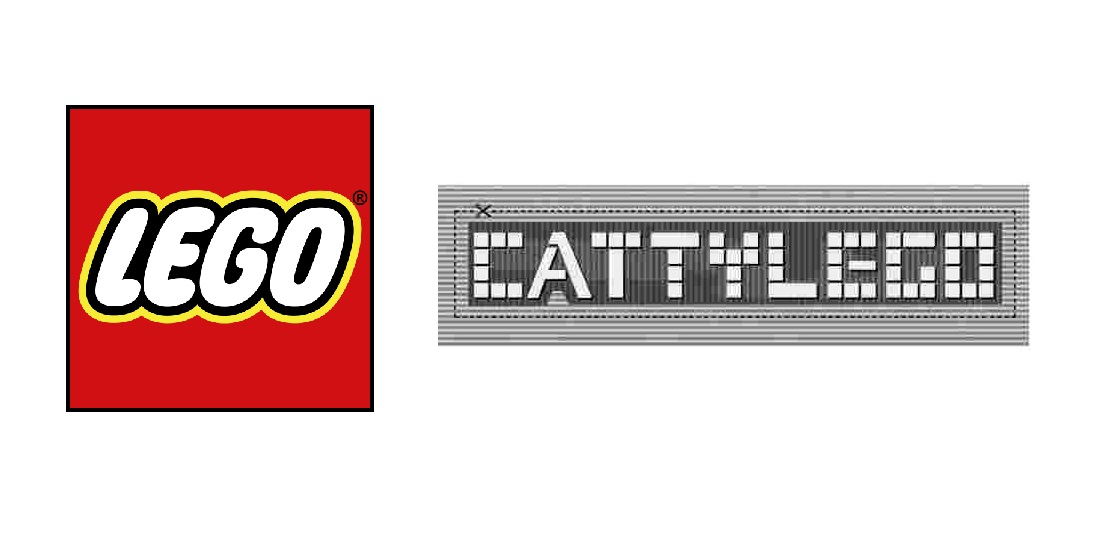
PETSWEEY Co., Ltd., a Taiwanese company, applied for trademark registration in Japan for the mark consisting of a word “CATTYLEGO” and rectangle device (see below in right) on June 15, 2016 by designating toys for pets in class 28. Apparently, PETSWEET Co., Ltd. promotes various categories of cat toys, e.g. Cat Tree, Cart Playground as you can review by accessing their website.

The Japan Patent Office (JPO) admitted registration of the mark on November 15, 2016 and published the gazette under trademark registration no. 5902786 on January 10, 2017.


LEGO Trademark

LEGO Juris A/S, the world’s largest Danish toy manufacturer, filed an opposition against the mark CATTYLEGO on the final day of a two-month duration for opposition.

LEGO argued that the mark CATTYLEGO shall be cancelled due to a conflict with the famous LEGO trademark (see above in left) based on Article 4(1)(viii), (xi), (xv) and (xix) of the Trademark Law.


BOARD DECISION

The Opposition Board admitted a high degree of reputation and population of the LEGO trademark as a source indicator of opponent in relation to brick toys by taking account of consecutive promotion of LEGO bricks in Japan for more than five decades, annual sales amount over 8 billion yens (Approx. USD 74 million ), its remarkable share in the sector of kids toys, and almost half of preschools in Japan have adopted the bricks for educational purpose.

In the meantime, the Board negated similarity between the CATTYLEGO mark and the LEGO trademark, stating that it is unconvincing to consider “CATTY” descriptive from overall appearance of the opposed mark. If so, opposed mark is unlikely to giver rise to any meaning and pronunciation in association with LEGO bricks or opponent.

Based on the foregoing, the Board concluded opposed mark shall not subject to Article 4(1)(xi) so long as both marks are dissimilar.

Board also found less likelihood of confusions due to a remote association between toys for pets and brick toys (for kids) in view of different manufacturers, consumers, usage, commercial channel for these goods as well as dissimilarity of the marks.

Article 4(1)(viii) is a provision to prohibit registration of trademarks which contain the representation or name of any person, famous pseudonym, professional name or pen name of another person, or famous abbreviation thereof. A term of “Person” is construed to include a legal entity as well as individual. It is obvious that opposed mark contains “LEGO” which corresponds to an abbreviated name of opponent. However, it is noteworthy that the Board, in adopting the article, dismissed opponent’s allegation by stating that opponent failed to demonstrate the use of the LEGO trademark in a manner that relevant consumers would conceive it as an abbreviation of opponent’s name.

Under Armour Lost Trademark Battle Against AGEAS in Japan

The Opposition Board of the Japan Patent Office (JPO) dismissed an opposition filed by Under Armour Incorporated, an American sporting goods manufacturer which supplies athletic and casual apparel, as well as footwear, against trademark registration no. 5924494 for the “H” device mark designating apparels, footwear, headgear, gloves, cycling wears in class 25.
[Opposition case no. 2017-900163, Gazette issue date:  February 23, 2018]

Under Armour logo

In an opposition, Under Armour claimed trademark registration no. 5924494 violates Article 4(1)(x), (xi), (xv) and (xix) of the Japan Trademark Law by citing a senior trademark registration no. 4701254 for the Under Armour logo (see below in left). Cited registration has been effectively registered since 2003 by designating clothing, footwear, sportswear, sports shoes in class 25.

Opposed mark

Opposed mark was applied for trademark registration on August 26, 2016 in the name of AGEAS INC. (USA) covering various goods in class 25 (see above in right).

Without any refusal notice from the JPO, opposed mark was granted for registration on January 16, 2017, and published in gazette for opposition on March 21, 2017.

Subsequently, Under Armour filed an opposition in May.


Opposition grounds

Article 4(1)(x) prohibits to register a trademark which is identical with, or similar to, other entity’s well-known mark over goods or services closely related with the entity’s business.
Article 4(1)(xi) is a provision to refrain from registering a junior mark which is deemed identical with, or similar to, any senior registered mark.
Article 4(1)(xv) prohibits to register a trademark which is likely to cause confusion with a business of other entity.
Article 4(1)(xix) prohibits to register a trademark which is identical with, or similar to, other entity’s famous mark, if such trademark is aimed for unfair purposes, e.g. gaining unfair profits, or causing damage to the entity.

To sum up, Under Armour wins if the Under Armour logo is considered confusingly similar to opposed mark. Meanwhile, even if the Under Amour logo obtains a high degree of popularity and reputation among relevant public in Japan, the opposition is overruled as long as both marks are dissimilar and unlikely to cause confusion.


Board decision

The Opposition Board admitted a high degree of popularity and reputation of the Under Armour logo as a source indicator of opponent among relevant consumers in the fields of sports.

In the assessment of mark appearance, the Board concluded:

“It is apparent that respective mark gives rise to a diverse visual impression in the mind of consumers because of different configuration. Opposed mark can be perceived as a device deriving from ‘H’. In the meantime, the cited mark as a device consisting of ‘U’ and upside-down ’U’. Besides, from phonetical and conceptual points of view, there exists no element to find similarity of the marks. Based on the foregoing, both marks shall be less likely to cause confusion due to a remarkable degree of visual difference.”


As a conclusion, the Board decided opposed mark is not subject to Article 4(1)(x), (xi), (xv) and (xix) of the Trademark Law, and admitted to continue a status quo.

IP High Court reversed JPO decision pertinent to a likelihood of confusion between men’s fashion magazines and male cosmetics

In a judgement pronounced on November 14, 2017, the IP High Court of Japan ruled to reverse JPO decision which negated a likelihood of confusion between MEN’S CLUB brand men’s fashion magazine and the same brand male cosmetics.[Court case no. H29(Gyo-ke)10109]

MEN’S CLUB magazine

The lawsuit was filed by a publisher of the MEN’S CLUB magazine who unsuccessfully challenged to invalidate TM registration no. 5858891 for a word mark “MEN’S CLUB” in standard character covering goods of male cosmetics in class 3 (hereinafter referred to as “Disputed mark”).

MEN’S CLUB magazine has been continuously published past six decades since 1965 in Japan.


TM Registration 5858891 – MEN’S CLUB on male cosmetics

Disputed mark was applied for registration on January 7, 2016, registered on June 17, 2016 without receiving any office action from the Japan Patent Office (JPO) examiner.

On April 5, 2017, plaintiff demanded for a trial to invalidate disputed mark in violation of Article 4(1)(xv) and (xix) of the Trademark Law by citing MEN’S CLUB brand men’s fashion magazines used by plaintiff.

The Trial Board of JPO decided that disputed mark shall neither fall under Article 4(1)(xv) nor 4(1)(xix), and dismissed the invalidation petition entirely [case no. 2016-890063].

In the lawsuit, plaintiff argued the Board misconstrued Article 4(1)(xv), thus erred in judgment to apply the article on the case.

Article 4(1)(xv)

Article 4(1)(xv) of the Trademark Law provides that a mark shall not be registered where it is likely to cause confusion with the goods or services pertaining to a business of another entity.

Theoretically, Article 4(1)(xv) is applicable to the case where a mark in question designates remotely associated or dissimilar goods or services with that of a well-known brand business.

IP High Court decision

The IP High Court ruled that the Board erred in applying Article 4(1)(xv) based on following reasons.

  • Both marks, consisting of MEN’S CLUB, are almost identical
  • MEN’S CLUB brand men’s fashion magazine has acquired a high degree of popularity and reputation among relevant consumers as a result of substantial use over decades, notwithstanding lack of creativity in the mark
  • Male cosmetics are considerably associated with men’s fashion magazines since they are often featured in men’s fashion magazines
  • Consumers of men’s fashion magazines are likely to consume male cosmetics

Based on the foregoing and the degree of ordinary care taken by relevant consumers, the court concluded that consumers of male cosmetics would conceive the MEN’S CLUB brand men’s fashion magazine and then associate the cosmetics with goods produced by plaintiff or a business entity who has systematical or economical connection with plaintiff in error.

JPO : KAPAPA is unlikely to cause confusion with Kappa

In a recent trademark opposition, Opposition Board of the Japan Patent Office (JPO) decided the mark “KAPAPA” is unlikely to cause confusion with “Kappa”, one of the world’s largest sport brands founded in 1960s, Italy even when used on sport wears.[Opposition case no. 2017-900115, decisively concluded on August 17, 2017]


Opponent, a Japanese business entity authorized to distribute “Kappa” goods in Japan, filed a trademark opposition against TM registration no. 5912402 for the “KAPAPA” logo mark (see below).

Opposed mark was applied for registration on April 20, 2016 by designating various goods in class 18 and 25, e.g. bags, clothing, sport wears, sport shoes, caps and socks.


Opponent asserted that the opposed mark violates Article 4(1)(xi) and 4(1)(xix) of the Trademark Law by citing senior registrations for the “Kappa” mark.


Based on substantive evidential materials to show the facts the “Kappa” is ranked as 6th sport brand in annual sale and has been promoted in Japan over three decades, the Opposition Board admitted that “Kappa” has acquired a certain degree of popularity and reputation among relevant consumers as a source indicator of workout clothes, gym clothes, athletic wear and soccer wear.

In the meantime, the Board denied similarity between “KAPAPA” and “Kappa” by taking into consideration a distinctive gap in sound and meaning of respective mark as a whole.

As a conclusion, the opposition is groundless since it shall be unlikely that relevant consumers with an ordinary care would confuse or associate “KAPAPA” wears with “Kappa” and any entity systematically or economically connected with opponent, the Board held.

Mattel failed in a trademark opposition to block “Salon BARBIES”

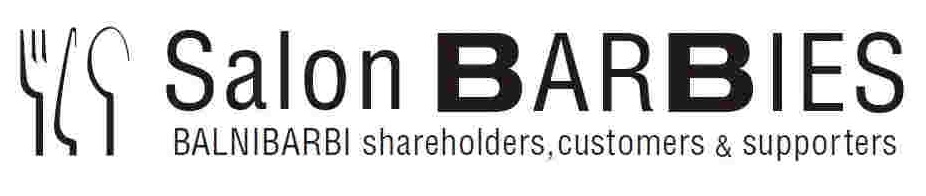
JPO dismissed an opposition by Mattel, Inc. – maker of the world-famous Barbie doll – who claimed “Salon BARBIES” is likely to cause confusion or association with famous Barbie doll when used on restaurant and fan club services. [Opposition case no. 2016-900395]


Opposed mark

Opposed mark, TM Registration no. 5881203, was filed on March 10, 2016 by designating various services in class 35 and 43 including restaurant, accommodation club services, business management analysis and others.

JPO granted to register opposed mark with no finding of refusal grounds and published for registration on October 11, 2016.


Opposition

On December 12, 2016, Mattel, Inc., an American multinational toy manufacturing company, opposed an application to register the mark Salon BARBIES (see above).

In the opposition, Mattel cited two senior trademark registrations.

  • TM Registration no. 5383631 for word mark “BARBIE” in standard character (classes 9, 14, 18, 24, 25, 28, 35)
  • TM Registration no. 589632 for the BARBIE logo (classes 9, 15, 20, 21, 25, 28)

Mattel argued that Opposed mark is subject to cancellation in violation of Article 4(1)(xv) of the Trademark Law on the grounds that its BARBIE mark had acquired such fame that, upon seeing the opposed mark used on restaurant and fan club service, the average consumer would be led to infer the existence of a connection to the owner of the famous brand.

Besides, Opposed mark is objectionable in violation of Article 4(1)(xix) as well since it would presumably aim to dilute or do harm to remarkable prestige bestowed to BARBIE mark.


Board decision

The Opposition Board admitted BARBIE mark has acquired a high degree of popularity and reputation as a source indicator of dolls among relevant traders and consumers at the time of both the application and the grant of registration of Opposed mark.
In the meantime, the Board denied similarity of both marks in visual, phonetical and conceptual points of view.
Based on dissimilarity of the marks, the Board concluded relevant traders and consumers are unlikely to confuse or associate the services using Opposed mark with opponent or any business entity economically or systematically connected with Mattel.
Therefore, Opposed mark shall not be cancelled due to Article 4(1)(xv) of the Trademark Law.

Article 4(1)(xix) is applicable only where both marks are identical or similar.
Besides, from the totality of the circumstances, the Board found no fact and evidence to show or infer that Opposed mark was filed with malicious or fraudulent intent on the part of registrant to hinder the business of opponent. Thus, Opposed mark shall remain valid in light of Article 4(1)(xix) as well.

ENRICO COVERI failed to remove “COVERI” from trademark registration

The Opposition Board of Japan Patent Office (JPO) held in an opposition filed by Enrico Coveri Società a Responsabilità Limitata (Opponent) that trademark registration no. 5874843 for a word mark “COVERI” (Opposed mark) shall remain as valid as ever and dismissed claims in the opposition entirely.
[Opposition case no. 2016-900368]


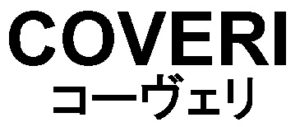
Opposed mark (see below) was applied for registration on November 27, 2015 by designating various kinds of goods in class 25 including apparels and shoes, and published for registration on September 20, 2016without any office action from the JPO examiner.


Opponent claimed that the opposed mark “COVERI” shall be cancelled on the basis of Article 4(1)(vii), (viii), (x), (xi), (xv) and (xix) of the Japan Trademark Law by citing senior trademark registrations for word mark “ENRICO COVERI”, a name of the late Italian fashion designer, in class 18, 24 and 25.


In the opposition decision, the Board concluded that “ENRICO COVERI” and “COVERI” are both dissimilar in appearance, pronunciation and concept.

Besides, the Board did not admit a high degree of popularity and recognition to “ENRICO COVERI” among relevant public in Japan because of insufficient evidence to demonstrate amount of sales, number of stores and expenditure for promotion and advertisement (Opponent has just produced some photographs or articles appeared in fashion magazines).

Based on the fact finding, the Board concluded that opposed mark was not filed in a malicious intent to do harm to the designer’s fame, and “COVERI” shall not be deemed as an abbreviation of “ENRICO COVERI”. Therefore, there finds less likelihood of confusion between “COVERI” and “ENRICO COVERI” even if both marks are used on apparels or shoes.


It is highly advisable to an owner of high-end or luxurious brand, consisting of two or more alphabetical words, to have each word registered as well for the purpose of preventing free-riding and enjoying a broader scope of protection against use by others.