Louis Vuitton victory in trademark battle for remake use

In a trademark battle involving famous Louis Vuitton Monogram for remake use, the Japan IP High Court ruled in favor of Louis Vuitton and ordered appellant to pay 1.7 million JP-Yen for damages on October 23, 2018.

Custom-made Remake

Appellant has produced shoes, caps and other fashion items by making use of material of secondhand Louis Vuitton goods (see below) and promoted the items as a custom-made remake, e.g. LOUIS VUITTON REMAKE DENIM CAP/BLUE, through internet.

Unfair Competition Prevention Act

Louis Vuitton filed a lawsuit and demanded to stop selling the items as well as payment for the damage on the grounds that appellant’s act constitutes unfair competition under Article 2(1)(ii) of the Japan Unfair Prevention Act.

Article 2(1)(ii) of the Unfair Competition Prevention Act is a provision to prohibit any person from using a famous source indicator of another person without permission.

Appeal

Appellant argued they become popular among relevant consumers as a business entity to produce a custom-made remake from secondhand of genuine brand. If so, since consumers are fully aware that the items are remake, neither faked goods nor brand-new article, confusion is unlikely to happen in the mind of consumers. Besides, appellant insisted as long as the Louis Vuitton Monogram is not used as a source indicator but design, the Unfair Competition Prevention Act is not applicable to the items.

IP High Court decision

The IP High Court decisively dismissed appellant’s allegations and decided the monogram on the items still plays a role of source indicator in view of remarkable reputation of Louis Vuitton Monogram. It can be easily presumed that average consumers at sight of the items shall conceive Louis Vuitton. Even if the items are sold as a custom-made remake or with any description to appeal the items made from secondhand, such facts will not affect the decision on the merit.
[Heisei 30 (Ne)10042]


The Unfair Competition Prevention Act is essential to the case where actual confusion would not happen in fact regardless of unauthorized commercial use of famous brand.


Trademark Dispute over Pendant Lamp Shade

In a decision to the invalidation trial claimed by LUIS POULSEN A/S, a Danish company, the Trial Board of Japan Patent Office (JPO) upheld the petition and invalidated TM registration no. 5643726 for a combination mark containing the pendant lamp shade design (see below) in violation of Article 4(1)(xix) of the Trademark Law.
[Invalidation case no. 2017-890003, Gazette issue date: September 28, 2018]


Disputed mark

Disputed mark, consisting of a literal element “R&M Interior Store”, “R&M” logo in the shape of shield and the pendant lamp shade design (see below), was filed on June 14, 2013 by a Japanese business entity, designating wholesale or retail services for lighting apparatus and others in class 35.

Going through substantive examination, the JPO admitted registration on January 17, 2014. Three years after the registration, LUIS POULSEN A/S filed an invalidation action against disputed mark on January 4, 2017.


Invalidation trial

During the invalidation trial, LUIS POULSEN A/S argued disputed mark shall be invalidation based on Article 4(1)(xix) since the applicant filed the mark, confusingly similar to trademark registration no. 5825191 for 3D mark in the shape of unique pendant lamp shade (see below) well-known for “PH5” created by a Danish designer Poul Henningsen, with a malicious intention to damage claimant.

According to supporting evidence produced to the trial, “PH5” lamp was originally designed in 1958. It has been promoted for sale in the marketplace of Japan since 1976. More than 500,000 lamps have been produced and sold around the globe. To bolster its reputation, LUIS POULSEN submitted a written declaration by Danish Ambassador to Japan. Besides, 3D shape of “PH5” lamp shade is successfully registered by finding acquired distinctiveness as a result of substantial use and uniqueness finally to serve as a source indicator (TM Registration no. 5825191).


Article 4(1)(xix)
 prohibits to register a trademark which is identical with, or similar to, other entity’s famous mark, if such trademark is aimed for unfair purposes, e.g. gaining unfair profits, or causing damage to the entity.


Board decision

The Board found that:

  1. 3D shape of “PH5” lamp has become famous as a source indicator of LUIS POULSEN among relevant domestic consumers well before the filing date of disputed mark as a result of continuous marketing activities in Japan since 1976.
  2. In the assessment of trademark similarity, it is unquestionable that the pendant lamp shade design depicted in disputed mark closely resembles “PH5”. From overall appearance, relevant consumers and traders will conceive the portion of the pendant lamp shade design plays a dominant role in disputed mark.
  3. The fact that applicant promoted similar lamp shade as “reproduct” or “generic product” of “PH5” convinces us that applicant has been aware of prospective controversy and causing damage to business interest of LUIS POULSEN.

Based on the above findings, the Board concluded that applicant filed a similar mark to “PH5” well-known for a pendant lamp shade of LUIS POULSEN with a malicious intention to gain unfair profits or cause damage to claimant. Thus, disputed mark shall be invalidated in violation of Article 4(1)(xix) of the Trademark Law.

Apple successful in a trademark opposition to block “PriPhone”

Apple Inc. achieved a victory over trademark battle involving famous “iPhone”.
In a recent trademark opposition, case no. 2017-900319, the Opposition Board of Japan Patent Office (JPO) decided in favor of Apple Inc. to cancel trademark registration no. 5967983 for word mark “PriPhone” due to a likelihood of confusion with Apple’s famous “iPhone”.

“PriPhone”

Opposed mark “PriPhone” was filed by a Japanese business entity on December 26, 2016 by designating the goods of “mobile phones; smart phones; downloadable image and music files; telecommunication machines and apparatus; electronics machines, apparatus and their parts” in class 9.
The JPO admitted registration on July 28, 2017 and published for registration on August 22, 2017.

Apple’s Opposition

To oppose the registration, Apple Inc. filed an opposition against “PriPhone” on October 20, 2017.

In the opposition brief, Apple Inc. asserted the opposed mark shall be cancelled in violation of Article 4(1)(xv) of the Japan Trademark Law given a remarkable reputation of opponent mark “iPhone” since nearly a quarter of Japanese have favorably used iPhone as a personal device to connect with internet.
Apple argued the opposed registrant knowingly included famous “iPhone” trademark on the ground that the company promotes protective cases, covers for iPhone.

Article 4(1)(xv) provides that a mark shall not be registered where it is likely to cause confusion with other business entity’s well-known goods or services, to the benefit of brand owner and consumers. Theoretically, Article 4(1)(xv) is applicable to the case where both marks are dissimilar, but likely to cause confusion among relevant consumers because of a related impression attributable to reputation of the well-known mark.

Board Decision

The Opposition Board admitted a remarkable degree of reputation and popularity of opponent trademark “iPhone” among general consumers which occupies the highest share (54.1% in 2012) of the smart phone market for past five years consecutively.

In the assessment of mark similarity, the Board found “PriPhone” would be perceived containing “iPhone” in the mark, provided that “iPhone”, as a coined word, is deemed a unique and famous trademark. Besides, in view of close connection between smart phones and the goods in question, similarity with respect to consumers, it is undeniable that relevant consumers with an ordinary care are likely to conceive “iPhone” from opposed mark when used on goods in question.

Based on the foregoing, the Board decided that relevant consumers are likely to confuse or misconceive a source of the opposed mark with Apple Inc. or any entity systematically or economically connected with the opponent.
If so, opposed mark shall be cancelled in violation Article 4(1)(xv) of the trademark law.

Japan IP High Court: Cancellation of trademark right due to inappropriate use by licensee

The IP High Court ruled on September 26, 2018 to totally cancel TM Reg. No. 1809362 for the mark “TOP-SIDER” on the ground that use of the registered mark by licensee is likely to cause confusion with goods from a business entity other than trademark owner.
[Case no. Heisei30(Gyo-ke)10053]

TM Registration – “TOP-SIDER”

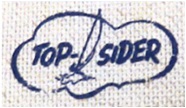
Registered mark in question, consisting of the word “TOP-SIDER” written in plain Gothic font (see below), was registered in 1985 over the goods of clothing, coats, shirts and others in class 25 and  has been validly renewed over three decades .

Licensee’s Use

Mizujin  Co., Ltd, a  non-exclusive licensee of the registered mark in question, used “TOP-SIDER” logo on T-shirts (see below).

Sperry Top-Sider

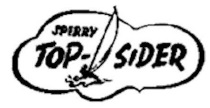
Sperry Top-Sider LLC, a US business entity, famous for “Sperry Top-Sider” deck shoes, filed a cancellation trial against the registration based on Article 53 of the Japan Trademark Law and argued that above use by Mizujin shall be inappropriate since it is likely to cause confusion with “Sperry Top-Sider”.

Cancellation trial based on Article 53

JPO sided with Sperry and decided to entirely cancel the registration. To contend, trademark owner appealed to the IP High Court and alleged cancellation of the decision.

Article 53 of the Trademark Law provides that trademark right is subject to cancellation if use of the mark by licensee causes confusion with respect to another’s business and trademark owner is liable for failure to supervise with an ordinary care.

IP High Court decision

The IP High Court upheld the JPO decision, stating that:

  1. Apparently from totality of the circumstances, trademark owner must have noticed above use by Mizujin.
  2. ”TOP-SIDER” logo contains figurative elements to be seen as cloud and yacht, and looks quite similar to the Sperry mark.
  3. “Sperry Top-Sider” logo has become well-known for Sperry’s deck shoes among traders and general consumers.
  4. Since T-shirts and shoes are offered for sale to wear at same apparel shops, they are closely related with each other in view of sales channel as well as consumers.
  5. Thus, the Court finds that above use by licensee is likely to cause confusion with respect to Sperry business on deck shoes.

It is noteworthy that trademark owner is entitled to grant a licensee the right to use registered mark, however, by doing so , it enhances a risk to lose trademark right if he is careless to supervise the licensee’s inappropriate use and cause confusion.

IP High Court: “VANSNEAKER” is confusingly similar to famous “VANS” sneakers

The IP High Court ruled on August 29, 2018 to uphold the Japan Patent Office (JPO) decision to cancel TM Reg. No. 5916735 for the mark “VANSNEAKER” over shoes in class 25 due to a conflict with TM Reg. No. 5245474 for famous mark “VANS”.
[Case no. Heisei30(Gyo-ke)10026]

VANSNEAKER

Disputed mark “VANSNEAKER” in the standard character format was filed on July 25, 2016 and registered next January by designating shoes in class 25 in the name of VAN Jacket Inc., a Japanese business entity, who succeeded to apparel business of “VAN” brand all the rage in the 60’S.

Opposition by VANS Incorporated

VANS Incorporated, a US business entity, established in California 1966,  famous for “VANS” sneakers, filed an opposition  by citing its own senior registered mark “VANS” in standard character format over shoes in class 25. The JPO decided to cancel disputed mark in breach of Article 4(1)(xi) of the Trademark Law on the ground that it is confusingly similar to famous “VANS” mark from a conceptual point of view. [Opposition case no. 2017-900135]

Article 4(1)(xi) is a provision to refrain from registering a junior mark which is deemed identical with, or similar to, any senior registered mark.

Appeal to the IP High Court

To contend, VAN Jacket appealed to the IP High Court and demanded cancellation of the decision.

VAN Jacket alleged in the court that JPO decision was based on an erroneous assumption of fact because it considered the portion of “VANS” plays a dominant role in source indicator. Given disputed mark “VANSNEAKER” consists of one word in its entirety, it is unlikely that consumers perceive the last letter “S” of “VANS” functions to represent an initial letter of “SNEAKER” as well.

Court decision

The IP High Court, however, dismissed the arguments by VAN Jacket, stating that:

  1. Cited mark ”VANS” has become famous among Japanese general consumers in connection with sneakers and shoes both at the time of filing application and registration of disputer mark.
  2. “NEAKER” does not give rise to any specific meaning. In the meantime, “SNEAKER”, combining “S” with “NEAKER” adjacent to it, is an English word familiar among relevant public to mean a type of the designated goods (shoes).
  3. It becomes usual to prevent successive letter in a coined mark consisting of two words where first word ends with a letter and send word starts with the same letter.
  4. Based on the foregoing, consumers at sight of disputed mark shall pay attention to a distinctive portion of “VANS” and are likely to conceive that the mark consists of two words, “VANS” and “SNEAKER” by omitting first or the last letter “S” of respective words.
  5. Consequently, the Court finds that disputed mark is likely to cause confusion with famous “VANS” sneakers when used on shoes.

Trademark battle over slogan : Think different vs Tick different

Swiss watch giant Swatch has failed to stop US tech giant Apple from registering “Think Different” as a trademark, which Swatch argued segues too closely to its own “Tick Different” trademark.

THINK DIFFERENT

Apple’s “THINK DIFFERENT” mark was used in its successful Emmy-award winning advertising campaign which ran for five years from 1997. The mark was also used on the box packaging for its iMac computers next to another trademark “Macintosh”.

Its applications to register “THINK DIFFERENT” were filed in Japan on February 24, 2016 for use in relation to various goods and services belonging to 8 classes like watches, clocks (cl.12) as well as online social networking services (cl.45), among other items. JPO admitted registration on September 12, 2017. Subsequently, the mark was published in the Official Gazette for opposition.

Tick different

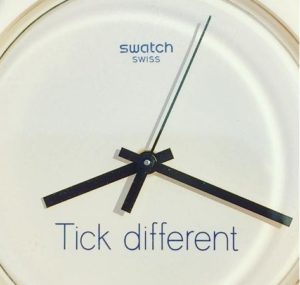
By citing its own mark, Swatch filed an opposition against Apple’s “THINK DIFFERENT” mark based on Article 4(1)(xi) of the Japan Trademark Law and asserted a likelihood of confusion with Swatch “Tick different” mark when used in connection with all goods designated in class 14.

Swatch’s “Tick Different” mark was filed to JPO through the Madrid Protocol (IR no. 1279757) with priority date of July 16, 2015 and admitted national registration on July 15, 2016 by designating timepieces and chronometric instruments, namely chronometers, chronographs, clocks, watches, wristwatches, wall clocks, alarm clocks, among other items in class 14.

Swatch, having a worldwide presence and its corporate group owns a stable of Swiss watch brands, including Omega, Tissot and Swatch, has allegedly used the mark on mobile payment smart watches since 2015.


Opposition decision

Swatch argued that the two marks were highly similar due to the same syllabic structure and number of words. With the same ending and almost the same beginning, they are visually and aurally similar.

However, in decision grounds issued on June 6 2018, the Opposition Board of Japan Patent Office (JPO) found that when compared as wholes, the marks were more dissimilar than similar.

The Board, after considering all the pleadings, evidence and submissions, concluded because of the conceptual, visual and aural dissimilarities of the marks, the Board was persuaded that the average consumer would conceive they are, overall, more dissimilar than similar.

Consequently, JPO ruled that as Swatch’s opposition failed on all grounds, the “THINK DIFFERENT” mark registration from Apple will remain with the status quo.
[Opposition case no. 2017-900376]

Google victorious in trademark dispute for YouTube icon

The Trial Board of Japan Patent Office (JPO) recently upheld Google’s invalidation petition against TM Reg. no. 5665763 for the “Video Blog” mark in combination with figurative element (see below) due to similarity to YouTube icon and a likelihood of confusion with Google business.
[Invalidation case no. 2017-890005, Gazette issue date: July 27, 2018]


TM Registration no.5665763

Opposed mark, consisting of two words “Video Blog” in English and Japanese in two lines, and figurative elements depicted in between the words, was applied for registration on August 13, 2013 in respect of broadcasting services for internet in class 38.

Without confronting with a refusal during substantive examination, opposed mark was registered on April 25, 2014.

Petition for invalidation

Japan Trademark Law provides a provision to retroactively invalidate trademark registration for certain restricted reasons specified under Article 46 (1).

Google Incorporated filed a petition for invalidation against opposed mark on January 25, 2017. Google argued it shall be invalidated due to a conflict with famous YouTube icon (see below) and a likelihood of confusion with Google business when used on internet broadcasting services in class 38 based on Article 4(1)(x) and (xv) of the Trademark Law.

Board decision

The Board admitted that YouTube icon has acquired a high degree of popularity and reputation as a sign to play movies and TV shows on YouTube or an icon to start up YouTube application among relevant consumers of broadcasting service for internet.

In assessment of the similarity between two marks, at the outset the Board found that the words “Video Blog” of opposed mark in itself lack distinctiveness as a source indicator in relation to the designated service. If so, the figurative element of opposed mark plays key role as a source indicator. It is unquestionable that the figurative element is highly similar to Youtube icon. Besides, in view of Google’s business portfolio, it is highly predictable that Google launches broadcasting or news distributing business.

Users of Google services are also likely to receive internet broadcasting services.

Based on the foregoing, the Board concluded that, from totality of circumstances and evidences, relevant traders or consumers are likely to confuse or misconceive a source of opposed mark with Google or any entity systematically or economically connected with the opponent and declared invalidation based on Article 4(1)(x) and (xv).

Trademark Battle: SPEC vs. SPECK

In a trademark opposition filed by Samsonite IP Holdings S.à.r.l., an owner of IR no. 1024440 for the mark “SPECK”, against Japanese TM Reg. no. 5980195 for the mark “SPEC”, the Opposition Board of Japan Patent Office (JPO) dismissed the opposition.
[Opposition case no. 2017-900373, Gazette issue date: July 27, 2018]

“SPEC”

Opposed mark “SPEC” was filed by SPEC CORPORATION, a Japanese business entity on September 3, 2015 by designating the goods of audio speakers; audio amplifiers; audio players; CD players; audio equipment to be connected with internet” in class 9.
The JPO admitted registration on September 15, 2017 and published for registration on October 10, 2017.


“SPECK”

Samsonite IP Holdings S.à.r.l., operating as a wholly-owned subsidiary of Samsonite International S.A., a travel luggage company, owns international TM registration no. 1024440 for the mark “SPECK” over the goods of “Protective carrying cases for portable electronic listening devices and music players, namely, MP3 players, and for global positioning systems (GPS devices), mobile and cellular telephones, and portable media players” in class 9 and it has become effective in Japan since 2012.

As a result of acquisition of Speck Products, a leading U.S. designer and distributor of slim protective cases for personal electronic devices, Samsonite extends its brand portfolio beyond its traditional strength in travel luggage products.


Opposition – SPEC vs. SPECK

On December 11, 2017, Samsonite IP Holdings S.à.r.l. filed an opposition and cited senior registered mark “SPECK”.
In the opposition brief, Samsonite asserted opposed mark shall be cancelled in violation of Article 4(1)(xi) of the Japan Trademark Law.
Article 4(1)(xi) is a provision to refrain from registering a junior mark which is deemed identical with, or similar to, any senior registered mark.


Board decision

The Opposition Board negated similarity of mark between SPEC and SPECK, stating that:

“From appearance, both marks are distinguishable by means of a fact that opposed mark does not contain “K” in the suffix position since such difference shall not be negligible in the configuration consisting of small number of letters, four or five. Conceptually, opposed mark can be perceived as a word to mean specification. Meanwhile, opponent mark does not give rise to any specific meaning. Hence, both marks are dissimilar in concept.
It is doubtless that both marks give rise to the same sound, however, distinctive gap in appearance and concept may cause consumers to recognize them as a different source indicator. If so, both marks are unlikely to cause confusion and thus deemed dissimilar.”

Based on the foregoing, the Board decided opposed mark is not subject to Article 4(1)(xi), and admitted registration as a status quo.

Aston Villa lost trademark battle over rampant lion emblem

In a trademark battle over rampant lion emblem, the Japan Patent Office (JPO) dismissed an opposition filed by Aston Villa Football Club Limited, one of the oldest and most successful football clubs in English football, holding that relevant consumers are unlikely to consider the opposed rampant lion device mark (see below) confusingly similar to Aston Villa’s club badge.
[Opposition case no. 2017-900318, Gazette issued date: June 29, 2018]


Rampant lion device mark

Opposed mark, consisting of a rampant lion device facing left, thrusting out its tongue, and extending its tail vertically, was filed on February 7, 2017 by designating clothing, shoes, sportswear and sports shoes in class 25 and other two classes (12 and 35).
JPO admitted trademark registration on July 28, 2017 [TM registration no. 5966695] and published it for opposition on August 22, 2017.

Trademark Opposition

Aston Villa Football Club Limited opposed registration based on Article 4(1)(xi) of the Trademark Law, asserting that opposed mark is confusingly similar to Aston Villa’s senior IR registration no. 1296488 effective in Japan for the mark of opponent’s club badge (see below).

Article 4(1)(xi) is a provision to refrain from registering a junior mark which is deemed identical with, or similar to, any senior registered mark.

Where opposed mark is considered similar to opponent mark and designated goods of opposed mark is identical with or similar to that of opponent mark, opposed mark shall be retroactively cancelled in violation of Article 4(1)(xi). In this regard, since IR no. 1296488 covers clothing, footwear, replica shirts, football boots, polo shirts, shoes for sports etc. in class 25, similarity of goods is undisputable in the case.


Board decision

The Opposition Board denied similarity between the marks on the grounds that:

  1. Regardless of similarity in basic configuration of a rampant lion facing left, there exist some distinctive features in depiction of head, tongue, ear, and tail as well as length of the legs.
  2. Rampant lion has been frequently used in heraldry. Therefore, relatively the lion design will not be a material factor in the assessment of mark similarity.
  3. Opponent mark can be perceived as a crest combining “AVFC” and rampant lion design.
  4. In the meantime, opposed mark shall not give rise to a meaning of crest, and relevant consumers with an ordinary care can easily discriminate both marks from appearance due to such distinctive features and overall impression.


Accordingly, JPO sided with opposed mark and decided it shall not be cancelled based on Article 4(1)(xi) in relation to opponent mark.