Toyota vs. Renault: Battle of the Brands

In a trademark opposition between Toyota Motor Corporation (JAPAN) and Renault SAS (FRANCE), the Opposition Board of Japan Patent Office (JPO) dismissed the opposition against trademark registration no. 5932825 for word mark “WIGO”.


WIGO vs. TWINGO

Renault opposed to register the word mark “WIGO” designating automobiles in class 12 by Toyota based on Article 4(1)(xi), (xv) of the Trademark Law by citing his senior trademark registration no. 2710075 for Renault’s car brand “TWINGO”.

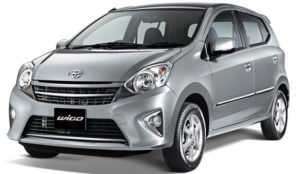
TOYOTA WIGO is mini hatchback from Toyota.
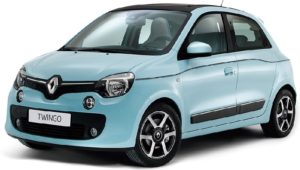
RENAULT TWINGO is small city car from Renault.
Assessment of trademark similarity

Article 4(1)(xi) is a provision to refrain from registering a junior mark which is deemed identical with, or similar to, any senior registered mark.

In assessing trademark similarity under Article 4(1)(xi), the Board considered opposed mark “WIGO” is deemed a coined word since it does not give rise to any specific meaning as well as “TWINGO”. Besides, both marks are evidently distinguishable in appearance and pronunciation. If so, the Board found that it is groundless to conclude “WIGO” is similar to “TWINGO” from visual, phonetic and conceptual aspect.


Likelihood of confusion

Article 4(1)(xv) provides that a mark shall not be registered where it is likely to cause confusion with other business entity’s well-known goods or services, to the benefit of brand owner and users’ benefits.
Theoretically, Article 4(1)(xv) is applicable to the case where a mark in question is deemed dissimilar to well-known brand, but is still likely to cause confusion because of a high degree of popularity and reputation of the brand.

The Board concluded it remains unclear whether Renault TWINGO has become famous in automobiles from totality of the circumstances and evidence.
Provided that TWINGO does not obtain remarkable reputation in relation to automobiles as a source indicator of Renault car, WIGO is unlikely to cause confusion with Renault TWINGO because both marks are considerably dissimilar.
[Opposition case no. 2017-900193]

Trademark Dispute ROOT vs ROOTS

The Japan Patent Office (JPO) decided in a trademark opposition that ROOT is dissimilar to ROOTS in appearance, pronunciation and meaning.
[Opposition case no. 2017-900326, Gazette issue date: June 29, 2018]

Opposed mark

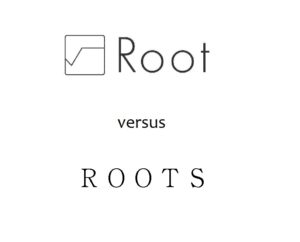
Opposed mark consists of the square root design and a word “ROOT” (see below). It was applied for registration on February 9, 2017 by designating bags in class 18 and retail or whole sale services in relation to bags and clothing in class 35.
JPO granted registration in August 4, 2017 (TM registration no. 5969604).

Opposition

Opponent, Roots Corporation, a Canadian business entity, filed an opposition against opposed mark based on a self-owned senior trademark registration no. 5947860 for the work mark “ROOTS” (see above) in class 35 for on-line retail or wholesale services in relation to bags and clothing.

Opponent argued opposed mark shall be canceled in violation of Article 4(1)(xi) of the Trademark Law because “ROOT” and “ROOTS” are confusingly similar.

Article 4(1)(xi) is a provision to refrain from registering a junior mark which is deemed identical with, or similar to, any senior registered mark.


Board decision

The Opposition Board of JPO negated similarity between the ROOT mark and ROOTS, stating that:

“From appearance, both marks are distinguishable since opponent mark does not contain the square root device and “S” in the suffix position. Besides there exist differences in font design and case sensitivity. 
Regarding pronunciation of the marks, opposed mark gives rise to a sound of “ruːt”. In the meantime, opponent mark sounds “ruːts”. Given the short sound of three syllables, a different pronunciation in the suffix position is not in any way ignorable. If so, both marks can be phonetically distinctive. 
Conceptually, opposed mark gives rise to a meaning of the square root. Meanwhile, opponent mark can be perceived as a word to mean the parts of plant that grow under the ground or ancestor. Hence, both marks are distinctive in concept as well.”

Based on the foregoing, the Board concluded that it is unlikely to consider relevant consumers at the sight of opposed mark would connect a word “Root” adjacent to the square root device with opponent mark. Therefore, the Board dismissed opposition and allowed opposed mark to survive.