Trademark battle over slogan : Think different vs Tick different

Swiss watch giant Swatch has failed to stop US tech giant Apple from registering “Think Different” as a trademark, which Swatch argued segues too closely to its own “Tick Different” trademark.

THINK DIFFERENT

Apple’s “THINK DIFFERENT” mark was used in its successful Emmy-award winning advertising campaign which ran for five years from 1997. The mark was also used on the box packaging for its iMac computers next to another trademark “Macintosh”.

Its applications to register “THINK DIFFERENT” were filed in Japan on February 24, 2016 for use in relation to various goods and services belonging to 8 classes like watches, clocks (cl.12) as well as online social networking services (cl.45), among other items. JPO admitted registration on September 12, 2017. Subsequently, the mark was published in the Official Gazette for opposition.

Tick different

By citing its own mark, Swatch filed an opposition against Apple’s “THINK DIFFERENT” mark based on Article 4(1)(xi) of the Japan Trademark Law and asserted a likelihood of confusion with Swatch “Tick different” mark when used in connection with all goods designated in class 14.
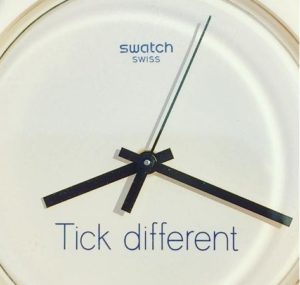
Swatch’s “Tick Different” mark was filed to JPO through the Madrid Protocol (IR no. 1279757) with priority date of July 16, 2015 and admitted national registration on July 15, 2016 by designating timepieces and chronometric instruments, namely chronometers, chronographs, clocks, watches, wristwatches, wall clocks, alarm clocks, among other items in class 14.

Swatch, having a worldwide presence and its corporate group owns a stable of Swiss watch brands, including Omega, Tissot and Swatch, has allegedly used the mark on mobile payment smart watches since 2015.


Opposition decision

Swatch argued that the two marks were highly similar due to the same syllabic structure and number of words. With the same ending and almost the same beginning, they are visually and aurally similar.

However, in decision grounds issued on June 6 2018, the Opposition Board of Japan Patent Office (JPO) found that when compared as wholes, the marks were more dissimilar than similar.

The Board, after considering all the pleadings, evidence and submissions, concluded because of the conceptual, visual and aural dissimilarities of the marks, the Board was persuaded that the average consumer would conceive they are, overall, more dissimilar than similar.

Consequently, JPO ruled that as Swatch’s opposition failed on all grounds, the “THINK DIFFERENT” mark registration from Apple will remain with the status quo.
[Opposition case no. 2017-900376]


Trademark Battle: SPEC vs. SPECK

In a trademark opposition filed by Samsonite IP Holdings S.à.r.l., an owner of IR no. 1024440 for the mark “SPECK”, against Japanese TM Reg. no. 5980195 for the mark “SPEC”, the Opposition Board of Japan Patent Office (JPO) dismissed the opposition.
[Opposition case no. 2017-900373, Gazette issue date: July 27, 2018]

“SPEC”

Opposed mark “SPEC” was filed by SPEC CORPORATION, a Japanese business entity on September 3, 2015 by designating the goods of audio speakers; audio amplifiers; audio players; CD players; audio equipment to be connected with internet” in class 9.
The JPO admitted registration on September 15, 2017 and published for registration on October 10, 2017.


“SPECK”

Samsonite IP Holdings S.à.r.l., operating as a wholly-owned subsidiary of Samsonite International S.A., a travel luggage company, owns international TM registration no. 1024440 for the mark “SPECK” over the goods of “Protective carrying cases for portable electronic listening devices and music players, namely, MP3 players, and for global positioning systems (GPS devices), mobile and cellular telephones, and portable media players” in class 9 and it has become effective in Japan since 2012.

As a result of acquisition of Speck Products, a leading U.S. designer and distributor of slim protective cases for personal electronic devices, Samsonite extends its brand portfolio beyond its traditional strength in travel luggage products.


Opposition – SPEC vs. SPECK

On December 11, 2017, Samsonite IP Holdings S.à.r.l. filed an opposition and cited senior registered mark “SPECK”.
In the opposition brief, Samsonite asserted opposed mark shall be cancelled in violation of Article 4(1)(xi) of the Japan Trademark Law.
Article 4(1)(xi) is a provision to refrain from registering a junior mark which is deemed identical with, or similar to, any senior registered mark.


Board decision

The Opposition Board negated similarity of mark between SPEC and SPECK, stating that:

“From appearance, both marks are distinguishable by means of a fact that opposed mark does not contain “K” in the suffix position since such difference shall not be negligible in the configuration consisting of small number of letters, four or five. Conceptually, opposed mark can be perceived as a word to mean specification. Meanwhile, opponent mark does not give rise to any specific meaning. Hence, both marks are dissimilar in concept.
It is doubtless that both marks give rise to the same sound, however, distinctive gap in appearance and concept may cause consumers to recognize them as a different source indicator. If so, both marks are unlikely to cause confusion and thus deemed dissimilar.”

Based on the foregoing, the Board decided opposed mark is not subject to Article 4(1)(xi), and admitted registration as a status quo.

Aston Villa lost trademark battle over rampant lion emblem

In a trademark battle over rampant lion emblem, the Japan Patent Office (JPO) dismissed an opposition filed by Aston Villa Football Club Limited, one of the oldest and most successful football clubs in English football, holding that relevant consumers are unlikely to consider the opposed rampant lion device mark (see below) confusingly similar to Aston Villa’s club badge.
[Opposition case no. 2017-900318, Gazette issued date: June 29, 2018]


Rampant lion device mark

Opposed mark, consisting of a rampant lion device facing left, thrusting out its tongue, and extending its tail vertically, was filed on February 7, 2017 by designating clothing, shoes, sportswear and sports shoes in class 25 and other two classes (12 and 35).
JPO admitted trademark registration on July 28, 2017 [TM registration no. 5966695] and published it for opposition on August 22, 2017.

Trademark Opposition

Aston Villa Football Club Limited opposed registration based on Article 4(1)(xi) of the Trademark Law, asserting that opposed mark is confusingly similar to Aston Villa’s senior IR registration no. 1296488 effective in Japan for the mark of opponent’s club badge (see below).

Article 4(1)(xi) is a provision to refrain from registering a junior mark which is deemed identical with, or similar to, any senior registered mark.

Where opposed mark is considered similar to opponent mark and designated goods of opposed mark is identical with or similar to that of opponent mark, opposed mark shall be retroactively cancelled in violation of Article 4(1)(xi). In this regard, since IR no. 1296488 covers clothing, footwear, replica shirts, football boots, polo shirts, shoes for sports etc. in class 25, similarity of goods is undisputable in the case.


Board decision

The Opposition Board denied similarity between the marks on the grounds that:

  1. Regardless of similarity in basic configuration of a rampant lion facing left, there exist some distinctive features in depiction of head, tongue, ear, and tail as well as length of the legs.
  2. Rampant lion has been frequently used in heraldry. Therefore, relatively the lion design will not be a material factor in the assessment of mark similarity.
  3. Opponent mark can be perceived as a crest combining “AVFC” and rampant lion design.
  4. In the meantime, opposed mark shall not give rise to a meaning of crest, and relevant consumers with an ordinary care can easily discriminate both marks from appearance due to such distinctive features and overall impression.


Accordingly, JPO sided with opposed mark and decided it shall not be cancelled based on Article 4(1)(xi) in relation to opponent mark.

Toyota vs. Renault: Battle of the Brands

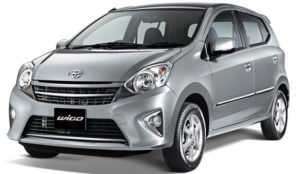
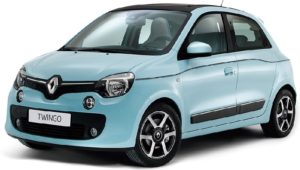
In a trademark opposition between Toyota Motor Corporation (JAPAN) and Renault SAS (FRANCE), the Opposition Board of Japan Patent Office (JPO) dismissed the opposition against trademark registration no. 5932825 for word mark “WIGO”.


WIGO vs. TWINGO

Renault opposed to register the word mark “WIGO” designating automobiles in class 12 by Toyota based on Article 4(1)(xi), (xv) of the Trademark Law by citing his senior trademark registration no. 2710075 for Renault’s car brand “TWINGO”.

TOYOTA WIGO is mini hatchback from Toyota.

RENAULT TWINGO is small city car from Renault.

Assessment of trademark similarity

Article 4(1)(xi) is a provision to refrain from registering a junior mark which is deemed identical with, or similar to, any senior registered mark.

In assessing trademark similarity under Article 4(1)(xi), the Board considered opposed mark “WIGO” is deemed a coined word since it does not give rise to any specific meaning as well as “TWINGO”. Besides, both marks are evidently distinguishable in appearance and pronunciation. If so, the Board found that it is groundless to conclude “WIGO” is similar to “TWINGO” from visual, phonetic and conceptual aspect.


Likelihood of confusion

Article 4(1)(xv) provides that a mark shall not be registered where it is likely to cause confusion with other business entity’s well-known goods or services, to the benefit of brand owner and users’ benefits.
Theoretically, Article 4(1)(xv) is applicable to the case where a mark in question is deemed dissimilar to well-known brand, but is still likely to cause confusion because of a high degree of popularity and reputation of the brand.

The Board concluded it remains unclear whether Renault TWINGO has become famous in automobiles from totality of the circumstances and evidence.
Provided that TWINGO does not obtain remarkable reputation in relation to automobiles as a source indicator of Renault car, WIGO is unlikely to cause confusion with Renault TWINGO because both marks are considerably dissimilar.

[Opposition case no. 2017-900193]

Trademark Dispute ROOT vs ROOTS

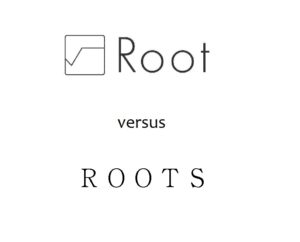
The Japan Patent Office (JPO) decided in a trademark opposition that ROOT is dissimilar to ROOTS in appearance, pronunciation and meaning.
[Opposition case no. 2017-900326, Gazette issue date: June 29, 2018]

Opposed mark

Opposed mark consists of the square root design and a word “ROOT” (see below). It was applied for registration on February 9, 2017 by designating bags in class 18 and retail or whole sale services in relation to bags and clothing in class 35.
JPO granted registration in August 4, 2017 (TM registration no. 5969604).

Opposition

Opponent, Roots Corporation, a Canadian business entity, filed an opposition against opposed mark based on a self-owned senior trademark registration no. 5947860 for the work mark “ROOTS” (see above) in class 35 for on-line retail or wholesale services in relation to bags and clothing.

Opponent argued opposed mark shall be canceled in violation of Article 4(1)(xi) of the Trademark Law because “ROOT” and “ROOTS” are confusingly similar.

Article 4(1)(xi) is a provision to refrain from registering a junior mark which is deemed identical with, or similar to, any senior registered mark.


Board decision

The Opposition Board of JPO negated similarity between the ROOT mark and ROOTS, stating that:

“From appearance, both marks are distinguishable since opponent mark does not contain the square root device and “S” in the suffix position. Besides there exist differences in font design and case sensitivity. 
Regarding pronunciation of the marks, opposed mark gives rise to a sound of “ruːt”. In the meantime, opponent mark sounds “ruːts”. Given the short sound of three syllables, a different pronunciation in the suffix position is not in any way ignorable. If so, both marks can be phonetically distinctive. 
Conceptually, opposed mark gives rise to a meaning of the square root. Meanwhile, opponent mark can be perceived as a word to mean the parts of plant that grow under the ground or ancestor. Hence, both marks are distinctive in concept as well.”

Based on the foregoing, the Board concluded that it is unlikely to consider relevant consumers at the sight of opposed mark would connect a word “Root” adjacent to the square root device with opponent mark. Therefore, the Board dismissed opposition and allowed opposed mark to survive.

Straight Wings Emblem Trademark Battle

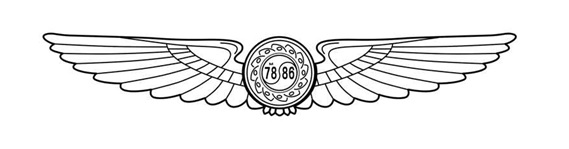
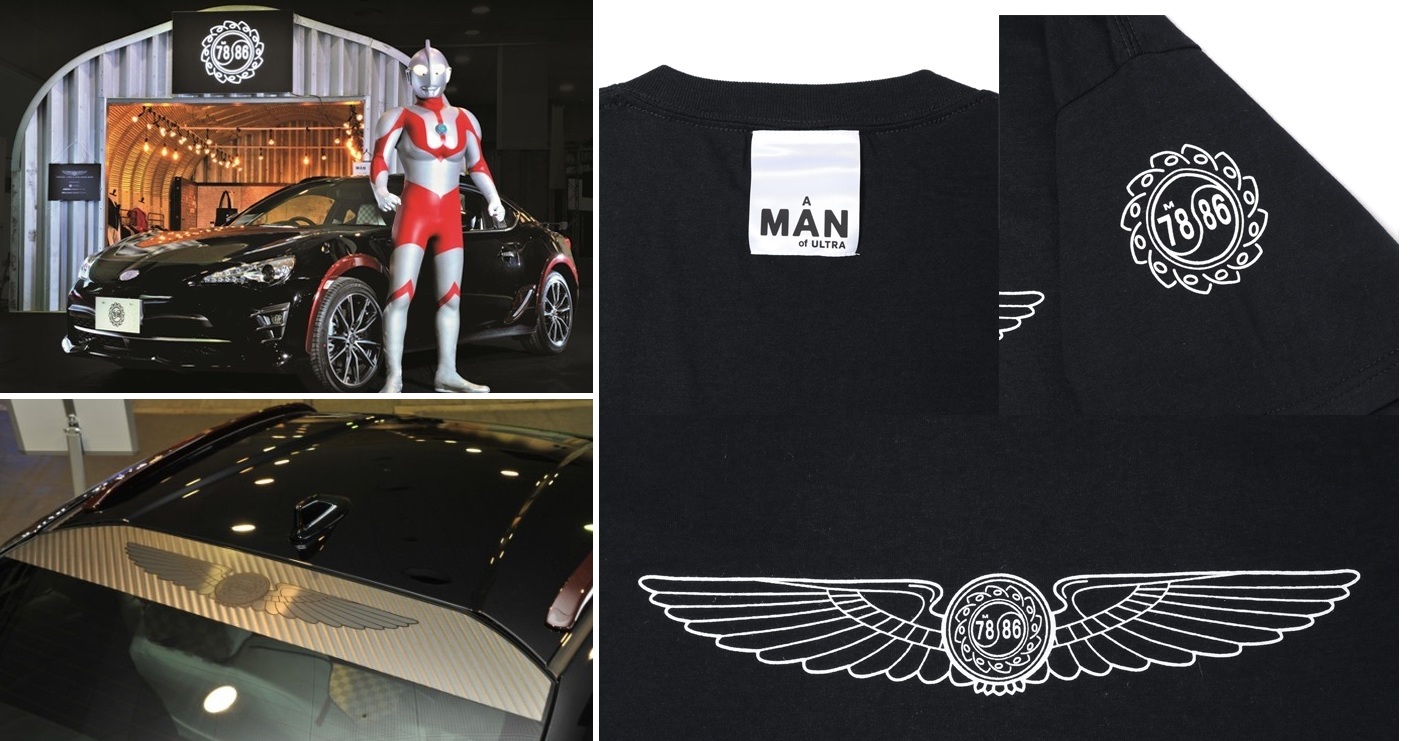
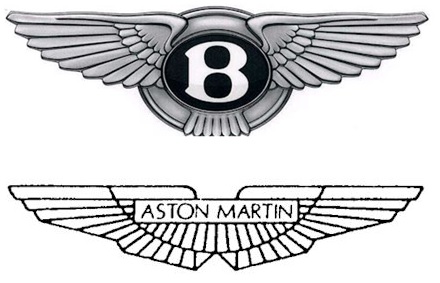
In a recent trademark decision regarding straight wings emblem on automobiles, the Opposition Board of Japan Patent Office (JPO) dismissed an opposition filed by BENTLEY MOTORS LIMITED and ASTON MARTIN LAGONDA LIMITED against trademark registration no. 5962270 for a combined mark consisting of “M78 86” and straight wings device due to unlikelihood of confusion.
[Opposition case no. 2017-900293, Gazette issued date: May 17, 2018]

TM registration no. 5962270

Disputed mark (see below) was applied for registration on December 8, 2016 by designating automobiles and other goods in class 12.

Tsubuyara Productions CO., Ltd, a Japanese company, famous for the creator of Ultraman (Japanese Superhero) is a co-applicant of disputed mark.

A month after the filing, during the Press Conference held at Tokyo Auto Salon 2017, Toyota’s new M78 x 86 concept car was unveiled. Toyota, as a car supplier collaborating with Ultraman, aimed to make people “feel like Ultraman”.

“86” is a name for Toyota sports coupe. “M78” comes from Nebula M78, a home world of Ultraman, thirteen million light years away from the earth.

Disputed mark was created to represent the collaboration between Toyota and Tsuburaya.

Opposition

JPO granted registration of the mark on July 7, 2017.

To oppose the mark, Bentley, the most sought after luxury car brand in the world, and Aston Martin, iconic luxury British sports car manufacturer, filed an opposition on the grounds that disputed mark is likely to cause confusion with opponents’ business due to close resemblance and famousness of opponent mark based on Article 4(1)(x), (xi), (xv), (xix) of the Trademark Law.

Article 4(1)(x) prohibits to register a trademark which is identical with, or similar to, other entity’s well-known mark over goods or services closely related with the entity’s business.
Article 4(1)(xi) is a provision to refrain from registering a junior mark which is deemed identical with, or similar to, any senior registered mark.
Article 4(1)(xv) prohibits to register a trademark which is likely to cause confusion with a business of other entity.
Article 4(1)(xix) prohibits to register a trademark which is identical with, or similar to, other entity’s famous mark, if such trademark is aimed for unfair purposes, e.g. gaining unfair profits, or causing damage to the entity.

Board decision

The Opposition Board admitted a certain degree of popularity and reputation of Opponent emblem as a source indicator of opponent’s business among relevant consumers in the fields of automobiles, however, totally negated similarity of both marks from the perspective of appearance, pronunciation, and concept. Besides, finding that relevant consumers with an ordinary care would pay particular attention to the mark in procuring expensive goods, such as cars, the Board held that a mere graphical resemblance of straight wings is insufficient to find a likelihood of confusion since even opponents are co-existing in peace regardless of the similar straight wings.
Based on the foregoing, the Board concluded that there is no likelihood of confusion between the marks and allowed the “M78 86” straight wings mark valid.

JPO sided with Apple Inc. over trademark battle between Mac and MacEdge

Apple Inc. has won a trademark opposition it lodged against GIGAZONE INTERNATIONAL CO., LTD., a Taiwanese company, over Japanese trademark registration no. 5877027 for word mark “MacEdge”.
[Opposition case no. 2016-900375, Gazette issued date: April 27, 2018]

OPPOSED MARK “MacEdge”

Opposed mark “MacEdge” (see below) was applied for trademark registration in Japan on March 10, 2016 by designating several accessories of computers in class 9.

The Japan Patent Office (JPO) admitted registration of the mark on August 8, 2016 and published the gazette under trademark registration no. 5877027 on September 27, 2016.

Apple “Mac” Computer and Operating system

In an opposition, Apple Inc. argued opposed mark violates Article 4(1)(xi) of the Japan Trademark Law based on famous Apple “Mac” computer and operating system which have been continuously distributed under various trademarks, e.g. MacBook, MacBook Air, MacBook Pro, iMac, Mac Pro, Mac mini, mac OS, Mac OS X, since 1984.

Article 4(1)(xv) provides that a mark shall not be registered where it is likely to cause confusion with other business entity’s well-known goods or services, to the benefit of brand owner and users’ benefits.

Apple Inc. pointed that MacEdge website operated by the opposed party (see below) is likely to cause confusion with opponent since the front page looks similar to that of Apple’s website and it refers to opponent products.

Board decision

The Opposition Board admitted a high degree of reputation and popularity of opponent trademark “Mac” in the field of personal computers. In the assessment of mark similarity, the Board found “MacEdge” could be perceived as a combination of “Mac” and “Edge” because of two capital letters of “M” and “E”. As long as the “Mac” trademark becomes famous as a source indicator of Apple Inc. in the field of personal computers, relevant consumers are likely to connect opposed mark with opponent since the term “Mac” in opposed mark is almost identical with Apple “Mac” trademark. In the meantime, the term “Edge”, a common English word, is less distinctive and does not give rise to any specific meaning in combination with “Mac”.

Based on the foregoing, the Board decided that relevant consumers who purchase accessories of computers are likely to confuse or misconceive a source of the opposed mark with Apple Inc. or any entity systematically or economically connected with the opponent.
If so, opposed mark shall be cancelled in violation Article 4(1)(xv) of the trademark law.

Trademark Opposition: “HP” versus “HP MAKER”

In a trademark dispute between “HP” and “HP MAKER”, the Japan Patent Office (JPO) dismissed an opposition filed by Hewlett-Packard, an American multinational information technology company, holding that there is no likelihood of confusion when the “HP MAKER” mark is used on the service of website creation.
[Opposition case no. 2017-900253, Gazette issued date: March 19, 2018]

HP MAKER

Oppose mark, consisting of “HP MAKER” in standard character, was filed on November 16, 2015 by designating website-related services, e.g. “Creation and maintenance of web sites for others; computer programming” in class 42. JPO permitted registration of the opposed mark on April 25, 2017 [TM registration no. 5948103].

Opponent contended that relevant consumers of the web-related services are likely to cause confusion the opposed mark “HP MAKER” with Hewlett-Packard or any business entity systematically or economically connected with opponent since trademark “HP” has already become famous among not only relevant consumers of computers but also general public in Japan as an abbreviation of Hewlett-Packard. If so, opposed mark shall be cancelled on the basis of Article 4(1)(x) and (xv) of the Japan Trademark Law.

Board decision

The Opposition Board admitted a high degree of reputation and popularity of the “HP” mark in connection with computer-related goods as a source indicator of opponent and its business, however, questioned such reputation prevails in the services of class 42 from totality of the circumstances and evidences provided by opponent.
Besides, finding that “HP” is also known as an abbreviation of homepage, the Board held opposed mark “HP MAKER” rather gives rise to a meaning of “person or tool to create homepage” from its configuration in the minds of relevant consumers with an ordinary care when used on the website-related services in dispute.
Based on the foregoing, the Board concluded that there is no likelihood of confusion between the marks and allowed the “HP MAKER” mark to remain valid.