Louis Vuitton victory in trademark battle for remake use

In a trademark battle involving famous Louis Vuitton Monogram for remake use, the Japan IP High Court ruled in favor of Louis Vuitton and ordered appellant to pay 1.7 million JP-Yen for damages on October 23, 2018.

Custom-made Remake

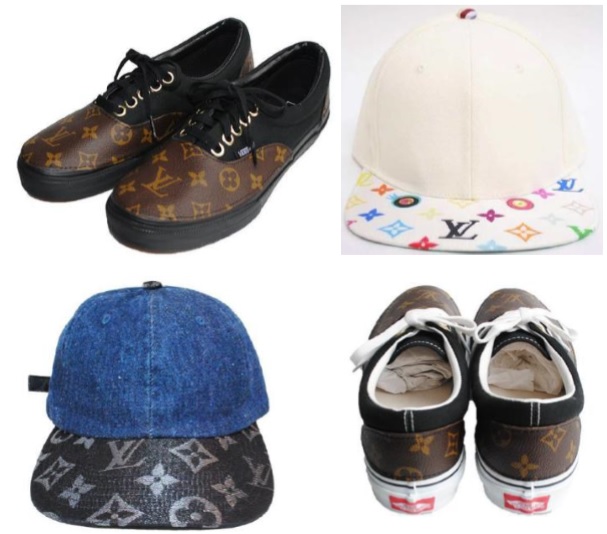
Appellant has produced shoes, caps and other fashion items by making use of material of secondhand Louis Vuitton goods (see below) and promoted the items as a custom-made remake, e.g. LOUIS VUITTON REMAKE DENIM CAP/BLUE, through internet.
Unfair Competition Prevention Act

Louis Vuitton filed a lawsuit and demanded to stop selling the items as well as payment for the damage on the grounds that appellant’s act constitutes unfair competition under Article 2(1)(ii) of the Japan Unfair Prevention Act.

Article 2(1)(ii) of the Unfair Competition Prevention Act is a provision to prohibit any person from using a famous source indicator of another person without permission.

Appeal

Appellant argued they become popular among relevant consumers as a business entity to produce a custom-made remake from secondhand of genuine brand. If so, since consumers are fully aware that the items are remake, neither faked goods nor brand-new article, confusion is unlikely to happen in the mind of consumers. Besides, appellant insisted as long as the Louis Vuitton Monogram is not used as a source indicator but design, the Unfair Competition Prevention Act is not applicable to the items.

IP High Court decision

The IP High Court decisively dismissed appellant’s allegations and decided the monogram on the items still plays a role of source indicator in view of remarkable reputation of Louis Vuitton Monogram. It can be easily presumed that average consumers at sight of the items shall conceive Louis Vuitton. Even if the items are sold as a custom-made remake or with any description to appeal the items made from secondhand, such facts will not affect the decision on the merit.
[Heisei 30 (Ne)10042]


The Unfair Competition Prevention Act is essential to the case where actual confusion would not happen in fact regardless of unauthorized commercial use of famous brand.
Fashion design and copycat

On July 30, the Tokyo District Court delivered a ruling in the case of copycat fashion dispute pertinent to the shape of cold shoulder blouse.
[Case no. Heisei 29(Wa)30499]


Cold Shoulder Blouse

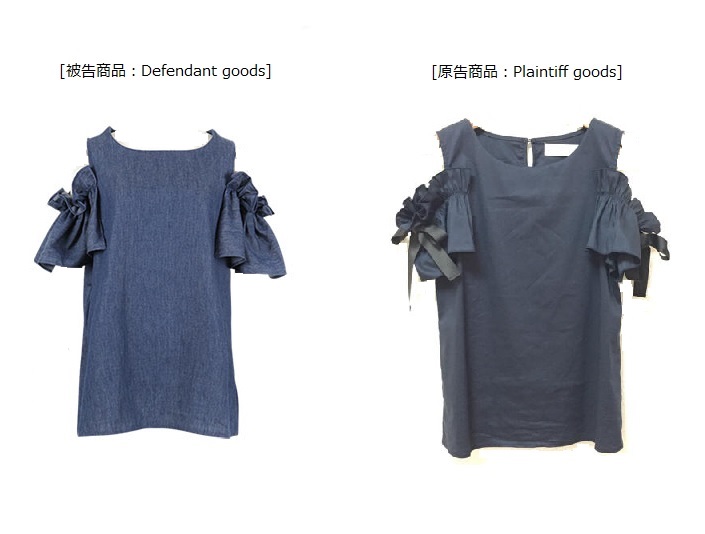
The case was brought into the court by PETTERS Co., Ltd. who complained MAXIM Co., Ltd. of unlawfully imitating a unique shape of cold shoulder blouse designed by plaintiff and damaging business interests by distribution of defendant’s “KOBE LETTUCE” cold shoulder blouses.

According to the court decision, plaintiff allegedly designed a new cold shoulder blouse featuring unique ruffle sleeve and long ribbon (see right in below) in February 2016 and began selling from August of the year. Subsequently, defendant imported similar blouses (see left in below) from Korea and promoted for sale in Japan since May 2017.

Unfair Competition Prevention Law

Plaintiff argued defendant shall be liable for his conduct because it constitutes violation of Article 2(1)(iii) of the Unfair Competition Prevention Law.

Article 2(1)(iii) of the Unfair Prevention Law prohibits unauthorized party from assignment, lease, display for assignment or lease, export or import of goods which shape results from imitation of goods belonging to other entity.

The party shall be exempted from liability if it passes three months from initial offer for sale of imitated goods at the time of his misconduct.
From the case law, it is construed that the article does not apply for imitation of a commonly used-shape in light of the purposes and objectives of the article.


Court decision

The judge, however, did not clearly state if overall shape of plaintiff’s cold shoulder blouse shall be protectable under the article.
As a consequence, the court totally dismissed the case on the grounds that:

  1. There exists difference in the shape of ruffle sleeve and ribbon between disputed goods.
  2. The difference gives rise to distinctive impressive in the mind of consumers
  3. If so, the shape of defendant’s goods shall neither be identical with, nor deemed imitation of plaintiff’s goods.

Japan IP High Court Ruling – Shape of “Unit Shelf” functions as a source indicator of Ryohin Keikaku

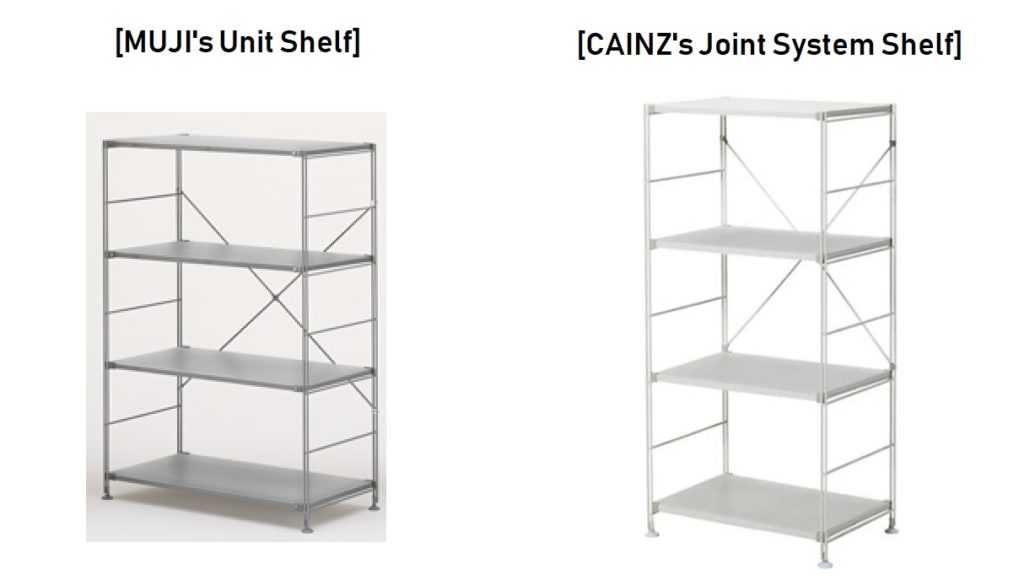
The Japan IP High Court has affirmed an earlier ruling by the Tokyo District Court, and sided with Ryohin Keikaku Co., Ltd, an operator of the MUJI retail chain, in a lawsuit accusing CAINZ Corporation, the second largest DIY store chain in Japan, of violating the Unfair Competition Prevention Act (UCPA) by distributing ready-to-assemble storage rack “Joint System Shelf” which is allegedly an imitation of MUJI’s “Unit Shelf”.

CAINZ (appellant) contested the early ruling made an error of judgment  in finding that relevant consumers conceive the shape of “Unit Shelf” as a source indicator of Ryohin Keikaku (appellee) based on the research results which showed approx. 98 percent of general consumers were unable to associate the shape with appellee, and 9 merchants out of 10 who daily deals with living ware and furniture could not identify the shape as “Unit Shelf”.

Besides, appellant claimed appellee violated clean hands doctrine and thus abused the right given he pursued the case knowing that his act to promote the “Unit Shelf” constitutes infringement of  design right belonging to a third party.

The IP High Court ruled the research was neither adequate nor persuasive  enough to negate distinctive function of “Unit Shelf” as a source indicator, stating that it just targeted people in their 20s to 40s despite consumers of goods in dispute cover whole generations having an interest in household furniture. The questionnaire to ask a specific name of retail shop was far from the case. Some of the researched merchants have business with appellant. In addition, opinions of 10 merchants are way too insufficient  to bolster appellant’s allegation.

Fact that an entity who suffered damage by unfair misconduct of competitor admittedly infringes design right belonging to third party  does not immediately hinder him from making a legal claim based on the UCPA. Being that appellant’s act to promote  the “Joint System Shelf” is likely to cause confusion with appellee’s “Unit Shelf”, the court finds  higher degree of necessity to put a restriction on appellant’s misconduct. From the foregoing findings, the court ruled in favor of appellee and dismissed the allegations as well as abuse of right.


When you conduct market research pertinent to trademark, you should be more careful to decide questionnaire and respondent. Non-existence of design or trademark registration does not guarantee risk-free transaction of a similarly shaped goods with hot-selling product if the shape functions as source indicator.