Menu

MARKS IP LAW FIRM

Japanese IP Attorney Firm specializing in Trademarks with a commitment to excellence

MARKS IP LAW FIRM
Facebook Email LinkedIn Instagram

Primary Menu

Skip to content
  • Home
  • About Us
    • Our Philosophy
    • Attorney
    • Achievements
    • Honors & Awards
  • Practice Areas
    • TRADEMARK
    • TRADE DRESS
    • INDUSTRIAL DESIGN
    • COPYRIGHT
  • Trademark Services
    • Search & Selection
    • Trademark Application
    • Office Action
    • Opposition / Invalidation
    • Renewals
    • Non-Use Cancellation
    • Contract & License
    • Watching & Surveillance
    • Portfolio Management
    • Trademark Litigation
    • Domain Dispute
    • Customs Enforcement
  • Trademark Updates
    • 2023
    • 2022
    • 2021
    • 2020
    • 2019
    • 2018
  • FAQs
  • Testimonials
  • Contact Us
    • Office Locations
Search

タグ: Apple logo

Is it Apple, or not?

Posted on2024年7月20日2024年7月27日

In a trademark opposition filed by U.S. tech giant Apple Inc. against TM Reg no. 6737922, alleging similarity or likelihood of confusion with Apple Inc.’s iconic logo, the Japan Patent Office (JPO) rejected the opposition.
[Opposition case no. 2023-900267 decided on July 11, 2024]


Opposed mark

A Japanese individual filed a device mark representing a quarter-cut apple (see below left) with the JPO for registration on January 31, 2023 for use on various goods in Classes 9, 18, 24 and 25.

The mark was registered on September 21, without benign confronted with any office action in the course of the substantive examination by the JPO examiner.


Opposition by Apple Inc.

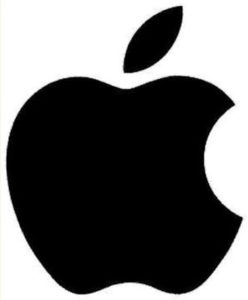
Apple Inc. filed an opposition on November 30, 2023. Apple argued that the mark should be canceled in contravention of Article 4(1)(xi) and (xv) of the Trademark Law due to similarity or likelihood of confusion with its famous “bitten apple” logo (see above right) when used on any goods in the designated classes.

Article 4(1)(xi) is a provision to prohibit registration of a junior mark that is deemed identical with, or similar to, an earlier registered mark.

Article 4(1)(xv) provides that a mark shall not be registered where it is likely to cause confusion with other business entities’ well-known goods or services, to the benefit of brand owners and users.


JPO decision

The JPO did not question famousness the opponent iconic logo as a source indicator of Apple Inc. among relevant consumers of any goods in question.

In the meantime, the JPO found the opposed mark dissimilar to the Apple logo by stating that:

Even though both marks represent an apple having a leaf-like figure at the top, there is clear distinctions in configurations that the fruit has been cut or bitten off. Therefore, the Board believes these are distinguishable from appearance when they are observed at different times and places.

The opposed mark does not have a specific meaning, while the opponent mark gives rise to a meaning of “a house mark of Apple Inc.” Accordingly, both marks are distinguishable in concept.

Even if a phonetical comparison is neutral as neither the opposed mark nor the opponent mark has any clear sound, both marks are dissimilar and unlikely to cause confusion from visual and conceptual points of view.

Given a low degree of similarity between two marks,the Board has a reason to believe that, regardless of the reputation of the opponent mark, the relevant consumers are unlikely to confuse a source of the goods in question bearing the opposed mark with the opponent.

Based on the foregoing, the JPO Opposition Board found the opposition groundless and decided to dismiss the opposition entirely.


Categories2024, Article 4(1)(xi), Article 4(1)(xv), Device mark, Famous mark, Likelihood of confusion, Similarity of mark, Trademark OppositionTagsApple Inc., Apple logo, Article 4(1)(xi), Article 4(1)(xv), Famous mark, JAPAN PATENT OFFICE, Japan Trademark Law, Likelihood of confusion, similarity of mark, Trademark opposition

A trademark dispute over Apple logo

Posted on2022年2月5日2022年2月17日

On January 13, 2022, the Japan Patent Office (JPO) dismissed an invalidation action filed by Apple Inc. against TM Reg no. 5770529 for device mark by finding an unlikelihood of confusion with the famous Apple design mark.

[Invalidation case no. 2020-890049]

Disputed mark

Shelly Co., Ltd applied device mark (see below) for registration to be used on protection covers and cases for smartphones, protection covers and cases for tablets, cases for laptops in class 9 with the JPO on January 20, 2015.

The mark was registered on June 12, 2015, without receiving a refusal during the substantive examination.


Invalidation action

Japan Trademark Law has a provision to retroactively invalidate trademark registration for certain restricted reasons specified under Article 46 (1) provided that the interested party files an invalidation petition within a five-year statute of limitations.

Apple Inc. filed a petition for invalidation against the disputed mark on June 12, 2020. Apple argued the mark shall be invalidated in contravention of Article 4(1)(xv) of the Trademark Law due to a likelihood of confusion with its famous “bitten apple” logo (see below) when used on all goods in class 9.

Article 4(1)(xv) provides that a mark shall not be registered where it is likely to cause confusion with other business entities’ well-known goods or services, to the benefit of brand owners and users.


JPO decision

The JPO did not question a remarkable degree of reputation and popularity of the Apple logo as a source indicator of Apple Inc. in connection with personal computers, smartphones, and any goods and services related to them.

In the meantime, the JPO found the disputed mark is dissimilar to the Apple logo. Because of a low degree of similarity, relevant consumers are unlikely to cause confusion with Apple Inc. when the disputed mark is used on the goods in question by stating that:

  1. From appearance, both marks are obviously dissimilar. Provided that it is adequate to rotate the disputed mark 90 degrees to the left and compare it with the Apple logo, the Board still has a reasonable ground to believe both marks are visually dissimilar because of distinctive features in detail and overall appearance.
  2. Both the disputed mark and the Apple logo would not give rise to any specific sound. If so, the marks are not comparable in pronunciation.
  3. The Apple logo gives rise to a meaning of “famous source indicator of Apple Inc.”. The disputed mark has no meaning. Therefore, both marks are dissimilar in concept.

Based on the foregoing, regardless of the famousness of the Apple logo and close association between the goods in question with Apple’s business and relevant consumers, the Board decided to dismiss the invalidation action.

Categories2022, Article 4(1)(xi), Article 4(1)(xix), Article 4(1)(xv), Device mark, Famous mark, Invalidation trial, Likelihood of confusion, Similarity of goods, Similarity of markTagsApple, Apple Inc., Apple logo, Article 4(1)(xi), Article 4(1)(xv), Famous mark, invalidation trial, JAPAN PATENT OFFICE, Japan Trademark Law, Likelihood of confusion, similarity of mark

APPLE took a painful bite at Apple design mark on medical services

Posted on2018年5月12日2022年1月3日

The Japan Patent Office (JPO) dismissed a trademark opposition filed by the U.S. tech giant, Apple Inc. against trademark registration no. 5939652 for the Apple design mark in class 44.[Opposition case no. 2017-900222, Gazette issued date: April 27, 2018]


Opposed mark

Opposed mark, consisting of literal and figurative elements of Apple (see below), was filed by a Japanese medical corporation on March 17, 2016 by designating medical services in class 44.

As a result of substantive examination, the JPO admitted registration on April 14, 2017.


Apple’s Opposition

To oppose against registration, Apple Inc. filed an opposition on July 5, 2017.

In the opposition, Apple Inc. argued Opposed mark shall be cancelled in violation of Article 4(1)(xv) of the Japan Trademark Law due to a likelihood of confusion with Apple Inc’s trademark registrations for:

  • the Apple word mark in class 9 (computers; electronic machines, apparatus and their parts) and class 42 (computer software design, computer programming, or maintenance of computer software).
  • the Apple logo (see below) in classes 44 (medical services)

Article 4(1)(xv) provides that a mark shall not be registered where it is likely to cause confusion with other business entity’s well-known goods or services, to the benefit of brand owner and users’ benefits.
Theoretically, Article 4(1)(xv) is applicable to the case where a mark in question designates remotely associated or dissimilar goods or services with that of a well-known brand business.

Board Decision

The Opposition Board admitted a remarkable degree of reputation and popularity of opponent trademark “Apple” and the Apple logo in the field of computers, smart phones, and related goods/services.

In the meantime, the Board held a negative view whether such reputation prevails even among consumers or traders of goods/services other than computer-related goods/services.

  1. Likelihood of confusion with the Apple word mark

    The Board considered Opposed mark is deemed similar to the Apple word mark since both marks give rise to the same sound and meaning of apple (a round fruit with firm, white flesh and a green, red, or yellow skin), however, it is unlikely to cause confusion between Opposed mark and the Apple word mark due to tenuous connection between medical services and computer-related goods/services.

  2. Likelihood of confusion with the Apple logo

    The Board held that both marks are easily distinguishable in appearance. Also, negated similarity from phonetic and conceptual point of view because the Apple logo gives rise to a meaning of “bitten apple”. As long as it is questionable whether the Apple logo prevails among relevant consumers and traders of medical services, the Board found less likelihood of confusion between Opposed mark and the Apple logo.


Apple Inc. asserted close relatedness with medical services based on a fact that Apple provides computer application software for healthcare. The Board dismissed the assertion by stating that the application shall belong to electronic machines in class 9 since it is just intended to monitor health condition in daily life, not be equivalent to medical services in class 44.

Categories2018, Article 4(1)(xv), Composite mark, Device mark, Famous mark, Likelihood of confusion, Trademark OppositionTagsApple, Apple logo, Article 4(1)(xv), Likelihood of confusion, medical services, Trademark opposition

Recent Posts

  • BULLDOG vs GREEN BULLLDOG2024年10月11日
    The Japan Patent Office (JPO) dismissed an opposition against TM Reg no. 6724674 for the wordmark “GREEN BULLD Read More ...
  • BVLGARI Defeated with TM Opposition over “SERPENTI” Collection2024年10月5日
    The Japan Patent Office (JPO) dismissed an opposition claimed by BULGARI S.P.A. against TM Reg no. 6629637 for Read More ...
  • PAGANI Lost Trademark Opposition Against PAGANI DESIGN2024年9月29日
    PAGANI S.p.A. lost in a bid to oppose TM Reg no. 6731316 for word mark “PAGANI DESIGN” in class 14 as the JPO Read More ...

Menu

Location / Contact information

MARKS IP LAW FIRM
OSAKA [Main Office]
2F iPLUS Edobori, 1-9-11 Edobori Nishi-ku, Osaka, 550-0002, Japan

TOKYO [Group Office]
9292 Bldg., 3-1-8 Kanda-Surugadai, Chiyoda-ku, Tokyo, 101-0062, Japan

T: +81 6 6467 8334
F: +81 6 6467 8335
E: info@marks-iplaw.jp


ATTORNEY’S LINKEDIN

Masaki Mikami
Copyright © 2024 MARKS IP LAW FIRM. All Rights Reserved.
Scroll Up
  • Home
  • About Us
    • Our Philosophy
    • Attorney
    • Achievements
    • Honors & Awards
  • Practice Areas
    • TRADEMARK
    • TRADE DRESS
    • INDUSTRIAL DESIGN
    • COPYRIGHT
  • Trademark Services
    • Search & Selection
    • Trademark Application
    • Office Action
    • Opposition / Invalidation
    • Renewals
    • Non-Use Cancellation
    • Contract & License
    • Watching & Surveillance
    • Portfolio Management
    • Trademark Litigation
    • Domain Dispute
    • Customs Enforcement
  • Trademark Updates
    • 2023
    • 2022
    • 2021
    • 2020
    • 2019
    • 2018
  • FAQs
  • Testimonials
  • Contact Us
    • Office Locations