Samsung Unsuccessful in Trademark Opposition against BEAT GALAXY

The Japan Patent Office (JPO) did not side with Samsung, the South Korean tech giant, in a trademark opposition against TM Reg no. 6895229 for word mark “BEAT GALAXY” in Class 9 by finding a low degree of similarity to and less likelihood of confusion with the mark “GALAXY” even when used on PDA, mobile phones.
[Opposition case no. 2025-900084, decided on December 2, 2025]


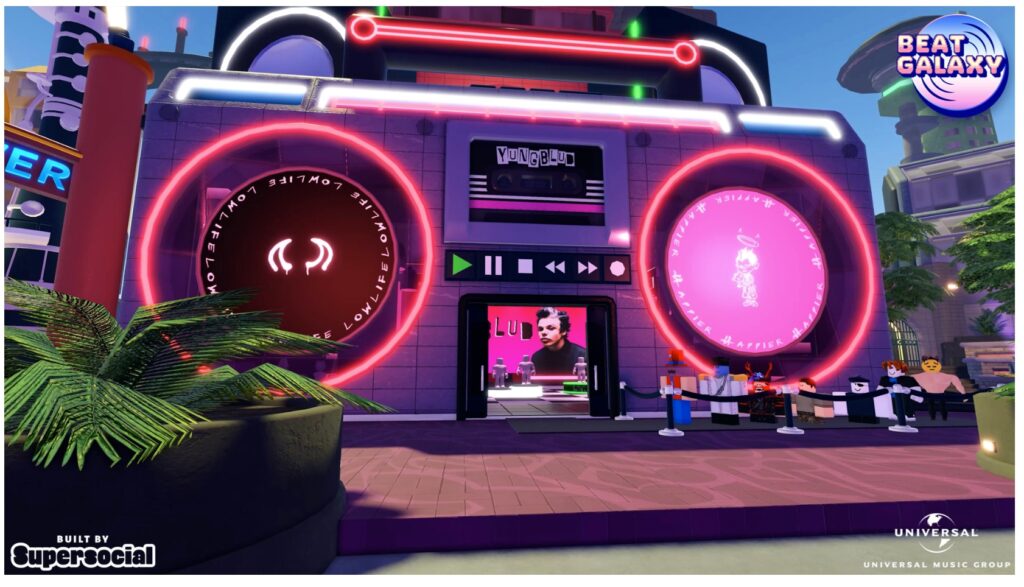
BEAT GALAXY

UMG Recordings Inc. filed a trademark application for the wordmark “BEAT GALAXY” in standard character with the JPO on November 13, 2023, for use on PDA, mobile phones, computers, computer software, audio files and other goods in Class 9 [TM App no. 2023-129205].
The JPO examiner granted protection of the mark on February 4, 2025.

Subsequently, it was published for a post-grant opposition on February 20, 2025.


Opposition by Samsung

Samsung, a South Korean tech giant, filed an opposition against the mark “BEAT GALAXY” on April 18, 2025, and claimed cancellation of the contested mark in contravention of Article 4(1)(vii), (x), (xi), (xv), and (xix) of the Japan Trademark Law by citing their earlier mark “GALAXY”.

Samsung argued the contested mark “BEAT GALAXY” is similar to the cited mark, and conveys a negative impression of defeating Samsung’s Galaxy. Thus, the contested mark detrimentally affects the goodwill of the cited mark. Relevant consumers are likely to associate the contested mark with Samsung.


JPO decision

The JPO Opposition Board found that the cited mark “GALAXY” has been widely recognised as an indicator of Samsung’s business.

In the meantime, the Board denied similarity between “BEAT GALAXY” and “GALAXY” by stating that:

The contested mark and the cited mark differ in the presence of the word “BEAT” at the beginning of the contested mark. Therefore, even when assessed in a different time and place, there is no likelihood of confusion in appearance.

Secondly, the different sound caused by the word “Beat” at the beginning of the contested mark significantly affects the overall aural impression. As both sounds are distinguishable as a whole, there is no likelihood of confusion in pronunciation.

As for concept, while the contested mark does not have any specific concept, the cited mark gives rise to a meaning of a collection of stars and planets that are held together by gravity. Accordingly, both marks are neutral in concept.

Based on the foregoing, the Board noted that, even though the goods in question are highly related to Samsung’s business, in view of a low degree of similarity and originality of the cited mark, it is reasonable to conclude that relevant consumers are unlikely to confuse a source of goods bearing the contested mark with Samsung or any undertaking economically or systematically connected with the claimant.

Consequently, the Board decided to dismiss the entire opposition.

ALVIERO MARTINI Defeated Over World Map Mark Dispute

The Japan Patent Office (JPO) dismissed an invalidation claim by ALVIERO MARTINI S.p.A., against TM Reg no. 6320074, which features an old-world map design, due to its dissimilarity and less likelihood of confusion with the claimant’s 1A CLASSE “GEO MAP” mark.
[Invalidation case no. 2024-890008, decided on September 18, 2025]


Japan TM Reg no. 6320074

Two Korean individuals filed a trademark application with the JPO for a device mark depicting an old-world map (see below) in relation to bags and other leather goods of Class 18 on December 24, 2019 [TM App no. 2019-165453].

Without raising any ground of refusal, the JPO examiner granted registration of the mark on December 24, 2020.


Invalidation action by Alviero Martini

ALVIERO MARTINI S.p.A., known as an Italian heritage brand, Alviero Martini 1A Classe, filed an invalidation action with the JPO on February 13, 2024, and claimed invalidation of TM Reg no. 6320074 in contravention of Article 4(1)(vii), (xi), (xv) and (xix) of the Japan Trademark Law by citing earlier IR no. 982100 of the world map mark in Class 18.

ALVIERO MARTINI argued the contested mark is confusingly similar to the cited mark that has been widely recognized among relevant consumers to identify a source of Alviero Martini 1A CLASSE brand.

The claimant also pointed out the fact that the applicant applied for other mark containing the term “PRIMA CLASSE” (see below). Given a high degree of resemblance between the marks and close relatedness between the goods in question and the claimant’s fashion business, it is presumed that the applicant had maliciously filed the contested mark with an intention to free-ride goodwill on the cited mark.


JPO decision

The JPO Invalidation Board noted the fact that the cited mark has been used in a manner that depicts only a portion of the world map on the claimant’s goods. The produced evidence does not suggest that the cited mark is ever used in its entirety as a source indicator.

Therefore, it would be unreasonable to conclude that the cited mark has acquired a certain degree of recognition in Japan and other jurisdictions.

Regarding the similarity of the marks, the Board stated, “Although they both consist of a device that represents a world map in common, the overall impressions differ significantly due to the different arrangement of continents, the presence of country and ocean names, and sailing ships. Therefore, the contested mark is visually dissimilar to the cited mark”, and “the coincidence in the graphic element representing world map is not sufficient to counteract or outbalance these visual differences.”

Based on the foregoing, the Board found that the marks are dissimilar and relevant consumers are unlikely to confuse the source of the goods in question bearing the contested mark with the cited owner.

Given the lack of persuasive evidence demonstrating a high recognition of the cited mark, it is unclear whether the applicant has a malicious intent vulnerable to invalidation.

JPO dismisses Honda’s opposition against “WONKEY” mark for motorcycles

The Japan Patent Office (JPO) dismissed an opposition filed by Honda Motor Co., Ltd. against TM Reg No. 6852662 for the word mark “WONKEY” in Class 12, finding no similarity or likelihood of confusion with Honda’s well-known “MONKEY” bikes.
[Opposition Case No. 2024-900262, decided July 15, 2025]


The Contested Mark: “WONKEY”

The opposed mark, consisting of the stylized word “WONKEY” in bold font (see below), was filed by Diner Co., Ltd. on February 26, 2024, for use on motorcycles, electrically operated scooters, and electric bicycles in Class 12 [TM App. No. 2024-18623].

The applicant promotes “WONKEY” motorized bicycles that may be driven by persons over 16 years of age without a driver’s license.

The JPO granted registration on October 9, 2024 [TM Reg. No. 6852662], and published it for post-grant opposition on October 18, 2024.


Honda’s Opposition

On December 17, 2024, Honda filed an opposition, seeking cancellation under Article 4(1)(vii), (x), (xi), (xv), and (xix) of the Trademark Law, relying on its earlier Trademark Registration No. 2512844 for the stylized word mark “MONKEY” in Class 12.

Honda argued that “WONKEY” is visually similar to “MONKEY,” emphasizing that:

“Of the six letters, five (‘onkey’) are identical in type, spelling, and sequence. The only difference lies in the initial letters ‘w’ and ‘m,’ which themselves share similar forms composed of two v-shaped or u-shaped strokes. At first glance, the two letters appear alike, and thus the marks as a whole create a closely similar impression, rendering them confusingly similar in appearance.”

To support its case, Honda submitted extensive evidence demonstrating the fame of its “Monkey” bikes, which have been marketed since 1961.


The JPO’s Decision

The Opposition Board acknowledged the widespread recognition of Honda’s “Monkey” bikes among relevant consumers at the time of application and registration of the contested mark.

Nevertheless, the Board denied similarity between the marks. In particular, it reasoned that:

  • The contested mark “WONKEY” does not generate any specific concept.
  • The cited mark “MONKEY,” by contrast, is a well-known word in Japan with the meaning “monkey,” giving rise to both the pronunciation “monkey” and the concept of “monkey.”
  • While the two marks share all letters and sounds except for their initial characters (“w” vs. “m”; “wo” vs. “mo”), both are short (six letters and four sounds). Accordingly, the initial differences exert a significant impact on the overall appearance and pronunciation.
  • Coupled with the concept of “monkey” derived from the cited mark, these differences lead to a clear distinction in the overall impressions, memories, and associations conveyed to consumers.

The Board concluded that, given the low degree of similarity, relevant consumers were unlikely to confuse the source of the contested goods in Class 12 with Honda or any economically or organizationally related entity.

Based on the above findings, the JPO dismissed the opposition in its entirety and upheld the validity of the contested mark “WONKEY.”

JPO Finds trademark “yes no champagne” for wines with the protected appellation of origin “Champagne” registrable even if owned by Japanese company.

The Japan Patent Office (JPO) dismissed an opposition filed by Comité Interprofessionnel du Vin de. Champagne (C.I.V.C.) against TM Reg no. 6843113 for wordmark “yes no champagne” in Class 33 by stating that Japanese ownership of the contested mark would neither harm the friendly relationship between Japan and France, nor public sentiment.
[Opposition case no. 2024-900238, decided on June 24, 2025]


YES NO CHAMPAGNE

ZERU Co., Ltd. filed a trademark application for word mark “yea no champagne” and its Japanese transliteration arranged in two lines (see below) for use on wines in Class 33 with the JPO on November 16, 2023. [TM App no. 2023-133081]

On May 31, 2024, the JPO examiner issued an office action based on Article 4(1)(xvi) and (xvii) of the Japan Trademark Law.

Article 4(1)(xvi) prohibits registering a mark that could mislead consumers about the quality of the goods.

Article 4(1)(xvii) prohibits the registration of any mark comprised of a mark indicating the place of origin of wines or spirits from the World Trade Organization member that has prohibited its use on wines or spirits not originating from its region.

Since, the applicant restricted the designated goods in Class 33 to wines with the protected appellation of origin “Champagne” as a response to the office action, the JPO examiner granted registration of the mark. Subsequently, the mark was published for post-grant opposition on September 20, 2024.


Opposition by C.I.V.C.

On November 21, 2024, just before a lapse of the two-month statutory opposition period, Comité Interprofessionnel du Vin de. Champagne (C.I.V.C.) filed an opposition and claimed cancelation of the contested mark based on Article 4(1)(vii) of the Trademark Law.

Article 4(1)(vii) provides that a mark shall not be registered if it is likely to cause damage to public policy.

In the opposition brief, the C.I.V.C. argued that any mark containing the term “Champagne” should not be owned by an entity with no connection to or place of business in the region. Such ownership would likely to lead to free-riding on a famous geographical indication, diluting its source-identifying value and ultimately dishonoring France and its citizens, contrary to international faith.


JPO decision

The JPO Opposition Board admitted the remarkable reputation of the geographical indication “Champagne” among the general public, which was acquired through substantive use and marketing efforts made by the C.I.V.C. and other relevant organizations. The Board also found that the term “Champagne” and Champagne wines are cultural products of France and of extremely high significance to the country and its citizens.

Meanwhile, the Board noted that champagne wines are widely distributed in Japan, and that relevant traders commonly use the term “champagne” to refer to the wines.

Taking account of long-lasting trade practice that the term “Champagne” has been commonly used among traders of the goods in question, it would not anything but disorder public policy or moral to use the contested mark that contains the term “Champagne” in connection with wines with the protected appellation of origin “Champagne.”

If so, the Board finds no reason to believe that registration and use of the contested mark by the applicant is likely to harm the friendly relationship between Japan and France or public sentiment.

Based on the above findings, the Board made a decision to dismiss the opposition entirely.

Trademark dispute: MINI vs. DMINI

The Japan Patent Office (JPO) dismissed an opposition claimed by BMW against TM Reg no. 6798869 for wordmark “DMINI” in class 12 due to dissimilarity to and unlikelihood of confusion with a famous small car “MINI”.
[Opposition case no. 2024-900137, Gazette issued date: April 25, 2025]


DMINI

Mitsubishi Motors Corporation filed a trademark application for word mark “DMINI” in standard character for use on automobiles, motorcycles, bicycles, electric cars, hybrid electric cars, driverless cars and other goods in class 12 with the JPO on October 10, 2023.

The JPO examiner did not raise any objection in the course of substantive examination, and granted registration on March 29, 2024.

The mark “DMINI” was published on trademark registration gazette (TM Reg no. 6798869) for a post-grant opposition on May 7, 2024.


Opposition by BMW

Bayerische Motoren Werke GmbH (BMW) filed an opposition with the JPO on July 5, 2024 before the lapse of two-month statutory period counting from the publication date.

BMW requested the cancellation of the mark “DMINI” based on Article 4(1)(vii), (xi), and (xv) of the Japan Trademark Law by citing its owned earlier trademark registrations for wordmark “MINI” in class 12.

Allegedly, the cited mark has become famous among the relevant consumers to indicate a source of the world-famous small cars “MINI” that have been imported into Japan for more than the past six decades. BMW argued that the literal element “MINI” would be dominant in the opposed mark, taking into account the high degree of recognition of the cited mark “MINI” among the consumers. If so, both marks should be considered similar, or likely to cause confusion in relation to the goods in question.


JPO decision

From the produced evidence, the JPO Opposition Board found the cited mark “MINI” has acquired a remarkable degree of popularity and reputation among consumers to indicate the automobiles (small cars) manufactured by BMW.

However, the Opposition Board question similarity of the marks by stating that:

There is a difference in the presence or absence of the letter “D” at the beginning of each mark. The difference has a strong visual impact and is likely to create a different impression given the relatively short character structure of five and four letters respectively. Therefore, there is a low degree of visual similarity between the marks.

Secondly, there is a difference between in the overall sound of “DMINI” and “MINI” due to the presence or absence of the sound “D” at the beginning. It has a significant impact on the overall sound, given the short phonetic structure of four or two sounds, and thus the overall tone and aural impression are clearly different to the extent that a risk of confusion in pronunciation is not conceivable.

Thirdly, the opposed mark does not give rise to a specific meaning, whereas the cited mark has a meaning of “famous automobile brand owned by BMW”. If so, there will be any conceptual confusion.

Even if the cited mark “MINI” has become famous and the goods in question are highly related to the goods bearing the cited mark administered by BMW, given the facts that the term “MINI” is not a coined word and the low degree of similarity between “MINI” and “DMINI”, the Board has no reason to believe that the consumers are likely to confuse a source of goods bearing the opposed mark “DMINI” with BMW.

Based on the foregoing, the Board decided to dismiss the entire opposition and declared the validity of the mark “DMINI” as status quo.

End of the TOKYO 2020 Olympic emblem dispute

On March 12, 2025, the Japan IP High Court handed down a decision regarding the validity of TM Reg no. 6008759 for the Tokyo 2020 Olympic Emblem owned by the International Olympic Committee (IOC).
[Court case no. Reiwa6(Gyo-ke)10057]


Tokyo 2020 Olympic Emblem

The official emblem of the 2020 Tokyo Olympics was scrapped in 2016 (see below left) and replaced with the new emblem (see below right) before the opening of the Olympics, as you recall.

Even after the Games closed without spectators in 2021, a year after originally scheduled to due to a global pandemic, the new official emblem was to face with another challenge at the Japan Patent Office (JPO) in 2022.

The contested new emblem was filed by the IOC for use on all goods and services in every class from 1 to 45 with the JPO on April 25, 2016. In the course of substantive examination, the mark was assigned to the Tokyo Olympic Committee (TOC). Subsequently, the JPO granted registration on December 7, 2017 (TM Reg no. 6008759). Upon the Olympic Games finalizing, it was re-assigned to the IOC in December 2021.


Invalidation action

A group of Japanese legal experts filed an application for a declaration of invalidity against the new Tokyo 2020 Olympic Emblem with the JPO on June 21, 2022. They claimed that the emblem should be invalidated in contravention of Article 4(1)(vi), (vii), (x) and (xix) of the Japan Trademark Law.

The experts argued, inter alia, that the IOC failed to comply with Article 31(1) of the Trademark Law, which prohibits the licensing of a trademark registration to a third party given the mark was registered subject to Article 4(2).

Article 4(2) provides an exception to allow the registration of a trademark applied for by a non-profit organization engaged in activities in the public interest, even if the trademark is unregistrable under Article 4(1)(vi).

In this respect, the experts considered it illegal that the IOC granted a trademark license to the TOC, other organizers and sponsors. In fact, under the license, the TOC sent C&D letters based on TM Reg no. 6008759 to entities seeking to benefit from the Tokyo 2020 Olympic Games in order to prevent ambush marketing.

In these circumstances, the contested mark should be declared invalid in contravention of Article 4(1)(vii) because the IOC had a bad faith intent to unjustifiably protect the profits of official sponsors without legal basis by harming the interests of other entities.

It should be noted that Article 31(1) was revised in 2019, one year after the registration of the contested mark. Now, the prohibition to license the registered mark under Article 4(2) no longer exists.


IP High Court decision

In its ruling, the IP High Court acknowledged the need to restrict ambush marketing, which deliberately attempts to persuade or mislead consumers into believing they are associated with a sporting mega-event, or to use their IP without permission.

The Court found that since the elimination of the restriction on granting a license for a mark registered under Article 4(2) came into effect immediately after the promulgation of the Trademark Law Revision in 2019, it would rather serve to promote the appropriate use of the famous trademark for the public interest and satisfy the intention behind the law.

Therefore, even if the IOC had licensed the contested mark to the TOC and official sponsors in order to prevent ambush marketing, it would be irrelevant to find that the contested mark should be invalidated in contravention of Article 4(1)(vii) due to the likelihood of causing damage to public order or morality.

Trademark Squatter Seeking to Ruin Luxury Brand with Obscene Language

In May 2022, the Japan IP High Court ruled in favor of the plaintiff, OMEGA S.A. The case concerns cancellation of TM Reg no. 6277280 for the word mark “OMECO” in Class 14 (watches) owned by a Japanese company, OMECO Co., Ltd.

In the complaint, OMEGA S.A. argued that the contested mark is likely to cause confusion with world-famous brand “OMEGA” when used on watches. The court declared cancellation of the contested mark, however, not because of the LOC, but the likelihood of damage to public order or morality based on Article 4(1)(vii) of the Japan Trademark Law.

Do you think OMEGA S.A. is satisfied with the court’s decision?

As a matter of fact, the company continues to sell wristwatches bearing the mark “OMECO” even now.

If the court ruled the case by finding a likelihood of confusion with OMEGA based on Article 4(1)(xv), the goods must be prohibited from selling because of trademark infringement or unfair competition. Ironically, the court decision encourages the company to promote watches bearing a vulgar, obscene, prurient and immoral mark by slightly changing famous luxury brands as shown below. The names have a vulgar, obscene and prurient meaning in Japanese.

Not only the actual use, but the company is seeking trademark registration of these vulgar, obscene, lewd and immoral marks in Japan, which obviously intends to free-ride on famous luxury brands such as Cartier, PATEK PHILIPPE, HUBLOT, A. LANGE & SOHNE, RICHARD MILLE, BOTTEGA VENETA, ROLEX.

Recently, the Japan Patent Office (JPO) examiner issued an office action based on Article 4(1)(xi), (xv) and (xix) of the Trademark Law due to similarity to and likelihood of confusion with famous luxury brands.

It is anticipated that the company files a response to the office action and argue dissimilarity and unlikelihood of confusion by referring to the court decision since the rejection would affect their business.

Trademark dispute: MONSTER EVERGY vs POCKET MONSTERS

In a trademark opposition disputed between “MONSTER ENERGY” and “POCKET MONSTERS”, the Japan Patent Office (JPO) did not side with Monster Energy Company and decided in favor of Nintendo.
[Opposition case no. 2023-900162, decided on December 19, 2024]


POCKET MONSTERS

Nintendo / Creatures Inc. / Game Freak Inc., the IP owners of “Pocket Monsters”, widely known as its abbreviation, “Pokémon” as well, filed a trademark application for wordmark “POCKET MONSTRERS” in standard character for use on various categories of goods and services in classes 3, 9, 14, 16, 18, 20, 21, 24, 25, 28, 30 and 41 with the JPO on September 1, 2022 (TM App no. 2022-101055).

Pokémon, a blend of the words “Pocket Monsters”, means not only fictional creatures that inhabit the fictional Pokémon World, but also a Japanese media franchise that includes video games, animated series, films, and a trading card game.

The JPO granted protection of the applied mark without issuing any office action on April 3, 2023. Subsequently, the mark was published for post-grant opposition on May 12, 2023.


Opposition by Monster Energy

Monster Energy Company, the parent company of Monster Energy Drink, filed an opposition against “POCKET MONSTERS” with the JPO on July 10, 2023 before the lapse of a two-month statutory period counting from the publication date.

Monster Energy claimed a partial cancellation of the applied mark in relation to the designated goods of class 30 including tea, tea-based beverages, coffee, coffee beverages, cocoa based on Article 4(1)(vii) and (xv) of the Japan Trademark Law by citing its owned earlier marks that consist of “MONSTER ENERGY” or “MONSTER” in class 32.

Monster Energy alleged that the mark “MONSTER” has become famous among consumers to indicate energy drinks originating from the claimant. There was no dispute that the applied mark contains the term “MONSTER”. Therefore, relevant consumers would mistakenly associate the opposed mark with the claimant and consider a source of the beverages bearing the mark “POCKET MONSTERS” from a licensee of the claimant.


JPO decision

The JPO Opposition Board found evidence sufficient to establish a high degree of recognition of the mark “MONSTER ENERGY” to indicate energy drinks from the claimant. However, the Board questioned whether the cited marks have been widely recognized even among general consumers of carbonated beverages and juices other than energy drinks.

In addition, the Board found evidence insufficient to find a certain degree of recognition of the mar “MONSTER” per se.

Based on the above findings, the Board assessed similarity of mark by comparing overall appearance, sound and meaning between “MONSTER ENERGY” and “POCKET MONSTERS”.

From appearance and sound, the difference of words, “ENERGY” and “POCKET” has a material effect on overall visual and aural impression to the extent that relevant consumers can easily distinguish. Conceptually, the marks are unlikely to cause confusion because the opposed mark does not give rise to any specific meaning contrary to the cited marks. Therefore, the opposed mark is deemed dissimilar to the cited mark “MONSTER ENERGY”.

Given the low degree of similarity between “MONSTER ENERGY” and “POCKET MONSTERS”, the Board has no reason to believe that relevant consumers are likely to associate the opposed mark used on the goods in class 30 with Monster Energy or its licensee.

If so, the opposed mark should not be cancelled in contravention of Article 4(1)(vii) and (xv).

COSTCO vs MINICOS

In a trademark opposition regarding a likelihood of confusion between the mark “COSTCO” and “MINICOS” in relation to retail or wholesale services, the Japan Patent Office (JPO) found no confusion with the American mega-chain Costco.
[Opposition case no. 2024-900059, decided on November 6, 2024]


MINICOS

The contested mark, consisting of the terms “MINICOS” and “RETAIL SHOP” arranged in two lines with five-star devices (see below), was filed with the JPO on October 31, 2023 for use in retail or wholesale services for food and beverages in Class 35.

The applicant uses the mark in their retail and online shops that resell the food and beverages purchased at Costco Wholesale.

As the applicant requested the JPO to accelerate examination procedure, the examiner granted registration of the MINICOS mark in two months without issuing any office action.

Accordingly, the mark was officially registered on December 27, 2023 (TM Reg no. 6766577) and published for a post-grant opposition on January 11, 2024.


Opposition

MINISO Hong Kong Limited filed an opposition on March 8, 2024 to contest validity of the mark based on Article 4(1)(vii) and (xv) of the Japan Trademark Law by citing the earlier mark “COSTCO”.

The opponent argued that the applicant undoubtedly has knowledge of Costco Wholesale in view of their business and that the relevant consumers are likely to associate the contested mark with Costco because of the concept of “a small-size Costco retail store” and the same color combinations of red and blue.

In light of the relatedness between the Costco Wholesale business and the services in question as well as the high level of recognition of the cited mark among Japanese consumers, it is likely to cause confusion with Costco Wholesale when the contested mark is used in connection with the retail services for food and beverages.


JPO Decision

Astonishingly, the JPO Opposition Board questioned famousness of the cited mark among Japanese consumers because of insufficient evidence to show sales, market share, advertisement and promotional activities by Costco in Japan.

Besides, the Board found that given the cited mark has not acquired a high degree of recognition, the contested mark would not give rise to any specific meaning. If so, there is no reason to find similarity between the contested mark and the cited mark from visual, aural and conceptual points of view.

Even if the Costco Wholesale business is highly related to the contested services, given the low degree of similarity between the marks, the Board has reason to believe that the relevant consumers are unlikely to confuse a source of the services represented by the contested mark with Costco.

A mere fact that the applicant filed the contested mark with a knowledge of Costco in their business to resell the food and beverages purchased at Costco Wholesale is irrelevant to find fraudulent intention to obtain unjustifiable benefit from it.

Based on the foregoing, the JPO decided to dismiss the opposition entirely.

Audemars Piguet Unsuccessful in Opposition to Trademark “ROYAL OAK”

The Japan Patent Office (JPO) dismissed an opposition filed by Audemars Piguet Holding SA (AP), a Swiss luxury watchmaker, against TM Reg no. 6754358 for wordmark “ROYAL OAK” in class 33 due to insufficient recognition of “ROYAL OAK” luxury watches among general consumers.
[Opposition case no. 2024-900016, decided on October 16, 2024]


Opposed mark

On May 12, 2023, St. Michael Wine and Spirits Co., Ltd. filed an application for the registration of a word mark “ROYAL OAK” in standard character, in connection with whisky, spirits [beverages], liqueurs, and western liquors (class 33) with the JPO.

The applicant sells whisky and soda in cans bearing the mark “ROYAL OAK”.

The JPO did not raise any office action in the course of substantive examination and published it for a post-grant opposition on November 24, 2023.


Opposition by Audemars Piguet

On January 23, 2024, before the lapse of a two-month statutory period counting from the publication date, AP filed an opposition and claimed cancellation of the applied mark in contravention of Article 4(1)(vii), (xv) and (xix) of the Japan Trademark Law.

AP argued that “ROYAL OAK” has been well known for AP’s luxury watches even among relevant consumers of the goods in question. Allegedly, “ROYAL OAK” luxury watches have been promoted for sale in Japan since 1972. Annual sales exceed JPY 8 billion on average in the past six years. Each year, AP spent more than JPY400 million on advertisement and promotion in Japan. Due to the high degree of reputation and popularity of “ROYAL OAK” luxury watches, consumers are likely to consider whiskey and western spirits bearing the “ROYAL OAK” mark as coming from the opponent or other business entity economically or systematically connected with AP.


JPO decision

The Opposition Board admitted a certain degree of recognition of the opponent’s “ROYAL OAK” among the consumers who have purchased or interest in luxury watches. However, the Board questioned a high degree of recognition among general consumers because the opponent’s watches are priced at a premium, with relatively low sales volumes and a limited distribution network in Japan. There are about 50 stores only that engage in the resale of the “ROYAL OAK” watches in Japan in addition to the AP official salon or shop. Presumably, lots of general consumers have seldom visited these stores and seen the “ROYAL OAK” watches.

Besides, the Board found whisky, spirits [beverages], liqueurs, and western liquors do not closely relate to luxury watches.

Given that the AP’s “ROYAL OAK” has not acquired a high degree of recognition among relevant consumers and a low degree of relatedness between the goods, the Board has no reason to find a likelihood of confusion between the opposed mark and the opponent business even if both marks are same.

Based on the foregoing, the Board concluded AP’s allegations groundless and decided to maintain the registration of the opposed mark.