The University of Oxford Failed in Opposition Against “OXFORD” mark

The Japan Patent Office (JPO) dismissed an opposition filed by Oxford Limited against trademark registration no. 6164941 for composite mark comprised of term “OXFORD” and a square X symbol in class 25, 35,40 by questioning whether the term per se has been known as a source indicator of the University.
[Opposition case no. 2019-900303, Gazette issued date: October 13, 2020]

Opposed mark

Japanese trademark registration no. 6164941 for composite mark comprised of term “OXFORD” and a square X symbol colored in dark blue (see below), was filed on October 26, 2018, by Oxford Corporation Co., Ltd., a Japanese business entity tailoring custom-made suits, over clothing, footwear made in England in class 25, retail or wholesale services for clothing, footwear and other goods in class 35, and dressmaking, treatment or processing of cloth, clothing or fur, custom tailoring services, and others in class 40.

JPO granted to protect the opposed mark and published for registration on August 20, 2019.

Opposition

On October 18, 2019, Oxford Limited, a wholly-owned subsidiary of the University of Oxford, filed an opposition and claimed the Opposed mark shall be canceled in contravention of Article 4(1)(vii), (viii), (xi), (xv) and (xix) of the Trademark Law by citing its own marks (see below).

Oxford Limited argued that the University of Oxford is an extremely well-known university worldwide. It has been ranked in 5th and 3rd places in tables of top international higher education institutes. Besides, Oxford Limited has promoted and licensed commercial goods bearing trademarks of the University. In Japan, various licensed goods e.g. apparel, accessories, interiors, stationery, educational toys are distributed via Ingram Co., Ltd., an authorized broker.
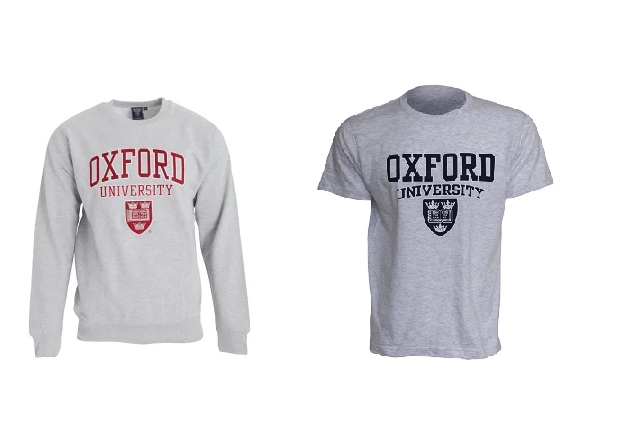
Under the circumstances, there is no doubt that relevant consumers at the sight of the term “OXFORD” would conceive the University when used on goods and services in question. If so, the opposed mark shall be deemed similar to and likely to cause confusion with the cited mark since the term “OXFORD” per se plays a dominant role in identifying a source.

JPO Decision

The JPO Opposition Board admitted a high degree of the reputation of “University of Oxford” among the general public. In the meantime, the Board opined that it is questionable if the term “OXFORD” has acquired a substantial degree of popularity as a source indicator of the University from the produced evidence and totality of the circumstances in view of the fact that the term is also a geographical indication, namely, the capital of the county of Oxfordshire.

Based on the foregoing, the Board found relevant consumers would recognize the term “OXFORD” of the Opposed mark just to indicate ‘the capital of the county of Oxfordshire’. Meanwhile, the cited marks give rise to a sound and concept pertinent to the University. The figurative element of both marks is sufficiently distinguishable from appearance. There was a low level of visual, aural, and conceptual similarity between the marks to the extent that relevant consumers would be unlikely to confuse the Opposed mark with the University of Oxford. Therefore, the allegations are groundless and the Opposed mark shall remain valid as the status quo.


I am not convinced with the JPO’s finding of “the term OXFORD of the Opposed mark just to indicate ‘the capital of the county of Oxfordshire”. I firmly believe the term immediately reminds us of the University rather than the name of the capital of Oxfordshire.


Coffee Trademark Battle

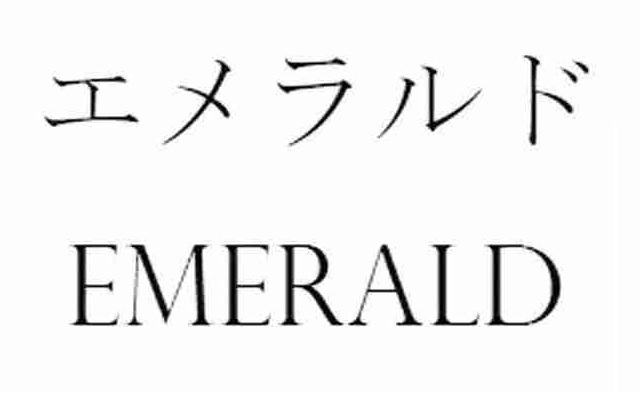
Colombian Coffee Federation (FNC) failed a fight for invalidation of Japanese TM Registration no. 5901554 for word mark “EMERALD” in class 30 owned by The Coca-Cola Company, one of the world’s largest beverage company in the US.
[Invalidation case no. 2018-890017, Gazette issued date: August 28, 2020]

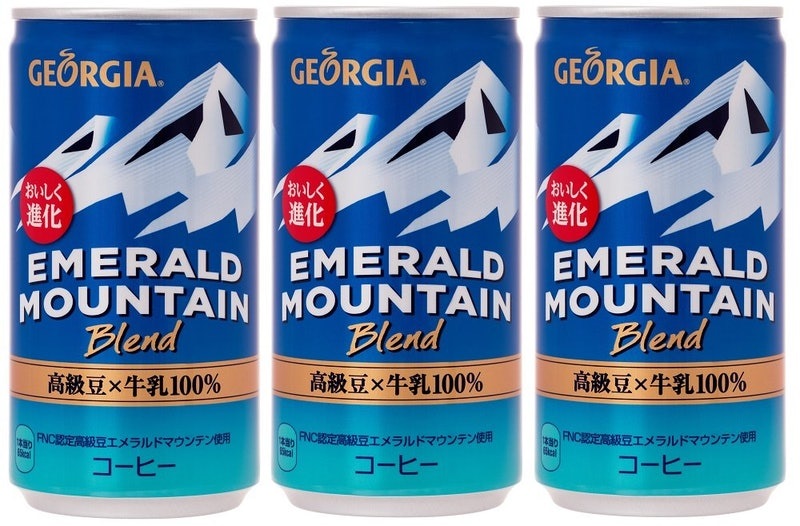
EMERALD MOUNTAIN

Emerald Mountain is a top brand name of Colombian coffee approved by FNC (NGO organization, the union of coffee producer established in 1927 joining over 560,000 members for enhancing quality, production, and export) guaranteed hand-picked and hand-screened beans of which quantity is only 3 –1% of the total production of Colombia coffee beans.

The FNC owns several trademark registrations for “EMERALD MOUNTAIN” in Japan.

In the early 90s, Emerald Mountain began to be sold by Coca-Cola as canned liquid coffee under the Georgia brand in thousands of vending machines across Japan. Since 1997 it has become the most sold coffee in Japanese history as well as the #1 beverage sold by Coca-Cola in Japan. Every can of Georgia Emerald Mountain coffee has an explanation of the Colombian origin of the coffee as well as the high-quality certification of the FNCS. With annual sales of more than 630 million cans, Georgia Emerald Mountain Blend is undoubtedly Emerald Mountain’s leading product within the Japanese market.

EMERALD

Irrespective of a long-standing relationship, The Coca Cola Company, in 2011, sought registration for a wordmark “EMERALD” over artificial coffee, coffee-based beverages, prepared coffee and cocoa, tea, ice in class 30 which confronted with a severe objection from FNC.

FNC was successful in removing the registration by means of a non-use cancellation in 2017. However, The Coca Cola Company deliberately filed a new trademark application for the same mark in 2015 immediately when the registered mark was vulnerable for cancellation on grounds of non-use. The JPO allowed registration of the new application in December 2016.

To contend, FNC filed an invalidation action against the EMERALD mark in March 2018.

Invalidation petition by FNC

FNC argued the EMERALD mark shall be invalidated in contravention of Article 4(1)(vii), (x), (xi), (xv), and (xix) of the Trademark Law by stating that “EMERALD MOUNTAIN” has acquired substantial reputation and popularity as an indicator of high-quality Columbian coffee as a result of continuous sales promotion in Japan since 1970. In the coffee industry, coffee beans grown in highland are often named with the term “MOUNTAIN”, e.g. “BLUE MOUNTAIN”, “CRYSTAL MOUNTAIN”, “CARRIBERAN MOUNTAIN”, “CORAL MOUNTAIN”. In this respect, “EMERALD” shall play a prominent role in “EMERALD MOUNTAIN”. If so, both marks are deemed similar and it is likely that relevant consumers confuse or associate artificial coffee, coffee-based beverages, prepared coffee and cocoa, tea, ice bearing the EMERALD mark with “EMERALD MOUNTAIN”.

Besides, The Coca Cola Company has been using “EMERALD MOUNTAIN” on canned-liquid coffee under license from FNC. Presumably, the disputed mark was filed in anticipation of non-use cancellation claimed by FNC. In the cancellation proceeding, The Coca-Cola Company did neither answer nor respond. These facts clearly show the disputed mark was filed just to avoid cancellation even if The Coca-Cola Company had no intention to use it. It is really annoyance and free-riding on the famous marks with a fraudulent intention.

JPO decision

From the totality of evidence and circumstances, the JPO admitted a high degree of reputation and popularity of EMERALD MOUNTAIN as a source indicator of FNC’s high-quality Columbian coffee beans. In the meantime, the JPO questioned if relevant consumers connect the term “EMERALD” with FNC when used on coffee since the evidence did not disclose EMERALD MOUNTAIN is actually abbreviated to “EMERALD” in commerce. Likewise, it is suspicious whether “BLUE MOUNTAIN”, “CRYSTAL MOUNTAIN”, “CARRIBERAN MOUNTAIN”, “CORAL MOUNTAIN” are recognized with its short name, namely, “BLUE”, “CRYSTAL”, “CARRIBEAN”, “CORAL”.

In assessing the similarity of the mark, the JPO found “EMERALD MOUNTAIN” and “EMERALD” are dissimilar from visual, phonetic, and conceptual points of view. Given both marks are distinctively dissimilar, it is unlikely to find a likelihood of confusion in connection with the goods in dispute.

Even if The Coca-Cola Company filed the disputed mark with an intention to avoid the non-use cancellation, it would be anything but punishable in view of dissimilarity between marks. Besides, from the produced evidence, the JPO was unable to find fraudulent intention by Coca Cola to be blamed for invalidation.

Based on the foregoing, the JPO decided to dismiss the invalidation action.

Is “You Tuber” a source indicator of Google?

The Japan Patent Office (JPO) recently dismissed Google LLC’s invalidation petition against TM Reg. no. 5999063 for word mark “NYAN TUBER” by finding “YouTuber” would be famous, but not as a source indicator of Google.
[Invalidation case no. 2018-890081, Gazette issued date: June 26, 2020]

Disputed mark

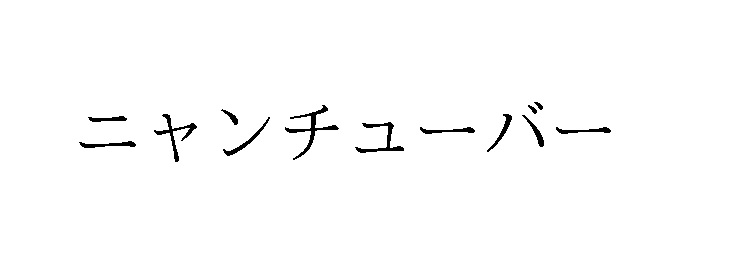
PECO Co., Ltd., a Japanese business entity working on the health benefits of the human-animal bond, filed a trademark application for word mark “NYAN TUBER” written in Japanese Katakana character (see below) on pet-related services in class 35 and 42 to the JPO on April 3, 2017.

“Nyan” is the sound cats make in Japan. Cats don’t make the same sounds in other countries. In the United States, it sounds like meow. In Germany, it’s miau; and, in France, it’s miaou.

So, “NYAN TUBER” easily reminds Japanese consumers of a person who frequently uploads videos of cats to ‘YouTube’.

The disputed mark was registered on November 24, 2017 (TM Registration no. 5999063).

Invalidation petition by Google

On October 24, 2018, Google LLC filed a petition for invalidation and alleged among others the disputed mark shall be invalidated in contravention of Article 4(1)(vii),(x),(xi),(xv),(xix) of the Trademark Law due to similarity to, or a likelihood of confusion with “YouTuber”

Google argued “YouTuber” has become famous as an indication closely associated with Google’s well-known online video sharing services ‘YouTube’. Because of it, relevant consumers and traders at sights of the disputed mark would connect or associate it with ‘YouTuber’.

YOU TUBER

According to recent polls, becoming a YouTuber or vlogger becomes the most popular career goal for Japanese children and teenagers.

TOP 5 JOBS BOYS WANT (2019)
1. Youtuber/Vlogger, 2. Soccer player, 3. Baseball player, 4. Driver, 5. Policeman

PECO counterargued that it becomes usual for YouTubers to use him/her YouTube name “___Tuber”. If so, relevant consumers at the sight of “NYAN TUBER” videos would just consider the disputed mark represents the video or a person who uploaded it and never conceive the mark as a source indicator of Google or YouTube.

Invalidation Board decision

The JPO Invalidation Board did not question a high degree of popularity and reputation of “YouTube” as a source indicator of Google’s online video sharing services.

In the meantime, the Board found “YouTuber” would be recognized as a generic term to represent ‘a person who creates and uploads videos on the YouTube online video sharing service’ by referring to some dictionaries. In fact, Google does not register the term over any goods and services at all, and thus the Board denied the famousness of “YouTuber” as a source indicator of Google’s service.

With regard to the assessment of the similarity between “YouTuber” and “NYAN TUBER”, the Board found that both marks are dissimilar as a whole even though they have partially the same in the suffix. The difference in the prefix, “NYAN” and “YOU” substantially gives rise to a distinctive impression from appearance, sound, and concept as a whole in the minds of relevant consumers. Accordingly, both marks would be anything but confusingly similar.

Based on the foregoing, the Board dismissed Google’s allegations entirely and declared validation of the disputed mark.

Never Register “BOND GIRL” Never Again

In a recent administrative decision, the Japan Patent Office (JPO) sided with Danjaq, LLC, and declared invalidation of a wordmark “BOND GIRL” written in a Japanese katakana character in contravention of Article 4(1)(vii) of the Trademark Law.

[Invalidation case no. 2019-890044, Gazette issued date: April 24, 2020]

Disputed mark

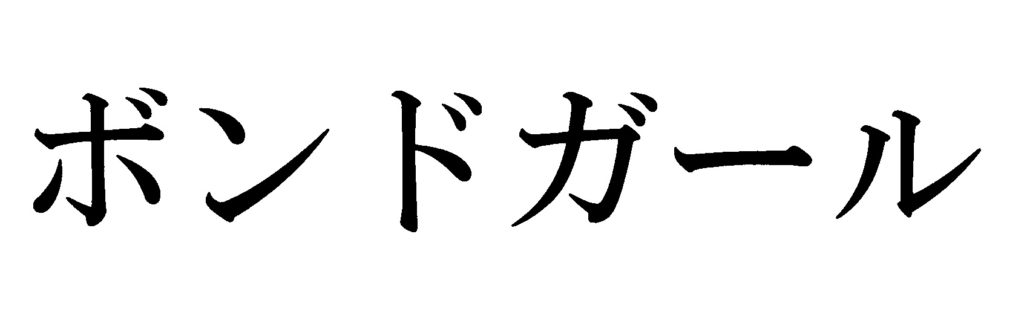
“BOND GIRL” written in a Japanese katakana character (see below) was filed to JPO on the service of ‘arranging, conducting, and organization of seminars’ in class 41 by a Japanese individual on November 4, 2015, and registered on December 2, 2016.

Opposition & Invalidation petition by Danjaq, LLC

On March 9, 2017, just before the lapse of a two-months opposition period, Danjaq, LLC, the holding company responsible for the copyright and trademarks to the characters, elements, and other material related to James Bond on screen, filed an opposition to the disputed mark.

However, since Danjaq failed to supplement arguments for opposition within a statutory period, the JPO decided to dismiss the opposition entirely.

On August 2, 2019, Danjaq filed a petition for invalidation and argued disputed mark shall be invalid in contravention of Article 4(1)(vii), (xv) and (xix) of the Trademark Law by citing world-famous cinematic heroine “BOND GIRL” in the James Bond film series “007”.

Article 4(1)(vii)

Article 4(1)(vii) of the Trademark Law prohibits any mark likely to cause damage to public order or morality from registration.

In the petition, Danjaq argued “BOND GIRL” has appeared as a love interest of James Bond in the movies for over 55 years since 1962. Due to frequent appearances in magazines, other public media, and various events pertinent to the Japes Bond movie, the name and sign of “BOND GIRL” has been well-known for cinematic heroine in association with the film series “007”.

If so, it is presumed that the applicant intentionally applied disputed mark with an aim to monopolize the term. Since the applicant does not have any legal interest with Danjaq, a legitimate owner of trademarks and copyrights pertaining to the 007 movies, it must impermissibly cause not only damage to public order but the disorder in domestic and foreign trade.

Invalidation Board decision

The Invalidation Board initially noted that the James Bond film series “007” is world-widely known motion pictures. From the produced evidence, the cinematic heroine “Bond girl” has regularly attracted audiences through screens, magazines, and promotional events of the movie. The sign “BONG GIRL” had further extensive marketing and licensing to companies in vastly different product categories, not only with products associated with the motion pictures, e.g. nails, cosmetics, dolls, cards, calendars, and others. Relevant consumers at the sight of the disputed mark would conceive nothing but the cinematic heroine in the film. The Board, therefore, considered that “BOND GIRL” has become worldly famous as a cinematic heroine that appeared in the “007” film series.

The Board continued in analyzing efforts made by Danjaq to enhance the commercial value of “BOND GIRL” by means of trademark registrations in various jurisdictions and licensing to different product categories.

The Board finally concluded that taking into account the foregoing, since it appears that the applicant makes less contribution to establishing reputation and goodwill on “BOND GIRL”, it shall be impermissible for the applicant to monopolize the term on service in question.

To prevent damage to public order, the disputed mark shall be retroactively invalidated in contravention of Article 4(1)(vii).

In the meantime, surprisingly, the Board denied Danjaq’s allegation regarding a likelihood of confusion because “BOND GIRL” is just famous for cinematic heroine, not as a source indicator of Danjaq.

Adidas defeated in 3-stripe trademark dispute

The Japan Patent Office (JPO) held in an opposition filed by Adidas AG that trademark registration no. 6085087 for horizontal three-stripes (Opposed mark) shall remain as valid as ever and entirely dismissed Adidas’ claims based on its famous three stripes.
[Opposition case no. 2018-900382, Gazette issued on February 28, 2020]

ULTRA MUSIC FESTIVAL

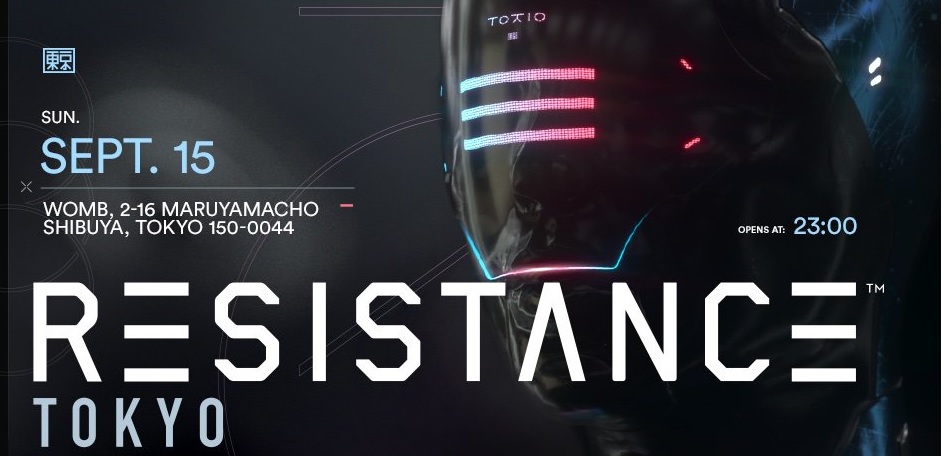
Opposed mark (see below) was applied for registration on October 10, 2017 over clothing, headwear, footwear in class 25, advertisement and promotion of music festival, concert in class 35, arrangement and conducting of musical performances, music festival, concerts in class 41 by Ultra Enterprises Inc., a U.S. business entity organizing outdoor electronic music event “ULTRA MUSIC FESTIVAL (UML)”, and published for registration on October 23, 2018.

Apparently, opposed mark is used as a symbolic logo for Ultra Music Festival’s RESISTANCE set.

Opposition by Adidas

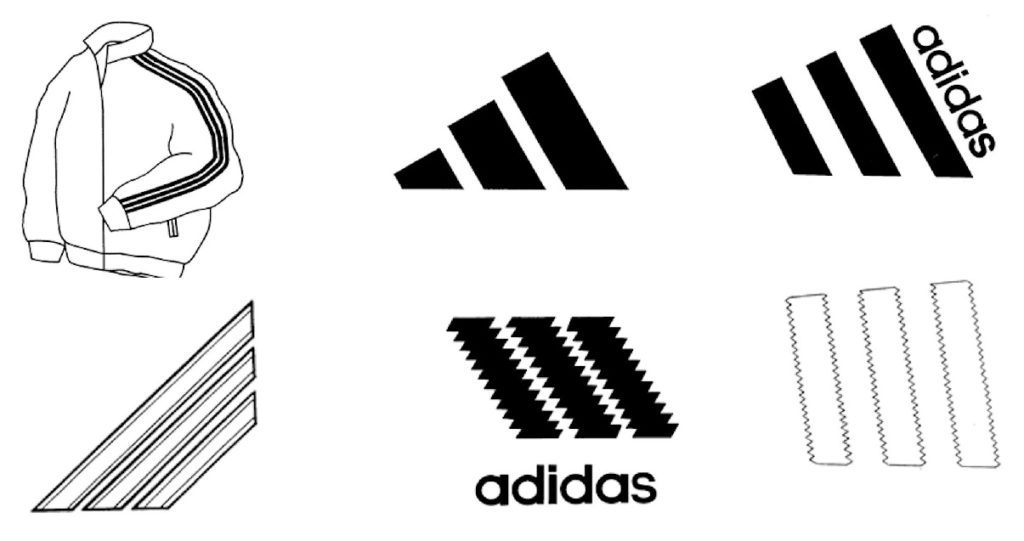
On December 21, 2018, Adidas AG filed an opposition and argued opposed mark is revocable under Article 4(1)(vii) and 4(1)(xv) of the Japan Trademark Law in relation to its famous three stripes (see below).

Article 4(1)(vii)

Article 4(1)(vii) prohibits any mark likely to offend public order and morals from registering.

Based on a remarkable degree of reputation and popularity to Adidas three stripes, opponent asserted, applicant must have been aware of Adidas three stripes and filed opposed mark with a malicious intention to take advantage of the reputation and credit of opponent’s famous trademark and impair the goodwill embodied on its iconic three stripes.

Article 4(1)(xv)

Article 4(1)(xv) prohibits to register a trademark which is likely to cause confusion with a business of other entity.

Adidas argued that, from appearance and concept, opposed mark evidently gives rise to a same impression with Adidas three stripes since each stripe of the mark is depicted in the same direction, width and shape, besides a space between stripe also has the same width with the stripe.

Average consumers with an ordinary care of goods/services in question who have been quite familiar with Adidas are likely to associate opposed mark with Adidas’ three-stripes. Inter alia, when opposed mark is used on apparels with a smaller configuration printed in one spot, so-called ‘one-point mark’, it must be difficult for relevant consumers to distinguish opposed mark with Adidas three-stripes because of its resemblance. Besides, goods/services in question are closely related to opponent business, namely sportswear, sports shoes, sports events. If so, it is highly anticipated that relevant consumers would confuse a source of opposed mark with opponent.

JPO Decision

The Opposition Board admitted a high degree of reputation and popularity to Adidas three stripes in relation to sport shoes, sportswear, sports gear at the time of initial filing and registration of opposed mark.

In the meantime, the Board found a low degree of originality of three stripes and similarity between the marks, from visual, phonetic, and conceptual points of view. The Board stated opposed mark can be perceived as ‘three-stripes’ deployed inside a vertically long rectangle. On the other hand, opponent’s marks consist of ‘three-stripes’ deployed inside a triangle or parallelogram. Even if Adidas three stripes have acquired remarkable reputation, because of a low degree of similarity and the originality, relevant consumers at the sight of opposed mark would not hesitate to consider a source of opposed mark unrelated to Adidas.
Thus, the Board held it is unlikely that relevant consumers confuse or associate opposed mark with Adidas.

The Board also negated opponent’s allegation of ‘one-point mark’ theory by stating that even if average consumers have tendency to pay less attention to details of a mark when used on apparels with smaller configuration, due to dissimilar impression caused by a different outline (vertically long rectangle, triangle, and parallelogram) of respective mark, opposed mark shall be undoubtedly perceived as a distinctive three-stripes unrelated to Adidas by relevant consumers with an ordinary care.

Besides, from the produced evidences, the Board found it was not foreseen a circumstance to offend public order and morals from registering opposed mark and give harmful effect to the international faith.

Based on the foregoing, the Board concluded opposed mark shall be irrevocable under Article 4(1)(vii) as well as (xv) and granted registration a status quo.

KUMAMON triumphs over bear mascot trademark battle

The Japan Patent Office (JPO) sided with Kumamon and declared invalidation of trademark registration no. 5997141 for a bear-like design mark due to a likelihood of confusion with Kumamon.
[Invalidation case no. 2019-890004, Gazette issue date: February 28, 2020]

KUMAMON

Have you ever heard of “Kumamon”?

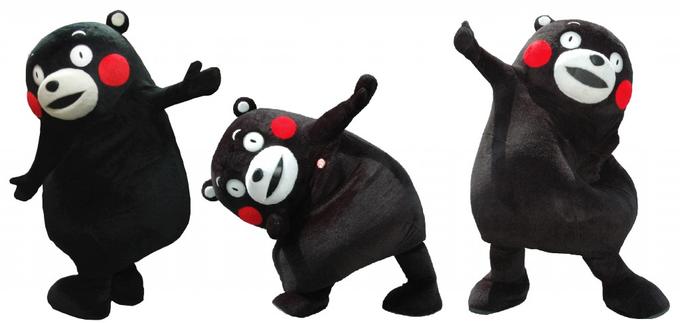
Nowadays, we are accustomed to see there are many organizations that create and use mascots to further their brands. Kumamon is a cuddly character with its pitch-black fur, red cheeks and white eyes designed as the official mascot (see below) of the Kumamoto Prefecture, a small prefecture in western Japan.

Kumamon made its debut in 2011 as part of a tourism promotion campaign for the Kyushu high-speed railway line. At the time a wave of local municipalities and companies sought to use ‘yuru-kyara’, or ‘relaxing characters’, to promote local products and attractions. Kumamon was hired as a part-time civil servant at Kumamoto before being elevated to sales manager. Such topics generated headlines and helped push Kumamon’s popularity beyond Kumamoto.

As an iconic symbol of ‘relaxing characters’, Kumamon has become a social and cultural phenomenon nationwide. Sales of goods using the Kumamon mascot topped 150 billion yen ($1.4 billion) in 2018.

To protect and promote the mascot, the Kumamoto Prefecture has registered its figurative image reproduced in 2D for various classed of goods and services in Japan as well as neighboring countries.

Disputed Mark

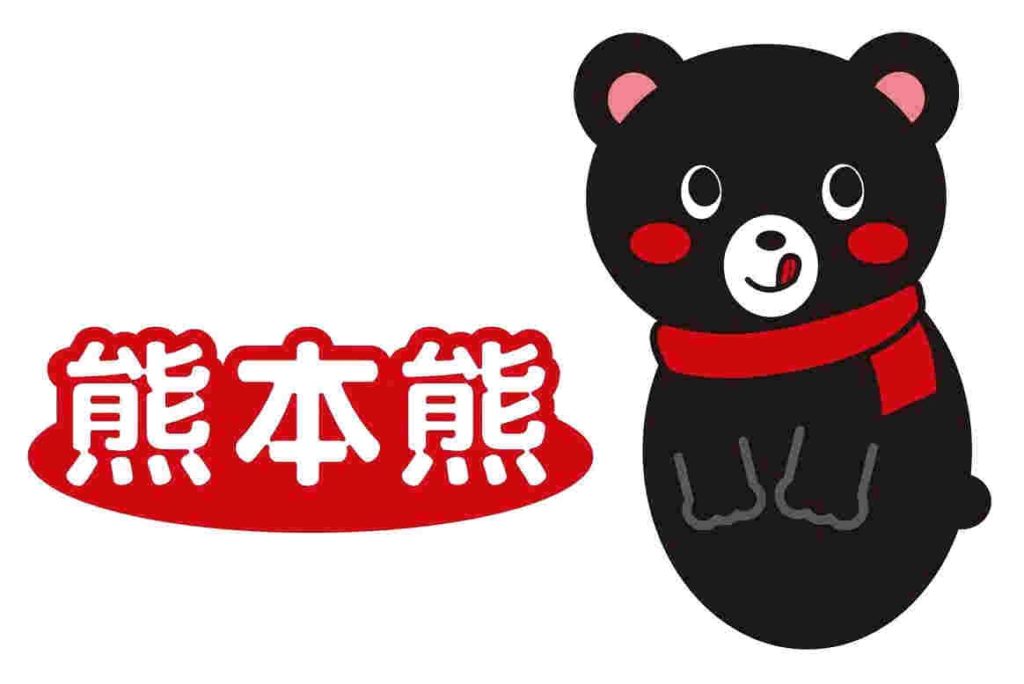
On March 21, 2017, Unique Design Company Limited (Belize) , sought to register the mark consisting of a bear-like design and three Chinese characters “熊本熊” which mean Kumamoto’s bear (see below) to be used on goods in class 11. The JPO granted protection of opposed mark on October 27, 2017.

Invalidation Trial

To challenge the validity of disputed mark, on January 25, 2019, the Kumamoto Prefecture filed an invalidation action to the JPO based on Article 4(1)(vi), (vii), (xi), (xv) and (xix) of the Japan Trademark Law. Kumamoto Prefecture argued that the figurative element of disputed mark closely resembles to the Kumamon character well-known for the official mascot of the Kumamoto Prefecture from appearance. Besides, the literal element of disputed mark gives rise to a similar meaning related to the Kumamoto Prefecture and Kumamon. If so, disputed mark as a whole shall be invalid due to a likelihood of confusion with Kumamon.

JPO Decision

The Invalidation Board of JPO found that:

  1. Unquestionably, Kumamon has acquired a remarkable degree of reputation and popularity nationwide as the official mascot of the Kumamoto Prefecture well before the filing date of disputed mark through continuous activities, promotions, and actual use on various goods since 2011. In addition, it becomes public among relevant consumers that the literal element of disputed mark “熊本熊” gets to be known as a Chinese name of Kumamon in China and neighboring countries.
  2. Since Kumamon has distinctive features visually different from wild bear, the mascot shall be deemed unique, creative, and impressive in itself.
  3. From appearance the bear-like design of disputed mark is confusingly similar to Kumamon. It gives rise to a similar meaning to Kumamon, the mascot originated from bear in the Kumamoto Prefecture. Likewise, the literal element of disputed mark gives rise to the same meaning. If so, both marks are considered highly similar.
  4. Due to free-use policy for brand promotion to domestic merchants (Kumamoto lets domestic companies use the character for free, but charges a license fee of a few percent on product sales by foreign companies), Kumamon mascot has been commercially used on wide range of goods over 10,000 items. 7-year cumulative sales exceed 510 billion JP-yen. If so, disputed goods in class 11, e.g. oil stoves, heaters, pocket warmers, electric foot warmers, shall be closely associated with the Kumamon goods in channels and consumers.

Based on the above findings, the Board concluded that relevant consumers and traders are likely to confuse disputed mark with Kumamon or misconceive a source from any entity systematically or economically connected with the Kumamoto Prefecture. Thus, disputed mark shall be invalidated in violation of Article 4(1)(xv) of the Trademark Law.

Trademark Battle – PUMA vs KUMA

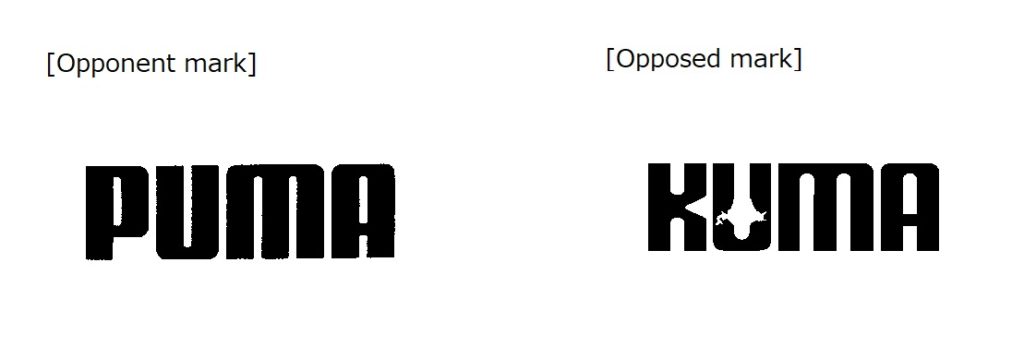
The Japan Patent Office (JPO) decided to invalidate trademark registration no. 5661816 for a stylized word “KUMA”, which means ‘bear’ in Japanese, due to similarity to, and a likelihood of confusion with a world-renowned sports brand, PUMA. [Invalidation case no. 2019-890021, Gazette issue date: January 31,2020]

KUMA mark

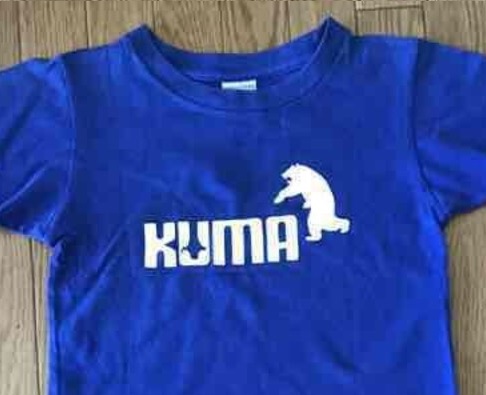
Disputed mark (see below),consisting of a stylized word “KUMA” with a partial island shape of Hokkaido, Japan’s most northerly main island, depicted on the inside of letter “U”, was filed on October 24, 2013 by a Japanese business entity having its principal place of business in Hokkaido over various goods in class 25 including sportswear and shoes.

It was found Applicant has used the KUMA mark on T-shirts and other goods with a bear silhouette facing left in the upper right of the mark.

The JPO admitted registration on April 4, 2014 and published for opposition on May 13, 2014.

PUMA’s Opposition / Invalidation Trial

On June 13, 2014, PUMA SE filed an opposition against the KUMA mark based on Article 4(1)(vii) and 4(1)(xv) of the Trademark Law. PUMA argued relevant consumers or traders are likely to confuse or misconceive a source of disputed mark with PUMA when used on designated goods in class 25 because of a high reputation and close resemblance between PUMA word logo and the KUMA mark.

The Opposition Board admitted a high degree of popularity and reputation of PUMA word logo, however, Board dismissed the opposition entirely due to unlikelihood of confusion because of a low degree of similarity between the marks (Opposition case no. 2014-900177).

Subsequently, PUMA SE entrusted the case to us. On April 3, 2019, just one day before the lapse of five-year Statute of limitations, MARKS IP LAW FIRM on behalf of PUMA SE requested for an invalidation trial and challenged invalidating the KUMA mark based on Article 4(1)(vii), (xi), (xv) and (xix) of the Japanese Trademark Law.

Article 4(1)(vii) of the Trademark Law prohibits any mark likely to cause damage to public order or morality from registration.

Article 4(1)(xi) is a provision to refrain from registering a junior mark which is deemed identical with, or similar to, any senior registered mark on identical or similar goods/service.

Article 4(1)(xv) prohibits to register a trademark which is likely to cause confusion with a business of other entity.

Article 4(1)(xix) prohibits to register a trademark which is identical with, or similar to, other entity’s famous mark, if such trademark is aimed for unfair purposes, e.g. gaining unfair profits, or causing damage to the entity.

Invalidation Decision

The Invalidation Board reversed the opposition decision and decided in favor of PUMA on all grounds by finding that:

  1. PUMA word logo has been continuously well-known in Japan for a source indicator of PUMA in connection with sports shoes, sportswear and others among relevant consumers and traders.
  2. A mere difference on initial letter of both marks and the Hokkaido island shape shall be insufficient to overturn an overall impression of the mark from visual and phonetic points of view. Conceptually, the KUMA mark, having a meaning of bears in Japanese, would give rise to a similar meaning with PUMA word logo, four-footed mammal. If so, by taking into consideration a high degree of reputation and popularity of PUMA word logo, both marks shall be deemed similar.
  3. Configuration of PUMA word logo looks unique, creative, and impressive in itself.
  4. Besides, given close association between designated goods in class 25 and PUMA’s business, relevant consumers of the goods in question with an ordinary care are likely to confuse its source with PUMA.
  5. It has good reasons to believe that the applicant of disputed mark did fraudulently apply the KUMA mark for registration with an aim to free-ride and dilute PUMA’s goodwill based on totality of the circumstances.
  6. If so, applicant must have filed disputed mark with a malicious intention to dilute or do harm to PUMA’s goodwill, which was impermissible to protect public order and morals

Based on the foregoing, the JPO decided to invalidate the KUMA mark based on Article 4(1)(vii), (xi), (xv) as well as 4(1)(xix) of the Japan Trademark Law.

Rothschild Lost Trademark Opposition in Japan

In a recent trademark opposition, the Opposition Board of the Japan Patent Office (JPO) dismissed an opposition filed by Baron Philippe de Rothschild S.A. (Rothschild) against trademark registration no. 6090508 for word mark “MOUTON” in relation to restaurant service due to unlikelihood of confusion with the fabled French winery “Château Mouton Rothschild”.
[Opposition case no. 2019-900012, Gazette issued date: September 7, 2019]

Opposed mark

Opposed mark, consisting of a word mark “MOUTON” in standard character, was filed in the name of Kabushiki Kaisha Waltz, a Japanese company deploying in business field of bars and restaurants.

The mark was filed to JPO on November 17, 2017. Going through substantive examination, JPO admitted registration in relation to “restaurant service” in class 43 and “wholesale and retail services for non-alcoholic beverages and foods” in class 35, and published for opposition on November 13, 2018.

Opposition by Rothschild

On January 15, 2019, Baron Philippe de Rothschild S.A. filed an opposition and argued opposed mark shall be revocable under Article 4(1)(vii) and 4(1)(xv) of the Japan Trademark Law by citing its wine brand “Château Mouton Rothschild”.

Article 4(1)(vii)

Article 4(1)(vii) prohibits any mark likely to offend public order and morals from registering.
Trademark Examination Guidelines set forth criteria for the article and examples.
Among others, “Trademarks whose registration is contrary to the order predetermined under the Trademark Act and is utterly unacceptable for lack of social reasonableness in the background to the filing of an application for trademark registration.”

Based on a remarkable degree of reputation and popularity to “Château Mouton Rothschild”, Rothschild asserted, applicant must have been aware of the wine brand and filed opposed mark with a malicious intention to take advantage of the reputation and credit of opponent’s famous trademark and impair the goodwill embodied on its brand.

Article 4(1)(xv)

Article 4(1)(xv) prohibits to register a trademark which is likely to cause confusion with a business of other entity.

Rothschild argued that opponent has used the mark “Château Mouton Rothschild”on wines from Pauillac in the Médoc region which became Premier Grand Cru in 1973, and thus part of a limited list since there are only 5 Premiers Grands Crus from the region. It is doubtless that “Château Mouton Rothschild” and its abbreviation “MOUTON” have acquired a remarkable degree of reputation and popularity as a source indicator of opponent wines. If so, relevant consumers and traders of restaurant service are likely to misconceive or associate opposed mark with famous wine brand of opponent.

Opposition decision

The Opposition Board admitted a certain degree of reputation and popularity to “Château Mouton Rothschild” as a source indicator of opponent among traders and wine lovers, however, questioned whether the wine brand has become famous among general consumers. Besides, from the produced evidences, the Board was not convinced that “MOUTON” has been known as an abbreviation of “Château Mouton Rothschild”.
In the assessment of the similarity between two marks, the Board found a low degree of similarity between opposed mark and “Château Mouton Rothschild” from visual, phonetic, and conceptual points of view. If so, even if wine and restaurant service are associated, it is unlikely that average consumers confuse or associate opposed mark with Rothschild.

Also, the Board found it was not foreseen a circumstance to offend public order and morals from registering opposed mark and give harmful effect to the international faith provided that “MOUTON” is a dictionary word meaning ‘processed sheepskin that has been sheared and dyed to resemble beaver or seal’.

Based on the foregoing, the Board concluded opposed mark shall not be revocable under Article 4(1)(vii) as well as (xv) and granted registration a status quo.

Failed Opposition by Apple against trademark registration “EYE PHONE”

The Japan Patent Office (JPO) dismissed a trademark opposition claimed by the U.S. tech giant, Apple Inc. against trademark registration no. 6099794 for word mark “EYE PHONE” in class 9 by finding less likelihood of confusion with Apple “iPhone”.
[Opposition case no. 2019-900030, Gazette issue date: September 27, 2019]

“EYE PHONE”

Opposed mark, a word mark “EYE PHONE” in standard character, was filed by a Japanese business entity, NOVELTY EYE-WEAR Inc., on February 26, 2018 by designating ‘spectacles [eyeglasses and goggles]’ in class 9.

The JPO admitted registration on November 22, 2018 and published for registration on December 18, 2018.

APPLE’s Opposition

To oppose against registration within a statutory period of two months counting from the publication date, Apple Inc. filed an opposition on January 28, 2019.

In the opposition brief, Apple Inc. asserted the opposed mark shall be cancelled in violation of Article 4(1)(vii), (xv) and (xix) of the Japan Trademark Law given a remarkable reputation of opponent mark “iPhone” to indicate opponent’s smart phones currently holding a 44.1% market share in Japan and close resemblance between “iPhone” and “EYE PHONE”.

Apple Inc. argued opposed mark “EYE PHONE” has the same pronunciation with “iPhone” and gives a similar impression in appearance. If so, both marks shall be confusingly similar. Besides, the goods in question are closely related to smart phones since smartphone users get to wear specific glasses for smartphone to block blue light. Recently, smart glasses, wearable device that brings with suitable technology a computer screen/display in front of a person’s eye, have become a hot topic.

Article 4(1)(xv) provides that a mark shall not be registered where it is likely to cause confusion with other business entity’s well-known goods or services, to the benefit of brand owner and consumers.

Board Decision

The Opposition Board admitted a remarkable degree of reputation and popularity of opponent trademark “iPhone” in connection with smart phones based on the produced evidences boasting the top market share consecutively for the past seven years in Japan.

Meanwhile, the Board found a low degree of originality of “iPhone” given a combination of alphabetical letter “i” and descriptive term “Phone” in relation to smartphones.

In the assessment of mark, the Board held “EYE PHONE” and “iPhone” are dissimilar even if both marks have the same pronunciation since they are sufficiently distinguishable from visual and conceptual point of view. Also, the Board negated close relation between glasses and smartphones in view of its nature, purpose, usage, distribution channel and consumers.

If so, it is unlikely that the consumers confuse or misconceive a source of opposed mark with Apple Inc. or any entity systematically or economically connected with opponent.

Based on the foregoing, the Board decided opposed mark shall not be cancelled on the grounds of Article 4(1)(vii), (xv) and (xix).