Under Armour Lost Trademark Battle Against AGEAS in Japan

The Opposition Board of the Japan Patent Office (JPO) dismissed an opposition filed by Under Armour Incorporated, an American sporting goods manufacturer which supplies athletic and casual apparel, as well as footwear, against trademark registration no. 5924494 for the “H” device mark designating apparels, footwear, headgear, gloves, cycling wears in class 25.
[Opposition case no. 2017-900163, Gazette issue date:  February 23, 2018]

Under Armour logo

In an opposition, Under Armour claimed trademark registration no. 5924494 violates Article 4(1)(x), (xi), (xv) and (xix) of the Japan Trademark Law by citing a senior trademark registration no. 4701254 for the Under Armour logo (see below in left). Cited registration has been effectively registered since 2003 by designating clothing, footwear, sportswear, sports shoes in class 25.

Opposed mark

Opposed mark was applied for trademark registration on August 26, 2016 in the name of AGEAS INC. (USA) covering various goods in class 25 (see above in right).

Without any refusal notice from the JPO, opposed mark was granted for registration on January 16, 2017, and published in gazette for opposition on March 21, 2017.

Subsequently, Under Armour filed an opposition in May.


Opposition grounds

Article 4(1)(x) prohibits to register a trademark which is identical with, or similar to, other entity’s well-known mark over goods or services closely related with the entity’s business.
Article 4(1)(xi) is a provision to refrain from registering a junior mark which is deemed identical with, or similar to, any senior registered mark.
Article 4(1)(xv) prohibits to register a trademark which is likely to cause confusion with a business of other entity.
Article 4(1)(xix) prohibits to register a trademark which is identical with, or similar to, other entity’s famous mark, if such trademark is aimed for unfair purposes, e.g. gaining unfair profits, or causing damage to the entity.

To sum up, Under Armour wins if the Under Armour logo is considered confusingly similar to opposed mark. Meanwhile, even if the Under Amour logo obtains a high degree of popularity and reputation among relevant public in Japan, the opposition is overruled as long as both marks are dissimilar and unlikely to cause confusion.


Board decision

The Opposition Board admitted a high degree of popularity and reputation of the Under Armour logo as a source indicator of opponent among relevant consumers in the fields of sports.

In the assessment of mark appearance, the Board concluded:

“It is apparent that respective mark gives rise to a diverse visual impression in the mind of consumers because of different configuration. Opposed mark can be perceived as a device deriving from ‘H’. In the meantime, the cited mark as a device consisting of ‘U’ and upside-down ’U’. Besides, from phonetical and conceptual points of view, there exists no element to find similarity of the marks. Based on the foregoing, both marks shall be less likely to cause confusion due to a remarkable degree of visual difference.”


As a conclusion, the Board decided opposed mark is not subject to Article 4(1)(x), (xi), (xv) and (xix) of the Trademark Law, and admitted to continue a status quo.


OMEGA unsuccessful in cancelling OMEGA mark

The Japan Patent Office dismissed a trademark opposition claimed by a Swiss luxury watchmaker, OMEGA SA against trademark registration no. 5916814 for the OMEGA mark in class 41 by finding less likelihood of confusion due to remote association between watches and services in class 41.
[Opposition case no. 2017-900136]

Opposed OMEGA mark

Opposed mark (see below) was filed by a Japanese business entity on April 28, 2016 by designating the services of “fortune-telling; educational and instruction services relating to arts, crafts, sports or general knowledge; providing electronic publications; Art exhibition services; Reference libraries of literature and documentary records; production of videotape film in the field of education, culture, entertainment or sports; photography etc.” in class 41.


As a result of substantive examination, the JPO admitted registration on January 27, 2017 and published for registration on February 28, 2017.

OMEGA’s Opposition

To oppose against registration, OMEGA SA filed an opposition on April 28, 2017.

In the opposition brief, OMEGA SA asserted the opposed mark shall be cancelled in violation of Article 4(1)(xv) of the Japan Trademark Law by citing the owned luxury watch brand of OMEGA (see below).

Article 4(1)(xv) provides that a mark shall not be registered where it is likely to cause confusion with other business entity’s well-known goods or services, to the benefit of brand owner and users’ benefits. Theoretically, Article 4(1)(xv) is not applicable to the case where a mark in question is objectionable under Article 4(1)(xi), which prohibit a junior mark from registering if it is deemed identical with or similar to any senior registration. Article 4(1)(xv) plays a key role where a junior mark designates remotely associated or dissimilar goods or services with that of a well-known brand business.

Board Decision

The Opposition Board admitted similarity of both marks and a remarkable degree of reputation and population of opponent OMEGA mark in relation to watches, however, questioned whether such reputation has prevailed even among relevant consumers of designated services in class 41 as long as opponent failed to produce sufficient evidences regarding the issue.

Based on remote association between watched and services designated under the opposed mark, the Board decided that, by addressing less creativity of the OMEGA mark originating from a familiar Greek alphabet even to Japanese with an ordinary care, relevant consumers of designated services in class 41 are unlikely to confuse or misconceive a source of the opposed mark with OMEGA SA or any entity systematically or economically connected with the opponent.

Adidas triumphs over 3-stripe trademark battle

After six years of prolonged dispute, Adidas AG could achieve a victory over trademark battle involving famous 3-stripe design. In a recent trademark invalidation appeal, case no. 2016-890047, the Trial Board of Japan Patent Office (JPO) decided in favor of Adidas AG to retroactively null trademark registration no. 5430912 for three lines device mark (see below) due to a likelihood of confusion with Adidas’ famous 3-stripe design.


Disputed mark

Disputed mark was filed on March 2, 2011 by a Japanese business entity, designating shoes in class 25 and registered on August 5, 2011 (Registration no. 5430912).

To oppose the registration, on October 18, 2011, Adidas AG filed an opposition against disputed mark based on Article 43bis of the Trademark. But the Opposition Board of JPO overruled the opposition and decided to admit registration of disputed mark on June 27, 2012. Four years later, Adidas AG filed an invalidation appeal with an attempt to retroactively null disputed mark based on Article 4(1)(xv), 46(1)(i) of the Trademark Law.

The Japan Trademark Law provides where a trademark has been registered for five years or more, an invalidation appeal based on Article 4(1)(xv) shall be dismissed unless the trademark was aimed for registration with a fraudulent purpose.

It is imagined that the provision urged Adidas to take an invalidation action eventually since the appeal date is just one week before a lapse of five years from registration.


Invalidation trial

Adidas AG repeatedly argued a likelihood of confusion between Adidas’ famous 3-stripe design and disputed mark because of a high degree of popularity and reputation of 3-stripe design as a source indicator of Adidas sportswear and sports shoes, visual resemblance between the marks.

Board decision

The Board found that:

  1. Adidas’ 3-stripe design has acquired a substantial degree of reputation well before the filing date of disputed mark as a result of continuous marketing activities in Japan since 1971.
  2. Occasionally, Adidas promotes shoes depicting various types of 3-stripe design with a slight modification to length, width, angle, outline or color of the stripe.
  3. Disputed mark gives rise to the same visual impression in the mind of consumers with 3-stripe design by taking account of similar graphical representation consisting of three lines in parallel leaning to the left. Difference in detail is negligible since it can be perceived as a variation of Adidas shoes given actual business circumstances.

Based on the above findings, the Board concluded that relevant consumers and traders are likely to confuse shoes using disputed mark with Adidas’ famous 3-stripe design or misconceive a source from any entity systematically or economically connected with Adidas AG. Thus, disputed mark shall be invalidated in violation of Article 4(1)(xv) of the Trademark Law.


Apple Inc. failed in a trademark opposition to block “Apple Assist Center”

The Japan Patent Office dismissed a trademark opposition claimed by the U.S. tech giant, Apple Inc. against trademark registration no. 59923763 for word mark “Apple Assist Center” in class 35, 36, and 43 by finding less likelihood of confusion.
[Opposition case no. 2017-900155]

Apple Assist Center

Opposed mark “Apple Assist Center” was filed by a Japanese business entity on July 22, 2016 by designating the services of “secretary services; telephone answering and message handling services; reception services for visitors” in class 35, “rental of business and commercial premises; management of buildings; providing information in the field of buildings for business and commercial use” in class 36, “rental of conference room; rental of exhibition room” in class 43.
As a result of substantive examination, the JPO admitted registration on February 17, 2017 and published for registration on March 21, 2017.

Apple’s Oppositioon

To oppose against registration, Apple Inc. filed an opposition on May 17, 2017.

In the opposition brief, Apple Inc. asserted the opposed mark shall be cancelled in violation of Article 4(1)(xv) of the Japan Trademark Law.

Article 4(1)(xv) of the Trademark Law provides that a mark shall not be registered where it is likely to cause confusion with other business entity’s well-known goods or services, to the benefit of brand owner and users’ benefits. Theoretically, Article 4(1)(xv) is applicable to the case where a mark in question designates remotely associated or dissimilar goods or services with that of a well-known brand business.

Board Decision

The Opposition Board admitted a remarkable degree of reputation and population of opponent trademark “Apple” in the field of computers, smart phones, audio devices etc., however, gave a negative view in relation to goods and services remotely associated with Apple products by taking account of arguments and evidences Apple Inc. provided during the trial.

Besides, in the assessment of mark similarity, the Board found “Apple Assist Center” and “Apple” are dissimilar since they are sufficiently distinguishable in visual, phonetic, and conceptual point of view. The Board considered that the word of “Assist Center” does not immediately give rise to a descriptive meaning in relation to the designated service of class 35, 36, and 43. Given that “Assist Center” is deemed a coined word, it is not permissible to separate a element of “Apple” from the opposed mark.

Based on the foregoing, the Board decided that, unless Apple Inc. demonstrates possibility to embark on business related to the designated services and overlapping of consumers between Apple products and the opposed mark, relevant consumers are unlikely to confuse or misconceive a source of the opposed mark with Apple Inc. or any entity systematically or economically connected with the opponent.


It surprises me that the Board considered “Assist Center” does not lack distinctiveness in relation to business support services.


Adidas successful in invalidating three bones device mark

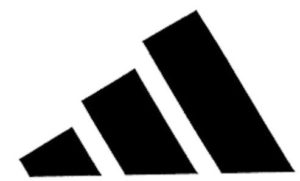
In a trademark invalidation appeal, case no. 2017-890017, the Trial Board of Japan Patent Office (JPO) decided in favor of Adidas AG to retroactively null trademark registration no. 5799460 for three bones device mark (see below) due to a likelihood of confusion with Adidas’ famous 3-stripe design.

Disputed mark

Disputed mark was filed on May 1, 2015 by a Japanese business entity, designating the goods of clothing for pets in class 18 and registered on October 16, 2015.

Subsequently after the registration, Adidas AG filed an opposition against disputed mark on November 26, 2015. Since it ended in vain, Adidas AG challenged inadequacy of the decision and registration by means of invalidation trial.

Invalidation trial

During the invalidation trial, Adidas AG argued a likelihood of confusion between Adidas’ famous 3-stripe design and disputed mark because of a high degree of popularity and reputation of 3-stripe design as a source indicator of Adidas sportswear and sports shoes, visual resemblance between the marks, and close relatedness of its consumers and commodity goods.

Board decision

The Board found that:

  1. Adidas’ 3-stripe design has acquired a substantial degree of reputation well before the filing date of disputed mark as a result of continuous marketing activities in Japan since 1971.
  2. Three bones device mark visually resembles with 3-stripe design by taking account of the same graphical representations allocating three trapezoids in different length in parallel to be seen it constituting a triangle in overall appearance.
  3. It becomes apparent that distributors of sports gears, apparels, bags, and shoes also deal with clothing for pets nowadays.

Based on the above findings, the Board concluded that consumers who are accustomed to the circumstance, are likely to confuse clothing for pets using disputed mark with Adidas’ famous 3-stripe design or misconceive a source from any entity systematically or economically connected with Adidas AG. Thus, disputed mark shall be invalidated in violation of Article 4(1)(xv) of the Trademark Law.


It should be noteworthy that a decision to dismiss opposition is not appealable under the Japan Trademark Law. If opposed party wants to argue the decision, there is no way other than invalidation trial.

Royal Copenhagen successful in removing FLORA DANICA on bags and apparels

The Opposition Board of Japan Patent Office (JPO) decided to cancel trademark registration no. 5681437 for word mark “FLORA DANICA” covering various types of bags in class 18, apparels and shoes in class 25 as a consequence of opposition trial raised by ROYAL COPENHAGEN AS, one of Europe’s oldest porcelain manufacturers in Denmark.
[Opposition case no. 2014-900278]

Trademark Opposition

Opposed mark was filed by a Danish corporation on January 23, 2014. Without receiving any office action from the JPO examiner, it was smoothly granted registration on May 30, 2014. Upon payment of registration fee on June 19, 2014, it was published for opposition on July 29, 2014.

On the very final day of statutory period to file an opposition (two months from the publication provided under Article 43bis of the Trademark Law), ROYAL COPENHAGEN challenged to an opposition disputing validity of opposed mark due to a likelihood of confusion with renowned Flora Danica porcelain, made 1790-1803 at the Royal Copenhagen Porcelain Manufactory, decorated with botanical drawings of Denmark’s flora.

The opposition relied on Article 4(1)(xv) of the Trademark Law to prohibit a junior mark likely to cause confusion with other business entity’s well-known goods or services from being registered to the benefit of brand owner and users’ benefits.

Article 4(1)(xv)

Trademark Examination Guidelines set forth factors to be taken into consideration in the assessment of a likelihood of confusion under the article.

  • The degree of similarity between the trademark as applied and the other entity’s mark;
  • The degree to which the other entity’s trademark is well known;
  • Whether the other entity’s trademark consists of a coined word or contains a distinctive feature;
  • Whether the other entity’s trademark is used as a house mark;
  • Whether there is the possibility of proximity in business as a result of diversified management;
  • Whether there is any relationship between goods, services or goods and services;
  • Whether there is any commonality between the consumers of goods, etc. and other actual states of transactions.

Click here to access the guidelines.

Board decision

In the disputed opposition, the Board found that “FLORA DANICA” has acquired a high degree of population and reputation among relevant traders and consumers as a source indicator of ceramic products manufactured by ROYAL COPENHAGEL and remained the status quo continuously.

The Board assessed both marks are deemed unquestionably identical or similar. Besides, both opposed goods in classes 18, 25 and ceramic products are all closely related to daily life, and consumers are likely to show strong preference for design and fashion of goods in selection of these goods. ROYAL COPENHAGEN deals with handkerchiefs, scarfs, perfumes, cuffs, wallets, aprons, bags as well.

Base on the foregoing, the Board concluded that relevant traders and consumers of the goods in question are likely to confuse or associate the goods using Opposed mark with opponent or any business entity economically or systematically connected with ROYAL COPENHAGEN. Thus, Opposed mark is subject to cancellation due to Article 4(1)(xv) of the Trademark Law.