Trademark battle over ZOOM between Zoom Communications Inc and Zoom Corporation

On November 26, 2025, the Japan IP High Court upheld the Japan Patent Office’s (JPO) decision not to cancel TM Reg. No. 4940899, “ZOOM,” due to the commercial use of the mark in connection with a computer program for communication between internet or network users in Class 9.
[Court case no. Reiwa 6 (Gyo-ke)10111, decided on November 26, 2025]


ZOOM

ZOOM Corporation, a Japan-based electronic device company established in 1983, registered the stylised mark “ZOOM” (see below) for various goods, including musical instruments (Class 15) and computer programs (Class 9), in Japan [TM Reg. No. 4940899].

Non-use cancellation action

In June 2022, Zoom Communications Inc., a U.S. company that provides an easy-to-use communication platform and solutions for video meetings, filed a non-use cancellation and claimed partial cancellation of the ZOOM mark in connection with computer programs for communicating with other internet or network users in Class 9 (Cancellation Case No. 2022-300478).

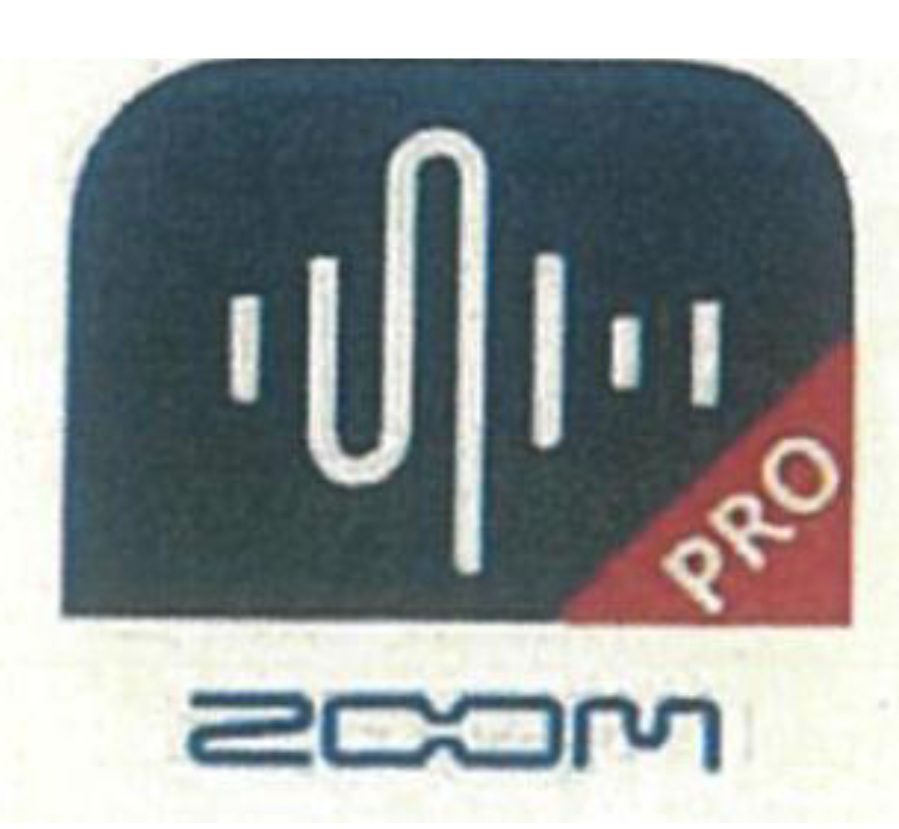
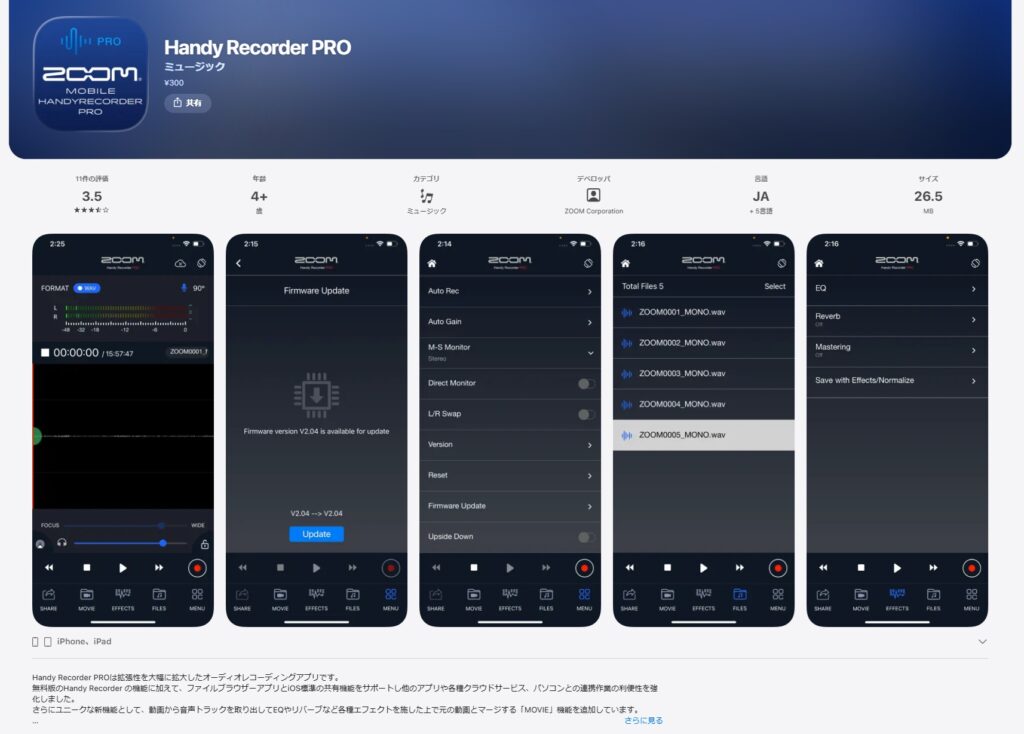
Since January 8, 2022, the owner has developed and provided application software for iPhones and iPads that enables users to send recorded audio files via email under the name “Handy Recorder PRO.” The ZOOM mark is represented on the application’s icon (see below).
On August 30, 2024, the Japan Patent Office (JPO) Trial Board found that the owner had established actual use of the mark on the goods in question and dismissed the cancellation petition.

On December 26, 2024, Zoom Communications Inc. filed an appeal against the JPO decision at the IP High Court, and claimed cancellation of the decision.


IP High Court decision

The court observed that an email is a medium through which users can communicate via the internet and communication networks. In this respect, the defendant’s application software shall be regarded as a computer program for communication between internet or network users in Class 9.

As for the plaintiff’s argument that emails cannot be sent without the support of the other file browser app and the iOS standard sharing function, the court noted that this fact would not affect the finding that the defendant’s application is a computer program for communicating with other users on the Internet or a network, by taking into consideration the overall function and graphical interface of the defendant’s application.

Since the defendant successfully demonstrated the actual and commercial use of the mark ZOOM on the goods in question, it is reasonable for the JPO to conclude that the mark should not be cancelled based on non-use.

Japan IP High Court Ruling: “Designed, Quality-controlled in France” is not equivalent to “Made in France”

On March 22, 2022, in an appeal against the non-use cancellation decision by the Japan Patent Office (JPO), the Japan IP High Court affirmed the JPO’s decision and ruled it is not construed that a disputed mark “I R O PARIS” has been used on its designated goods with a limitation of the origin ‘All made in France’ because the term is not equivalent to ‘designed, or quality-controlled in France’.


Disputed mark “I R O PARIS”

A French fashion house, IRO has registered a wordmark “I R O PARIS” on various goods e.g., jewelry, watches, leather, bags, umbrella, wallets, clothing, shoes, sports shoes, headgear in classes 14, 18, and 25 with a limitation of the origin ‘all made in France’ in 2013 (TM Reg No. 5623868).


Non-Use Cancellation

Article 50 of the Japan Trademark Law provides if a trademark registered in Japan has never been used in commerce in Japan for three consecutive years or longer after registration, the trademark is vulnerable to cancellation provided that third parties file a petition for cancellation of the trademark registration.

iROO International Co., Ltd., a Taiwanese company, filed a petition for non-use cancellation against the disputed mark on every goods of three classes on October 4, 2019.

In the cancellation action, the registrant produced evidence (order form, invoice, magazines) to demonstrate the actual use of the mark “IRO” and “www.iroparis.com” on skirts, belts, and dresses in Japan. The JPO admitted these marks are equivalent to the registered mark “I R O PARIS”. However, the JPO found the goods bearing the mark are not “made in France”, but “made in China”. If so, the disputed mark has not been precisely used on designated goods. Because of it, the Cancellation Board decided to cancel the disputed mark in whole on March 24, 2021.

IRO filed an appeal against the JPO decision on July 29, 2021, and argued the mark “IRO” has been used on goods designed by employees working at the head office in Paris (France). The head office has exclusive authority to control the quality of every item, namely, selecting suitable materials, producing samples made of materials available in Paris, securing the quality of goods made by suppliers, and storing finished goods in a warehouse in Paris before delivery. In view of actual commitment to quality control of final goods made by suppliers and common industry practice in the apparel, the goods shall be construed ‘made in France’ even if it was manufactured by an overseas supplier.


IP High Court decision

The court found the JPO did not err in fact-findings. In fact, the goods bearing the mark “IRO” were manufactured by suppliers having a place of business out of France. On the plaintiff’s website “IRO FALL WINTER 21 COLLECTION”, it mentions the product was made in China.

The disputed mark designates ‘clothing made in France’. It shall be construed the clothing was made in the territory of France. If so, the clothing made out of France would never be deemed identical to the designated goods.

The court has no reason to believe “designed, quality-controlled in France” is equivalent to ‘made in France’ in the literal interpretation of Article 50 of the Japan Trademark Law.

Based on the foregoing, the IP High Court dismissed the appeal and affirmed the cancellation decision.

[Judicial case no. Reiwa 3(Gyo-ke)10087]


This case teaches how important for brand owners to keep designated goods consistent with the actual business. It often happens that the goods bearing a mark containing GI are made in other countries or regions as a matter of fact. Such inconsistency may result in non-use cancellation if the designated goods limit the origin.

As an experienced trademark practitioner, I never fail to confirm the relation between goods and GI when a mark contains GI. In case a brand owner does not manufacture in the area, it is advisable to limit goods by placing more adequate terms, such as ‘designed by (area), derived from (area), using material from (area).’ Otherwise, you may lose your trademark registration in Japan as a result of non-use cancellation.