Which to win, first to file or first to trademark?

A recent JPO decision over trademark opposition for “Le Tan” will serve as a cautionary message to brand owners who intend to launch business in Japan before too long.


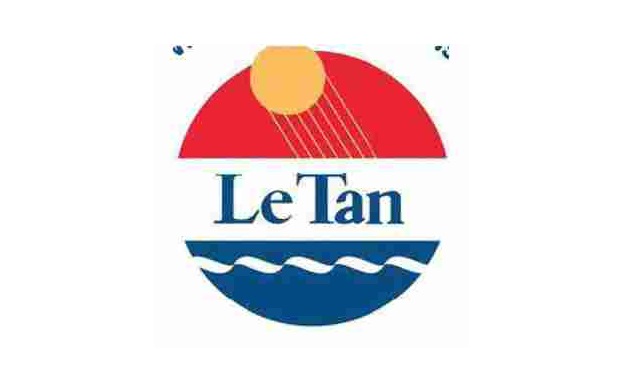
Le Tan

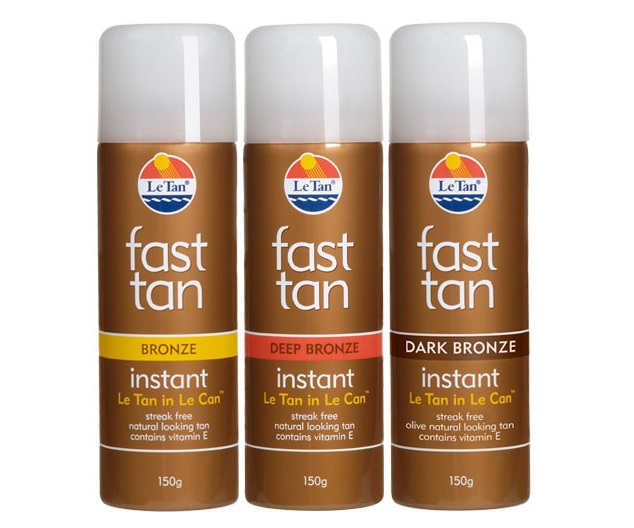
Heritage Le Tan Pty Limited, an Australian Private Company, acquired the Le Tan brand in 2015 for use on tanning lotions & sprays, tanning oils, coconut screen, after sun, which has been made in Australia since 1977 and grown into the number one tanning brand in Australia.

Heritage filed a trademark application with the Japan Patent Office (JPO) for its iconic house mark (see below) on ‘Sunscreen preparations; lotions for cosmetic purposes; sun protection oils [cosmetics]; sunscreen creams; sun-tanning preparations [cosmetics]; self-tanning creams; self-tanning lotions; self-tanning preparations [cosmetic]; cosmetics’ in class 3 on October 28, 2019, when six months have passed after actual sales took place allegedly in April 2019, in Japan.

On November 30, 2020, the JPO examiner raised her objection due to a conflict with senior trademark registration no. 6251672 in contravention of Article 4(1)(xi) of the Japan Trademark Law.


Opposed mark “LE TAN”

Chanson cosmetics Inc., a Japanese private company, filed the cited mark “LE TAN” for use on ‘cosmetics and toiletries’ in class 3 on June 20, 2019, with the JPO.

The mark, consisting of words “LE TAN” and its transliteration written in Japanese Katakana characters (see below), was registered on May 14, 2020, and published for post-grant opposition on June 2, 2020.


Opposition: “Le Tan” vs “LE TAN”

Apparently, in anticipation of the upcoming refusal or perhaps, because of any other reason, Heritage filed an opposition against the mark on July 30, 2020.

In the opposition brief, Heritage argued the opposed mark shall be cancelled in contravention of Article 4(1)(xix) of the Trademark Law.

Article 4(1)(xix) prohibits registering a trademark that is identical with, or similar to, other entity’s famous mark, if such trademark is aimed for unfair purposes, e.g. gaining unfair profits, or causing damage to the entity.

Heritage argued a remarkable degree of reputation and popularity of the Le Tan mark in Australia in relation to sunscreen and suntan preparations [cosmetics] as a result of substantial use of the mark by producing evidence to demonstrate growing annual sales (approx. 16 million Australian dollars in 2017), the second market share of 16 % in Australia (2013) , increasing website visitors (approx. 86,000 in 2019) , email subscriptions (24,000) and followers (Instagram: 250,000, Facebook: 180,000) , and annual expense for advertisement and publication (approx. 0.6 ~ 1 million Australian dollars for the past decade) by means of television, radio, magazine, the internet.

Heritage mentioned they had begun to export their products since 2015 and launched promotion and distribution to Japanese consumers in April 2019.

In an attempt to prove Chanson’s unlawful intention, Heritage pointed out the fact that Chanson has registered the mark “LE TEMPS” pronounced the same as “LE TAN” on the same class since 1984 and used the mark on skin-care cosmetics in fact. Heritage alleged that it appeared unreasonable for Chanson to file the opposed mark which has a same pronunciation but different spelling since Chanson must be convinced that skin-care conscious consumers are unwilling to use cosmetics giving rise to an impression of ‘the suntan.’ If so, Chanson must have filed the opposed mark just two months after the launch of trademarking Australian brand “Le Tan” in Japan simply because of interrupting their business.


JPO Decision

The Opposition Board of the JPO admitted a certain degree of reputation and popularity of the “Le Tan” mark in Australia in view of substantial use on sunscreen or suntan preparations [cosmetics] over four decades, however, the Board denied Heritage’s allegation that the opposed mark was filed with a malicious intention by stating:

From the totality of circumstance, the Board can’t find any reason to believe that Chanson sought for protection of the opposed mark to gain unfair profits or cause damage to the opponent. A mere fact the opposed mark was filed a few months after the opponent started to use the “Le Tan” mark in Japan was insufficient to find unfair purposes subject to Article 4(1)(xix). Heritage failed to convince the Board of the likelihood of interruption. Noticeably, according to the produced evidence, the opponent business in Japan is expanding contrary to their allegations.

Based on the foregoing, the JPO decided to dismiss the opposition entirely and concluded the Opposed mark shall remain valid as the status quo.

AlphaGo Unsuccessful in Defeating AlphaMini

“AlphaGo” AI system, developed by Google-owned artificial intelligence company DeepMind, has gained the world’s attention after defeating the top human players of the world in a game of go in the year 2016. But, in a recent opposition decision, the Japan Patent Office (JPO) did not admit the famousness of the trademark “AlphaGo”.
[Opposition case no. 2020-900207, Gazette issued date: March 26, 2021]

AlphaMini

Opposed mark “AlphaMini” (see below) was filed with the JPO by UBTECH Robotics, Inc., Chinese artificial intelligence and humanoid robotic company on July 26, 2019, and designated ‘computer programs; AI-powered humanoid robots; application software for smartphones; security surveillance robots; sensors; teaching robots; navigational instruments; mobile phones; facial recognition software; cameras’ in class 9 and ‘games; toy robots; toys; board games; balls for games; body-building apparatus; fishing tackle; archery implements’ in class 28.

According to the website of URTECH Robotics, Inc., the mark is used as a name of their humanoid educational robot.

Opposition by DeepMind “AlphaGo”

DeepMind Technologies Limited filed an opposition against “AlphaMini” and argued the opposed mark shall be canceled in contravention of Article 4(1)(xv) of the Japan Trademark Law because relevant consumes would confuse the source of goods bearing the opposed mark “AlphaMini” with DeepMind due to a close resemblance between two marks and famousness of “AlphaGo”.

Article 4(1)(xv) is a provision to prohibit registration of a trademark which is likely to cause confusion with the business of other entities.

Besides, DeepMind owns several trademarks that begin with the term “ALPHA”, namely, “ALPHACHESS”, “ALPHAZERO”, “ALPHAFOLD”, “ALPHASHOGI”. Taking into consideration a highly renowned computer program “AlphaGo” as the very first AI program that was able to beat one of the highest-ranked human players in the world in 2016, as well as a naming strategy for “ALPHA” AI system series, relevant consumers are likely to associate the opposed mark “AlphaMini” with DeepMind when used on its designated goods in class 9 and 28.

JPO Decision

The Opposition Board of the JPO had concluded that insufficient evidence had been submitted to support the assumption of a well-known mark that is protectable under Article 4(1)(xv).

The Board pointed out that most of the produced newspapers and magazines did not prove the use of the mark “AlphaGo” as a source indicator of the computer program for Go developed by DeepMind. Instead, they just revealed the term “アルファ碁” has been used to represent the AI system by DeepMind. “アルファ碁” is precisely a translation and transliteration of “AlphaGo” written in Japanese character.

The JPO held the mere fact that the first word of both marks is identical would be insufficient. Overall impression of “AlphaGo” and “AlphaMini” is remarkably different from visual, phonetic, and conceptual points of view. Thus, the Board found a low level of similarity between the two marks.

Even if the goods in dispute are closely associated with DeepMind’s business, given a low level of similarity and insufficient evidence to assume the famousness of “AlphaGo”, the Board had no reason to believe the opposed mark would cause confusion with DeepMind when used on the disputed goods in class 9 and 28.

Based on the foregoing, the Board decided the opposed mark would not be canceled in contravention of Article 4(1)(x) of the Trademark Law and dismissed the opposition entirely.

COCO vs COCOMIST – Decision of the Opposition Board of the Japan Patent Office

Chanel handed a loss in its attempt to block Japanese trademark registration no. 6202587 for wordmark “COCOMIST” to be used on cosmetics, perfumery, fragrances, incense, and other goods in class 3.
[Opposition case no. 2020-900047, Gazette issued date: February 26, 2021.]

COCOMIST

The opposed mark consists of the word “COCOMIST” written in standard character (see below). Applicant, a Japanese company, 196+ Inc., filed it for use on ‘cosmetics, perfumery, fragrances, incense, toiletry preparations’ and other goods in Class 3 on January 7, 2019.

The mark was published for post-grant opposition on December 24, 2019, without confronting any office action from the JPO examiner.

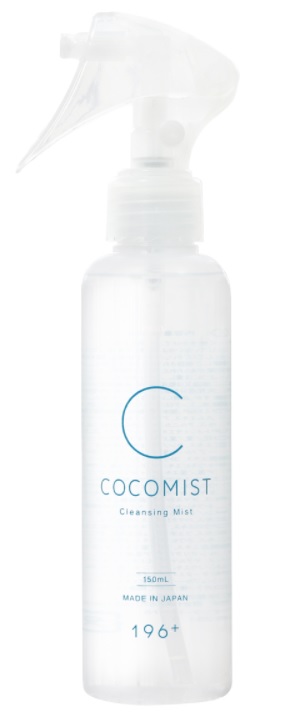
It is apparent that the applicant actually uses the opposed mark on cleaning mist.

Opposition by CHANEL

On February 20, 2020, CHANEL SARL filed an Opposition and argued the opposed mark shall be canceled in contravention of Article 4(1)(xi), (xv), and (xix) of the Trademark Law on the grounds that:

  1. Since 1995, the opponent has owned senior trademark registration no. 2704127 for wordmark “COCO” over cosmetics, perfumery, and fragrances, which has unquestionably acquired a remarkable degree of reputation and popularity as a source indicator of the opponent’s cosmetics as well as a nickname or short name of French fashion designer “Gabrielle COCO CHANEL”, the founder of the Chanel brand.
  2. The term “MIST” lacks distinctiveness in relation to cosmetics. If so, relevant consumers at the sight of the opposed mark would easily conceive “COCO” as a prominent portion when used on goods in question.
  3. In view of the close resemblance between two marks and goods, presumably, the applicant must have applied the opposed mark for use on cosmetics with prior knowledge of the cited mark and fraudulent intention of free-riding on its reputation.

JPO Decision

The JPO Opposition Board admitted a high degree of reputation and popularity of “COCO” as a source indicator of the opponent’s perfumery and fragrances among relevant consumers based on substantial use of the cited mark in Japan but questioned its famousness in relation to other cosmetics except for perfumery and fragrances.

The JPO denied the similarity between the opposed mark and “COCO”, stating that the opposed mark shall be taken as a whole in view of a tight combination of its literal element from appearance. If so, the opposed mark does not give rise to any specific meaning and the Board has no reasonable ground to believe that the opposed mark “COCOMIST” shall be similar to “COCO” from visual, phonetic, and conceptual points of view.

Given a low degree of similarity between the marks, the Board held the opposed mark is unlikely to cause confusion even when used on perfumery and fragrances.

Assuming that both marks are dissimilar, the Board was not convinced that the applicant aimed for free-riding on the goodwill of Chanel.

Based on the foregoing, the JPO dismissed the entire allegations of CHANEL SARL and allowed the opposed mark to register as the status quo.

Like a Jaguar, but not JAGUAR

The Japan Patent Office (JPO) dismissed an opposition filed by Jaguar Land Rover Ltd. against trademark registration no. 6244325 for word mark “Like a Jaguar” on cosmetics and other goods in class 3 by finding dissimilarity and unlikelihood of confusion with “JAGUAR.”
[Opposition case no. 2020-900165, Gazette issued date: December 14, 2020]

Opposed mark

An opposed mark consists of the term “Like a Jaguar” in a gothic type and its transliteration in a Japanese katakana character as below.

The mark was filed by KOSE Corporation on May 10, 2019, for use on ‘cosmetics; soaps and detergents; dentifrices; perfume and flavor materials; incense; breath-freshening preparations; false nails; false eyelashes; cosmetic cotton wool; fabric softeners for laundry use; adhesives for affixing false eyelashes; adhesive paper; cotton sticks for cosmetic purposes’ in class 3.

JPO, going through substantive examination, admitted registration and published for post-grant opposition on April 28, 2020.

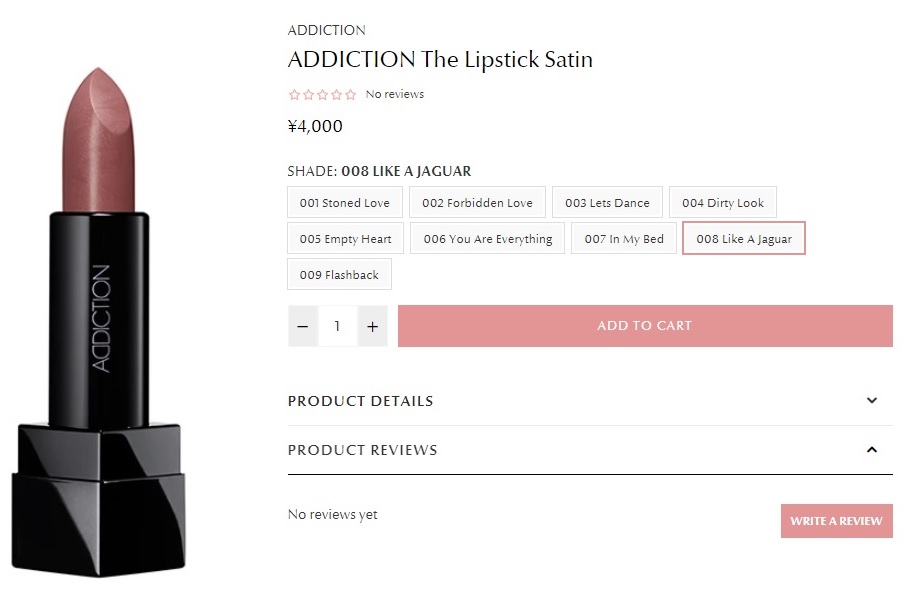
Apparently, KOSE uses the mark “Like a Jaguar” to represent a lipstick color for ‘ADDICTION The Lipstick Satin’ 008.

Captured from website – everglowcosmetics.com

Opposition by Jaguar Land Rover

Jaguar Land Rover Ltd. filed a trademark opposition on June 25, 2020, before the JPO and claimed that the opposed mark shall be canceled in contravention of Article 4(1)(viii), (xi), and (xv) of the Trademark Law by citing trademark registrations for its iconic logo consisting of the image of a leaping jaguar and the word “JAGUAR” (see below), which allegedly has been used on the opponent’s products since 1935.

Article 4(1)(viii) prohibits registration of trademarks that contain the representation or name of any person, famous pseudonym, professional name or pen name of another person, or famous abbreviation thereof for the purpose of protecting the personal rights of a living individual.

Article 4(1)(xi) is a provision to prohibit registering a junior mark that is deemed identical with, or similar to, any senior registered mark.

Article 4(1)(xv) provides that a mark shall not be registered where it is likely to cause confusion with other business entity’s well-known goods or services, to the benefit of a brand owner as well as users’ benefits.

Jaguar Land Rover argued that the opposed mark has been confusingly similar to the cited mark since the opposed mark “Like a Jaguar” gives rise to a meaning of ‘Similar to Jaguar’ in its entirety. Besides, given the mark “JAGUAR” has obtained a high level of popularity among relevant consumers as a source indicator of the opponent’s motorcars, apparels, fragrances, and other licensed goods, the consumers would notice the term “Jaguar” as a dominant portion of the opposed mark and thus confuse or misconceive it with the opponent consequently.

JPO decision

The Opposition Board did not admit a high level of popularity of the cited mark by stating that the opponent failed to produce sufficient evidence in an objective manner. According to the allegation, opponents sold more than 100,000 cars around the globe in 2019. But relevant evidence was not produced to demonstrate the sales. Due to this reason, it is unknown how many cars of the opponent were sold in Japan. Likewise, there was little evidence to show a high recognition of the cited mark in relation to goods other than cars.

Provided that the mark “JAGUAR” was found insufficiently famous for the opponent cars, the Board has no reason to believe that relevant consumers would see the term “Jaguar” of the opposed mark as a dominant source indicator. If so, both marks shall be assessed in their entirety.

The opposed mark gives rise to a meaning of ‘similar to a large spotted wild cat of South America’ and a pronunciation of ‘laɪk ə dʒæɡ.wɑːr’. The term “Like a” sufficiently differentiates the opposed mark from the cited mark in appearance, sound, and concept.

Based on the foregoing, the Board found relevant traders and consumers are unlikely to confuse or associate the opposed mark with the opponent or any business entity economically or systematically connected with Jaguar Land Rover when used on the goods in question. In conclusion, the opposed mark shall remain valid as the status quo.

Ariana Grande Loses Trademark Opposition at Japan Patent Office

The Japan Patent Office (JPO) dismissed an opposition filed by GrandAri Inc., the owner of a trademark “ARIANA GRANDE”, against TM Reg no. 6202585 for wordmark “Arianna” to be used on cosmetics by finding dissimilarity between “Arianna” and “ARIANA GRANDE.”
[Opposition case no. 2020-900051, Gazette issued date: January 29, 2021.]

Opposed mark

Arianna Co., Ltd. applied for a wordmark “Arianna” registration for use on cosmetics, soaps, and detergents of Class 3 and medical apparatus of Class 10 with the JPO on January 7, 2019 (TM Application no. 2019-000339).

The JPO admitted the registration of the opposed mark on November 29, 2019, and published for opposition on Christmas Eve of the year.

Opposition by GrandAri Inc.

On February 21, 2020, GrandAri Inc. filed an opposition before the JPO and claimed that the opposed mark shall be revocable in contravention of Article 4(1)(xi) and (xv) of the Japan Trademark Law by citing International Registration no. 1260129 for wordmark “ARIANA GRANDE” and others over the goods of ‘Perfume; eau de parfum; fragranced body care preparations, namely, body lotions, body scrubs’ in Class 3.

Article 4(1)(xi) is a provision to prohibit registering a junior mark that is deemed identical with, or similar to, any senior registered mark.

GrandAri argued that relevant consumers would easily think of American pop superstar from the cited mark “ARIANA GRANDE”. Besides, because of her celebrity and popularity, she is affectionately called by her first name “ARIANA”. In view of the space between “ARIANA” and “GRANDE”, it is highly likely that the consumers would consider the term “ARIANA” as a dominant source indicator at the sight of the cited mark. It is no doubt that the opposed mark “Arianna” is confusingly similar to “ARIANA” since the mere difference of the letter ‘n’ is negligible in appearance and both terms give rise to the same pronunciation.

Article 4(1)(xv) provides that any mark shall not be registered where it is likely to cause confusion with other business entity’s well-known goods or services, to the benefit of brand owners and users’ benefits.

GrandAri argued the cited mark is used on fragrances developed by Ariana herself, which are also called “ARIANA” in the advertisement.

Given a close resemblance between the opposed mark and the “ARIANA” mark, and a certain degree of popularity of the fragrances, firstly sold in November 2015 in Japan, it is likely to cause confusion with the cited mark when the opposed mark is used on the goods in question.

JPO Decision

The JPO admitted a high level of reputation and popularity of American pop singer, “ARIANA GRANDE” in Japan. In the meantime, the JPO questioned, from the produced evidence, whether the term “ARIANA” per se plays a role of the source indicator of Ariana Grande fragrances since it is constantly adjacent to the cited mark “ARIANA GRANDE.”
Consequently, the JPO negated the famousness of the term “ARIANA” as a source indicator of the opponent’s goods.

As for the similarity of the marks, the JPO assessed that relevant consumers would see the cited mark “ARIANA GRANDE” in its entirety because she is known and called by her full name. If so, both marks are distinctively dissimilar since the opposed mark does neither give rise to a pronunciation of “ARIANA GRANDE” nor a concept of American pop superstar.

The JPO dared to assess the similarity between the opposed mark “Arianna” and “ARIANA” and held that “Arianna” is not confusingly similar to “ARIANA” from a phonetical point of view. Due to a low level of similarity of the marks, the JPO does not have any reason to believe that the opposed mark would cause confusion with the cited mark “ARIANA GRANDE” as well as “ARIANA” when used on cosmetics, soaps, and detergents of Class 3.

Based on the foregoing, the JPO dismissed the entire allegations of GrandAri and allowed “Arianna” to survive.

The University of Oxford Failed in Opposition Against “OXFORD” mark

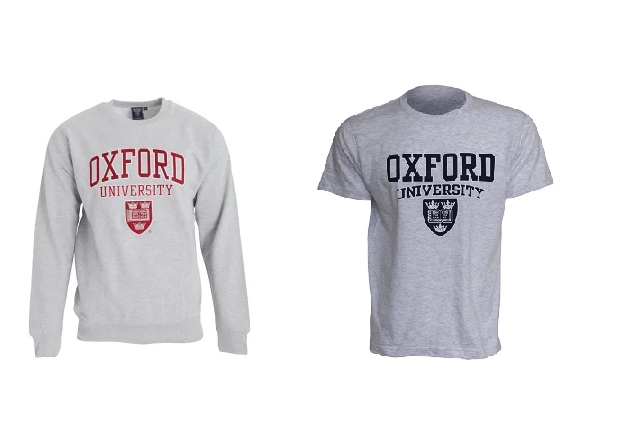
The Japan Patent Office (JPO) dismissed an opposition filed by Oxford Limited against trademark registration no. 6164941 for composite mark comprised of term “OXFORD” and a square X symbol in class 25, 35,40 by questioning whether the term per se has been known as a source indicator of the University.
[Opposition case no. 2019-900303, Gazette issued date: October 13, 2020]

Opposed mark

Japanese trademark registration no. 6164941 for composite mark comprised of term “OXFORD” and a square X symbol colored in dark blue (see below), was filed on October 26, 2018, by Oxford Corporation Co., Ltd., a Japanese business entity tailoring custom-made suits, over clothing, footwear made in England in class 25, retail or wholesale services for clothing, footwear and other goods in class 35, and dressmaking, treatment or processing of cloth, clothing or fur, custom tailoring services, and others in class 40.

JPO granted to protect the opposed mark and published for registration on August 20, 2019.

Opposition

On October 18, 2019, Oxford Limited, a wholly-owned subsidiary of the University of Oxford, filed an opposition and claimed the Opposed mark shall be canceled in contravention of Article 4(1)(vii), (viii), (xi), (xv) and (xix) of the Trademark Law by citing its own marks (see below).

Oxford Limited argued that the University of Oxford is an extremely well-known university worldwide. It has been ranked in 5th and 3rd places in tables of top international higher education institutes. Besides, Oxford Limited has promoted and licensed commercial goods bearing trademarks of the University. In Japan, various licensed goods e.g. apparel, accessories, interiors, stationery, educational toys are distributed via Ingram Co., Ltd., an authorized broker.

Under the circumstances, there is no doubt that relevant consumers at the sight of the term “OXFORD” would conceive the University when used on goods and services in question. If so, the opposed mark shall be deemed similar to and likely to cause confusion with the cited mark since the term “OXFORD” per se plays a dominant role in identifying a source.

JPO Decision

The JPO Opposition Board admitted a high degree of the reputation of “University of Oxford” among the general public. In the meantime, the Board opined that it is questionable if the term “OXFORD” has acquired a substantial degree of popularity as a source indicator of the University from the produced evidence and totality of the circumstances in view of the fact that the term is also a geographical indication, namely, the capital of the county of Oxfordshire.

Based on the foregoing, the Board found relevant consumers would recognize the term “OXFORD” of the Opposed mark just to indicate ‘the capital of the county of Oxfordshire’. Meanwhile, the cited marks give rise to a sound and concept pertinent to the University. The figurative element of both marks is sufficiently distinguishable from appearance. There was a low level of visual, aural, and conceptual similarity between the marks to the extent that relevant consumers would be unlikely to confuse the Opposed mark with the University of Oxford. Therefore, the allegations are groundless and the Opposed mark shall remain valid as the status quo.


I am not convinced with the JPO’s finding of “the term OXFORD of the Opposed mark just to indicate ‘the capital of the county of Oxfordshire”. I firmly believe the term immediately reminds us of the University rather than the name of the capital of Oxfordshire.

Google’s Trademark Battle over Street View

The Opposition Board of the Japan Patent Office (JPO) sided with Google LLC and decided to cancel trademark registration no. 6086044 for word mark “STREET VIEW MODEL (SVM)” due to a likelihood of confusion with Google’s “STREET VIEW”.
[Opposition case no. 2018-900391, Gazette issued on September 25, 2020]

Opposed mark

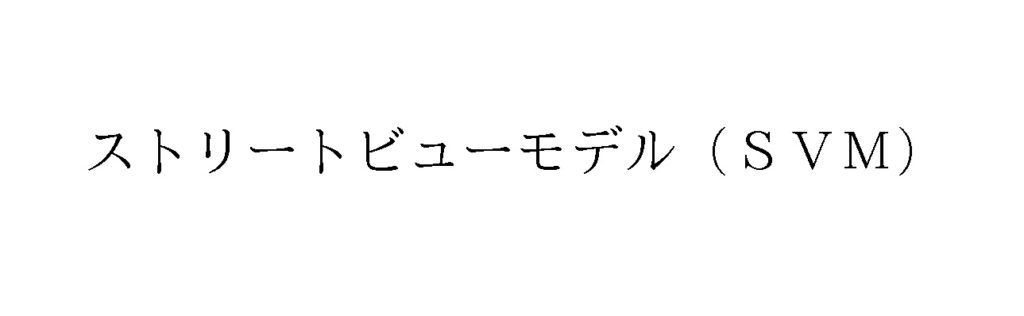
A Japanese individual filed a trademark application for word mark “STREET VIEW MODEL (SVM)” written in Japanese Katakana character (see below) by designating the service of ‘providing online non-downloadable videos and photographs’ in class 41 with the JPO on December 27, 2017.

The opposed mark was registered and published for opposition on October 30, 2018.

Google “Street View”

On December 28, 2018, Google LLC filed an opposition against “STREET VIEW MODEL (SVM)” and argued that the opposed mark shall be canceled in contravention of Article 4(1)(xv) and (xix) of the Trademark Law based on its owned senior registration for the STREET VIEW mark (IR no. 12138361) in class 9 and 42 because both marks resemble and relevant consumers would confuse or associate the opposed mark, containing “STREET VIEW” famous for the service featured on Google map enabling to provide panoramic 360-degree views from the designated street, with the opponent when used on the designated service in question.

IR no. 12138361

Article 4(1)(xv) prohibits registering a trademark which is likely to cause confusion with the business of other entities.

Board Decision

The Board did not question the famousness of the STREET VIEW mark as a source indicator of Google’s service for providing digital images on a map at the time of both initial filing and registration of the opposed mark.

In the assessment of similarity between the marks, the Board found that the average consumers would likely pay considerable attention to the term “STREET VIEW” of the opposed mark because of its fame. If so, a high degree of similarity exists between the opposed mark and “STREET VIEW”.

It is true that the “STREET VIEW” mark is anything but a fancy or invented word since it consists of two common English words that the relevant consumers are familiar with, however, given the designated service in question and Google “STREET VIEW” are related to providing digital images via the internet, these are supposedly purchased or consumed by the same consumers. If so, the Board considers the opponent business, and the service in question are closely associated.

Based on the foregoing, the Board concluded that relevant traders and consumers are likely to confuse or misconceive a source of the opposed mark when used in relation to the service (class 41) with Google or any entity systematically or economically connected with the opponent and thus decided cancellation in contravention of Article 4(1)(xv).

LEGO Triumphs In ‘CATTYLEGO’ Trademark Battle at JPO

LEGO eventually scored a win over PETSWEET CO., Ltd., a Taiwanese company, in a trademark dispute against ‘CATTYLEGO’ thanks to the JPO’s finding a likelihood of confusion with “LEGO” famous for toy brick.
[Invalidation case no. 2018-890084, Gazette issued date: September 25, 2020]

CATTY LEGO

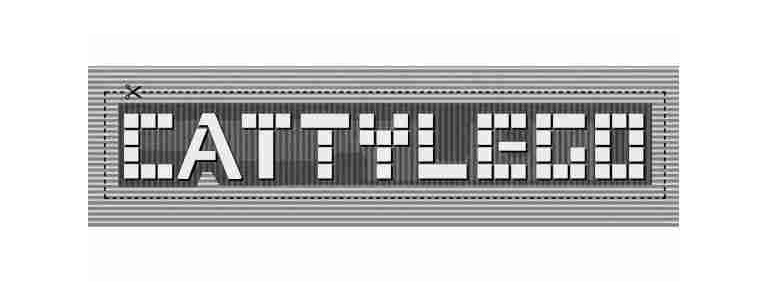
PETSWEEY Co. (派斯威特國際有限公司), Ltd., a Taiwanese company, applied for trademark registration in Japan for the mark consisting of a word “CATTYLEGO” and rectangle device (see below) on June 15, 2016, over toy boxes and chests, dog kennels, fodder racks, pet cushions, pet house in class 20 and toys for pets in class 28.

The Japan Patent Office (JPO) registered the mark on December 2, 2016 (TM Registration no. 5902786) and published for opposition on January 10, 2017.

LEGO

LEGO Juris A/S, the world’s largest Danish toy manufacturer, filed an opposition against the mark ‘CATTYLEGO’ on the final day of a two-month duration for the opposition, and argued it shall be canceled in contravention of Article 4(1)(viii), (xi), (xv) and (xix) of the Japan Trademark Law, but in vain. Click here to read more about the opposition.

Subsequently, LEGO lodged a trademark invalidation trial with the JPO on October 31, 2018, based on the same grounds.

JPO Decision

The Invalidation Board did not question a high degree of reputation and popularity of the LEGO trademark as a source indicator of toy brick by finding consecutive promotion of LEGO bricks in Japan for more than five decades, annual sales amounting to over 8 billion yen (Approx. USD 74 million ), its remarkable share in the sector of kids toys, and almost half of preschools in Japan have adopted the bricks for educational purpose.

Given the remarkable reputation of the LEGO mark, the Board held relevant consumers/traders at the sight of the ‘CATTYLEGO’ mark would inevitably conceive the term “LEGO” as a dominant portion. If so, both marks may give rise to a similar sound and concept pertinent to “LEGO”.

The Board also affirmed toy brick and the goods in question are closely associated in view of suppliers, commercial channels, usage, consumers.

Consequently, by taking into consideration the totality of the circumstances, the Board found relevant consumers with an ordinary care would confuse or associate the goods in question bearing the ‘CATTYLEGO’ mark with LEGO or any entity systematically or economically connected with LEGO, and thus the mark shall be invalidated based on Article 4(1)(xv) of the trademark law.