Samsung Unsuccessful in Trademark Opposition against BEAT GALAXY

The Japan Patent Office (JPO) did not side with Samsung, the South Korean tech giant, in a trademark opposition against TM Reg no. 6895229 for word mark “BEAT GALAXY” in Class 9 by finding a low degree of similarity to and less likelihood of confusion with the mark “GALAXY” even when used on PDA, mobile phones.
[Opposition case no. 2025-900084, decided on December 2, 2025]


BEAT GALAXY

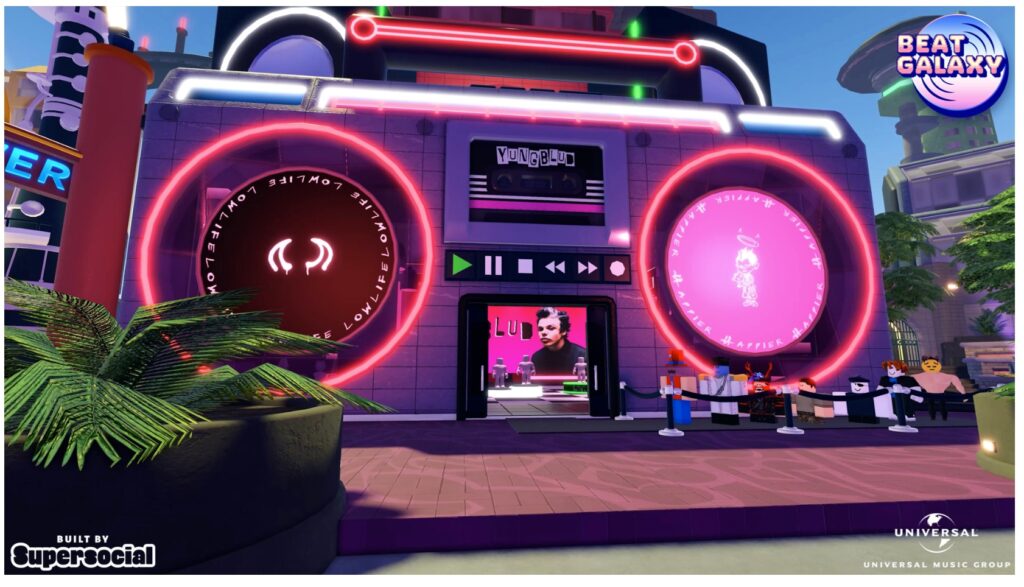
UMG Recordings Inc. filed a trademark application for the wordmark “BEAT GALAXY” in standard character with the JPO on November 13, 2023, for use on PDA, mobile phones, computers, computer software, audio files and other goods in Class 9 [TM App no. 2023-129205].
The JPO examiner granted protection of the mark on February 4, 2025.

Subsequently, it was published for a post-grant opposition on February 20, 2025.


Opposition by Samsung

Samsung, a South Korean tech giant, filed an opposition against the mark “BEAT GALAXY” on April 18, 2025, and claimed cancellation of the contested mark in contravention of Article 4(1)(vii), (x), (xi), (xv), and (xix) of the Japan Trademark Law by citing their earlier mark “GALAXY”.

Samsung argued the contested mark “BEAT GALAXY” is similar to the cited mark, and conveys a negative impression of defeating Samsung’s Galaxy. Thus, the contested mark detrimentally affects the goodwill of the cited mark. Relevant consumers are likely to associate the contested mark with Samsung.


JPO decision

The JPO Opposition Board found that the cited mark “GALAXY” has been widely recognised as an indicator of Samsung’s business.

In the meantime, the Board denied similarity between “BEAT GALAXY” and “GALAXY” by stating that:

The contested mark and the cited mark differ in the presence of the word “BEAT” at the beginning of the contested mark. Therefore, even when assessed in a different time and place, there is no likelihood of confusion in appearance.

Secondly, the different sound caused by the word “Beat” at the beginning of the contested mark significantly affects the overall aural impression. As both sounds are distinguishable as a whole, there is no likelihood of confusion in pronunciation.

As for concept, while the contested mark does not have any specific concept, the cited mark gives rise to a meaning of a collection of stars and planets that are held together by gravity. Accordingly, both marks are neutral in concept.

Based on the foregoing, the Board noted that, even though the goods in question are highly related to Samsung’s business, in view of a low degree of similarity and originality of the cited mark, it is reasonable to conclude that relevant consumers are unlikely to confuse a source of goods bearing the contested mark with Samsung or any undertaking economically or systematically connected with the claimant.

Consequently, the Board decided to dismiss the entire opposition.
Samsung Failed in TM Opposition against “Funky Galaxy”

The Japan Patent Office (JPO) dismissed an opposition filed by Samsung, the world’s largest smartphone maker, against TM Reg no. 6263685 for wordmark “Funky Galaxy” by stating the opposed mark would not cause confusion with Samsung “Galaxy” even when used on smartphones.

[Opposition case no. 2020-900229, Gazette issued date: November 11, 2021]

Opposed mark

On April 12, 2019, KING Entertainment Co., Ltd. applied for registration of wordmark “Funky Galaxy” in standard character for use on goods and services in classes 9, 16, 35, and 41. The goods in class 9 covers ‘telecommunication machines and apparatus; personal digital assistants; smartphones; electronic machines, and apparatus and their parts.’

JPO granted protection of the “Funky Galaxy” mark and published for opposition on July 14, 2020.


Opposition by Samsung

On September 11, 2020, Samsung, the world’s largest smartphone maker famous for Galaxy series mobiles, filed an opposition and claimed the Opposed mark shall be canceled in relation to goods and services in class 9, 35, and 41 in contravention of Article 4(1)(vii), (x), (xi), (xv) and (xix) of the Trademark Law by citing its own senior TM Reg nos. 4498554 “Galaxy”, IR1335923 “GALAXY STUDIO”, and 6309820 “Galaxy Harajuku”.

Article 4(1)(xv) is a provision to prohibit any mark from registering if it is likely to cause confusion with other business entities’ well-known goods or services.

Samsung argued the Opposed mark shall cause confusion with Samsung “Galaxy” especially when used on smartphones and related goods and services, given a remarkable reputation of “Galaxy” holding 3rd market share (7.4% in 2018, 8.0% in 2019, 9,0% in 2020) in Japan and the close resemblance between “Galaxy” and “Funky Galaxy”.


JPO Decision

The Opposition Board did not question a remarkable degree of reputation and popularity of trademark “Galaxy” as a source indicator of the opponent smartphones.

In the meantime, the Board did not consider the term “Galaxy” as a prominent portion of the opposed mark from visual and conceptual points of view. If so, the opposed mark shall be assessed in its entirety.

In the assessment of similarity of the mark, the Board found “Funky Galaxy” is visually and phonetically distinguishable from “Galaxy” due to the presence of “Funky.” From concept, both marks are less similar because the opposed mark does not give rise to a specific meaning and the opponent mark “Galaxy” means an extremely large group of stars and planets. Both marks have a low degree of similarity accordingly.

Even though “Galaxy” has been well-known as a source indicator of Samsung smartphones, and the goods and services in question are closely associated with smartphones, given a low degree of similarity between “Funky Galaxy” and “Galaxy”, the Board has a reasonable ground to believe that relevant consumers would not confuse a source of goods and services bearing the opposed mark “Funky Galaxy” with Samsung and any business entity economically or systematically connected with the opponent.

Based on the foregoing, the Board decided the allegations are groundless and the Opposed mark shall remain valid as the status quo.