Top 10 Trademark News in Japan, 2025

As the year 2025 comes to an end, it is a good time to share the top 10 trademark news in Japan by counting the total number of likes on the Linkedin “Like” Button.


1: JPO Grants TM Registration for 3D Shape of the Popular Pocky Cookie

The Japan Patent Office (JPO) granted trademark registration for the three-dimensional (3D) shape of Ezaki Glico’s iconic “Pocky” cookie, recognizing that the shape had acquired distinctiveness in relation to chocolate confections in Class 30 [TM Reg. No. 6951539].


2: UNIQLO Lost in Trademark Opposition against UNIPRO

UNIQLO lost in its attempt to oppose TM Reg no. 6746724 for the mark “UNIPRO” in class 28 due to dissimilarity and unlikelihood of confusion with a world-famous Japanese clothing brand “UNIQLO”.


3: STARBUCKS Unsuccessful Invalidation Action against Trademark “STARBOSS”

The Japan Patent Office (JPO) dismissed an invalidation action claimed by Starbucks Inc. against TM Reg no. 6595964 for wordmark “STARBOSS” in class 32 due to dissimilarity to and unlikelihood of confusion with the world’s largest coffee chain “STARBUCKS”.


4: IP High Court ruling: STARBUCKS vs STARBOSS

The Japan IP High Court did not side with Starbucks Corporation in a trademark dispute between “STARBUCKS” and “STARBOSS”, and affirmed the JPO decision that found “STARBOSS” dissimilar to, and less likelihood of confusion with “STARBUCKS when used on beverages.


5: Trademark dispute: SONY vs SONIMART

The Japan Patent Office (JPO) sided with SONY in a trademark invalidation action against TM Reg no. 6162062 for word mark “SONIMARK” in classes 35 and 42 by finding a likelihood of confusion with famous mark “SONY”.


6: MONSTER STRIKE vs MONSTER ENERGY

The Japan Patent Office (JPO) did not decide in favour of Monster Energy Company in its opposition to Defensive Mark Reg. No. 5673517 for the word mark “MONSTER STRIKE” in Classes 29, 30, and 32.


7: YONEX Scored Win in Registering Color mark

On October 21, 2025, the Japan Patent Office (JPO) granted registration of a color mark that consists of blue and green colors, filed by Yonex Co., Ltd. to use on badminton shuttlecocks by finding acquired distinctiveness of the color combination.


8: HERMES Defeated with Trademark Opposition against KIMONO TWILLY

The Japan Patent Office (JPO) dismissed an opposition filed by Hermes International against TM Reg no. 6753650 for the word mark “KIMONO TWILLY” in Class 18, claiming a likelihood of confusion with the Hermes scarves “TWILLY”.


9: JPO Said No to Register Kawasaki Green Color Mark

On March 19, 2025, the Japan Patent Office (JPO) finally decided to reject a color mark application filed a decade ago by Kawasaki Heavy Industries, Ltd., which sought to register a green color used on the world-famous Kawasaki motorcycles.


10: TOMMY HILFIGER vs TOMTOMMY

The Japan Patent Office (JPO) did not side with Tommy Hilfiger Licensing B.V. in an opposition against TM Reg no. 6604265 “TOMTOMMY” due to dissimilarity and unlikelihood of confusion with “TOMMY” and “TOMMY HILFIGER”.

Trademark dispute: SONY vs SONIMART

The Japan Patent Office (JPO) sided with SONY in a trademark invalidation action against TM Reg no. 6162062 for word mark “SONIMARK” in classes 35 and 42 by finding a likelihood of confusion with famous mark “SONY”.
[Invalidation case no. 2024-890041, decided on January 27, 2025]


SONIMART

The contested mark, consisting of word “SONIMART” and its transliteration written in Japanese katakana character arranged in two lines (see below), was filed by Sonic Line Co., Ltd. for use on various services including retail service and providing computer programs on data networks in classes 35 and 42 with the JPO on June 14, 2018.

The JPO examiner did not find similarity to and a likelihood of confusion with famous brand “SONY” and granted registration of the mark on July 12, 2019.


Invalidation action by SONY

SONY, one of the most recognized Japanese brands globally, filed an application for declaration of invalidity with the JPO on July 11, 2024, just before the lapse of five years counting from its registration date.

SONY claimed that the contested mark shall be invalidated in contravention of Article 4(1)(xi) and (xv) of the Japan Trademark Law by citing its owned earlier trademark registrations for the mark “SONY”.

Article 4(1)(xi) is a provision that prohibits the registration of a junior mark that is deemed identical with, or similar to, any earlier registered mark.

Article 4(1)(xv) is a provision to prohibit any mark from registering if it is likely to cause confusion with other business entities’ well-known goods or services.

SONY argued that relevant consumers of the services in question are likely to find the contested mark consists of “SONI” and “MART”. Since the term ‘MART’ is less distinctive in relation to the services in question, the element ‘SONI’, which is visually and phonetically confusingly similar to ‘SONY’, would play a dominant role in indicating the source of the services covered by the contested mark.


JPO decision

The JPO Invalidation Board did not question the high degree of reputation and popularity of the mark “SONY” in relation to telecommunications and electronic machines and apparatus, and consumer games.

Comparing the contested mark and the cited mark “SONY”, although the marks differ in their overall structure, both marks contain the same initial three letters, “SON” and the same pronunciation. Moreover, the term “SONI” and its sound are likely to be associated with the cited mark “SONY”, which is well known and famous in the fields of telecommunications and electronic machines and apparatus, and consumer games.

Bearing in mind that SONY has plenty of group companies and stores using a name consisting of “SONY” and descriptive word, such as Sony shop, Sony music entertainment, Sony bank, Sony city, the Board has a reason to believe that there is a certain degree of similarity between the contested mark and the cited mark.

Consumers of the services in question, in particular retail services for smart phone cases, rental of computers, and providing computer programs on data networks, are overlapping with those of telecommunications and electronic machines and apparatus. In this respect, these are closely related.

Based on the foregoing, the Board decided to invalidate the contested mark in contravention of Article 4(1)(xv) because the relevant consumers are likely to confuse a source of the services in question with SONY or an entity that is systematically or economically connected to the claimant.

JPO found likelihood of confusion between SONY and SONICODE

The Japan Patent Office sided with Sony Corporation and declared invalidation of TM Registration no. 5764615 for wordmark “SONICODE” due to a likelihood of confusion with “SONY”.

[Invalidation case no. 2020-890039, Gazette issued date: July 30, 2021]

SONICODE

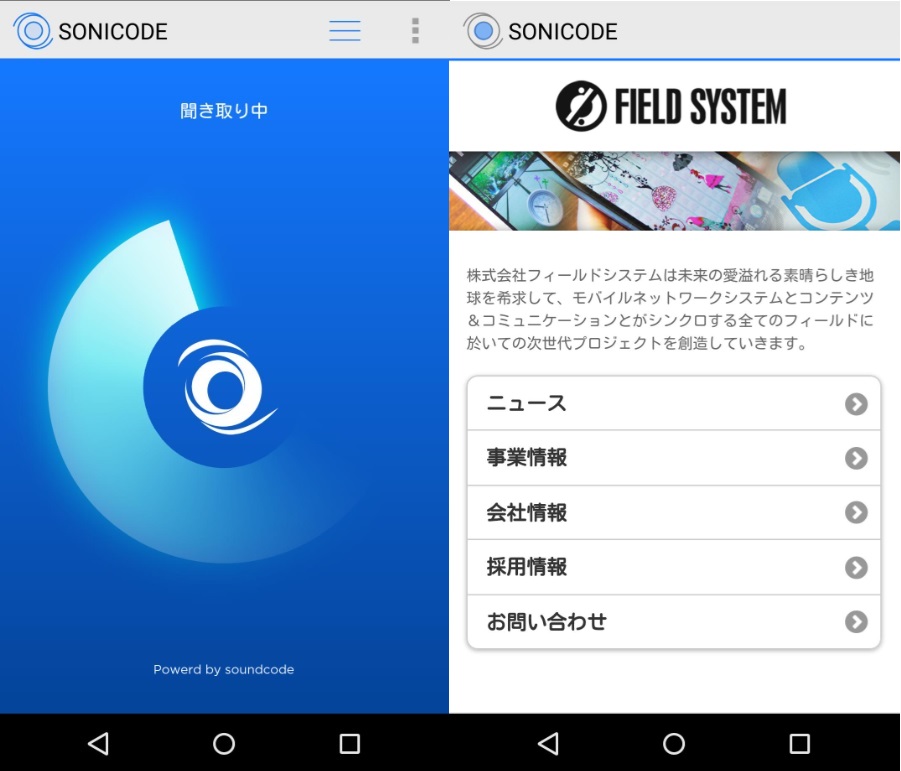
Field System Inc., a mobile application developer, applied wordmark “SONICODE” in standard character for registration on various goods including telecommunication apparatus, electronic machines, consumer video game programs, and its related services in class 9, 38, and 41 with the JPO on December 12, 2014 (TM App no. 2014-105218).

The mark did not face any refusal during the substantive examination and it was registered on date May 15, 2015.

Apparently, the mark has been used on mobile applications for smartphones.


SONY

SONY CORPORATION, a major Japanese manufacturer of consumer electronics products, filed an opposition against the SONICODE mark on August 5, 2015, before the lapse of a two-month statutory period for the opposition, in contravention of Article 4(1)(xi), (xv), and (xix) of the Japan Trademark Law. However, the JPO Opposition Board found both marks dissimilar and no likelihood of confusion between the marks SONY and SONICODE and dismissed SONY’s allegations entirely. [Opposition case no. 2015-900260]

On May 12, 2020, just three days before the lapse of the five-year statute of limitations, SONY CORPORATION files a petition for invalidation and alleged that the contested mark shall be invalidated based on Article 4(1)(x), (xi), (xv).

SONY argued that relevant consumers would conceive SONY at the sight of the contested mark SONICODE because of a high reputation of SONY and less distinctiveness of the term “CODE” in relation to the goods and services in question.

To bolster the arguments, SONY demonstrated how AI speakers, e.g., Amazon Alexa, Google Assist, Microsoft Cortana, Apple Siri, reacted to hear “SONICODE”. Allegedly, the AI speakers recognized it as ‘SONY code’ or ‘SONY cord’ and displayed information relating to SONY.

Field System Inc. did neither answer to the petition nor dispute at all during the invalidation procedure.


JPO decision

The JPO Invalidation Board did not question a remarkable degree of reputation, popularity, and originality of “SONY” as a source indicator of the opponent’s business and its products (telecommunication apparatus, electronic machines, consumer video game programs).

Besides, the Board found the prefix “SONI” of the contested mark gives rise to a similar appearance and pronunciation with “SONY”. Relevant consumers are likely to consider that the contested mark consists of “SONI” and “CODE”. If so, even if both marks are deemed dissimilar in their entirety, the Board has good reason to believe “SONICODE” has a certain degree of similarity to “SONY”.

In view of a close association between the goods and services in question and the opponent business, the Board concluded the contested mark shall be retroactively invalidated in contravention of Article 4(1)(xv). In the meantime, because of the dissimilarity of the marks, the Board dismissed allegations based on Article 4(1)(x) and (xi).