SWATCH Defeated in SWATCH vs iWATCH Trademark Dispute

The Trial Board of Japan Patent Office (JPO) dismissed an invalidation petition by Swiss watch giant, Swatch against TM Reg. no. 5849925 for word mark “iWATCH” owned by U.S. tech giant, Apple Inc.
[Invalidation case no. 2017-890071, Gazette issue date: January 31,2020]

iWATCH

Disputed mark, consisting of a word “iWATCH” in plain block letters (see below), was applied for registration in the name of Apple Inc. on April 25, 2014 in respect of watches, clocks and other goods in class 14.

Immediately after registration on May 13, 2016, Swatch filed an opposition to challenge registrability of disputed mark based on Article 3(1)(iii), 3(1)(vi), 4(1)(xi), 4(1)(xv), 4(1)(xvi) of the Japan Trademark Law, but in vain. [Opposition case no. 2016-900234]

Article 3(1)(iii) is a provision to prohibit any mark from registering where the mark solely consists of elements just to indicate, in a common manner, the place of origin, place of sale, quality, materials, efficacy, intended purpose, quantity, shape (including shape of packages), price, the method or time of production or use.

Article 3(1)(vi) is a comprehensive provision to prohibit any mark lacking inherent distinctiveness from being registered.

Article 4(1)(xi) is a provision to refrain from registering a junior mark which is deemed identical with, or similar to, any senior registered mark.

Article 4(1)(xv) provides that a mark shall not be registered where it is likely to cause confusion with other business entity’s well-known goods or services, to the benefit of brand owner and users’ benefits.

Article 4(1)(xvi) is a provision to prohibit registration of any mark likely to mislead quality of goods or services.

Invalidation Trial

Japan Trademark Law provides a provision to retroactively invalidate trademark registration for specific grounds under Article 46 (1).

In an effort to argue against the opposition decision, Swatch filed a petition for invalidation against disputed mark on October 23, 2017. Swatch argued disputed mark “iWATCH” shall be invalid because of following reasons:

  1. Given disputed mark consists of an alphabet letter “i” and a generic term in relation to a designated goods ‘watch’, the mark can be merely perceived to indicate a value, code, type, mode or standard of ‘watch’. If so, disputed mark shall be lack of distinctiveness and revocable under Article 3(1)(vi) in relation to the goods.
  2. Likewise, relevant consumers would misconceive quality of goods when disputed mark is used on goods other than ‘watch’ in class 14, e.g. jewelry, key holders, jewelry boxes, accessories. If so, disputed mark shall be revocable under Article 4(1)(xvi) in relation to goods other than ‘watch’.
  3. Disputed mark “iWATCH” resembles “SWATCH” from visual and phonetic points of view. It is unquestionable SWATCH has become remarkably famous for watches and fashion items of Swatch Group. If so, a likelihood of confusion will arise between “iWATCH” and “SWATCH” when disputed mark is used on goods in class 14. Thus, disputed mark is revocable under Article 4(1)(xi).

Board Decision

In the decision, the Board sided with Apple Inc. and found that:

  • The Board considers the term “iWATCH” is a coined word in its entirety which does not give rise to any specific meaning at all. Therefore, it is unlikely that relevant consumers conceive disputed mark just as a qualitative indication of goods in question.
  • The Board admits “SWATCH” has been acquired a high degree of reputation and popularity among relevant consumers and traders as famous watch of Swatch Group. In the meantime, the term appears less unique and creative since it is a dictionary word meaning ‘a sample piece (as of fabric) or a collection of samples’.
  • Difference on initial letter of both marks shall not be negligible on the case. The Board has no good reason to believe both marks are deemed similar from visual, phonetic and conceptual points of view.
  • If so, it is unlikely to happen that relevant consumers with an ordinary care would associate or misconceive disputed mark with Swatch or any entity systematically or economically connected with claimant even when used on ‘watch’.

Based on the foregoing, the Board concluded “iWATCH” shall be irrevocable in relation to “SWATCH” and dismissed Swatch’s invalidation petition wholly.


French fashion magazine “ELLE” Victorious in Trademark Opposition against “ELLEROSE”

The Japan Patent Office (JPO) upheld an opposition filed by HACHETTE FILIPACCHI PRESSE, société anonyme (FR) and decided cancellation of Japanese trademark registration no. 6010765 for a composite mark containing “ELLROSE” due to a likelihood of confusion with a French fashion magazine “ELLE”.
[Opposition case no. 2018-900085, Gazette issued date: December 27, 2019]

ELLEROSE

Opposed mark, a composite mark consisting of three terms “ELLEROSE”, “STYLE UP”, “BODY SHAPE WEAR” aligned vertically in different font size and a silhouette of female lower body depicted in between ‘STYLE’ and ‘UP’ (see below), was applied for registration on July 25, 2017 for ‘underwear, socks, thermal supporters [clothing], waistbands, belts [clothing], special clothing for sports’ in class 25 by ELLEROSE Co., Ltd., a Japanese company. The JPO published opposed mark for registration on February 6, 2018.

ELLEROSE promoted the sales of women’s shapewear using the “STYLE UP” mark. Click here.

Opposition by ELLE

On April 6, 2018, just before the lapse of a two-months opposition period, HACHETTE FILIPACCHI PRESSE, société anonyme (hereinafter referred to as HFP), a French company responsible for the well-known women’s magazine ELLE, which had the largest readership of any fashion magazine in the world, with culturally specific editions published on six continents in the early 21st century, filed an opposition to “ELLEROSE”.

In the opposition, HFP contended that opposed mark shall be cancelled under Article 4(1)(xv) of the Japan Trademark Law, stating that relevant consumers are likely to confuse or misconceive opposed mark with HFP or any business entity systematically or economically connected with opponent due to high popularity of opponent’s fashion brand “ELLE” and close resemblance between opposed mark and “ELLE”.

Article 4(1)(xv)

Article 4(1)(xv) provides that a mark shall not be registered where it is likely to cause confusion with other business entity’s well-known goods or services, to the benefit of brand owner and users’ benefits.

Board decision

The Board admitted “ELLE” has acquired a high degree of reputation and popularity among relevant consumers and traders as a source indicator of opponent in connection with magazine as well as fashion items based on the facts that (i) “ELLE japon” fashion magazine has been published in Japan since 1982. Annual circulation of the magazine was 940,000 in 2014, (ii) HSP has continuously promoted and licensed the ELLE mark on various fashion items since 1987. The number of licensees increased over 30. It turned over JPY 4.8billion (approx. USD 43million) in 2017.

Besides, the Board found that it is allowed to cut out and compare respective element of opposed mark with opponent mark “ELLE” in assessing similarity of both marks since the Board can’t identify any visual, conceptual or phonetic linkage between the elements to comprehend opposed mark as a whole. Given the elements of “STYLE UP”, “BODY SHAPE WEAR” and a silhouette of female lower body are less distinctive, there is reasonable ground to believe that relevant consumers shall be impressed with the term “ELLEROSE” and consider it a dominant part of opposed mark.

Averages consumers would easily notice the term “ELLEROSE” consists of “ELLE” and “ROSE” which is a familiar French term meaning ‘a garden plant with thorns on its stems and pleasant-smelling flowers’, and then conceive a famous fashion brand, ELLE from the term when used on goods in class 25.

Based on the foregoing, the Board concluded that, relevant traders or consumers are likely to confuse or misconceive a source of opposed mark with HFP or any entity systematically or economically connected with the opponent when used on goods in class 25 and declared cancellation based on Article 4(1)(xv).

SCOTT Bikes Failed Trademark Opposition against “PRESCOTT”

The Japan Patent Office (JPO) dismissed a trademark opposition claimed by SCOTT USA Inc. against trademark registration no. 6025819 for stylized word mark “PRESCOTT” on bicycles in class 12 by finding dissimilarity to “SCOTT”.
[Opposition case no. 2018-900134, Gazette issue date: December 27, 2019]

“PRESCOTT”

Opposed mark, stylized word mark “PRESCOTT” (see below), was filed by a Chinese individual to the JPO on June 19, 2017 by designating ‘electric bicycles, motorized bicycles, bicycles and accessories/structural parts, motorcycles’ in class 12.

The JPO admitted registration on March 9, 2018 and published for registration on April 3, 2018.

Opposition by SCOTT

To contend registration within a statutory period of two months counting from the publication date, SCOTT USA Inc. filed an opposition on June 1, 2018.

In the opposition brief, SCOTT USA Inc. asserted the opposed mark shall be cancelled in violation of Article 4(1)(viii), (xi) and (xix) of the Japan Trademark Law given a remarkable reputation of opponent mark “SCOTT” to indicate opponent’s mountain bicycles and close resemblance between a senior registration no. 2700543 “SCOTT” in class 12 and opposed mark.

Article 4(1)(viii) prohibits registration of trademarks which contain the representation or name of any person, famous pseudonym, professional name or pen name of another person, or famous abbreviation thereof.

Article 4(1)(xi) is a provision to refrain from registering a junior mark which is deemed identical with, or similar to, any senior registered mark.

Article 4(1)(xix) prohibits to register a trademark which is identical with, or similar to, other entity’s famous mark, if such trademark is aimed for unfair purposes, e.g. gaining unfair profits, or causing damage to the entity.

Scott, founded in 1958 in Sun Valley, Idaho, began as a manufacturer of aluminum ski poles before it branched out into a huge range of other sectors in the sporting goods industry. These days the brand produces bikes for a whole range of disciplines, but it cut its teeth with mountain bikes, introducing its first model way back in 1986. Nowadays, as the leading bike manufacturer in Europe, designing and fabricating an extensive line of high-quality mountain bikes, road bikes, kids bikes and urban city bikes, the SCOTT bikes have been ranked top mountain bicycles brands. In Japan, SCOTT USA has progressively promoted the SCOTT bikes through its subsidiary, SCOTT Japan since 2013. SCOTT Japan spent more than 20 million JP-Yen on advertisement annually.

SCOTT USA Inc. argued that these facts are sufficient to demonstrate “SCOTT” has acquired a high degree of reputation and popularity in the field of sports bicycles as an abbreviation or source indicator of opponent. Given the reputation, it is undeniable that applicant of opposed mark must have acquainted with opponent famous mark “SCOTT” before the filing. Besides, opponent mark “SCOTT” is actually used in an italic font (see below) on the bikes, which truly gives rise to a more resembled impression with opposed mark in the mind of consumers visually.

If so, opposed mark “PRESCOTT” shall be revocable because it contains a famous trademark name “SCOTT” without permission of opponent and looks confusingly similar to opponent’s famous mark when used on sports bicycles in fact. It is obvious that the applicant aims to gain unfair profits by free-riding opponent famous trademark.

JPO decision

The Opposition Board denied a certain degree of reputation and popularity of opponent trademark “SCOTT” in connection with mountain bicycles by stating that the produced evidences have no reference to sales amount and total number of participants to promotional events of the SCOTT bikes in Japan. 20 million JP-Yen (approx. USD182,000) for advertising expenses would be anything but a sufficient amount to prove famous bicycle brands.

Even if it is true that SCOTT sold more than 420,000 bicycles in European market in 2010 and achieved the largest market share in the high-end sports bicycles in ten EU countries, e.g. Germany, Norway, Sweden, the Board considers it insufficient to find a high degree of reputation among consumers in specific country in EU from the produced evidences.

In the assessment of mark, the Board held “PRESCOTT” and “SCOTT” are totally dissimilar from visual and phonetical points of view. Unless the Board finds a term “SCOTT” becomes famous in relation to the goods in question, there is no reason to see it as the dominant portion of opposed mark.

Based on the foregoing, the Board decided opposed mark shall not be cancelled on the grounds of Article 4(1)(viii), (xi) and (xix).

I often see the case like this where the JPO gives an unfavorable decision to famous brand owner. One reason is just due to insufficient production of evidences to show its famousness outside of Japan. Provided that Japanese consumers recognize such circumstance in foreign countries, the brand shall be broadly protected under the Japan Trademark Law.

San Miguel defeat in trademark dispute over ‘AGUA MIGUEL’

In a recent trademark decision, the Opposition Board of Japan Patent Office (JPO) dismissed an opposition against TM Reg. no. 6104642 for word mark ‘AGUA MIGUEL’ filed by Philippines-based San Miguel Brewing International Ltd. who argued a likelihood of confusion with its famous beer brand ‘San Miguel’.
[Opposition case no. 2019-900077, Gazette issued on December 27, 2019]

Opposed mark – AGUA MIGUEL

Opposed mark ‘AGUA MIGUEL’ written in standard character was filed in the name of NIPPON BEER CO., LTD., a Japanese importer and wholesaler of beers and beverage from abroad.

The mark was filed to JPO on March 29, 2018 and, without confronting with office action from the JPO examiner, published for registration on January 8, 2019 over the goods of “mineral water” in class 32.

Opposition by San Miguel

On March 8, 2019, before the lapse of a two-months opposition period, San Miguel Brewing International Ltd. filed an opposition. In the opposition, San Miguel contended opposed mark shall be cancelled based on Article 4(1)(xv) of the Trademark Law.

Article 4(1)(xv) prohibits to register a trademark which is likely to cause confusion with a business of other entity.

Likelihood of confusion is a key criteria when assessing the similarity of trademarks. To establish whether there is likelihood of confusion, the visual, phonetic and conceptual similarity will be assessed as well as the goods and/or services involved. This assessment is based on the overall impression given by those marks, account being taken, in particular, of their distinctive and dominant components. A low degree of similarity between the goods or services may be offset by a high degree of similarity between the marks, and vice versa.

San Miguel argued opposed mark is likely to cause confusion with opponent’s beer brand ‘San Miguel’, which occupies 90% of the market share in Philippines and its reputation has been widely known in Asian countries including Japan. Opposed mark consists of terms ‘AGUA’ and ‘MIGUEL’. ‘AGUA’ is less distinctive in relation to mineral water since it means water in Spanish. If so, it is apparent that the portion of ‘MIGUEL’ relatively plays a dominant role of source indicator of opposed mark. Likewise, presumably relevant consumers would pay more attention to the term ‘Miguel’ from famous beer brand. In view of close association between mineral water and beers and resemblance between the marks, it is undeniable that relevant consumers are likely to confuse or misconceive opposed mark with San Miguel or any business entity systematically or economically connected with opponent.

Board decision

The Opposition Board found a low degree of similarity between ‘San Miguel’ and ‘AGUA MIGUEL’ from visual, phonetic and conceptual points of view. Even if the term ‘AGUA’ means water in Spanish, relevant consumers with an ordinary care at the sight of opposed mark would be unlikely to see the portion of ‘MIGUEL’ as a dominant part, but rather gasp opposed mark in its entirety.

The Board found a certain degree of popularity and reputation of beer brand ‘San Miguel’ among traders and beer drinkers, but, to my surprise, the Board questioned if the beer has been widely known among general consumers regardless of continuous domestic use of the mark in commerce since 1972, by stating that produced materials have no reference to actual sales performance in Japan. A mare fact of continuous use for the last 47 years is insufficient and non-objective to demonstrate famousness of the San Miguel beer brand in Japan.

Provided that opponent failed to demonstrate ‘San Miguel’ has been well-known for opponent’s beer among relevant consumers, the Board held that opposed mark is unlikely to cause confuse with opponent or any business entity systematically or economically connected with San Miguel in view of a remote resemblance between both marks. Thus, opposed mark shall not be revocable to Article 4(1)(xv) of the Trademark Law and dismissed the opposition entirely.

Google successful in a trademark opposition against “ANDROID HOSPITAL”

The Opposition Board of the Japan Patent Office (JPO) decided in favor of Google LLC to retroactively cancel trademark registration no. 6008625 for word mark “ANDROID HOSPITAL” due to a likelihood of confusion with Google’s famous trademark “ANDROID”.
[Opposition case no. 2018-900065, Gazette issued on November 29, 2019]

Opposed mark

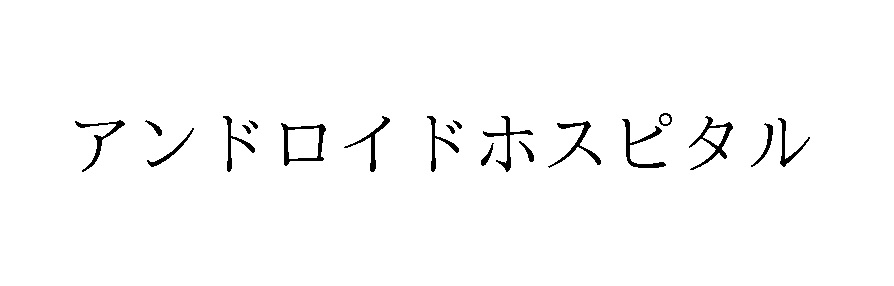
SMAHOSPOTAL Co., Ltd., a Japanese business entity running smartphone repair shops, filed a trademark application for word mark “ANDROID HOSPITAL” written in Japanese Katakana character (see below) on smartphone repair or maintenance service in class 37 to the JPO on May 10, 2017.

Opposed mark was published for registration on January 30, 2018 without confronting with office action from the JPO examiner.

Opposition by Google LLC

On March 14, 2018, Google LLC filed an opposition against “ANDROID HOSPITAL”.

Google argued that opposed mark shall be cancelled in violation of Article 4(1)(xv) of the Trademark Law on the grounds that relevant consumers would confuse or associate opposed mark, containing Google’s trademark “ANDROID” famous for Google’s Linux-based open source operating system for mobile devices, with opponent when used on the designated service in question.

Article 4(1)(xv) prohibits to register a trademark which is likely to cause confusion with a business of other entity.

Board Decision

The Board admitted that ANDROID has acquired a high degree of popularity and reputation as a source indicator of Google’s operating system for mobile devices at the time of both initial filing and registration of opposed mark.

In the assessment of similarity, the Board found it is likely that the average consumers would pay a considerable attention to the term “ANDROID” of opposed mark from its configuration because the initial portion of a mark is better remembered and generally considered to be the dominant portion of the mark. If so, a certain degree of similarity exists between two marks.

Even though “ANDROID” is a dictionary word having a meaning of ‘a robot with a human appearance’, it would anything but mean to negate novelty of the term in relation to OS for mobile devices. Besides, the designated service in question and OS for mobile devices are both related to smartphone. Given ‘smartphone repair or maintenance service’ includes ‘repair and maintenance service for Android smartphones’ as a matter of course and these are purchased or consumed by the same consumers (the general public), the Board considers opponent business and the service in question are closely associated.

Based on the foregoing, the Board concluded that, from totality of circumstances and evidences, relevant traders and consumers are likely to confuse or misconceive a source of opposed mark used in relation to the service (class 37) with Google or any entity systematically or economically connected with the opponent and declared cancellation based on Article 4(1)(xv).

Happiness Diamond makes Chopard Happy Diamonds unhappy

Swiss manufacturer and retailer of luxury watches, jewelry and accessories, CHOPARD INTERNATIONAL S.A. failed in their attempt to stop the registration of a word mark “Happiness Diamond” at the Japan Patent Office.
[Opposition case no. 2019-900134, Gazette issue date: November 29, 2019]

HAPPINESS DIAMOND

Opposed mark (TM Registration no. 6118600), consisting of two words “Happiness Diamond” in standard character, was applied for registration on November 26,2018 for jewelry, accessories, watches in class 14 by Happiness and D Co., Ltd., a Japanese company.

At an initial application, applicant requested the JPO to expedite substantive examination. In accordance with the request, JPO examiner put a priority on the mark and admitted to grant registration in two months subsequent to substantive examination.

Accelerated Examination

JPO applies the accelerated examination system to trademark application on the condition that the application meets the following condition.

  1. Applicant/licensee uses or will use applied mark on one of designated goods/services at least, and there exists an urgency to registration, e.g. unauthorized use by third parties
  2. All designated goods/services are actually or shortly used by applicant/licensee, or
  3. Applicant/licensee uses or will use applied mark on one of designated goods/services at least, and all the goods/services are designated in accordance with a standard description based on Examination Guidelines for Similar Goods and Services.

Accelerated examination system enables applicant to obtain examination results in less than two months on average, which is six months shorter than regular examination nowadays.

Opposition by Chopard

On April 26, 2019, before the lapse of a two-months opposition period, CHOPARD INTERNATIONAL S.A., a Swiss manufacturer and retailer of luxury watches, jewelry and accessories, filed an opposition to opposed mark.

Opponent (CHOPARD) claimed that the opposed mark “Happiness Diamond” shall be retroactively cancelled under Article 4(1)(x), (xi), (xv), (xix) of the Japan Trademark Law in relation to all designated goods in class 14 by citing an owned senior international registration no. 446502 for word mark “Happy Diamonds” covering ‘Mechanical hand-winding and self-winding watches; electric and electronic watches; chronometers; jewelry; jewelry watches; all these goods adorned with diamonds’ in class 14, which has been effectively registered in Japan since September 24, 2010.

Article 4(1)(x) prohibits to register a trademark which is identical with, or similar to, other entity’s well-known mark over goods or services closely related with the entity’s business.

Article 4(1)(xi) is a provision to refrain from registering a junior mark which is deemed identical with, or similar to, any senior registered mark.

Article 4(1)(xv) prohibits to register a trademark which is likely to cause confusion with a business of other entity.

Article 4(1)(xix) prohibits to register a trademark which is identical with, or similar to, other entity’s famous mark, if such trademark is aimed for unfair purposes, e.g. gaining unfair profits, or causing damage to the entity.

To stop registration of opposed mark, CHOPARD has to prove “Happy Diamonds” is similar to “Happiness Diamond”. Even if both marks are deemed dissimilar, CHOPARD is still able to win the case by demonstrating likelihood of confusion resulting from fame of CHOPARD “Happy Diamonds”.

Board Decision

To my surprise, the Board held “Happiness Diamond” is sufficiently dissimilar to “Happy Diamonds” by stating that:

  1. From appearance and pronunciation, both marks, consisting of two words, are unlikely to cause confusion given the difference on the first word “Happiness” and “Happy”.
  2. Besides, both marks do not give rise to any specific meaning. If so, it is incomparable in concept.
  3. Thus, from the totality of the circumstances, relevant consumers would neither associate nor connect opposed mark with “Happy Diamonds”.

The Board questioned whether CHOPARD “Happy Diamonds” has acquired a sufficient degree of reputation and popularity among relevant consumers in Japan to be protectable under Article 4(1)(xv) of the Trademark Law in view of produced evidences although opponent alleged its first use dates back to 1976. If so, it is unlikely that relevant consumers confuse or misconceive a source of the opposed mark with CHOPARD or any entity systematically or economically connected with the opponent.

Consequently, opposed mark is not subject to Article 4(1)(x), (xi), (xv) and (xix), and remains valid as a status quo.

JAGUAR LAND ROVER Lost Trademark Opposition over Jaguar Logo

The Opposition Board of the Japan Patent Office (JPO) held a junior trademark registration no. 6104905 for a composite mark comprised of “JAGTEC” and feline device is neither similar to, nor likely to cause confusion with senior trademark registrations for leaping jaguar logo owned by Jaguar Land Rover Ltd. when used on automobiles in class 12.
[Opposition case no. 2019-900064, Gazette issued date: October 25, 2019]

Opposed mark

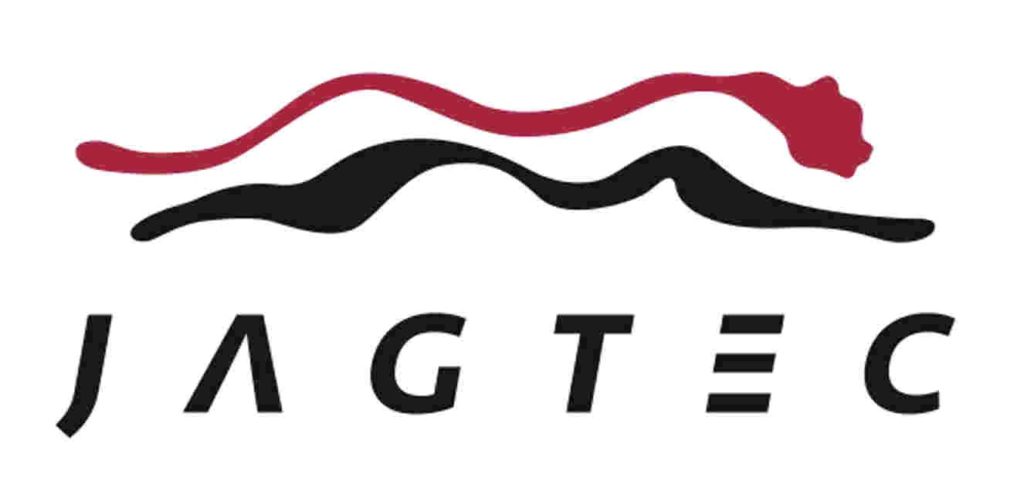
Opposed mark (see below) was applied for registration on March 29, 2018 by designating automobiles and its structural parts in class 12, and published for registration on January 8, 2019 without confronting any office action from the JPO examiner.

Opposition by Jaguar Land Rover

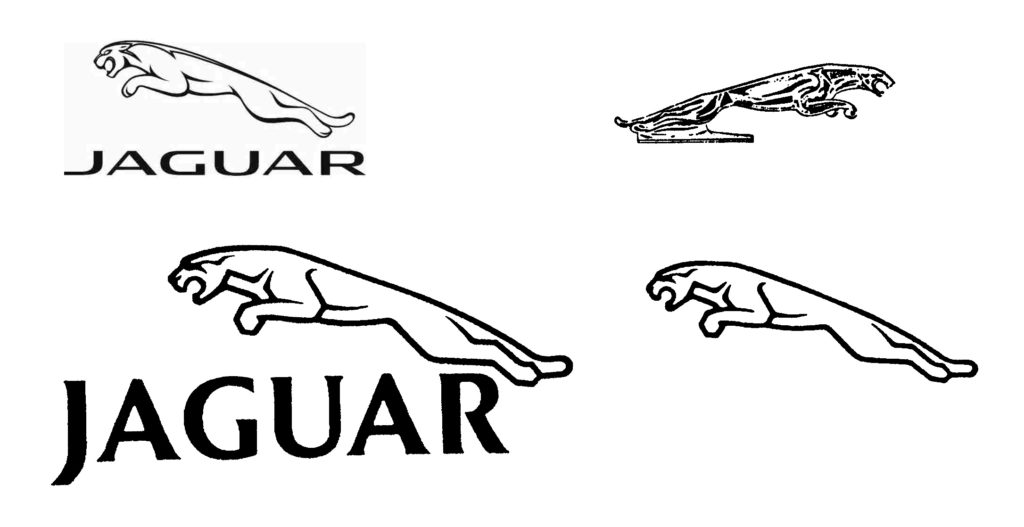
Jaguar Land Rover Ltd. filed an opposition on February 28, 2019 before the JPO and claimed that opposed mark shall be cancelled based on Article 4(1)(xi) and (xv) of the Trademark Law by citing trademark registrations for its iconic jaguar logos (see below) which include the image of a leaping jaguar, accompanied by the word “jaguar”, which the opponent claims to be used over 75 years old.

Article 4(1)(xi) is a provision to prohibit from registering a junior mark which is deemed identical with, or similar to, any senior registered mark.

Article 4(1)(xv) provides that a mark shall not be registered where it is likely to cause confusion with other business entity’s well-known goods or services, to the benefit of brand owner and users’ benefits.

Jaguar Land Rover claimed that , inter alia, opposed mark, consisting of a leaping feline device and literal element starting from “JAG”, looks confusingly similar to the cited marks from visual, oral, and conceptual points of view. Besides, the goods in question is identical with that of cited marks. If so, opposed application “for the contested goods would be recognized as uniquely and unmistakably identifying or suggesting a connection to opponent , and thus relevant consumers are likely to confuse or misconceive opposed mark with a famous car brand “JAGUAR”.

Opposition decision

To my surprise, the Opposition Board pointed out that Jaguar Land Rover alleged the leaping jaguar logo has been used since 1938 and well-acquainted with relevant consumers though, it is questionable whether cited marks have acquired a substantial reputation as a result of consecutive use from the produced evidences.

Besides, the Board flatly negated similarity between opposed mark and cited marks respectively.

By taking into consideration uncertain famousness of cited marks and low degree of similarity between the marks, the Board concluded relevant traders and consumers are unlikely to confuse or associate opposed mark with opponent or any business entity economically or systematically connected with Jaguar Land Rover even when used on automobiles. Based on the foregoing, opposed mark shall not be cancelled under Article 4(1)(xi) and (xv) of the Trademark Law.

JPO finds “CLUB MOET KYOTO” and “Moët & Chandon” likely to cause confusion

The Opposition Board of the Japan Patent Office (JPO) sided with MHCS, the producer, inter alia, of the famous Moët & Chandon champagne, and decided to cancel trademark registration no. 6030384 for word mark “CLUB MOET KYOTO” due to a likelihood of confusion with “Moët & Chandon”.

CLUB MOET KYOTO

Opposed mark, a word mark “CLUB MOET KYOTO” written in standard character, was filed on November 14, 2017 by designating restaurant service of class 43 in the name of a Japanese business entity having its principal place of business at Kyoto. It appears the applicant owns hostess bar and opposed mark is actually used as a name of the bar. See here.

Immediately after filing the application, applicant requested the JPO to accelerate examination of opposed mark. In accordance with the request, the JPO rushed to a decision and admitted registration on March 23, 2018.

MHCS – OPPOSITION

MHCS, as a holder of the Japanese trademark “MOET”, sought to retroactively cancel the registration of opposed mark, on the grounds that the mark was likely to cause confusion with “Moët & Chandon” when used on restaurant service in class 43 under Article 4(1)(xv) of the Japan Trademark Law.

Likelihood of confusion is a key criteria when assessing the similarity of trademarks. To establish whether there is likelihood of confusion, the visual, phonetic and conceptual similarity will be assessed as well as the goods and/or services involved. This assessment is based on the overall impression given by those marks, account being taken, in particular, of their distinctive and dominant components. A low degree of similarity between the goods or services may be offset by a high degree of similarity between the marks, and vice versa.

MHCS argued that a term “MOET” of opposed mark shall playa a dominant role as a source indicator since both “CLUB” and “KYOTO” are devoid of distinctive character in relation to restaurant service. If so, relevant consumers may misconceive “Moët & Chandon” from opposed mark when used on the service in question by taking its prestigious reputation of “Moët” as an abbreviation of world-famous champagne into consideration.

OPPOSITION DECISION

The JPO Opposition Board decided in favor of MHCS, finding that both “Moët & Chandon” and its abbreviation “Moët” have acquired substantial reputation as a top ranking champagne brand distributed by MHCS. It is unlikely that relevant consumers would conceive “Moët” as a surname of foreigners. If so, the term is anything but a dictionary word, rather a coined word. Besides, both marks are confusingly similar, due to visual, phonetic and conceptual similarities, since the literal elements “CLUB” and “KYOTO” of opposed mark are devoid of distinctive character in relation to the service in question, as well as close association between champagne and restaurant service for which protection was sought based on the fact that MHCS once opened restaurant in the year 2014.

Based on the above considerations, the Opposition Board cancelled trademark registration of opposed mark in its entirety, finding there to be likelihood of confusion between “Moët & Chandon” and the trademark applied for.
[Opposition case no. 2018-900152, Gazette issued date: October 25, 2019]

Volkswagen Unsuccessful in Trademark Opposition to Baidu’s “Car-pollo” mark

In a trademark opposition involving the Volkswagen Polo, the Opposition Board of Japan Patent Office (JPO) decided that VW’s famous car model name “Polo” is dissimilar to, and unlikely to cause confusion with, the word mark “Car-pollo” even when used in relation to car navigation.
[Opposition Case no. 2019-900054, Gazette issued date: October 25, 2019]


Trademark opposition

German car giant Volkswagen AG filed an opposition against TM registration no. 615016 for word mark “Car-pollo” written in standard character (Opposed mark) sought for registration by Baidu Online Network Technology Beijing Company Limited, a Chinese language internet search company, on the grounds that Opposed mark shall be objectionable under Article 4(1)(xi) and 4(1)(xv) of the Japan Trademark Law based on senior trademark registrations for word mark “POLO”.

The opposed mark designates navigation apparatus (GPS) for vehicles [on-board computers]; car video recorders; batteries for vehicles; battery charging devices for motor vehicles; electric locks for vehicles and others in class 9, wheel barrows; airplanes; vessels; bicycles; electric bicycles in class 12, and automatic driving cars design in class 42.

Article 4(1)(xi) is a provision to prohibit from registering a junior mark which is deemed identical with, or similar to, any senior registered mark.

Volkswagen argued opposed mark is a compound word consisting of “Car”, which would be unregistrable alone in relation to the designated goods and service, and “pollo” formed with hyphen. If so, the term “pollo” would constitute the dominant portion of opposed mark. Since the term is an unfamiliar Italian and Spanish word in Japan, relevant consumers would not conceive its meaning of ‘chicken’ at all. The term “pollo” gives rise to a same sound with “POLO” and resembles with “POLO” from appearance. Also, the designated goods in class 12 of both marks are identical or similar. Therefore, opposed mark shall be objectionable under Article 4(1)(xi).

Article 4(1)(xv) provides that a mark shall not be registered where it is likely to cause confusion with other business entity’s well-known goods or services, to the benefit of brand owner and users’ benefits.

Volkswagen argued “POLO” has acquired substantial popularity and reputation as a source indicator of VW’s famous car model name. Thus, it is highly likely that relevant traders and consumers confuse or misconceive the source of goods and services using opposed mark “Car-pollo” with opponent or a business entity systematically or economically connected with VW. If so, opposed mark shall be objectionable under Article 4(1)(xv).


Board decision

The Board admitted “POLO” has become remarkably famous for a car mode name of Volkswagen by taking into consideration of the facts that the Volkswagen Polo has been continuously imported to Japan since 1982 and ranked in the top 5 of new imported automobile registrations for the past decade.

In the meantime, the Board found “POLO” and “Car-pollo” are totally dissimilar from visual, sound and conceptual points of view. Regarding opponent’s allegation the Board stated the term “Car” isn’t a usual word to indicate ‘wheel barrows; airplanes; vessels; bicycles; electric bicycles’ of class 12. From the produced evidence, there does not exist any circumstance to admit the term “pollo” shall be conceived as a dominant portion of opposed mark in fact. If so, it looks rather appropriate to consider relevant consumers would grasp opposed mark in its entirety.

Given a lower degree of similarity between both marks and lack of originality for the term “POLO”, which means a game played on horseback between two teams, each of four players, the Board also negated a likelihood of confusion between “POLO” and “Car-pollo” even when opposed mark is used on car video recorders; batteries for vehicles; battery charging devices for motor vehicles; electric locks for vehicles, and car-related services.

Based on the foregoing, the Board dismissed opposition and allowed “Car-pollo” to survive.

Rothschild Lost Trademark Opposition in Japan

In a recent trademark opposition, the Opposition Board of the Japan Patent Office (JPO) dismissed an opposition filed by Baron Philippe de Rothschild S.A. (Rothschild) against trademark registration no. 6090508 for word mark “MOUTON” in relation to restaurant service due to unlikelihood of confusion with the fabled French winery “Château Mouton Rothschild”.
[Opposition case no. 2019-900012, Gazette issued date: September 7, 2019]

Opposed mark

Opposed mark, consisting of a word mark “MOUTON” in standard character, was filed in the name of Kabushiki Kaisha Waltz, a Japanese company deploying in business field of bars and restaurants.

The mark was filed to JPO on November 17, 2017. Going through substantive examination, JPO admitted registration in relation to “restaurant service” in class 43 and “wholesale and retail services for non-alcoholic beverages and foods” in class 35, and published for opposition on November 13, 2018.

Opposition by Rothschild

On January 15, 2019, Baron Philippe de Rothschild S.A. filed an opposition and argued opposed mark shall be revocable under Article 4(1)(vii) and 4(1)(xv) of the Japan Trademark Law by citing its wine brand “Château Mouton Rothschild”.

Article 4(1)(vii)

Article 4(1)(vii) prohibits any mark likely to offend public order and morals from registering.
Trademark Examination Guidelines set forth criteria for the article and examples.
Among others, “Trademarks whose registration is contrary to the order predetermined under the Trademark Act and is utterly unacceptable for lack of social reasonableness in the background to the filing of an application for trademark registration.”

Based on a remarkable degree of reputation and popularity to “Château Mouton Rothschild”, Rothschild asserted, applicant must have been aware of the wine brand and filed opposed mark with a malicious intention to take advantage of the reputation and credit of opponent’s famous trademark and impair the goodwill embodied on its brand.

Article 4(1)(xv)

Article 4(1)(xv) prohibits to register a trademark which is likely to cause confusion with a business of other entity.

Rothschild argued that opponent has used the mark “Château Mouton Rothschild”on wines from Pauillac in the Médoc region which became Premier Grand Cru in 1973, and thus part of a limited list since there are only 5 Premiers Grands Crus from the region. It is doubtless that “Château Mouton Rothschild” and its abbreviation “MOUTON” have acquired a remarkable degree of reputation and popularity as a source indicator of opponent wines. If so, relevant consumers and traders of restaurant service are likely to misconceive or associate opposed mark with famous wine brand of opponent.

Opposition decision

The Opposition Board admitted a certain degree of reputation and popularity to “Château Mouton Rothschild” as a source indicator of opponent among traders and wine lovers, however, questioned whether the wine brand has become famous among general consumers. Besides, from the produced evidences, the Board was not convinced that “MOUTON” has been known as an abbreviation of “Château Mouton Rothschild”.
In the assessment of the similarity between two marks, the Board found a low degree of similarity between opposed mark and “Château Mouton Rothschild” from visual, phonetic, and conceptual points of view. If so, even if wine and restaurant service are associated, it is unlikely that average consumers confuse or associate opposed mark with Rothschild.

Also, the Board found it was not foreseen a circumstance to offend public order and morals from registering opposed mark and give harmful effect to the international faith provided that “MOUTON” is a dictionary word meaning ‘processed sheepskin that has been sheared and dyed to resemble beaver or seal’.

Based on the foregoing, the Board concluded opposed mark shall not be revocable under Article 4(1)(vii) as well as (xv) and granted registration a status quo.