Google successful in a trademark opposition against “ANDROID HOSPITAL”

The Opposition Board of the Japan Patent Office (JPO) decided in favor of Google LLC to retroactively cancel trademark registration no. 6008625 for word mark “ANDROID HOSPITAL” due to a likelihood of confusion with Google’s famous trademark “ANDROID”.
[Opposition case no. 2018-900065, Gazette issued on November 29, 2019]

Opposed mark

SMAHOSPOTAL Co., Ltd., a Japanese business entity running smartphone repair shops, filed a trademark application for word mark “ANDROID HOSPITAL” written in Japanese Katakana character (see below) on smartphone repair or maintenance service in class 37 to the JPO on May 10, 2017.
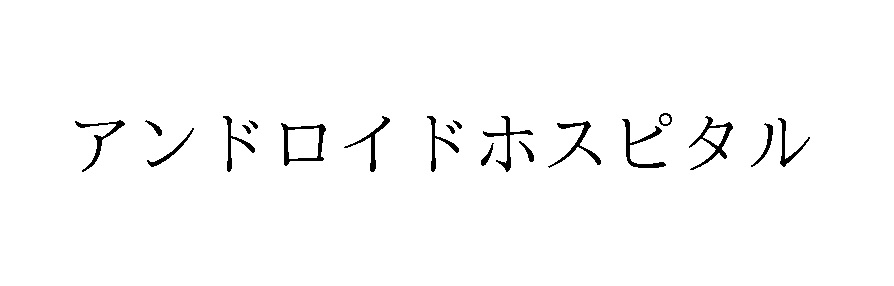
Opposed mark was published for registration on January 30, 2018 without confronting with office action from the JPO examiner.

Opposition by Google LLC

On March 14, 2018, Google LLC filed an opposition against “ANDROID HOSPITAL”.

Google argued that opposed mark shall be cancelled in violation of Article 4(1)(xv) of the Trademark Law on the grounds that relevant consumers would confuse or associate opposed mark, containing Google’s trademark “ANDROID” famous for Google’s Linux-based open source operating system for mobile devices, with opponent when used on the designated service in question.

Article 4(1)(xv) prohibits to register a trademark which is likely to cause confusion with a business of other entity.

Board Decision

The Board admitted that ANDROID has acquired a high degree of popularity and reputation as a source indicator of Google’s operating system for mobile devices at the time of both initial filing and registration of opposed mark.

In the assessment of similarity, the Board found it is likely that the average consumers would pay a considerable attention to the term “ANDROID” of opposed mark from its configuration because the initial portion of a mark is better remembered and generally considered to be the dominant portion of the mark. If so, a certain degree of similarity exists between two marks.

Even though “ANDROID” is a dictionary word having a meaning of ‘a robot with a human appearance’, it would anything but mean to negate novelty of the term in relation to OS for mobile devices. Besides, the designated service in question and OS for mobile devices are both related to smartphone. Given ‘smartphone repair or maintenance service’ includes ‘repair and maintenance service for Android smartphones’ as a matter of course and these are purchased or consumed by the same consumers (the general public), the Board considers opponent business and the service in question are closely associated.

Based on the foregoing, the Board concluded that, from totality of circumstances and evidences, relevant traders and consumers are likely to confuse or misconceive a source of opposed mark used in relation to the service (class 37) with Google or any entity systematically or economically connected with the opponent and declared cancellation based on Article 4(1)(xv).
JAGUAR LAND ROVER Lost Trademark Opposition over Jaguar Logo

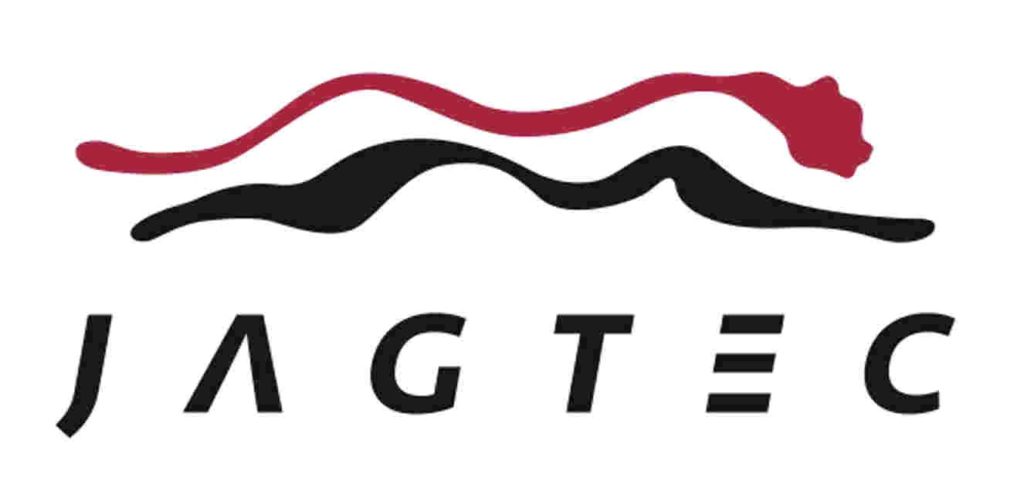
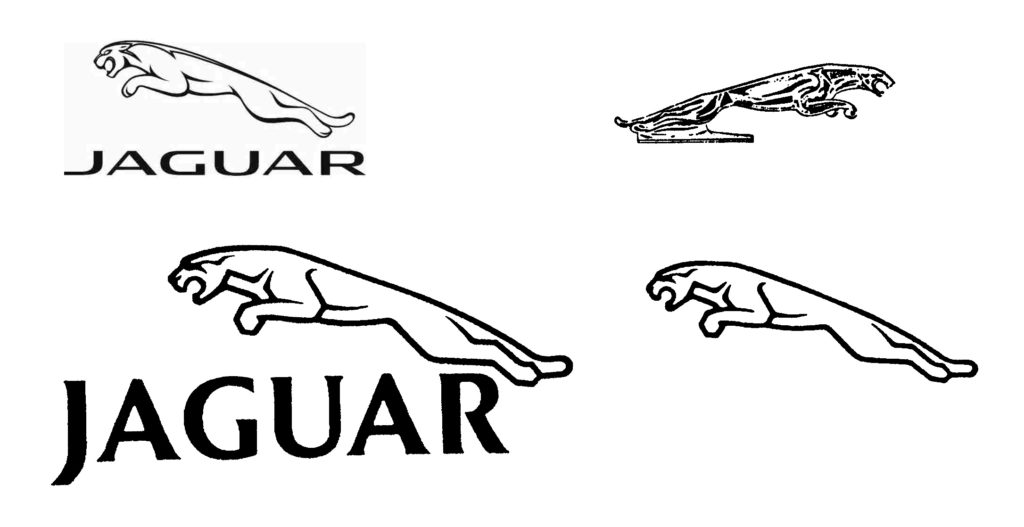
The Opposition Board of the Japan Patent Office (JPO) held a junior trademark registration no. 6104905 for a composite mark comprised of “JAGTEC” and feline device is neither similar to, nor likely to cause confusion with senior trademark registrations for leaping jaguar logo owned by Jaguar Land Rover Ltd. when used on automobiles in class 12.
[Opposition case no. 2019-900064, Gazette issued date: October 25, 2019]

Opposed mark

Opposed mark (see below) was applied for registration on March 29, 2018 by designating automobiles and its structural parts in class 12, and published for registration on January 8, 2019 without confronting any office action from the JPO examiner.

Opposition by Jaguar Land Rover

Jaguar Land Rover Ltd. filed an opposition on February 28, 2019 before the JPO and claimed that opposed mark shall be cancelled based on Article 4(1)(xi) and (xv) of the Trademark Law by citing trademark registrations for its iconic jaguar logos (see below) which include the image of a leaping jaguar, accompanied by the word “jaguar”, which the opponent claims to be used over 75 years old.

Article 4(1)(xi) is a provision to prohibit from registering a junior mark which is deemed identical with, or similar to, any senior registered mark.

Article 4(1)(xv) provides that a mark shall not be registered where it is likely to cause confusion with other business entity’s well-known goods or services, to the benefit of brand owner and users’ benefits.

Jaguar Land Rover claimed that , inter alia, opposed mark, consisting of a leaping feline device and literal element starting from “JAG”, looks confusingly similar to the cited marks from visual, oral, and conceptual points of view. Besides, the goods in question is identical with that of cited marks. If so, opposed application “for the contested goods would be recognized as uniquely and unmistakably identifying or suggesting a connection to opponent , and thus relevant consumers are likely to confuse or misconceive opposed mark with a famous car brand “JAGUAR”.

Opposition decision

To my surprise, the Opposition Board pointed out that Jaguar Land Rover alleged the leaping jaguar logo has been used since 1938 and well-acquainted with relevant consumers though, it is questionable whether cited marks have acquired a substantial reputation as a result of consecutive use from the produced evidences.

Besides, the Board flatly negated similarity between opposed mark and cited marks respectively.

By taking into consideration uncertain famousness of cited marks and low degree of similarity between the marks, the Board concluded relevant traders and consumers are unlikely to confuse or associate opposed mark with opponent or any business entity economically or systematically connected with Jaguar Land Rover even when used on automobiles. Based on the foregoing, opposed mark shall not be cancelled under Article 4(1)(xi) and (xv) of the Trademark Law.

Volkswagen Unsuccessful in Trademark Opposition to Baidu’s “Car-pollo” mark

In a trademark opposition involving the Volkswagen Polo, the Opposition Board of Japan Patent Office (JPO) decided that VW’s famous car model name “Polo” is dissimilar to, and unlikely to cause confusion with, the word mark “Car-pollo” even when used in relation to car navigation.
[Opposition Case no. 2019-900054, Gazette issued date: October 25, 2019]


Trademark opposition

German car giant Volkswagen AG filed an opposition against TM registration no. 615016 for word mark “Car-pollo” written in standard character (Opposed mark) sought for registration by Baidu Online Network Technology Beijing Company Limited, a Chinese language internet search company, on the grounds that Opposed mark shall be objectionable under Article 4(1)(xi) and 4(1)(xv) of the Japan Trademark Law based on senior trademark registrations for word mark “POLO”.

The opposed mark designates navigation apparatus (GPS) for vehicles [on-board computers]; car video recorders; batteries for vehicles; battery charging devices for motor vehicles; electric locks for vehicles and others in class 9, wheel barrows; airplanes; vessels; bicycles; electric bicycles in class 12, and automatic driving cars design in class 42.

Article 4(1)(xi) is a provision to prohibit from registering a junior mark which is deemed identical with, or similar to, any senior registered mark.

Volkswagen argued opposed mark is a compound word consisting of “Car”, which would be unregistrable alone in relation to the designated goods and service, and “pollo” formed with hyphen. If so, the term “pollo” would constitute the dominant portion of opposed mark. Since the term is an unfamiliar Italian and Spanish word in Japan, relevant consumers would not conceive its meaning of ‘chicken’ at all. The term “pollo” gives rise to a same sound with “POLO” and resembles with “POLO” from appearance. Also, the designated goods in class 12 of both marks are identical or similar. Therefore, opposed mark shall be objectionable under Article 4(1)(xi).

Article 4(1)(xv) provides that a mark shall not be registered where it is likely to cause confusion with other business entity’s well-known goods or services, to the benefit of brand owner and users’ benefits.

Volkswagen argued “POLO” has acquired substantial popularity and reputation as a source indicator of VW’s famous car model name. Thus, it is highly likely that relevant traders and consumers confuse or misconceive the source of goods and services using opposed mark “Car-pollo” with opponent or a business entity systematically or economically connected with VW. If so, opposed mark shall be objectionable under Article 4(1)(xv).


Board decision

The Board admitted “POLO” has become remarkably famous for a car mode name of Volkswagen by taking into consideration of the facts that the Volkswagen Polo has been continuously imported to Japan since 1982 and ranked in the top 5 of new imported automobile registrations for the past decade.

In the meantime, the Board found “POLO” and “Car-pollo” are totally dissimilar from visual, sound and conceptual points of view. Regarding opponent’s allegation the Board stated the term “Car” isn’t a usual word to indicate ‘wheel barrows; airplanes; vessels; bicycles; electric bicycles’ of class 12. From the produced evidence, there does not exist any circumstance to admit the term “pollo” shall be conceived as a dominant portion of opposed mark in fact. If so, it looks rather appropriate to consider relevant consumers would grasp opposed mark in its entirety.

Given a lower degree of similarity between both marks and lack of originality for the term “POLO”, which means a game played on horseback between two teams, each of four players, the Board also negated a likelihood of confusion between “POLO” and “Car-pollo” even when opposed mark is used on car video recorders; batteries for vehicles; battery charging devices for motor vehicles; electric locks for vehicles, and car-related services.

Based on the foregoing, the Board dismissed opposition and allowed “Car-pollo” to survive.

HUGO BOSS fails in attempt to block trademark registration

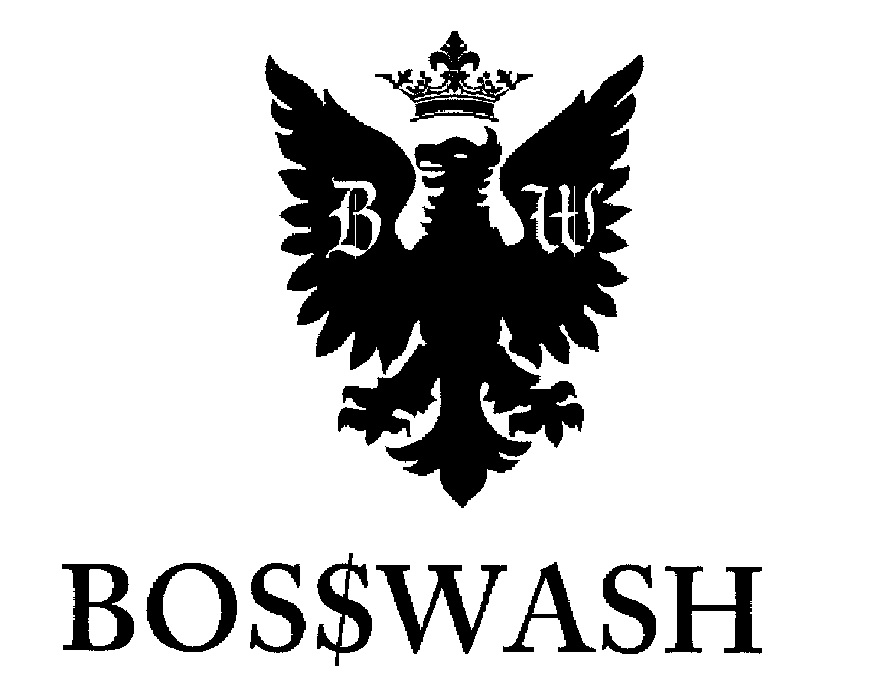
German luxury fashion house Hugo Boss has failed in their attempt to stop the registration of a composite mark consisting of “BOSSWASH” and a spread-eagle device at the Japan Patent Office (JPO).
[Opposition case no. 2017-900382, Gazette issue date: October 25, 2019]

Opposed mark

Opposed mark, filed in April 2017, consists of the literal element “BOSSWASH” and a spread-eagle in black with crown over its head, a letter “B” on its right wing and “W” on left wing (see below).

The application was for bags and pouches in class 18 and published for registration (TM Registration no. 5985092) by the JPO on October 24, 2017.

Opposition by Hugo Boss

To oppose against registration within a statutory period of two months counting from the publication date, HUGO BOSS Trademark Management GmbH & Co KG filed an opposition on December 20, 2017.

Hugo Boss’s opposition to stop the registration was based on claims that the “BOSSWASH” mark could be similar to or confused with sixteen of their earlier trademarks (#2190696, #3236870, IR746972, IR754225, IR773035, IR782587, IR827260, IR827261, IR831750, IR952458, IR964946, IR1023719, IR1055000, IR1058629, IR1072604, IR1263822), which prominently contain the term “BOSS”.

Board Decision

In the decision, the JPO found that, given the literal portion of opposed mark “BOSSWSH” shall be inseparable and perceived in its entirety, opposed mark and Hugo Boss’s trademarks were sufficiently distinguishable in visual, phonetic and conceptual points of view.

To my surprise, the Opposition Board of JPO admitted a high degree of popularity and reputation of “HUGH BOSS” as a trade name of opponent, however, it denied popularity of Hugo Boss’s trademarks, stating that produced materials are insufficient and non-objective to demonstrate substantial use and famousness of the cited marks.

Based on the foregoing, the JPO concluded it is unlikely that consumers confuse or misconceive a source of the opposed mark with Hugo Boss and dismissed the opposition totally.

Failed Opposition by Apple against trademark registration “EYE PHONE”

The Japan Patent Office (JPO) dismissed a trademark opposition claimed by the U.S. tech giant, Apple Inc. against trademark registration no. 6099794 for word mark “EYE PHONE” in class 9 by finding less likelihood of confusion with Apple “iPhone”.
[Opposition case no. 2019-900030, Gazette issue date: September 27, 2019]

“EYE PHONE”

Opposed mark, a word mark “EYE PHONE” in standard character, was filed by a Japanese business entity, NOVELTY EYE-WEAR Inc., on February 26, 2018 by designating ‘spectacles [eyeglasses and goggles]’ in class 9.

The JPO admitted registration on November 22, 2018 and published for registration on December 18, 2018.

APPLE’s Opposition

To oppose against registration within a statutory period of two months counting from the publication date, Apple Inc. filed an opposition on January 28, 2019.

In the opposition brief, Apple Inc. asserted the opposed mark shall be cancelled in violation of Article 4(1)(vii), (xv) and (xix) of the Japan Trademark Law given a remarkable reputation of opponent mark “iPhone” to indicate opponent’s smart phones currently holding a 44.1% market share in Japan and close resemblance between “iPhone” and “EYE PHONE”.

Apple Inc. argued opposed mark “EYE PHONE” has the same pronunciation with “iPhone” and gives a similar impression in appearance. If so, both marks shall be confusingly similar. Besides, the goods in question are closely related to smart phones since smartphone users get to wear specific glasses for smartphone to block blue light. Recently, smart glasses, wearable device that brings with suitable technology a computer screen/display in front of a person’s eye, have become a hot topic.

Article 4(1)(xv) provides that a mark shall not be registered where it is likely to cause confusion with other business entity’s well-known goods or services, to the benefit of brand owner and consumers.

Board Decision

The Opposition Board admitted a remarkable degree of reputation and popularity of opponent trademark “iPhone” in connection with smart phones based on the produced evidences boasting the top market share consecutively for the past seven years in Japan.

Meanwhile, the Board found a low degree of originality of “iPhone” given a combination of alphabetical letter “i” and descriptive term “Phone” in relation to smartphones.

In the assessment of mark, the Board held “EYE PHONE” and “iPhone” are dissimilar even if both marks have the same pronunciation since they are sufficiently distinguishable from visual and conceptual point of view. Also, the Board negated close relation between glasses and smartphones in view of its nature, purpose, usage, distribution channel and consumers.

If so, it is unlikely that the consumers confuse or misconceive a source of opposed mark with Apple Inc. or any entity systematically or economically connected with opponent.

Based on the foregoing, the Board decided opposed mark shall not be cancelled on the grounds of Article 4(1)(vii), (xv) and (xix).

Chloé Victorious in Trademark Battle

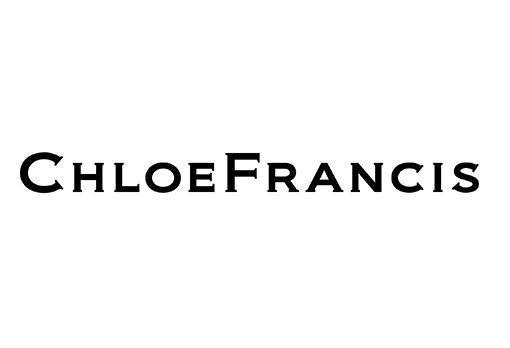
In a recent administrative trademark decision, the Opposition Board of Japan Patent Office (JPO) upheld an opposition to the registration of “CHLOEFRANCIS” on the ground that it is likely to cause confusion with a French fashion house, Chloe.
[Opposition case no. 2018-900048, Gazette issued date: August 30, 2019]

CHLOEFRANCIS

Opposed mark, a word mark “CHLOEFANCIS” in standard character was applied for registration on May 25, 2017 for ‘shoes’ in class 25 by Kabushiki Kaisha Jay Jay Japan, a Japanese shoemaker.

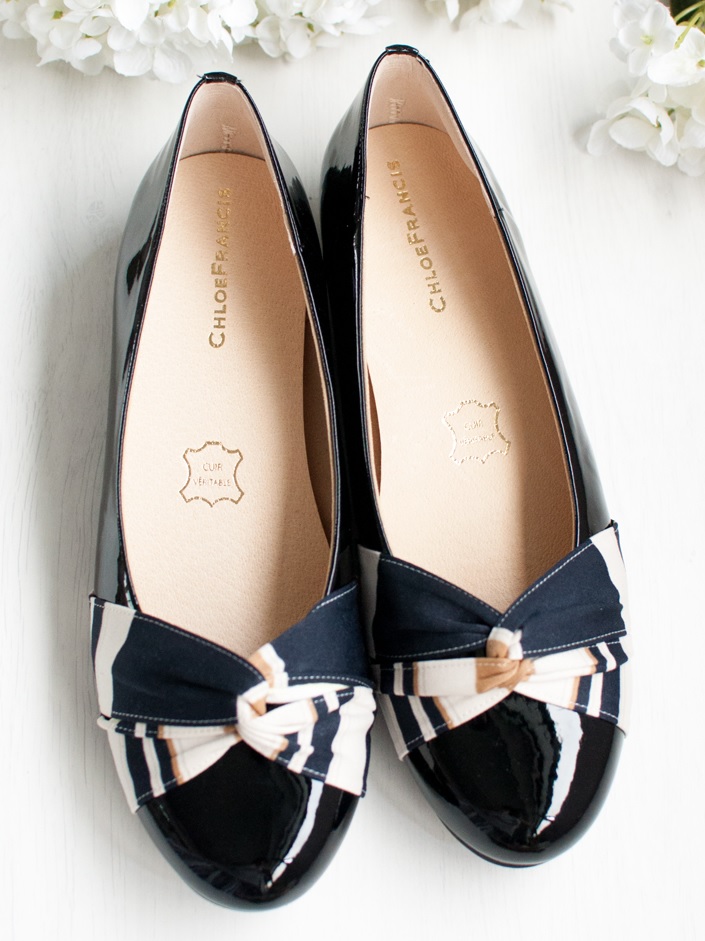
Jay Jay Japan has been promoting the sales of women’s shoes, ballerinas and heels using the CHLOEFRANCIS mark.

Opposition by Chloe

On February 23, 2018, Chloe S.A.S., a French luxury fashion house founded in 1952 by Gaby Aghion, filed an opposition, stating that relevant consumers are likely to confuse or misconceive opposed mark with Chloe or any business entity systematically or economically connected with opponent due to high popularity of opponent’s fashion brand “Chloe” and close resemblance between opposed mark and “Chloe”.

Article 4(1)(xv)

Chloe sought to retroactively cancel opposed mark based on Article 4(1)(xv) of the Trademark Law.

Article 4(1)(xv) provides that a mark shall not be registered where it is likely to cause confusion with other business entity’s well-known goods or services, to the benefit of brand owner and users’ benefits.

Board decision

The Board admitted “Chloe” has acquired a high degree of reputation among relevant consumers and traders in connection with fashion items.

Besides, the Board found that opposed mark apparently consists of “CHLOE” and “FRANCIS”. If so, relevant consumers shall be impressed with the term “CHLOE” and consider it a dominant part of opposed mark since they easily conceive a famous source indicator of the high-end fashion brand, Chloe.

Furthermore, the Board pointed out that Jay Jay Japan has used opposed mark with a space between the two words, “CHLOE” and “FRANCIS”.

Based on the foregoing, the Board concluded that, relevant traders or consumers are likely to confuse or misconceive a source of opposed mark with Chloe SAS or any entity systematically or economically connected with the opponent when used on shoes in class 25 and declared cancellation based on Article 4(1)(xv).

Trademark Dispute Over Cigarette Sub-Brand “SIGNATURE”

In a decision dated September 12, 2019, the Japan IP High Court affirmed the Japan Patent Office’s (JPO) determination to refuse registration for the STATE EXPRESS 555 “SIGNATURE” cigarette package design due to a conflict with senior Trademark Registration No. 4658792 for word mark “SIGNATURE”.
[Court case no. Heisei31(Gyo-ke)10020]

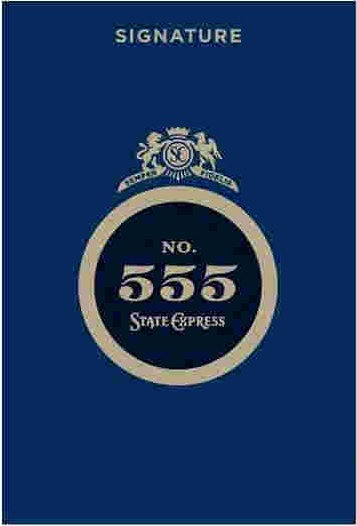
STATE EXPRESS 555 “SIGNATURE” cigarette package design

CTBAT International Company Limited, a joint investment of subsidiaries of China National Tobacco Corporation and British American Tobacco and incorporated in Hong Kong, filed a trademark application for device mark representing cigarette package design (see below) by designating cigarette, tobacco, electronic cigarette and others in class 34 on November 28, 2016 (TM application No. 2016-134074).

It the center, “No. 555 STATE EXPRESS” is written in three lines inside a circle. “SIGNATURE” is written independently on the upper side of the design.

Senior trademark “SIGNATURE”

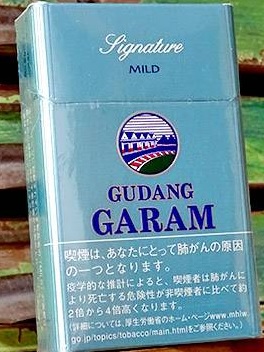
The JPO examiner refused registration by citing a senior Trademark Registration No. 4658792 for word mark “SIGNATURE” in standard character overt the goods of cigarette in class 34 owned by PT Gudang Garam TBK, one of Indonesia’s leading cigarette manufacturers, best known for its kretek clove cigarettes, headquartered in Kediri, Indonesia, which was acquired by Philip Morris in 2005.

PT Gudang Garam TBK has used the registered mark as a cigarette sub-brand of Gudang Garam.

CTBAT filed an appeal against the JPO examiner’s refusal and argued dissimilarity between the marks, but in vain. [Appeal case no. 2018-002007]
Subsequently, CTBAT appealed to the IP High Court and demanded cancellation of the administrative decision to refuse registration for plaintiff’s mark.

Qualitative description

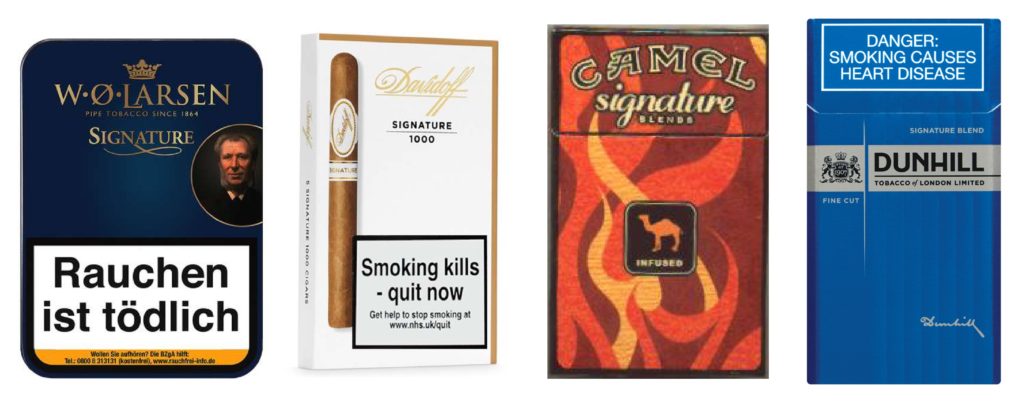
CTBAT argued the term ‘SIGNATURE’ lacks distinctiveness in relation to cigarette because several cigarette manufacturers, e.g. Dunhill, Camel, Davidoff, W.O.Larsen, have been using it as a qualitative term to indicate the cigarette has a specific feature of symbolic brand.

Besides, plaintiff’s mark contains distinctive terms, “No. 555 STATE EXPRESS”, which has acquired a certain degree of popularity of the cigarette brand through substantial use for more than 100 years. If so, it is unlikely that relevant consumers and traders would recognize the term “SIGNATURE” on the upper side as a source indicator in itself.

IP High Court Ruling

The court dismissed the allegation entirely, by stating that:

  1. From overall appearance of plaintiff’s mark, the term “SIGNATURE” shall not be perceived to combine with other figurative and literal elements.
  2. From the produced evidences, it is unclear if “No. 555 STATE EXPRESS” and “555” has acquired a certain degree of popularity because the cigarette brand has never been distributed in Japan so far.
  3. It is questionable that relevant Japanese consumers fully understand the term “SIGNATURE” and associated words, “Signature model”, “Signature Blends” have a qualitative or descriptive meaning in connection with cigarette.
  4. It has been often seen that a sub-brand is used on cigarette package separable from its main brand.
  5. The court finds the cited mark is used as a source indicator (sub-brand) on its cigarette package as well.
  6. Given the term “SIGNATURE” does not inseparably combine with other elements of plaintiff’s mark, it shall be permissible to cut out the portion and assess similarity of both marks based on the portion as long as it does meet with trade practice.

Based on the foregoing, the IP High Court sided with the JPO and upheld the refusal decision.

Fashion Designer in trademark fight over his name

On August 7, 2019, the Japan IP High Court ruled to dismiss an appeal by Ken Kikuchi, a Japanese jewelry designer, who contested a decision by the Japan Patent Office (JPO) to deny trademark registration for a composite mark consisting of a word “KEN KIKUCHI” with an eagle device under Article 4(1)(viii) of the Trademark Law.
[Judicial case no. Heisei31(Gyo-ke)10037]

KEN KIKUCHI

Disputed mark (see below) was filed by Ken Kikuchi on May 23 ,2017 covering various goods in class 14, 18 and 25 including jewelry and accessories. [TM application no. 2017-69467]

Since 2000, Ken Kikuchi allegedly has been designing and manufacturing affordable elaborate silver jewelry under the brand of his name “KEN KIKUCHI”. As a result of business expansion (14 brick-and-mortar stores in Japan, 4 stores in foreign counties) and advertisements from television, magazines, the designer’s name has acquired better reputation in the industry.

Refusal decision by JPO

The Japan Patent Office (JPO) refused the mark based on Article 4(1)(viii) of the Trademark Law, on the ground that the literal element of disputed mark can be perceived to identify a private individual named “Ken Kikuchi”. According to white pages, evidently there exist several Japanese people with the same name. If so, disputed mark shall not be allowed for registration since it contains a name of living person per se.

Article 4(1)(viii)

Article 4(1)(viii) of the Trademark Law prohibits registration of trademarks which contain the representation or name of any person, famous pseudonym, professional name or pen name of another person, or famous abbreviation thereof. Notwithstanding the provision, the article is not applicable where the applicant of disputed mark produces the written consent of the person.

The Supreme Court of Japan has ruled the article shall be interpreted to protect personal rights of a living individual. In line with the Supreme Court ruling, Trademark Examination Manuals (TEM) set forth that the article is applicable not only to natural persons (including foreigners) and corporations but also associations without capacity.

The Appeal Board of JPO also sided with the examiner’s refusal on the same ground. [Appeal case no. 2018-7529]

To contest the administrative decision, the designer filed an appeal to the IP High Court on March 25, 2019

IP High Court Ruling

The court dismissed the allegation entirely, by stating that:

  1. “KEN” and “KIKUCHI” are both commonly used names to Japanese people.
  2. Literal elements of disputed mark shall be perceived as a name of person even if the name is written in alphabet, given it has become popular to write a full name on the passport, credit card and others in alphabet.
  3. Article 4(1)(viii) shall be construed to comprehend a name of person written in alphabet.
  4. It is not relevant to consider reputation of disputed mark in applying the article since it aims to protect personal rights of a living individual.
  5. Irrespective of the fact that a person named “Ken Kikuchi” surely exists, applicant failed to prove consent from the person.

Based on the foregoing, the IP High Court sided with the JPO and upheld the refusal decision.

PUMA’s Fight Against Logo Parody

On August 1, 2019, the Japan Patent Office (JPO) decided to invalidate trademark registration no. 5861923 for composite mark consisting of a word “KUMA”, which means ‘bear’ in Japanese, and the bear device by finding a likelihood of confusion with a world-renowned sports brand, PUMA and detrimental effect to public policy or morality.
[Invalidation case no. 2019-890001]

KUMA device mark

Disputed mark (see below) was filed on January 7, 2016 by a Japanese business entity in Hokkaido, Japan’s most northerly main island, an otherworldly volcanic land with eastern Asia’s highest concentration of brown bears, over various goods in class 25 including sportswear and shoes.

Precedently, applicant applied for registration of following trademarks, consist of four alphabets in bold font and an animal silhouette facing left depicted in the upper right of the alphabets, on goods in classes 9, 14, 16, 24, 25 and 28, but in vain.

“UUMA” means ‘horse’, “BUTA” means ‘pig’, “KUMA” means ‘bear’ in Japanese. It is obvious that both literal element and figurative element of respective mark give rise to a same meaning, which is the same for PUMA.

It is likely the applicant intended to use these marks on souvenirs from Hokkaido since we get accustomed to see scenes at a famous tourist spot that T-shirts and other small items displayed at gift shops parody famous brands by featuring local specialty to attract tourists for fun.

PUMA’s Opposition / Invalidation Trial

On September 26, 2016, PUMA SE filed an opposition against the KUMA mark based on Article 4(1)(vii) and 4(1)(xv) of the Trademark Law. PUMA argued relevant consumers or traders are likely to confuse or misconceive a source of disputed mark with PUMA when used on designated goods in class 25 because of a high reputation and close resemblance between PUMA logo and the KUMA mark.

The Opposition Board admitted a high degree of popularity and reputation of PUMA logo, however, the Board dismissed the opposition entirely due to unlikelihood of confusion as a result of low degree of similarity between the marks (Opposition case no. 2016-900308).

Subsequently, PUMA SE entrusted the case to MARKS IP LAW FIRM. On New Year’s Eve of 2018, MARKS IP LAW FIRM on behalf of PUMA SE requested for an invalidation trial and sought to annul the KUMA mark on the same grounds.

Invalidation Decision

The Invalidation Board reversed the opposition decision and decided in favor of PUMA by finding that:

  1. PUMA logo has been continuously famous as a source indicator of PUMA in connection with sports shoes, sportswear and others among relevant consumers and traders in Japan.
  2. Configuration of PUMA logo looks unique, creative, and impressive in itself.
  3. Regardless of visual difference in detail between the marks, overall impression of both marks is quite similar.
  4. Given close association between designated goods in class 25 and PUMA business, relevant consumers of the goods with an ordinary care are likely to confuse its source with PUMA
  5. Besides, it is presumed the current registrant of disputed mark was knowingly assigned a similar KUMA mark that applicant had a fraudulent intent to free-ride and dilute PUMA’s goodwill.
  6. If so, current registrant must have filed disputed mark with a fraudulent intention to dilute or do harm to PUMA’s goodwill given a close resemblance of between disputed mark and a rejected KUMA mark (see above right).

Based on the foregoing, the JPO decided to invalidate disputed marks based on Article 4(1)(xv) as well as 4(1)(vii) of the Japan Trademark Law.

SISLEY lose trademark opposition over SOIR DE LUNE

In a recent trademark opposition, the Opposition Board of the Japan Patent Office (JPO) held a junior trademark registration no. 6041076 for word mark “LunaSoir” is dissimilar to a senior IR registration no. 845029 for word mark “SOIR DE LUNE”, one of fragrance brands by SISLEY, a French producer of cosmetics and fragrances, even when used on fragrance in class 3
[Opposition case no. 2018-900194, Gazette issue date: July 26, 2019]

LunaSoir

Opposed mark (see below) was applied for registration on July 31, 2017 by designating soaps, perfumery, cosmetics and others in class, and published for registration on June 5, 2018 without any office action from the JPO examiner.

SISLEY – SOIR DE LUNE

Opponent, SISLEY, a French producer of cosmetics and fragrances, claimed that the opposed mark “LunaSoir” shall be cancelled under Article 4(1)(xi) of the Japan Trademark Law by citing a senior trademark registration for word mark “SOIR DE LUNE”covering soaps, perfumery, essential oils, cosmetics, hair lotions, dentifrices in class 3.

Article 4(1)(xi) is a provision to prohibit from registering a junior mark which is deemed identical with, or similar to, any senior registered mark.

SISLEY argued both marks give rise to a same meaning of “moon night” given “Luna” and “LUNE mean “moon” in Latin and French respectively, “SOIR” means “night” in French, and “DE” corresponds to “of” in English. If so, both marks are likely to cause confusion from a conceptual point of view.

Board Decision

In the decision, the Board decided that “LunaSoir” and “SOIR DE LUNA” are both dissimilar in appearance, pronunciation as well as concept.

The Board assessed, by taking into consideration a relatively low level of knowledge to Latin and French language among relevant consumers with an ordinary care, opposed mark consisting of “Luna” and “Soir” would not give rise to any specific meaning at all.
Based on the fact finding, the Board concluded that opposed mark “LunaSoir” is obviously dissimilar to SISLEY’s fragrance brand “SOIR DE LUNE” from concept, needless to say appearance and pronunciation.

It is noteworthy to a brand owner from non-English speaking nations that conceptual similarity would not play a defensive role to prevent free-riding and enjoy a broader scope of protection against use by others where the brand contains a non-English term unfamiliar to Japanese.