Top 10 Trademark News in Japan, 2025

As the year 2025 comes to an end, it is a good time to share the top 10 trademark news in Japan by counting the total number of likes on the Linkedin “Like” Button.


1: JPO Grants TM Registration for 3D Shape of the Popular Pocky Cookie

The Japan Patent Office (JPO) granted trademark registration for the three-dimensional (3D) shape of Ezaki Glico’s iconic “Pocky” cookie, recognizing that the shape had acquired distinctiveness in relation to chocolate confections in Class 30 [TM Reg. No. 6951539].


2: UNIQLO Lost in Trademark Opposition against UNIPRO

UNIQLO lost in its attempt to oppose TM Reg no. 6746724 for the mark “UNIPRO” in class 28 due to dissimilarity and unlikelihood of confusion with a world-famous Japanese clothing brand “UNIQLO”.


3: STARBUCKS Unsuccessful Invalidation Action against Trademark “STARBOSS”

The Japan Patent Office (JPO) dismissed an invalidation action claimed by Starbucks Inc. against TM Reg no. 6595964 for wordmark “STARBOSS” in class 32 due to dissimilarity to and unlikelihood of confusion with the world’s largest coffee chain “STARBUCKS”.


4: IP High Court ruling: STARBUCKS vs STARBOSS

The Japan IP High Court did not side with Starbucks Corporation in a trademark dispute between “STARBUCKS” and “STARBOSS”, and affirmed the JPO decision that found “STARBOSS” dissimilar to, and less likelihood of confusion with “STARBUCKS when used on beverages.


5: Trademark dispute: SONY vs SONIMART

The Japan Patent Office (JPO) sided with SONY in a trademark invalidation action against TM Reg no. 6162062 for word mark “SONIMARK” in classes 35 and 42 by finding a likelihood of confusion with famous mark “SONY”.


6: MONSTER STRIKE vs MONSTER ENERGY

The Japan Patent Office (JPO) did not decide in favour of Monster Energy Company in its opposition to Defensive Mark Reg. No. 5673517 for the word mark “MONSTER STRIKE” in Classes 29, 30, and 32.


7: YONEX Scored Win in Registering Color mark

On October 21, 2025, the Japan Patent Office (JPO) granted registration of a color mark that consists of blue and green colors, filed by Yonex Co., Ltd. to use on badminton shuttlecocks by finding acquired distinctiveness of the color combination.


8: HERMES Defeated with Trademark Opposition against KIMONO TWILLY

The Japan Patent Office (JPO) dismissed an opposition filed by Hermes International against TM Reg no. 6753650 for the word mark “KIMONO TWILLY” in Class 18, claiming a likelihood of confusion with the Hermes scarves “TWILLY”.


9: JPO Said No to Register Kawasaki Green Color Mark

On March 19, 2025, the Japan Patent Office (JPO) finally decided to reject a color mark application filed a decade ago by Kawasaki Heavy Industries, Ltd., which sought to register a green color used on the world-famous Kawasaki motorcycles.


10: TOMMY HILFIGER vs TOMTOMMY

The Japan Patent Office (JPO) did not side with Tommy Hilfiger Licensing B.V. in an opposition against TM Reg no. 6604265 “TOMTOMMY” due to dissimilarity and unlikelihood of confusion with “TOMMY” and “TOMMY HILFIGER”.


JPO Found Trademark Squatter Liable for Disobeying Public Order

In a trademark dispute regarding the validity of TM Reg no. 6680828 “Alphacool,” the Japan Patent Office (JPO) declared invalidation of the contested mark because of disobeying the public order by a trademark squatter.
[Invalidation case no. 2025-890027, decided on December 9, 2025]


Trademark Squatting

The mark at issue, consisting of the term “Alphacool” in standard character, was filed with the JPO for use on goods in Class 9 on May 16, 2022, by a Chinese individual, and registered on March 15, 2023 [TM Reg no. 6680828].

The applicant filed 80 trademark applications from October 13, 2019, to August 6, 2024. “dyson”, “roomba”, “Xiaomi” are included among them. 48 marks are already registered. However, nine of them are subject to opposition, and seven to invalidation.

On April 21, 2025, Alphacool International GmbH requested the invalidation of TM Reg no. 6680828 “Alphacool” in contravention of Article 4(1)(vii), (x), (xv), and (xix) of the Japan Trademark Law.


JPO decision

The JPO invalidation Board observed that the applicant must have knowingly filed a lot of trademarks, including the contested mark used by other business entities. Actual use of the contested mark by the applicant rather suggests that the applicant sought to parasitize the other’s trademarks with malicious intent to disturb their business or free-ride on the reputation of their marks.

To bolster the above finding, the Board noted the fact that 16 marks out of 48 registered by the applicant are subject to opposition or invalidation actions. The ratio is approximately 33%. According to the JPO annual statistics, the average ratio is 0.5% for registered marks to be opposed or invalidated. Compared to the average ratio, 33% must be extremely high.

Accordingly, the Board found the contested mark should be invalidated based on Article 4(1)(vii) due to the likelihood of disobeying public order.

Japan IP High Court reversed JPO decision regarding similarity between COSME MUSEUM and Cosmetic Museum

On November 17, 2025, the Japan IP High Court handed down a ruling to disaffirm the JPO Invalidation Board’s decision regarding similarity between COSME MUSEUM in Class 35 for retail services for cosmetics and Cosmetic Museum in Class 3 for cosmetics.
[Court case no. Reiwa6(Gyo-ke)10104, decided on November 17, 2025]


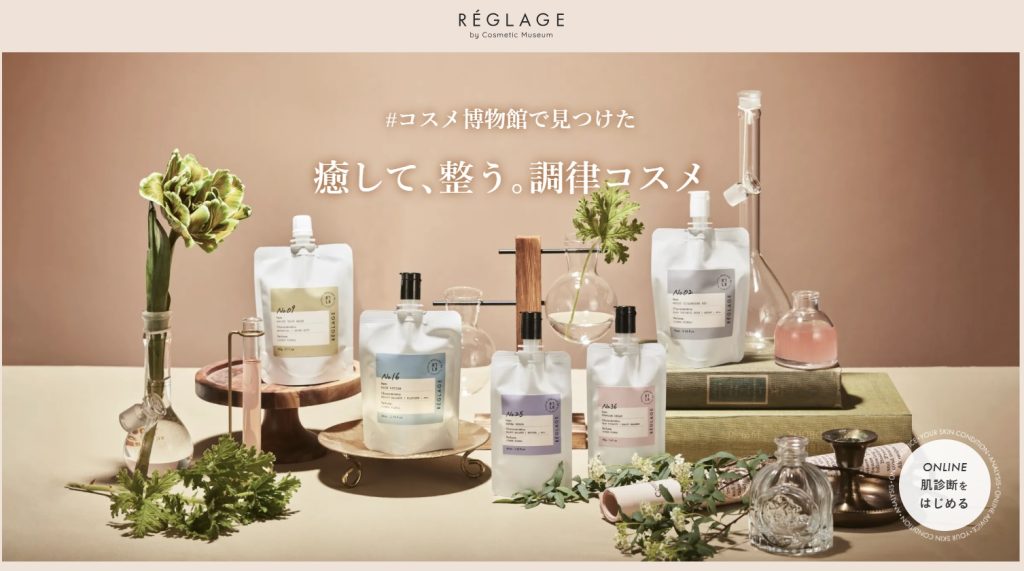
COSME MUSEUM

The contested mark, consisting of the word “COSME MUSEUM” in a plain letter, was filed with the JPO on February 24, 2023. It designates various services classified in class 35, including retail or wholesale services for cosmetics (TM App no. 2023-18992).

The applicant owns the domain “cosme-museum.com” and uses the contested mark on the domain’s web pages.

The JPO examiner granted registration of the contested mark on August 9, 2023, without issuing a notice of refusal. Upon payment of the statutory registration fee, the mark was registered on October 19, 2023 [TM Reg no. 6746429].


Cosmetic Museum

MOMOTANIJUNTENKAN Co., Ltd. filed a trademark application for the wordmark “Cosmetic Museum” in standard character with the JPO on February 16, 2023 (8 days prior to the contested mark) for use on breath freshening preparations, deodorants for animals, soaps and detergents, dentifrices, bath preparations, not for medical purposes, perfumes and flavor materials, incense, false nails, false eyelashes, and cosmetics in class 3 (TM App no. 2023-16082) to secure online use of the mark in connection with cosmetics on its websites under the domain “cosmeticmuseum.jp”.

The JPO registered the earlier mark on July 13, 2023 (3 months prior to the contested mark) [TM Reg no. 6717335].

On March 28, 2024, five months after the registration of the contested mark, MOMOTANIJUNTENKAN filed an invalidation petition with the JPO requesting that the contested mark be retroactively annulled based on Article 4(1)(xi) of the Japan Trademark Law.

Article 4(1)(xi) is a provision that prohibits the registration of a junior mark that is deemed identical with, or similar to, any earlier registered mark.


JPO decision

The JPO Invalidation Board found the contested mark “COSME MUSEUM” is dissimilar to the cited mark “Cosme Museum” by stating that:

Firstly, comparing the appearance of the contested mark and the cited mark, there are visual distinctions in the presence or absence of the term “tic”, and the upper-case letters or lower-case letters consisting of the respective mark. Therefore, the Board has a reason to believe that two marks are clearly distinguishable, and unlikely to cause confusion in appearance.

Secondly, the pronunciation of the contested mark and that of the cited mark clearly differ in the presence or absence of a “tic” sound in the middle, and are clearly audible.

Thirdly, the two marks do not convey any particular meaning at all. In this regard, they remain conceptually neutral.

Based on the foregoing, the contested mark and the cited mark are unlikely to cause confusion due to a low degree of similarity in appearance and pronunciation. Taking a global view of the impression, memory, and association that the relevant consumers will perceive from the appearance, sound and concept of the marks, the Board has a reason to believe that the contested mark “COSME MUSEUM” should be found dissimilar to the earlier mark “Cosmetic Museum” and unlikely to cause confusion.”

On December 12, 2024, MOMOTANIJUNTENKAN filed a lawsuit with the IP High Court, claiming that the court should annul the contested decision because the JPO erroneously applied Article 4(xi) of the Japan Trademark Law and thus found “COSME MUSEUM” and “Cosmetic Museum” similar.


IP High Court ruling

The court noted that the term “COSME” is defined as an abbreviation for cosmetics in Japanese dictionaries and is widely used in the industry to refer to cosmetics. Thus, relevant consumers would associate the term with cosmetics, and the contested mark will convey the meaning of a museum for cosmetics as a whole.

Although the term “COSME” is recognized as an abbreviation for “cosmetics” or “cosmetic”, there is insufficient evidence to demonstrate that the terms have been used in trade practice to indicate different sources without causing confusion. Bearing this in mind, the court found that the two marks do not differ significantly in appearance.

Similarly, the court observed that the aural difference between “COSME” and “cosmetic” would be negligible.

Since both marks have the same meaning, it is reasonable to believe that relevant consumers may confuse the source of the contested mark with the earlier mark when used in connection with retail services for cosmetics.

Based on the foregoing, the court declared the annulment of the contested decision because the JPO errored in applying Article 4(1)(xi) and finding the relevant facts.

IP High Court ruling: STARBUCKS vs STARBOSS

The Japan IP High Court did not side with Starbucks Corporation in a trademark dispute between “STARBUCKS” and “STARBOSS” and affirmed the JPO decision that found “STARBOSS” dissimilar to, and less likelihood of confusion with “STARBUCKS when used on beverages.
[Court case no. Reiwa7(Gyo-ke)10036, ruled on October 20, 2025]


STARBOSS

Kenkoman Co., Ltd. filed a trademark application for a wordmark “STARBOSS” in standard character for use on beer, carbonated drinks [refreshing beverages], fruit juices, vegetable juices [beverages], extracts of hops for making beer, whey beverages in class 32 with the JPO on January 25, 2022 (TM App no. 2022-13707).

The JPO examiner granted registration of the applied mark on June 24, 2022, without issuing any office action (TM Reg no. 6595964).

The applicant promotes energy drinks bearing the applied mark.


JPO decision against the invalidation filed by Starbucks

Starbucks Corporation requested a declaration of invalidity against the applied mark with the JPO in contravention of Article 4(1)(xi) and (xv) of the Trademark Law on April 28, 2023.

Starbucks argued that the mark “STARBOSS” is confusingly similar to the earlier mark “STARBUCKS” that has been consecutively registered in class 32 since 1989 because the difference of the letter, “OS” and “UCK” in the middle of respective marks, would not overwhelm the entire similarity in appearance and concept.

Besides, consumers of the goods in question mostly overlap with coffee shop. Taking into consideration a remarkable degree of popularity and reputation of the mark “STARBUCKS” among the general public in Japan, relevant consumers at the sight of beverages bearing the contested mark would pay much attention to the prefix portion starting with “STARB” and associate it with STARBUCKS, and thus consider the goods originating from a business entity economically or systematically connected with Starbucks.

However, the JPO Invalidation Board did not question a high degree of recognition of the mark “STARBUCKS” to indicate a source of coffee chain managed by Starbucks.

In the meantime, the Board found both marks dissimilar by stating that:

“Comparing with appearance, both marks start with “STARB” and end with “S”. But there is a difference between the letters “OS” and “UCK” in the middle of respective mark. This difference would have a material effect on the visual impression of two marks that consist of eight or nine alphabet letters. Thus, both marks are clearly distinguishable in appearance.

Aurally, relevant consumers can distinguish “STARBOSS” from “STURBUCKS” because the enunciation of “BO” and “BUCK” in the middle of respective marks is pronounced in a strong tone and accordingly has a material impact on the overall sound.

A conceptual comparison is neutral as neither “STARBOSS” nor “STARBUCKS” has any clear meaning.

Based on the above findings, the Board has a reason to believe that the contested mark “STARBOSS” is dissimilar to the mark “STARBUCKS” by considering the impression, memory, and association conveyed to the consumers overall.”

Given the low degree of similarity between “STARBOSS” and “STARBUCKS”, relevant consumers with ordinary care are unlikely to confuse a source of goods in question bearing the contested mark with Starbucks or any business entity economically or systematically connected with the claimant.

Consequently, the Board dismissed the invalidation action by Starbucks on December 17, 2024.

Starbucks filed an appeal to the IP High Court and argued that the contested mark is similar to the earlier mark “STARBUCKS”, and relevant consumers are likely to confuse the source of goods in question with Starbucks.


IP High Court Ruling

In the court decision dated October 20, 2025, the IP High Court stated as follows.

1. Similarity of the marks

– Visual comparison

Though both marks start with the letters “STARB” and end with “S” in common, they contain different letters ‘OS’ and “UCK” around the middle. Given their relatively short configuration of eight or nine alphabet letters, this difference enables the marks to be distinguishable. Considering that the letters of both marks are inextricably combined as a whole, and thus the relevant consumers would never consider the “STARB” portion as a dominant element for identifying the source of goods bearing the contested mark.

– Aural comparison

Though both marks have the same sound starting with “star” and ending with “su” in common, their pronunciations differ in the sound of ‘bo’ and “back” around the middle. Due to the difference, both sounds are sufficiently distinguishable, given a relatively short sound configuration.

– Conceptual comparison

The cited mark gives rise to a meaning of “Starbucks coffee chain.” Since the contested mark does not have any specific meaning, both marks are easily distinguishable in concept. Furthermore, there is no circumstantial evidence to support that relevant consumers would associate the terms beginning with “STARB” with Starbucks or their business. Therefore, it would be unreasonable to find that the literal portion “STARB” of the contested mark causes a conceptual connection with Starbucks.

2. Likelihood of confusion

Based on the low degree of similarity between “STARBOSS” and “STARBUCKS”, and the lack of evidence to demonstrate actual use of a mark starting with “STARB” other than “STARBUCKS” by Plaintiff, from the provided evidence at record, the court found no rational basis to believe that relevant consumers confuse the origin of goods in question bearing the contested mark with Starbucks.

ALVIERO MARTINI Defeated Over World Map Mark Dispute

The Japan Patent Office (JPO) dismissed an invalidation claim by ALVIERO MARTINI S.p.A., against TM Reg no. 6320074, which features an old-world map design, due to its dissimilarity and less likelihood of confusion with the claimant’s 1A CLASSE “GEO MAP” mark.
[Invalidation case no. 2024-890008, decided on September 18, 2025]


Japan TM Reg no. 6320074

Two Korean individuals filed a trademark application with the JPO for a device mark depicting an old-world map (see below) in relation to bags and other leather goods of Class 18 on December 24, 2019 [TM App no. 2019-165453].

Without raising any ground of refusal, the JPO examiner granted registration of the mark on December 24, 2020.


Invalidation action by Alviero Martini

ALVIERO MARTINI S.p.A., known as an Italian heritage brand, Alviero Martini 1A Classe, filed an invalidation action with the JPO on February 13, 2024, and claimed invalidation of TM Reg no. 6320074 in contravention of Article 4(1)(vii), (xi), (xv) and (xix) of the Japan Trademark Law by citing earlier IR no. 982100 of the world map mark in Class 18.

ALVIERO MARTINI argued the contested mark is confusingly similar to the cited mark that has been widely recognized among relevant consumers to identify a source of Alviero Martini 1A CLASSE brand.

The claimant also pointed out the fact that the applicant applied for other mark containing the term “PRIMA CLASSE” (see below). Given a high degree of resemblance between the marks and close relatedness between the goods in question and the claimant’s fashion business, it is presumed that the applicant had maliciously filed the contested mark with an intention to free-ride goodwill on the cited mark.


JPO decision

The JPO Invalidation Board noted the fact that the cited mark has been used in a manner that depicts only a portion of the world map on the claimant’s goods. The produced evidence does not suggest that the cited mark is ever used in its entirety as a source indicator.

Therefore, it would be unreasonable to conclude that the cited mark has acquired a certain degree of recognition in Japan and other jurisdictions.

Regarding the similarity of the marks, the Board stated, “Although they both consist of a device that represents a world map in common, the overall impressions differ significantly due to the different arrangement of continents, the presence of country and ocean names, and sailing ships. Therefore, the contested mark is visually dissimilar to the cited mark”, and “the coincidence in the graphic element representing world map is not sufficient to counteract or outbalance these visual differences.”

Based on the foregoing, the Board found that the marks are dissimilar and relevant consumers are unlikely to confuse the source of the goods in question bearing the contested mark with the cited owner.

Given the lack of persuasive evidence demonstrating a high recognition of the cited mark, it is unclear whether the applicant has a malicious intent vulnerable to invalidation.

JPO found BYOMA and BIYŌMA dissimilar marks

In an invalidation action disputing the validity of TM Reg no. 6637032 for the word mark “BIYŌMA” in class 3 due to its similarity to the earlier IR no. 1633315 for the word mark “BYOMA”, the Japan Patent Office (JPO) found BYOMA and BIYŌMA to be dissimilar.
[Invalidation case no. 2023-890015, gazette issued on May 30, 2025]


TM Reg no. 6637032

The contested mark, consisting of the word “BIYŌMA” in a plain font (see below), was filed with the JPO for use on cosmetics of class 3 in particular and various goods in classes 21, 24, 25 and 30 on March 17, 2022, by TSUKAMONO CORPORATION. [TM App no. 2022-30868]

The JPO examiner notified a refusal ground that states the mark is unregistrable due to a conflict with IR no. 1633315 for word mark “BYOMA” based on Article 4(1)(xi) of the Japan Trademark Law. The applicant filed a response in which they argued dissimilarity of mark.

Eventually, the examiner withdrew his refusal and granted protection of the mark on September 30, 2022.

The applicant promotes body cream, body soap, hand cream, and lip stick displaying the mark “BIYŌMA”.


Invalidation action by BYOMA Limited

BYOMA Limited, the owner of IR no. 1633315 “BYOMA”, filed an application for a declaration of partial invalidation to the contested mark on March 14, 2023 with the JPO in contravention of Article 4(1)(xi) of the Trademark Law, and disputed similarity between “BYOMA” and “BIYŌMA” in relation to cosmetics of class 3.

BYOMA Limited argued that the contested mark resembles the cited mark because it contains all of the letters that constitute the cited mark, and the difference in the second letter, “I,” is trivial. A conceptual comparison is neutral as both marks have any clear meaning. Besides, taking account of aural similarity, the contested mark should be considered similar to the cited mark.


JPO decision

On October 2, 2024, the JPO Invalidation Board dismissed the invalidation petition by stating that:

Visual Comparison

Although the contested mark and the cited mark contain the same letters “B,” “Y,” “O,” “M,” and “A”, there are differences in the presence or absence of the letter “I” in the second character and the hyphen in the letter “O.” These differences have a significant impact on the overall visual impression of the contested mark. Especially, when comparing the relatively short constituent characters of six and five letters. Therefore, both marks are clearly distinguishable in appearance.

Aural Comparison

There is a difference between “biyo” and “byo” in the initial sound, which is an important element in distinguishing the pronunciation. In the comparison of the short constituent sounds of four or three syllables, these differences affect the overall pronunciation of the two marks. Even when pronounced consecutively, the tone and feeling of the pronunciations differ to the extent relevant consumers can easily distinguish them phonetically.

Conceptual Comparison

The conceptual aspect does not have impact on the assessment of similarity, since both marks are meaningless.

Based on the foregoing, the Board decided that the contested mark is dissimilar to and unlikely to cause confusion with the cited mark even when used on the goods in question.

End of the TOKYO 2020 Olympic emblem dispute

On March 12, 2025, the Japan IP High Court handed down a decision regarding the validity of TM Reg no. 6008759 for the Tokyo 2020 Olympic Emblem owned by the International Olympic Committee (IOC).
[Court case no. Reiwa6(Gyo-ke)10057]


Tokyo 2020 Olympic Emblem

The official emblem of the 2020 Tokyo Olympics was scrapped in 2016 (see below left) and replaced with the new emblem (see below right) before the opening of the Olympics, as you recall.

Even after the Games closed without spectators in 2021, a year after originally scheduled to due to a global pandemic, the new official emblem was to face with another challenge at the Japan Patent Office (JPO) in 2022.

The contested new emblem was filed by the IOC for use on all goods and services in every class from 1 to 45 with the JPO on April 25, 2016. In the course of substantive examination, the mark was assigned to the Tokyo Olympic Committee (TOC). Subsequently, the JPO granted registration on December 7, 2017 (TM Reg no. 6008759). Upon the Olympic Games finalizing, it was re-assigned to the IOC in December 2021.


Invalidation action

A group of Japanese legal experts filed an application for a declaration of invalidity against the new Tokyo 2020 Olympic Emblem with the JPO on June 21, 2022. They claimed that the emblem should be invalidated in contravention of Article 4(1)(vi), (vii), (x) and (xix) of the Japan Trademark Law.

The experts argued, inter alia, that the IOC failed to comply with Article 31(1) of the Trademark Law, which prohibits the licensing of a trademark registration to a third party given the mark was registered subject to Article 4(2).

Article 4(2) provides an exception to allow the registration of a trademark applied for by a non-profit organization engaged in activities in the public interest, even if the trademark is unregistrable under Article 4(1)(vi).

In this respect, the experts considered it illegal that the IOC granted a trademark license to the TOC, other organizers and sponsors. In fact, under the license, the TOC sent C&D letters based on TM Reg no. 6008759 to entities seeking to benefit from the Tokyo 2020 Olympic Games in order to prevent ambush marketing.

In these circumstances, the contested mark should be declared invalid in contravention of Article 4(1)(vii) because the IOC had a bad faith intent to unjustifiably protect the profits of official sponsors without legal basis by harming the interests of other entities.

It should be noted that Article 31(1) was revised in 2019, one year after the registration of the contested mark. Now, the prohibition to license the registered mark under Article 4(2) no longer exists.


IP High Court decision

In its ruling, the IP High Court acknowledged the need to restrict ambush marketing, which deliberately attempts to persuade or mislead consumers into believing they are associated with a sporting mega-event, or to use their IP without permission.

The Court found that since the elimination of the restriction on granting a license for a mark registered under Article 4(2) came into effect immediately after the promulgation of the Trademark Law Revision in 2019, it would rather serve to promote the appropriate use of the famous trademark for the public interest and satisfy the intention behind the law.

Therefore, even if the IOC had licensed the contested mark to the TOC and official sponsors in order to prevent ambush marketing, it would be irrelevant to find that the contested mark should be invalidated in contravention of Article 4(1)(vii) due to the likelihood of causing damage to public order or morality.

Trademark dispute: SONY vs SONIMART

The Japan Patent Office (JPO) sided with SONY in a trademark invalidation action against TM Reg no. 6162062 for word mark “SONIMARK” in classes 35 and 42 by finding a likelihood of confusion with famous mark “SONY”.
[Invalidation case no. 2024-890041, decided on January 27, 2025]


SONIMART

The contested mark, consisting of word “SONIMART” and its transliteration written in Japanese katakana character arranged in two lines (see below), was filed by Sonic Line Co., Ltd. for use on various services including retail service and providing computer programs on data networks in classes 35 and 42 with the JPO on June 14, 2018.

The JPO examiner did not find similarity to and a likelihood of confusion with famous brand “SONY” and granted registration of the mark on July 12, 2019.


Invalidation action by SONY

SONY, one of the most recognized Japanese brands globally, filed an application for declaration of invalidity with the JPO on July 11, 2024, just before the lapse of five years counting from its registration date.

SONY claimed that the contested mark shall be invalidated in contravention of Article 4(1)(xi) and (xv) of the Japan Trademark Law by citing its owned earlier trademark registrations for the mark “SONY”.

Article 4(1)(xi) is a provision that prohibits the registration of a junior mark that is deemed identical with, or similar to, any earlier registered mark.

Article 4(1)(xv) is a provision to prohibit any mark from registering if it is likely to cause confusion with other business entities’ well-known goods or services.

SONY argued that relevant consumers of the services in question are likely to find the contested mark consists of “SONI” and “MART”. Since the term ‘MART’ is less distinctive in relation to the services in question, the element ‘SONI’, which is visually and phonetically confusingly similar to ‘SONY’, would play a dominant role in indicating the source of the services covered by the contested mark.


JPO decision

The JPO Invalidation Board did not question the high degree of reputation and popularity of the mark “SONY” in relation to telecommunications and electronic machines and apparatus, and consumer games.

Comparing the contested mark and the cited mark “SONY”, although the marks differ in their overall structure, both marks contain the same initial three letters, “SON” and the same pronunciation. Moreover, the term “SONI” and its sound are likely to be associated with the cited mark “SONY”, which is well known and famous in the fields of telecommunications and electronic machines and apparatus, and consumer games.

Bearing in mind that SONY has plenty of group companies and stores using a name consisting of “SONY” and descriptive word, such as Sony shop, Sony music entertainment, Sony bank, Sony city, the Board has a reason to believe that there is a certain degree of similarity between the contested mark and the cited mark.

Consumers of the services in question, in particular retail services for smart phone cases, rental of computers, and providing computer programs on data networks, are overlapping with those of telecommunications and electronic machines and apparatus. In this respect, these are closely related.

Based on the foregoing, the Board decided to invalidate the contested mark in contravention of Article 4(1)(xv) because the relevant consumers are likely to confuse a source of the services in question with SONY or an entity that is systematically or economically connected to the claimant.

STARBUCKS Unsuccessful Invalidation Action against Trademark “STARBOSS”

The Japan Patent Office (JPO) dismissed an invalidation action claimed by Starbucks Incorporation against TM Reg no. 6595964 for wordmark “STARBOSS” in class 32 due to dissimilarity to and unlikelihood of confusion with the world’s largest coffee chain “STARBUCKS”.
[Invalidation case no. 2023-890037, decided on December 17, 2024]


“STARBOSS”

Kenkoman Co., Ltd. filed a trademark application for wordmark “STARBOSS” in standard character for use on beer, carbonated drinks [refreshing beverages], fruit juices, vegetable juices [beverages], extracts of hops for making beer, whey beverages in class 32 with the JPO on January 25, 2022 (TM App no. 2022-13707).

The JPO examiner granted registration of the applied mark on June 24, 2022 without issuing any office action (TM Reg no. 6595964).

The applicant promotes energy drinks bearing the applied mark.


Invalidation action by Starbucks

Starbucks Incorporation filed an application for a declaration of invalidity against the applied mark with the JPO in contravention of Article 4(1)(xi) and (xv) of the Trademark Law on April 28, 2023.

Starbucks argued that the mark “STARBOSS” is confusingly similar to earlier mark “STARBUCKS” that has been consecutively registered in class 32 since 1989 because the difference of the letter, “OS” and “UCK” in the middle of respective mark would not overwhelm the entire similarity in appearance and concept.

Besides, consumers of the goods in question mostly overlap with coffee shop. Taking into consideration a remarkable degree of popularity and reputation of the mark “STARBUCKS” among general public in Japan, relevant consumers at the sight of beverages bearing the contested mark would pay much attention to the prefix portion starring with “STARB” and associate it with STARBUCKS, and thus consider the goods originating from a business entity economically or systematically connected with Starbucks.


JPO decision

The JPO Invalidation Board did not question a high degree of recognition of the mark “STARBUCKS” to indicate a source of coffee chain provided by Starbucks.

In the meantime, the Board found evidence insufficient to establish a certain degree of recognition of the mark “STARBUCKS” in relation to coffee beverages, juices and any other drinks.

The Board found both marks dissimilar by stating that:

“Comparing with appearance, both marks start with “STARB” and end with “S”. But there is a difference between the letters “OS” and “UCK” in the middle of respective mark. This difference would have a material effect on the visual impression of two marks that consist of eight or nine alphabets. Thus, both marks are clearly distinguishable in appearance.

Aurally, relevant consumers can distinguish “STARBOSS” with “STURBUCKS” because the enunciation of “BO” and “BUCK” in the middle of respective mark are pronounced in a strong tone and accordingly have a material impact on the overall sound.

A conceptual comparison is neutral as neither “STARBOSS” nor “STARBUCKS” have any clear meaning.

Based on the above findings, the Board has a reason to believe that the contested mark “STARBOSS” is dissimilar to the mark “STARBUCKS” by considering the impression, memory and association conveyed to the consumers overall.”

Given the low degree of similarity between “STARBOSS” and “STARBUCKS”, relevant consumers with an ordinary care are unlikely to confuse a source of goods in question bearing the contested mark with Starbucks or any business entity economically or systematically connected with the claimant.

Consequently, the Invalidation Board declared validity of the contested mark and dismissed the invalidation action by Starbucks.

Top 10 Trademark News in Japan, 2024

As the year 2024 comes to an end, it is a good time to share the top 10 trademark news in Japan by counting the total number of likes on the Linkedin “Like” Button.


1: Japan IP High Court said No to registering the color of Hermes packaging

The Japan IP High Court ruled to dismiss Herme’s appeal against the JPO decision that rejected Hermes packaging color due to a lack of inherent and acquired distinctiveness.


2: Can a ‘Letter of Consent’ guarantee successful trademark registration in Japan?

The revised Japan Trademark Law will come into effect on April 1, 2024, introducing the “Letter of Consent” as a means to overcome conflicts with earlier trademark registrations.


3: COCO vs. KOKO

In a recent administrative decision, the Japan Patent Office (JPO) found that the trademarks “CoCo” and “koko” are dissimilar and unlikely to cause confusion.


4: CHANEL defeated in Trademark Opposition against “COCOCHI”

The Japan Patent Office (JPO) handed a loss to Chanel SARL in trademark opposition against TM Reg no. 6674710 for the “COCOCHI” mark by finding unlikelihood of confusion with “COCO”.


5: ZARA Unsuccessful Opposition against TM “LAZARA”

On April 22, 2024, the Japan Patent Office (JPO) dismissed an opposition filed by Industria de Diseño Textil, SA (INDITEX), owner of the fashion brand “ZARA”, against TM Reg no. 6699667 for word mark “LAZARA” in classes 25 due to dissimilar marks and unlikelihood of confusion with “ZARA”.


6: CHANEL Lost in Trademark opposition against “COCOBABY”

The Japan Patent Office (JPO) did not side with CHANEL in an opposition against TM Reg no. 6650252 for wordmark “COCOBABY” in class 25 by finding dissimilarity of mark between “COCOBABY” and “COCO”.


7: Trademark Dispute: Chateau Mouton Rothschild vs MOUTON

The Japan Patent Office (JPO) declared invalidation of TM Reg no. 6090508 for wordmark “MOUTON” in classes 35 and 43 due to a likelihood of confusion with famous mark “Mouton” as a source indicator of Chateau Mouton Rothschild, one of the most famous wine estates in the world.


8: Hermes Victory with Invalidating Birkin Lookalike Design

The Japan IP High Court has ruled in favor of Hermes in a dispute over the validity of Design Reg no. 1606558 by finding a likelihood of confusion with Hermes.


9: Trademark dispute: VALENTINO GARAVANI vs GIANNI VALENTINO

In a trademark opposition claimed by Valentino S.p.A. against TM Reg no. 6550051 for the GIANNI VALENTINO mark, the Japan Patent Office (JPO) decided to cancel the registration due to a conflict with earlier IR no. 975800 for the VALENTINO GARAVANI mark.


10: Japan IP High Court gives Green Light to 3D “Godzilla” shape as Trademark

On October 30, 2024, the Japan IP High Court disaffirmed the administrative decision by the Japan Patent Office (JPO) not to register the 3D shape of the eponymous character from the film “Shin Godzilla” as a trademark.