Serapian Loses Trademark Opposition against S device mark

The Italian-based fashion house Stefano Serapian S.r.l., known for its briefcases, handbags and purses opposed the registration in Japan of the trademark S logo owned by the Japanese company, Kabushiki Kaisha Overseas.


Opposed mark

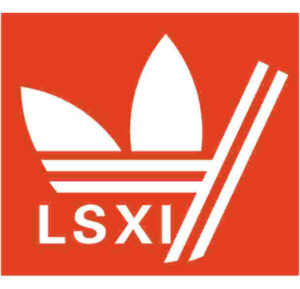
Overseas filed an application to register S logo (see below) designating, among others, bags, purses, pouches and leather goods in class 18 on April 27, 2017. Going through substantive examination at the Japan Patent Office (JPO), it was registered on October 20 of that year (TM Reg no. 5990450).

Serapian Opposition

A trademark opposition proceeding filed on January 15, 2018, Serapian contended that opposed mark is confusingly similar to its registered famous “S” device mark (see below) by citing its owned IR no. 1117130 and thus shall be cancelled in violation of Article 4(1)(xi) and (xv) of the Japan Trademark Law.


Article 4(1)(xi) is a provision to refrain from registering a junior mark which is deemed identical with, or similar to, any senior registered mark.

Article 4(1)(xv) provides that a mark shall not be registered where it is likely to cause confusion with other business entity’s well-known goods or services, to the benefit of brand owner and consumers.

Theoretically, Article 4(1)(xv) is applicable to the case where a mark in question is deemed dissimilar to well-known brand, but still likely to cause confusion because of a high degree of popularity and reputation of the brand.


The Ruling

The Opposition Board of JPO negated a certain degree of popularity and reputation of Serapian’s “S” device mark, stating that produced materials are insufficient and non-objective to demonstrate famousness of the cited mark.

Besides, the Board found that both marks are sufficiently distinguishable from appearance in view of overall configuration. From phonetic and conceptual points of view, it is apparent that respective mark would not be perceived as an alphabetical letter ‘S’, but a geometric figure device without any specific concept and pronunciation. If so, both marks would not give rise to similar appearance, sound and meaning at all.

Even if taking account of originality of “S” device mark, as long as it remains unclear whether Serapian “S” device mark has become popular among relevant consumers in Japan, the Board had no reason to admit a likelihood of confusion.

As a conclusion, the Board decided opposed mark is not subject to Article 4(1)(xi) and (xv) of the Trademark Law and dismissed the opposition accordingly.

[Opposition case no. 2018-900017, Gazette issue date December 28, 2018]

LUIS POULSEN Victory over trademark infringement lawsuit for Pendant Lamp Shade

On December 27, 2018, the Tokyo District Court sided with Luis Poulsen A/S, a Danish company, in a lawsuit for trademark infringement against R&M Japan Co., Ltd. who imported into Japan and sold lighting apparatus allegedly identical with or confusingly similar to a registered 3D mark in the shape of unique pendant lamp shade well-known for “PH5” and awarded damages of 4.4 million JPY. [Case no. Heisei 29(Wa)22543]


Luis Poulsen “PH-5”

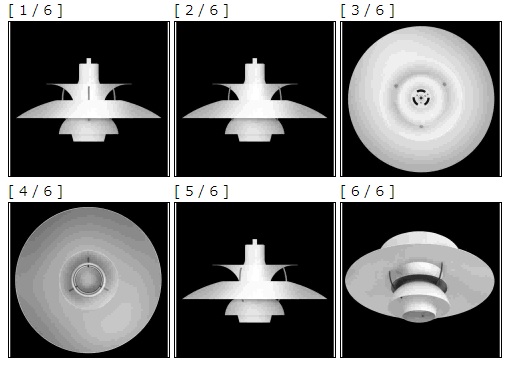
Luis Poulsen A/S has manufactured and sold lighting apparatus with a unique lamp shape well-known for “PH-5” in Japan past four decades. The shape was successfully registered as a 3D mark by the JPO in 2016 as a result of demonstrating acquired distinctiveness of the shape as a source indicator in connection with goods of ramp shade in class 11 (see below) [Trademark registration no. 5825191].


Infringing product

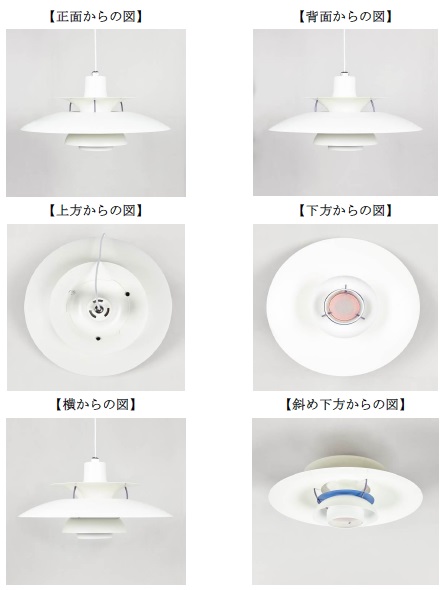
R&M Japan, Defendant, imported into Japan and sold lighting apparatus which apparently looks identical with the shape of PH-5 (see below).

Defendant argued that the Court should dismiss the complaint in its entirely.

According to the court decision, defendant admitted to reproducing a design which has terminated its exclusive right after the lapse of statutory period and thus became public domain.

Defendant also disputed there happened no damages to plaintiff on the grounds that the company put consumers on notice to offer replica designer lighting or free generic design items in the marketplace. There exists a remarkable price gap between genuine PH-5 and defendant product. If so, claimed damages shall not be linked to defendant’s act.


Court decision

The Tokyo District Court ruled in favor of Luis Poulsen by stating that:

  1. It is unquestionable that infringing product constitutes trademark infringement given the same shape with registered 3D mark representing “PH-5” owned by plaintiff.
  2. Provided that the 3D shape of “PH-5” has been successfully registered as a trademark in Japan, expiration of design right shall not prevent the owner from enforcing trademark right against the shape once registered as design right.
  3. Even if infringing product was offered to sell on notice of replica designer lighting or free generic design items at a lower price than genuine PH-5, it shall not deny a fact that infringing product is likely to compete with plaintiff.

Based on the foregoing, the Court ruled that R&M Japan committed a trademark infringement and awarded Luis Poulsen 4.4 million JPYen for damages.

R&M Japan once challenged validity of trademark registration for the 3D mark of PH-5, but resulted in vain. click here.

Lee unsuccessful in removing Leeao from trademark registration

The Japan Patent Office dismissed a trademark opposition claimed by the second largest manufacturer of jeans in the United States, The H.D. Lee Company, Inc. (LEE) against trademark registration no. 5990967 for the Leeao logo mark in class 25 by finding less likelihood of confusion with “Lee” because of remarkable dissimilarity between the marks.
[Opposition case no. 2017-900381]


Leeao

Opposed mark “Leeao” (see below) was filed by a Japanese business entity on April 28, 2017 by designating clothing and clothes for sports in class 25.

Going through substantive examination, the JPO admitted registration on September 29, 2017 and published for registration on November 21, 2017.

LEE’s Opposition

To oppose against registration, LEE filed an opposition on December 20, 2017.
In the opposition brief, LEE asserted the opposed mark shall be cancelled in violation of Article 4(1)(xi) of the Japan Trademark Law given a high reputation and popularity of opponent mark “Lee” in the business field of jeans having longer history than LEVIS and similarity of opposed mark with its owned senior trademark registration no. 1059991 for the “Lee” logo mark (see below) over clothing in class 25 effective since 1974.

LEE argued opposed mark gives rise to a pronunciation of ‘liː’ from the first three letters, allegedly a prominent portion of opposed mark, since remaining elements are rarely perceived as letters of “ao” from its appearance.

Article 4(1)(xi) is a provision to refrain from registering a junior mark which is deemed identical with, or similar to, any senior registered mark.

Where opposed mark is considered similar to opponent mark and designated goods of opposed mark is identical with or similar to that of opponent mark, opposed mark shall be retroactively cancelled in violation of Article 4(1)(xi). In this regard, since LEE’s senior registration covers clothing in class 25, similarity of goods is indisputable in the case.


Board Decision

The Opposition Board, based on the fact-finding that Lee jeans has been distributed in Japan for five decades and its frequent appearance in media, admitted a high degree of popularity and reputation of “LEE” logo as a source indicator of opponent jeans among general consumers.

In the meantime, the Board completely denied similarity between the marks on the grounds that:

  1. Opposed mark, from appearance, shall not be seen as a combination of “lee” and “ao” unless “ao” does clearly give rise to a descriptive meaning. If so, opposed mark shall constitute one word as a whole and be deemed sufficiently distinctive in concept as well.
  2. In the meantime, relevant consumers of goods in question shall conceive opponent mark as a source indicator of famous “Lee” jeans.
  3. If so, both marks are completely distinguishable from three aspects of appearance, sound, and concept.

Accordingly, JPO sided with opposed mark and decided it shall not be cancelled based on Article 4(1)(xi) in relation to opponent mark.

Is GRAND HOME dissimilar or similar to GRAN HOME?

In a recent appeal trial over trademark dispute, the Appeal Board of Japan Patent Office (JPO) overturned the Examiner’s determination and held that a word mark “GRAND HOME” is dissimilar to, and unlikely to cause confusion with a senior trademark registration for the “GRAN HOME” mark in connection with construction, reform or repair service for residential homes and buildings.

[Appeal case no. 2017-13251, Gazette issue date: November 30, 2018]

GRAND HOME

Kabushiki Kaisha GRAND HOME, a Japanese business entity filed a trademark application for a word mark “GRAND HOME” in standard character covering services of reform, repair, maintenance, cleaning and construction for residential homes and buildings in class 37 on May 17, 2016 [TM application no. 2016-53226].

Going through substantive examination by the JPO examiner, applied mark was completely refused registration based on Article 4(1)(xi) of the Trademark Law due to a conflict with senior trademark registration no. 5534717 for word mark “GRAN HOME” written in Japanese character(katakana) for the same services in class 37.

There are basic rules that the examiner is checking when evaluating the similarity between the marks:

  • visual similarity
  • aural similarity
  • conceptual similarity

and taking into account all these three aspects examiner makes a decision if a mark is similar (at least to some extent) with the earlier mark and if there is a likelihood of confusion for the consumers.

Applicant filed an appeal against the refusal on September 6, 2017 and argued dissimilarity of the marks.

Appeal Board decision

The Board reversed the examiner’s refusal and admitted applied mark to registration by stating that:

  1. From appearance, both marks are distinguishable because of a difference in literal elements. Applied mark consists of alphabetical letters. Meanwhile, the earlier mark consists of Japanese character.
  2. Having compared the sound of applied mark “ɡrænd hoʊm” and earlier mark “ɡræn hoʊm”, there evidently exists a difference in the middle sound. The difference shall not be negligible from overall sound composition as long as the sound “D” in the middle of applied mark is pronounced in a clear and intelligible manner. If so, both marks are aurally distinctive.
  3. Applied mark gives rise to a meaning of ‘large house’. In the meantime, the earlier mark “GRAN HOME” does not give rise to any specific meaning. Hence, both marks are dissimilar from conceptual point of view.
  4. Based on the foregoing, it is unlikely that relevant consumers confuse or misconceive a source of “GRAND HOME” with the earlier mark “GRAN HOME”.

POLO BCS defeated in trademark battle with POLO RALPH LAUREN

In a ruling on the merits of whether or not an applied mark “POLO HOME / BRITISH COUNTRY SPIRIT” is likely to cause confusion with a world-famous trademark “POLO” by the fashion house Ralph Lauren, the Japan IP High Court sided with the JPO and ruled in favor of Ralph Lauren on December 10, 2018.

[Court case no. H30(Gyo-ke)10067]


“POLO HOME / BRITISH COUNTRY SPIRIT”

POLO BCS Co., Ltd., plaintiff of the case, is a Japanese business entity, promoting apparel products bearing trademarks of “POLO BRITISH COUNTRY SPIRIT”, “POLO BCS”, and “POLO HOME”.


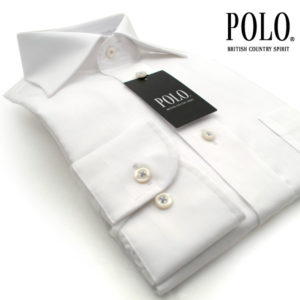
POLO BCS filed a trademark registration for the mark “POLO HOME / BRITISH COUNTRY SPIRIT” as shown in below on January 5, 2015 by designating clothing and other goods in class 25. [TM application no. 2015-305]


In fact, POLO BCS, a registrant of the word mark “POLO” on class 25 in Japan since 1997 (TM registration no. 1434359 and 2721189), granted trademark license to Ralph Lauren in the year of 1987 and since then continuously allows RL to use the mark “POLO” in Japan.


JPO decision

The Japan Patent Office (JPO) rejected the applied mark based on Article 4(1)(xv) of the Trademark Law on June 3, 2016. The refusal relies on a prominent portion of the mark “POLO” is likely to cause confusion with RALPH LAUREN when used on apparel products, being that “POLO” becomes remarkably well-known for an abbreviation of POLO RALPH LAUREN among relevant consumers with an ordinary care.

Article 4(1)(xv) is a provision to prohibit any mark from being registered where it is likely to cause confusion with other business entity’s well-known goods or services, to the benefit of brand owner and users’ benefits.

POLO BCS filed an appeal against the refusal on August 16, 2016, but its attempt resulted in failure [Appeal case no. 2016-12344].
To contest the JPO decision, POLO BCS appealed to the IP High Court filed immediately.


IP High Court decision

The court admitted a high degree of reputation and popularity of Ralph Lauren and “POLO” as an abbreviation of Polo Ralph Lauren in connection with apparel products by taking account of following fact findings.

  1. The first collection for Polo brand was launched in the US by a designer Mr. Ralph Lauren in 1967.
  2. Annual sales of Ralph Lauren exceed 7 billion USD in 2013 around the globe.
  3. In 1976, Ralph Lauren launched Polo brand and shops in Japan.
  4. According to brand perception survey of 900 randomly selected Japanese consumers ages 20 to 69 conducted in 2010, 81.8% of consumers recognize Ralph Lauren.
  5. Annual sales of 26.7 billion JPY in Japan (fiscal year 2008) accounts for 6% of global sales of Ralph Lauren.


Besides, the court found close similarity between applied mark and “POLO” by Ralph Lauren given a tiny font size of “BRITISH COUNTRY SPIRIT” in the configuration of applied mark and less distinctiveness of the word “HOME” in relation to apparel for home use.

Plaintiff argued to consider the fact that RL has used the “POLO” mark in Japan under license from plaintiff. But the court negated the argument stating that such fact would not mean consumers recognize the mark as a source indicator of plaintiff. In addition, plaintiff argued originality and fame of the word “POLO” as a source indicator of Ralph Lauren by citing Polo Game, organizations for the game, e.g. US POLO ASSOCIATION, HURLINGHAM POLO, and a generic name of Polo shirts. Court considered such circumstances would mean less originality of the mark “POLO”, but never deny fame of the mark as a source indicator of Ralph Lauren as long as consumers doubtlessly connect it with Ralph Lauren.

Based on the foregoing, the IP High Court concluded it is obvious that relevant consumers are likely to confuse or misconceive a source of the applied mark with Ralph Lauren or any entity systematically or economically connected with RL when used on clothing in class 25.

SEGWAY unsuccessful in opposing SWAGWAY mark

The Japan Patent Office dismissed a trademark opposition claimed by an American manufacturer of two-wheeled personal transporters, Segway Inc. against trademark registration no. 5910587 for the Swagway mark in class 12 by finding less likelihood of confusion due to dissimilarity of mark. [Opposition case no. 2017-900114]


Opposed Swagway mark

Opposed mark “Swagway” in standard character was filed by a Chinese business entity on December 2, 2015 by designating the goods of “a two-wheeled, self-balancing personal transporter; automobiles; bicycles; airplanes; water vehicles; railway cars: accessories of aforementioned goods” in class 12.
Going thourgh a substantive examination, the JPO admitted registration on January 6, 2017 and published for opposition on February 7, 2017.


Segway’s Opposition

To oppose against registration of the Swagway mark, Segway Inc. filed an opposition on April 7, 2017.

In the opposition brief, Segway Inc. asserted the opposed mark shall be cancelled in violation of Article 4(1)(vii), (x), (xi), (xv) and (xix) of the Japan Trademark Law by citing the owned famous SEGWAY mark effectively registered over various types of vehicles in class 12 since 2002 (TM Reg. no. 4605474 etc.).
Article 4(1)(vii) prohibits any mark likely to offend public order and morals from registering.
Article 4(1)(x) prohibits to register a trademark which is identical with, or similar to, other entity’s well-known mark over goods or services closely related with the entity’s business.
Article 4(1)(xi) is a provision to refrain from registering a junior mark which is deemed identical with, or similar to, any senior registered mark.
Article 4(1)(xv) prohibits to register a trademark which is likely to cause confusion with a business of other entity.
Article 4(1)(xix) prohibits to register a trademark which is identical with, or similar to, other entity’s famous mark, if such trademark is aimed for unfair purposes, e.g. gaining unfair profits, or causing damage to the entity.


Board Decision

The Opposition Board admitted a certain degree of reputation and popularity of opponent SEGWAY mark in relation to a two-wheeled, self-balancing personal transporter, however, negated similarity of mark between SEGWAY and Swagway totally. The Board assessed, from appearance, difference at the 2nd and 3rd letters gives rise to a distinctive impression in the mind of relevant consumers provided that both marks merely consist of six or seven letters in its entirety. The difference also produces a distinctive impression in sound of the 1st syllable. Besides, both marks are evidently dissimilar in meaning given they are not dictionary words per se.
Based on it, the Board dismissed allegations of Article 4(1)(x) and (xi).

The Board questioned, as long as both marks are distinctively dissimilar, whether relevant consumers are likely to associate or confuse the source of opposed mark with Segway Inc. even if opposed mark is used on a two-wheeled, self-balancing personal transporter.
From the evidences produced by opponent, the Board was unable to find any fact to cause confusion with, or to presume malicious intention to do harm to opponent’ good will and business. If so, it is questionable whether relevant consumers or traders are likely to confuse or misconceive a source of the opposed mark with Segway Inc. or any entity systematically or economically connected with the opponent.
Based on the foregoing, the Board dismissed allegations of Article 4(1)(vii), (x) and (xix) as well.

JPO decision over POWER TECH trademark

In an administrative appeal disputing trademark similarity between TM registration no. 4015750 for word mark “POWERTECH” and a junior application no. 2016-137853 for the “AC POWERTECH” device mark represented as below, the Appeal Board of the Japan Patent Office decided that both marks are deemed dissimilar and reversed examiner’s rejection.
[Appeal case no. 2018-6124, Gazette issued date: October 26, 2018]


TM Registration no. 4015750

The cited mark, consisting of a word “POWERTECH” colored in red (see below), was registered on June 20, 1997 by designating various vehicles in class 12.

Junior Application no. 2016-137853

Applied junior mark consists of the following “AC POWERTECH” device mark (see below).

It was applied for registration on December 7, 2016 by designating vehicles in class 12.

The JPO examiner refused the applied mark due to a conflict with senior TM registration no. 4015750 based on Article 4(1)(xi) of the Trademark Law.

Article 4(1)(xi) is a provision to refrain from registering a junior mark which is deemed identical with, or similar to, any senior registered mark.


Subsequently, the applicant filed an appeal against the rejection and disputed dissimilarity of both marks.


Board decision

In the decision, the Appeal Board held that:

Applied mark is a composite mark mainly consisting of two words of “AC” and “POWERTECH” written in two lines and a black hexagon.

Even if the term “AC” is likely to be used as an indication of type and mode of vehicles in commerce, from appearance of applied mark as a whole, the Board opines that relevant consumers would not conceive the term as indication of type or model. If so, it is questionable whether consumers ignore “AC” in the applied mark and pay considerable attention to the term “POWERTECH”. Thus, it is reasonable to conclude that applied mark shall give rise to a pronunciation nothing but “AC POWERTECH” and no specific meaning.

Based on the foregoing, in the assessment of trademark similarity, the Board decided that:

Obviously, both marks are distinguishable in appearance. Given applied mark does give rise to a pronunciation of “AC POWERTECH” and no meaning, the Board finds no ground to affirm examiner’s rejection from visual, phonetic, and conceptual point of view.


Astonishingly, JPO viewed the applied mark “AC POWERTECH” in its entirety irrespective of significant difference in font size between “AC” and “POWERTECH”.

“Teddy Bear” versus “Rose Teddy Bear”

The Appeal Board of Japan Patent Office (JPO) ruled that senior trademark registrations for the mark “Teddy Bear” in standard character over goods of trees, flowers, dried flowers, plants, seedlings, saplings in class 21 is unlikely to cause confusion with a junior mark “Rose Teddy Bear” in plain letters even if the mark is used on rose and rose bushes in class 21. [Appeal case no. 2017-18006, Gazette issue date: October 26, 2018]


Senior registrations for the “Teddy Bear” mark

“TEDDY BEAR”, a children’s toy, made from soft or furry material, which looks like a friendly bear, has its origin after Teddy, nickname for Theodore Roosevelt who was well known as a hunter of bears.

In Japan, name of the toy bear has been registered in the name of Nisshin OilliO Group. Ltd. on various goods in class 29, 30, 31 and 32 since 1986.


Junior application for “Rose Teddy Bear”

Junior mark for “Rose Teddy Bear” was applied for registration by a French company on August 10, 2016 over goods of rose, rose trees and other items relating to rose in class 31.

JPO examiner rejected junior mark due to a conflict with the “Teddy Bear” mark based on Article 4(1)(xi) of the Trademark Law on September 5. 2017.

Article 4(1)(xi) is a provision to refrain from registering a junior mark which is deemed identical with, or similar to, any senior registered mark.

To seek for registration, applicant filed an appeal against the refusal on December 5, 2017.


Appeal Board decision

The Appeal Board set aside a refusal on the grounds that:

(1) From appearance and pronunciation, the term of “Rose Teddy Bear” shall be recognized as one mark in its entirety.
(2) Relevant consumers and traders are likely to conceive the term as a coined word since it does not give rise to any specific meaning as a whole.
(3) Therefore, the refusal based on the assumption that literal portions of “Teddy Bear” in junior mark plays a dominant role made a factual mistake and shall be cancelled consequently.

It seems that the Board decision is not consistent with the Trademark Examination Guidelines (TEG) criteria.

[Chapter III, Part 10 of TEG] A composite trademark having characters representing an adjective (characters indicating the quality, raw materials, etc. of goods or characters indicating the quality of services, the location of its provision, quality, etc.) is judged as similar to a trademark without the adjective as a general rule.

In this respect, as long as the junior mark designates rose in class 21 and the term “Rose” in the mark further impresses the concept of rose in mind of consumers, the portion of “Rose” should be considered descriptive in relation to designated goods. Otherwise, any combined mark composed of registered mark and a generic term pertinent to the designated goods is deemed dissimilar to the registered mark.

I suppose the Board signaled a narrower scope of right where trademark has evidently its origin from other entity or meaning unrelated to senior registrant.

Trademark dispute for XXXX

In a recent trademark appeal trial to seek dismissal of examiner’s refusal, the Appeal Board of Japan Patent Office (JPO) set aside the refusal and allowed registration of TM Application no. 2017-21396 for the XXXX mark because of dissimilarity to a senior registration for “XXXX” mark.
[Appeal case no. 2018-5881, Gazette issue date: October 26, 2018]


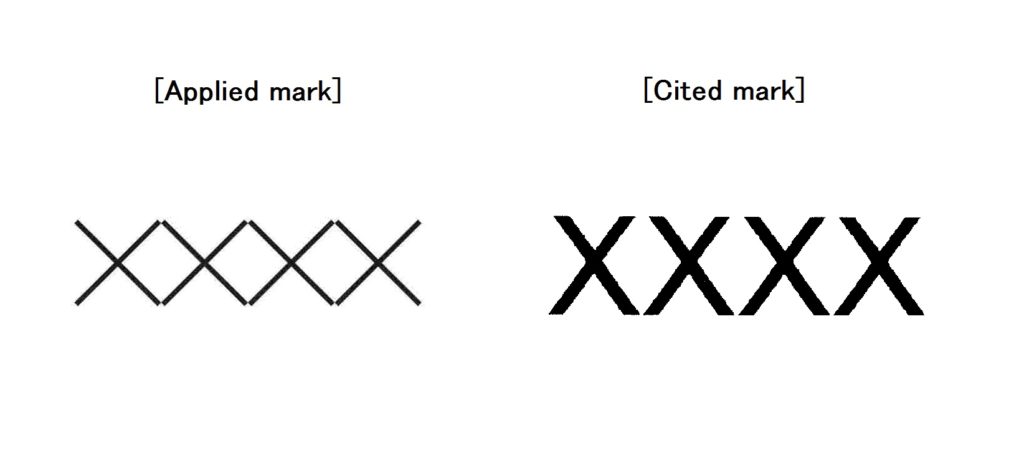
Applied mark

The mark in dispute (see below left) was applied for registration in the name of Mitsukoshi Isetan, Japan’s largest department store group, on February 22, 2017 by designating goods of clothing; belts in class 25 and retail or wholesale services for clothing, bags and pouches, handkerchief and hair ornaments in class 35.


Cited TM registration for “XXXX”

The JPO examiner refused the applied mark due to a conflict with senior TM registration no. 4147840 for the mark “XXXX” (see above right) based on Article 4(1)(xi) of the Trademark Law.

Article 4(1)(xi) is a provision to refrain from registering a junior mark which is deemed identical with, or similar to, any senior registered mark.

Cited mark has been registered since 1998 over goods of clothing, garters, sock suspenders, suspenders [braces], waistbands, belts for clothing, footwear, clothes for sports, special footwear for sports in class 25.

Applicant filed an appeal against the decision on April 27, 2018 and disputed dissimilarity of the marks.


Appeal Board decision

The Appeal Board sided with the applicant and negated similarity of both marks by stating that:

Applied mark shall be seen to represent a certain geometric figure. It appears that cited mark represents four alphabetical letters of “X” in line. It means there finds distinguishable gap between geometric figure and alphabetical letters from appearance.
Applied mark does not give rise to any specific pronunciation. In the meantime, cited mark shall have pronunciations of “eks eks eks eks” and “four eks”. Likewise, both marks are sufficiently distinguishable in pronunciation.
Besides, as long as both marks do not give rise to any specific meaning, it is not feasible to compare them in concept.
In view of above aspects, it unlikely happens confusion between the marks and thus deemed dissimilar.


Based on the foregoing, the Board decided applied mark is not subject to Article 4(1)(xi), and admitted registration.