JPO refused to register 3D shape of Mitsubishi Electric’s spiral escalator

The Appeal Board of Japan Patent Office (JPO) disallowed registration of 3D shape of Mitsubishi Electric’s spiral escalator due to lack of inherent distinctiveness and secondary meaning in relation to escalators, class 7. [Appeal case no. 2017-6855]

Spiral escalator

Mitsubishi Electric Corporation first developed the spiral escalator in 1985, and has been the world’s first and sole manufacturer of spiral escalators. Spiral escalator is a special design type of escalator in the form of a spiral/helical with curved steps.
On May 3, 2016, Mitsubishi Electric filed a trademark application for 3D shape of spiral escalator (see below) by designating escalators in class 7 to the JPO [TM application no. 2016-23374].
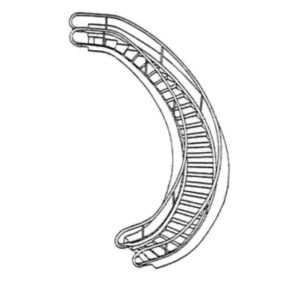
The JPO examiner totally refused the application based on Article 3(1)(iii) of the Japan Trademark Law stating that the applied mark can be easily seen as a 3D shape of escalator and the shape does solely consist of a common configuration to achieve the basic function of escalator. If so, the applied mark lacks distinctiveness as a source indicator.

To dispute the refusal, Mitsubishi Electric filed an appeal on May 12, 2017.

Appeal Board’s decision

The Appeal Board, however, upheld the examiner’s decision on the ground and dismissed Mitsubishi’s allegation by stating that relevant consumers and traders shall conceive of an escalator designed to enhance its function or sensuousness at the sight of applied mark.

Acquired distinctiveness

Mitsubishi Electric also argued that even if the applied mark is deemed descriptive in relation to escalators, it shall be registrable based on Article 3(2) due to acquired distinctiveness of the mark because Mitsubishi Electric Spiral Escalators has achieved 100 % market share in the world and continuously used the 3D shape on escalators for more than three decades.

Article 3(2) is a provision to allow registration of applied mark if, as a result of substantial use of the mark in fact, consumers are able to connect the mark with a source indicator of designated goods or services.

Under the totality of the circumstances, the Appeal Board dismissed the allegation as well.

The Board found that regardless of 100 % market share in the category of spiral escalators, Mitsubishi Electric’s domestic supply record of 24 units in the last thirty years shall be a trivial quantity in comparison with total number of escalators in operation. Besides, questionnaire result rather shows a source of the applied mark is unknown to more than 60% of the questionee.

Based on the foregoing, the Board questioned whether applied mark has acquired distinctiveness through actual use in relation to escalators and consequently refused to register the mark based on Article 3(1)(iii) and 3(2) of the Trademark Law.
Trademark registration for Kikkoman’s Soy sauce 3D Bottle

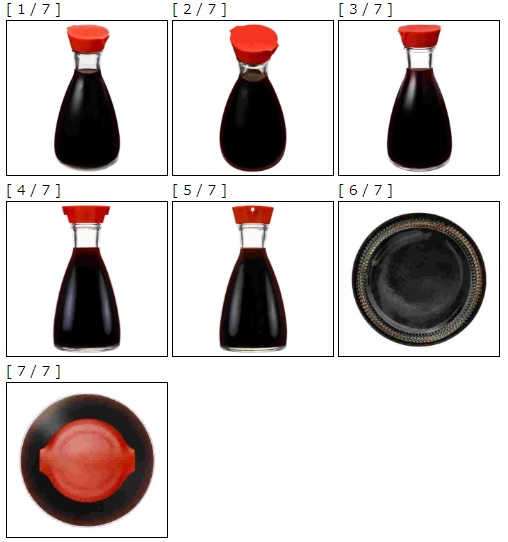
In October 11, 2016, Kikkoman Corporation, the world’s leading producer of soy sauce, filed an application for trademark registration at the Japan Patent Office (JPO) for the following three-dimensional colored mark for soy sauce in class 30.

Red-capped Kikkoman soy sauce dispenser

Iconic red-capped Kikkoman soy sauce dispenser was introduced in 1961 and has been in continuous production ever since. It was developed by Kenji Ekuan, a Japanese Navy sailor former naval academy student who dedicated his life to design when he left the service. Its unique shape took three years and over a hundred prototypes to perfect, but the teardrop design and dripless spout have become a staple of restaurant condiments all around the world. The bottle’s design hasn’t changed over the past 50 years.

JPO Examination/Acquired distinctiveness

The JPO examiner initially notified her refusal due to a lack of inherent distinctiveness in relation to say sauce.

In a response to the office action, Kikkoman argued acquired distinctiveness of the 3D bottle arising from uniqueness of its shape and substantial use for over five decades.

According to news release from Kikkoman, over 500 million of the bottles have been sold since the design was first introduced and distributed in approximately a hundred countries worldwide. Red-capped Kikkoman soy sauce dispenser has already been registered as 3D mark in US, EU, Ukraine, Norway, Russia, Australia.

In March 30, 2018, the JPO granted trademark registration based on Article 3(2) of the Trademark Law by finding acquired distinctiveness of the 3D color mark as a source indicator of Kikkoman.
[TM Registration No. 6031041]


It is just a 3D shape of electronic baccarat shoe, or trademark?

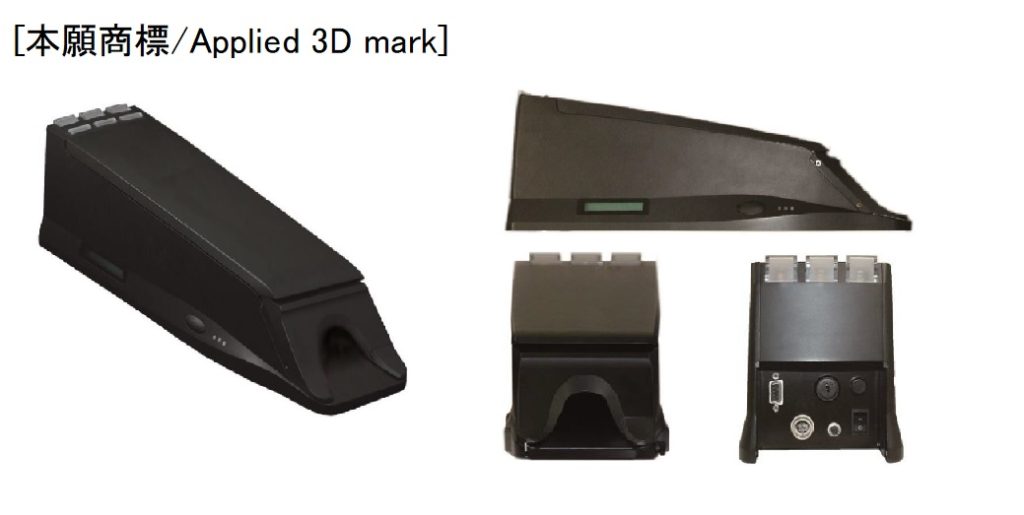
In a lawsuit disputing adequacy of decision by the JPO Appeal Board (Appeal case no. 2015-907) to refuse the applied 3D mark (TM2014-5943, class 28), consisting of a three-dimensional shape of electronic baccarat shoe with the program enabling to reduce the chance of foreign cards and eliminate dealer mistakes, due to lack of  distinctiveness and secondary meaning, the IP High Court sustained the decision being appealed.
[Case no. Heisei28(Gyo-ke)10266,  Decision date: September 27, 2017]

Inherent distinctiveness of the 3D shape

Plaintiff, a Japanese manufacturer and distributor of the ANGEL EYE electronic baccarat shoe, asserted that the 3D shape of ANGEL EYE, being the first products in the industry, is not an essential shape to make it free for public use since no competitors have dealt with same type of product other than plaintiff so far. Besides, a fact that the 3D shape has been registered in the legal gambling countries, e.g. US, EU, AU, RU, Malaysia and NZ, will rather bolster necessity to allow exclusive right on the shape.

However, the Court opposed to plaintiff. “It is inadequate to allow plaintiff to use the 3D shape exclusively. Applied 3D mark can be perceived objectively as a general shape of electronic baccarat shoe aimed to fulfill its original function and produce aesthetic image. If so, it may disorder a fair marketplace to allow exclusive use to plaintiff just because of a first-to-file. A mere fact of trademark registrations in countries where the ANGEL EYE has been distributed is insufficient to admit trademark registration in our nation since the goods is yet to be distributed in Japan.” Accordingly, the Court refused Applied 3D mark based on Article 3(1)(iii).


Secondary meaning of Applied 3D mark

Plaintiff argued Applied 3D mark has already served to function as a source indicator by means of substantial use of the mark sine 2005. Plaintiff exported 11,481 units (sale proceeds: 2.7 billion yen) over the lase decade and has achieved 90 % market share in Macau, the world’s largest casino gambling hub.

In this respect, the Court ruled in favor of the JPO. As plaintiff admits, the shoe has not been manufactured for domestic use. Any evidence suggesting a high degree of recognition to Applied 3D mark in foreign countries is neither relevant nor persuasive. Unless plaintiff demonstrates that domestic consumers have become aware of such recognition, it is groundless to find Applied 3D mark would satisfy requisite of secondary meaning based on Article 3(2) of the Japan Trademark Law.


The case raises a question: What is a role of the Trademark Law where applied mark, being registered in foreign nations,  confronts with an insuperable refusal attributable to legal restrictions on domestic use of the mark?
Unsuccessful domestic registration prevents domestic company from utilizing the Madrid Protocol and protecting his/her vital brands on the global market in an effective and economical manner.