Is the Academy Award-winning film “La La Land” a famous trademark?

In an appeal decision, the Japan Patent Office (JPO) overturned the examiner’s rejection and decided to register the trademark “LA LA LAND” in class 25 by finding no likelihood of confusion with the Academy Award-winning film “La La Land.”

[Appeal case no. 2020-17242, Gazette issued date: October 29, 2021]

LA LA LAND

A Los Angeles based private equity firm, Tsunami Capital Group, Inc., filed a trademark application for the word “LA LA LAND” in standard character on various goods in class 25 including clothing, footwear, headwear, and sportswear with the JPO on July 1, 2019 [TM App no. 2019-91271].

The JPO examiner rejected the mark in contravention of Article 4(1)(xv) of the Japan Trademark Law by stating that the word “La La Land” has been widely recognized as a title of the Academy Award-winning film among relevant consumers and traders. If so, the consumers at the sight of the applied mark used on the designated goods in class 12 are likely to conceive it from an entity economically or systematically connected with the filmmaker.

The applicant filed an appeal against the refusal on December 16, 2020.


JPO Appeal Board decision

The Appeal Board questioned the famousness of the word “La La Land” as a source indicator.

Even if an original movie musical “La La Land” won 6 Academy Awards at the 89th Academy Awards after earning a record-tying 14 nominations and “La La Land” DVD has been released for sale, the Board had an opinion that it is doubtful whether the word “La La Land” has been widely recognized as a source indicator of goods or services from the filmmaker in view of insufficient use of the cited mark on the goods or services unrelated to the film.

Given the word “La La Land” has meanings of a euphoric, dreamlike mental state detached from the harsher realities of life and a nickname for Los Angeles, California, the cited mark would be considered less original.

Based on the foregoing, the Board had a reasonable ground to believe that relevant consumers would not confuse the source of the goods in question with the filmmaker or an entity economically or systematically connected with them and concluded the refusal shall be disaffirmed since the examiner erroneously found famousness of the film “La La Land” as a source indicator.

Failed trademark opposition by Disney over a 3-circle silhouette

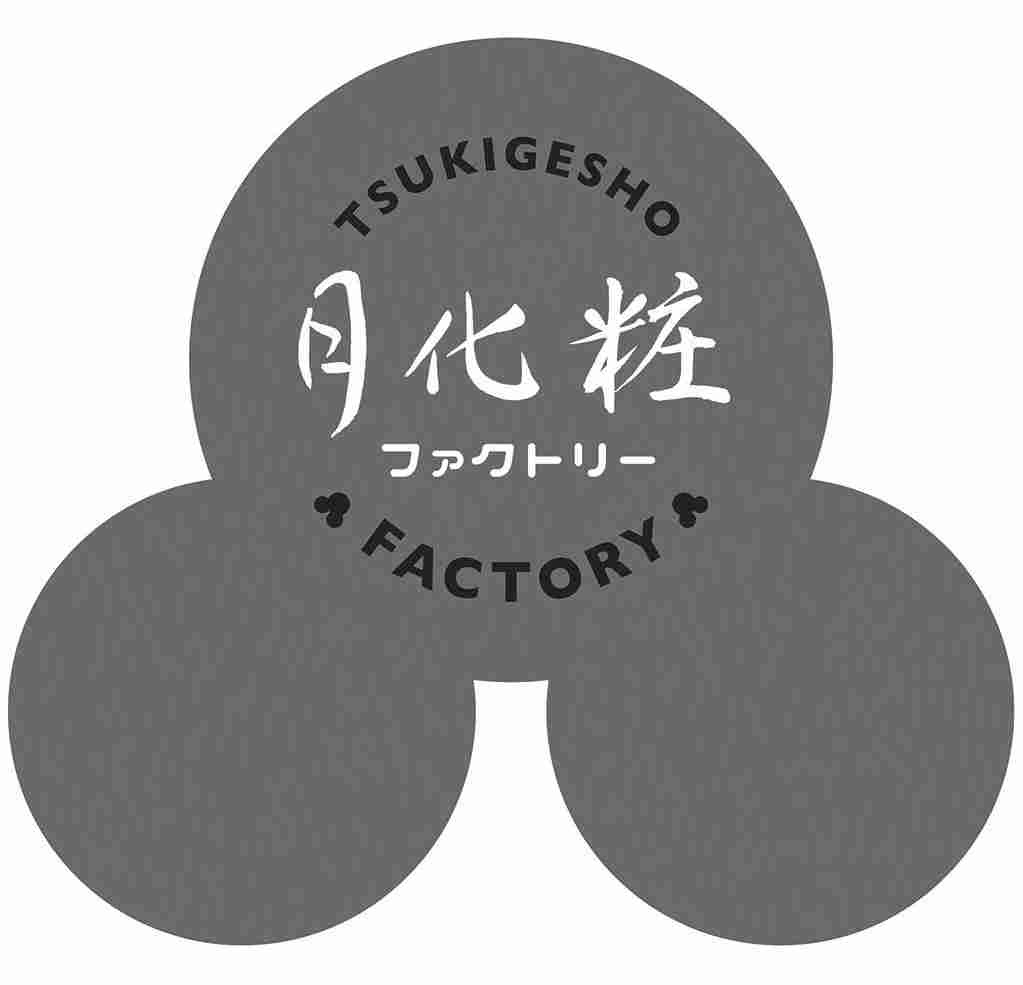
In a recent decision, the Japan Patent Office (JPO) dismissed an opposition filed by Disney Enterprises, Inc. against TM Reg no. 6303837 for a composite mark containing a three-round device due to a low degree of similarity to famous Mickey’s 3-circle silhouette.

[Opposition case no. 2021-900006, Gazette issued date: September 24, 2021]

Opposed mark

Aoki shofuan Co., Ltd., a Japanese confectionery maker, applied a composite mark consisting of words “TSUKIGESHO”, “FACTORY”, its Japanese language and a three-round device (see below) for use on retail or wholesales service in relation to confectionery, processed foods and beverage (tea, coffee, cocoa) in class 35 with the JPO on October 21, 2019.

The JPO examiner granted protection of the opposed mark on September 23, 2020, and published for opposition on November 4, 2020.


Opposition by Disney

To oppose against registration within a statutory period of two months counting from the publication date, Disney Enterprises, Inc. filed an opposition against the opposed mark on January 4, 2021.

Disney argued the opposed mark shall be canceled in contravention of Article 4(1)(x), (xi), (xv), and (xix) of the Trademark Law because of the remarkable reputation and popularity of Mickey’s 3-circle silhouette (see below) as a source indicator of Disney and a high degree of similarity between the opposed mark and the opponent’s famous mark.


JPO decision

The JPO Opposition Board did not question the famousness of Mickey’s 30-circle silhouette as a source indicator of Disney and their business since most consumers would conceive a world-famous iconic character “Mickey Mouse” at the sight of the silhouette.

In the meantime, the Board negated similarity between the marks by stating that:

  1. From appearance, both marks are easily distinguishable because the opposed mark contains distinctive literal elements “TSUKIGESHO” and its Japanese language written in a conspicuous manner, and the figurative element (three round silhouette) is depicted upside down.
  2. Phonetically, both marks are quite dissimilar because the opponent mark does not give rise to a pronunciation contrary to the opposed mark.
  3. Conceptually, although the opposed mark does not give rise to any specific meaning, both marks are dissimilar given the opponent mark is well-known for an indication of Mickey Mouse.
  4. In view of different configuration of the figurative element by depicting three circles upside down, relevant consumers are unlikely to associate the three-round device of the opposed mark with Mickey Mouse. If so, the figurative element would not be considered as a prominent portion to play a source indicator of the opposed mark.

Based on the foregoing, the JPO found both marks are too dissimilar to cause a likelihood of confusion. If so, the Board can’t find reasonable grounds to believe the opposed mark shall be canceled under Article 4(1)(x), (xi), (xv), and (xix) and decided to dismiss the opposition.

Huda Kattan failed to take back trademark HUDABEAUTY

In a trademark opposition against TM Reg no. 6204338 for the stylized “HUDABEAUTY” mark in class 3, the Japan Patent Office (JPO) dismissed the opposition claimed by Huda Kattan due to insufficient famousness of trademark “HUDA BEAUTY” as a source indicator of a beauty mogul “Huda Kattan”.

[Opposition case no. 2020-900049, Gazette issued date: September 24, 2021]

Opposed mark

A Chinese company filed the stylized “HUDABEAUTY” mark (see below) on cosmetics; lotions; facial creams; lips; hand-cleaners; eye-shadows; whitening creams and other goods in class 3 with the JPO on November 22, 2018.

The JPO granted protection of the opposed mark on November 26, 2019, and published for opposition on January 7, 2020. [TM Reg. 6204338]


Opposition by Huda Kattan

On January 10, 2020, three days after the publishment of the opposed mark, Huda Kattan applied the same mark for use on cosmetics, perfumes, and fragrances in class 3 with the JPO and filed an opposition against TM Reg no. 6204338 on February 21, 2020.

The opponent argued the opposed mark shall be canceled in contravention of Article 4(1)(vii), (x), (xv) and (xix) of the Trademark Law because the opposed mark is completely identical with the stylized “HUDABEAUTY” mark that has acquired a substantial reputation and popularity as a source indicator of cosmetics line launched by famous beauty blogger “Huda Kattan” among relevant consumers at the filing date of the opposed mark.

In bolstering the famousness of the opponent mark, the opponent alleged the founder, Kattan, achieved popularity on Instagram, attaining more than 47 million followers as of 2020. Huda is ranked #1 on the “2017 Influencer Instagram Rich List” and was declared one of the “ten most powerful influencers in the world of beauty” and “The Richest Self-Made Women and one of the Top Three Beauty Influencers ” by Forbes magazine. She was chosen as one of “The 25 Most Influential People on the Internet” by Time magazine in 2017.

Internet search does not reveal any goods of the opposed party. Meanwhile, the opponent’s “HUDABEAUTY” cosmetics are available at Amazon Japan and other online platforms for domestic consumers.


JPO decision

Astonishingly, the JPO Opposition Board did not admit the famousness of the “HUDABEAUTY” mark as a source indicator of Huda Kattan by stating that:

  1. It is unclear if the merchants promoting “HUDABEAUTY” cosmetics at Amazon Japan and other online platforms are licensed distributor.
  2. Produced invoices to demonstrate the actual sale of opponent’s goods to Japanese consumers are irrelevant because these are issued on a date after the registration of the opposed mark.
  3. Even though the opponent and Huda Kattan make good use of SNS and have a very high number of followers and been awarded as a beauty influencer, the Board can’t find reasonable grounds to believe from these facts the opponent mark has acquired a certain degree of reputation and popularity among relevant consumers in Japan.
  4. The opponent did not produce any evidence to demonstrate sales amount, publication, and advertisement in Japan.

Since it is one of the requisites in applying Article 4(1)(vii), (x), (xv), and (xix) to have a certain degree of reputation and popularity among relevant consumers before the filing date of the opposed mark, regardless of the close duplication, the Board decided to dismiss the opposition entirely and allowed registration of the opposed mark as it is.


This case teaches us how significant to be a “first-filer” in registering and protecting trademarks in Japan.

Famous mark Protection under Trademark Law

Japan is a rigid “first-to-file” jurisdiction, meaning that it is necessary to register a trademark in order to obtain proprietary rights over it in principle. Prior use of the trademark is insufficient to be protected under the Trademark Law. The only meaningful exception to this rule is the treatment of so-called famous trademarks even if they have not been filed yet. But it should note owners of famous trademarks can’t file an infringement lawsuit based on the trademark right without registration in Japan. The Trademark Law provides special provisions to protect the famous trademarks. However, the statute never refers to the “famous” mark. It only refers to “recognized” marks, “widely recognized” marks, and “highly recognized” marks.


Relative grounds for refusal, opposition, invalidation

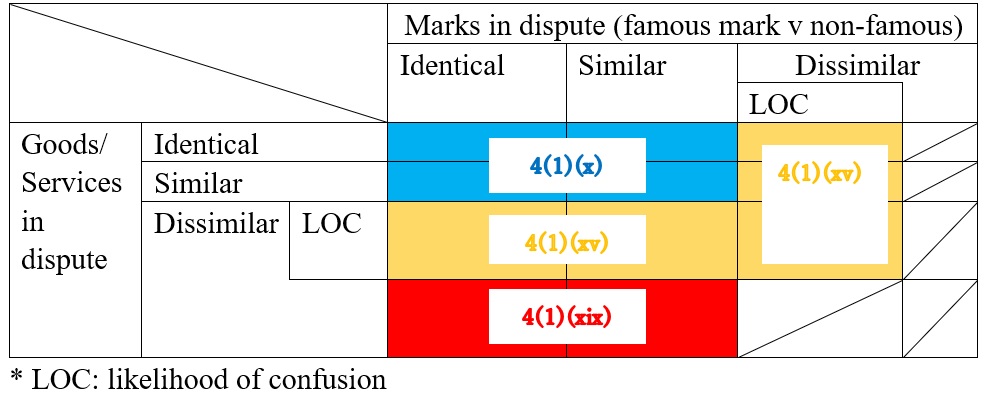
Like other jurisdictions, the Japan Trademark Law prohibits registration of junior marks which are the same as or similar to senior marks that are effectively registered in Japan under Article 4(1)(xi). In order to provide broader protection of famous trademarks, the Law stipulates extra grounds for refusal, opposition, and invalidation on Article 4(1)(x), (xv), (xix).

Article 4(1)(x)

Trademarks that are the same as or similar to trademarks that are widely recognized by consumers as marks indicating the goods or services of another and are used on the same goods or services or similar to those of the other party may not be registered.

Article 4(1)(xv)

Trademarks that are likely to cause confusion in connection with the goods or services related to another’s business may not be registered.

Article 4(1)(xix)

Trademarks which are the same as or similar to trademarks that are widely recognized among consumers either in Japan or in foreign countries as identifying the goods or services related to another’s business and are used for illicit purposes such as trading off the goodwill of another or causing damage to another may not be registered.

These articles spotlight that the Japan Trademark Law considers (1) “similarity” as a most critical issue to determine the scope of protection to famous trademark and (2) “likelihood of confusion” as other legal concepts different from “similarity”.


Defensive mark

A famous trademark may be registered as a defensive mark to cover other identified goods or services than those listed in the original registration under Article 64. These additional goods or services need to be dissimilar to the original goods or services and the registrant needs to prove (1) that the mark is “widely recognized by consumers” and (2) that confusion is likely if the mark is used on these additional goods or services by a third party.

Noteworthy is that defensive mark registration would not be vulnerable to non-use cancellation. Besides, the registrant is entitled to take action against a third party for trademark infringement even if the mark was used on the goods or services that are remotely associated with his business.


Prior use rights

As stated above, a mere prior use is insufficient to be protected under the Trademark Law. Prior user is entitled to defense for trademark infringement only where the mark is “widely recognized by consumers” as identifying the goods or services of the prior user at the filing date of initial trademark application by the registrant under Article 32.


Enforcement/Infringement

Unauthorized use of the mark that is the same as or similar to the registered mark constitutes trademark infringement under Articles 25 and 37(i).

As a matter of law, the Trademark Law does not provide broader protection of famous trademarks in enforcement. No specific provision is given to prohibit famous trademark dilution and parody. There is a considerable gray zone in the Trademark Law when it comes to the unauthorized use of “non-similar” marks that are likely to cause confusion with famous trademarks.

HUGO BOSS Unsuccessful in Blocking “BOSS”

German luxury fashion house Hugo Boss failed in their attempt to block Japanese TM Reg no. 6218609 for word mark “BOSS” on SaaS and order processing services.

[Opposition case no. 2020-900096, Gazette issued date: August 27, 2021]

Opposed mark

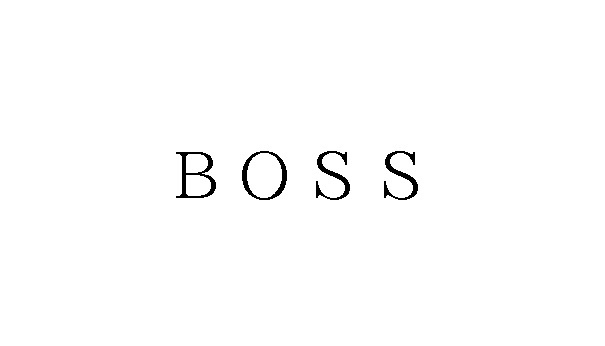
Opposed mark, filed on January 22, 2019, by Rakuten, Japanese electronic commerce and online retailing company, consists of the word “BOSS” in standard character (see below).

The services sought for registration are order processing services in class 35 and providing computer programs on e-commerce, software as a service (SaaS), and other related services in class 42. Rakuten is using the opposed mark “BOSS” as an abbreviation of ‘Back Office Support System’ to indicate their service for sales order management and automated shipping system.

The JPO admitted registration on June 22, 2020, and published for post-grant opposition on February 12, 2020.


Opposition by Hugo Boss

HUGO BOSS Trademark Management GmbH & Co KG filed an opposition against the opposed mark on April 3, 2020, and claimed the opposed mark “BOSS” shall be canceled in contravention of Article 4(1)(xi) and (xv) of the Japan Trademark Law.

Article 4(1)(xi) is a provision to prohibit registering a junior mark that is identical with, or similar to, any senior registered mark.

Article 4(1)(xv) is a provision to prohibit registration of a trademark which is likely to cause confusion with the business of other entities.

HUGO BOSS argued that not only tradename “HOGO BOSS but also their mark “BOSS” has been well known for a luxury fashion brand and source indicators of the opponent by producing Deloitte’s annual list of the world’s largest luxury companies on which HUGO BOSS was ranked No.19(2015), No.21(2016), No.23(2017).

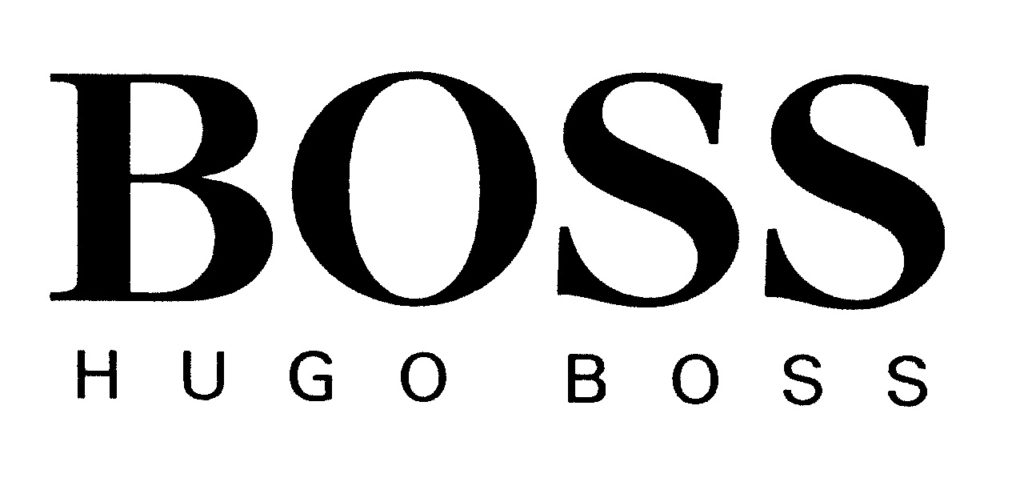
In view of a high degree of similarity between the opposed mark and the opponent’s mark “BOSS” (see below), relevant consumers are likely to confuse the source of services bearing the opposed mark with HUGO BOSS.


Board Decision

The JPO Opposition Board admitted a certain degree of the reputation of the “HUGO BOSS” mark as a source indicator of the opponent in connection with fashion items, e.g., clothing, watches, sunglasses, fragrances.

In the meantime, the Board questioned if the word “BOSS” has also acquired such popularity, stating that produced materials are insufficient to find the word perse plays the source indicator since the cited mark contains a famous mark “HUGO BOSS” adjacent to it.

Even if there is a high degree of similarity between the marks, the Board has a reasonable ground to believe the services in question, namely, order processing services (cl.35) and SaaS (cl.42) are less associated with fashion items, e.g., clothing, watches, sunglasses, fragrances.

If so, it is unlikely that relevant consumers at the sight of the opposed mark would conceive or associate it with HUGO BOSS or any entity who is systematically or economically connected with the opponent when used on the services in question.

Based on the foregoing, the JPO dismiss the entire allegations of HUGO BOSS and allowed the opposed mark “BOSS” to survive.

No confusion between WeWork and iWork

The Japan Patent Office (JPO) dismissed a trademark opposition claimed by WeWork Companies Inc. against Japanese trademark registration no. 6271212 for wordmark “iWork” by finding less likelihood of confusion with “WeWork”.

[Opposition case no. 2020-900249, Gazette issued date: July 30, 2021]

iWork

Desigmassion Company Ltd. applied the wordmark “iWork” in standard character for registration on ‘rental of offices for coworking’ in class 36 and ‘rental of temporary accommodation; providing foods and beverages; rental of meeting rooms; rental of facilities for exhibitions’ in class 43 wit the JPO on February 1, 2021 (TM App no. 2020-011256).

The mark did not face any refusal during the substantive examination and was published for opposition on August 4, 2020.

The company offers all-inclusive coworking space and private office “iWork” in Downtown Tokyo.


WeWork

WeWork Companies Inc., one of the leading global flexible space providers, filed an opposition against the iWork mark on October 1, 2020, before the lapse of a two-month statutory period for the opposition, in contravention of Article 4(1)(xi) and (xv) of the Japan Trademark Law.

Article 4(1)(xv) prohibits registering a trademark that is likely to cause confusion with a business of another entity.

The likelihood of confusion is a key criterion when assessing the similarity of trademarks. To establish whether there is the likelihood of confusion, the visual, phonetic, and conceptual similarity will be assessed as well as the goods and/or services involved. This assessment is based on the overall impression given by those marks, account being taken, in particular, of their distinctive and dominant components. A low degree of similarity between the goods or services may be offset by a high degree of similarity between the marks, and vice versa.

WeWork argued that “iWork” shall be deemed similar to the opponent’s senior registered mark “WeWork” (IR no. 1453286) because a mere difference of the prefix “we” and “i” would be insufficient for relevant consumers to distinguish two marks from phonetical and visual points of view.

Besides, in view of a remarkable degree of reputation and popularity of the opponent mark as a source indicator of coworking space among relevant consumers, a close association between their services, and resemblance in appearance and sound between the marks, it is unquestionable that relevant consumers are likely to conceive “WeWork” at the sight of the opposed mark “iWork” when used on the services in question.


JPO decision

To my surprise, the JPO Opposition Board did not admit the famousness of the “WeWork” mark by stating that the opponent just had 27 locations in six cities and 22,000 users in Japan at the time of filing the opposed mark, and the produced evidence was insufficient to find a high degree of recognition among domestic consumers.

In the assessment of similarity between the marks, the Board found that relevant consumers were apt to pay higher attention to the prefix of a mark. Given the short sound consisting of four syllables, a different letter and pronunciation in the prefix position shall give rise to a distinctive impression in the minds of the consumer. Both marks are undisputedly dissimilar in concept.

By taking into consideration a low degree of similarity between “iWork” and “WeWork”, and insufficient evidence to assume the famousness of “WeWork”, even if the services in dispute are closely associated with WeWork’s business, the Board had no reason to believe the opposed mark would cause confusion with WeWork when used on the disputed services in class 36 and 43.

Based on the foregoing, the Board decided the opposed mark would not be canceled in contravention of Article 4(1)(xi) and (x) of the Trademark Law and dismissed the opposition entirely.

JPO found likelihood of confusion between SONY and SONICODE

The Japan Patent Office sided with Sony Corporation and declared invalidation of TM Registration no. 5764615 for wordmark “SONICODE” due to a likelihood of confusion with “SONY”.

[Invalidation case no. 2020-890039, Gazette issued date: July 30, 2021]

SONICODE

Field System Inc., a mobile application developer, applied wordmark “SONICODE” in standard character for registration on various goods including telecommunication apparatus, electronic machines, consumer video game programs, and its related services in class 9, 38, and 41 with the JPO on December 12, 2014 (TM App no. 2014-105218).

The mark did not face any refusal during the substantive examination and it was registered on date May 15, 2015.

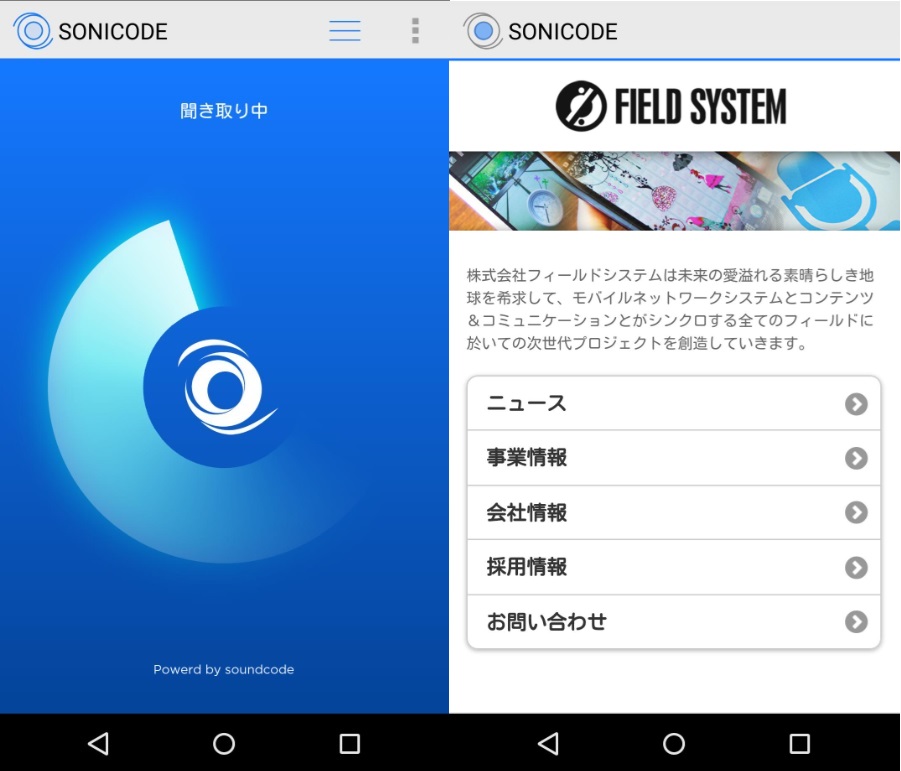
Apparently, the mark has been used on mobile applications for smartphones.


SONY

SONY CORPORATION, a major Japanese manufacturer of consumer electronics products, filed an opposition against the SONICODE mark on August 5, 2015, before the lapse of a two-month statutory period for the opposition, in contravention of Article 4(1)(xi), (xv), and (xix) of the Japan Trademark Law. However, the JPO Opposition Board found both marks dissimilar and no likelihood of confusion between the marks SONY and SONICODE and dismissed SONY’s allegations entirely. [Opposition case no. 2015-900260]

On May 12, 2020, just three days before the lapse of the five-year statute of limitations, SONY CORPORATION files a petition for invalidation and alleged that the contested mark shall be invalidated based on Article 4(1)(x), (xi), (xv).

SONY argued that relevant consumers would conceive SONY at the sight of the contested mark SONICODE because of a high reputation of SONY and less distinctiveness of the term “CODE” in relation to the goods and services in question.

To bolster the arguments, SONY demonstrated how AI speakers, e.g., Amazon Alexa, Google Assist, Microsoft Cortana, Apple Siri, reacted to hear “SONICODE”. Allegedly, the AI speakers recognized it as ‘SONY code’ or ‘SONY cord’ and displayed information relating to SONY.

Field System Inc. did neither answer to the petition nor dispute at all during the invalidation procedure.


JPO decision

The JPO Invalidation Board did not question a remarkable degree of reputation, popularity, and originality of “SONY” as a source indicator of the opponent’s business and its products (telecommunication apparatus, electronic machines, consumer video game programs).

Besides, the Board found the prefix “SONI” of the contested mark gives rise to a similar appearance and pronunciation with “SONY”. Relevant consumers are likely to consider that the contested mark consists of “SONI” and “CODE”. If so, even if both marks are deemed dissimilar in their entirety, the Board has good reason to believe “SONICODE” has a certain degree of similarity to “SONY”.

In view of a close association between the goods and services in question and the opponent business, the Board concluded the contested mark shall be retroactively invalidated in contravention of Article 4(1)(xv). In the meantime, because of the dissimilarity of the marks, the Board dismissed allegations based on Article 4(1)(x) and (xi).

Dolce & Gabbana failed in a trademark opposition to block DolceSport

The Japan Patent Office dismissed a trademark opposition claimed by the Italian luxury firm, Dolce & Gabbana against trademark registration no. 6259630 for word mark “DolceSport” in class 18, 20, 22, 25, and 28 by finding a less likelihood of confusion with “Dolce & Gabbana.”

[Opposition case no. 2020-900206, Gazette issued date: July 30, 2021]

“Dolce Sport”

Opposed mark, consisting of the word “Dolce Sport” in standard character, was filed by a Japanese company, SIS Co., Ltd. for use on various goods belonging to class 18,20, 22, 25 and 28 with the JPO on May 30, 2019 (TM Application no. 2019-83931).

The JPO admitted registration on June 15, 2020 and published for registration on July 7, 2020.


Opposition by Dolce & Gabbana

Dolce & Gabbana filed an opposition on August 19, 2020 and argued the opposed mark “Dolce Sport” shall be cancelled in contravention of Article 4(1)(xv) of the Japan Trademark Law since relevant consumes are likely to confuse the source of goods bearing the opposed mark with Dolce & Gabbana because of a close resemblance between “Dolce Sport” and a word “Dolce” that has become famous per se as a source indicator of the opponent.

Article 4(1)(xv) is a provision to prohibit registration of a trademark which is likely to cause confusion with the business of other entities.

To apply the article, it is requisite that the mark of other entities has acquired a certain degree of reputation and popularity among relevant consumers in Japan.

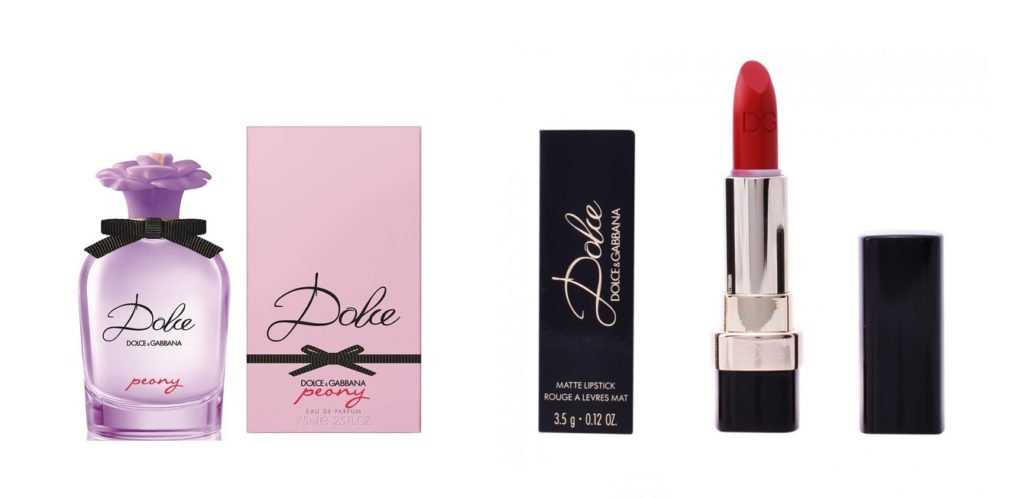
Opponent produced evidence to demonstrate the word “Dolce” per se has been used on their goods, e.g. perfume, cosmetics, and bags. See below.


JPO decision

The JPO Opposition Board did not admit the term “Dolce” per se has become famous as a source indicator of Dolce & Gabbana by stating that famous brand “Dolce & Gabbana” is obviously represented adjacent to the term “Dolce” on their goods. If so, the Board has good reason to believe that it would be unclear whether the term has acquired a certain degree of reputation as a source indicator of the opponent from the produced evidence. Besides, the Board questioned whether “Dolce” has been known as an abbreviation of “Dolce & Gabbana” due to the same reason.

Based on the foregoing, the Board decided that, even if the opposed mark “Dolce Sport” has a medium degree of similarity with the “Dolce” and the goods in question are somewhat associated with the opponent business, relevant consumers are unlikely to confuse or misconceive a source of the opposed mark with Dolce & Gabbana by taking account of less originality of the term “Dolce” having a meaning of ‘sweet; dessert’ in Italian language and lack of good-will protectable under Article 4(1)(xv) enough to indicate a source of “Dolce & Gabbana”.

To whom does “Mary Poppins” return?

The Japan Patent Office (JPO) dismissed an invalidation petition by Disney Enterprises, Inc. against Japanese TM Reg no. 5710595 for the wordmark “Mary Poppins” by finding that “Mary Poppins” has not been well known as a source indicator of Disney.

[Invalidation case no. 2019-890040, Gazette issued date: June 25, 2021]

TM Registration no. 5710595

Disputed mark, consisting of the word “Mary Poppins” in standard character (see below), was applied for registration on February 28, 2014, in respect of caring for babies [excluding services provided at facilities]; babysitting in class 45.

Without confronting refusal during the substantive examination, the disputed mark was registered on October 17, 2014.

The applicant of the disputed mark, Mary Poppins Inc., has apparently offered babysitting services in Kobe, Japan since its establishment in 1988.

Screen capture from https://www.marypoppins.co.jp/en/

Petition for invalidation by Disney

Japan Trademark Law has a provision to retroactively invalidate trademark registration for certain restricted reasons specified under Article 46 (1), provided that the interested party files an invalidation petition within a five-year statute of limitations.

Disney filed a petition for invalidation against the disputed mark on July 18, 2019, three months before the lapse of the limitations period, and argued the mark unquestionably freerides on the world-famous Walt Disney film “Mary Poppins” and thus relevant consumers would associate the disputed mark with Disney when used on the services in question. If so, it shall be invalid in contravention of Article 4(1)(vii), (xv), and (xix) of the Japan Trademark Law.

Article 4(1)(vii) of the Trademark Law prohibits any mark likely to cause damage to public order or morality from registration.

Article 4(1)(xv) provides that a mark shall not be registered where it is likely to cause confusion with other business entities ’ well-known goods or services, to the benefit of brand owners and users.

Article 4(1)(xix) prohibits registering a trademark that is identical with, or similar to, another entity’s famous mark, if such trademark is aimed for unfair purposes, e.g. gaining unfair profits, or causing damage to the entity.


Mary Poppins, an American musical film, released in 1964, features the now-iconic screen debut of Julie Andrews. A children’s classic, Mary Poppins is considered to be among the finest of Walt Disney’s productions based on the original books by P.L Travers.


JPO Decision

The JPO Invalidation Board admitted a certain degree of reputation and popularity of “Mary Poppins” as the title of the beloved Walt Disney film and the name of the main character of the film.

In the meantime, the Board questioned if “Mary Poppins” has played a distinctive role in indicating a source of Disney’s goods or services. A mere fact that goods featuring the Walt Disney films and its characters are merchandised at the Tokyo Disney Resort and Disney Shops in Japan is insufficient to prove Disney has used “Mary Poppins” as a source indicator to identify their business, the Board found.

In so far as “Mary Poppins” has not been recognized as a source indicator, but a title of the world-famous Walt Disney film or the main character of the film, it is unlikely that relevant consumers would consider the disputed mark “Mary Poppins” used on the services in question coming from Disney or entities systematically or economically connected with the opponent.

The Board also referred to the precedent court cases that ruled invalidation of the trademark “Anne of Green Gables” and “Tarzan” in contravention of Article 4(1)(vii). Contrary to these films, the Board could find no authorized activity to protect or preserve the film or original books of “Mary Poppins” as cultural heritage and prohibit unlicensed use by the private sector. If so, it is inadequate to treat the case equally with them. The Board held that the disputed mark shall not be likely to cause damage to public order or morality.

Based on the foregoing, the JPO decided the disputed mark shall remain valid and dismissed the invalidation entirely.

Trademark Dispute over “RED HOT”

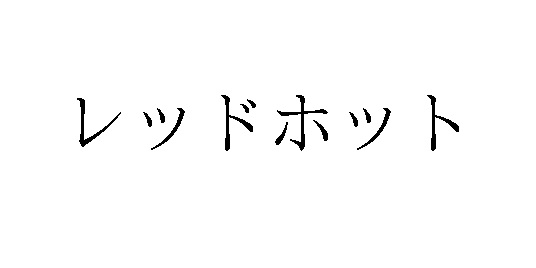
The Japan Patent Office (JPO) dismissed trademark opposition against wordmark “REDHOT” written in Katakana character opposed by The French’s Food Company LLC who owns senior trademark “REDHOT” and “FRANK’S REDHOT” in class 30.

[Opposition case no. 2020-900289, Gazette issued date: June 25, 2021]

Opposed mark “REDHOT”

Opposed mark, consisting of the word “REDHOT” written in Japanese Katakana character (see below), was filed by Kentucky Fried Chicken Japan (KFC) for use on fried chicken, meat, processed meat products, and other goods in class 29 and hamburgers, hot dog sandwiches, bread rolls, and other goods except for seasonings and spices in class 30 with the JPO on November 6, 2018 (TM Application no. 2018-142676).

KFC Japan has begun selling the “Red Hot Chicken”, red and white pepper with a touch of habanero, giving it a crisp, spicy flavor and the taste of domestic chicken in limited quantities since 2004.


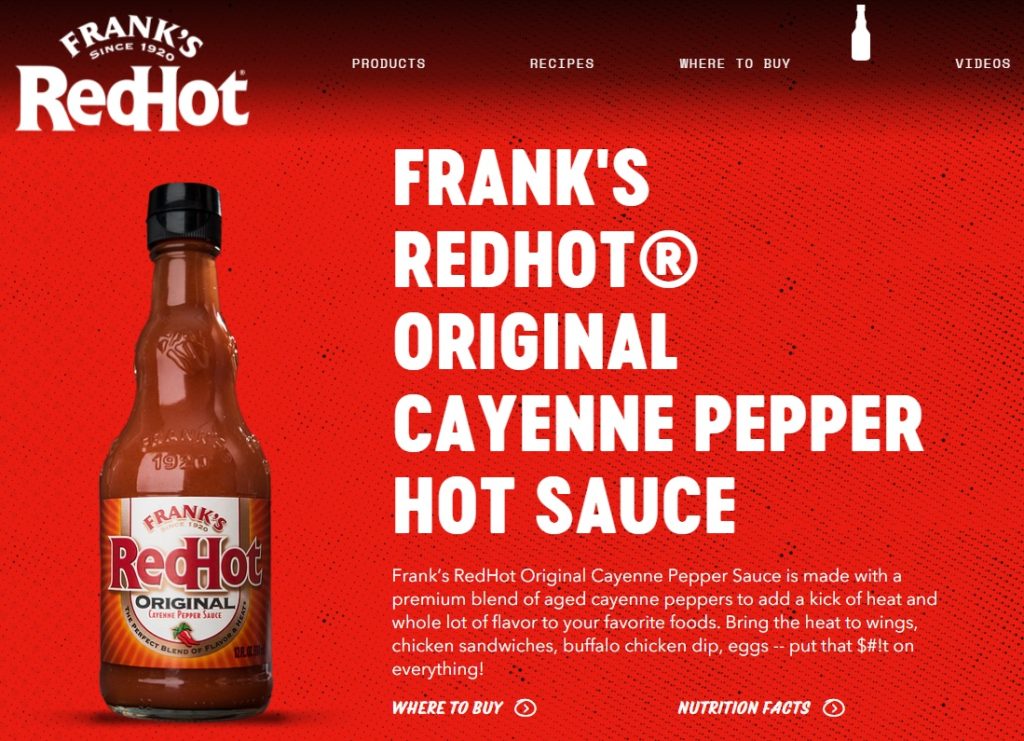
FRANK’S REDHOT

The French’s Food Company LLC, an owner of the #1 brand of hot sauce “Frank’s RedHot” in America, filed an opposition on November 2, 2020.

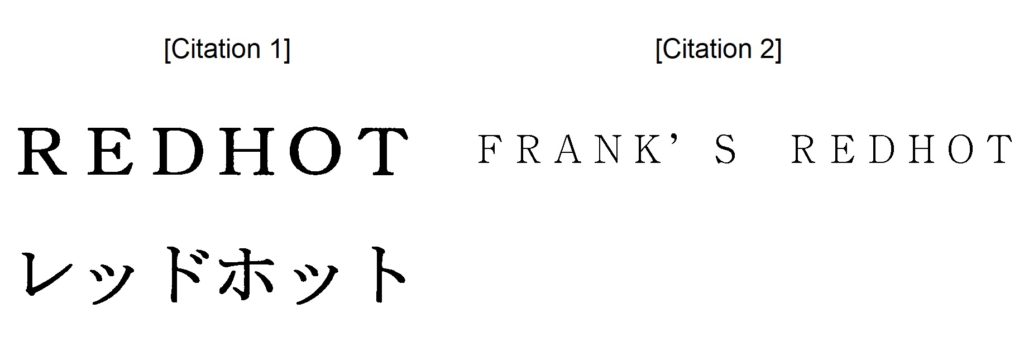
Opponent argued that the opposed mark shall be canceled in contravention of Article 4(1)(xi) and (xv) because of similarity to senior TM Reg nos. 4723565 and 5523112 for wordmark “REDHOT” on seasonings and spices in class 30 (Citation 1), and a likelihood of confusion with TM Reg no. 5523111 for wordmark “FRANK’S REDHOT” (Citation 2) which has become famous as a source indicator in connection with hot sauce as a result of substantial and continuous use since 1920.


JPO decision

The Opposition Board of JPO found that Article 4(1)(xi) shall not be applicable to the opposed mark.

Article 4(1)(xi) is a provision to prohibit registering a junior mark that is identical with, or similar to, any senior registered mark.

Since the designated goods, seasonings and spices, of the opposed mark are deemed dissimilar to any other goods belonging to class 30. In so far as respective goods in question are dissimilar, the opposed mark shall not be subject to the article even though the mark is identical with Citation 1.

The Board questioned whether the mark “FRANK’S REDHOT” has acquired a certain degree of reputation and popularity among relevant consumers in Japan by taking account of the produced evidence. The mere fact that the opponent’s hot sauces get to be a popular choice at specific dining restaurants is insufficient to support the famousness of Citation 2 in Japan.

Besides, relevant consumers would be easily able to distinguish the opposed mark with “FRANK’S REDHOT” by means of the distinctive term “FRANK’S” of Citation 2.

Given the low degree of similarity and unproven famousness as a source indicator of the opponent, the Board concluded it is unlikely that relevant consumers would confuse the source of goods bearing the opposed mark with the opponent or Citation 2 from the totality of circumstances, and thus dismissed the opposition entirely.