

The Japan Patent Office (JPO) set aside rejection by the examiner to register TM App no. 2025-57051 “Finto” in Class 9 by finding dissimilarity to earlier TM Reg no. 5547097 for the wordmark “Fi.n.t” in the same class.
[Appeal case no. 2025-16841, decided on January 22, 2026]
Finto
Visional Co., Ltd. filed a trademark application for the word mark “Finto” in standard character for use on computer software and other computer-related goods in Class 9 with the JPO on May 26, 2026. [TM App no. 2025-57051]
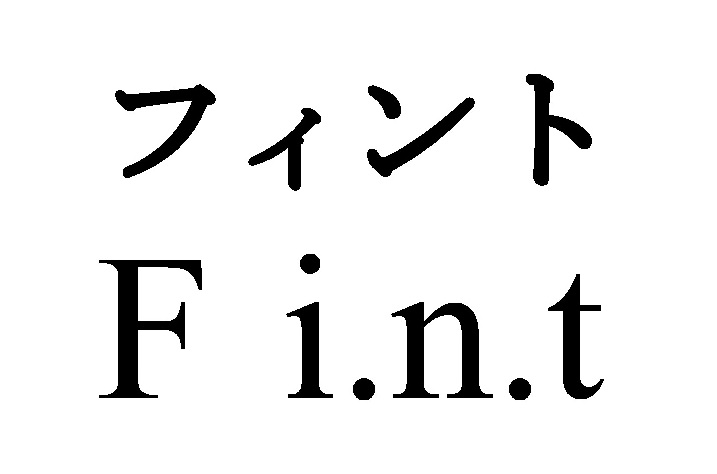
Fi.n.t
On June 4, 2025, the JPO examiner gave the applicant a notice of ground for refusal laid down in Article 4(1)(xi) of the Japan Trademark Law by citing earlier TM Reg no. 5547097 for a word mark “Fi.n.t” with its Japanese transliteration (see below) in Class 9 that has been effectively registered since 2012.
The applicant filed a response to the office action on July 9, 2025, and argued dissimilarity of the marks. However, the examiner did not withdraw his refusal and finally decided to reject the entire application on July 25.
The applicant filed an appeal against the examiner’s rejection on October 22, 2025, and argued dissimilarity of the marks.
Appeal Board decision
The JPO Appeal Board noted that the term “Finto” is not listed in standard dictionaries. As no circumstances are confirmed to suggest its specific meaning in Japan, it will be recognized as a coined word. Therefore, the mark has a sound of “finto” and does not elicit any particular connotations.
Regarding the cited mark, the Board observed that it comprises the letters “Fi.n.t” and their Japanese katakana transliteration, arranged in two lines. It is regular to refrain from pronouncing two dots placed in the middle of the letters. From overall appearance, it is reasonable to find that the cited mark also has a sound of “finto” and no meaning in its entirety.
Due to the clear distinctions in literal configuration, the number of letters, and the presence and absence of “,” / “o,” visual impressions differ remarkably to the extent that relevant consumers can distinguish two marks in appearance. Evidently, both marks have the same sound. A conceptual comparison is neutral as neither of the concepts has a clear meaning.
Based on the foregoing, the Board found that even if the marks have common sound and the conceptual comparison is neutral, given that the marks are sufficiently distinguishable in appearance, relevant consumers will not confuse the source of goods in question bearing the mark “Finto” with the cited mark. If so, the Board has reason to believe that they are dissimilar as a whole.