JPO found “is me” dissimilar to “iS.ME” as trademark

The Japan Patent Office (JPO) reversed the examiner’s rejection of the word mark “is me” in Classes 14, 18, and 25, by finding it dissimilar to senior TM Reg No. 5006417 for the mark “iS.ME” with an oval device.
[Appeal case no. 2025-4535, decided on December 17, 2025]


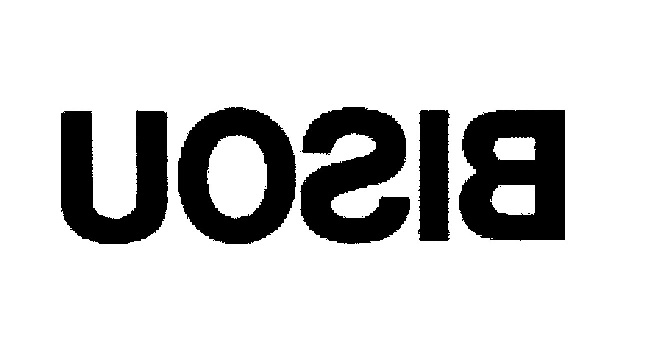
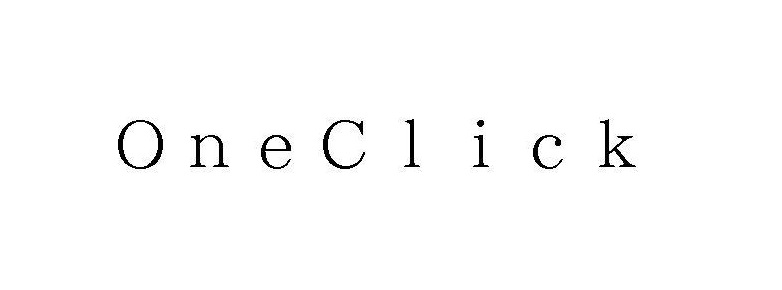
“is me”

ARIGATO CO., LTD. filed a trademark application for the stylized mark “is me” (see below) in connection with personal ornaments (Cl. 14), bags (Cl. 18), and apparel products (Cl. 25) with the JPO on February 8, 2024. [TM App no. 2024-18788]


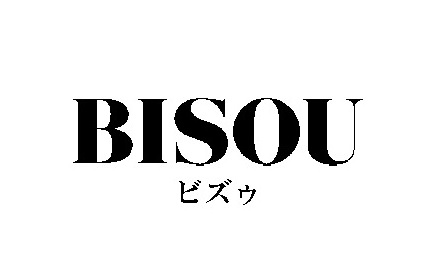
TM Reg No. 5006417

On October 4, 2024, the JPO examiner issued a notice of ground for refusal by citing senior TM Reg No. 5006417 for the mark “IS.ME” with an oval device (see below) in Classes 12, 14, and 25.

The applicant filed a response against the refusal on November 27, 2024, to argue the dissimilarity of these marks. However, on February 4, 2025, the examiner decided to reject the entire application due to similarity to the cited mark based on Article 4(1)(xi) of the Japan Trademark Law.

On March 25, 2025, the applicant filed an appeal against the contested decision, requesting that the rejection be set aside.


JPO Appeal Board decision

The JPO Appeal Board disaffirmed the contested decision and found that the mark “is me” should not be subject to rejection under Article 4(1)(xi) by stating that:

  1. The mark in question consists of the letters “is me” written in a script font. Both terms, “is” and “me”, are English words generally familiar to Japanese consumers, meaning “to be” and “myself” respectively. Therefore, the mark has the sound of “iz-miː.” Meanwhile, as “is me” lacks a subjective term, it does not give rise to any specific meaning as a whole.
  2. The literal elements of the cited mark will not be considered inextricable from the graphical element because of a space between them, and lack of conceptual integrity as a whole. In this regard, it is reasonable to consider the literal element as dominant in the cited mark, and compare it with the mark in question to assess similarity between the marks. The literal element gives rise to various sounds, not limited to “iz-miː.”, but “ai-es-dot-emu-iː”, “iz-dot-miː.”, “ai-es-dot-miː”.
  3. From appearance, the cited mark features a distinctive combination of the initial letter “i” in lowercase and the subsequent three letters in uppercase, all written in bold Gothic and colored in red. This constitutes a prominent distinction from the mark in question, resulting in strong commercial impressions that are easily distinguishable.
  4. Aurally, even if both sounds are the same when the cited mark is pronounced as “iz-miː”, the other sounds are clearly distinguishable.
  5. A conceptual comparison is neutral as neither of them has any specific meaning.
  6. Based on the foregoing, given both marks are unlikely to cause confusion from visual and phonetic points of view, the Board has reason to believe the mark “is me” is deemed dissimilar to the cited mark as a whole.

SERAPIAN Successful in Registering iconic MOSAICO braided pattern as trademark

The Italian-based fashion house Stefano Serapian S.r.l. was successful in an appeal to overturn the examiner’s rejection of TM App no. 2022-131488 for the Serapian’s signature “Mosaico” leather pattern in Class 18.
[Appeal case no. 2023-16337, decided on December 17, 2025]


SERAPIAN MOSAICO

Stefano Serapian S.r.l. filed a trademark application for a braided pattern (see below) for use on bags, suitcases, tote bags, backpacks, key cases, porches, wallets, coin cases, and handbags in Class 18 with the JPO on November 17, 2022 [TM App no. 2022-131488].

The Serapian Mosaico pattern is known for its iconic hand-weaving technique, which dates back to 1947 and serves as an emblem of the Italian luxury brand, Serapian.


JPO Examination

On June 26, 2023, the examiner rejected the mark based on Article 3(1)(vi) of the Japan Trademark Law by finding that:

The applied-for mark represents a continuous and repetitive geometric pattern consisting of a white square with a vertical line in the middle and a black square in a diagonal position. As a whole, it will be perceived merely as a decorative background design. Besides, there is no distinctive element that identifies the source of the goods in question. Consequently, consumers are unable to recognize it as a source indicator due to its lack of inherent distinctiveness.

Serapian filed an appeal against the rejection on September 27, 2023, to dispute the inherent distinctiveness of the mark based on substantial use and advertising of the Mosaico collection in Japan since 2014.


JPO Appeal Board Decision

The JPO Appeal Board noted the following facts.

  • Founded in 1928, the applicant is known for its line of bags favored by the late British actress Audrey Hepburn. The applicant’s bags, which depict the applied-for mark and were designed in 1947, have been sold nationwide in Japan for over 10 years and have been distributed in Japan since 2014.
  • Major fashion magazines and online articles have featured the bags and their iconic “MOSAICO” pattern design.
  • The bags are also sold in major department stores and online malls. Despite being expensive and high-end goods, annual sales exceeded JPY 50 million in 2023 and JPY 9 million in 2024.
  • A discretionary survey by the Board did not reveal the actual use of a similar pattern by others.

Based on the foregoing, the Board found that relevant consumers and traders can distinguish the applicant’s goods from others based solely on the Mosaico pattern.

Therefore, since the applied-for mark is not subject to Article 3(1)(vi) of the Japan Trademark Law, the Board overturned the examiner’s rejection.

Top 10 Trademark News in Japan, 2025

As the year 2025 comes to an end, it is a good time to share the top 10 trademark news in Japan by counting the total number of likes on the Linkedin “Like” Button.


1: JPO Grants TM Registration for 3D Shape of the Popular Pocky Cookie

The Japan Patent Office (JPO) granted trademark registration for the three-dimensional (3D) shape of Ezaki Glico’s iconic “Pocky” cookie, recognizing that the shape had acquired distinctiveness in relation to chocolate confections in Class 30 [TM Reg. No. 6951539].


2: UNIQLO Lost in Trademark Opposition against UNIPRO

UNIQLO lost in its attempt to oppose TM Reg no. 6746724 for the mark “UNIPRO” in class 28 due to dissimilarity and unlikelihood of confusion with a world-famous Japanese clothing brand “UNIQLO”.


3: STARBUCKS Unsuccessful Invalidation Action against Trademark “STARBOSS”

The Japan Patent Office (JPO) dismissed an invalidation action claimed by Starbucks Inc. against TM Reg no. 6595964 for wordmark “STARBOSS” in class 32 due to dissimilarity to and unlikelihood of confusion with the world’s largest coffee chain “STARBUCKS”.


4: IP High Court ruling: STARBUCKS vs STARBOSS

The Japan IP High Court did not side with Starbucks Corporation in a trademark dispute between “STARBUCKS” and “STARBOSS”, and affirmed the JPO decision that found “STARBOSS” dissimilar to, and less likelihood of confusion with “STARBUCKS when used on beverages.


5: Trademark dispute: SONY vs SONIMART

The Japan Patent Office (JPO) sided with SONY in a trademark invalidation action against TM Reg no. 6162062 for word mark “SONIMARK” in classes 35 and 42 by finding a likelihood of confusion with famous mark “SONY”.


6: MONSTER STRIKE vs MONSTER ENERGY

The Japan Patent Office (JPO) did not decide in favour of Monster Energy Company in its opposition to Defensive Mark Reg. No. 5673517 for the word mark “MONSTER STRIKE” in Classes 29, 30, and 32.


7: YONEX Scored Win in Registering Color mark

On October 21, 2025, the Japan Patent Office (JPO) granted registration of a color mark that consists of blue and green colors, filed by Yonex Co., Ltd. to use on badminton shuttlecocks by finding acquired distinctiveness of the color combination.


8: HERMES Defeated with Trademark Opposition against KIMONO TWILLY

The Japan Patent Office (JPO) dismissed an opposition filed by Hermes International against TM Reg no. 6753650 for the word mark “KIMONO TWILLY” in Class 18, claiming a likelihood of confusion with the Hermes scarves “TWILLY”.


9: JPO Said No to Register Kawasaki Green Color Mark

On March 19, 2025, the Japan Patent Office (JPO) finally decided to reject a color mark application filed a decade ago by Kawasaki Heavy Industries, Ltd., which sought to register a green color used on the world-famous Kawasaki motorcycles.


10: TOMMY HILFIGER vs TOMTOMMY

The Japan Patent Office (JPO) did not side with Tommy Hilfiger Licensing B.V. in an opposition against TM Reg no. 6604265 “TOMTOMMY” due to dissimilarity and unlikelihood of confusion with “TOMMY” and “TOMMY HILFIGER”.

JPO Found Trademark Squatter Liable for Disobeying Public Order

In a trademark dispute regarding the validity of TM Reg no. 6680828 “Alphacool,” the Japan Patent Office (JPO) declared invalidation of the contested mark because of disobeying the public order by a trademark squatter.
[Invalidation case no. 2025-890027, decided on December 9, 2025]


Trademark Squatting

The mark at issue, consisting of the term “Alphacool” in standard character, was filed with the JPO for use on goods in Class 9 on May 16, 2022, by a Chinese individual, and registered on March 15, 2023 [TM Reg no. 6680828].

The applicant filed 80 trademark applications from October 13, 2019, to August 6, 2024. “dyson”, “roomba”, “Xiaomi” are included among them. 48 marks are already registered. However, nine of them are subject to opposition, and seven to invalidation.

On April 21, 2025, Alphacool International GmbH requested the invalidation of TM Reg no. 6680828 “Alphacool” in contravention of Article 4(1)(vii), (x), (xv), and (xix) of the Japan Trademark Law.


JPO decision

The JPO invalidation Board observed that the applicant must have knowingly filed a lot of trademarks, including the contested mark used by other business entities. Actual use of the contested mark by the applicant rather suggests that the applicant sought to parasitize the other’s trademarks with malicious intent to disturb their business or free-ride on the reputation of their marks.

To bolster the above finding, the Board noted the fact that 16 marks out of 48 registered by the applicant are subject to opposition or invalidation actions. The ratio is approximately 33%. According to the JPO annual statistics, the average ratio is 0.5% for registered marks to be opposed or invalidated. Compared to the average ratio, 33% must be extremely high.

Accordingly, the Board found the contested mark should be invalidated based on Article 4(1)(vii) due to the likelihood of disobeying public order.

Samsung Unsuccessful in Trademark Opposition against BEAT GALAXY

The Japan Patent Office (JPO) did not side with Samsung, the South Korean tech giant, in a trademark opposition against TM Reg no. 6895229 for word mark “BEAT GALAXY” in Class 9 by finding a low degree of similarity to and less likelihood of confusion with the mark “GALAXY” even when used on PDA, mobile phones.
[Opposition case no. 2025-900084, decided on December 2, 2025]


BEAT GALAXY

UMG Recordings Inc. filed a trademark application for the wordmark “BEAT GALAXY” in standard character with the JPO on November 13, 2023, for use on PDA, mobile phones, computers, computer software, audio files and other goods in Class 9 [TM App no. 2023-129205].

The JPO examiner granted protection of the mark on February 4, 2025.

Subsequently, it was published for a post-grant opposition on February 20, 2025.


Opposition by Samsung

Samsung, a South Korean tech giant, filed an opposition against the mark “BEAT GALAXY” on April 18, 2025, and claimed cancellation of the contested mark in contravention of Article 4(1)(vii), (x), (xi), (xv), and (xix) of the Japan Trademark Law by citing their earlier mark “GALAXY”.

Samsung argued the contested mark “BEAT GALAXY” is similar to the cited mark, and conveys a negative impression of defeating Samsung’s Galaxy. Thus, the contested mark detrimentally affects the goodwill of the cited mark. Relevant consumers are likely to associate the contested mark with Samsung.


JPO decision

The JPO Opposition Board found that the cited mark “GALAXY” has been widely recognised as an indicator of Samsung’s business.

In the meantime, the Board denied similarity between “BEAT GALAXY” and “GALAXY” by stating that:

The contested mark and the cited mark differ in the presence of the word “BEAT” at the beginning of the contested mark. Therefore, even when assessed in a different time and place, there is no likelihood of confusion in appearance.

Secondly, the different sound caused by the word “Beat” at the beginning of the contested mark significantly affects the overall aural impression. As both sounds are distinguishable as a whole, there is no likelihood of confusion in pronunciation.

As for concept, while the contested mark does not have any specific concept, the cited mark gives rise to a meaning of a collection of stars and planets that are held together by gravity. Accordingly, both marks are neutral in concept.

Based on the foregoing, the Board noted that, even though the goods in question are highly related to Samsung’s business, in view of a low degree of similarity and originality of the cited mark, it is reasonable to conclude that relevant consumers are unlikely to confuse a source of goods bearing the contested mark with Samsung or any undertaking economically or systematically connected with the claimant.

Consequently, the Board decided to dismiss the entire opposition.

Trademark battle over ZOOM between Zoom Communications Inc and Zoom Corporation

On November 26, 2025, the Japan IP High Court upheld the Japan Patent Office’s (JPO) decision not to cancel TM Reg. No. 4940899, “ZOOM,” due to the commercial use of the mark in connection with a computer program for communication between internet or network users in Class 9.
[Court case no. Reiwa 6 (Gyo-ke)10111, decided on November 26, 2025]


ZOOM

ZOOM Corporation, a Japan-based electronic device company established in 1983, registered the stylised mark “ZOOM” (see below) for various goods, including musical instruments (Class 15) and computer programs (Class 9), in Japan [TM Reg. No. 4940899].


Non-use cancellation action

In June 2022, Zoom Communications Inc., a U.S. company that provides an easy-to-use communication platform and solutions for video meetings, filed a non-use cancellation and claimed partial cancellation of the ZOOM mark in connection with computer programs for communicating with other internet or network users in Class 9 (Cancellation Case No. 2022-300478).

Since January 8, 2022, the owner has developed and provided application software for iPhones and iPads that enables users to send recorded audio files via email under the name “Handy Recorder PRO.” The ZOOM mark is represented on the application’s icon (see below).

On August 30, 2024, the Japan Patent Office (JPO) Trial Board found that the owner had established actual use of the mark on the goods in question and dismissed the cancellation petition.

On December 26, 2024, Zoom Communications Inc. filed an appeal against the JPO decision at the IP High Court, and claimed cancellation of the decision.


IP High Court decision

The court observed that an email is a medium through which users can communicate via the internet and communication networks. In this respect, the defendant’s application software shall be regarded as a computer program for communication between internet or network users in Class 9.

As for the plaintiff’s argument that emails cannot be sent without the support of the other file browser app and the iOS standard sharing function, the court noted that this fact would not affect the finding that the defendant’s application is a computer program for communicating with other users on the Internet or a network, by taking into consideration the overall function and graphical interface of the defendant’s application.

Since the defendant successfully demonstrated the actual and commercial use of the mark ZOOM on the goods in question, it is reasonable for the JPO to conclude that the mark should not be cancelled based on non-use.

MONSTER STRIKE vs MONSTER ENERGY

The Japan Patent Office (JPO) did not decide in favour of Monster Energy Company in its opposition to Defensive Mark Reg. No. 5673517 for the word mark “MONSTER STRIKE” in Classes 29, 30, and 32.
[Opposition case no. 2023-900135, decided on November 4, 2025]


MONSTER STRIKE

Monster Strike, a popular mobile “slingshot hunting RPG” developed by the Japanese company Mixi, is famous for its simple pull-and-release gameplay, deep co-op mode for up to four players, frequent collaborations, and immense revenue. Monster Strike essentially saved Mixi’s social network legacy, becoming a cultural phenomenon in Japan and generating billions in revenue while fostering family communication.

Since 2014, Mixi has owned trademark registration for the word mark “MONSTER STRIKE” in Classes 9 and 41 in connection with game programs [TM Reg no. 5673517].

On March 29, 2021, Mixi filed a defensive mark application for the mark to expand the scope of protection in Classes 14, 16, 18, 21, 24, 25, 26, 28, 29, 30, 32, and 33, including beverages [TM Application no. 2021-37152].


Defensive mark

Article 64 of the Japan Trademark Law provides the requirements for defensive mark registration.

“Where a registered trademark is well known among consumers as an indicator of the designated goods or service in connection with the owner’s business and confusion is likely if the mark is to be used on dissimilar goods or services by a third party, the owner is entitled to obtain a defensive mark registration for the same mark in connection with such goods or services.”

A trademark can be registered as a defensive mark for dissimilar goods or services not covered by the original registration if the owner can demonstrate that the mark has gained significant prestige for the goods or services for which it has been used. This is because relevant consumers are likely to confuse the source of the goods or services if they are remotely associated with or dissimilar to those in the original registration due to the substantial reputation of the mark.

It is noteworthy that the JPO does not examine whether a defensive mark may confuse earlier marks that have been registered on the goods and services designated in the defensive mark application.

The JPO granted registration of the mark MONSTER STRIKLE in Classes 14, 16, 18, 21, 24, 25, 26, 28, 29, 30, 32, and 33 as a defensive mark on March 24, 2023, and published it for a post-grant opposition on April 3, 2024.

Subsequently, Monster Energy Company filed an opposition against the defensive mark registration, claiming cancellation for goods, inter alia, beverages, in Classes 29, 30, and 33, in contravention of Article 64.


JPO decision

The JPO Opposition Board found that “MONSTER STRIKE” has been widely recognised among not only consumers for game programs designated under the original registration, but also relevant consumers unrelated to the game industry.

The Board noted a trade practice that, in general, there are a lot of goods, including food and beverages, distributed bearing well-known contents and characters in collaboration with other suppliers. Bearing this in mind, it is reasonable to find that the contested goods are to some extent associated with the goods and services in the original registration.

Therefore, where the contested goods bearing the term “MONSTER STRIKE” are placed in the market by a third party, relevant consumers are likely to consider that the goods originate from Mixi or economically linked undertakings, and thus confuse the source accordingly.

The opponent claimed their substantial use of the mark “MONSTER” on the energy drink. However, such facts are irrelevant to evaluate the likelihood of confusion stipulated under Article 64(1).

Based on the above findings, the JPO dismissed the opposition and declared registration of the defensive mark as the status quo.

Japan IP High Court reversed JPO decision regarding similarity between COSME MUSEUM and Cosmetic Museum

On November 17, 2025, the Japan IP High Court handed down a ruling to disaffirm the JPO Invalidation Board’s decision regarding similarity between COSME MUSEUM in Class 35 for retail services for cosmetics and Cosmetic Museum in Class 3 for cosmetics.
[Court case no. Reiwa6(Gyo-ke)10104, decided on November 17, 2025]


COSME MUSEUM

The contested mark, consisting of the word “COSME MUSEUM” in a plain letter, was filed with the JPO on February 24, 2023. It designates various services classified in class 35, including retail or wholesale services for cosmetics (TM App no. 2023-18992).

The applicant owns the domain “cosme-museum.com” and uses the contested mark on the domain’s web pages.

The JPO examiner granted registration of the contested mark on August 9, 2023, without issuing a notice of refusal. Upon payment of the statutory registration fee, the mark was registered on October 19, 2023 [TM Reg no. 6746429].


Cosmetic Museum

MOMOTANIJUNTENKAN Co., Ltd. filed a trademark application for the wordmark “Cosmetic Museum” in standard character with the JPO on February 16, 2023 (8 days prior to the contested mark) for use on breath freshening preparations, deodorants for animals, soaps and detergents, dentifrices, bath preparations, not for medical purposes, perfumes and flavor materials, incense, false nails, false eyelashes, and cosmetics in class 3 (TM App no. 2023-16082) to secure online use of the mark in connection with cosmetics on its websites under the domain “cosmeticmuseum.jp”.

The JPO registered the earlier mark on July 13, 2023 (3 months prior to the contested mark) [TM Reg no. 6717335].

On March 28, 2024, five months after the registration of the contested mark, MOMOTANIJUNTENKAN filed an invalidation petition with the JPO requesting that the contested mark be retroactively annulled based on Article 4(1)(xi) of the Japan Trademark Law.

Article 4(1)(xi) is a provision that prohibits the registration of a junior mark that is deemed identical with, or similar to, any earlier registered mark.


JPO decision

The JPO Invalidation Board found the contested mark “COSME MUSEUM” is dissimilar to the cited mark “Cosme Museum” by stating that:

Firstly, comparing the appearance of the contested mark and the cited mark, there are visual distinctions in the presence or absence of the term “tic”, and the upper-case letters or lower-case letters consisting of the respective mark. Therefore, the Board has a reason to believe that two marks are clearly distinguishable, and unlikely to cause confusion in appearance.

Secondly, the pronunciation of the contested mark and that of the cited mark clearly differ in the presence or absence of a “tic” sound in the middle, and are clearly audible.

Thirdly, the two marks do not convey any particular meaning at all. In this regard, they remain conceptually neutral.

Based on the foregoing, the contested mark and the cited mark are unlikely to cause confusion due to a low degree of similarity in appearance and pronunciation. Taking a global view of the impression, memory, and association that the relevant consumers will perceive from the appearance, sound and concept of the marks, the Board has a reason to believe that the contested mark “COSME MUSEUM” should be found dissimilar to the earlier mark “Cosmetic Museum” and unlikely to cause confusion.”

On December 12, 2024, MOMOTANIJUNTENKAN filed a lawsuit with the IP High Court, claiming that the court should annul the contested decision because the JPO erroneously applied Article 4(xi) of the Japan Trademark Law and thus found “COSME MUSEUM” and “Cosmetic Museum” similar.


IP High Court ruling

The court noted that the term “COSME” is defined as an abbreviation for cosmetics in Japanese dictionaries and is widely used in the industry to refer to cosmetics. Thus, relevant consumers would associate the term with cosmetics, and the contested mark will convey the meaning of a museum for cosmetics as a whole.

Although the term “COSME” is recognized as an abbreviation for “cosmetics” or “cosmetic”, there is insufficient evidence to demonstrate that the terms have been used in trade practice to indicate different sources without causing confusion. Bearing this in mind, the court found that the two marks do not differ significantly in appearance.

Similarly, the court observed that the aural difference between “COSME” and “cosmetic” would be negligible.

Since both marks have the same meaning, it is reasonable to believe that relevant consumers may confuse the source of the contested mark with the earlier mark when used in connection with retail services for cosmetics.

Based on the foregoing, the court declared the annulment of the contested decision because the JPO errored in applying Article 4(1)(xi) and finding the relevant facts.

Trademark dispute: SUNRISE vs KILLER SUNRISE

In a recent trademark dispute between “SUNRISE” and “KILLER SUNRISE”, the Japan Patent Office (JPO) found both marks dissimilar and non-confusable for wines and alcoholic beverages.
[Opposition case no. 2025-900010, decided on November 4, 2025]


KILLER SUNRISE

Monster Brewing LLC filed a trademark application for the word mark “KILLER SUNRISE” in standard character with the JPO for use on alcoholic beverages, except beer of Class 33 on June 7, 2024 [TM App no. 2024-61229].

The JPO examiner, without raising any grounds for refusal, granted registration of the mark on October 16, 2024. Subsequently, it was registered on November 6, 2024, and published in the JPO official gazette on November 14, 2024, for a post-grant opposition.


Opposition by Viña Concha y Toro

On January 8, 2025, Viña Concha y Toro S.A., the main Latin American wine producer, filed an opposition against the mark “KILLER SUNRISE” by citing their earlier TM Reg no. 4208026 for the word mark “SUNRISE” that has been used on Chilean wine.

Viña Concha y Toro argued that the cited mark has become famous to indicate the origin of their Chilean wines as a result of extensive use for three decades.

Relevant consumers will recognise the contested mark be composed of “KILLER” and “SUNRISE” in appearance and concept. As the term “KILLER” has an adjective meaning of ‘strikingly impressive or effective’ that appears to be less distinctive, the literal element “SUNRISE” would be a dominant portion of the contested mark. Since the dominant portion is identical to the cited mark, the contested mark should be considered similar to the cited mark. In view of a high degree of similarity between the marks and a highly-recognised “SUNRISE” Chilean wine, relevant consumers and traders would confuse the goods in question with the contested mark comes from the same undertaking or from an economically linked undertaking. Accordingly, the contested mark should be cancelled in contravention of Article 4(1)(xi) and (xv) of the Japan Trademark Law.


JPO Decision

The JPO Opposition Board observed that the evidence shows the cited mark was used in connection with wine and its advertising. However, it did not demonstrate the sales amount, market share, and advertising expenditure of the SUNRISE wine. Based on this finding, the Board noted that the evidence was insufficient and unpersuasive to demonstrate a high degree of recognition and reputation for the cited mark, “SUNRISE”.

Regarding the similarity of the marks, the Board stated that the marks are distinguishable in appearance and sound due to the presence of the term “KILLER.” The contested mark does not convey any specific meaning. Meanwhile, the cited mark has a concept of ‘the apparent rising of the sun above the horizon.’ Therefore, the conceptual comparison does not impact the finding of similarity between the marks.

Accordingly, the Board has a reason to believe that the contested mark is dissimilar to the cited mark.

Given that the cited mark is not famous, according to the evidence, and the low degree of similarity between the marks, relevant consumers are unlikely to confuse the source of goods in question bearing the contested mark with the cited mark.

Based on the foregoing, the Board dismissed the opposition entirely and found that the contested mark should not be subject to cancellation under Article 4(1)(xi) and (xv) of the Japan Trademark Law.

IP High Court ruling: STARBUCKS vs STARBOSS

The Japan IP High Court did not side with Starbucks Corporation in a trademark dispute between “STARBUCKS” and “STARBOSS” and affirmed the JPO decision that found “STARBOSS” dissimilar to, and less likelihood of confusion with “STARBUCKS when used on beverages.
[Court case no. Reiwa7(Gyo-ke)10036, ruled on October 20, 2025]


STARBOSS

Kenkoman Co., Ltd. filed a trademark application for a wordmark “STARBOSS” in standard character for use on beer, carbonated drinks [refreshing beverages], fruit juices, vegetable juices [beverages], extracts of hops for making beer, whey beverages in class 32 with the JPO on January 25, 2022 (TM App no. 2022-13707).

The JPO examiner granted registration of the applied mark on June 24, 2022, without issuing any office action (TM Reg no. 6595964).

The applicant promotes energy drinks bearing the applied mark.


JPO decision against the invalidation filed by Starbucks

Starbucks Corporation requested a declaration of invalidity against the applied mark with the JPO in contravention of Article 4(1)(xi) and (xv) of the Trademark Law on April 28, 2023.

Starbucks argued that the mark “STARBOSS” is confusingly similar to the earlier mark “STARBUCKS” that has been consecutively registered in class 32 since 1989 because the difference of the letter, “OS” and “UCK” in the middle of respective marks, would not overwhelm the entire similarity in appearance and concept.

Besides, consumers of the goods in question mostly overlap with coffee shop. Taking into consideration a remarkable degree of popularity and reputation of the mark “STARBUCKS” among the general public in Japan, relevant consumers at the sight of beverages bearing the contested mark would pay much attention to the prefix portion starting with “STARB” and associate it with STARBUCKS, and thus consider the goods originating from a business entity economically or systematically connected with Starbucks.

However, the JPO Invalidation Board did not question a high degree of recognition of the mark “STARBUCKS” to indicate a source of coffee chain managed by Starbucks.

In the meantime, the Board found both marks dissimilar by stating that:

“Comparing with appearance, both marks start with “STARB” and end with “S”. But there is a difference between the letters “OS” and “UCK” in the middle of respective mark. This difference would have a material effect on the visual impression of two marks that consist of eight or nine alphabet letters. Thus, both marks are clearly distinguishable in appearance.

Aurally, relevant consumers can distinguish “STARBOSS” from “STURBUCKS” because the enunciation of “BO” and “BUCK” in the middle of respective marks is pronounced in a strong tone and accordingly has a material impact on the overall sound.

A conceptual comparison is neutral as neither “STARBOSS” nor “STARBUCKS” has any clear meaning.

Based on the above findings, the Board has a reason to believe that the contested mark “STARBOSS” is dissimilar to the mark “STARBUCKS” by considering the impression, memory, and association conveyed to the consumers overall.”

Given the low degree of similarity between “STARBOSS” and “STARBUCKS”, relevant consumers with ordinary care are unlikely to confuse a source of goods in question bearing the contested mark with Starbucks or any business entity economically or systematically connected with the claimant.

Consequently, the Board dismissed the invalidation action by Starbucks on December 17, 2024.

Starbucks filed an appeal to the IP High Court and argued that the contested mark is similar to the earlier mark “STARBUCKS”, and relevant consumers are likely to confuse the source of goods in question with Starbucks.


IP High Court Ruling

In the court decision dated October 20, 2025, the IP High Court stated as follows.

1. Similarity of the marks

– Visual comparison

Though both marks start with the letters “STARB” and end with “S” in common, they contain different letters ‘OS’ and “UCK” around the middle. Given their relatively short configuration of eight or nine alphabet letters, this difference enables the marks to be distinguishable. Considering that the letters of both marks are inextricably combined as a whole, and thus the relevant consumers would never consider the “STARB” portion as a dominant element for identifying the source of goods bearing the contested mark.

– Aural comparison

Though both marks have the same sound starting with “star” and ending with “su” in common, their pronunciations differ in the sound of ‘bo’ and “back” around the middle. Due to the difference, both sounds are sufficiently distinguishable, given a relatively short sound configuration.

– Conceptual comparison

The cited mark gives rise to a meaning of “Starbucks coffee chain.” Since the contested mark does not have any specific meaning, both marks are easily distinguishable in concept. Furthermore, there is no circumstantial evidence to support that relevant consumers would associate the terms beginning with “STARB” with Starbucks or their business. Therefore, it would be unreasonable to find that the literal portion “STARB” of the contested mark causes a conceptual connection with Starbucks.

2. Likelihood of confusion

Based on the low degree of similarity between “STARBOSS” and “STARBUCKS”, and the lack of evidence to demonstrate actual use of a mark starting with “STARB” other than “STARBUCKS” by Plaintiff, from the provided evidence at record, the court found no rational basis to believe that relevant consumers confuse the origin of goods in question bearing the contested mark with Starbucks.