Japan IP High Court said No to registering the color of Hermes packaging.

The Japan IP High Court ruled to dismiss Herme’s appeal against the JPO decision that rejected Hermes packaging color due to a lack of inherent and acquired distinctiveness.
[Court case no. Reiwa5 (Gyo-ke) 10095, ruled on March 11, 2024]


Color mark of Hermes box

On August 23, 2023, HERMES INTERNARTIONAL filed an appeal with the Japan IP High Court to seek the cancellation of the JPO refusal decision (Appeal case no. 2021-13743) that denied registration of TM App no. 2018-133223 for a color mark consisting of orange on the entire box and brown on the upper outline of the box. (see below)
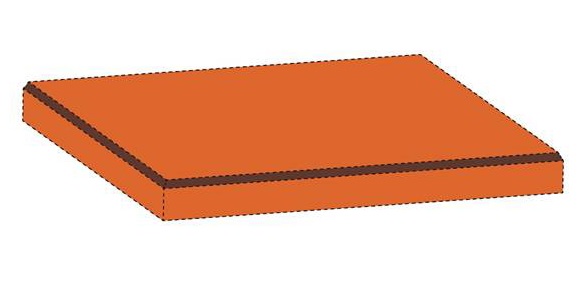
The application designates various goods in classes 3, 14, 16, 18, and retail services for the goods in class 35.


Second Market Research

HERMES conducted a second market research study in August 2023 to demonstrate acquired distinctiveness of its packaging color. The study targeted men and women in their 30s to 50s residing in nine prefectures who expressed interest in bags, accessories, watches, cosmetics, or perfume and had purchased either of these items within the past six months.

According to the second research report, 39.2% of respondents (2,060 in total) answered Hermes when shown three Hermes boxes in different shapes. 44.4% chose Hermes from the ten options (It is notable that 27.2% of respondents selected “Louis Vuitton” as their answer).


IP High Court decision

In their ruling, the judges pointed out the applied mark is classified into a mark consisting of colors, but from descriptions of mark, it is considered a two-color mark combined with a three-dimensional shape (a box).

The judges also noted the submitted evidence did not demonstrate the actual use of the applied mark in relation to perfumery of class 3 and paper boxes, paper bags, paper packages and wrapping papers of class 16, nor did it substantiate the use of the mark in relation to retail services for these goods in class 35.

The judge recognized that the “Hermes” brand has gained significant recognition in Japan, and its degree of renown is considered to be one of the most prominent among all fashion brands. From the submitted advertisement and publications, the applied mark evidently has been used as a symbolic color to indicate “Hermes” in a marketing tactic designed to enhance brand value. It is clear that the Hermes box is a well-known and important identifier for consumers interested in or who have purchased luxury fashion items.

The issue is whether relevant consumers can identify Hermes from the colors per se on Hermes box, without the word “Hermes” and the horse and carriage emblem. In this respect, the court said it useful to review brand recognition research especially in a case for color mark. The judges said the result of two market researches are sufficient (Recognition rate: approximately 40%) to admit acquired distinctiveness in general. However, two researches do not target general consumers by excluding age under 29 and over 60, and limiting their incomes JPY10,000,000 and above (1st research) or those who expressed interest in bags, accessories, watches, cosmetics, or perfume and had purchased either of these items within the past six months (2nd research).

Given the applied mark covers various goods that are regularly consumed by the general public, the researches with such limitations are inadequate and insufficient as evidence to demonstrate acquired distinctiveness of the color mark in question.

Therefore, the court has a reason to believe the JPO did not make an error in denying inherent and acquired distinctiveness of the applied mark and rejecting it based on Article 3(1)(iii) and 3(2) of the Trademark Law.

Based on the foregoing, the court decided to dismiss the entire appeal by Hermes.
Acceptable goods and services for Metaverse and NFTs

On March 29, 2024, the Japan Patent Office (JPO) released a new Trademark Examination Manual 46.02 regarding adequate goods and services in connection with the Metaverse and NFTs.


Virtual goods

  1. “Virtual goods” is unacceptable as a goods because of broad and vague description.
  2. Acceptable description (examples in virtual clothing) [similarity code]
    • Cl. 9: Downloadable virtual clothing [11C01, 24E02, 26D01]
    • Cl. 9: Downloadable computer programs for displaying clothing in virtual environments [24E02, 26D01]
    • Cl. 9: Downloadable image files for displaying clothing in virtual environments [24E02, 26D01]
    • Cl. 35: Online retail services for downloadable virtual clothing [11C01, 24E02, 26D01, 35K08, 35K15, 35K99]
    • Cl. 41: Providing online images for displaying clothing in virtual environment [41E02]
    • Cl. 42: Providing computer programs on data networks for displaying clothing in virtual environments [42X11]
  3. Unacceptable description
    • Cl. 9: virtual goods (clothing)
    • Cl. 9: downloadable virtual goods
    • Cl. 9: downloadable virtual living ware
    • Cl. 9: downloadable computer programs for displaying goods in virtual environments
    • Cl. 9: downloadable image files for displaying goods in virtual environments
    • Cl. 35: retail services for downloadable virtual goods
    • Cl. 35: retail services for downloadable virtual foods and beverages
    • Cl. 41: providing online images for displaying goods in virtual environment
    • Cl. 42: Providing computer programs on data networks for displaying goods in virtual environments
  4. Inappropriate class
    • Cl. 25: downloadable virtual clothing
    • Cl. 25: virtual clothing

Services in connection with the Metaverse

  1. Acceptable description (examples)
    • Metaverse Platformers
      • Cl. 38: providing chatrooms in virtual environments [42X11]
      • Cl. 42: hosting software platforms for virtual environment-based work collaboration [42X11]
    • Service provider on the Metaverse
      • Cl. 35: marketing through product placement for others in virtual environments [35A01, 35A02, 35B01]
      • Cl. 36: online banking services renders in virtual environments [36A01]
      • Cl. 41: simulated travel services provided in virtual environments for entertainment purposes [41F06]
      • Cl. 41: online game services provided via virtual environments [41K01, 41Z99]
  2. Similarity code
    • Identical code is used when a service provided in the Metaverse achieves the same purpose and outcome as a service in the real world
      • Cl. 35: advertising for other in virtual environments [35A01]
      • Cl. 41: presentation of music concerts in virtual environments [41E03]
    • Different code is used when a service provided in the Metaverse does not achieve the same purpose and outcome as a service in real world
      • Cl. 41: simulated restaurant services provided in virtual environments for entertainment purposes [41K01, 41Z99] (cf. Cl. 43: restaurant services [42B01])

NFTs

  1. “NFT” is unacceptable as a goods and service because of broad and vague description.
  2. Acceptable description (examples) [similarity code]
    • Cl. 9: Downloadable computer software applications for minting non-fungible tokens [NFTs] [11C01]
    • Cl. 9: Downloadable digital image files authenticated by non-fungible tokens [NFTs] [24E02, 26D01]
    • Cl. 25: clothing authenticated by non-fungible tokens [NFTs] [17A01, 17A02, 17A03, 17A04, 17A07]
    • Cl. 35: purchasing of digital image files authenticated by non-fungible tokens [NFTs] [35B01]
    • Cl. 36: management of crypto assets authenticated by non-fungible tokens [NFTs] [36A01]
    • Cl. 42: Providing online non-downloadable computer software for minting non-fungible tokens [NFTs] [42X11]
  3. Unacceptable description
    • Non-fungible tokens [NFTs]
    • Online retail services for non-fungible tokens [NFTs]
    • Provision of an online marketplace for buyers and sellers of non-fungible tokens [NFTs]

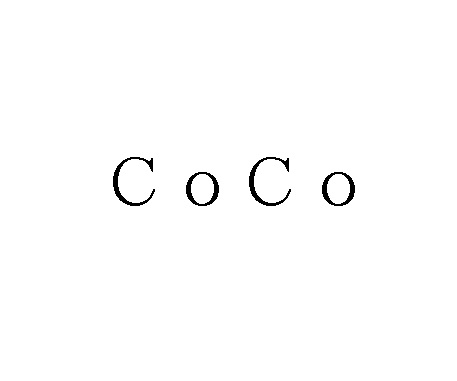
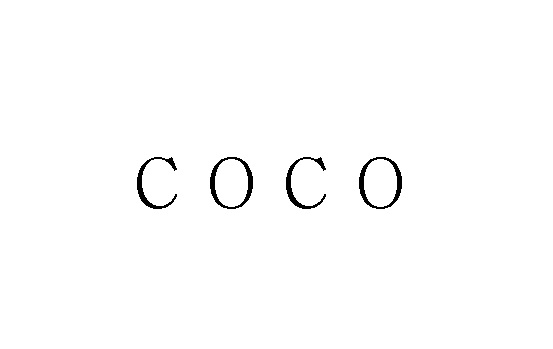
COCO vs. KOKO

In a recent administrative decision, the Japan Patent Office (JPO) found that the trademarks “CoCo” and “koko” are dissimilar and unlikely to cause confusion.
[Opposition case no. 2023-900250, decided on March 25, 2024]


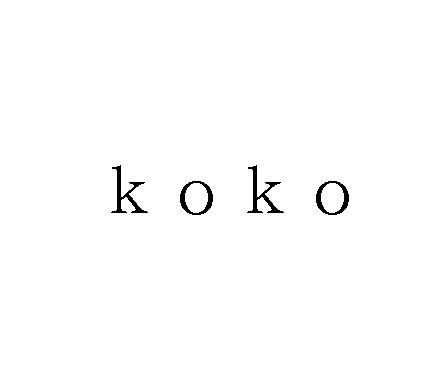
“koko”

A wordmark “koko” in standard character was applied for registration with the JPO by a Japanese individual in relation to services of class 35, 41 and 42 including educational and instruction services relating to arts, crafts, sports or general knowledge (cl. 41) on October 7, 2022 (TM App no. 2022-115511).

The JPO examiner issued an office action due to a conflict with TM Reg nos. 6327674 and 6327645 for the mark “KOKO HOTELS” and IR no. 950884-A for the mark “KOKO”.

The applicant was successful in a partial non-use cancellation action to IR no. 950884-A and argued in a response dissimilarity of the mark between “KOKO HOTELS” and “koko”.

Consequently, the examiner withdrew her rejection and granted protection of the mark “koko” on September 8, 2023. After registration (TM Reg no. 6737526), the mark was published for a post-grand opposition on September 28, 2023.


Trademark Opposition

The owner of earlier TM Reg no. 6167547 for wordmark “CoCo” filed a partial opposition on November 6, 2023, and claimed cancellation of the mark “koko” in relation to educational and instruction services relating to arts, crafts, sports or general knowledge of class 41 based on Article 4(1)(xi) of the Japan Trademark Law.

Article 4(1)(xi) is a provision to prohibit registration of a junior mark that is deemed identical with, or similar to, an earlier registered mark.

The claimant argued that the opposed mark “koko” shall be deemed similar to “CoCo” since both marks have the same sound. Besides, the service “educational and instruction services relating to arts, crafts, sports or general knowledge” is similar to ballet school services in class 41 designated by the cited mark. Therefore, the opposed mark is subject to cancellation in contravention of Article 4(1)(xi).


JPO decision

The JPO Opposition Board found the opposed mark “koko” is a coined word without any specific meaning. In the meantime, the cited mark “CoCo” has a meaning of the coconut palm as described in English dictionary.

The Board stated when comparing visual aspect of respective mark, overall impressions are different and unlikely to cause confusion because as they differ in the first and third letters “k” and “C” among four letters in total.

Although both marks share the same sound, the Board believes that they are sufficiently distinguishable in terms of concept and appearance regardless of similarity in respective service. Therefore, it is unlikely that relevant consumers will confuse the source of the service in question based on a global assessment of visual, phonetic, and conceptual factors.

Based on the foregoing, the JPO dismissed the entire opposition and decided the opposed mark shall not be subject to Article 4(1)(xi).

JPO Status Report 2024

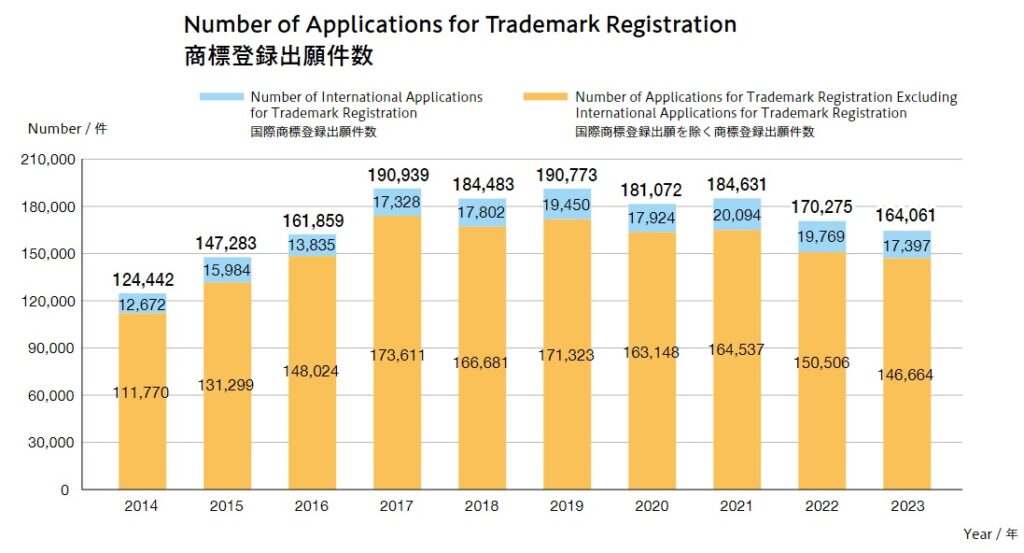
According to “JPO Status Report 2024” released on March 28, 2024, by the Japan Patent Office (JPO), a total of 164,061 trademark applications were filed in 2023. This number decreased 3.6% compared to the previous year when the number of applications amounted to 170,275.

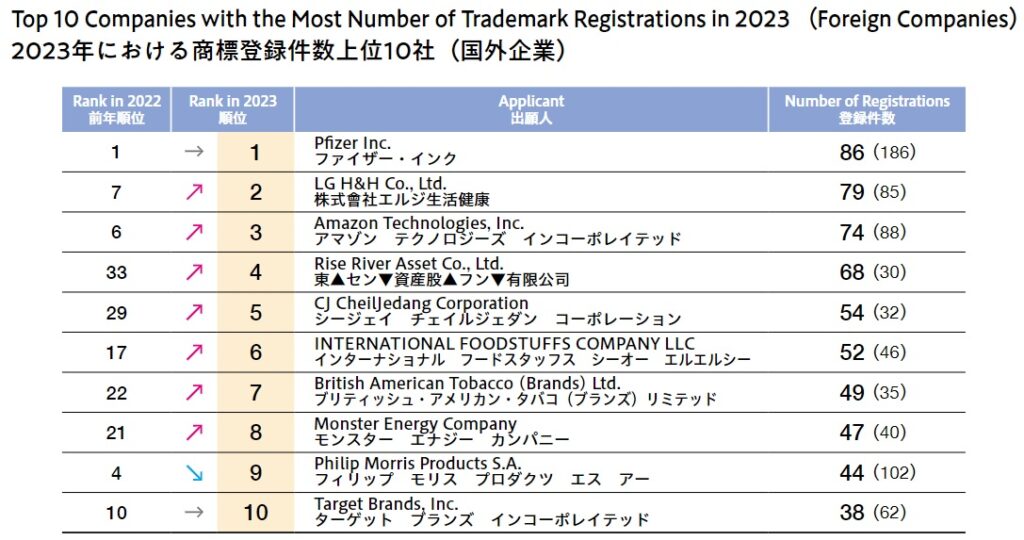
Pfizer Inc. became a top-ranking foreign registrant in 2023 who could successfully register 86 trademarks in Japan, drastically decreased from the previous year.

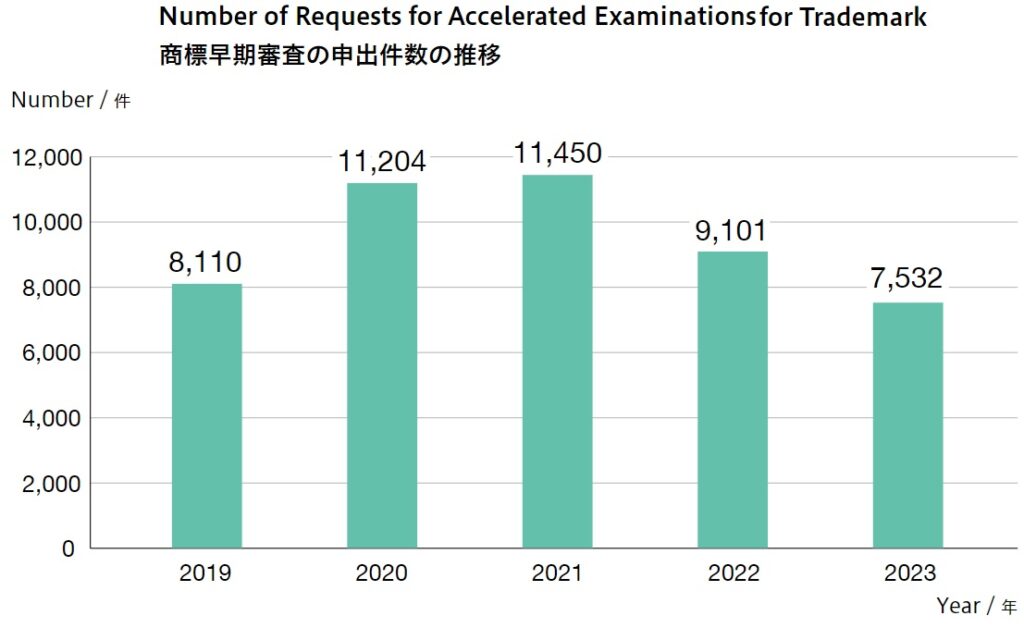
Requests for accelerated examination decreased to 7.532 by 17.2% in 2023, which enables applicants to obtain trademark registration within 2months.

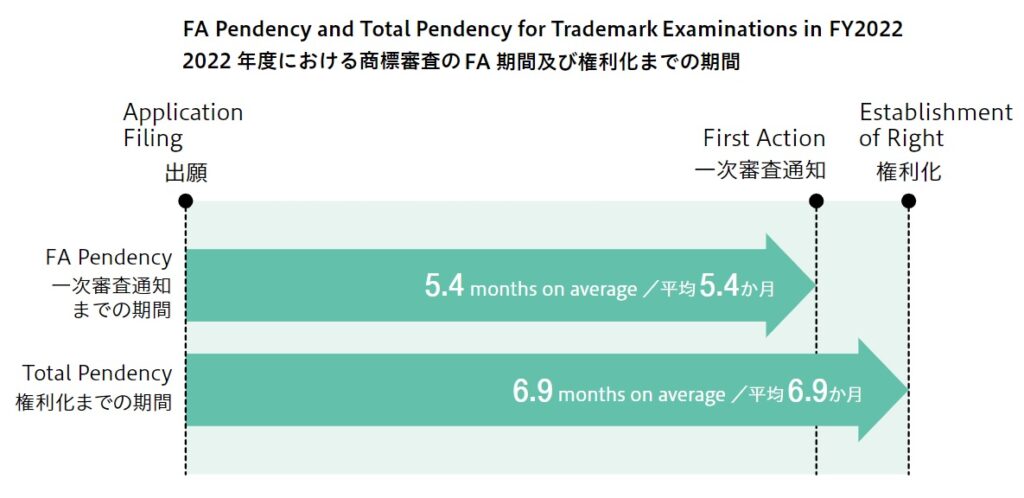
As a background, it should be noted that the entire trademark process for general examination at the JPO (the total time of application from filing to registration) takes 6.9 months on average, which gets 4.3 months shorter in two years.

You can access and download the full text of “JPO Status Report 2024” from here.

Can a ‘Letter of Consent’ guarantee successful trademark registration in Japan?

The revised Japan Trademark Law will come into effect on April 1, 2024, introducing the “Letter of Consent” as a means to overcome conflicts with earlier trademark registrations.

However, the Japan Patent Office (JPO) recently announced that evidence must be provided in addition to a consent letter obtained from the earlier registrant when applying Article 4(4) of the Japan Trademark Law. This evidence must convince the JPO examiner that there is no likelihood of confusion between earlier and junior marks, not only at present but also in the future.


Article 4(4) of the Japan Trademark Law, which is newly introduced in April, states:

Trademark applications will not be rejected under Article 4(1)(xi) as long as the applicant obtains consent from the owner of the cited mark and it is unlikely to cause confusion with the cited owner or its exclusive or non-exclusive licensee when used on goods or services designated under the application.


Trademark examination guidelines for Article 4(4) provides:

  1. The requirement of being ‘unlikely to cause confusion’ must be satisfied not only at the time of the JPO examiner’s decision, but also in the future.
  2. To satisfy the requirement, the following factors will be assessed:
    • Similarity between marks
    • Recognition of mark
    • Uniqueness of mark
    • Significance of mark (House mark or product brand)
    • Possibility of business expansion
    • Relatedness of goods and service
    • Consumers
    • Trade practices involving actual use of mark
  3. Where both marks are identical and used on same goods and service, the examiner will find “likely to cause confusion” in principle.
  4. Applicant will be required to provide evidence to demonstrate unlikelihood of confusion based on actual use of both marks. For instance,
    • Different color, font or combination between literal element and figurative element of respective mark
    • Different position to place the mark or to accompany with other distinctive mark
    • Difference in speific purpose or price of respective goods
    • Different sales channel
    • Different seasons to use the mark
    • Different territory to use the mark
    • Mutual covenants to take necessary actions if confusion is likely to occur between the marks
  5. An agreement between the parties not to change the present use or configuration of both marks in the future will be required to strengthen the unlikelihood of confusion in the future.

It is important to note that “letter of consent” is not available to trademark applications filed with the JPO before April 1, 2024, even if they are pending examination.

Similarly, international registrations that were registered at the WIPO or subsequently designated to Japan before April 1, 2024, can’t make use of the consent.

Hermes Victory with Invalidating Birkin Lookalike Design

The Japan IP High Court has ruled in favor of Hermes in a dispute over the validity of Design Reg no. 1606558 by finding a likelihood of confusion with Hermes.
[Court case no. Reiwa5(Gyo-ke)10113, decided on February 19,2024]


Design Registration no. 1606558

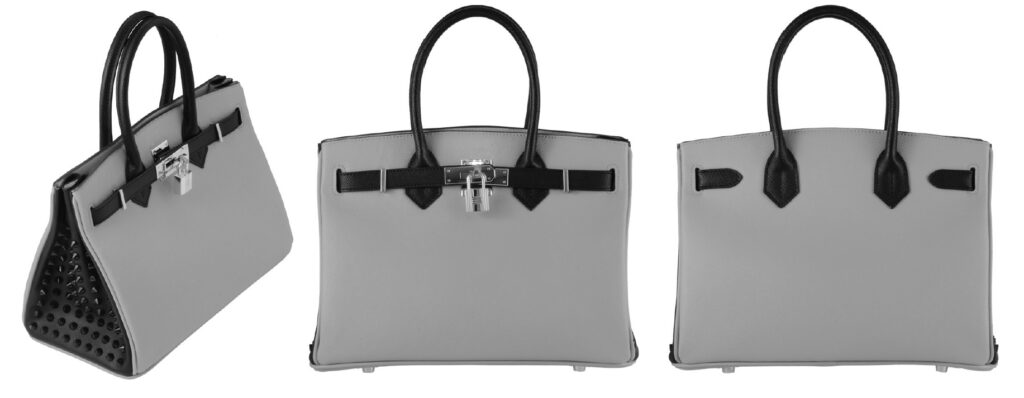
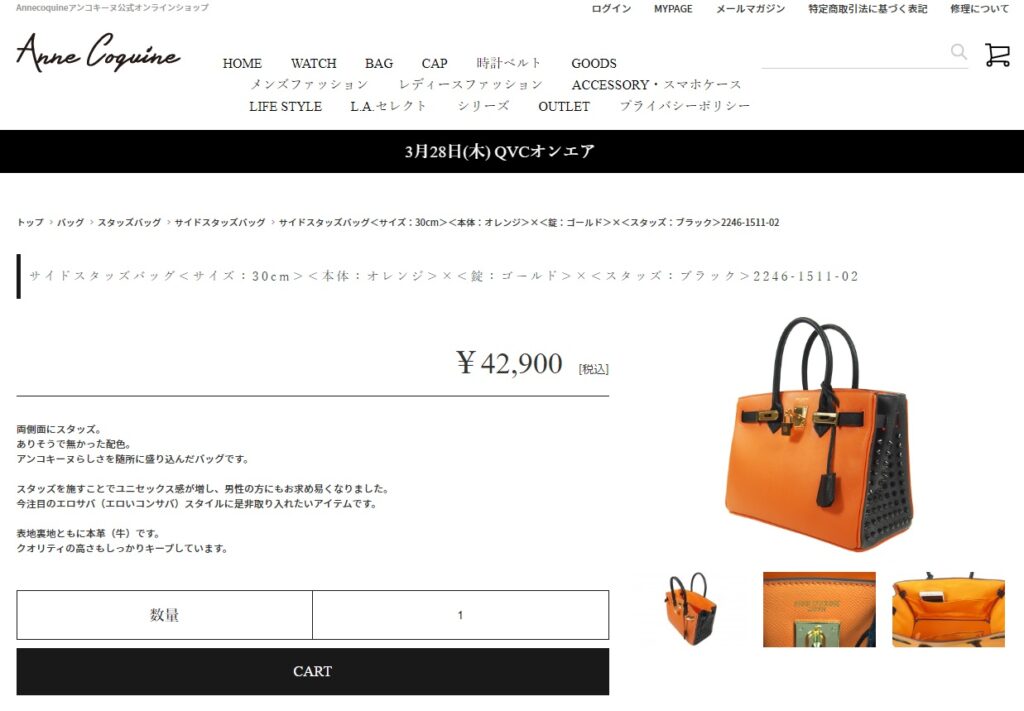
Plaintiff, Toms and Collective Co., Ltd applied a 3D shape of bag (see below) with the JPO on August 23, 2017 (Design App no. 2017-18064). The JPO, as a result of substantive examination, granted protection of the design on May 18, 2018.

Defendant, Hermes International filed an invalidation action with the JPO on January 13, 2023 and claimed the design registration shall be invalidated in contravention of Article 5(ii) of the Japan Design Law.

Article 5(ii) provides a design that has a risk of causing confusion with goods of another person’s business may not be registered.

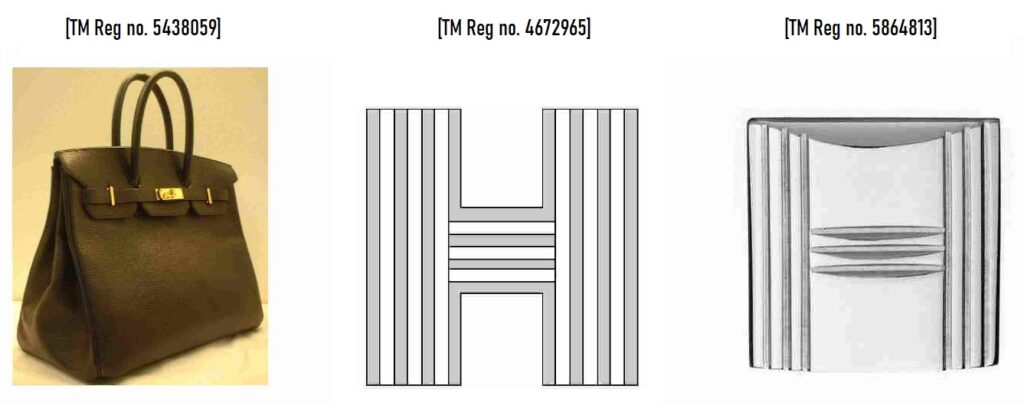
Hermes referred to three trademark registrations that are relevant to the 3D shape of Birkin bags (TM Reg no. 5438059) and two “H” logos (TM Reg nos. 4672965 and 5864813) in class 18. They argued that the disputed design is likely to cause confusion with Hermes when used on bags due to the famousness of the registered marks and the resemblance between the disputed design and Hermes’ marks.


Invalidation decision by JPO

On September 4, 2023, the JPO Trial Board decided to invalidate the disputed mark by stating that:

  1. As there is a remarkable gap between the disputed design and 3D shape of Birkin bags, the Board has no reason to find a likelihood of confusion with TM Reg no. 5438059.
  2. The Board questions whether the “H” logo for TM Reg no. 4672965 (H1 mark) has become famous as a source indicator of Hermes. Therefore, the disputed design would not cause confusion with H1 mark.
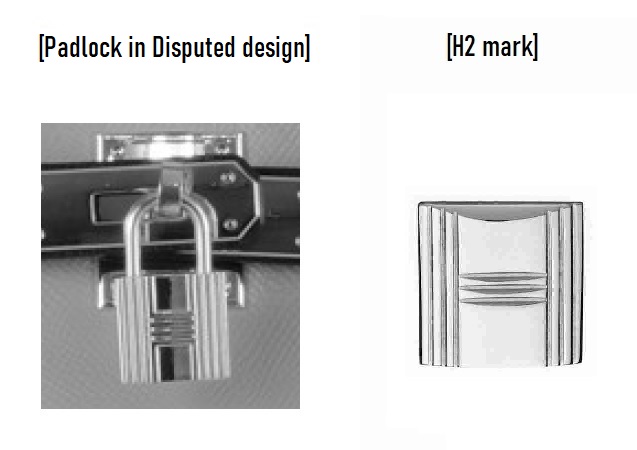
  3. Meanwhile, Meanwhile, the plaintiff admits that the ‘H’ logo for TM Reg no. 5864813 (H2 mark) has become famous for identifying Hermes. The padlock in the disputed design bears a resemblance to the H2 mark that has been used on the buckles of Hermes bags. As a result, relevant consumers are likely to confuse the bags with Hermes upon seeing the disputed design, particularly the padlock.

IP High Court decision

On October 11, 2023, the Plaintiff filed an appeal with the IP High Court and requested the cancellation of the invalidation decision made by JPO.

In the lawsuit, Plaintiff argued that the padlock should not be considered a prominent element of the design, as it is merely an accessory to the disputed design that represents a shape of the bag as a whole.

Screenshot taken from https://annecoquine.com/

The judge stated that any partial shape of the entire design is subject to assessment in adapting Article 5(ii). It is unrelated to the “prominent element” used to assess design similarity under Article 3(1)(iii) of the Design Law.

The judge also addressed that it is irrelevant to consider whether Plaintiff promotes bags representing the disputed design but without the padlock.

Based on the foregoing, the court dismissed all allegations and invalidated the disputed design due to a likelihood of confusion with Hermes.

Trademark dispute: “CLUB MOET” vs “Moët & Chandon”

The Japan Patent Office (JPO) cancelled trademark registration no 6687666 due to a likelihood of confusion with ‘Moët’, which is known as an abbreviation for the world-famous ‘Moët & Chandon’ champagne.
[Opposition case no. 2023-900130, decided on February 29, 2024]


CLUB MOET

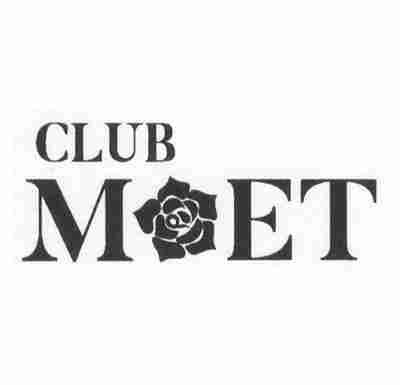
Opposed mark, consisting of words “CLUB” and “MOET” combined with a rose design (see below), was filed on June 27, 2021 for use on restaurant services in class 43 by a Japanese individual.

The JPO examiner rejected the mark due to a likelihood of confusion with famous mark “Moët” in connection with alcoholic beverages based on Article 4(1)(xv) of the Trademark Law on January 14, 2022. To contest the decision, the applicant filed an appeal with the JPO and claimed to cancel the examiner’s rejection.

On March 16, 2023, the JPO Appeal Board disaffirmed the examiner’s rejection and found that the mark would not contain the term “MOET” visually because of a rose design in between “M” and “ET”. If so, relevant consumers are unlikely to associate the mark with “Moët & Chandon” even if the term “MOET” has acquired a certain degree of recognition as an abbreviation of world-famous “Moët & Chandon” champaign. [Appeal case no. 2022-5881]

Accordingly, the Board granted protection of the mark and published for a post-grant opposition on April 17, 2023.


MHCS – OPPOSITION

On May 31, 2023, MHCS, the producer of the famous Moët & Chandon champagne, sought cancellation of the opposed mark in contravention of the same article, and claimed the opposed mark is likely to cause confusion with “Moët & Chandon” when used on restaurant service in class 43.

MHCS argued that the combination of literal elements and the rose design can be considered to represent the term ‘MOET’, as the rose design resembles a stylised letter ‘O’. As ‘CLUB’ lacks distinctive character in relation to restaurant service, the term ‘MOET’ should be considered a significant portion as a source indicator.

If so, relevant consumers are likely to associate or misconnect the restaurant using the opposed mark with “Moët & Chandon” due to the high degree of reputation and popularity of the mark “MOET” as an abbreviation of the world-famous champaign, as well as the close resemblance between the opposed mark and “MOET”.


JPO decision

The JPO Opposition Board ruled in favor of MHCS, stating that both ‘Moët & Chandon’ and its abbreviation ‘Moët’ have gained significant recognition as a leading champagne brand distributed by MHCS.

The Board determined that the rose design’s outline is almost circular and can be substituted with the letter ‘O’. Therefore, the combination of the literal elements and the rose design will be identified as the term ‘MOET’ in its entirety.

The difference between ‘MOET’ and ‘Moët’ is insignificant. The term ‘CLUB’ lacks distinctiveness in relation to the service in question. Therefore, the Board has reason to find a high degree of similarity between the opposed mark and ‘Moët’.

Besides, there is a certain degree of association between champagne and restaurant services.

Based on the foregoing, the Opposition Board decided that found relevant consumers are likely to confuse a source of restaurant using the opposed mark with MHCS or any business entity that is economically or systematically connected with the opponent. As a result, the opposed mark was cancelled in contravention of Article 4(1)(xv).

RIMOWA Unsuccessful in Trademark Opposition

On February 26, 2024, the Japan Patent Office (JPO) dismissed an opposition filed by Rimowa GmbH against TM Reg no. 6701836 for wordmark “RIMOWA” written in Japanese character in class 38 and 42 by finding dissimilarity to earlier IR no. 1303010 “Rimowa Electronic Tag”.
[Opposition case no. 2023-900179]


Opposed mark

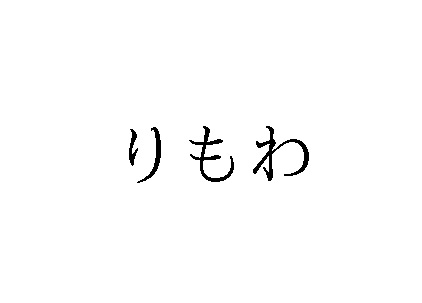
Opposed mark, consisting of three Japanese hiragana character “りもわ” that corresponds to the Japanese transliteration of “RIMOWA”, was flied with the JPO by Computer Engineering & Consulting Ltd. (CEC) a Japanese company, for use on ‘Telecommunication; Providing online forums; Communications by mobile phones; Streaming of data; Electronic bulletin board services [telecommunications services]; Video-on-demand transmission; Videoconferencing services’ in class 38 and ‘Providing computer programs on data networks; Software as a service [SaaS]; Platform as a service [PaaS]; Providing virtual computer systems through cloud computing; Providing computer software for virtual reality’ in class 42 on Nov 21, 2022 (TM App no. 2022-133281).

The JPO examiner issued an office action based on Article 4(1)(xi) of the Japan Trademark Law by citing IR no. 1452467 “RIMOWA” (cl. 9) owned by Rimowa GmbH.

As the applicant deleted the services in class 42 that conflict with the goods in class 9 designated under IR no. 1452467, the examiner granted protection of the mark on May 12, 2023.

The applicant uses the mark in relation to virtual office services. If this is the case, the mark indicates an abbreviation of ‘Remote working’.


Opposition by RIMOWA

Rimowa GmbH, the renowned German luxury luggage-maker, filed an opposition with the JPO on August 7, 2023 and claimed cancellation of the opposed mark in contravention of Article 4(1)(xi) by citing IR no. 1303010 for wordmark “Rimowa Electronic Tag” that covers services in class 38 and 42.

Rimowa argued that the term ‘Rimowa’ is well-known among relevant consumers as a high-end luggage brand and should play a significant role in identifying the source of services in classes 38 and 42. This is because the term ‘Electronic Tag’ is less distinctive in relation to these services. Therefore, the opposed mark may be confusingly similar to the cited mark from a visual point of view.


JPO decision

The JPO Opposition Board found the opposed mark is not an ordinary word in dictionaries and has a sound of “Rimowa” but does not give rise to any specific meaning.

Regarding the cited mark, the Board determined that it should be evaluated as a whole, rather than based on the individual words ‘Electronic Tag’. This approach considers the tight combination of all the letters in the cited mark.

If so, the Board stated that there is no reason to believe that the term ‘Rimowa’ is a significant part of the cited mark as a source indicator.

When comparing the opposed mark to the cited mark in terms of appearance, it is easy to distinguish between them due to the obvious differences in characters (hiragana and alphabets) and the number of letters. In terms of pronunciation, the term ‘Electronic Tag’ makes a clear difference in the overall sound of two marks. Therefore, it is easily distinguishable when pronounced, even though the initial sound is the same. Furthermore, in terms of concept, neither of the two marks produces a specific meaning, making them incomparable. Therefore, considering these findings and circumstances, there is no risk of confusion regarding the origin, even when they are used for the same or similar services.

Based on the above, the Board found that both marks were dissimilar and decided to dismiss all allegations.

CHANEL Lost in Trademark opposition against “COCOBABY”

The Japan Patent Office (JPO) did not side with CHANEL in an opposition against TM Reg no. 6650252 for wordmark “COCOBABY” in class 25 by finding dissimilarity of mark between “COCOBABY” and “COCO”.
[Opposition case no. 2023-900041, decided on February 9, 2024]


COCOBABY

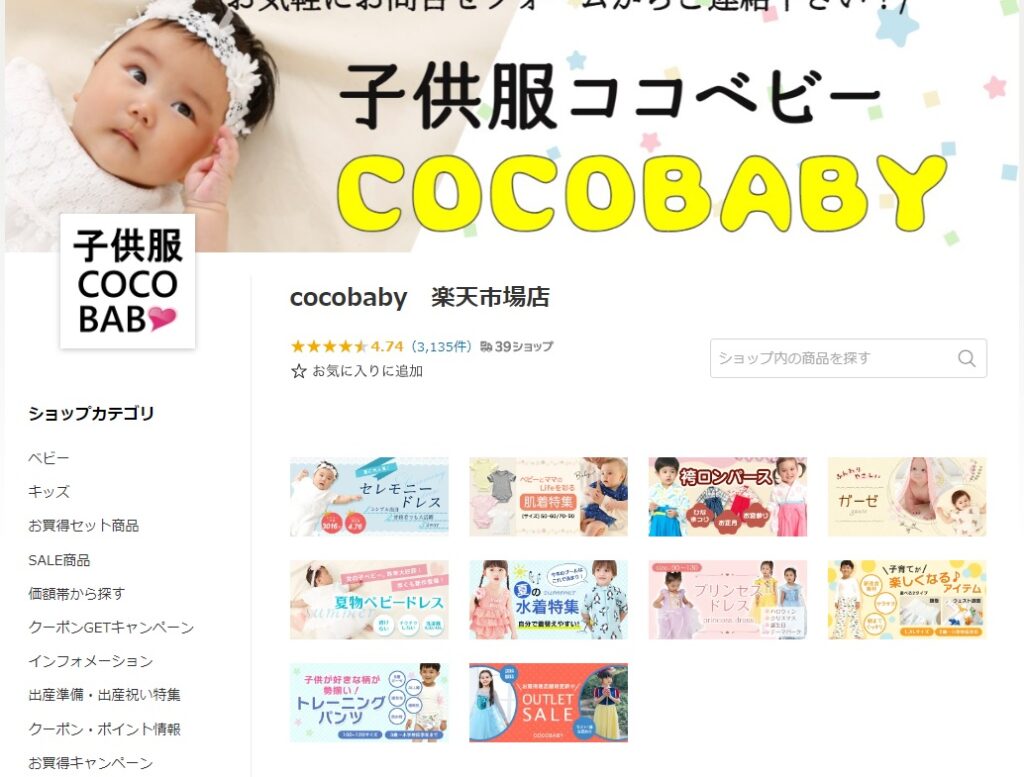
On September 22, 2022, a Japanese individual applied to register the word mark ‘COCOBABY’ for use in relation to apparel and toddler clothes of class 25 and immediately after the filing, the applicant requested an accelerated examination based on the fact that he operates the online shop “COCOBABY”, which offers a wide range of clothes for toddlers and babies.

A screen capture from https://www.rakuten.co.jp/princessdream/

Accordingly, the JPO examiner granted protection on November 30, 2022 without raising her objection due to a conflict with Chanel’s COCO mark.


Opposition by CHANEL

On February 14, 2023, Chanel SARL filed an opposition against TM Reg no. 6650252 for the mark “COCOBABY”, and claimed cancellation of the mark in contravention of Article 4(1)(xi), (xv) and (xix) of the Japan Trademark Law by citing earlier trademark registrations for their historical mark “COCO”.

Chanel argued that the term “BABY” was descriptive in relation to the designated goods, namely children’s clothing in class 25. In addition, the mark “COCO” has become famous as an indication of origin for Chanel’s perfumes and cosmetics. In those circumstances, the relevant consumers would consider the term “COCO” to be a prominent part of the opposed mark and would be likely to confuse the source of the clothes bearing the opposed mark with Chanel and an entity economically or systematically liked to Chanel.


JPO decision

The JPO Opposition Board accepted that the mark “COCO” has been well known for Chanel’s perfume. However, the Board questioned whether, on the basis of the evidence submitted, the mark has become also well known among consumers of other goods.

In addition, the Board found that the opposed mark had to be assessed as a whole, even in relation to children’s clothing, from a visual point of view. The mark “COCOBABY”, taken as a whole, does not have a specific meaning.

If so, the opposed mark is not conceptually comparable to the mark “COCO”, but is visually and aurally distinguishable from it.

In view of the low degree of similarity between the marks and the insufficient evidence of the reputation of the mark “COCO” among consumers of the goods in question, the Board has no reason to believe that the consumers are unlikely to confuse the source of the clothing and children’s clothing bearing the opposed mark with Chanel.

Based on the foregoing, the Board dismissed the opposition entirely and decided to maintain the opposed mark as the status quo.

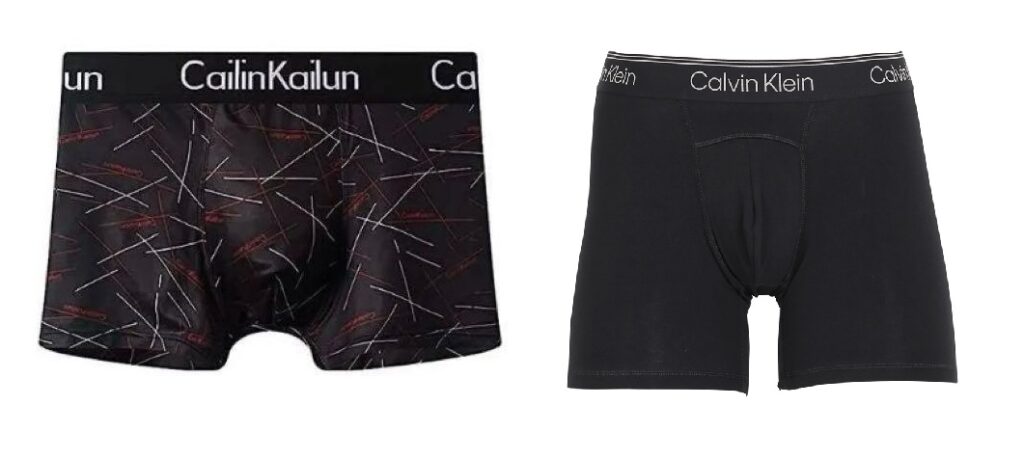
Calvin Klein vs Cailin Kailun

The Japan Patent Office (JPO) dismissed an opposition against TM Reg no. 6686442 for wordmark “Cailin Kailun” in class 25 claimed by Calvin Klein Trademark Trust who argued a likelihood of confusion with “Calvin Klein”.
[Opposition case no. 2023-900108, Gazette issued date: January 26, 2024]


Cailin Kailun

A Chinese individual applied for registration of the wordmark “Cailin Kailun” in standard characters for use on coats, suits, trousers, T-shirts, dresses, socks, stockings, underwear and other clothing, and sports shoes in class 25 on September 1, 2022.

Apparently, men’s underwear bearing the mark is sold online.

The JPO examiner granted protection of the mark on January 30, 2023.


Opposition by Calvin Klein

On May 15, 2023 within two-month statutory deadline starting from the issued date of TM gazette on April 12, 2023, Calvin Klein Trademark Trust filed an opposition against the Cailin Kailun mark and claimed cancellation in contravention of Article 4(1)(vii) and (xv) of the Trademark Law.

Calvin Klein argued that the opposed mark “Cailin Kailun” is confusingly similar to a global fashion brand “Calvin Klein” in appearance and sound. In view of a high degree of distinctiveness and popularity of the “Calvin Klein” mark and close relatedness between the goods in question and the business lineup of Calvin Klein, relevant consumers with an ordinary care would confuse a source of the goods in question bearing the mark “Cailin Kailun” with Calvin Klein even if both marks are not similar in concept.


JPO decision

The JPO Opposition Board admitted the cited mark “Calvin Klein” has been well-known among consumers as a source indicator of the claimant’s business in relation to clothing.

In the meantime, the Board denied similarity of the marks by assessing clear distinctions in appearance, sound and meaning.

Comparing both marks, it is obvious that they start with the same spelling of ‘Ca’ at the first word, and ‘K’ at the second word, and end with ‘n’ at both words. However, because of clear distinction at the other letters, they are easily distinguishable in appearance.

Although both marks have the same sounds at the beginning, in the fourth and last, due to severe difference in other five sounds, they are audibly distinguishable.

There is no similarity in concept because the opposed mark has no meaning at all. Meanwhile, the cited mark gives rise to a meaning of “famous brand called Calvin Klein”.

Given a low degree of similarity between the marks, the Board did not find any reason to believe that relevant consumers would associate or connect the goods bearing the opposed mark with “Calvin Klein” even though the goods in question is highly related to the business lineup of Calvin Klein.

Based on the foregoing, the Board found the opposed mark shall not be cancelled in contravention of Article (1)(vii) and (xv), and decided to dismiss the opposition entirely.