Unquestionably, 2020 was remarkably a tough and soul-destroying year for businesses around the world. The coronavirus pandemic has had a major impact on every aspect of day-to-day life, including the world of business. Just as the fluctuations in the economy and our changing work and lifestyles due to long months spent at homes destroyed our understanding of “normal.” Business mentality, preferences, and actions taken during the crisis have all changed. As a result, it was inevitable for trademark filings to be affected by these changes.
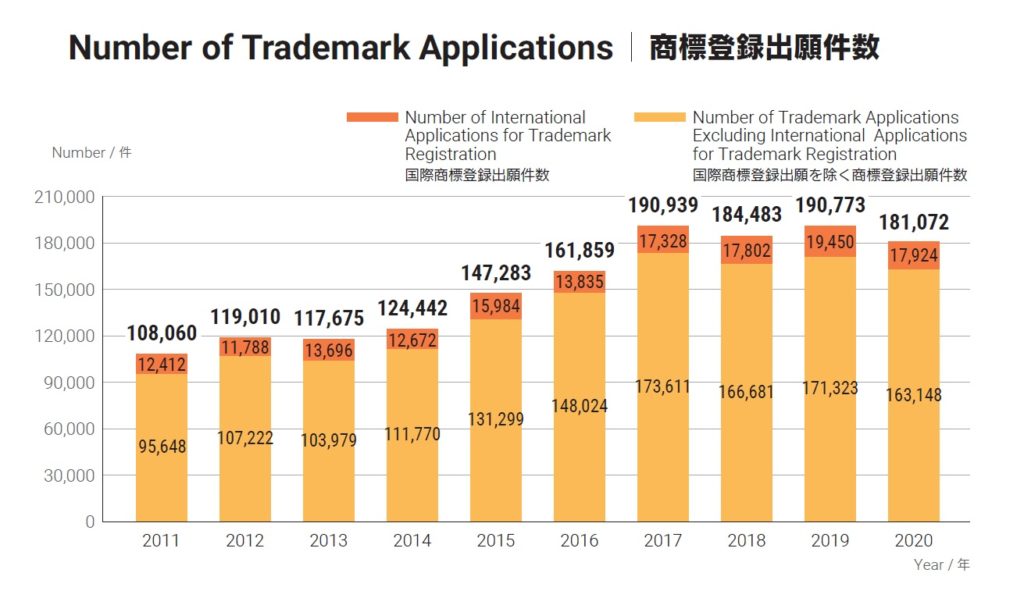
According to “JPO Status Report 2021” released on March 31, 2021, by the Japan Patent Office (JPO), a total of 181,072 trademark applications were filed in 2020. This number is down 5% compared to the previous year when the number of applications amounted to 190,773.
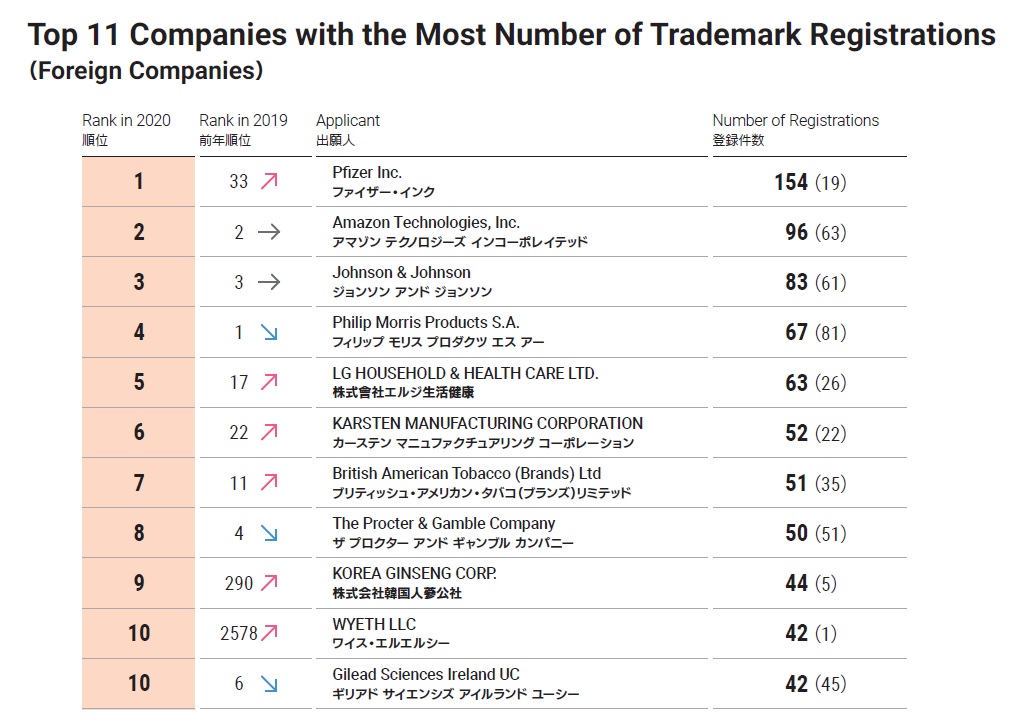
It is interesting to see that Pfizer Inc. became a top-ranking foreign registrant in 2020 who could successfully register 154 trademarks in Japan, drastically increased from the previous year.
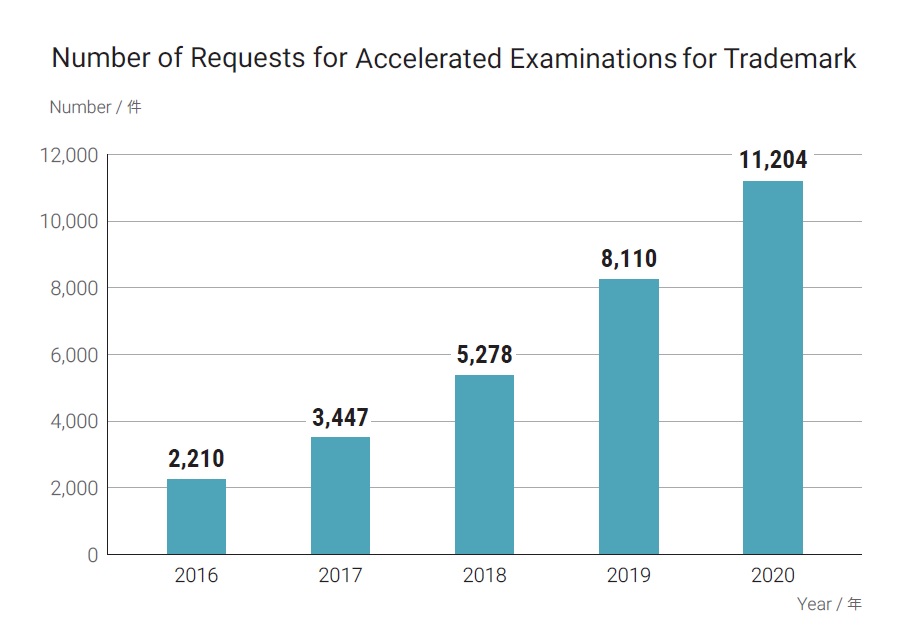
Requests for accelerated examination consecutively increased to 11,204 by 38% in 2020, which enables applicants to obtain trademark registration within 2months.
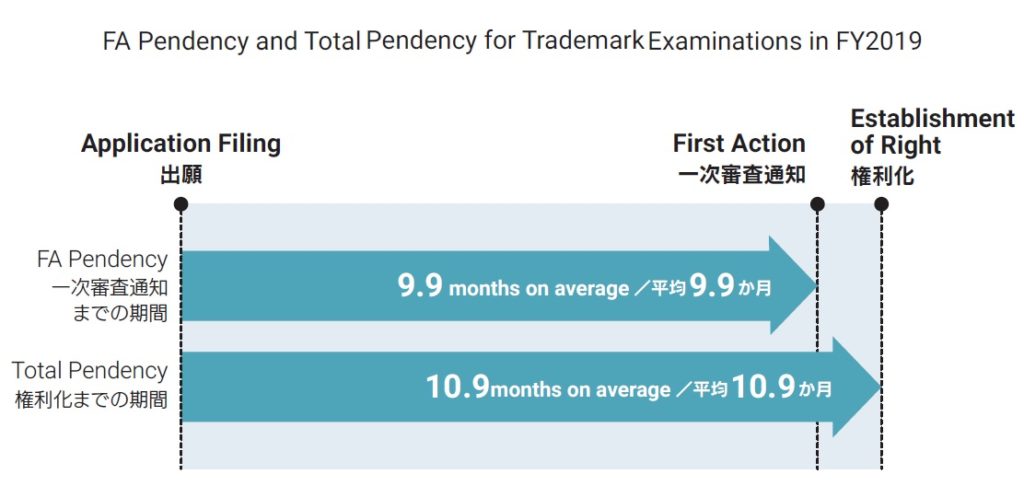
As a background, it should be noted that the entire trademark process for general examination at the JPO (the total time of application from filing to registration) takes 10.9 months on average, which is nearly 2 months longer than the previous year.
You can access and download the full text of “JPO Status Report 2021” from here.
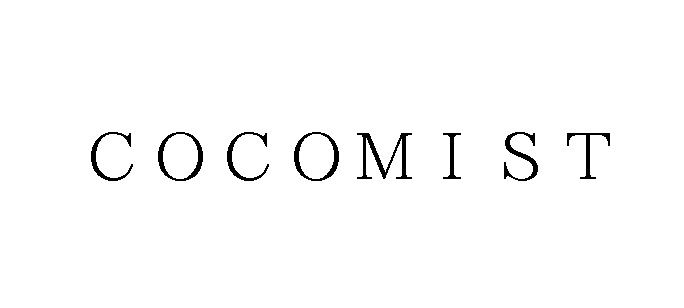
Chanel handed a loss in its attempt to block Japanese trademark registration no. 6202587 for wordmark “COCOMIST” to be used on cosmetics, perfumery, fragrances, incense, and other goods in class 3. [Opposition case no. 2020-900047, Gazette issued date: February 26, 2021.]
COCOMIST
The opposed mark consists of the word “COCOMIST” written in standard character (see below). Applicant, a Japanese company, 196+ Inc., filed it for use on ‘cosmetics, perfumery, fragrances, incense, toiletry preparations’ and other goods in Class 3 on January 7, 2019.
The mark was published for post-grant opposition on December 24, 2019, without confronting any office action from the JPO examiner.
It is apparent that the applicant actually uses the opposed mark on cleaning mist.
Opposition by CHANEL
On February 20, 2020, CHANEL SARL filed an Opposition and argued the opposed mark shall be canceled in contravention of Article 4(1)(xi), (xv), and (xix) of the Trademark Law on the grounds that:
Since 1995, the opponent has owned senior trademark registration no. 2704127 for wordmark “COCO” over cosmetics, perfumery, and fragrances, which has unquestionably acquired a remarkable degree of reputation and popularity as a source indicator of the opponent’s cosmetics as well as a nickname or short name of French fashion designer “Gabrielle COCO CHANEL”, the founder of the Chanel brand.
The term “MIST” lacks distinctiveness in relation to cosmetics. If so, relevant consumers at the sight of the opposed mark would easily conceive “COCO” as a prominent portion when used on goods in question.
In view of the close resemblance between two marks and goods, presumably, the applicant must have applied the opposed mark for use on cosmetics with prior knowledge of the cited mark and fraudulent intention of free-riding on its reputation.
JPO Decision
The JPO Opposition Board admitted a high degree of reputation and popularity of “COCO” as a source indicator of the opponent’s perfumery and fragrances among relevant consumers based on substantial use of the cited mark in Japan but questioned its famousness in relation to other cosmetics except for perfumery and fragrances.
The JPO denied the similarity between the opposed mark and “COCO”, stating that the opposed mark shall be taken as a whole in view of a tight combination of its literal element from appearance. If so, the opposed mark does not give rise to any specific meaning and the Board has no reasonable ground to believe that the opposed mark “COCOMIST” shall be similar to “COCO” from visual, phonetic, and conceptual points of view.
Given a low degree of similarity between the marks, the Board held the opposed mark is unlikely to cause confusion even when used on perfumery and fragrances.
Assuming that both marks are dissimilar, the Board was not convinced that the applicant aimed for free-riding on the goodwill of Chanel.
Based on the foregoing, the JPO dismissed the entire allegations of CHANEL SARL and allowed the opposed mark to register as the status quo.
The Japan Patent Office (JPO) dismissed a trademark opposition claimed by Montblanc-Simplo GmbH, Germany, against Japanese trademark registration no. 6240752 for “MONTBLANC PROFESSIONAL PRIDES” with a device mark, stating that the opposed mark is unlikely to cause confusion with “Montblanc” known around the world for its superior writing instruments when used on the goods in question of class 25. [Opposition case no. 2020-900159, Gazette issued date: February 26, 2021]
MONTBLANC PROFESSIONAL PRIDES
Opposed mark, consisting of words “MONTBLANC” and “PROFESSIONAL PRIDES” combined with a three-vertical-line design (see below) , was filed on April 17, 2019, by a Japanese business entity, SUMISHO MONTBLANC Co., Ltd. for use on ‘Medical scrubs; nurse dresses; nurse overalls; nurse pants; nurse uniforms; nurse caps; clothing; nurse shoes; footwear’ and other goods in class 25, and published for opposition on April 21, 2020, after registration on March 30, 2020.
Opposition by Montblanc-Simplo GmbH
On June 18, 2020, Montblanc-Simplo GmbH filed an opposition and claimed that the opposed mark shall be cancelled in contravention of Article 4(1)(xv) of the Japan Trademark Law due to a likelihood of confusion with the wordmark “MONTBLANC” known for its superior writing instruments.
Article 4(1)(xv)
Article 4(1)(xv) prohibits registering a trademark which is likely to cause confusion with the business of other entities.
Among other things, Montblanc argued the word “MONTBLANC” shall be considered as a prominent portion of the opposed mark since it does not indivisibly combine with the rest of the elements, namely, “PROFESSIONAL PRIDES” and three-vertical-line design. If so, taking account of a remarkable degree of reputation and popularity to the Montblanc writing instruments, relevant consumers would misconceive the source of goods bearing the opposed mark with the opponent.
Board Decision
It does not surprise me that the Opposition Board admitted a remarkable degree of reputation and popularity of the “Montblanc” mark in connection with fountain pens and ball-point pens based on the facts that the opponent has made and sold writing instruments identified by the MONTBLANC trademark for more than a hundred years since 1906 and operates 121 brick-and-mortar stores in Japan as of now.
Meanwhile, the Board questioned if “Montblanc” has been widely known even among relevant consumers of the goods in class 25 since the Board was unable to find a reasonable ground to believe that medical scrubs, nurse shoes and other goods in question are closely associated with the writing instruments. In this respect, a mere fact that the opposed mark contains the word “MONTBLANC” would be insufficient to find a likelihood of confusion with the opponent when used on goods in question.
Based on the foregoing, the Board decided the opposed mark shall not be subject to cancellation in contravention of Article 4(1)(xv) and allowed registration as the status quo.
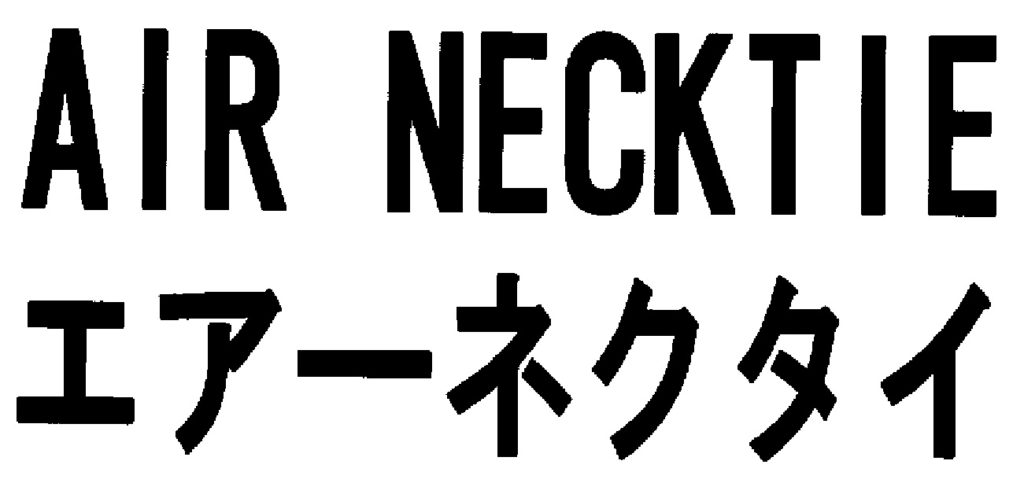
The Japan Patent Office (JPO) dismissed an appeal filed by a Japanese individual who sought registration for use of the wordmark “AIR NECKTIE” on neckties in class 25 due to the similarity to NIKE “AIR.” [Appeal case no. 2020-4106, Gazette issued date: February 26, 2021.]
AIR NECKTIE
The mark in question, consisting of two English words “AIR” and “NECKTIE”, and its transliteration in a Japanese katakana character (see below), was filed for use on ‘neckties’ in class 25 with the JPO on July 6, 2018 [TM Application no. 2018-88482].
TM App no. 2018-88482
AIR
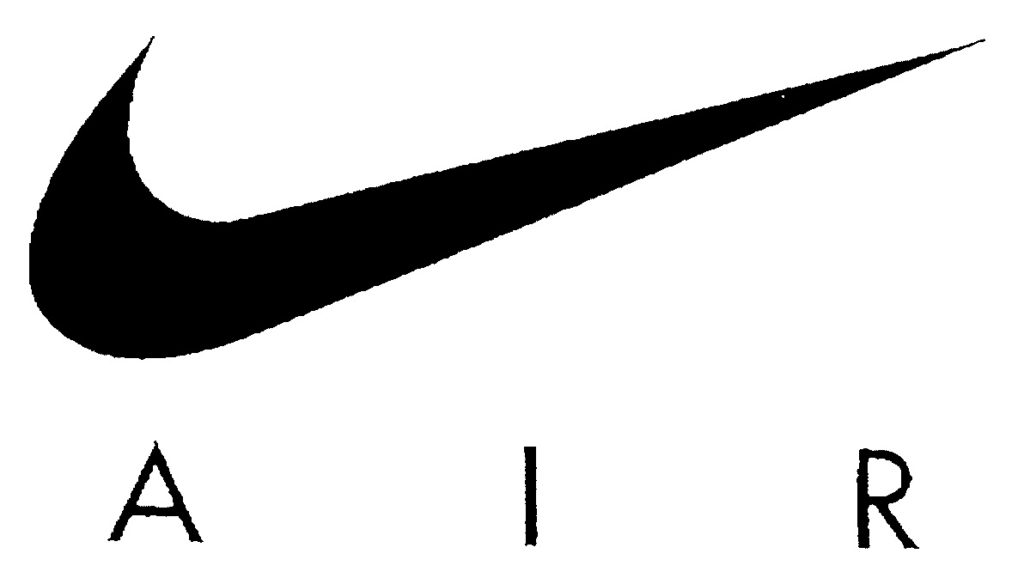
The examiner raised her objection based on Article 4(1)(xi) of the Trademark Law by citing senior registration nos. 502137 and 4327964 for the mark “AIR” owned by NIKE Innovate C.V. (see below) which cover clothing, shoes, neckties, and other goods in class 25.
TM Reg no. 502137
TM Reg no. 4327964
Article 4(1)(xi) is a provision to prohibit registering a junior mark that is deemed identical with, or similar to, any senior registered mark.
Regardless of the arguments made on a written response to the office action by the applicant, the JPO examiner entirely rejected the “AIR NECKTIE” mark based on the ground.
On March 6, 2020, the applicant filed an appeal against the refusal with the JPO and disputed that the applied mark “AIR NECKTIE” is dissimilar to the cited mark “AIR.”
JPO decision
The JPO Appeal Board referred to the tests established by the Supreme Court ruling in 2008 to determine whether it is permissible to take out respective elements of the composite mark when assessing the similarity of two marks.
“Where a mark in dispute is recognized as a composite mark consisting of two elements or more, it is not permissible to assess the similarity of marks simply by means of taking out an element of the composite mark and then comparing such element with the other mark, unless consumers or traders are likely to perceive the element as a dominant portion indicating its source of origin of goods/service, or remaining elements truly lack inherent distinctiveness as a source indicator in view of sound and concept.”
Based on the tests, the Board found that it is permissible to take out a literal element “AIR” from the applied mark and compare it with the citations by stating the following grounds:
The applied mark can be seen as a composite mark consisting of ‘AIR’ and ‘NECKTIE’ because of the space between two words.
“NECKTIE” is unquestionably recognized as a generic term in connection with ‘neckties’ in class 25.
Relevant consumers at the sight of neckties bearing the mark “AIR NECKTIE” would conceive the term “AIR” as a prominent source indicator.
“AIR NECKTIE” does not give rise to any specific meaning in its entirety.
The above facts suggest that “NECKTIE” lacks inherent distinctiveness in relation to the goods in question, and it would not play the role of source indicator of the applied mark in view of sound as well as concept.
Based on the foregoing, the Board affirmed the examiner’s rejection and decided that the applied mark “AIR NECKTIE” is similar to the cited marks as a whole given the remarkable similarity in sound and concept, even if the word “NECKTIE” differentiates two marks in appearance.
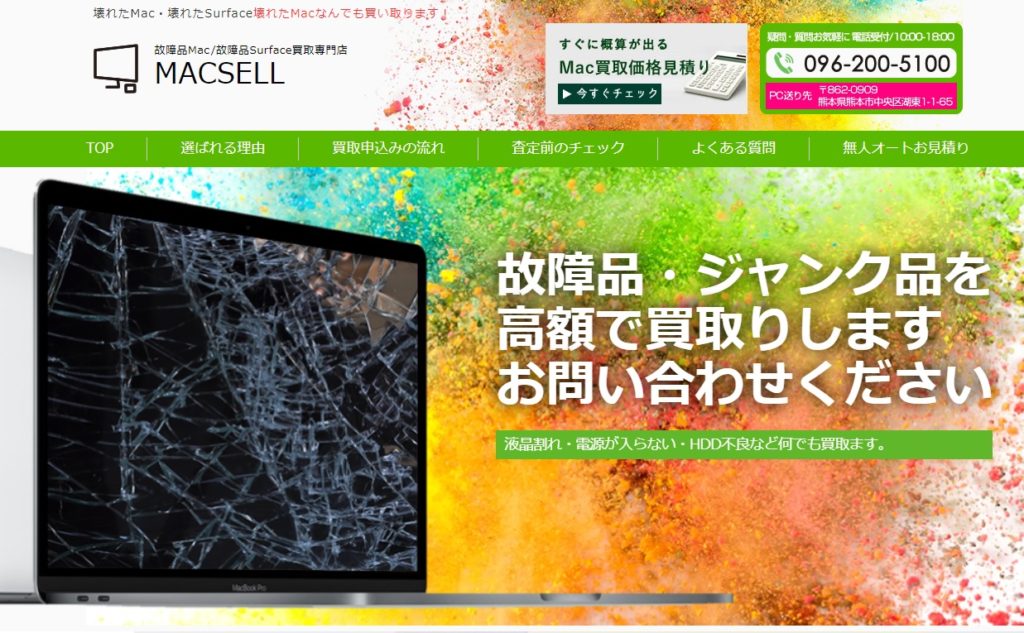
The Japan Patent Office (JPO) dismissed an opposition claimed by Apple Inc. against trademark registration no. 6223514 for word mark “MACSELL” on used mobile phone, Smartphone, PC and tablet computer value estimation service in class 36 by finding less likelihood of confusion with Apple “Mac” series. [Opposition case no. 2020-900114, Gazette issued date: Jan 29, 2021]
MACSELL
Opposed word mark “MACSELL” in standard character was filed on March 22, 2019, for the service of used mobile phone, Smartphone, PC and tablet computer value estimation, and others in class 36. Going through the substantive examination, the JPO admitted registration on February 6, 2020.
Apple Inc. argued the opposed mark “MACSELL” shall be canceled in violation of Article 4(1)(xv) of the Japan Trademark Law.
“Mac” has become famous as a source indicator of Apple’s PC by virtue of substantial use with various trademarks, e.g. “MacBook Air” and “MacBook Pro” on laptops, “iMac” and “iMac Pro” on desktops, “Mac Pro” and “Mac mini” on computer hardware.
The opposed mark, consisting of “MAC” and “SELL”, would easily give rise to a meaning of offering Apple’s PC for sale.
If so, relevant consumers at the sight of the opposed mark when used on the service in question are likely to associate and confuse the origin of the opposed mark with Apple Inc. or any entity related to the opponent.
JPO decision
The JPO Opposition Board admitted a remarkable degree of reputation and popularity of “Mac” as a source indicator of Apple Inc. and a close association between Apple’s goods and the service in question.
However, the Board found a low level of similarity between “MACSELL” and “Mac” by stating that the term “SELL” would severely cause a distinctive impression between both marks from visual, phonetical, and conceptual points of view, even if the marks share the word “MAC.”
Besides, taking into account a low level of originality of the opponent mark “Mac,” the Board questioned if relevant consumers and traders are likely to associate or connect the opposed mark with the opponent when used on the service in question.
Consequently, the Board held that relevant consumers would be unlikely to confuse the source of the opposed mark with Apple Inc. and any entity economically or systematically connected with the opponent.
Based on the foregoing, the Board decided to dismiss the opposition entirely and allowed registration of the opposed mark as status quo.
The Japan Patent Office (JPO) affirmed the examiner’s refusal and decided to reject a wordmark “FS12” due to a lack of inherent distinctiveness. [Appeal case no. 2019-650019, Gazette issued date: January 29, 2021]
“FS12”
Fette Compacting GmbH filed a trademark application with the JPO via the Madrid Protocol (IR no. 1349196) for word mark “FS12” (see below) for use on goods of ‘Compression tools (parts of machines for the pharmaceutical industry, chemical industry, food industry, and metal industry) for producing pellets and tablets; die-table segments (parts of machines for the pharmaceutical industry, chemical industry, food industry, and metal industry) for rotary presses’ in class 7
Article 3(1)(v) of the Trademark Law
The JPO examiner refused the “FS12” mark in contravention of Article 3(1)(v) of the Trademark Law.
The article prohibits any mark from registering if it consists solely of a very simple and common mark.
Trademark Examination Guidelines (TEG)stipulates that a mark consisting of one or two alphabetical letters followed by a numeral, e.g. “A2”, “AB2”, is unregistrable under the article.
Followings are also enumerated as unregistrable marks under the article.
Numerals
One or two alphabetical letters, e.g. “AA”
Two alphabetical letters combined with “-” or “&”, e.g. “A-B”, “C&D”
One or two alphabetical letters accompanied by “Co.”, e.g. “AB Co.”
A numeral followed by one or two alphabetical letters, e.g. “2A”
The applicant filed an appeal against the refusal and argued distinctiveness of the “FS12” mark.
Appeal Board decision
However, the JPO Appeal Board dismissed the entire allegations and held that a mark consisting of a numeral and one or two alphabetical letters is incapable of identifying the source of the goods since the relevant public would perceive, without further thought, it to indicate a value, code, type, model or standard of the goods in question.
As a matter of fact, the Board found the combination of alphabetical letters, and a numeral is frequently used to indicate a value, code, type, model, or standard of the goods in relevant industries.
Given the mark “FS12” consists of two alphabetical letters and two digits written in regular font, the Board considers it is unlikely to play a role of source indicator and shall be unregistrable in contravention of Article 3(1)(v) of the Trademark Law.
To my knowledge, “FS12” would be mostly considered distinctive in other jurisdictions. Please be noted that a combination of one or two alphabetical letters and the numeral is deemed descriptive in relation to any kind of goods in Japan. To register such a mark, it is required to add a descriptive element or demonstrate acquired distinctiveness as a result of substantial use in Japan.
Trademark owners can freely sell their trademark or transfer it without any compensation. Transfers of trademark ownership happen when the owner of trademark rights is changed. Examples of when transfers of trademark rights might happen include when a company is buying another company, or when a business buys product rights from another company or individual.
Deed of Assignment
A deed of assignment is used where the trademark owner (the “assignor”) transfers all or part of their right, title, and interest in a trademark to another entity (the “assignee”). A deed of assignment can be done in one transaction, by transferring all ownership rights of trademarks detailed in the deed. No payment is required for it to be valid.
A deed of assignment must be in writing and should include:
The names and addresses of the assignor and assignee
A description of the trademark right, i.e., Japanese trademark registration number to be transferred
A statement that the assignor transfers the trademark right to the assignee
Seals/Signatures of the parties and the date of the agreement execution
Recording Trademark Assignment
Although a deed of assignment transfers ownership in trademark right, it does not change the registration of the ownership. To be valid and enforced, the trademark assignment must be recorded with the Japan Patent Office (“JPO”). The parties must submit a deed of trademark assignment along with a statutory request to change the ownership.
Joint Application Rule
It is noteworthy that the Japanese law provides the request to change trademark ownership with relevant administrative authority should be applied jointly by assignor and assignee even though assignor agrees to assign their interest in the property to the assignee in the deed.
Consequently, mere signatures of both parties on the deed of the assignment are insufficient to meet this requirement.
To record the assignment of trademark registration with the JPO requested solely in the name of the assignee, which often happens, as a matter of fact, the deed should contain a declaration that the assignor would agree and never oppose assignee to solely request the transfer of trademark right with the JPO. (Article 8 of Japan Trademark Registration Order)
Taxes
It is mandatory to pay an official fee, JPY30,000 per registration in order to register the change in ownership with the JPO.
Meanwhile, where the transfer arises from general succession, e.g., inheritance, M&A, it costs JPY3,000 per registration.
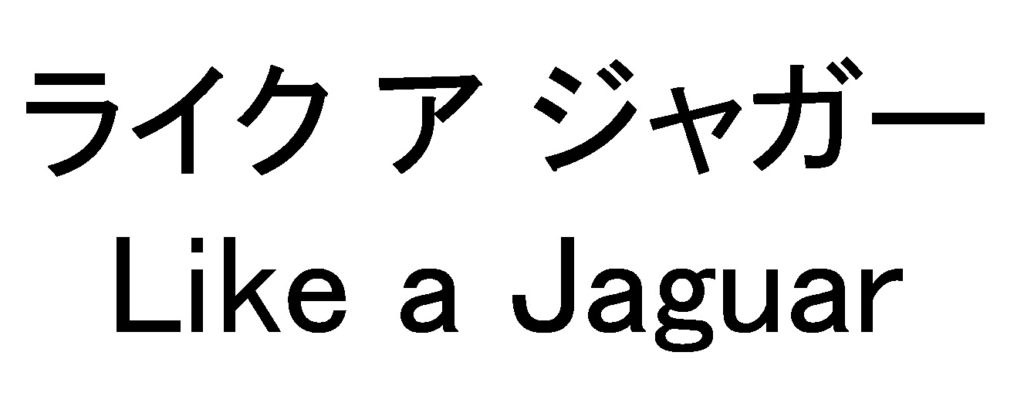
The Japan Patent Office (JPO) dismissed an opposition filed by Jaguar Land Rover Ltd. against trademark registration no. 6244325 for word mark “Like a Jaguar” on cosmetics and other goods in class 3 by finding dissimilarity and unlikelihood of confusion with “JAGUAR.” [Opposition case no. 2020-900165, Gazette issued date: December 14, 2020]
Opposed mark
An opposed mark consists of the term “Like a Jaguar” in a gothic type and its transliteration in a Japanese katakana character as below.
The mark was filed by KOSE Corporation on May 10, 2019, for use on ‘cosmetics; soaps and detergents; dentifrices; perfume and flavor materials; incense; breath-freshening preparations; false nails; false eyelashes; cosmetic cotton wool; fabric softeners for laundry use; adhesives for affixing false eyelashes; adhesive paper; cotton sticks for cosmetic purposes’ in class 3.
JPO, going through substantive examination, admitted registration and published for post-grant opposition on April 28, 2020.
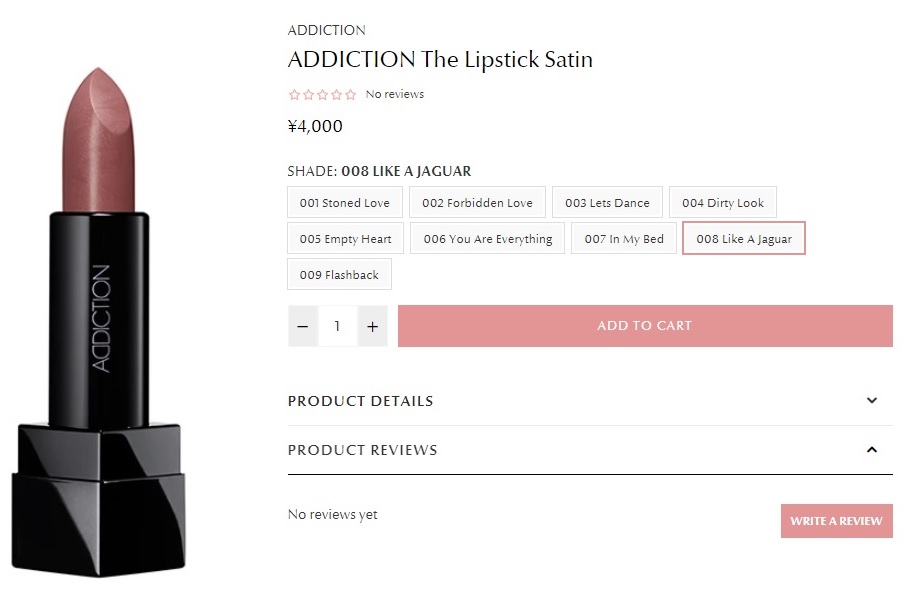
Apparently, KOSE uses the mark “Like a Jaguar” to represent a lipstick color for ‘ADDICTION The Lipstick Satin’ 008.
Captured from website – everglowcosmetics.com
Opposition by Jaguar Land Rover
Jaguar Land Rover Ltd. filed a trademark opposition on June 25, 2020, before the JPO and claimed that the opposed mark shall be canceled in contravention of Article 4(1)(viii), (xi), and (xv) of the Trademark Law by citing trademark registrations for its iconic logo consisting of the image of a leaping jaguar and the word “JAGUAR” (see below), which allegedly has been used on the opponent’s products since 1935.
Article 4(1)(viii) prohibits registration of trademarks that contain the representation or name of any person, famous pseudonym, professional name or pen name of another person, or famous abbreviation thereof for the purpose of protecting the personal rights of a living individual.
Article 4(1)(xi) is a provision to prohibit registering a junior mark that is deemed identical with, or similar to, any senior registered mark.
Article 4(1)(xv) provides that a mark shall not be registered where it is likely to cause confusion with other business entity’s well-known goods or services, to the benefit of a brand owner as well as users’ benefits.
Jaguar Land Rover argued that the opposed mark has been confusingly similar to the cited mark since the opposed mark “Like a Jaguar” gives rise to a meaning of ‘Similar to Jaguar’ in its entirety. Besides, given the mark “JAGUAR” has obtained a high level of popularity among relevant consumers as a source indicator of the opponent’s motorcars, apparels, fragrances, and other licensed goods, the consumers would notice the term “Jaguar” as a dominant portion of the opposed mark and thus confuse or misconceive it with the opponent consequently.
JPO decision
The Opposition Board did not admit a high level of popularity of the cited mark by stating that the opponent failed to produce sufficient evidence in an objective manner. According to the allegation, opponents sold more than 100,000 cars around the globe in 2019. But relevant evidence was not produced to demonstrate the sales. Due to this reason, it is unknown how many cars of the opponent were sold in Japan. Likewise, there was little evidence to show a high recognition of the cited mark in relation to goods other than cars.
Provided that the mark “JAGUAR” was found insufficiently famous for the opponent cars, the Board has no reason to believe that relevant consumers would see the term “Jaguar” of the opposed mark as a dominant source indicator. If so, both marks shall be assessed in their entirety.
The opposed mark gives rise to a meaning of ‘similar to a large spotted wild cat of South America’ and a pronunciation of ‘laɪk ə dʒæɡ.wɑːr’. The term “Like a” sufficiently differentiates the opposed mark from the cited mark in appearance, sound, and concept.
Based on the foregoing, the Board found relevant traders and consumers are unlikely to confuse or associate the opposed mark with the opponent or any business entity economically or systematically connected with Jaguar Land Rover when used on the goods in question. In conclusion, the opposed mark shall remain valid as the status quo.
The Japan Patent Office (JPO) dismissed an opposition filed by GrandAri Inc., the owner of a trademark “ARIANA GRANDE”, against TM Reg no. 6202585 for wordmark “Arianna” to be used on cosmetics by finding dissimilarity between “Arianna” and “ARIANA GRANDE.” [Opposition case no. 2020-900051, Gazette issued date: January 29, 2021.]
Opposed mark
Arianna Co., Ltd. applied for a wordmark “Arianna” registration for use on cosmetics, soaps, and detergents of Class 3 and medical apparatus of Class 10 with the JPO on January 7, 2019 (TM Application no. 2019-000339).
The JPO admitted the registration of the opposed mark on November 29, 2019, and published for opposition on Christmas Eve of the year.
Opposition by GrandAri Inc.
On February 21, 2020, GrandAri Inc. filed an opposition before the JPO and claimed that the opposed mark shall be revocable in contravention of Article 4(1)(xi) and (xv) of the Japan Trademark Law by citing International Registration no. 1260129 for wordmark “ARIANA GRANDE” and others over the goods of ‘Perfume; eau de parfum; fragranced body care preparations, namely, body lotions, body scrubs’ in Class 3.
Article 4(1)(xi) is a provision to prohibit registering a junior mark that is deemed identical with, or similar to, any senior registered mark.
GrandAri argued that relevant consumers would easily think of American pop superstar from the cited mark “ARIANA GRANDE”. Besides, because of her celebrity and popularity, she is affectionately called by her first name “ARIANA”. In view of the space between “ARIANA” and “GRANDE”, it is highly likely that the consumers would consider the term “ARIANA” as a dominant source indicator at the sight of the cited mark. It is no doubt that the opposed mark “Arianna” is confusingly similar to “ARIANA” since the mere difference of the letter ‘n’ is negligible in appearance and both terms give rise to the same pronunciation.
Article 4(1)(xv) provides that any mark shall not be registered where it is likely to cause confusion with other business entity’s well-known goods or services, to the benefit of brand owners and users’ benefits.
GrandAri argued the cited mark is used on fragrances developed by Ariana herself, which are also called “ARIANA” in the advertisement.
Given a close resemblance between the opposed mark and the “ARIANA” mark, and a certain degree of popularity of the fragrances, firstly sold in November 2015 in Japan, it is likely to cause confusion with the cited mark when the opposed mark is used on the goods in question.
JPO Decision
The JPO admitted a high level of reputation and popularity of American pop singer, “ARIANA GRANDE” in Japan. In the meantime, the JPO questioned, from the produced evidence, whether the term “ARIANA” per se plays a role of the source indicator of Ariana Grande fragrances since it is constantly adjacent to the cited mark “ARIANA GRANDE.” Consequently, the JPO negated the famousness of the term “ARIANA” as a source indicator of the opponent’s goods.
As for the similarity of the marks, the JPO assessed that relevant consumers would see the cited mark “ARIANA GRANDE” in its entirety because she is known and called by her full name. If so, both marks are distinctively dissimilar since the opposed mark does neither give rise to a pronunciation of “ARIANA GRANDE” nor a concept of American pop superstar.
The JPO dared to assess the similarity between the opposed mark “Arianna” and “ARIANA” and held that “Arianna” is not confusingly similar to “ARIANA” from a phonetical point of view. Due to a low level of similarity of the marks, the JPO does not have any reason to believe that the opposed mark would cause confusion with the cited mark “ARIANA GRANDE” as well as “ARIANA” when used on cosmetics, soaps, and detergents of Class 3.
Based on the foregoing, the JPO dismissed the entire allegations of GrandAri and allowed “Arianna” to survive.
The Japan Patent Office (JPO) dismissed a trademark opposition claimed by Costa Limited, operating the UK’s largest and the World’s second-largest International chain of coffee shops “COSTA COFFEE”, against trademark registration no. 6230027 for the “Caffè la Costa” mark for use on coffee, coffee beans in class 30 and restaurant services in class 43 by finding both marks are dissimilar and less likely to cause confusion. [Opposition case no. 2020-900137, Gazette issued date: December 25, 2020]
Opposed mark
The mark “Caffè la Costa” (see below) was filed by a Japanese individual on March 11, 2019, for use on tea; coffee; cocoa; coffee beans; confectionery, and bread in class 30 and restaurant service in class 43, and published for opposition on May 17, 2020, after registration on February 27, 2020.
Opposition by Costa Limited
On May 14, 2020, Costa Limited filed an opposition and alleged the opposed mark shall be revocable in contravention of Article 4(1)(xi) of the Japan Trademark Law due to close resemblance to senior trademark registration for a wordmark “COSTA” and the “COSTA COFFEE” logo (see below) in class 30 and 43.
Article 4(1)(xi) is a provision to prohibit registering a junior mark that is identical with, or similar to, any senior registered mark.
Costa Limited argued that relevant consumers are accustomed to discriminating coffee shops by means of a distinctive literal element contained in their name. As a universal habit of shortening the full name, “Starbucks Coffee” is referred to as “Starbucks.” Likewise, “Doutor Coffee” as “Doutor”, “Excelsior Caffè” as “Excelsior”, “Tully’s Coffee” as “Tully’s”. Because the term “Coffee” and “Caffè” lack distinctiveness as a source indicator in relation to coffee; coffee beans and restaurant services.
In this respect, the consumers would consider the term “Costa” to be a dominant portion of the opposed mark when used on the goods and services in question. Therefore, “Caffè la Costa” shall be deemed confusingly similar to a wordmark “COSTA” and the “COSTA COFFEE” logo mark owned by Costa Limited.
Board Decision
The Opposition Board found the opposed mark does not give rise to any particular meaning as a whole. The mere fact that the respective word of the opposed mark (“Caffè”, “la”, “Costa”), is in the Italian dictionary would not change the finding since relevant consumers are unfamiliar with these Italian words. If so, the consumers would perceive the opposed mark as a coined word in its entirety and pronounce the entire mark as it sounds. In this regard, the Board doubted whether the term “Costa” is considered the dominant portion of the opposed mark by stating the facts show no evidence.
Based on the findings, the Board assessed the similarity of both marks as follows.
It looks obvious that the opposed mark is distinguishable from the cited marks, “COSTA” and the “COSTA COFFEE” logo, in appearance and sound, on account of different term and position of “Caffè la” and “COFFEE” combined with “Costa” and other distinction of figurative elements. Provided that “COSTA” is an Italian word unfamiliar to relevant consumers with ordinary care, the Board believes both marks are incomparable in concept. Even if both marks are incomparable in concept, the low level of similarity in appearance and sound would suffice to conclude that the consumers are unlikely to associate, connect the opposed mark with “COSTA COFFEE” when used on the goods and services in question.
Accordingly, the Board decided the opposed mark wasn’t revocable in contravention of Article 4(1)(xi) of the Trademark Law.