JPO found “is me” dissimilar to “iS.ME” as trademark

The Japan Patent Office (JPO) reversed the examiner’s rejection of the word mark “is me” in Classes 14, 18, and 25, by finding it dissimilar to senior TM Reg No. 5006417 for the mark “iS.ME” with an oval device.
[Appeal case no. 2025-4535, decided on December 17, 2025]


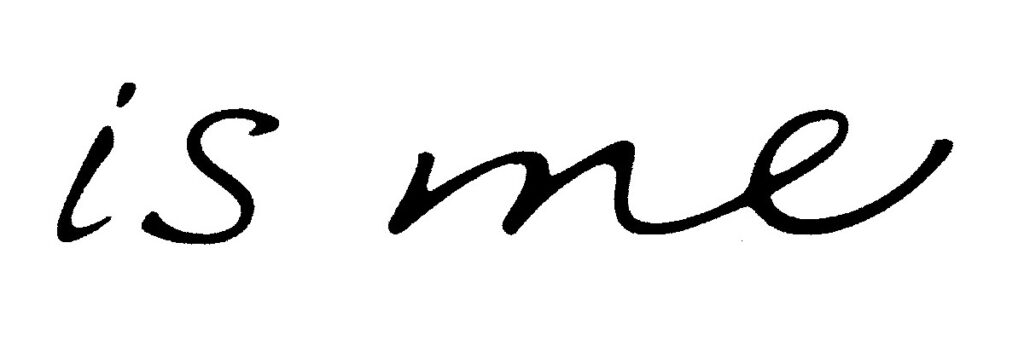
“is me”

ARIGATO CO., LTD. filed a trademark application for the stylized mark “is me” (see below) in connection with personal ornaments (Cl. 14), bags (Cl. 18), and apparel products (Cl. 25) with the JPO on February 8, 2024. [TM App no. 2024-18788]


TM Reg No. 5006417

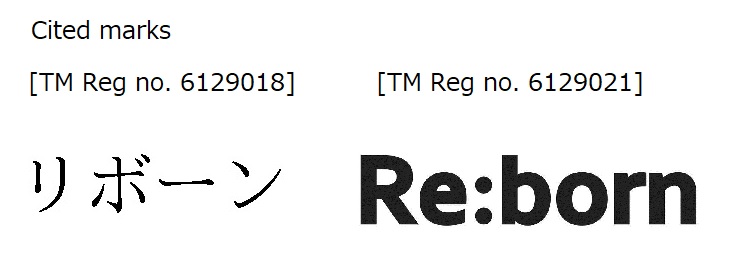
On October 4, 2024, the JPO examiner issued a notice of ground for refusal by citing senior TM Reg No. 5006417 for the mark “IS.ME” with an oval device (see below) in Classes 12, 14, and 25.

The applicant filed a response against the refusal on November 27, 2024, to argue the dissimilarity of these marks. However, on February 4, 2025, the examiner decided to reject the entire application due to similarity to the cited mark based on Article 4(1)(xi) of the Japan Trademark Law.

On March 25, 2025, the applicant filed an appeal against the contested decision, requesting that the rejection be set aside.


JPO Appeal Board decision

The JPO Appeal Board disaffirmed the contested decision and found that the mark “is me” should not be subject to rejection under Article 4(1)(xi) by stating that:

  1. The mark in question consists of the letters “is me” written in a script font. Both terms, “is” and “me”, are English words generally familiar to Japanese consumers, meaning “to be” and “myself” respectively. Therefore, the mark has the sound of “iz-miː.” Meanwhile, as “is me” lacks a subjective term, it does not give rise to any specific meaning as a whole.
  2. The literal elements of the cited mark will not be considered inextricable from the graphical element because of a space between them, and lack of conceptual integrity as a whole. In this regard, it is reasonable to consider the literal element as dominant in the cited mark, and compare it with the mark in question to assess similarity between the marks. The literal element gives rise to various sounds, not limited to “iz-miː.”, but “ai-es-dot-emu-iː”, “iz-dot-miː.”, “ai-es-dot-miː”.
  3. From appearance, the cited mark features a distinctive combination of the initial letter “i” in lowercase and the subsequent three letters in uppercase, all written in bold Gothic and colored in red. This constitutes a prominent distinction from the mark in question, resulting in strong commercial impressions that are easily distinguishable.
  4. Aurally, even if both sounds are the same when the cited mark is pronounced as “iz-miː”, the other sounds are clearly distinguishable.
  5. A conceptual comparison is neutral as neither of them has any specific meaning.
  6. Based on the foregoing, given both marks are unlikely to cause confusion from visual and phonetic points of view, the Board has reason to believe the mark “is me” is deemed dissimilar to the cited mark as a whole.

SERAPIAN Successful in Registering iconic MOSAICO braided pattern as trademark

The Italian-based fashion house Stefano Serapian S.r.l. was successful in an appeal to overturn the examiner’s rejection of TM App no. 2022-131488 for the Serapian’s signature “Mosaico” leather pattern in Class 18.
[Appeal case no. 2023-16337, decided on December 17, 2025]


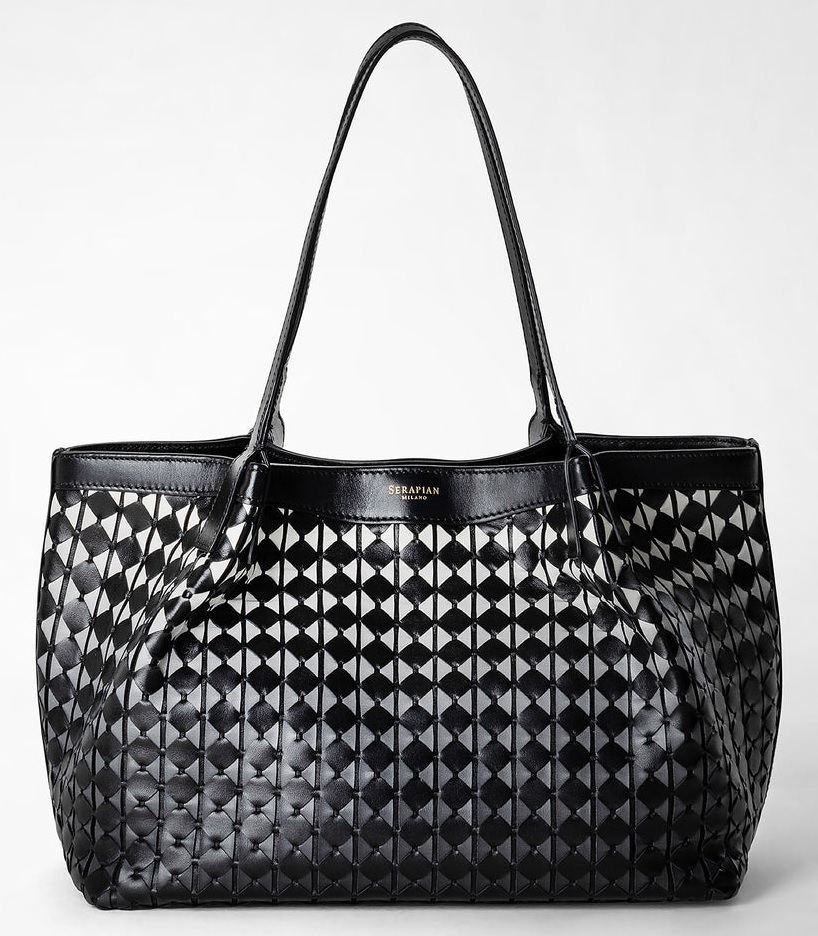
SERAPIAN MOSAICO

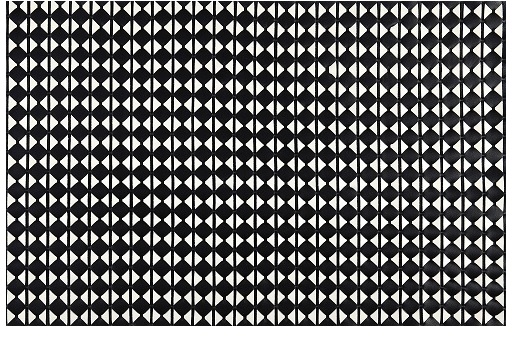
Stefano Serapian S.r.l. filed a trademark application for a braided pattern (see below) for use on bags, suitcases, tote bags, backpacks, key cases, porches, wallets, coin cases, and handbags in Class 18 with the JPO on November 17, 2022 [TM App no. 2022-131488].

The Serapian Mosaico pattern is known for its iconic hand-weaving technique, which dates back to 1947 and serves as an emblem of the Italian luxury brand, Serapian.


JPO Examination

On June 26, 2023, the examiner rejected the mark based on Article 3(1)(vi) of the Japan Trademark Law by finding that:

The applied-for mark represents a continuous and repetitive geometric pattern consisting of a white square with a vertical line in the middle and a black square in a diagonal position. As a whole, it will be perceived merely as a decorative background design. Besides, there is no distinctive element that identifies the source of the goods in question. Consequently, consumers are unable to recognize it as a source indicator due to its lack of inherent distinctiveness.

Serapian filed an appeal against the rejection on September 27, 2023, to dispute the inherent distinctiveness of the mark based on substantial use and advertising of the Mosaico collection in Japan since 2014.


JPO Appeal Board Decision

The JPO Appeal Board noted the following facts.

  • Founded in 1928, the applicant is known for its line of bags favored by the late British actress Audrey Hepburn. The applicant’s bags, which depict the applied-for mark and were designed in 1947, have been sold nationwide in Japan for over 10 years and have been distributed in Japan since 2014.
  • Major fashion magazines and online articles have featured the bags and their iconic “MOSAICO” pattern design.
  • The bags are also sold in major department stores and online malls. Despite being expensive and high-end goods, annual sales exceeded JPY 50 million in 2023 and JPY 9 million in 2024.
  • A discretionary survey by the Board did not reveal the actual use of a similar pattern by others.

Based on the foregoing, the Board found that relevant consumers and traders can distinguish the applicant’s goods from others based solely on the Mosaico pattern.

Therefore, since the applied-for mark is not subject to Article 3(1)(vi) of the Japan Trademark Law, the Board overturned the examiner’s rejection.