Louboutin 2nd Defeat in Litigation over Red Soles

By order of December 26, 2022, the IP High Court ruled to dismiss an appeal taken by Louboutin against the Tokyo District Court ruling that denied a source-indicating function of Louboutin’s red soles.

[Appeal court case no. Reiwa4(ne)10051]

Appellant, Christian Louboutin SAS, brought an appeal against the Tokyo District Court ruling decided on March 11, 2022.

In May 2019, Louboutin sued Eizo Collection Co., Ltd., a Japanese company that produced ladies’ shoes with red-colored rubber soles, and sought a permanent injunction as well as damages in the amount of JPY4,208,000 under the Unfair Competition Prevention Law. The Tokyo District Court did not side with Louboutin by finding an insufficient reputation of Louboutin’s red soles perse as a source indicator and thus unlikelihood of confusion.
See details here.
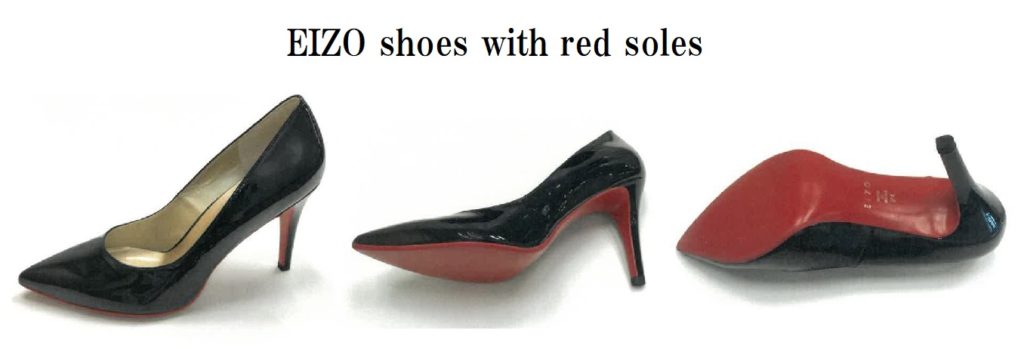

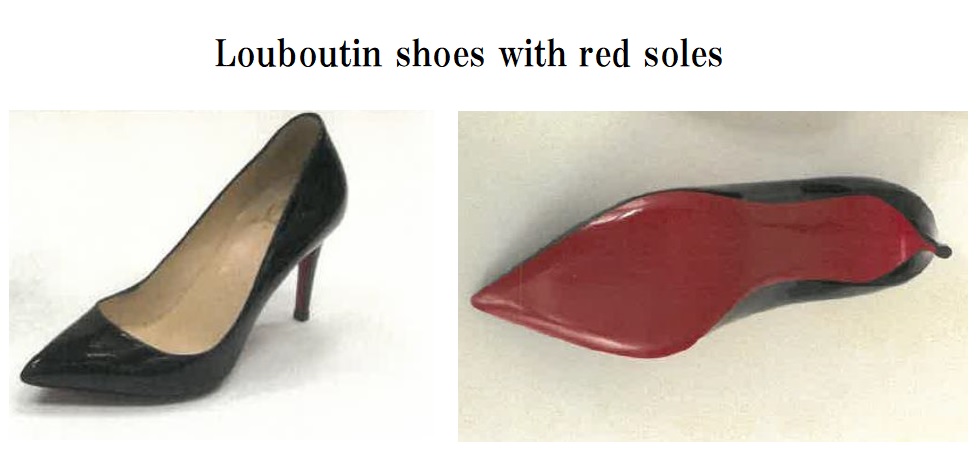
The IP High Court paid attention to the following factors to assess the likelihood of confusion in the case.

  1. Relevant consumers of high-heels (women from their 20s to 50s) are most likely to try on multiple pairs of shoes at a physical store and select the ones that fit them prior to the purchase.
  2. The market for women’s high heels can be divided into three categories: (1) luxury brand products, (2) affordable brand products, and (3) inexpensive no-name products. Undoubtedly, Louboutin’s high-heels priced at JPY80,000 and over are classified into category (1). In the meantime, Eizo’s shoes priced at JPY17,000 or less belong to category (2).
  3. Every high-heel bears a brand name or logo on the insole so that consumers can easily distinguish its supplier.
  4. E-commerce websites post not only images of ladies’ shoes but also the brand and condition of respective goods in advertisements.

Based on the foregoing, the judge found, irrespective of the resemblance in color on the outsole, no likelihood of confusion between both shoes.

As for the reputation of Louboutin’s red soles, the IP High Court admitted certain consumers may recognize the red soles as a source indicator of Louboutin, however, the judge questioned if the soles have acquired a remarkable reputation among relevant consumers in general based on the research targeted women, in their 20s to 50s accustomed to wearing high-heels, residing in major cities that revealed only 51.6 % of the interviewees answered Louboutin at the sight of a high-heel with red-colored sole and a fact that Louboutin has not been an exclusive supplier of red sole shoes for women.
JPO Rejected Colormark of Louboutin’s red soles

On June 7, 2022, the Appeal Board of the Japan Patent Office (JPO) decided to reject a red color mark used on the soles of high heels by Christian Louboutin due to a lack of inherent and acquired distinctiveness.

[Appeal case no. 2019-29921]

Louboutin’s Red Soles

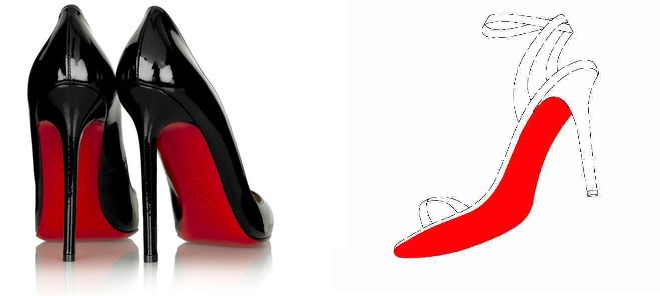
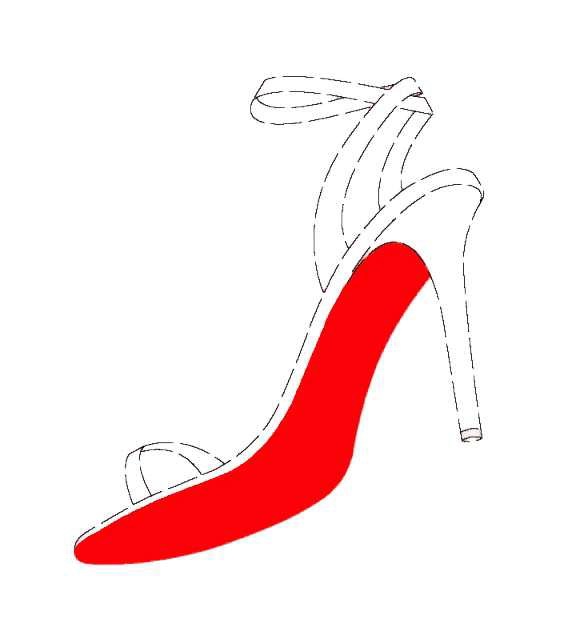
Fast on the heels of the introduction to register color marks in Japan, Christian Louboutin filed a trademark application for a color mark consisting of a red (Pantone 18-1663TP) colored in soles (see below) for use on high heels in class 25 on April 1, 2015 (TM App no. 2015-29921).

The JPO examiner refused the color mark based on Article 3(1)(iii) of the Japan Trademark Law by stating red color has been commonly used on shoes to enhance the aesthetic appearance and attract consumers of high heels. Red-colored heels and shoes have been widely distributed before the launch of Louboutin shoes in 1996 in Japan and even now. Under the circumstance and trade practice, the examiner had no reason to believe the color mark perse has acquired distinctiveness as a source indicator of Louboutin among relevant consumers in Japan. If so, the mark shall not be registrable under Article 3(2).

Louboutin filed an appeal against the refusal and disputed the inherent and acquired distinctiveness of Louboutin’s red soles as a color mark on October 29, 2019.

To bolster the acquired distinctiveness of the red soles, Louboutin conducted an online brand awareness survey to target 3,149 females, aging from 20 to 50 and having a domicile in Tokyo, Osaka, or Nagoya where Louboutin have stores. The survey demonstrated that 43.35% of the interviewees conceived of Louboutin in the answer to an unaided open-ended question (Q1). 53.99% associated the color mark with Louboutin in the answer to a closed-ended question, where it mentioned Louboutin along with other close competitors (Q2). Louboutin argued, that from the survey, it is obvious that Louboutin’s red soles have acquired distinctiveness among relevant consumers and shall be registered under Article 3(2) even though lacking inherent distinctiveness.


JPO Appeal Board decision

The Appeal Board affirmed the examiner’s findings and found the color mark perse lacks distinctiveness in relation to the goods in question by taking into account of fact that a lot of shoes with red-colored soles have been distributed by other shoemakers in Japan.

In the assessment of acquired distinctiveness, the Board pointed out a fact that more than half of the interviewees who live in the region where Louboutin stores are could not conceive of Louboutin in the answer to Q1. The survey was insufficient to admit acquired distinctiveness of the applied mark among relevant consumers nationwide, the Board found.

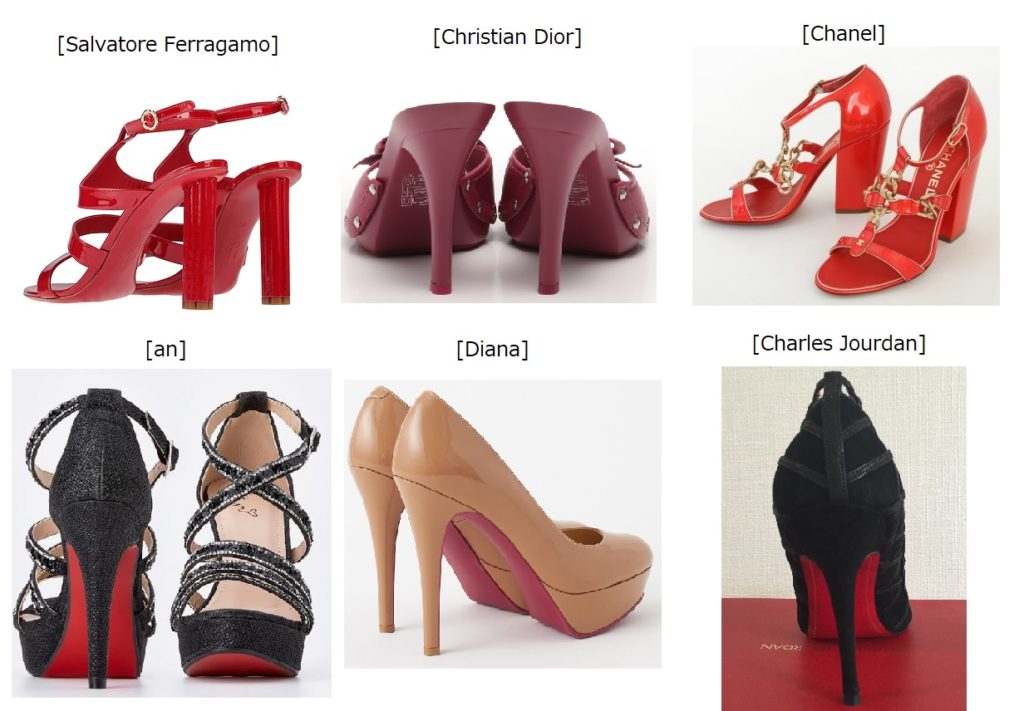
Even among the consumers who could associate the color mark with Louboutin, the Board had an opinion that as a matter of fact, they will be unable to distinguish Louboutin high heels from competitors’ shoes simply by means of red-colored soles without the aid of another source indicator, a wordmark “Louboutin”, used on the shoes given a lot of red-soled heels and shoes have been distributed by competitors as follows.

Besides, under the current trade practice, the Board considered it will inevitably cause a severe disorder and excessive restriction to competitors if it allows registration of a red color that has been freely used in the relevant industry to enhance the aesthetic appearance of shoes.

Based on the foregoing, the JPO concluded the color mark shall not be registrable under Article 3(2) as well.

Update of Colormark in Japan – Who awarded the 9th registration?

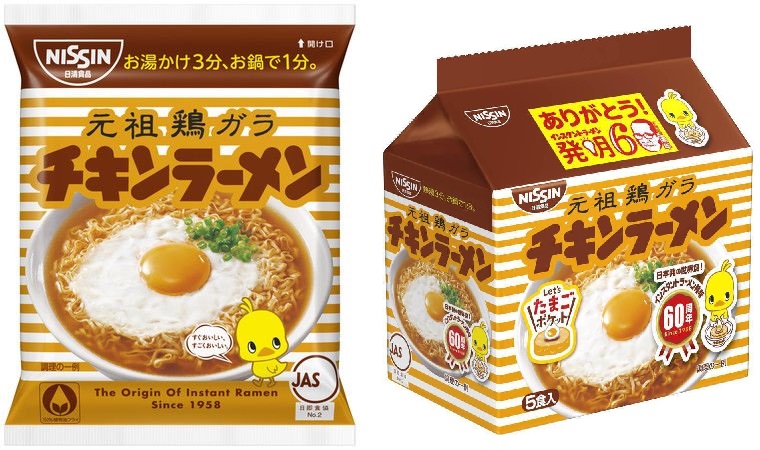
On March 25, 2022, the Japan Patent Office (JPO) granted protection of a color mark that has been used on the package of the first and a long-selling Japanese instant ramen “Nissin Chicken Ramen”. It is the 9th case for JPO to admit registration since opening the gate to color mark in April 2015.


Nissin Chicken Ramen

In 1958, NISSIN FOODS founder Momofuku Ando invented the world’s first instant noodles: Chicken Ramen, paired with a rich broth made of chicken and vegetables.

Nissin Chicken Ramen is a long-selling Japanese instant ramen loved by many generations and considered the world’s first instant noodles. According to the company’s release, more than 5 billion packages of Chicken Ramen had been sold.


Color mark on Package

The JPO opened the gate to Non-Traditional trademarks, namely, color, sound, position, motion, and hologram, in April 2015.

On July 12, 2018, Nissin Foods sought for registration of color combination on the Chicken Ramen package on instant noodles in class 30.

JPO examiner raised his objection because of a lack of distinctiveness based on Article 3(1)(iii) of the Trademark Law. However, the examiner eventually granted protection by finding acquired distinctiveness of the color mark (TM Reg no. 6534071).


Low Success rate -1.6%

563 color marks have participated in a race for trademark registration at the JPO as of now (May 14, 2022). 9 color marks could manage to award registration.

It is noteworthy that none of them is a mark consisting of a single color.


A previous post relating to colormark is accessible from here.

JPO Found Lego 3D Figure Mark Lack Distinctiveness

In a decision to the appeal against refusal to TM App no. 2017-138422 for the 3D shape of Lego figures in class 28, the Japan Patent Office (JPO) did not side with Lego Juris A/S and found the 3D mark is inherently descriptive and has not acquired distinctiveness in relation to toys.

[Appeal case no. 2019-13906, Decision date: January 6, 2022]

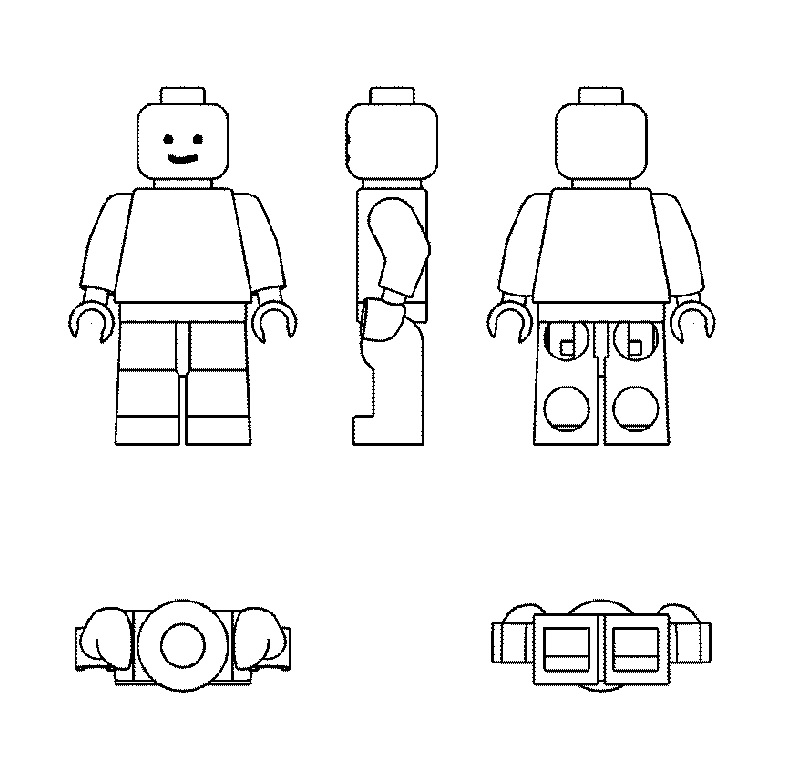
LEGO 3D Figure mark

Toy giant, Lego Juris A/S applied to the JPO to register a 3D mark, showing the Lego figure seen from the front, side, back, top, and beneath (see below), for “games and playthings” and other goods in class 28 on October 20, 2017.

Article 3(1)(iii)

Trademark Examination Guideline (TEG) pertinent to Article 3(1)(iii) of the Japan Trademark Law provides a mark shall be subject to the article if it solely consists of a shape that is recognized by consumers as a shape of goods or equivalent, namely “not go beyond the scope of the descriptive shape of goods”.

TEG stipulates criteria to assess the recognition.

  1. Where 3D shape is admittedly adopted for a purpose of enhancing function or the aesthetic appeal of goods, the shape is deemed to remain within the scope of descriptive shape of goods.
  2. Even though 3D shape has specific features by means of unique alteration or decoration, it is still considered not to go beyond the scope of descriptive shape of goods, where consumers assume such alteration or decoration attributable to enhancing function or the aesthetic appeal of goods.

The JPO examiner totally rejected the applied mark based on the article by finding the shape remains the scope of the descriptive shape of ‘human figure toys’ in class 28.

Lego Juris A/S filed an appeal against the rejection on October 18, 2019.


JPO decision

The JPO Appeal Board affirmed the findings of the examiner and found the 3D mark does not go beyond the scope of the descriptive shape of the goods in question by stating that:

  1. Plenty of human shape figures have been promoted for sale by competitors in relevant business field.
  2. There is less necessity to adopt specific configuration in making a human shape figure provided that it has a basic skeleton of head, body, arms, and legs.
  3. The Board has a reason to believe 3D shape of the applied mark is adopted enabling (i) to wear several caps and hair wigs, (ii) to get hold of various tools at hand, (iii) to stand still in display and play.
  4. If so, relevant consumers would assume the whole shape and its unique decoration of Lego figure attributable to enhancing function or the aesthetic appeal of the toy.

Taking into consideration that the actual 3D shape of Lego figures are considerably different from the applied mark, and the word mark “LEGO” has been constantly used on catalogs, packages, and advertisement material adjacent to the applied mark, the Board has a reasonable doubt if the 3D shape per se has acquired distinctiveness as a source indicator of LEGO toys.

Based on the foregoing, the JPO Appeal Board decided to dismiss the appeal in contravention of Article 3(1)(iii).

Hermes Challenge to Register Packaging Colors

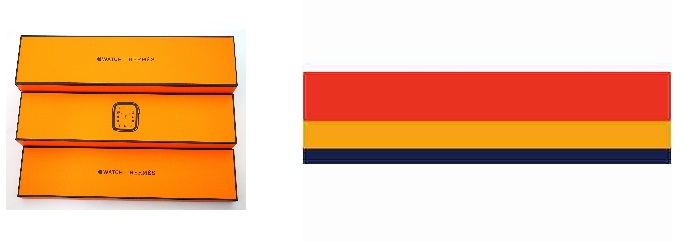
HERMES INTERNATIONAL, a French luxury fashion house, is in a legal battle to register its iconic packaging colors, orange and brown, as a color mark in Japan.


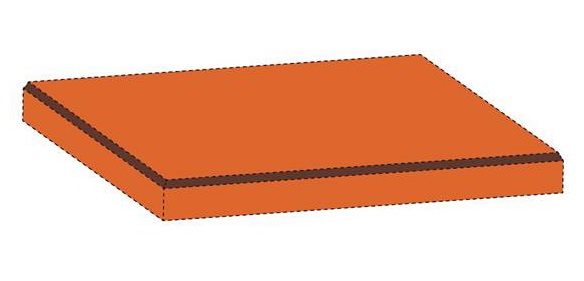
Color mark of Hermes box

On October 25, 2018, HERMES INTERNATIONAL filed a trademark application for its iconic packaging colors, orange and brown (see below), as a color mark to be used on various goods in class 3, 14, 16, 18, and retail services in class 35 with the Japan Patent Office (JPO) [TM application no. 2018-133223].


Article 3(1)(iii) and 3(1)(vi)

The JPO examiner rejected the color mark under Article 3(1)(iii) and 3(1)(vi) of the Japan Trademark Law by stating that colors per se are unlikely to play a role in source indicator because they are frequently aimed to attract consumers in association with function or quality of goods and services. Because of it, relevant consumers at the sight of goods or services bearing the applied color would not see the combination of colors, orange and brown, as a source indicator.


Acquired Distinctiveness

Hermes argued acquired distinctiveness of the color combination as a result of substantial use on Hermes box for the past six decades from the 1960s onward.

A bottleneck is that the Hermes box contains its name “HERMES” and horse and carriage logo as a conspicuous source indicator. Hermes conducted market research to demonstrate the acquired distinctiveness of the packaging color per se. The research targeted high-income men and women in their 30s to 50s with incomes JPY10,000,000 and above. According to the research report, 36.9% of the interviewees answered Hermes when shown three boxes in different shapes with the color mark. 43.1% chose Hermes from ten options.


JPO Rejection

The JPO examiner did not find the research persuasive to support acquired distinctiveness among relevant consumers of the goods and services in question.

The examiner stated the relevant consumers shall not be limited to the high-income class. Besides, even among high-income consumers, more than half of them did not link the color to Hermes. From the research, it is doubtful if relevant consumers would conceive the color per se as a source indicator.

Based on the above findings, the examiner totally rejected the applied color mark under Article 3(1)(iii) and (vi) on July 9, 2021.

HERMES INTERNATIONAL filed an appeal against the rejection on October 8, 2021.

Formula One Successful in Registering “F1”

In a recent decision, the Appeal Board of Japan Patent Office (JPO) overturned the examiner’s rejection and decided to register the wordmark “F1” in standard character by finding acquired distinctiveness as a source indicator in relation to automobile races in class 41.

[Appeal case no. 2021-1819, Decision date: November 5, 2021]

F1

Formula One Licensing BV, managing the trademarks for the FIA Formula One World Championship, applied wordmark “F1” in standard character for use on ‘organization, arranging and conducting of automobile races; providing information relating to automobile races’ in class 41 on May 7, 2018 (TM App no. 2018-58985).


Article 3(1)(v)

The JPO examiner rejected the mark “F1” because of lack of inherent distinctiveness based on Article 3(1)(v) of the Japan Trademark Law on the grounds that a sign consisting of a digit and an alphabet is commonly used in transactions to represent article number, model number or standards. If so, the applied mark shall not play a role in a specific source indicator.

Article 3(1)(v) prohibits any mark from registering if it solely consists of a very simple and common sign.

Trademark Examination Guidelines (TEG) sets forth that a mark consisting of one or two alphabetical letters followed by a numeral, e.g. “A2”, “AB2”, is unregistrable under the article.

Followings are also enumerated as unregistrable marks under the article.

Numerals

One or two alphabetical letters, e.g. “AA”

Two alphabetical letters combined with “-” or “&”, e.g. “A-B”, “C&D”

One or two alphabetical letters accompanied by “Co.”, e.g. “AB Co.”

A numeral followed by one or two alphabetical letters, e.g. “2A”

The applicant filed an appeal against the refusal and argued the distinctiveness of the “FS12” mark.

Formula One Licensing BV filed an appeal against the refusal and argued acquired distinctiveness of the “F1” mark on February 9, 2021.


JPO Appeal Board decision

The Appeal Board affirmed the examiner’s finding that the applied mark “F1” inherently lacks distinctiveness as a source indicator and shall not be registered under Article 3(1)(v).

In the meantime, the Board found the mark has acquired distinctiveness as a result of substantial use in relation to automobile races to indicate Formula One for more than seven decades. The Board could not find a single fact that the term “F1” has been used in relation to the services in question by any entity unrelated to the applicant. If so, the Board has a reasonable ground to believe that relevant consumers and traders would conceive the mark “F1” as a source indicator of Formula One and shall be exceptionally registered under Article 3(2).

Article 3(2)

Notwithstanding the preceding paragraph, a trademark that falls under any of items (iii) to (v) of the preceding paragraph may be registered if, as a result of the use of the trademark, consumers are able to recognize the goods or services as those pertaining to a business of a particular person.

Based on the above findings, the Board overturned the examiner’s rejection and granted protection of the wordmark “F1” in standard character for use on services relating to automobile races in class 41.

“FS12” can’t be registered due to a lack of distinctiveness

The Japan Patent Office (JPO) affirmed the examiner’s refusal and decided to reject a wordmark “FS12” due to a lack of inherent distinctiveness.
[Appeal case no. 2019-650019, Gazette issued date: January 29, 2021]

“FS12”

Fette Compacting GmbH filed a trademark application with the JPO via the Madrid Protocol (IR no. 1349196) for word mark “FS12” (see below) for use on goods of ‘Compression tools (parts of machines for the pharmaceutical industry, chemical industry, food industry, and metal industry) for producing pellets and tablets; die-table segments (parts of machines for the pharmaceutical industry, chemical industry, food industry, and metal industry) for rotary presses’ in class 7

Article 3(1)(v) of the Trademark Law


The JPO examiner refused the “FS12” mark in contravention of Article 3(1)(v) of the Trademark Law.

The article prohibits any mark from registering if it consists solely of a very simple and common mark.

Trademark Examination Guidelines (TEG) stipulates that a mark consisting of one or two alphabetical letters followed by a numeral, e.g. “A2”, “AB2”, is unregistrable under the article.

Followings are also enumerated as unregistrable marks under the article.

  • Numerals
  • One or two alphabetical letters, e.g. “AA”
  • Two alphabetical letters combined with “-” or “&”, e.g. “A-B”, “C&D”
  • One or two alphabetical letters accompanied by “Co.”, e.g. “AB Co.”
  • A numeral followed by one or two alphabetical letters, e.g. “2A”

The applicant filed an appeal against the refusal and argued distinctiveness of the “FS12” mark.

Appeal Board decision

However, the JPO Appeal Board dismissed the entire allegations and held that a mark consisting of a numeral and one or two alphabetical letters is incapable of identifying the source of the goods since the relevant public would perceive, without further thought, it to indicate a value, code, type, model or standard of the goods in question.

As a matter of fact, the Board found the combination of alphabetical letters, and a numeral is frequently used to indicate a value, code, type, model, or standard of the goods in relevant industries.

Given the mark “FS12” consists of two alphabetical letters and two digits written in regular font, the Board considers it is unlikely to play a role of source indicator and shall be unregistrable in contravention of Article 3(1)(v) of the Trademark Law.

To my knowledge, “FS12” would be mostly considered distinctive in other jurisdictions. Please be noted that a combination of one or two alphabetical letters and the numeral is deemed descriptive in relation to any kind of goods in Japan. 
To register such a mark, it is required to add a descriptive element or demonstrate acquired distinctiveness as a result of substantial use in Japan.

Hermès beat Birkin Bag Imitator for Trademark Infringement

On December 17, 2020, the Japan IP High Court upheld awards for JPY2,900,000 for damages suffered by Hermès in relation to a trademark infringement and passing-off case regarding the Birkin Bag imitations.
[Court case no. Reiwa2(Ne)10040]

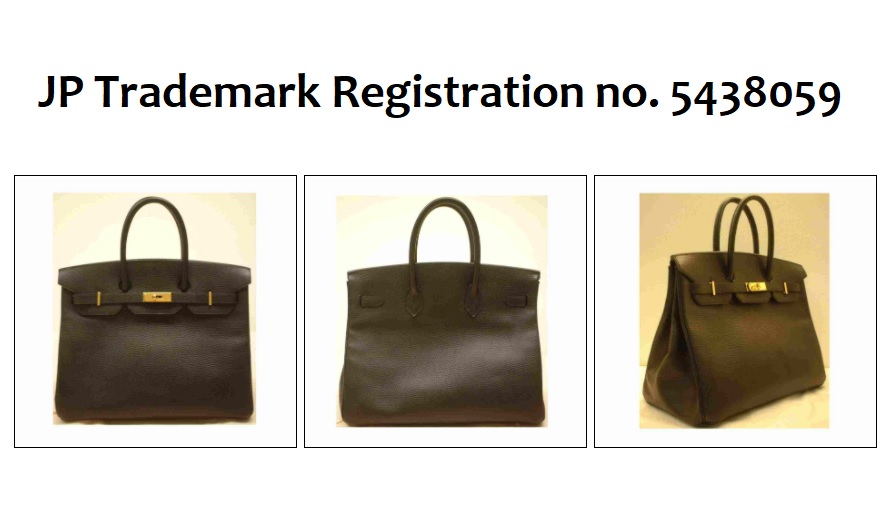
Hermès Birkin Bag

HERMES INTERNATIONAL, a French luxury fashion house, has owned Japanese trademark registration no. 5438059 for the 3D shape of the “Birkin” bag in connection with handbags of class 25 since 2011 by successfully demonstrating acquired secondary meaning as a specific source indicator of Hermès’ luxury bags.

The iconic Birkin bag was firstly created for Jane Birkin in 1984. It is known for its superior craftsmanship and jaw-dropping price tag, with standard models starting around JPY1,000,000. Its annual sales figures exceed 3,000 in 1998, 8,000 in 2003, and 17,000 in 2009.

Birkin Bag Imitations

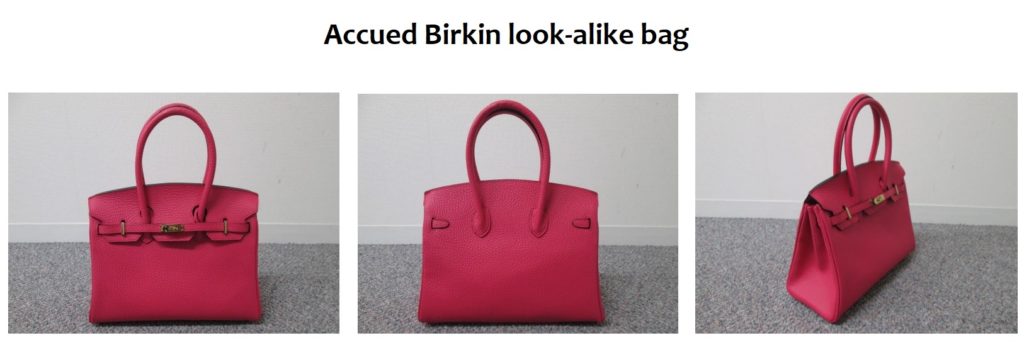
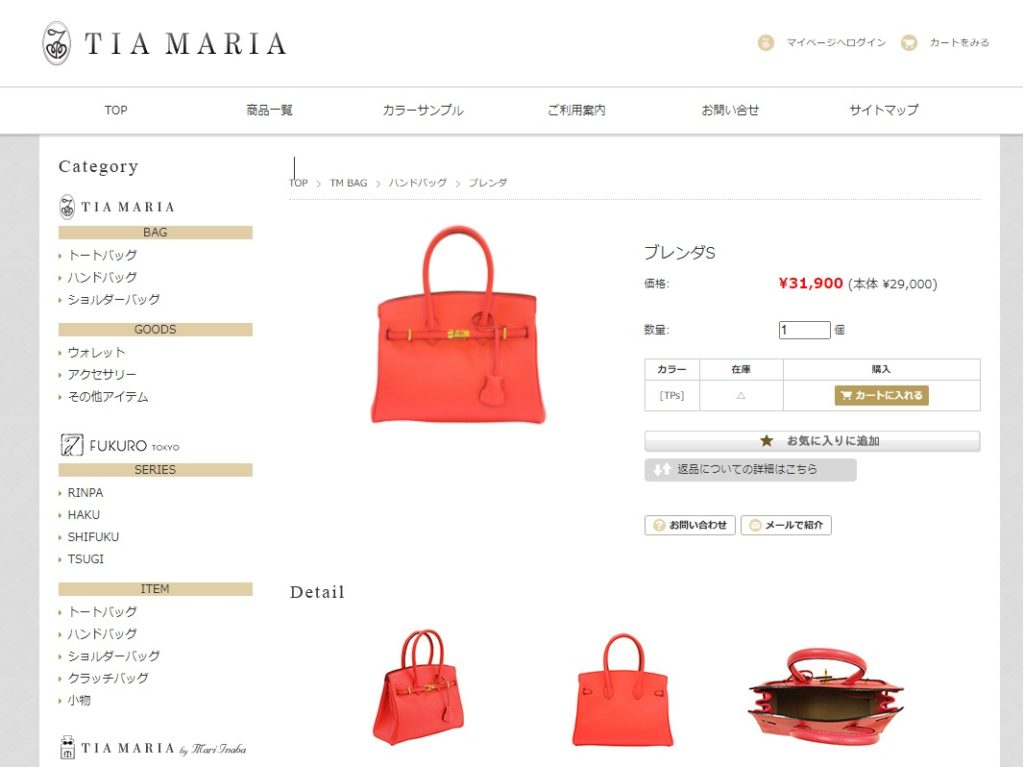
Hermes sued Kabushiki Kaisha Tia Maria at the Tokyo District Court for violating its trademark right and the unfair competition prevention law by allegedly promoting 100 or more Birkin look-alike bags (see below) in Japan with a price tag of JPY27,300 from August 2010 to February 2018.

Court decision

On June 3, 2020, the Tokyo District Court decided in favor of HERMES INTERNATIONAL and awarded damages for trademark infringement and passing-off in the amount of JPY2,900,000.
[court case no. Heisei31(wa)9997]

In the decision, the Tokyo District Court found that Hermès Birkin Bag has acquired distinctiveness and become remarkably famous as a source indicator of Hermès’ luxury bags by 2009.

Besides, the court held that defendant’s goods constitutes an infringement of the 3D shape of the “Birkin” bag trademark since both are confusingly similar in view of the following aspects:
(a) a distinctive three-lobed flap design with keyhole-shaped notches to fit around the base of the handle, (b) a dimpled triangular profile, (c) a closure which consists of two thin, horizontal straps designed to fit over the flap, with metal plates at their end that fit over a circular turn lock, (d) a padlock which fits through the center eye of the turn lock and (e), typically, a key fob affixed to a leather strap, one end of which is affixed to the bag by wrapping around the base of one end of the handle.

Screen capture of TIA MARIA’s website (http://tiamaria.zf.shopserve.jp/SHOP/V1172S.html)

The court measured damages to recover (i) defendant’s actual sales of infringing bags (JPY2,730,780) by subtracting appropriate variable cost (40% of the offered price) for JPY1,638,468, (ii) “mental suffering” caused by an infringement for JPY1,000,000, and (iii) reasonable attorney fee for JPY260,000.

The district court decision was challenged by the defendant before the High Court to set aside or vary it, however, the IP High Court dismissed the appeal entirely and sided with HERMES INTERNATIONAL.

To read a full text of the IP High Court decision (Japanese only), click here.

Less than 1.5% Success Rate for Getting Color Mark Registration in Japan

Japan opened the gate to Non-Traditional trademark, namely, color, sound, position, motion, hologram, in April 2015. It seems true that, beyond expectation, JPO has a significantly high hurdle to clear.

543 applications for color marks were filed with the Japan Patent Office (JPO) as of now (Nov 15, 2020). Among them, only 8 color marks are allowed for registration.

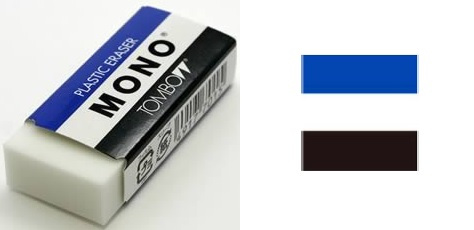
1. Tombow Pencil “MONO” (stationery)
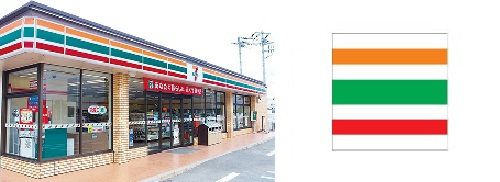
2. Seven-Eleven (convenience store)
3. Sumitomo Mitsui Financial Group (financial service)
4. Sumitomo Mitsui Financial Group (financial service)
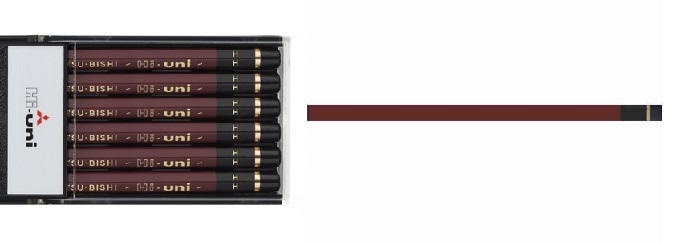
5. Mitsubishi Pencil “UNI” (pencil)
6. Mitsubishi Pencil “HI-UNI” (pencil)
7. Family Mart (convenience store)
8. UCC Ueshima Coffee (canned coffee)

All the registered color marks consist of more than two colors. JPO has yet to register a single case of color per se.

Most single-color marks are rejected due to a lack of distinctiveness and failure to demonstrate acquired distinctiveness. Surprisingly, 492 applications (90.6%) are already rejected or voluntarily withdrawn by the applicant.

Red Bull was unsuccessful in registering a combination of dark blue and silver on energy drinks in class 32.

Hermes also failed to register a three-color combination over various goods in class 14, 18, and 25.

43 applications are in review with the JPO as of now. Remarkably, Christian Louboutin fights for the appeal against the refusal of its iconic red-sole.

Japan IP High Court Ruling on Distinctiveness of Position Mark

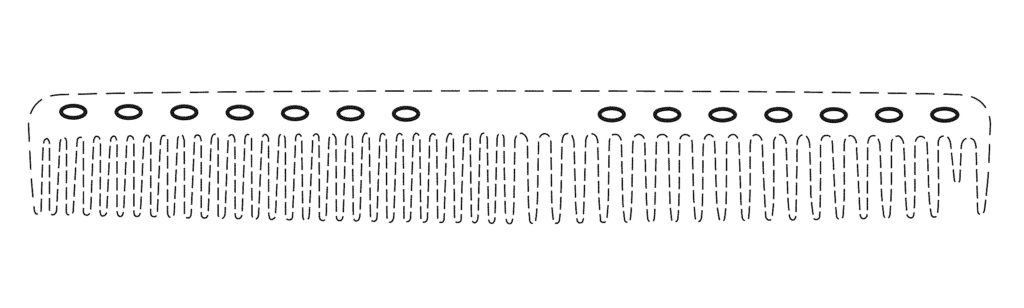
On August 27, 2020, the Japan IP High Court ruled to affirm the Japan Patent Office (JPO) decision and rejected TM application no. 2016-34650 for a position mark consisting of fourteen open ellipses built-in grip section of cutting combs in class 21 due to a lack of inherent distinctiveness. [Court case no. Reiwa1(Gyo-ke)10143]

YS Park Cutting Comb

The YS Park Cutting Comb features a non-slip grip section with fourteen air ellipses spaced in 1cm intervals to allow for great flexibility and sectioning.

Allegedly, the comb has been distributed in many countries and its annual sales increased to 170,000~27,000 pieces for the last five years.

Position Mark

Plaintiff, a Japanese corporation to distribute the YS Park Cutting Comb since 1989, sought for registration for fourteen open ellipses built-in grip section of the Cutting Comb as a Position Mark (see below) on March 28, 2016.

In Japan, by an enactment of the New Trademark Law in 2014, new types of mark, namely, color, sound, position, motion, hologram, was allowed for trademark registration since April 2015.

JPO decision

On September 17, 2019, the JPO refused the position mark under Article 3(1)(vi) of the Trademark Law by finding that there are plenty of competitor’s combs with a design, pattern, hole, or pit in short intervals on the grip section and it gives rise to an impression of the decorative or functional linear pattern as a whole. If so, relevant consumers at the sight of cutting comb bearing the position mark would just conceive it as a pattern for decorative or functional indication, not as a source indicator. Besides, consecutive use on the YS Park Cutting Comb over a decade would be insufficient to acquire secondary meaning from the produced evidence and business practice in relation to cutting comb. [Appeal case no. 2018-8775]

Article 3(1)(vi) is a provision to comprehensively prohibit from registering any mark lacking inherent distinctiveness.

Any trademark to be used in connection with goods or services pertaining to the business of an applicant may be registered, unless the trademark:
(vi) is in addition to those listed in each of the preceding items, a trademark by which consumers are not able to recognize the goods or services as those pertaining to a business of a particular person.

To contend, the applicant filed a lawsuit to the IP High Court on October 29, 2019, and demanded cancellation of the decision.

IP High Court Ruling

This is the 2nd court case for the IP High Court to hear the registrability of Position Mark.

At the outset, the court stated the distinctiveness of Position Mark shall be assessed as a whole by taking account of a constituent of the mark and its position on goods or services.

The court upheld fact-findings by the JPO that plenty of competitors advertise and provide cutting combs with a pattern, pit, or open holes in short intervals on the grip section to enhance its function. In this regard, it is unlikely that relevant consumers (general consumers on the case) would consider the whole pattern as a source indicator of the comb. The court pointed that plaintiff has promoted features of fourteen open ellipses on YS Park Cutting Comb with an advertisement of “Air Suspension Function” in fact. If so, consumers would find the open holes as a functional indication.

Plaintiff produced interviews and statements by beauticians, hairstylists, school officials/staff of Cosmetology and Beauty school and argued the secondary meaning of the Position mark, however, the court negated the allegation on the ground that such evidence is insufficient and irrelevant to demonstrate acquired distinctiveness since the goods in question shall be broadly targeted to general consumers. Thus, the court decided the JPO did not error in finding secondary meaning in the case.