JPO registers PUERTA DEL SOL as trademark

In a recent appeal decision, the Japan Patent Office (JPO) overturned examiner’s refusal and decided to register trademark “PUERTA DEL SOL” in connection with jewels, accessories, clothing and other goods of class 14, 18, 25 and 34 by finding the term shall not be recognized as a geographical indication, one of the most famous sites in Madrid, Spain.[Appeal case no. 2019-7624, Gazette issued date: January 31, 2020]

PUERTA DEL SOL

PUERTA DEL SOL Co., Ltd., a Japanese jewels and accessories company, applied for registration of word mark “PUERTA DEL SOL” in relation to jewels, accessories, bags, clothing, shoes and other various goods of class 14, 18, 25 and 34 on January 23, 2018.

On March 19, 2019, JPO examiner refused applied mark due to lack of distinctiveness based on Article 3(1)(iii) of the Trademark Law. Examiner found that PUERTA DEL SOL, a public square in Madrid (the capital and largest city of Spain), one of the best known and busiest places in the city, the heart of Madrid’s historic center used to be on the eastern border of the city, has been known for a famous tourist spot in Madrid. Since relevant traders and consumers in Japan are familiar with circumstances that variety of souvenirs and gifts are on sale at tourist spot, it is presumed that consumers will merely conceive the applied mark just as a geographical indication in connection with the designated goods, not a source indicator.

Article 3(1)(iii)

Article 3(1) of the Trademark Law is a provision to prohibit descriptive marks from registering.

Section (iii) of the article aims to remove any mark merely or directly suggesting quality of goods and services.

“Article 3(1) Any trademark to be used in connection with goods or services pertaining to the business of an applicant may be registered, unless the trademark:

(iii) consists solely of a mark indicating, in a common manner, in the case of goods, the place of origin, place of sale, quality, raw materials, efficacy, intended purpose, quantity, shape (including shape of packages), price, the method or time of production or use, or, in the case of services, the location of provision, quality, articles to be used in such provision, efficacy, intended purpose, quantity, modes, price or method or time of provision;”

To dispute the refusal, applicant filed an appeal on June 10, 2019.

Applicant argued “PUERTA DEL SOL” shall be sufficiently distinctive in connection with the goods in question by citing facts that the term is legitimately registered even in the territory of Spain and less familiarity to Spanish language among relevant consumers with an ordinary care, Google search by a keyword “PUERA DEL SOL” reveals most of websites refer to applicant’s goods and business.
If so, it is groundless to find that relevant consumers would conceive applied mark as a geographical indication name when used on goods in question.

Appeal Board’s decision

The Appeal Board overturned the examiner’s decision by stating that relevant consumers and traders at the sight of applied mark are unlikely to see the mark to indicate the place of origin or sale when used on goods in question. Because the Board has no reason to believe the term “PUERTA DEL SOL” is known for a famous tourist square in Madrid even though Spanish dictionary and encyclopedia mention so by taking into account less familiarity to Spanish language among relevant consumers in Japan. Furthermore, there is no clue to find that the square is commonly indicated to represent a place of origin and sale in connection with the goods in question.

Criteria for Trademark Examination Guideline

Trademark Examination Guideline (TEG) pertinent to Article 3(1)(iii) provides that where a trademark is merely composed of a geographical name in foreign country or sightseeing area, the mark is deemed as “the place of origin” of goods or “the place of their sale”, provided that consumers or traders generally recognize that the designated goods will be produced or sold at the place indicated by the geographical name.

Trademark Examination Manual413.103.01 sets forth criteria to examine trademarks related to foreign geographical name.

In the cases of (a) the name of a capital, (b) the name of a state, (c) the name of a prefecture, (d) the name of a state capital, (e) the name of a province, (f) the name of the capital of a province, (g) the name of a county, (h) the name of the capital of a prefecture, (i) a former country name, (j) an old regional name, (k) the name of a district, (l) the name of a city, or special district, (m) the name of a busy downtown street, and (n) the name of a sightseeing area, even though these names may not be directly described in a dictionary or other documents/material as the place of origin, the place of sales (location of transaction) of the goods, or the location of provision of services (location of transaction), if a factor exists that establishes a connection between the goods and the name as the place of sales (location of transaction), or the location of the provision of services (location of transaction), in principle, the trademark will be refused on the grounds that it indicates the location where the goods are sold (location of transaction) or the location of provision of services (location of transaction)
Acquired distinctiveness for 3D shape of OMRON digital thermometer

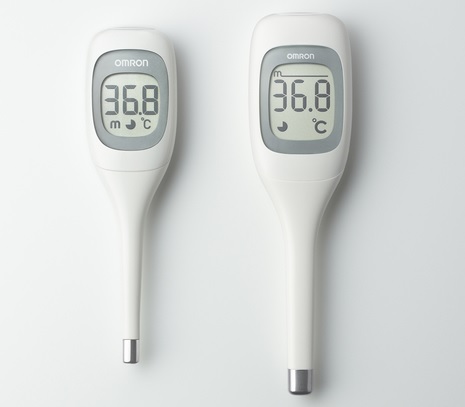
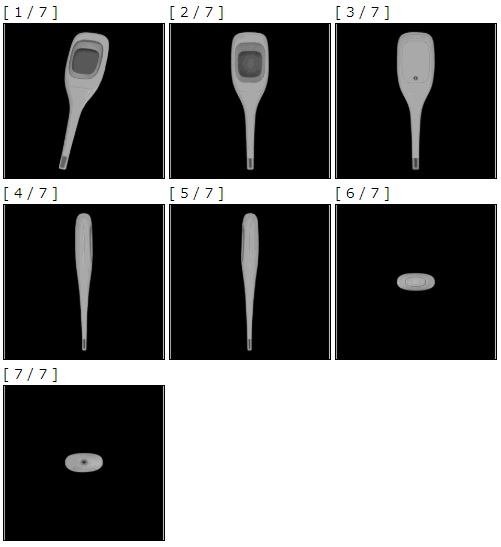
The Japan Patent Office recently admitted trademark registration for a three-dimensional shape of digital thermometers ‘MC-670’ and ‘MC-681’ manufactured by Omron Healthcare Co., Ltd. by finding acquired distinctiveness in relation to thermometers (cl.10) under Article 3(2) of the Japan Trademark Law.
[Appeal case no. 2019-10386, Gazette issued date: October 29, 2019]

3D shape of the Omron digital thermometer

Omron Healthcare Co., Ltd. filed a trademark solely consisting of three-dimensional shape of its digital thermometers ‘MC-670’ and ‘MC-681’ (see below) in relation to thermometers in class 10 on August 28, 2018.
[TM application no. 2018-108289]

JPO examiner entirely rejected the application on the ground that in general pen-shape digital thermometers have a similar configuration with the applied mark. If so, it is unlikely that relevant consumers and traders conceive the shape as a source indicator of the goods. Hence, the mark is subject to Article 3(1)(iii) of the Trademark Law.

Article 3(1)(iii) is a provision to prohibit any mark from registering where the mark solely consists of elements just to indicate, in a common manner, the place of origin, place of sale, quality, raw materials, efficacy, intended purpose, quantity, shape (including shape of packages), price, the method or time of production or use.

To dispute the refusal, applicant, Omron filed an appeal on August 6, 2019.

Appeal Board’s decision – Acquired Distinctiveness

The Appeal Board affirmed examiner’s rejection of the 3D shape based on lack of distinctiveness. In the meantime, the Board granted protection of the 3D shape by finding acquired distinctiveness under Article 3(2).

Article 3(2) of the Trademark Law

Notwithstanding the preceding paragraph, a trademark that falls under any of items (iii) to (v) of the preceding paragraph may be registered if, as a result of the use of the trademark, consumers are able to recognize the goods or services as those pertaining to a business of a particular person.

Allegedly Omron has continuously used the 3D shape on its digital thermometers ‘MC-670’ and ‘MC-681’ since November 2004. Omron holds top-ranked market share (43.9%) of digital thermometers in Japan. ‘MC-670’ and ‘MC-681’ have been sold more than 4million sets over the last decade and maintains the 2nd market share (8.7%) in 2018.

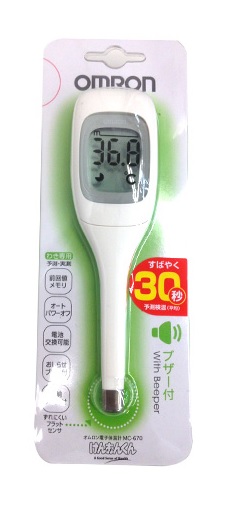
The Board took a favorable view of the package design to appeal its 3D shape in an impression and conspicuous manner (see below), advertisements and award-winning.

According to the produced interview report, 60% of the interviewees (total of one thousand people who have digital thermometer or use it more than once a year ranging in age from 20 to 69) associated the shape with Omron or its digital thermometers.

Since Omron has been aggressive to stop competitors using resembled shape on their thermometers, the Board considered that the 3D shape is distinguishable to achieve its role as a source indicator consequently even if the “OMRON” mark is represented on the thermometers.

Based on the above findings, the Board held that the 3D shape would be conceived as a source indicator of Omron thermometers and thus registrable based on the acquired distinctiveness under Article 3(2).
[TM Registration no. 6197317]

JPO rejects 3D Shape Mark of Giant Cotton Candy

In a dispute of registrability to a unique three-dimensional shape of giant cotton candy, the Appeal Board of Japan Patent Office (JPO) refused protection of the 3D mark due to lack of distinctiveness.  
[Appeal case no. 2017-9666, Gazette issue date: September 27, 2019]

TOTTI CANDY FACTORY

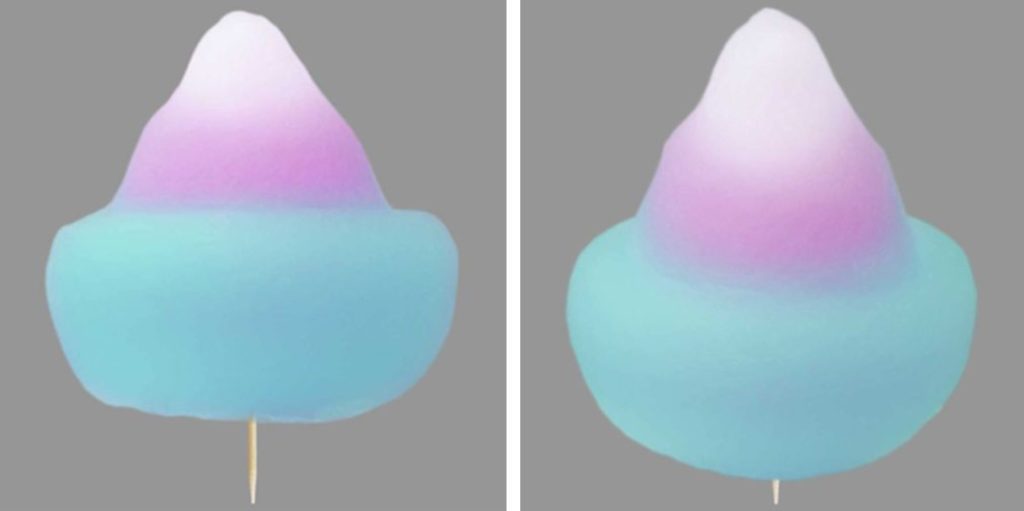
If you ever visit Harajuku (Tokyo) chances are you will spot people carrying around gigantic pastel-colored cotton candy. When you think of cotton candy, a balloon-size blob of sticky blue or pink fluff probably comes to mind. But this cotton candy is here to rewrite any preconceptions you have about the treat, because not only does it come in the most beautiful shades of pastel you’ve ever seen, it’s also legitimately larger than your head. It’s so big, it’s actually hard to take a cute picture holding it — because it blocks your entire face with its pretty rainbow hues.

You can find this giant rainbow cotton candy at a sweet shop popular with young people in Harajuku, Totti Candy Factory.

3D shape of the cotton candy was applied for registration with JPO in respect of confectionery (class 30) on May 20, 2016. [TM application no. 2016-54840]

Registrability of 3D shape mark

The shape of a product can be an important element that generates value for a company. For this reason, the protection of three-dimensional forms is of commercial interest. Three-dimensional trademarks include the shape of a product or its packaging. Prior to 1996, there was no proper statutory provision that recognized three-dimensional shapes as trademarks. 1996 revision to the Trademark Law recognized 3D shape trademarks such as the shape of the packaging and specific product shapes. Now, a Trademark Registration can be attained for any distinctive three-dimensional shapes, that discern the goods or services of one business from those of other businesses, under the Japan Trademark law.

JPO Examination

JPO examiner entirely rejected the 3D shape mark by stating that:

“Appearance of the applied mark in color can be perceived merely as an ordinary three-dimensional shape of cotton candy. If so, the shape is deemed equivalent to a configuration solely consisting of the shape of goods in a common manner to the extent that relevant traders and/or consumers are unlikely to recognize the shape as a source indicator. Hence, the mark is subject to Article 3(1)(iii) of the Trademark Law. From the produced evidence, it is questionable whether the shape has acquired distinctiveness as a result of substantial use.”

Article 3(1)(iii) is a provision to prohibit any mark from registering where the mark solely consists of elements just to indicate, in a common manner, the place of origin, place of sale, quality, raw materials, efficacy, intended purpose, quantity, shape (including shape of packages), price, the method or time of production or use.

To dispute the refusal, applicant, an owner of Totti Candy Factory, filed an appeal on June 30, 2017.

Appeal Board’s decision

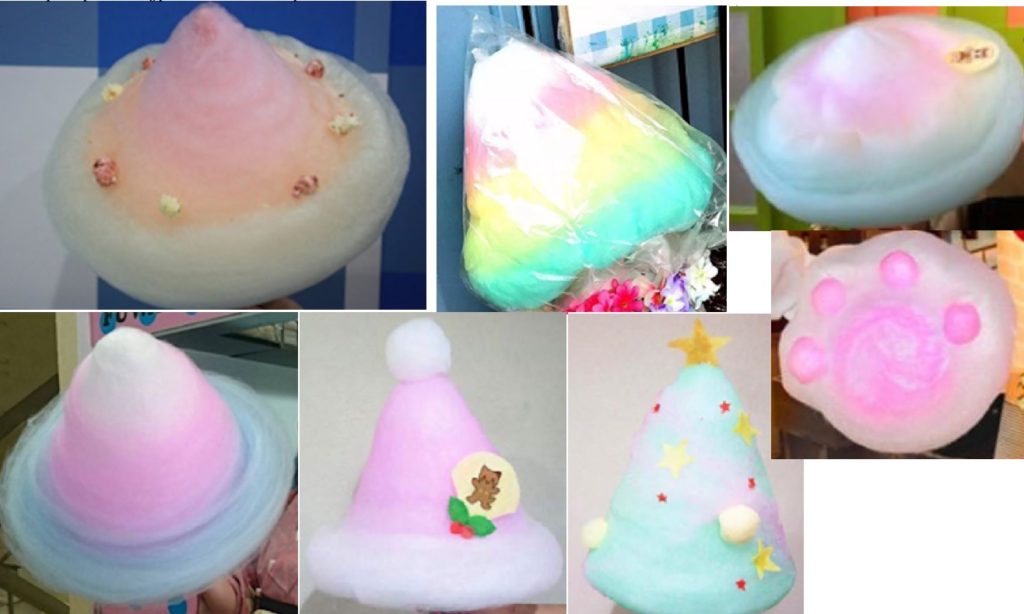
The Appeal Board affirmed examiner’s rejection of the 3D shape based on lack of distinctiveness. As grounds for rejection, Board cited following conical cotton candies in several colors distributed by third parties.

In addition, the Board negated acquired distinctiveness of the 3D shape by stating that:

  1. Allegedly applicant has used applied mark on cotton candy since February 2015, however, he failed to produce objective evidence of its first use.
  2. In general, cotton candy is consumed by individuals in a wide age range. If so, three brick-and-mortar shops at Harajuku (Tokyo), Shinsaibashi (Osaka), Nagoya PARCO (Aichi) are insufficient to demonstrate increased publicity among relevant consumers all over the country.
  3. According to the produced sales record, from the period of February 2015 through June 2017 applicant sold 370,302 pieces of Giant Rainbow Cotton Candy, amounting to 200 million JP-yen in total sales. However, its market share remains unclear.
  4. A fact that Totti Giant Cotton Candy has gotten popular with young women in their teens and early 20’s is insufficient to admit acquire distinctiveness of the 3D shape since consumers of cotton candy are not limited to young women.
  5. Advertisement and publications of Giant Rainbow Cotton Candy contains a term “TOTTI CANDY FACTORY” or “Totti” adjacent to the 3D shape. From these evidences, it is questionable whether relevant consumers would conceive the 3D shape in itself as a source indicator of Totti Candy Factory.

Based on the foregoing, the Board consequently refused to register the mark based on Article 3(1)(iii) of the Trademark Law.

Is “VEGAS” an abbreviation for Las Vegas, or a source indicator?

In a trademark opposition disputing over abbreviation for ‘Las Vegas’, the Japan Patent Office (JPO) decided the term “VEGAS” shall be distinctive in connection with a service of providing amusement facilities (casino facilities, Pachinko parlors) of class 41.
[Opposition case no. 2018-900349, Gazette issue date: August 30, 2019]

VEGAS

Opposed mark is a word mark “VEGAS” in a plain gothic type.

The mark was filed in December 26, 2017 by a Japanese entertainment company, VEGASVEGAS Co., Ltd., headquartered in Tokyo, for various services in class 41 including providing casino (gambling) facilities, Pachinko parlors.

JPO, going through substantive examination, admitted registration (TM Registration no. 6080858) and published for opposition on October 9, 2018.

TRADEMARK OPPOSITION – Article 3(1)(iii)

On November 26, 2018, before the lapse of a two-months opposition period, DAIHACHI Co., Ltd. (d/b/a VEGAS GROUP), an amusement company, operating Pachinko & slot machine parlors in the name of VEGAS, filed an opposition, arguing that the word ‘VEGAS’ has been known among relevant consumers for an abbreviation for Las Vegas, the gamblers’ paradise, a trendy tourist destination, the entertainment capital of the world.

If so, it shall be forbidden to allow exclusive use of famous geographical indication by trademark right. Besides, consumers at the sight of opposed mark would establish a link between the geographical indication Las Vegas and “amusement facilities, casino (gambling) facilities and Pachinko parlors” and just conceive the facilities using opposed mark are connected with or equivalent to services available in Las Vegas Nevada (US).

Therefore, it is evident that opposed mark lacks distinctiveness in connection with the designated service of providing amusement facilities (casino facilities, Pachinko parlors) of class 41 and shall be revocable under Article 3(1)(iii) of the Trademark Law.

Article 3(1) of the Trademark Law is a provision to prohibit descriptive marks from registering.

Section (iii) of the article aims to remove any mark merely or directly suggesting quality of goods and services.

“Article 3(1) Any trademark to be used in connection with goods or services pertaining to the business of an applicant may be registered, unless the trademark:

(iii) consists solely of a mark indicating, in a common manner, in the case of goods, the place of origin, place of sale, quality, raw materials, efficacy, intended purpose, quantity, shape (including shape of packages), price, the method or time of production or use, or, in the case of services, the location of provision, quality, articles to be used in such provision, efficacy, intended purpose, quantity, modes, price or method or time of provision;”

OPPOSITION DECISION

JPO Opposition Board totally dismissed the opposition by stating that:

  1. From the produced evidences, it is unclear whether ‘VEGAS’ becomes ordinary indication for Las Vegas in Nevada, US.
  2. The Board could not find circumstances and business practices related to the service in dispute that ‘VEGAS’ has been used to indicate a specific quality of the service or an association with Las Vegas at all.
  3. A mere fact that ‘VEGAS’ reminds consumers of Las Vegas is insufficient to negate distinctiveness of opposed mark in connection with the service in dispute.

Based on the foregoing, the JPO decided opposed mark shall play a part of source indicator over the service in class 41 and irrevocable under Article 3(1)(iii) of the Trademark Law.

Trademark registration for Tasaki’s Akoya pearls ring

In March 17, 2017, Japanese jewelry house TASAKI & Co., Ltd., the Japanese leading producer of Akoya pearls, filed an application for trademark registration at the Japan Patent Office (JPO) for the following three-dimensional mark for rings in class 14.

Signature ring featuring a row of five seemingly identical Akoya pearls

Applied mark represents a signature ring featuring a row of five seemingly identical Akoya pearls, one of Tasaki’s bestsellers.


Tasaki commenced sales of the ring in the name of “balancing signature ring” in April, 2010 and has been continuously promoting the sales since then.


JPO Examination/Acquired distinctiveness

The JPO examiner totally refused the mark due to a lack of inherent distinctiveness in relation to rings [jewelery].

Tasaki filed an appeal against the decision and argued acquired distinctiveness of the 3D configuration of the ring arising from uniqueness of its shape and substantial advertisement.

According to the filed evidences to the JPO, Tasaki installed a large signboard for advertisement at busy places, Ginza (Tokyo), Kobe, Osaka and made various promotional activities via internet, direct mails and events. The ring was appeared and published in magazines more than 130 times for the last eight years.

In March 1, 2019, the Appeal Board of JPO granted trademark registration based on Article 3(2) of the Trademark Law by finding acquired distinctiveness of the 3D configuration of the ring as a source indicator of Tasaki regardless of a fact that only 2,242 rings were purchased by consumers in fact .
[Appeal case no. 2018-9531, TM Registration No. 6125506]

Article 3(2) is a provision to allow registration of applied mark if, as a result of substantial use of the mark in fact, consumers are able to connect the mark with a source indicator of designated goods or services.

HISAMITSU unsuccessful in registering a shape of “Salonpas”

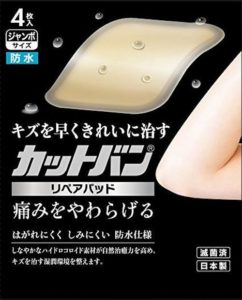
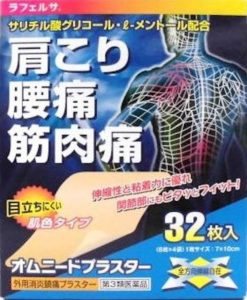
The Appeal Board of Japan Patent Office (JPO) disallowed registration of a shape of famous Japanese pain relief patches in the name of “Salonpas” manufactured by Hisamitsu Pharmaceutical Co., Inc. due to lack of inherent distinctiveness in relation to poultices, class 5. [Appeal case no. 2017-12694]


Salonpas

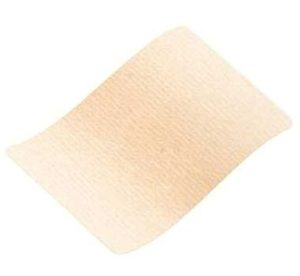
Hisamitsu Pharmaceutical Co., Inc. filed a trademark application for a shape of Over-The-Counter Topical Pain Patch known for “Salonpas” (see below) by designating pharmaceutical preparations, gauze for dressings, bandages for dressings, adhesive plasters and other goods in class 5 [TM application no. 2015-7479].

Salonpas is a product of Hisamitsu Pharmaceutical, a company whose history dates back to the mid-1800s. Salonpas was introduced in 1934 and was first distributed in Asia. The FDA approved the Salonpas Pain Relief Patch for the US market in 2008. Approximately 20 billion Salonpas transdermal patches have been sold in the last 20 years. Salonpas has been acknowledged as World’s No.1 OTC Topical Analgesics in patch format.


JPO Examination

The JPO examiner totally refused the application based on Article 3(1)(iii) of the Japan Trademark Law stating that the applied mark can be easily seen as a shape of poultices and the shape does solely consist of a common configuration to achieve the basic function of poultices. If so, the applied mark lacks distinctiveness as a source indicator.

Article 3(1)(iii) is a provision to prohibit any mark from registering where the mark solely consists of elements just to indicate, in a common manner, the place of origin, place of sale, quality, raw materials, efficacy, intended purpose, quantity, shape (including shape of packages), price, the method or time of production or use.


To dispute the refusal, Hisamitsu filed an appeal on August 28, 2017.


Appeal Board’s decision

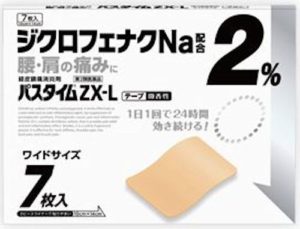
The Appeal Board, however, upheld the examiner’s decision on the ground and dismissed Hisamitsu’s allegation by stating that relevant consumers and traders shall conceive of a mere qualitative representation to indicate the shape of poultices and plasters at the sight of applied mark given similar indications are depicted on the packages of other supplier’s goods on the market (see below).


Based on the foregoing, the Board consequently refused to register the mark based on Article 3(1)(iii) of the Trademark Law.

JPO denied registering GRAND CANYON as trademark

In a recent appeal decision, the Japan Patent Office (JPO) upheld examiner’s refusal and decided to reject trademark “GRAND CANYON” in connection with clothing and shoes of class 25 due to lack of distinctiveness. [Appeal case no. 2017-16166]


GRAND CANYON

UNITIKA LTD., a Japanese textile company, applied for registration of word mark “GRAND CANYON” in relation to clothing, shoes and other goods of class 25 on September 26, 2016.

JPO examiner totally refused the application due to lack of distinctiveness based on Article 3(1)(iii) of the Trademark Law by stating that THE GRAND CANYON, a steep-sided canyon carved by the Colorado River in Arizona, one of America’s most famous and awe-inspiring natural attractions, recognized by UNESCO as a World Heritage Site, has been known for a famous tourist spot. Since relevant traders and consumers in Japan are familiar with circumstances that variety of souvenirs and gifts are on sale at tourist spot, presumably consumers will consider the applied mark just as a geographical indication in connection with the designated goods, not a source indicator.


Article 3(1)(iii)

Article 3(1) of the Trademark Law is a provision to prohibit descriptive marks from registering.

Section (iii) of the article aims to remove any mark merely or directly suggesting quality of goods and services.

“Article 3(1) Any trademark to be used in connection with goods or services pertaining to the business of an applicant may be registered, unless the trademark:

(iii) consists solely of a mark indicating, in a common manner, in the case of goods, the place of origin, place of sale, quality, raw materials, efficacy, intended purpose, quantity, shape (including shape of packages), price, the method or time of production or use, or, in the case of services, the location of provision, quality, articles to be used in such provision, efficacy, intended purpose, quantity, modes, price or method or time of provision;”


To dispute the refusal, UNITIKA filed an appeal on May 12, 2017.

UNITIKA argued “GRAND CANYON” shall be registrable in connection with clothing by citing several trademark registrations of the name granted by the JPO. In fact, UNITIKA is an owner of trademark registration for the same mark on goods of class 24 and 25 since 2005.


Appeal Board’s decision

The Appeal Board, however, upheld the examiner’s decision on the ground and dismissed UNITIKA’s allegation by stating that relevant consumers and traders at the sight of applied mark depicted on clothing shall conceive of a famous World Heritage Site in US.

Existing trademark registrations for the mark “GRAND CANYON” will not affect the decision since distinctiveness of trademark is variable as time goes by – with the lapse of time.


Criteria for Trademark Examination Guideline

Trademark Examination Guideline (TEG) pertinent to Article 3(1)(iii) provides that where a trademark is composed of a geographical name in foreign country or sightseeing area, the mark is deemed as “the place of origin” of goods or “the place of their sale”, provided that consumers or traders generally recognize that the designated goods will be produced or sold at the place indicated by the geographical name.

Trademark Examination Manual, 413.103.01 sets forth criteria to examine trademarks related to foreign geographical name.

In the cases of (a) the name of a capital, (b) the name of a state, (c) the name of a prefecture, (d) the name of a state capital, (e) the name of a province, (f) the name of the capital of a province, (g) the name of a county, (h) the name of the capital of a prefecture, (i) a former country name, (j) an old regional name, (k) the name of a district, (l) the name of a city, or special district, (m) the name of a busy downtown street, and (n) the name of a sightseeing area, even though these names may not be directly described in a dictionary or other documents/material as the place of origin, the place of sales (location of transaction) of the goods, or the location of provision of services (location of transaction), if a factor exists that establishes a connection between the goods and the name as the place of sales (location of transaction), or the location of the provision of services (location of transaction), in principle, the trademark will be refused on the grounds that it indicates the location where the goods are sold (location of transaction) or the location of provision of services (location of transaction)
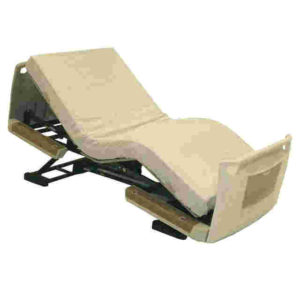
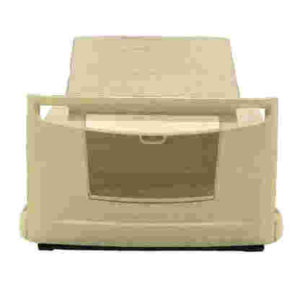
IP High Court denied registering 3D Shape of Nursing Care Bed

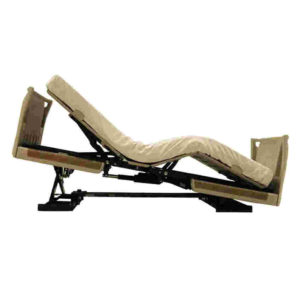
The Japan IP High Court, in its ruling on November 29, 2018, did not side with Paramount Bed Co., Ltd., a Japanese manufacturer and distributor of medical and nursing care product, who filed an appeal against refusal decision by JPO to TM Application no. 2015-29155 for 3D mark representing the shape of home care bed.
[Case No. Heisei 30 (Gyo-ke) 10060]


3D shape of home care bed

Disputed mark, representing three-dimensional shape of nursing care bed, was filed on March 31, 2015 by designating nursing care bed and mattress in class 20. The Japan Patent Office (JPO) refused the mark due to a lack of distinctiveness.

Paramount Bed argued acquired distinctiveness as a source indicator of Paramount nursing care bed through substantial use of the mark and its unique shape.
According to the argument, Paramount has distributed more than 145,000 sets of nursing care bed and mattress which 3D shape is identical with the applied mark. The company spent USD 2,400,000 to advertise the bed in newspaper and USD 20,000,000 in TV commercial during the past five years. Paramount produced on-line questionnaire results which showed more than 60 % of relevant traders have recognized the shape as a series of Paramount Bed.


IP High Court ruling

The IP High Court dismissed the allegation entirely, stating that the produced evidences are unpersuasive to conclude the 3D shape acquired distinctiveness as a source indicator of Paramount Bed’s business because of below-mentioned reasons.

  1. As long as nursing care beds are likely to be used by general public, questionnaire results answered by traders are insufficient to demonstrate acquired distinctiveness among relevant consumers.
  2. Given the shape of applied mark occasionally appears while nursing care bed is in operation and the bed has coverlet on it in ordinary days, it is questionable whether relevant consumers have perceived the shape of applied mark per se as a source indicator.
  3. Besides, catalogs and advertisements pertinent to Paramount nursing care bed show configurations of the bed other than the shape of applied mark.

Based on the foregoing, the court upheld JPO decision.

JPO refused to register 3D shape of Mitsubishi Electric’s spiral escalator

The Appeal Board of Japan Patent Office (JPO) disallowed registration of 3D shape of Mitsubishi Electric’s spiral escalator due to lack of inherent distinctiveness and secondary meaning in relation to escalators, class 7. [Appeal case no. 2017-6855]

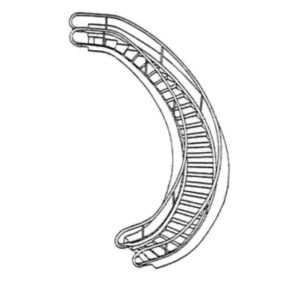
Spiral escalator

Mitsubishi Electric Corporation first developed the spiral escalator in 1985, and has been the world’s first and sole manufacturer of spiral escalators. Spiral escalator is a special design type of escalator in the form of a spiral/helical with curved steps.
On May 3, 2016, Mitsubishi Electric filed a trademark application for 3D shape of spiral escalator (see below) by designating escalators in class 7 to the JPO [TM application no. 2016-23374].

The JPO examiner totally refused the application based on Article 3(1)(iii) of the Japan Trademark Law stating that the applied mark can be easily seen as a 3D shape of escalator and the shape does solely consist of a common configuration to achieve the basic function of escalator. If so, the applied mark lacks distinctiveness as a source indicator.

To dispute the refusal, Mitsubishi Electric filed an appeal on May 12, 2017.

Appeal Board’s decision

The Appeal Board, however, upheld the examiner’s decision on the ground and dismissed Mitsubishi’s allegation by stating that relevant consumers and traders shall conceive of an escalator designed to enhance its function or sensuousness at the sight of applied mark.

Acquired distinctiveness

Mitsubishi Electric also argued that even if the applied mark is deemed descriptive in relation to escalators, it shall be registrable based on Article 3(2) due to acquired distinctiveness of the mark because Mitsubishi Electric Spiral Escalators has achieved 100 % market share in the world and continuously used the 3D shape on escalators for more than three decades.

Article 3(2) is a provision to allow registration of applied mark if, as a result of substantial use of the mark in fact, consumers are able to connect the mark with a source indicator of designated goods or services.

Under the totality of the circumstances, the Appeal Board dismissed the allegation as well.

The Board found that regardless of 100 % market share in the category of spiral escalators, Mitsubishi Electric’s domestic supply record of 24 units in the last thirty years shall be a trivial quantity in comparison with total number of escalators in operation. Besides, questionnaire result rather shows a source of the applied mark is unknown to more than 60% of the questionee.

Based on the foregoing, the Board questioned whether applied mark has acquired distinctiveness through actual use in relation to escalators and consequently refused to register the mark based on Article 3(1)(iii) and 3(2) of the Trademark Law.

Trademark registration for Kikkoman’s Soy sauce 3D Bottle

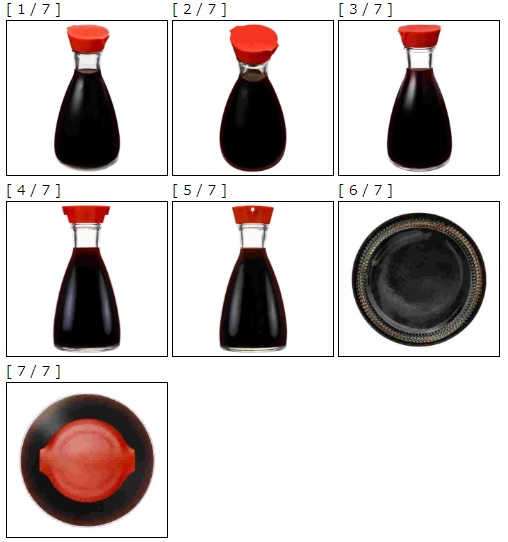
In October 11, 2016, Kikkoman Corporation, the world’s leading producer of soy sauce, filed an application for trademark registration at the Japan Patent Office (JPO) for the following three-dimensional colored mark for soy sauce in class 30.

Red-capped Kikkoman soy sauce dispenser

Iconic red-capped Kikkoman soy sauce dispenser was introduced in 1961 and has been in continuous production ever since. It was developed by Kenji Ekuan, a Japanese Navy sailor former naval academy student who dedicated his life to design when he left the service. Its unique shape took three years and over a hundred prototypes to perfect, but the teardrop design and dripless spout have become a staple of restaurant condiments all around the world. The bottle’s design hasn’t changed over the past 50 years.

JPO Examination/Acquired distinctiveness

The JPO examiner initially notified her refusal due to a lack of inherent distinctiveness in relation to say sauce.

In a response to the office action, Kikkoman argued acquired distinctiveness of the 3D bottle arising from uniqueness of its shape and substantial use for over five decades.

According to news release from Kikkoman, over 500 million of the bottles have been sold since the design was first introduced and distributed in approximately a hundred countries worldwide. Red-capped Kikkoman soy sauce dispenser has already been registered as 3D mark in US, EU, Ukraine, Norway, Russia, Australia.

In March 30, 2018, the JPO granted trademark registration based on Article 3(2) of the Trademark Law by finding acquired distinctiveness of the 3D color mark as a source indicator of Kikkoman.
[TM Registration No. 6031041]