Failed Opposition by Apple against trademark registration “EYE PHONE”

The Japan Patent Office (JPO) dismissed a trademark opposition claimed by the U.S. tech giant, Apple Inc. against trademark registration no. 6099794 for word mark “EYE PHONE” in class 9 by finding less likelihood of confusion with Apple “iPhone”.
[Opposition case no. 2019-900030, Gazette issue date: September 27, 2019]

“EYE PHONE”

Opposed mark, a word mark “EYE PHONE” in standard character, was filed by a Japanese business entity, NOVELTY EYE-WEAR Inc., on February 26, 2018 by designating ‘spectacles [eyeglasses and goggles]’ in class 9.

The JPO admitted registration on November 22, 2018 and published for registration on December 18, 2018.

APPLE’s Opposition

To oppose against registration within a statutory period of two months counting from the publication date, Apple Inc. filed an opposition on January 28, 2019.

In the opposition brief, Apple Inc. asserted the opposed mark shall be cancelled in violation of Article 4(1)(vii), (xv) and (xix) of the Japan Trademark Law given a remarkable reputation of opponent mark “iPhone” to indicate opponent’s smart phones currently holding a 44.1% market share in Japan and close resemblance between “iPhone” and “EYE PHONE”.

Apple Inc. argued opposed mark “EYE PHONE” has the same pronunciation with “iPhone” and gives a similar impression in appearance. If so, both marks shall be confusingly similar. Besides, the goods in question are closely related to smart phones since smartphone users get to wear specific glasses for smartphone to block blue light. Recently, smart glasses, wearable device that brings with suitable technology a computer screen/display in front of a person’s eye, have become a hot topic.

Article 4(1)(xv) provides that a mark shall not be registered where it is likely to cause confusion with other business entity’s well-known goods or services, to the benefit of brand owner and consumers.

Board Decision

The Opposition Board admitted a remarkable degree of reputation and popularity of opponent trademark “iPhone” in connection with smart phones based on the produced evidences boasting the top market share consecutively for the past seven years in Japan.

Meanwhile, the Board found a low degree of originality of “iPhone” given a combination of alphabetical letter “i” and descriptive term “Phone” in relation to smartphones.

In the assessment of mark, the Board held “EYE PHONE” and “iPhone” are dissimilar even if both marks have the same pronunciation since they are sufficiently distinguishable from visual and conceptual point of view. Also, the Board negated close relation between glasses and smartphones in view of its nature, purpose, usage, distribution channel and consumers.

If so, it is unlikely that the consumers confuse or misconceive a source of opposed mark with Apple Inc. or any entity systematically or economically connected with opponent.

Based on the foregoing, the Board decided opposed mark shall not be cancelled on the grounds of Article 4(1)(vii), (xv) and (xix).

Adidas unsuccessful in an attempt to prevent trademark protection for two-stripes

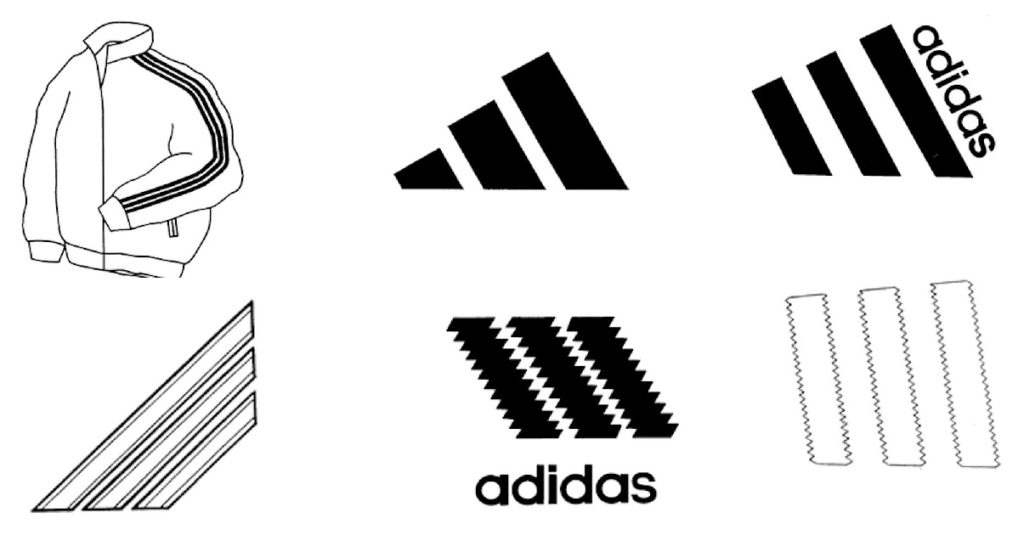
The Opposition Board of Japan Patent Office (JPO) held in an opposition filed by Adidas AG that trademark registration no. 6016240 for two-stripes device (Opposed mark) shall remain as valid as ever and entirely dismissed Adidas’ claims based on its famous three stripes.[Opposition case no. 2018-900100, Gazette issued on August 30, 2019]

Opposed mark

Opposed mark (see below) was applied for registration on June 16, 2016 over shoes in class 25 by Marubeni Footwear, a Japanese business entity, and published for registration on February 27, 2018.

Opposition by Adidas

On April 24, 2018, Adidas AG filed an opposition and argued opposed mark is revocable under Article 4(1)(vii) and 4(1)(xv) of the Japan Trademark Law in relation to its famous three stripes (see below).

Article 4(1)(vii)

Article 4(1)(vii) prohibits any mark likely to offend public order and morals from registering.

Trademark Examination Guidelines set forth criteria for the article and examples.
Among others, “Trademarks whose registration is contrary to the order predetermined under the Trademark Act and is utterly unacceptable for lack of social reasonableness in the background to the filing of an application for trademark registration.”

Based on a remarkable degree of reputation and popularity to Adidas three stripes, opponent asserted, applicant must have been aware of Adidas three stripes and filed opposed mark with a malicious intention to take advantage of the reputation and credit of opponent’s famous trademark and impair the goodwill embodied on its iconic three stripes.

Article 4(1)(xv)

Article 4(1)(xv) prohibits to register a trademark which is likely to cause confusion with a business of other entity.

Adidas argued that, from appearance, opposed mark evidently gives rise to a same impression with Adidas three stripes since each stripe of the mark is depicted in the same direction, width and shape, besides a space between stripe also has the same width with the stripe.

Given opponent mark has been substantially used in various colors, length, and configurations, average consumers with an ordinary care of shoes who have been quite familiar with Adidas are likely to associate opposed mark with Adidas’ three-stripes. Inter alia, when each stripe of opposed mark is used in different color on side upper sole and a space between the stripes (upper sole fabric) has other color, and thus opposed mark looks like depicting three stripes on shoes, it is highly anticipated that relevant consumers would confuse its source with opponent.

Opposition decision

The Opposition Board admitted a high degree of reputation and popularity to Adidas three stripes in relation to sport shoes, sportswear, sports gear at the time of initial filing and registration of opposed mark.

In the meantime, the Board found a low degree of originality of three stripes and similarity between the marks, from visual, phonetic, and conceptual points of view since opposed mark can be clearly perceived as ‘two-stripes’. Even if Adidas three stripes has acquired remarkable reputation, average consumers of sports shoes would not mistake two stripes for three stripes in purchasing shoes with opposed mark.
If so, the Board believes it is unlikely that relevant consumers confuse or associate opposed mark with Adidas.

The Board also negated opponent’s allegation of a possible ‘three-stripes’ appearance under specific color combination by stating that opposed mark is nothing but a two-stripes design mark. The space in between two stripes does not constitute opposed mark. If so, the allegation shall be irrelevant to the case.

Besides, from the produced evidences, the Board found it was not foreseen a circumstance to offend public order and morals from registering opposed mark and give harmful effect to the international faith.

Based on the foregoing, the Board concluded opposed mark shall not be revocable under Article 4(1)(vii) as well as (xv) and granted registration a status quo.

PUMA’s Fight Against Logo Parody

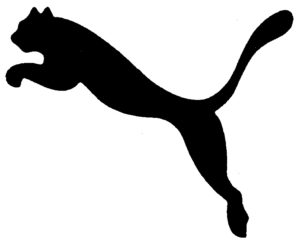
On August 1, 2019, the Japan Patent Office (JPO) decided to invalidate trademark registration no. 5861923 for composite mark consisting of a word “KUMA”, which means ‘bear’ in Japanese, and the bear device by finding a likelihood of confusion with a world-renowned sports brand, PUMA and detrimental effect to public policy or morality.
[Invalidation case no. 2019-890001]

KUMA device mark

Disputed mark (see below) was filed on January 7, 2016 by a Japanese business entity in Hokkaido, Japan’s most northerly main island, an otherworldly volcanic land with eastern Asia’s highest concentration of brown bears, over various goods in class 25 including sportswear and shoes.

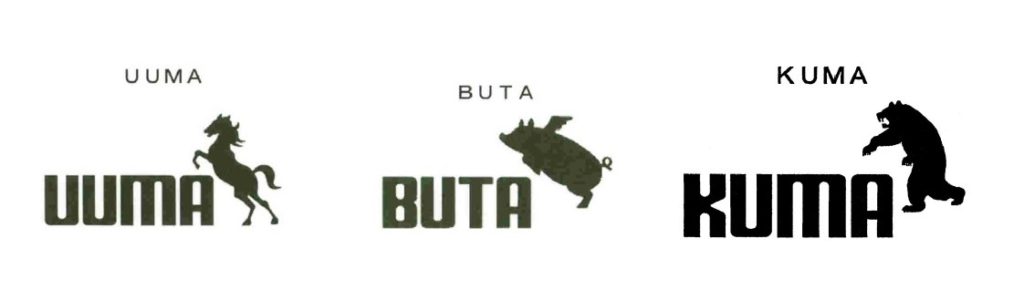
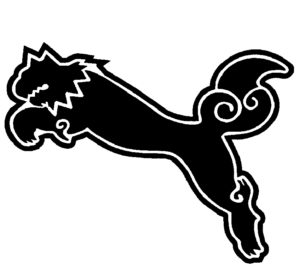
Precedently, applicant applied for registration of following trademarks, consist of four alphabets in bold font and an animal silhouette facing left depicted in the upper right of the alphabets, on goods in classes 9, 14, 16, 24, 25 and 28, but in vain.

“UUMA” means ‘horse’, “BUTA” means ‘pig’, “KUMA” means ‘bear’ in Japanese. It is obvious that both literal element and figurative element of respective mark give rise to a same meaning, which is the same for PUMA.

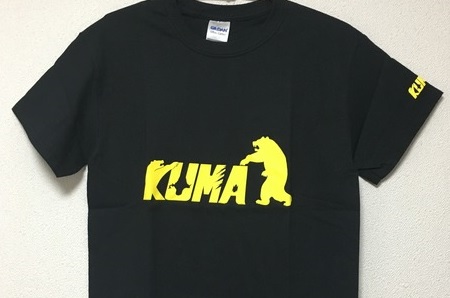
It is likely the applicant intended to use these marks on souvenirs from Hokkaido since we get accustomed to see scenes at a famous tourist spot that T-shirts and other small items displayed at gift shops parody famous brands by featuring local specialty to attract tourists for fun.

PUMA’s Opposition / Invalidation Trial

On September 26, 2016, PUMA SE filed an opposition against the KUMA mark based on Article 4(1)(vii) and 4(1)(xv) of the Trademark Law. PUMA argued relevant consumers or traders are likely to confuse or misconceive a source of disputed mark with PUMA when used on designated goods in class 25 because of a high reputation and close resemblance between PUMA logo and the KUMA mark.

The Opposition Board admitted a high degree of popularity and reputation of PUMA logo, however, the Board dismissed the opposition entirely due to unlikelihood of confusion as a result of low degree of similarity between the marks (Opposition case no. 2016-900308).

Subsequently, PUMA SE entrusted the case to MARKS IP LAW FIRM. On New Year’s Eve of 2018, MARKS IP LAW FIRM on behalf of PUMA SE requested for an invalidation trial and sought to annul the KUMA mark on the same grounds.

Invalidation Decision

The Invalidation Board reversed the opposition decision and decided in favor of PUMA by finding that:

  1. PUMA logo has been continuously famous as a source indicator of PUMA in connection with sports shoes, sportswear and others among relevant consumers and traders in Japan.
  2. Configuration of PUMA logo looks unique, creative, and impressive in itself.
  3. Regardless of visual difference in detail between the marks, overall impression of both marks is quite similar.
  4. Given close association between designated goods in class 25 and PUMA business, relevant consumers of the goods with an ordinary care are likely to confuse its source with PUMA
  5. Besides, it is presumed the current registrant of disputed mark was knowingly assigned a similar KUMA mark that applicant had a fraudulent intent to free-ride and dilute PUMA’s goodwill.
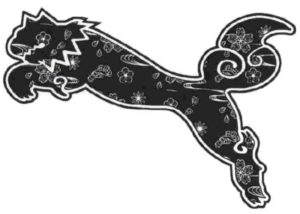
  6. If so, current registrant must have filed disputed mark with a fraudulent intention to dilute or do harm to PUMA’s goodwill given a close resemblance of between disputed mark and a rejected KUMA mark (see above right).

Based on the foregoing, the JPO decided to invalidate disputed marks based on Article 4(1)(xv) as well as 4(1)(vii) of the Japan Trademark Law.

Trademark dispute over Shogun Emblem of the Samurai Era

In a recent appeal trial over trademark dispute, the Trademark Appeal Board within the Japan Patent Office (JPO) overturned the Examiner’s determination and held that a combination mark with Tokugawa crest image and literal elements written in Chinese characters is dissimilar to, and unlikely to cause confusion with a senior trademark registration for the “TOKUGAWA CREST” device mark in connection with pickled plums of class 29.
[Appeal case no. 2018-6893, Gazette issue date: March 29, 2019]


TOKUGAWA CREST

The Tokugawa clan was the family that established the Edo shogunate, also known as the Tokugawa shogunate, (1603–1867), the final period of traditional Japan, a time of internal peace, political stability, and economic growth under the shogunate (military dictatorship) founded by Tokugawa Ieyasu. The Tokugawa shogunate continued to rule Japan for a remarkable 250 years and ended in 1868, with the Meiji Restoration when the Emperor regained power.

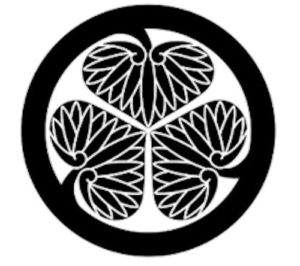
The Tokugawa crest was a circle in closing three leaves of the awoi (a species of mallow, found in Central Japan) joined at the tips, the stalks touching the circle (see below).

This gilded trefoil is gleaming on the property of the shogun and mausoleum even now in Japan.


YUME-AWOI

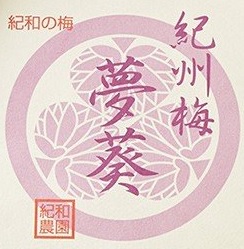
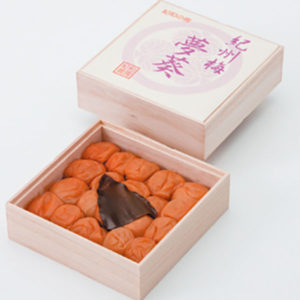
Kabushiki Kaisha Kiwa-Nouen Products, a Japanese merchant dealing with plums and its products filed a trademark application for a combination mark with Tokugawa crest image and literal elements written in Chinese characters (see below) covering pickled plums in class 29 on June 21, 2016 [TM application no. 2016-72127].

Three Chinese characters “紀州梅” in the upper right of the mark lacks distinctive since the term means plums made in Kishu, the name of a province in feudal Japan (the area corresponds to nowadays Wakayama Prefecture and southern Mie Prefecture), as a whole. Two characters “夢葵” in the center of the mark to be pronounces as “yume-awoi” is obviously a coined word and distinctive in relation to pickled plums.

The mark is actually in use on high-class pickled plums produced by applicant.

Tokugawa Museum

Going through substantive examination by the JPO examiner, applied mark was totally refused registration based on Article 4(1)(vi), (vii), (xv) of the Trademark Law on the ground that the mark contains a device resembling the Tokugawa crest which becomes famous as a source indicator of ‘Public Interest Incorporated Foundation The Tokugawa Museum’.
If so, using the mark on the designated goods by an unauthorized entity may free-ride goodwill vested in the Tokugawa crest and anything but conductive to the public interest. Besides, relevant consumers are likely to confuse or misconceive pickled plums using applied mark with goods from The Tokugawa Museum or any business entity systematically or economically connected with the museum.

Article 4(1)(vi) is a provision to refuse any mark which is identical with, or similar to, a famous mark indicating the State, a local government, an agency thereof, a non-profit organization undertaking a business for public interest, or a non-profit enterprise undertaking a business for public interest.

Article 4(1)(vii) of the Trademark Law prohibits any mark likely to cause damage to public order or morality from registration.

Article 4(1)(xv) provides that a mark shall not be registered where it is likely to cause confusion with other business entity’s well-known goods or services, to the benefit of brand owner and users’ benefits.


Applicant filed an appeal against the refusal on May 21, 2018 and argued dissimilarity of the marks.


Appeal Board decision

The Board reversed the examiner’s refusal and admitted applied mark to registration by stating that:

It becomes trade practice to print family crest on the packaging of food products. Especially, trefoil awoi crest has been commonly used on the packaging of specialty products or souvenir from Aichi (Owari), Wakayama (Kishu) and Ibaragi (Mito) Prefectures where descendants from clan founder Tokugawa Ieyasu’s three youngest sons governed during the Edo shogunate. Besides, from appearance, Tokugawa crest image in applied mark looks like a background pattern and thus relevant consumers are unlikely to aware that the pattern serves the legally defined role of a trademark because the image is colored washier than literal elements. If so, two Chinese characters “夢葵” of the mark functions primarily as a source indicator.

Based on the foregoing, the Board considered, given the Tokugawa crest image in the applied mark does not play a role of source indicator at all, both marks are dissimilar and unlikely to cause confusion from visual, phonetic and conceptual points of view even if the Tokugawa crest becomes famous as a source indicator of Public Interest Incorporated Foundation The Tokugawa Museum in fact. Likewise, the Board found no specific reason to cause damage to public order or morality from applied mark.

GEOGRAPHICAL INDICATION BOURBON LOSES TRADEMARK OPPOSITION

In a recent decision, the Japan Patent Office (JPO) has dismissed the opposition filed by Distilled Spirits Council of the United States (DISCUS), a US non-profit organization which represents the interests of producers and traders of spirit drinks, including Bourbon whiskey, against trademark registration no. 5927252 for the word mark “ROYCE’ BOURBON” for bourbon whiskey in class 33.

[Opposition case no. 2017-900181, Gazette issued on March 29, 2019]


ROYCE’ BOURBON

Opposed mark (see below) is a combination of “ROYCE” with apostrophe and “BOURBON” written in a plain roman type.

ROYCE’ BOURBON was filed in January 25, 2016 by a Japanese confectionery company, ROYCE’ Confect Co., Ltd., headquartered in Hokkaido, for bourbon whiskey in class 33.

JPO, going through substantive examination, admitted registration and published for opposition on April 4, 2017.


TRADEMARK OPPOSITION

On June 2, 2019, before the lapse of a two-months opposition period, DISCUS filed an opposition, arguing that the word ‘BOURBON’ in the mark applied for would allow consumers to establish a link between the geographical indication Bourbon and “bourbon whiskey”. Therefore, the use and registration of the mark by unrelated entity to Bourbon County, Kentucky (USA) would dilute and exploit the reputation of the geographical indication [Bourbon]. Opposed mark shall be prohibited from registration based on Article 4(1)(vii) of the Trademark Law as well as Article 4(1)(xvi) since the mark is likely to offend public order and cause misconception in quality.


BOARD DECISION

The Board admitted Bourbon is an indication of origin/geographical indication from the United States to represent an American Whiskey produced mainly in the southern part of Kentucky State. However, the Board considered opposed mark shall neither offend public order nor cause misconception in quality, stating that:

To the extent opposed mark just covers “bourbon whiskey”, appropriate use of the mark would not disorder fair deal and international trade practice. If so, the Board finds no clue to conclude the applicant adopted the mark with intentions to free ride the reputation of the geographical indication [Bourbon].

Likewise, as long as the Bourbon denomination may be used only for products manufactured in Kentucky by regulations, the designated goods “bourbon whisky” is unquestionably from the US. If so, opposed mark ROYCE’ BOURBON would not cause qualitative misconception in the minds of relevant consumers in relation to “bourbon whiskey” at all.

Based on the foregoing, the Board decided opposed mark shall not be objectionable under Article 4(1)(vii) and (xvi), and granted registration a status quo.

Is Marie-Antoinette a name of French Queen consort or a trademark?

The Japan Patent Office (JPO) ordered to dismiss an invalidation trial against IR no. 1238820 for word mark “Marie-Antoinette” by finding the mark shall be irrevocable under Article 4(1)(vii) of the Trademark Law. [case no. 2017-68002]

Tempting Brands Netherlands B.V. (NL), filed an international registration for the mark over goods of “Bleaching preparations [deodorants] for cosmetic purposes; perfumery, essential oils, cosmetics, hair lotions; dentifrices; cosmetic soaps, soaps for personal use; douching preparations for personal sanitary or deodorant purposes [toiletries]” in class 3 and others in class 9, 18 and 25 on Dec. 5, 2014 claiming priority based on Benelux TM application dated Aug. 22, 2014, and designating Japan which granted registration of the mark on Feb. 10, 2017.

To challenge, an invalidation trail was filed against the mark. Claimant, a Japanese business entity asserted the mark shall be invalidated in violation of Article 4(1)(vii) of the Trademark Law on the grounds that the mark “Marie-Antoinette” written in a plain letter represents the late ill-fated queen consort of King Louis XVI of France who has been highly well-known as a symbolic queen of beauty among relevant public not only in France but also Japan and other countries. If so, it is extremely harmful to prestige of “Marie Antoinette” and social affections on the historical figure to admit an exclusive right on the name to any unrelated entity. It may inevitably offend public order and morals

Article 4(1)(vii) of the Trademark Law prohibits any mark likely to cause damage to public order or morality from registration. Trademark Examination Guidelines provides  “Name of a well-known or famous historical personage likely to free-ride on public measures derivative from the personage and damage the public interests in face” as an example to apply the article.

The Invalidation Trial Board decided the mark shall not be subject to the article due to the following reason.

It is unquestionable that “Marie-Antoinette” represents a name of queen consort of King Louis XVI of France and becomes famous in France as well as Japan. In the meantime, the Board could not see a fact that the name has been made use of for revitalization of local communities or tourism industry. If so, it is quite unlikely to happen that the mark could offend public order and morals when used on goods of class 3. Besides, the Board has no reason to believe registration of the mark would cause disrespect for France and French people as well as international fidelity.  Besides, there finds no circumstances to conclude the mark is proscribed to use by other legislation and applicant apparently filed the mark with a malice or fraudulent intent to be blamed.  Based on the foregoing, the international registration shall be deemed valid since the Board was unable to find out any relevant facts to apply the article on the case.

It is not freely allowed to use and register a name of historical personage as trademark. JPO rejected “Darwin” and “Monet” based on Article 4(1)(vii), but allowed registration of “Elvis”.

SEGWAY unsuccessful in opposing SWAGWAY mark

The Japan Patent Office dismissed a trademark opposition claimed by an American manufacturer of two-wheeled personal transporters, Segway Inc. against trademark registration no. 5910587 for the Swagway mark in class 12 by finding less likelihood of confusion due to dissimilarity of mark. [Opposition case no. 2017-900114]


Opposed Swagway mark

Opposed mark “Swagway” in standard character was filed by a Chinese business entity on December 2, 2015 by designating the goods of “a two-wheeled, self-balancing personal transporter; automobiles; bicycles; airplanes; water vehicles; railway cars: accessories of aforementioned goods” in class 12.
Going thourgh a substantive examination, the JPO admitted registration on January 6, 2017 and published for opposition on February 7, 2017.


Segway’s Opposition

To oppose against registration of the Swagway mark, Segway Inc. filed an opposition on April 7, 2017.

In the opposition brief, Segway Inc. asserted the opposed mark shall be cancelled in violation of Article 4(1)(vii), (x), (xi), (xv) and (xix) of the Japan Trademark Law by citing the owned famous SEGWAY mark effectively registered over various types of vehicles in class 12 since 2002 (TM Reg. no. 4605474 etc.).
Article 4(1)(vii) prohibits any mark likely to offend public order and morals from registering.
Article 4(1)(x) prohibits to register a trademark which is identical with, or similar to, other entity’s well-known mark over goods or services closely related with the entity’s business.
Article 4(1)(xi) is a provision to refrain from registering a junior mark which is deemed identical with, or similar to, any senior registered mark.
Article 4(1)(xv) prohibits to register a trademark which is likely to cause confusion with a business of other entity.
Article 4(1)(xix) prohibits to register a trademark which is identical with, or similar to, other entity’s famous mark, if such trademark is aimed for unfair purposes, e.g. gaining unfair profits, or causing damage to the entity.


Board Decision

The Opposition Board admitted a certain degree of reputation and popularity of opponent SEGWAY mark in relation to a two-wheeled, self-balancing personal transporter, however, negated similarity of mark between SEGWAY and Swagway totally. The Board assessed, from appearance, difference at the 2nd and 3rd letters gives rise to a distinctive impression in the mind of relevant consumers provided that both marks merely consist of six or seven letters in its entirety. The difference also produces a distinctive impression in sound of the 1st syllable. Besides, both marks are evidently dissimilar in meaning given they are not dictionary words per se.
Based on it, the Board dismissed allegations of Article 4(1)(x) and (xi).

The Board questioned, as long as both marks are distinctively dissimilar, whether relevant consumers are likely to associate or confuse the source of opposed mark with Segway Inc. even if opposed mark is used on a two-wheeled, self-balancing personal transporter.
From the evidences produced by opponent, the Board was unable to find any fact to cause confusion with, or to presume malicious intention to do harm to opponent’ good will and business. If so, it is questionable whether relevant consumers or traders are likely to confuse or misconceive a source of the opposed mark with Segway Inc. or any entity systematically or economically connected with the opponent.
Based on the foregoing, the Board dismissed allegations of Article 4(1)(vii), (x) and (xix) as well.

JPO decided to invalidate the word mark “Bord’or” in relation to wines

In a decision to the invalidation trial jointly claimed by INSTITUT NATIONAL DE L’ORIGINE ET DE LA QUALITE and CONSEIL INTERPROFESSIONNEL DU VIN DE BORDEAUX, the Invalidation Board of Japan Patent Office (JPO) ordered to invalidate TM registration no. 5737079 for a word mark “Bord’or” in script fonts (see below) in violation of Article 4(1)(vii) of the Trademark Law.
[Invalidation case no. 2016-890075]
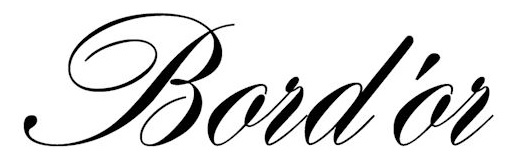
TM Registration no. 5737079

Mark in dispute (see above), owned by a Japanese legal entity, was filed on October 9, 2014 by designating various types of alcoholic beverages including wines in class 33. After an initial application, applicant requested the JPO to expedite substantive examination. In accordance with the request, JPO examiner put a priority on the mark and admitted to grant registration in three months subsequent to substantive examination.

Accelerated Examination

JPO applies the accelerated examination system to trademark application on the condition that the application meets the following condition.

  1. Applicant/licensee uses or will use applied mark on one of designated goods/services at least, and there exists an urgency to registration, e.g. unauthorized use by third parties, basic application to international registration,
  2. All designated goods/services are actually or shortly used by applicant/licensee, or
  3. Applicant/licensee uses or will use applied mark on one of designated goods/services at least, and all the goods/services are designated in accordance with a standard description based on Examination Guidelines for Similar Goods and Services.

Accelerated examination system enables applicant to obtain examination results in less than two months on average, which is four months shorter than regular examination.

Claimants’ allegation

Claimants argued disputed mark gives rise to the same pronunciation with BORDEAUX, “ bɔːˈdəʊ”. If so, relevant consumers shall conceive BORDEAUX, a world-famous geographical name known for an origin of French wine. Besides, according to the document produced by applicant to demonstrate actual use of disputed mark on designated goods in requesting accelerated examination, it evidently reveals intention to free-ride or dilute fame of prestigious wine.
Thus, if disputed mark is used on wines originated from areas other than BORDEAUX, it severely does harm to fame and aura of prestigious wine constituted under the strict control of domicile of origin. Then, inevitably it causes disorder to a world of global commerce in a manner inconsistent with international fidelity.

To bolster the allegation, claimants cited precedent trademark decisions involving famous French wine, e.g. ROMANEE-CONTI, BEAUJOLAIS NOUVEAU, CHABLIS. Inter alia, IP High Court ruled a word mark “CHAMPAGNE TOWER” invalid in relation to “CHAMPAGNE” based on Article 4(1)(vii).

Article 4(1)(vii) of the Japan Trademark Law

Article 4(1)(vii) prohibits any mark likely to offend public order and morals from registering.

Trademark Examination Guidelines sets forth criteria for the article and samples.

  1. Trademarks that are “likely to cause damage to public order or morality” are, for example, the trademarks that fall under the cases prescribed in (1) to (5) below.

(1) Trademarks which are, in composition per se, characters or figures, signs, three-dimensional shapes or colors or any combination thereof, or sounds that are unethical, obscene, discriminative, outrageous, or unpleasant to people. It is judged whether characters, figures, signs, three-dimensional shapes or colors or any combination thereof, or sounds are unethical, discriminative or unpleasant to people, with consideration given to their historical backgrounds, social impacts, etc. from a comprehensive viewpoint.

(2) Trademarks which do not have the composition per se as prescribed in (1) above but are liable to conflict with the public interests of the society or contravene the generally-accepted sense of morality if used for the designated goods or designated services.

(3) Trademarks with their use prohibited by other laws.

(4) Trademarks liable to dishonor a specific country or its people or trademarks generally considered contrary to the international faith.

(5) Trademarks whose registration is contrary to the order predetermined under the Trademark Act and is utterly unacceptable for lack of social reasonableness in the background to the filing of an application for trademark registration.


  1. Examples that fall under this item

(i) Trademarks that contain characters such as “university” and are likely to be mistaken for the name of universities, etc. under the School Education Act.

(ii) Trademarks that contain characters such as “士(shi)” which are likely to mislead that they represent national qualifications.

(iii) Trademarks of the name of a well-known or famous historical personage which are determined to have the risk of taking a free ride on public measures related to that personage and damage the public interests by inhibiting the performance of such measures.

(iv) Trademarks with figures indicated in a manner that may impair the dignity and honor of national flags (including foreign national flags)

(v) A sound mark related to the services of “medical treatment” which causes people to recognize siren sounds generated by ambulances that are well known in Japan.

(vi) A sound mark which causes people to recognize national anthems of Japan and other countries.

Board decision

Board found in favor of claimants that “BORDEAUX” has acquired a high degree of popularity and reputation among Japanese consumers as a source indicator of wines originated from the Bordeaux district. As long as disputed mark gives rise to the same pronunciation with BORDEAUX, it is undeniable that consumers are likely to connect the disputed mark with BORDEAUX wine or its district. If so, disputed mark free-rides or dilutes lure and image of BORDEAUX wine, and adversely affects domicile of origin strictly controlled by French government.
Consequently, Board decided to invalidate Bord’or in violation to Article 4(1)(vii).


Protection of geographical indication

The Japan Trademark Law contains provisions to protect geographical indication.
In principle, a mark merely consisting of geographical name or location is deemed descriptive and falls under Article 3(1)(iii). Even if a mark is combined geographical indication with other distinctive elements, it is subject to Article 4(1)(xvi) since the mark may mislead the quality when used on goods from other areas.
Regarding a mark indicating a place of origin off wine, Article 4(1)(xvii) plays a significant role.

Article 4(1)(xvii)

No trademark shall be registered if the trademark is comprised of a mark indicating a place of origin of wines or spirits of Japan which has been designated by the Commissioner of the Patent Office, or a mark indicating a place of origin of wines or spirits of a member of the World Trade Organization which is prohibited by the said member from being used on wines or spirits not originating from the region of the said member, if such a trademark is used in connection with wines or spirits not originating from the region in Japan or of the said member.

Geographical indications to be protected under the article can be reviewed by accessing http://www.jpo.go.jp/tetuzuki_e/t_tokkyo_e/pdf/appendix2.pdf

In this regard, it should be noted that Article 4(1)(xvii) is applicable to any mark containing a term to represent protected GI in itself. In other words, Article 4(1)(xvii) can’t block “Bord’or” since disputed mark does not contain “BORDEAUX” or its transliteration.