Ariana Grande Loses Trademark Opposition at Japan Patent Office

The Japan Patent Office (JPO) dismissed an opposition filed by GrandAri Inc., the owner of a trademark “ARIANA GRANDE”, against TM Reg no. 6202585 for wordmark “Arianna” to be used on cosmetics by finding dissimilarity between “Arianna” and “ARIANA GRANDE.”
[Opposition case no. 2020-900051, Gazette issued date: January 29, 2021.]

Opposed mark

Arianna Co., Ltd. applied for a wordmark “Arianna” registration for use on cosmetics, soaps, and detergents of Class 3 and medical apparatus of Class 10 with the JPO on January 7, 2019 (TM Application no. 2019-000339).
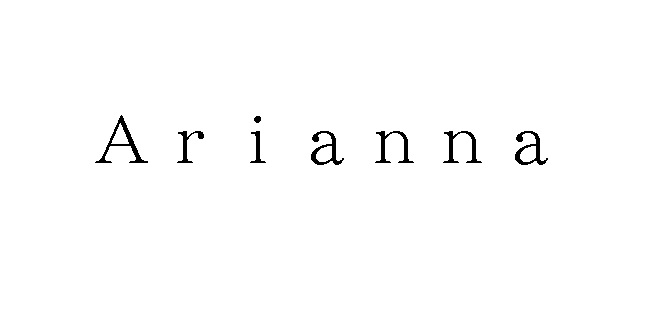
The JPO admitted the registration of the opposed mark on November 29, 2019, and published for opposition on Christmas Eve of the year.

Opposition by GrandAri Inc.

On February 21, 2020, GrandAri Inc. filed an opposition before the JPO and claimed that the opposed mark shall be revocable in contravention of Article 4(1)(xi) and (xv) of the Japan Trademark Law by citing International Registration no. 1260129 for wordmark “ARIANA GRANDE” and others over the goods of ‘Perfume; eau de parfum; fragranced body care preparations, namely, body lotions, body scrubs’ in Class 3.
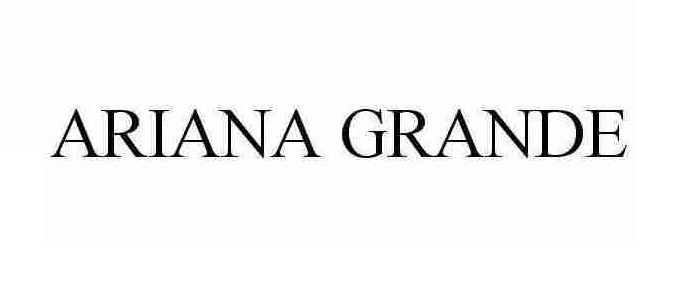
Article 4(1)(xi) is a provision to prohibit registering a junior mark that is deemed identical with, or similar to, any senior registered mark.

GrandAri argued that relevant consumers would easily think of American pop superstar from the cited mark “ARIANA GRANDE”. Besides, because of her celebrity and popularity, she is affectionately called by her first name “ARIANA”. In view of the space between “ARIANA” and “GRANDE”, it is highly likely that the consumers would consider the term “ARIANA” as a dominant source indicator at the sight of the cited mark. It is no doubt that the opposed mark “Arianna” is confusingly similar to “ARIANA” since the mere difference of the letter ‘n’ is negligible in appearance and both terms give rise to the same pronunciation.

Article 4(1)(xv) provides that any mark shall not be registered where it is likely to cause confusion with other business entity’s well-known goods or services, to the benefit of brand owners and users’ benefits.

GrandAri argued the cited mark is used on fragrances developed by Ariana herself, which are also called “ARIANA” in the advertisement.

Given a close resemblance between the opposed mark and the “ARIANA” mark, and a certain degree of popularity of the fragrances, firstly sold in November 2015 in Japan, it is likely to cause confusion with the cited mark when the opposed mark is used on the goods in question.

JPO Decision

The JPO admitted a high level of reputation and popularity of American pop singer, “ARIANA GRANDE” in Japan. In the meantime, the JPO questioned, from the produced evidence, whether the term “ARIANA” per se plays a role of the source indicator of Ariana Grande fragrances since it is constantly adjacent to the cited mark “ARIANA GRANDE.”
Consequently, the JPO negated the famousness of the term “ARIANA” as a source indicator of the opponent’s goods.

As for the similarity of the marks, the JPO assessed that relevant consumers would see the cited mark “ARIANA GRANDE” in its entirety because she is known and called by her full name. If so, both marks are distinctively dissimilar since the opposed mark does neither give rise to a pronunciation of “ARIANA GRANDE” nor a concept of American pop superstar.

The JPO dared to assess the similarity between the opposed mark “Arianna” and “ARIANA” and held that “Arianna” is not confusingly similar to “ARIANA” from a phonetical point of view. Due to a low level of similarity of the marks, the JPO does not have any reason to believe that the opposed mark would cause confusion with the cited mark “ARIANA GRANDE” as well as “ARIANA” when used on cosmetics, soaps, and detergents of Class 3.

Based on the foregoing, the JPO dismissed the entire allegations of GrandAri and allowed “Arianna” to survive.
“COSTA COFFEE” vs “Caffè la Costa”

The Japan Patent Office (JPO) dismissed a trademark opposition claimed by Costa Limited, operating the UK’s largest and the World’s second-largest International chain of coffee shops “COSTA COFFEE”, against trademark registration no. 6230027 for the “Caffè la Costa” mark for use on coffee, coffee beans in class 30 and restaurant services in class 43 by finding both marks are dissimilar and less likely to cause confusion.
[Opposition case no. 2020-900137, Gazette issued date: December 25, 2020]

Opposed mark

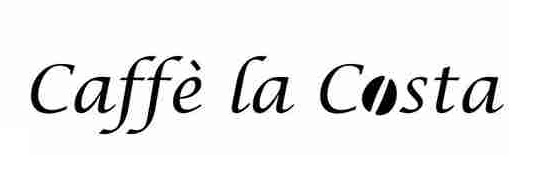
The mark “Caffè la Costa” (see below) was filed by a Japanese individual on March 11, 2019, for use on tea; coffee; cocoa; coffee beans; confectionery, and bread in class 30 and restaurant service in class 43, and published for opposition on May 17, 2020, after registration on February 27, 2020.

Opposition by Costa Limited

On May 14, 2020, Costa Limited filed an opposition and alleged the opposed mark shall be revocable in contravention of Article 4(1)(xi) of the Japan Trademark Law due to close resemblance to senior trademark registration for a wordmark “COSTA” and the “COSTA COFFEE” logo (see below) in class 30 and 43.

Article 4(1)(xi) is a provision to prohibit registering a junior mark that is identical with, or similar to, any senior registered mark.

Costa Limited argued that relevant consumers are accustomed to discriminating coffee shops by means of a distinctive literal element contained in their name. As a universal habit of shortening the full name, “Starbucks Coffee” is referred to as “Starbucks.” Likewise, “Doutor Coffee” as “Doutor”, “Excelsior Caffè” as “Excelsior”, “Tully’s Coffee” as “Tully’s”. Because the term “Coffee” and “Caffè” lack distinctiveness as a source indicator in relation to coffee; coffee beans and restaurant services.

In this respect, the consumers would consider the term “Costa” to be a dominant portion of the opposed mark when used on the goods and services in question. Therefore, “Caffè la Costa” shall be deemed confusingly similar to a wordmark “COSTA” and the “COSTA COFFEE” logo mark owned by Costa Limited.

Board Decision

The Opposition Board found the opposed mark does not give rise to any particular meaning as a whole. The mere fact that the respective word of the opposed mark (“Caffè”, “la”, “Costa”), is in the Italian dictionary would not change the finding since relevant consumers are unfamiliar with these Italian words. If so, the consumers would perceive the opposed mark as a coined word in its entirety and pronounce the entire mark as it sounds. In this regard, the Board doubted whether the term “Costa” is considered the dominant portion of the opposed mark by stating the facts show no evidence.

Based on the findings, the Board assessed the similarity of both marks as follows.

It looks obvious that the opposed mark is distinguishable from the cited marks, “COSTA” and the “COSTA COFFEE” logo, in appearance and sound, on account of different term and position of “Caffè la” and “COFFEE” combined with “Costa” and other distinction of figurative elements.
Provided that “COSTA” is an Italian word unfamiliar to relevant consumers with ordinary care, the Board believes both marks are incomparable in concept.
Even if both marks are incomparable in concept, the low level of similarity in appearance and sound would suffice to conclude that the consumers are unlikely to associate, connect the opposed mark with “COSTA COFFEE” when used on the goods and services in question.

Accordingly, the Board decided the opposed mark wasn’t revocable in contravention of Article 4(1)(xi) of the Trademark Law.

SMART vs SMART TYRE

The Japan Patent Office (JPO) dismissed an opposition against trademark registration no. 6227071 for work mark “SMART TYRE” over a tire and other goods in class 12 claimed by Daimler AG who argued the mark is confusingly similar to senior registrations for the “SMART” mark in the same class owned by smart Automobile Co., Ltd.
[Opposition case no. 2020-900136, Gazette issued date: December 25, 2020]

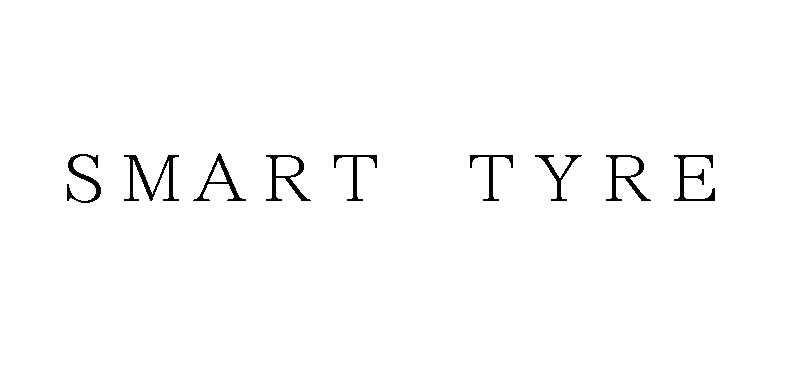
“SMART TYRE”

The opposed mark, composing of wordmark “SMART TYRE” written in standard character, was sought for registration by Sumitomo Rubber Industries, Ltd., famous for “DUNLOP” tire brand, by designating various tires, automobiles, motorcycles, bicycles, and its structural parts and accessories in class 12 on August 21, 2018.  
[TM Application no. 2018-105830]

The mark was registered and published for opposition on March 10, 2020.

Opposition by Daimler AG

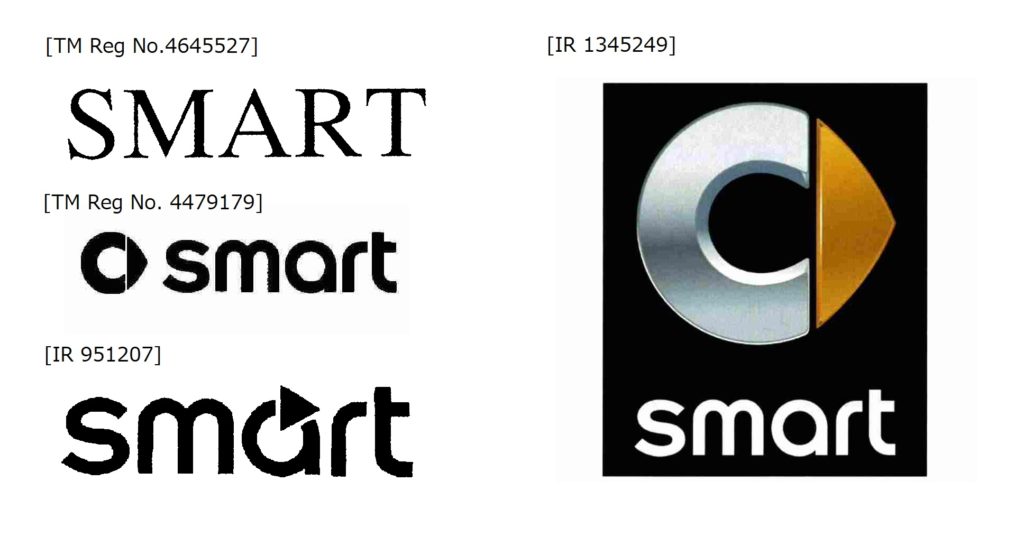
On May 11, 2020, just before the lapse of a two-months opposition period, Daimler AG filed an opposition before the JPO and claimed that the opposed mark shall be canceled in contravention of Article 4(1)(xi) and (xvi) of the Japan Trademark Law by citing senior trademark registrations for the “SMART” mark (see below) in class 12, which the opponent allegedly has used on the micro compact cars since 1998.

Daimler AG argued the opposed mark is a composite mark consisting of “SMART” and “TYRE”. The term “TYRE” undoubtedly lacks distinctiveness in relation to the goods of ‘tires’. If so, the dominant portion of the opposed mark shall be the term “SMART” which is identical to the cited marks. Besides, the ‘tires’ is considered as a structural part of automobiles and thus deemed similar to automobiles designated under the citations.

Therefore, the opposed mark shall be canceled based on Article 4(1)(xi).

Article 4(1)(xi) is a provision to prohibit registering a junior mark that is deemed identical with, or similar to, any senior registered mark.

Board decision

Surprisingly, the Opposition Board of the JPO found the opposed mark “SMART TYRE” shall be considered in its entirety irrespective of the fact that the term “TYRE” means ‘tire’. In addition, the Board held the opposed mark does not give rise to any specific meaning at all, and it is deemed a coined word.

Based on this finding, the Board assessed the similarity of marks as follows.

From appearance, both marks are sufficiently distinguishable since the opposed mark contains the term “TYRE” unlike the citations.

Phonetically, the opposed mark consists of seven sounds. In the meantime, the citations have four sounds. Due to the difference, relevant consumers are unlikely to confuse both marks.

The citations truly give rise to adjective meanings of ‘clever, bright, intelligent’. Meanwhile, the opposed mark has no meaning.

Therefore, the opposed mark “SMART TYRE” is dissimilar to the citations from visual, phonetical, and conceptual points of view even if the goods in question is deemed similar to the citations.

By stating that the term “TYRE” is inseparably and tightly incorporated into the opposed mark to the extent that relevant consumers would not conceive it as a descriptive indication in relation to the goods of class 12, the Board concluded the opposed mark shall not cause misapprehension of quality even when used on goods in question other than tires.

Based on the foregoing, the Board decided the opposed mark shall not be canceled in contravention of Article 4(1)(xi) and (xvi) of the Trademark Law and allowed “SMART TYRE” to survive.


The JPO’s finding does not look reasonable to me. It is clear that “TYRE” indicates ‘tire’. I suppose the Board rather should have mentioned the term “SMART” nowadays becomes generic when used in combination with the descriptive word(s) on the goods in question.

Japan IP High Court ruled “AZURE” is unregistrable due to “AZULE”

On December 23, 2020, the Japan IP High Court affirmed a decision of the Japan Patent Office (JPO) finding that the “AZURE” mark is similar to senior trademark registration no. 5454302 for word mark “AZULE” in connection with medical services of class 44.
[Judicial case no. Reiwa 2(Gyo-ke)10086]

AZURE

A disputed mark is a wordmark “AZURE” in standard character. The mark filed by Willfarm Co., Ltd., a Japanese merchant on November 22, 2017, over cosmetics (cl. 3), pharmaceutical preparations, dietary supplements (cl. 5), retail or wholesale services for these goods (cl. 35), beauty salon, massage, providing medical information, health clinic services, rental of medical equipment, nutritional and dietetic consultancy, nursing home services (cl. 44). [TM application no. 2017-153742]

JPO decision

Initially, the JPO examiner refused the mark in contravention of Article 4(1)(xi) of the Trademark Law by citing senior trademark registration no. 5454302 for word mark “AZULE” written in standard character. Among other things, the designated service of ‘providing medical information, health clinic services, rental of medical equipment’ in class 44 is deemed identical with that of the citation.

Article 4(1)(xi) is a provision to prohibit registering a junior mark that is identical with, or similar to, any senior registered mark.

There is a criterion that the examiner is checking when assessing the similarity between the marks:

  • visual similarity
  • aural similarity
  • conceptual similarity

and taking into account all these three aspects examiner makes a decision if a mark is similar (at least to some extent) to the earlier mark and if there is a likelihood of confusion for the consumers.

The applicant sought to file an appeal against the examiner’s rejection and argued dissimilarity of both marks, however, the Appeal Board upheld the rejection for the same reason on June 8, 2020. [Appeal case no. 2020-1707]

To contest the administrative decision, the applicant filed a lawsuit to the IP Hight Court on July 21, 2020.

IP High Court ruling

In the lawsuit, the plaintiff argued the Board inappropriately found the “AZURE” mark would give rise to pronunciations of ‘æʒə’ and ‘a-zhə-reˈ, but it is precisely pronounced as ‘æʒə’ or ‘a-jü(ə)l’. Besides, the Board erroneously held “AZURE” is similar to “AZULE” in appearance. By virtue of the difference in the fourth letter “R” and “L”, relevant consumers of the medical services in question would easily distinguish them. If so, by taking account of slight conceptual association between the marks, the “AZURE” mark shall be considered dissimilar to “AZULE” from visual, aural, and conceptual points of view.

The Court upheld the Board decision by stating that relevant consumers at the sight of the disputed mark would pronounce the term “AZURE” as ‘æʒə’ or ‘a-zhə-reˈ since it is not a familiar foreign word among the general public in Japan. The cited mark “AZULE” also gives rise to a pronunciation of ‘a-zhə-leˈ. Therefore, both pronunciations are confusingly similar.

As for appearance, the court denied the plaintiff’s argument on the ground that the medical services in question are consumed not only by health care workers but also by the general public. As long as both terms are unfamiliar to the relevant consumers, a mere difference of one letter would be anything but sufficient for them to distinguish both marks.

Based on the foregoing, the Court dismissed the allegations entirely and ruled to reject the “AZURE” mark in contravention of Article 4(1)(xi).

To read a full text of the IP High Court decision (Japanese only), click here.

The University of Oxford Failed in Opposition Against “OXFORD” mark

The Japan Patent Office (JPO) dismissed an opposition filed by Oxford Limited against trademark registration no. 6164941 for composite mark comprised of term “OXFORD” and a square X symbol in class 25, 35,40 by questioning whether the term per se has been known as a source indicator of the University.
[Opposition case no. 2019-900303, Gazette issued date: October 13, 2020]

Opposed mark

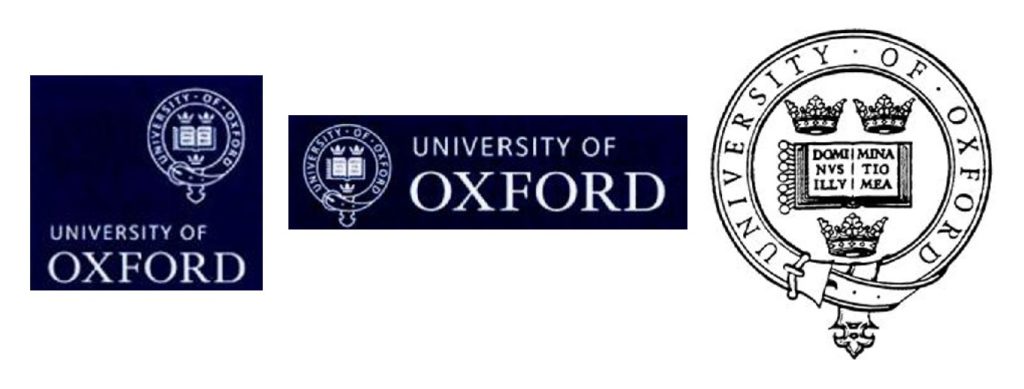
Japanese trademark registration no. 6164941 for composite mark comprised of term “OXFORD” and a square X symbol colored in dark blue (see below), was filed on October 26, 2018, by Oxford Corporation Co., Ltd., a Japanese business entity tailoring custom-made suits, over clothing, footwear made in England in class 25, retail or wholesale services for clothing, footwear and other goods in class 35, and dressmaking, treatment or processing of cloth, clothing or fur, custom tailoring services, and others in class 40.

JPO granted to protect the opposed mark and published for registration on August 20, 2019.

Opposition

On October 18, 2019, Oxford Limited, a wholly-owned subsidiary of the University of Oxford, filed an opposition and claimed the Opposed mark shall be canceled in contravention of Article 4(1)(vii), (viii), (xi), (xv) and (xix) of the Trademark Law by citing its own marks (see below).

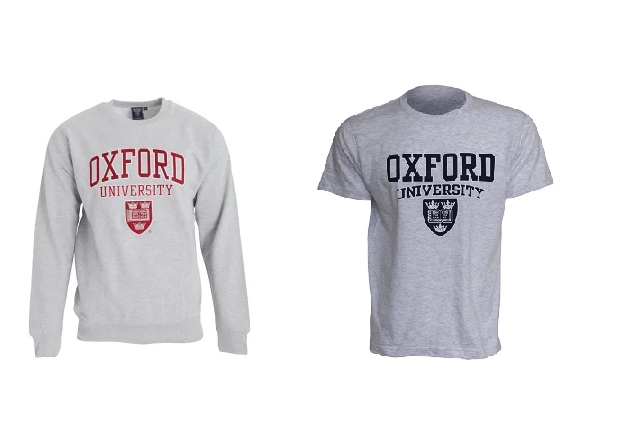
Oxford Limited argued that the University of Oxford is an extremely well-known university worldwide. It has been ranked in 5th and 3rd places in tables of top international higher education institutes. Besides, Oxford Limited has promoted and licensed commercial goods bearing trademarks of the University. In Japan, various licensed goods e.g. apparel, accessories, interiors, stationery, educational toys are distributed via Ingram Co., Ltd., an authorized broker.

Under the circumstances, there is no doubt that relevant consumers at the sight of the term “OXFORD” would conceive the University when used on goods and services in question. If so, the opposed mark shall be deemed similar to and likely to cause confusion with the cited mark since the term “OXFORD” per se plays a dominant role in identifying a source.

JPO Decision

The JPO Opposition Board admitted a high degree of the reputation of “University of Oxford” among the general public. In the meantime, the Board opined that it is questionable if the term “OXFORD” has acquired a substantial degree of popularity as a source indicator of the University from the produced evidence and totality of the circumstances in view of the fact that the term is also a geographical indication, namely, the capital of the county of Oxfordshire.

Based on the foregoing, the Board found relevant consumers would recognize the term “OXFORD” of the Opposed mark just to indicate ‘the capital of the county of Oxfordshire’. Meanwhile, the cited marks give rise to a sound and concept pertinent to the University. The figurative element of both marks is sufficiently distinguishable from appearance. There was a low level of visual, aural, and conceptual similarity between the marks to the extent that relevant consumers would be unlikely to confuse the Opposed mark with the University of Oxford. Therefore, the allegations are groundless and the Opposed mark shall remain valid as the status quo.


I am not convinced with the JPO’s finding of “the term OXFORD of the Opposed mark just to indicate ‘the capital of the county of Oxfordshire”. I firmly believe the term immediately reminds us of the University rather than the name of the capital of Oxfordshire.

Mercedes-Benz StarParts vs Star-Parts

In an administrative decision, the Japan Patent Office (JPO) held the “Mercedes-Benz Star Parts” with a car device mark is dissimilar to the “Star-Parts” word mark.
[Appeal case no. 2020-650009, Gazette issued date: November 27, 2020]

Mercedes-Benz StarParts

Daimler AG applied for registration of a composite mark consisting of “Mercedes-Benz StarParts” in two lines, a car device overlapping with checkmark icon, and a blue horizontal line in between (see below), in relation to ‘Parts for vehicles for locomotion by land, air, water or rail’ of class 12 via the Madrid Protocol (IR No. 1402813).

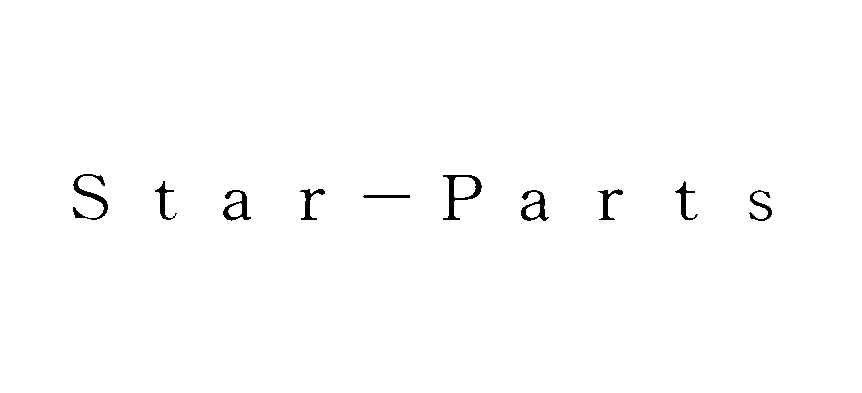
On December 5, 2019, the JPO examiner refused the applied mark based on Article 4(1)(xi) of the Trademark Law due to a conflict with senior trademark registration no. 5806962 for word mark “Star-Parts” in standard character which designates retail services or wholesale services for automobiles, parts, and accessories thereof in class 35.

Daimler AG filed an appeal against the refusal on March 4, 2019.

JPO Appeal Board’s decision

The Appeal Board overturned the examiner’s rejection by stating that the respective element of the applied mark shall be separably conceivable in view of a low degree of phonetic and conceptual association between figurative and literal elements. In the meantime, “StarParts” shall not be perceived as a dominant portion appealing its source of origin of goods, given “Mercedes-Benz” unquestionably plays an impressive role in identifying the source known for Germany luxury car maker. If so, it is not permissible to assess the similarity between the cited mark “Star-Parts” and the applied mark by dissecting the literal portion of “StarParts” from the applied mark.

Based on the foregoing, the Board concluded the refusal shall be disaffirmed since the examiner erroneously assessed the similarity between the marks.


I am of the view that the JPO’s decision looks unreasonable. From this viewpoint, any composite mark containing a famous or strong source indicator can be deemed dissimilar and eligible for registration.

LEGO Triumphs In ‘CATTYLEGO’ Trademark Battle at JPO

LEGO eventually scored a win over PETSWEET CO., Ltd., a Taiwanese company, in a trademark dispute against ‘CATTYLEGO’ thanks to the JPO’s finding a likelihood of confusion with “LEGO” famous for toy brick.
[Invalidation case no. 2018-890084, Gazette issued date: September 25, 2020]

CATTY LEGO

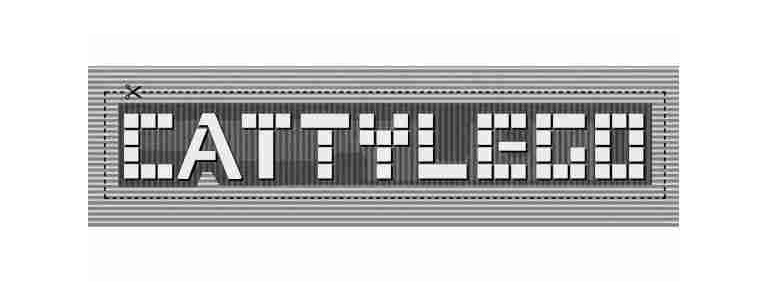
PETSWEEY Co. (派斯威特國際有限公司), Ltd., a Taiwanese company, applied for trademark registration in Japan for the mark consisting of a word “CATTYLEGO” and rectangle device (see below) on June 15, 2016, over toy boxes and chests, dog kennels, fodder racks, pet cushions, pet house in class 20 and toys for pets in class 28.

The Japan Patent Office (JPO) registered the mark on December 2, 2016 (TM Registration no. 5902786) and published for opposition on January 10, 2017.

LEGO

LEGO Juris A/S, the world’s largest Danish toy manufacturer, filed an opposition against the mark ‘CATTYLEGO’ on the final day of a two-month duration for the opposition, and argued it shall be canceled in contravention of Article 4(1)(viii), (xi), (xv) and (xix) of the Japan Trademark Law, but in vain. Click here to read more about the opposition.

Subsequently, LEGO lodged a trademark invalidation trial with the JPO on October 31, 2018, based on the same grounds.

JPO Decision

The Invalidation Board did not question a high degree of reputation and popularity of the LEGO trademark as a source indicator of toy brick by finding consecutive promotion of LEGO bricks in Japan for more than five decades, annual sales amounting to over 8 billion yen (Approx. USD 74 million ), its remarkable share in the sector of kids toys, and almost half of preschools in Japan have adopted the bricks for educational purpose.

Given the remarkable reputation of the LEGO mark, the Board held relevant consumers/traders at the sight of the ‘CATTYLEGO’ mark would inevitably conceive the term “LEGO” as a dominant portion. If so, both marks may give rise to a similar sound and concept pertinent to “LEGO”.

The Board also affirmed toy brick and the goods in question are closely associated in view of suppliers, commercial channels, usage, consumers.

Consequently, by taking into consideration the totality of the circumstances, the Board found relevant consumers with an ordinary care would confuse or associate the goods in question bearing the ‘CATTYLEGO’ mark with LEGO or any entity systematically or economically connected with LEGO, and thus the mark shall be invalidated based on Article 4(1)(xv) of the trademark law.

PGA

In a recent administrative decision, the Appeal Board of Japan Patent Office (JPO) disaffirmed the examiner’s refusal and held a composite mark, consisting of words “PERFECT GEAR AGENCY” and a monogram “PGA”, is dissimilar to the senior registered word mark “PGA” owned by Professional Golf Association.
[Appeal case no. 2019-10638, Gazette issued date: September 25, 2020]

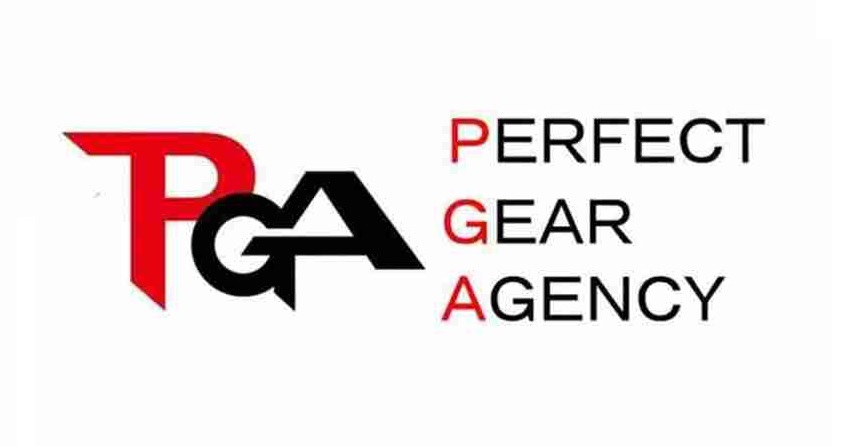
“PGA/ PERFECT GEAR AGENCY”

Disputed mark, see below, was applied for registration in relation to retail or wholesale services for various goods, e.g. foods and beverages, footwear, bags, automobiles in class 35 on January 24, 2018.

The disputed mark consists of the “PGA” monogram and the words “PERFECT GEAR AGENCY” on the right. The initial letter of the respective term is colored in red. Apparently, the monogram comes from an initial letter of each word “PERFECT”, “GEAR” and “AGENCY”.

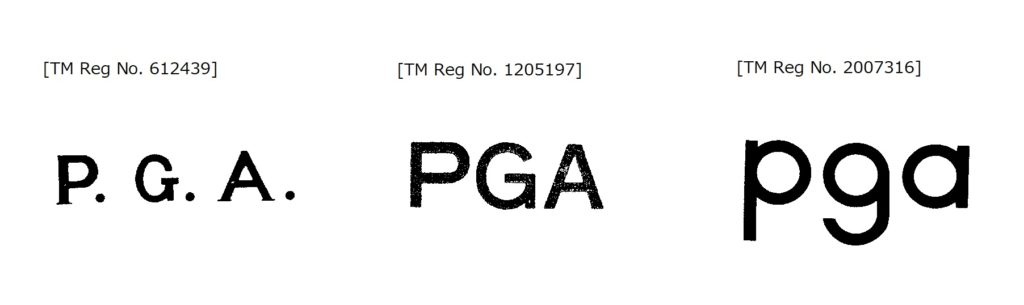
JPO Examiner rejected the disputed mark by citing several senior trademark registrations for a wordmark “PGA” in various classes owned by Professional Golf Association.

In Japan, retail or wholesale service in respect of specific goods is deemed similar to the goods or its equivalent. For example, retail service in respect of sporting goods (class 35) and sporting goods (class 28) is deemed similar.

That being the case, the applicant filed an appeal against the refusal and contended dissimilarity of the mark.

JPO decision

The Appeal Board found that the “PGA” monogram and words “PERFECT GEAR AGENCY” can be separably seen from a visual point of view. Besides, the “PGA” monogram per se does not give rise to any specific meaning. It is unknown whether relevant Japanese consumers have been familiar with the words “PERFECT GEAR AGENCY” as a whole. If so, the words do not give rise to a specific meaning as well.

By taking account of the above, the Board pointed out the disputed mark shall be pronounced as “PERFECT GEAR AGENCY”, but has no meaning.

Based on the foregoing, the Board concluded the refusal shall be disaffirmed since the examiner erroneously found that the disputed mark gives rise to a pronunciation of “PGA” from the “PGA” monogram.

Coffee Trademark Battle

Colombian Coffee Federation (FNC) failed a fight for invalidation of Japanese TM Registration no. 5901554 for word mark “EMERALD” in class 30 owned by The Coca-Cola Company, one of the world’s largest beverage company in the US.
[Invalidation case no. 2018-890017, Gazette issued date: August 28, 2020]

EMERALD MOUNTAIN

Emerald Mountain is a top brand name of Colombian coffee approved by FNC (NGO organization, the union of coffee producer established in 1927 joining over 560,000 members for enhancing quality, production, and export) guaranteed hand-picked and hand-screened beans of which quantity is only 3 –1% of the total production of Colombia coffee beans.

The FNC owns several trademark registrations for “EMERALD MOUNTAIN” in Japan.

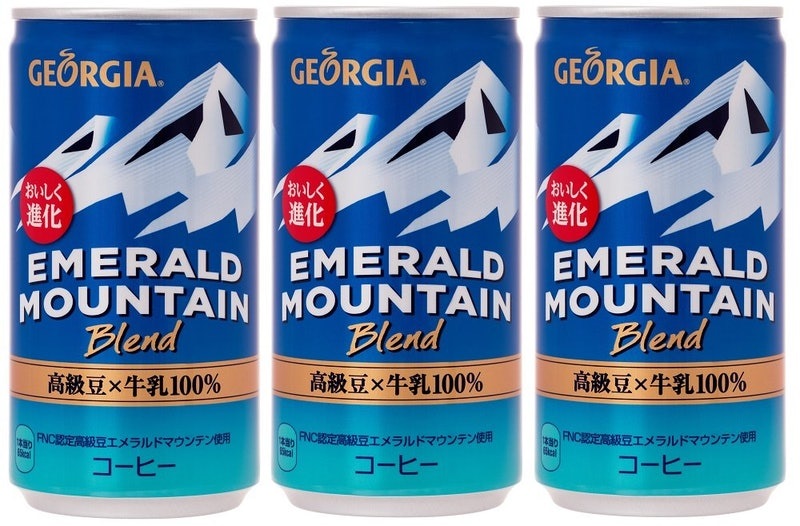
In the early 90s, Emerald Mountain began to be sold by Coca-Cola as canned liquid coffee under the Georgia brand in thousands of vending machines across Japan. Since 1997 it has become the most sold coffee in Japanese history as well as the #1 beverage sold by Coca-Cola in Japan. Every can of Georgia Emerald Mountain coffee has an explanation of the Colombian origin of the coffee as well as the high-quality certification of the FNCS. With annual sales of more than 630 million cans, Georgia Emerald Mountain Blend is undoubtedly Emerald Mountain’s leading product within the Japanese market.

EMERALD

Irrespective of a long-standing relationship, The Coca Cola Company, in 2011, sought registration for a wordmark “EMERALD” over artificial coffee, coffee-based beverages, prepared coffee and cocoa, tea, ice in class 30 which confronted with a severe objection from FNC.

FNC was successful in removing the registration by means of a non-use cancellation in 2017. However, The Coca Cola Company deliberately filed a new trademark application for the same mark in 2015 immediately when the registered mark was vulnerable for cancellation on grounds of non-use. The JPO allowed registration of the new application in December 2016.

To contend, FNC filed an invalidation action against the EMERALD mark in March 2018.

Invalidation petition by FNC

FNC argued the EMERALD mark shall be invalidated in contravention of Article 4(1)(vii), (x), (xi), (xv), and (xix) of the Trademark Law by stating that “EMERALD MOUNTAIN” has acquired substantial reputation and popularity as an indicator of high-quality Columbian coffee as a result of continuous sales promotion in Japan since 1970. In the coffee industry, coffee beans grown in highland are often named with the term “MOUNTAIN”, e.g. “BLUE MOUNTAIN”, “CRYSTAL MOUNTAIN”, “CARRIBERAN MOUNTAIN”, “CORAL MOUNTAIN”. In this respect, “EMERALD” shall play a prominent role in “EMERALD MOUNTAIN”. If so, both marks are deemed similar and it is likely that relevant consumers confuse or associate artificial coffee, coffee-based beverages, prepared coffee and cocoa, tea, ice bearing the EMERALD mark with “EMERALD MOUNTAIN”.

Besides, The Coca Cola Company has been using “EMERALD MOUNTAIN” on canned-liquid coffee under license from FNC. Presumably, the disputed mark was filed in anticipation of non-use cancellation claimed by FNC. In the cancellation proceeding, The Coca-Cola Company did neither answer nor respond. These facts clearly show the disputed mark was filed just to avoid cancellation even if The Coca-Cola Company had no intention to use it. It is really annoyance and free-riding on the famous marks with a fraudulent intention.

JPO decision

From the totality of evidence and circumstances, the JPO admitted a high degree of reputation and popularity of EMERALD MOUNTAIN as a source indicator of FNC’s high-quality Columbian coffee beans. In the meantime, the JPO questioned if relevant consumers connect the term “EMERALD” with FNC when used on coffee since the evidence did not disclose EMERALD MOUNTAIN is actually abbreviated to “EMERALD” in commerce. Likewise, it is suspicious whether “BLUE MOUNTAIN”, “CRYSTAL MOUNTAIN”, “CARRIBERAN MOUNTAIN”, “CORAL MOUNTAIN” are recognized with its short name, namely, “BLUE”, “CRYSTAL”, “CARRIBEAN”, “CORAL”.

In assessing the similarity of the mark, the JPO found “EMERALD MOUNTAIN” and “EMERALD” are dissimilar from visual, phonetic, and conceptual points of view. Given both marks are distinctively dissimilar, it is unlikely to find a likelihood of confusion in connection with the goods in dispute.

Even if The Coca-Cola Company filed the disputed mark with an intention to avoid the non-use cancellation, it would be anything but punishable in view of dissimilarity between marks. Besides, from the produced evidence, the JPO was unable to find fraudulent intention by Coca Cola to be blamed for invalidation.

Based on the foregoing, the JPO decided to dismiss the invalidation action.