Volkswagen Unsuccessful in Trademark Opposition to Baidu’s “Car-pollo” mark

In a trademark opposition involving the Volkswagen Polo, the Opposition Board of Japan Patent Office (JPO) decided that VW’s famous car model name “Polo” is dissimilar to, and unlikely to cause confusion with, the word mark “Car-pollo” even when used in relation to car navigation.
[Opposition Case no. 2019-900054, Gazette issued date: October 25, 2019]


Trademark opposition

German car giant Volkswagen AG filed an opposition against TM registration no. 615016 for word mark “Car-pollo” written in standard character (Opposed mark) sought for registration by Baidu Online Network Technology Beijing Company Limited, a Chinese language internet search company, on the grounds that Opposed mark shall be objectionable under Article 4(1)(xi) and 4(1)(xv) of the Japan Trademark Law based on senior trademark registrations for word mark “POLO”.

The opposed mark designates navigation apparatus (GPS) for vehicles [on-board computers]; car video recorders; batteries for vehicles; battery charging devices for motor vehicles; electric locks for vehicles and others in class 9, wheel barrows; airplanes; vessels; bicycles; electric bicycles in class 12, and automatic driving cars design in class 42.

Article 4(1)(xi) is a provision to prohibit from registering a junior mark which is deemed identical with, or similar to, any senior registered mark.

Volkswagen argued opposed mark is a compound word consisting of “Car”, which would be unregistrable alone in relation to the designated goods and service, and “pollo” formed with hyphen. If so, the term “pollo” would constitute the dominant portion of opposed mark. Since the term is an unfamiliar Italian and Spanish word in Japan, relevant consumers would not conceive its meaning of ‘chicken’ at all. The term “pollo” gives rise to a same sound with “POLO” and resembles with “POLO” from appearance. Also, the designated goods in class 12 of both marks are identical or similar. Therefore, opposed mark shall be objectionable under Article 4(1)(xi).

Article 4(1)(xv) provides that a mark shall not be registered where it is likely to cause confusion with other business entity’s well-known goods or services, to the benefit of brand owner and users’ benefits.

Volkswagen argued “POLO” has acquired substantial popularity and reputation as a source indicator of VW’s famous car model name. Thus, it is highly likely that relevant traders and consumers confuse or misconceive the source of goods and services using opposed mark “Car-pollo” with opponent or a business entity systematically or economically connected with VW. If so, opposed mark shall be objectionable under Article 4(1)(xv).


Board decision

The Board admitted “POLO” has become remarkably famous for a car mode name of Volkswagen by taking into consideration of the facts that the Volkswagen Polo has been continuously imported to Japan since 1982 and ranked in the top 5 of new imported automobile registrations for the past decade.

In the meantime, the Board found “POLO” and “Car-pollo” are totally dissimilar from visual, sound and conceptual points of view. Regarding opponent’s allegation the Board stated the term “Car” isn’t a usual word to indicate ‘wheel barrows; airplanes; vessels; bicycles; electric bicycles’ of class 12. From the produced evidence, there does not exist any circumstance to admit the term “pollo” shall be conceived as a dominant portion of opposed mark in fact. If so, it looks rather appropriate to consider relevant consumers would grasp opposed mark in its entirety.

Given a lower degree of similarity between both marks and lack of originality for the term “POLO”, which means a game played on horseback between two teams, each of four players, the Board also negated a likelihood of confusion between “POLO” and “Car-pollo” even when opposed mark is used on car video recorders; batteries for vehicles; battery charging devices for motor vehicles; electric locks for vehicles, and car-related services.

Based on the foregoing, the Board dismissed opposition and allowed “Car-pollo” to survive.
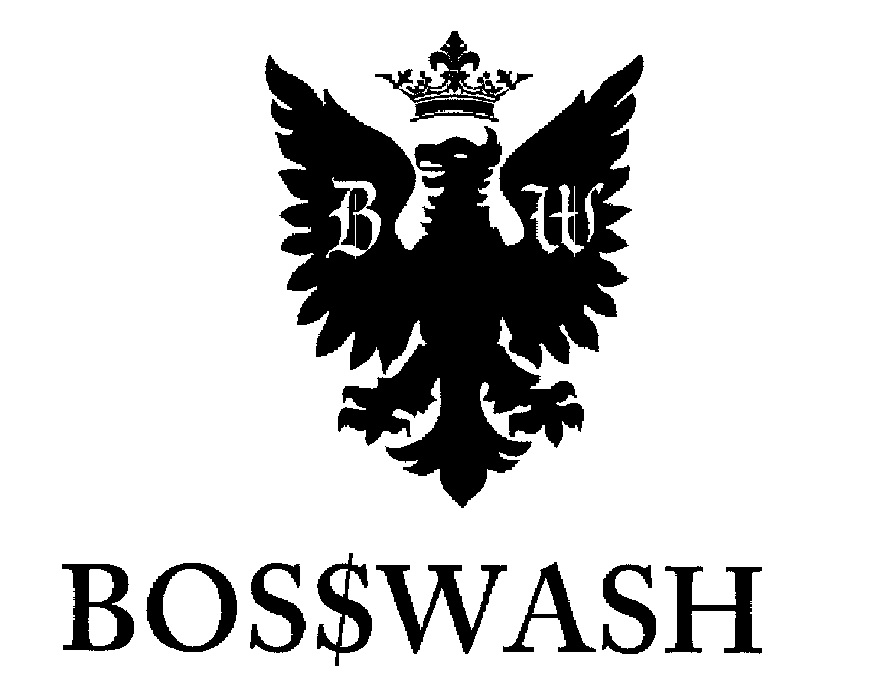
HUGO BOSS fails in attempt to block trademark registration

German luxury fashion house Hugo Boss has failed in their attempt to stop the registration of a composite mark consisting of “BOSSWASH” and a spread-eagle device at the Japan Patent Office (JPO).
[Opposition case no. 2017-900382, Gazette issue date: October 25, 2019]

Opposed mark

Opposed mark, filed in April 2017, consists of the literal element “BOSSWASH” and a spread-eagle in black with crown over its head, a letter “B” on its right wing and “W” on left wing (see below).

The application was for bags and pouches in class 18 and published for registration (TM Registration no. 5985092) by the JPO on October 24, 2017.

Opposition by Hugo Boss

To oppose against registration within a statutory period of two months counting from the publication date, HUGO BOSS Trademark Management GmbH & Co KG filed an opposition on December 20, 2017.

Hugo Boss’s opposition to stop the registration was based on claims that the “BOSSWASH” mark could be similar to or confused with sixteen of their earlier trademarks (#2190696, #3236870, IR746972, IR754225, IR773035, IR782587, IR827260, IR827261, IR831750, IR952458, IR964946, IR1023719, IR1055000, IR1058629, IR1072604, IR1263822), which prominently contain the term “BOSS”.

Board Decision

In the decision, the JPO found that, given the literal portion of opposed mark “BOSSWSH” shall be inseparable and perceived in its entirety, opposed mark and Hugo Boss’s trademarks were sufficiently distinguishable in visual, phonetic and conceptual points of view.

To my surprise, the Opposition Board of JPO admitted a high degree of popularity and reputation of “HUGH BOSS” as a trade name of opponent, however, it denied popularity of Hugo Boss’s trademarks, stating that produced materials are insufficient and non-objective to demonstrate substantial use and famousness of the cited marks.

Based on the foregoing, the JPO concluded it is unlikely that consumers confuse or misconceive a source of the opposed mark with Hugo Boss and dismissed the opposition totally.

Trademark Dispute Over Cigarette Sub-Brand “SIGNATURE”

In a decision dated September 12, 2019, the Japan IP High Court affirmed the Japan Patent Office’s (JPO) determination to refuse registration for the STATE EXPRESS 555 “SIGNATURE” cigarette package design due to a conflict with senior Trademark Registration No. 4658792 for word mark “SIGNATURE”.
[Court case no. Heisei31(Gyo-ke)10020]

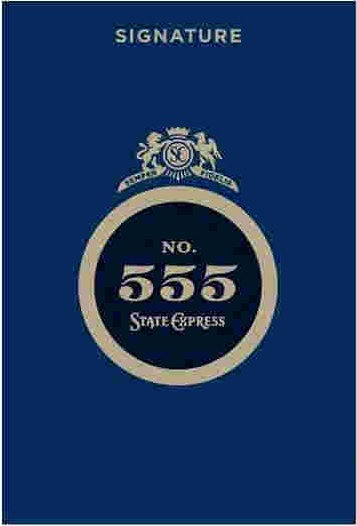
STATE EXPRESS 555 “SIGNATURE” cigarette package design

CTBAT International Company Limited, a joint investment of subsidiaries of China National Tobacco Corporation and British American Tobacco and incorporated in Hong Kong, filed a trademark application for device mark representing cigarette package design (see below) by designating cigarette, tobacco, electronic cigarette and others in class 34 on November 28, 2016 (TM application No. 2016-134074).

It the center, “No. 555 STATE EXPRESS” is written in three lines inside a circle. “SIGNATURE” is written independently on the upper side of the design.

Senior trademark “SIGNATURE”

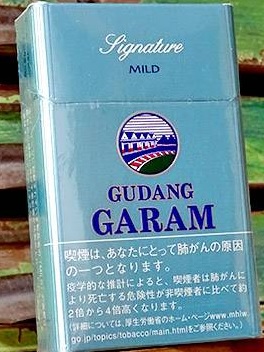
The JPO examiner refused registration by citing a senior Trademark Registration No. 4658792 for word mark “SIGNATURE” in standard character overt the goods of cigarette in class 34 owned by PT Gudang Garam TBK, one of Indonesia’s leading cigarette manufacturers, best known for its kretek clove cigarettes, headquartered in Kediri, Indonesia, which was acquired by Philip Morris in 2005.

PT Gudang Garam TBK has used the registered mark as a cigarette sub-brand of Gudang Garam.

CTBAT filed an appeal against the JPO examiner’s refusal and argued dissimilarity between the marks, but in vain. [Appeal case no. 2018-002007]
Subsequently, CTBAT appealed to the IP High Court and demanded cancellation of the administrative decision to refuse registration for plaintiff’s mark.

Qualitative description

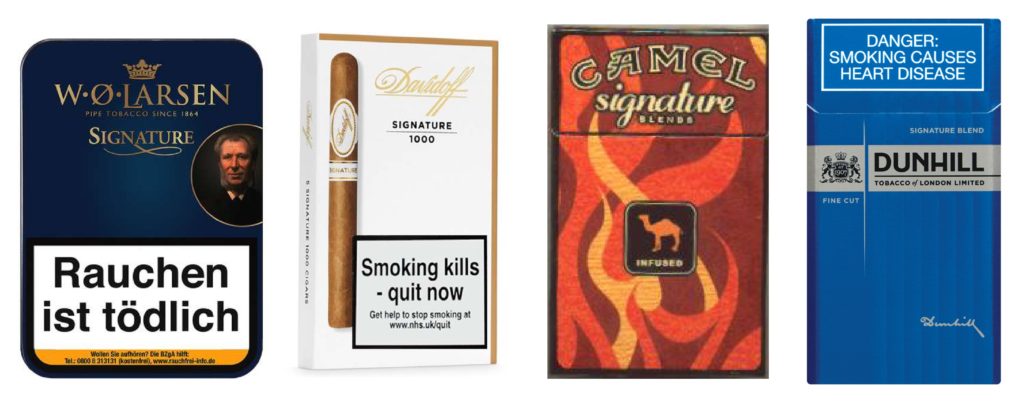
CTBAT argued the term ‘SIGNATURE’ lacks distinctiveness in relation to cigarette because several cigarette manufacturers, e.g. Dunhill, Camel, Davidoff, W.O.Larsen, have been using it as a qualitative term to indicate the cigarette has a specific feature of symbolic brand.

Besides, plaintiff’s mark contains distinctive terms, “No. 555 STATE EXPRESS”, which has acquired a certain degree of popularity of the cigarette brand through substantial use for more than 100 years. If so, it is unlikely that relevant consumers and traders would recognize the term “SIGNATURE” on the upper side as a source indicator in itself.

IP High Court Ruling

The court dismissed the allegation entirely, by stating that:

  1. From overall appearance of plaintiff’s mark, the term “SIGNATURE” shall not be perceived to combine with other figurative and literal elements.
  2. From the produced evidences, it is unclear if “No. 555 STATE EXPRESS” and “555” has acquired a certain degree of popularity because the cigarette brand has never been distributed in Japan so far.
  3. It is questionable that relevant Japanese consumers fully understand the term “SIGNATURE” and associated words, “Signature model”, “Signature Blends” have a qualitative or descriptive meaning in connection with cigarette.
  4. It has been often seen that a sub-brand is used on cigarette package separable from its main brand.
  5. The court finds the cited mark is used as a source indicator (sub-brand) on its cigarette package as well.
  6. Given the term “SIGNATURE” does not inseparably combine with other elements of plaintiff’s mark, it shall be permissible to cut out the portion and assess similarity of both marks based on the portion as long as it does meet with trade practice.

Based on the foregoing, the IP High Court sided with the JPO and upheld the refusal decision.

SISLEY lose trademark opposition over SOIR DE LUNE

In a recent trademark opposition, the Opposition Board of the Japan Patent Office (JPO) held a junior trademark registration no. 6041076 for word mark “LunaSoir” is dissimilar to a senior IR registration no. 845029 for word mark “SOIR DE LUNE”, one of fragrance brands by SISLEY, a French producer of cosmetics and fragrances, even when used on fragrance in class 3
[Opposition case no. 2018-900194, Gazette issue date: July 26, 2019]

LunaSoir

Opposed mark (see below) was applied for registration on July 31, 2017 by designating soaps, perfumery, cosmetics and others in class, and published for registration on June 5, 2018 without any office action from the JPO examiner.

SISLEY – SOIR DE LUNE

Opponent, SISLEY, a French producer of cosmetics and fragrances, claimed that the opposed mark “LunaSoir” shall be cancelled under Article 4(1)(xi) of the Japan Trademark Law by citing a senior trademark registration for word mark “SOIR DE LUNE”covering soaps, perfumery, essential oils, cosmetics, hair lotions, dentifrices in class 3.

Article 4(1)(xi) is a provision to prohibit from registering a junior mark which is deemed identical with, or similar to, any senior registered mark.

SISLEY argued both marks give rise to a same meaning of “moon night” given “Luna” and “LUNE mean “moon” in Latin and French respectively, “SOIR” means “night” in French, and “DE” corresponds to “of” in English. If so, both marks are likely to cause confusion from a conceptual point of view.

Board Decision

In the decision, the Board decided that “LunaSoir” and “SOIR DE LUNA” are both dissimilar in appearance, pronunciation as well as concept.

The Board assessed, by taking into consideration a relatively low level of knowledge to Latin and French language among relevant consumers with an ordinary care, opposed mark consisting of “Luna” and “Soir” would not give rise to any specific meaning at all.
Based on the fact finding, the Board concluded that opposed mark “LunaSoir” is obviously dissimilar to SISLEY’s fragrance brand “SOIR DE LUNE” from concept, needless to say appearance and pronunciation.

It is noteworthy to a brand owner from non-English speaking nations that conceptual similarity would not play a defensive role to prevent free-riding and enjoy a broader scope of protection against use by others where the brand contains a non-English term unfamiliar to Japanese.

Patagonia Victorious in Trademark Battle

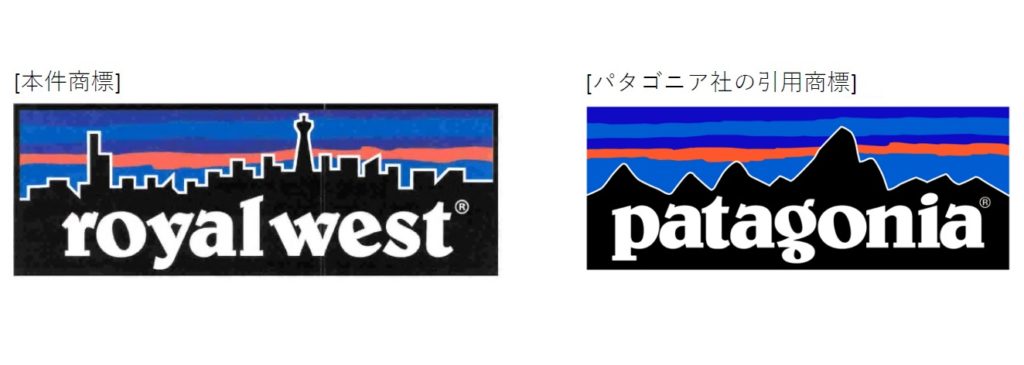
The Trial Board of Japan Patent Office (JPO) recently upheld an invalidation petition by US outdoor apparel company, Patagonia Inc. against TM Reg. no. 6028801 for the “royalwest” mark in combination with figurative elements due to a likelihood of confusion with Patagonia logo.
[Invalidation case no. 2018-890048, Gazette issue date: June 28, 2019]

TM Registration no.6028801

Disputed mark, consisting of a word “royalwest” and figurative elements (see below left), was applied for registration on April 13, 2017 in respect of apparels and other goods in class 25.

Without confronting with a refusal during substantive examination, disputed mark was registered on March 23, 2018.

Petition for invalidation

Japan Trademark Law provides a provision to retroactively invalidate trademark registration for certain restricted reasons specified under Article 46 (1).

US outdoor apparel company Patagonia Incorporated filed a petition for invalidation against disputed mark on June 29, 2018. Patagonia argued it shall be invalidated due to similarity to an owned senior trademark registration no. 5891980 for the Patagonia mark with figurative elements depicting mountain landscape and sky in blue, purple and orange color (see above right), and a likelihood of confusion with its famous brand when used on designated goods in class 25 based on Article 4(1)(xi) and (xv) of the Trademark Law.

Board decision

At the outset, the Board admitted the Patagonia logo has acquired a high degree of popularity and reputation as a source indicator of Patagonia Inc. among relevant consumers in connection with outdoor goods.

In assessing similarity of both marks, the Board found that a literal element of respective mark is unquestionably dissimilar. However, even if both marks give rise to a different pronunciation and concept, by taking account of similar factors: (1) coloring of the sky, (2) font design and size, (3) rectangular outline, (4) black silhouette with a white border line, (5) configuration and proportion of respective elements, and balancing them comprehensively, relevant consumers with an ordinary care at the sight of both marks would conceive a same impression from appearance and associate disputed mark with Patagonia. If so, it is obvious that visual similarity plays a key role in the assessment. A phonetical and conceptual difference arising from literal element is insufficient to negate similarity between the marks in its entirety.

Based on the foregoing, the Board concluded that, from totality of circumstances and evidences, relevant traders or consumers are likely to confuse or misconceive a source of disputed mark with Patagonia or any entity systematically or economically connected with the opponent when used on apparels and any other designated goods in class 25 and declared invalidation based on Article 4(1)(xi) and (xv).

Trademark Opposition: “iPhone” versus “SAIPHONE”

The Japan Patent Office (JPO) dismissed a trademark opposition claimed by the U.S. tech giant, Apple Inc. against trademark registration no. 6060316 for word mark “SAIPHONE” in class 9 and 18 by finding less likelihood of confusion with Apple “iPhone”.
[Opposition case no. 2018-900255]

“SAIPHONE”

Opposed mark, a word mark “SAIPHONE” in standard character, was filed by a Japanese business entity, STYLE Corporation, on September 28, 2017 by designating ‘mobile phones, smart phones, and its accessories, namely cases, covers and hands-free holders’ in class 9, and ‘purses and wallets, commutation-ticket holders, business card cases, bags and pouches, umbrellas, industrial packaging containers of leather’ in class 25.

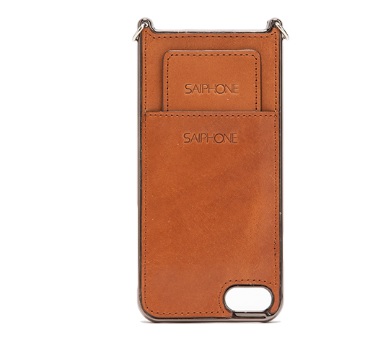
STYLE Corporation promotes the “SAIPHONE” leather cases for iPhone (see below).

The JPO admitted registration on June 22, 2018 and published for registration on July 6, 2018.

APPLE’s Opposition

To oppose against registration within a statutory period of two months counting from the publication date, Apple Inc. with AIPHONE Co., Ltd., as a joint claimant, filed an opposition on September 7, 2018.

In the opposition brief, Apple Inc. asserted the opposed mark shall be cancelled in violation of Article 4(1)(xi) and (xv) of the Japan Trademark Law given a remarkable reputation of opponent mark “iPhone” in the business field of smart phones and similarity to a senior trademark registration no. 5147866 for the word mark “iPhone” in standard character over mobile phones in class 9 effective since 2008.

Interestingly, “iPhone” is indeed a registered trademark owned by AIPHONE Co., Ltd. in Japan. Apple Inc. is an exclusive licensee of the mark.

Apple Inc. argued opposed mark “SAIPHONE” gives rise to a confusingly similar pronunciation and appearance to “iPhone”, since opposed mark contains a famous mark “iPhone” entirely and a mere difference on prefix “SA” is insufficient for relevant consumers anything but to conceive “iPhone” from opposed mark.

Article 4(1)(xi) is a provision to refrain from registering a junior mark which is deemed identical with, or similar to, any senior registered mark.

Article 4(1)(xv) provides that a mark shall not be registered where it is likely to cause confusion with other business entity’s well-known goods or services, to the benefit of brand owner and consumers.

Board Decision

The Opposition Board admitted a remarkable degree of reputation and popularity of opponent trademark “Apple” in connection with smart phones based on the produced evidences showing a more than 40% share of the market in Japan.

In the meantime, the Board found “SAIPHONE” and “iPhone” are totally dissimilar since they are sufficiently distinguishable in visual, phonetic, and conceptual point of view.
A fact that opposed mark contains “iPhone” is not persuasive on the case since relevant consumers with an ordinary case would see opposed mark in its entirety.
If so, it is likely that the consumers confuse or misconceive a source of the opposed mark with Apple Inc. or any entity systematically or economically connected with the opponent.

Based on the foregoing, the Board decided the opposed mark shall not be cancelled on the grounds of Article 4(1)(xi) as well as (xv).

Giorgio Armani defeated with trademark battle over V-shaped wing device

In a recent administrative trademark decision , the Opposition Board of Japan Patent Office (JPO) dismissed an opposition filed by Giorgio Armani S.p.A against trademark registration no. 5983697 for V-shaped wing device mark on bags in class 18 due to unlikelihood of confusion.

[Opposition case no. 2017-900384, Gazette issued date: April 26, 2019]

Opposed mark

Disputed mark (see below) was applied for registration on April 24, 2017, by designating bags, wallets, suitcases, hang bags, backpacks and others of class 18 in the name of a Chinese individual.

Going through substantive examination at the Japan Patent Office (JPO), the mark was registered on September 29 of that year (TM Reg no. 5983697).


Armani Opposition

To oppose the mark, Giorgio Amani filed an opposition on December 22, 2017.
In the opposition brief, Armani contended that opposed mark is confusingly similar to its registered famous V-shaped wing logo in the shape of “V” letter (see below) by citing its owned IR no. 695685 and thus shall be cancelled in violation of Article 4(1)(xi), (xv) and (xix) of the Japan Trademark Law.

Article 4(1)(xi) is a provision to refrain from registering a junior mark which is deemed identical with, or similar to, any senior registered mark.
Article 4(1)(xv) prohibits to register a trademark which is likely to cause confusion with a business of other entity.
Article 4(1)(xix) prohibits to register a trademark which is identical with, or similar to, other entity’s famous mark, if such trademark is aimed for unfair purposes, e.g. gaining unfair profits, or causing damage to the entity.


Board decision

To my surprise, the Opposition Board of JPO negated a certain degree of popularity and reputation of Armani V-shaped wing device mark – Armani logo, stating that produced materials are insufficient and non-objective to demonstrate famousness of the cited mark.

Besides, the Board found that both marks are sufficiently distinguishable from appearance in view of overall configuration. From phonetic and conceptual points of view, opposed mark is unlikely to give rise to any specific meaning and pronunciation as well as cited mark.If so, both marks would not be comparable from visual and conceptual points of view. By taking into consideration of above fact findings, the Board found dissimilarity of both marks and held less likelihood of confusion between the marks even if used on bags in class 18.
Based on the foregoing, the Board decided opposed mark is not subject to Article 4(1)(xi), (xv) and (xix) of the Trademark Law and dismissed the opposition totally.

JPO decision: TESLA is dissimilarly pronounced to Tesla

In a recent appeal decision over trademark dispute, the Appeal Board of Japan Patent Office (JPO) overturned the Examiner’s refusal and held the stylized TESLA mark is dissimilarly pronounced to a senior trademark registration for the “Tesla” word mark.

[Appeal case no. 2017-650037, Gazette issue date: February 22, 2019]


Stylized TESLA mark

U.S. electric automaker Tesla, Inc. (formerly Tesla Motors, Inc.) filed an application with the Japan Patent Office to register stylized TESLA mark as a trademark for “Articles of clothing, namely, t-shirts, shirts, jackets, hats; headgear, namely, sports hats, caps, sun visors.” in class 25 and “Providing financial services relating to automobiles, namely, automobile financing and lease-purchase financing; financing services for the purchase and leasing of motor vehicles; lease-purchase financing; credit services, namely, providing financing for motor vehicles; providing financial advice in the field of motor vehicles.” in class 36.


Senior TM registration for “Tesla”

Going through substantive examination by the JPO examiner, applied mark was completely refused registration based on Article 4(1)(xi) of the Trademark Law due to a conflict with a senior trademark registration no. 5533558 for word mark “Tesla” in standard character for clothing, caps and foot wears in class 25 owned by a Korean individual.

There is criterion that the examiner is checking when assessing the similarity between the marks:

  • visual similarity
  • aural similarity
  • conceptual similarity

and taking into account all these three aspects examiner makes a decision if a mark is similar (at least to some extent) with the earlier mark and if there is a likelihood of confusion for the consumers.

Applicant filed an appeal against the refusal on June 30, 2017 and argued dissimilarity of the marks.


Appeal Board decision

The Board reversed the examiner’s refusal and admitted applied mark to registration by stating that:

From appearance, both marks are sufficiently distinguishable because the 2nd and last letter of applied mark are too indecipherable to be perceived as a specific term in its entirety.

As long as applied mark does not give rise to any specific sound and meaning as a whole, applied mark is incomparable with cited mark “Tesla” in the aspects of pronunciation and connotation.

Based on the foregoing and criterion to assess similarity of mark, the Board is of a view that the stylized TESLA mark shall be dissimilar to senior registration for the word mark “Tesla” even if the designated goods are deemed identical or similar in class 25.

Who associates “Pen-Pineapple-Apple-pen” with Apple Inc.?

The Japan Patent Office (JPO) dismissed an opposition filed by Apple Incorporated, a US corporation, against TM Registration no. 6031236 for word mark “Pen Pineapple Apple Pen” written in alphabets and Katakana characters, and allowed the mark to remain valid. [case no. 2018-900165]


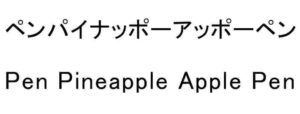
Opposed mark : Pen-Pineapple-Apple-Pen

Avex Inc., a Japanese company, filed the mark to the JPO on February 24, 2017 over various kinds of goods/services in class 3,9,14,16,18,20,21,24,25,28,30,32,41,43 (14 classes in total). The JPO admitted registration on March 30, 2018.


Opposition by Apple Inc.

Apple Inc., an US multinational IT company, filed an opposition based on Article 4(1)(xi), (xv) and (xix) of the Trademark Law by asserting opposed mark is deemed similar to opponent famous trademark “Apple”, “Apple Pay” and “Apple Pencil”, likely to cause confusion with opponent’s business when used on designated goods and services. Besides, opposed mark was seemingly adopted with an intention to freeride good-will bestowed on opponent famous trademarks.

Article 4(1)(xi) prohibits from registering a junior mark identical or similar to senior registered mark on identical or similar goods/service.
Article 4(1)(xv) prohibits any junior mark likely to cause confusion with others.
Article 4(1)(xix)
  prohibits a junior mark identical or similar to others’ famous mark with a malicious intention.
The provisions are available as cause of claims underlying  an opposition when registered in error.


JPO decision

The Opposition Board of JPO held opposed mark shall NOT be revocable in accordance with the articles by stating that:

“Opposed mark, solely consisting of literal elements with same size and same font, gives rise to a pronunciation of ‘pen pineapple apple pen’ as a whole. Regardless of slight verbosity, relevant consumers will surely connect the mark with viral hit song “Pen-Pineapple-Apple-Pen or PPAP” by PIKOTARO, internet sensation from Japan, which has become known among the general public remarkably. If so, opposed mark merely gives rise to a meaning of PIKOTARO’s song.  Therefore, opposed mark shall be deemed dissimilar to opponent trademarks from visual, phonetic and conceptual points of view.

The Board admits a high degree of reputation or popularity of “APPLE” as a source indicator of opponent’s business in connection with PC, its accessories, software and smartphones, however, provided that both marks are distinctively dissimilar and ‘APPLE’ is a dictionary word commonly known among relevant public to mean the round, red or yellow, edible fruit of a small tree, the Board considers it is unlikely that relevant consumers and traders would confuse or associate opposed mark with opponent’s mark “APPLE”.

Besides, opponent alleged that PIKOTARO might compose the song inspired by “APPLE PENCIL” and ludicrously promoted with an intention of free-riding opponent’s goodwill. However, the Board was unable to find out any fact to assume malicious intention of the free-riding by applicant from the totality of the circumstances.”


IP High Court ruling: “BULK AAA” confusingly similar to “BULK HOMME”

On March 7, 2019, the Japan IP High Court revoked a decision by the Japan Patent Office (JPO) to invalidation trial over a dispute of similarity between trademark “BULK AAA” and “BULK HOMME”, and ruled “BULLK AAA” shall be retroactively invalid. [Judicial case no. Heisei30(Gyo-ke)10141]


BULK HOMME

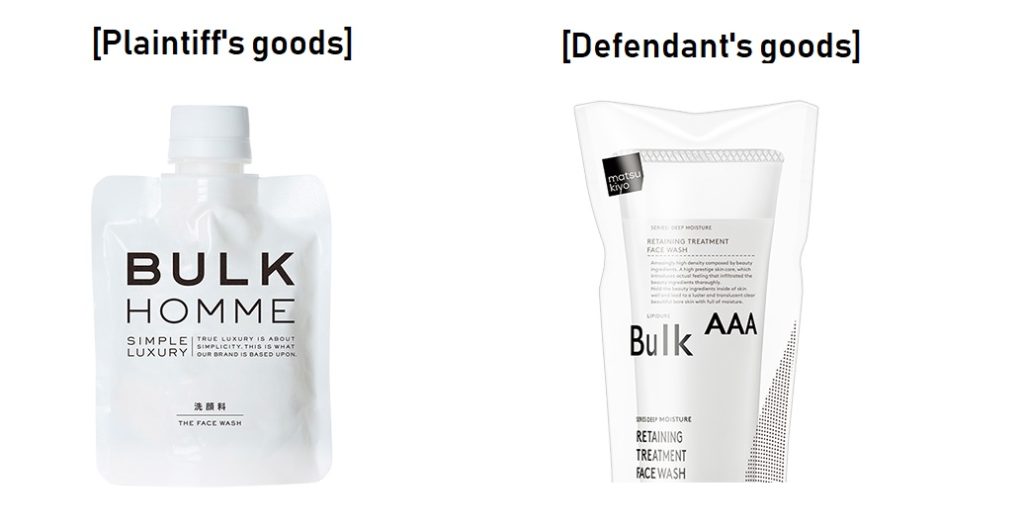
The case was brought into the IP High Court after the JPO decided to dismiss an invalidation trial (case no. 2017-890079) claimed by BULK HOMME Co., Ltd. (Plaintiff), an owner of senior trademark registration no. 5738351 for a  mark consisting of “BULK HOMME” and other literal elements (see below) over goods of cosmetics, skin care products for men in class 3.


INVALIDATION TRIAL AGAINST “BULK AAA”

In the invalidation trial, plaintiff asserted trademark registration no. 5931607 for word mark “BULK AAA” in standard character shall be invalid in violation of Article 4(1)(xi) of the Trademark Law since the mark is confusingly similar to “BULK HOMME” and designates cosmetics (class 3) which is undoubtedly identical with or similar to the goods designated under its own senior registration.

Article 4(1)(xi) is a provision to prohibit from registering a junior mark which is deemed identical with, or similar to, any senior registered mark.

Inter alia, plaintiff vehemently argued the term “AAA” in disputed mark lacks distinctiveness as a source indicator in relation to cosmetics since “AAA” is a term commonly used to represent the highest possible rating assigned to the bonds of an issuer by credit rating agencies. Given the circumstance, relevant consumes of cosmetics are likely to consider the term in disputed mark a qualitative indication of the goods even if the term has not been used as such  in connection with cosmetics in fact.

However, the Trial Board of JPO set aside the allegation by stating that disputed mark “BULK AAA” shall be assessed in its entirety. It is groundless to compare a word portion “BULK” of disputed mark with “BULK HOMME” given the Board could not identify any facts to assume relevant consumers of cosmetics conceive the term “AAA” of disputed mark as a qualitative indication. Both marks are sufficiently distinguishable from visual, phonetic, and conceptual points of view and dissimilar as a whole.

To contend against the decision, plaintiff filed an appeal to the IP High Court.


IP HIGH COURT DECISION

The IP High Court, to the contrary, sided with plaintiff and completely negated fact-findings made by the Trial Board of JPO. The Court held the term “AAA” is recognized as a qualitative indication even when used on cosmetics and thus the word portion of “BULK” is likely to play a dominant role of source indicator. If so, it is anything but inappropriate to pick up the word “BULK” from disputed mark and compare it with other mark in the assessment of mark similarity.

Besides, “HOMME” is a French word meaning “for men”. From the produced evidences, it seems apparent the word has been used in relation to men’s cosmetics, and consumers are accustomed to it so that they can recognize the meaning. Given the term is depicted in a thinner font than “BULK” in the citation, “BULK” gives dominant impression as a source indicator in the mind of consumers. Accordingly, it is reasonable to pick up the word “BULK” from the citation and compare it with other mark in the assessment of mark similarity.

The Court found that the Trial Board materially erred in the fact-finding and assessing similarity of mark. As long as dominant portion “BULK” of both marks and designated goods are identical, disputed mark shall be invalid based on Article 4(1)(xi).