“MACSELL” for use on PC value estimation service is unlikely to cause confusion with Apple “Mac”

The Japan Patent Office (JPO) dismissed an opposition claimed by Apple Inc. against trademark registration no. 6223514 for word mark “MACSELL” on used mobile phone, Smartphone, PC and tablet computer value estimation service in class 36 by finding less likelihood of confusion with Apple “Mac” series.
 [Opposition case no. 2020-900114, Gazette issued date: Jan 29, 2021]

MACSELL

Opposed word mark “MACSELL” in standard character was filed on March 22, 2019, for the service of used mobile phone, Smartphone, PC and tablet computer value estimation, and others in class 36. Going through the substantive examination, the JPO admitted registration on February 6, 2020.

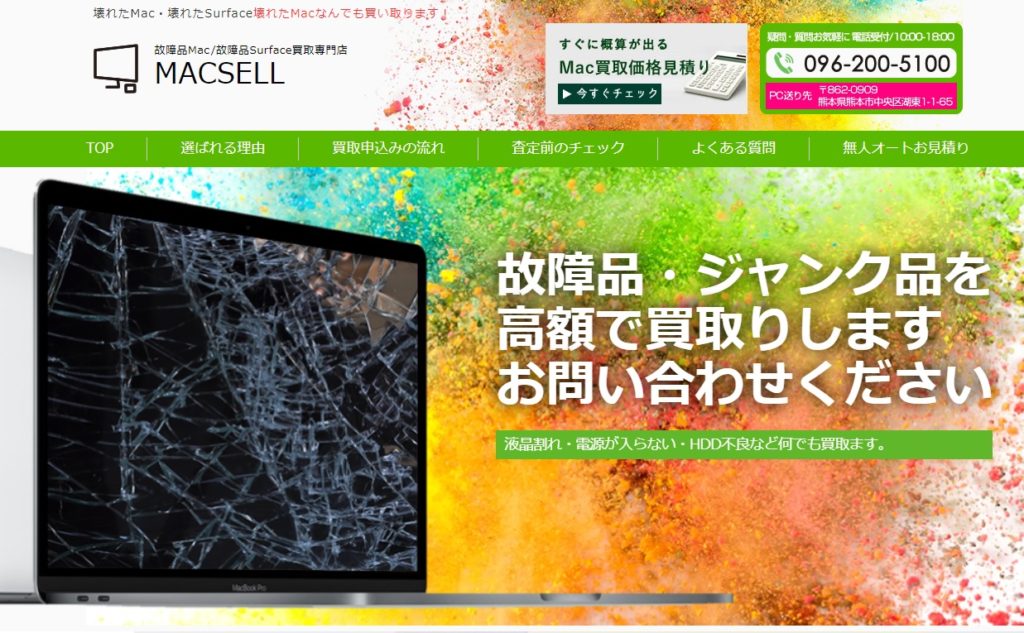
Apparently, the opposed mark is used as a tradename of used Mac and Surface recycle shop managed by the applicant.

Capture from “MACSELL” website
Capture from Google “Street View”

Apple’s Opposition

Apple Inc. argued the opposed mark “MACSELL” shall be canceled in violation of Article 4(1)(xv) of the Japan Trademark Law.

“Mac” has become famous as a source indicator of Apple’s PC by virtue of substantial use with various trademarks, e.g. “MacBook Air” and “MacBook Pro” on laptops, “iMac” and “iMac Pro” on desktops, “Mac Pro” and “Mac mini” on computer hardware.

The opposed mark, consisting of “MAC” and “SELL”, would easily give rise to a meaning of offering Apple’s PC for sale.

If so, relevant consumers at the sight of the opposed mark when used on the service in question are likely to associate and confuse the origin of the opposed mark with Apple Inc. or any entity related to the opponent.

JPO decision

The JPO Opposition Board admitted a remarkable degree of reputation and popularity of “Mac” as a source indicator of Apple Inc. and a close association between Apple’s goods and the service in question.

However, the Board found a low level of similarity between “MACSELL” and “Mac” by stating that the term “SELL” would severely cause a distinctive impression between both marks from visual, phonetical, and conceptual points of view, even if the marks share the word “MAC.”

Besides, taking into account a low level of originality of the opponent mark “Mac,” the Board questioned if relevant consumers and traders are likely to associate or connect the opposed mark with the opponent when used on the service in question.

Consequently, the Board held that relevant consumers would be unlikely to confuse the source of the opposed mark with Apple Inc. and any entity economically or systematically connected with the opponent.

Based on the foregoing, the Board decided to dismiss the opposition entirely and allowed registration of the opposed mark as status quo.

Ariana Grande Loses Trademark Opposition at Japan Patent Office

The Japan Patent Office (JPO) dismissed an opposition filed by GrandAri Inc., the owner of a trademark “ARIANA GRANDE”, against TM Reg no. 6202585 for wordmark “Arianna” to be used on cosmetics by finding dissimilarity between “Arianna” and “ARIANA GRANDE.”
[Opposition case no. 2020-900051, Gazette issued date: January 29, 2021.]

Opposed mark

Arianna Co., Ltd. applied for a wordmark “Arianna” registration for use on cosmetics, soaps, and detergents of Class 3 and medical apparatus of Class 10 with the JPO on January 7, 2019 (TM Application no. 2019-000339).

The JPO admitted the registration of the opposed mark on November 29, 2019, and published for opposition on Christmas Eve of the year.

Opposition by GrandAri Inc.

On February 21, 2020, GrandAri Inc. filed an opposition before the JPO and claimed that the opposed mark shall be revocable in contravention of Article 4(1)(xi) and (xv) of the Japan Trademark Law by citing International Registration no. 1260129 for wordmark “ARIANA GRANDE” and others over the goods of ‘Perfume; eau de parfum; fragranced body care preparations, namely, body lotions, body scrubs’ in Class 3.

Article 4(1)(xi) is a provision to prohibit registering a junior mark that is deemed identical with, or similar to, any senior registered mark.

GrandAri argued that relevant consumers would easily think of American pop superstar from the cited mark “ARIANA GRANDE”. Besides, because of her celebrity and popularity, she is affectionately called by her first name “ARIANA”. In view of the space between “ARIANA” and “GRANDE”, it is highly likely that the consumers would consider the term “ARIANA” as a dominant source indicator at the sight of the cited mark. It is no doubt that the opposed mark “Arianna” is confusingly similar to “ARIANA” since the mere difference of the letter ‘n’ is negligible in appearance and both terms give rise to the same pronunciation.

Article 4(1)(xv) provides that any mark shall not be registered where it is likely to cause confusion with other business entity’s well-known goods or services, to the benefit of brand owners and users’ benefits.

GrandAri argued the cited mark is used on fragrances developed by Ariana herself, which are also called “ARIANA” in the advertisement.

Given a close resemblance between the opposed mark and the “ARIANA” mark, and a certain degree of popularity of the fragrances, firstly sold in November 2015 in Japan, it is likely to cause confusion with the cited mark when the opposed mark is used on the goods in question.

JPO Decision

The JPO admitted a high level of reputation and popularity of American pop singer, “ARIANA GRANDE” in Japan. In the meantime, the JPO questioned, from the produced evidence, whether the term “ARIANA” per se plays a role of the source indicator of Ariana Grande fragrances since it is constantly adjacent to the cited mark “ARIANA GRANDE.”
Consequently, the JPO negated the famousness of the term “ARIANA” as a source indicator of the opponent’s goods.

As for the similarity of the marks, the JPO assessed that relevant consumers would see the cited mark “ARIANA GRANDE” in its entirety because she is known and called by her full name. If so, both marks are distinctively dissimilar since the opposed mark does neither give rise to a pronunciation of “ARIANA GRANDE” nor a concept of American pop superstar.

The JPO dared to assess the similarity between the opposed mark “Arianna” and “ARIANA” and held that “Arianna” is not confusingly similar to “ARIANA” from a phonetical point of view. Due to a low level of similarity of the marks, the JPO does not have any reason to believe that the opposed mark would cause confusion with the cited mark “ARIANA GRANDE” as well as “ARIANA” when used on cosmetics, soaps, and detergents of Class 3.

Based on the foregoing, the JPO dismissed the entire allegations of GrandAri and allowed “Arianna” to survive.

“COSTA COFFEE” vs “Caffè la Costa”

The Japan Patent Office (JPO) dismissed a trademark opposition claimed by Costa Limited, operating the UK’s largest and the World’s second-largest International chain of coffee shops “COSTA COFFEE”, against trademark registration no. 6230027 for the “Caffè la Costa” mark for use on coffee, coffee beans in class 30 and restaurant services in class 43 by finding both marks are dissimilar and less likely to cause confusion.
[Opposition case no. 2020-900137, Gazette issued date: December 25, 2020]

Opposed mark

The mark “Caffè la Costa” (see below) was filed by a Japanese individual on March 11, 2019, for use on tea; coffee; cocoa; coffee beans; confectionery, and bread in class 30 and restaurant service in class 43, and published for opposition on May 17, 2020, after registration on February 27, 2020.

Opposition by Costa Limited

On May 14, 2020, Costa Limited filed an opposition and alleged the opposed mark shall be revocable in contravention of Article 4(1)(xi) of the Japan Trademark Law due to close resemblance to senior trademark registration for a wordmark “COSTA” and the “COSTA COFFEE” logo (see below) in class 30 and 43.

Article 4(1)(xi) is a provision to prohibit registering a junior mark that is identical with, or similar to, any senior registered mark.

Costa Limited argued that relevant consumers are accustomed to discriminating coffee shops by means of a distinctive literal element contained in their name. As a universal habit of shortening the full name, “Starbucks Coffee” is referred to as “Starbucks.” Likewise, “Doutor Coffee” as “Doutor”, “Excelsior Caffè” as “Excelsior”, “Tully’s Coffee” as “Tully’s”. Because the term “Coffee” and “Caffè” lack distinctiveness as a source indicator in relation to coffee; coffee beans and restaurant services.

In this respect, the consumers would consider the term “Costa” to be a dominant portion of the opposed mark when used on the goods and services in question. Therefore, “Caffè la Costa” shall be deemed confusingly similar to a wordmark “COSTA” and the “COSTA COFFEE” logo mark owned by Costa Limited.

Board Decision

The Opposition Board found the opposed mark does not give rise to any particular meaning as a whole. The mere fact that the respective word of the opposed mark (“Caffè”, “la”, “Costa”), is in the Italian dictionary would not change the finding since relevant consumers are unfamiliar with these Italian words. If so, the consumers would perceive the opposed mark as a coined word in its entirety and pronounce the entire mark as it sounds. In this regard, the Board doubted whether the term “Costa” is considered the dominant portion of the opposed mark by stating the facts show no evidence.

Based on the findings, the Board assessed the similarity of both marks as follows.

It looks obvious that the opposed mark is distinguishable from the cited marks, “COSTA” and the “COSTA COFFEE” logo, in appearance and sound, on account of different term and position of “Caffè la” and “COFFEE” combined with “Costa” and other distinction of figurative elements.
Provided that “COSTA” is an Italian word unfamiliar to relevant consumers with ordinary care, the Board believes both marks are incomparable in concept.
Even if both marks are incomparable in concept, the low level of similarity in appearance and sound would suffice to conclude that the consumers are unlikely to associate, connect the opposed mark with “COSTA COFFEE” when used on the goods and services in question.

Accordingly, the Board decided the opposed mark wasn’t revocable in contravention of Article 4(1)(xi) of the Trademark Law.

Starbucks defeated in trademark battle to defend the logo

On September 16, 2020, the Japan IP High Court dismissed an appeal by the American multinational coffee house chain, Starbucks Corporation, challenging the unfavorable decision made by the Japan Patent Office (JPO) that did not find a likelihood of confusion with the previous Starbucks logo. [Court case no. Reiwa1(Gyo-ke)10170]

BULL PULU TAPIOCA LOGO

Starbucks has been eagerly struggling to invalidate trademark registration for BULL PULU TAPIOKA logo (see below) because it contains a green circular frame with white lettering inside.

Disputed mark was applied for registration over tapioca-based milk products in class 29, tapioca-flavored coffee, cocoa, confectionery; tapioca powder for foods in class 30, and restaurant service in class 43 on March 9, 2016, by a Japanese Company who operates tapioca drink parlors bearing the disputed mark in Japan. JPO registered the mark on December 9, 2016.

Invalidation action to JPO

On September 15, 2017, Starbucks Corporation filed a petition for invalidation and alleged among others the disputed mark shall be invalidated in contravention of Article 4(1)(xi) and (xv) of the Trademark Law due to similarity to, or a likelihood of confusion with senior trademark registration no. 4806987 for the previous Starbucks logo.

The third version of the Starbucks logo design, used from 1992 to 2010, consists of a black and white two-tailed siren wearing a starred crown and framed around a green circle in which the words “Starbucks Coffee” are written.

The JPO Invalidation Board questioned given five years have already passed since Starbucks redesigned its iconic emblem to the new logo whether the previous logo has continuously retained a substantial degree of reputation and popularity in Japan at the time of filing the disputed mark. Besides, the Board did see both marks are totally dissimilar and the configuration of a green circular frame with white lettering inside per se would never be known for a source indicator of Starbucks. If so, the Board found that relevant consumers are unlikely to confuse the source of goods and services in question bearing the disputed mark with Starbucks and decided to dismiss the invalidation action on August 21, 2019. [Invalidation case no. 2017-890065]

On December 19, 2019, Starbucks brought the case to the IP High Court and demanded the cancellation of the JPO decision.

IP High Court ruling

Starbucks argued the JPO erred in finding a likelihood of confusion based on the interview report which indicated more than 70% of the interviewees (total of 552 people ranging in age from 20 to 69) associated the following image of a green circular frame with white lettering inside with Starbucks.

The IP High Court held the previous logo has become remarkably famous as a source indicator of Starbucks in 2011 when it was replaced with the new logo. The Court also found the portion of a green circular frame with white lettering inside shall be impressive to consumers at the sight of the previous Starbucks logo. However, the court raised the same question if relevant consumers conceive Starbucks even when different words other than “STARBUCKS” and “COFFEE” appear inside the frame. If so, there is no reasonable ground to believe a mere image of a green circular frame with white lettering inside has played a significant role in the source indicator of Starbucks by taking account of the fact that the disputed mark was filed four years after the redesign to the new logo.

As for the interview report, the court strictly viewed that the image was not precisely identical to the previous Starbucks logo. It just focused on extracting the generic concept of the frame with lettering. In addition, interviewees were notified in advance that the image originally contained a design in the center and words to represent a company inside the frame. Such information shall be misleading and biased. If so, the report would be anything but appropriate and relevant to assess the high recognition of the frame as well as a likelihood of confusion on the case.

Based on the foregoing, the IP High Court upheld the JPO decision.

Fashion Designer Lost Trademark Dispute Over His Name

On July 29, 2020, the Japan IP High Court ruled to dismiss an appeal by Kabushiki Kaisha Soloist, founded by Takahiro Miyashita, a Japanese fashion designer, who contested a decision by the Japan Patent Office (JPO) to deny trademark registration for a compound mark consisting of “TAKAHIROMIYASHITA” and “TheSoloist.” under Article 4(1)(viii) of the Trademark Law.
[Judicial case no. Reiwa2(Gyo-ke)10006]

TAKAHIROMIYASHITATheSoloist.

Disputed mark (see below) was filed by Kabushiki Kaisha Soloist, founded by Takahiro Miyashita, on September 21, 2017, covering various fashion items in class 14, 18, and 25. [TM application no. 2017-126259]

In 2010, immediately after starting a company ‘Kabushiki Kaisha Soloist’, Takahiro Miyashita allegedly has launched his new brand “TAKAHIROMIYASHITATheSoloist.” and used the disputed mark on clothing, sandals, sunglass, eyewear, accessories designed by him since then and the disputed mark has become famous for his fashion brand. Consequently, relevant consumers and traders would not associate the disputed mark with any individual other than him.

Refusal decision by JPO

The Japan Patent Office (JPO) refused the mark in contravention of Article 4(1)(viii) of the Trademark Law, on the ground that the disputed mark contains a full name of private individual named “Takahiro Miyashita”. It is obvious that there are several Japanese people with the same name.

Article 4(1)(viii)

Article 4(1)(viii) of the Trademark Law prohibits registration of trademarks which contain the representation or name of any person, famous pseudonym, professional name or pen name of another person, or famous abbreviation thereof for the purpose of protecting personal rights of a living individual. Notwithstanding the provision, the article is not applicable where the applicant of the disputed mark produces the written consent of the person.

The Supreme Court of Japan has ruled the article shall be interpreted to protect the personal rights of a living individual. In line with the Supreme Court ruling, Trademark Examination Manuals (TEM) set forth that the article is applicable not only to natural persons (including foreigners) and corporations but also associations without capacity.

On January 29, 2019, the Appeal Board of JPO decided to affirm the examiner’s refusal on the same ground. [Appeal case no. 2019-1138]

To contest the administrative decision, the applicant filed an appeal to the IP High Court.

IP High Court Ruling

The court dismissed the allegation entirely, by stating that:

  1. Even though the disputed mark contains literal elements unrelated to the name of a living person, Article 4(1)(viii) is still applicable since relevant consumers would conceive the literal portions of “TAKAHIROMIYASHITA” as a name of a Japanese person.
  2. It is indisputable that there are several Japanese with the same name as Takahiro Miyashita and some of their names are written in different Chinese characters.
  3. The applicant failed to prove that he obtained consent from them.
  4. Alleged facts that the founder of the applicant has become famous as a fashion designer and because of it, relevant consumers and traders are unlikely to connect the disputed mark with any individual other than the designer would be construed irrelevant in applying Article 4(1)(viii).

Based on the foregoing, the IP High Court sided with the JPO and upheld the refusal decision.

Click here to see the Court’s official ruling (Japanese only)

Japan IP High Court ruling: “I♡JAPAN” lacks distinctiveness as a trademark

On June 17, 2020, the Japan IP High Court affirmed the JPO’s rejection of the “I♡JAPAN” mark in relation to various goods of class 14,16,18 and 24 due to a lack of distinctiveness.
[Judicial case no. Reiwa 1(Gyo-ke)10164]

I♡JAPAN

The disputed mark consists of the capital letter “I”, followed by a red heart symbol, below which are the capital letters “JAPAN” (see below). The mark filed by CREWZ COMPANY, a Japanese merchant on April 17, 2018, over various goods in class 14, 16, 18, and 24 [TM application no. 2018-049161].

Noticeably, the JPO already allowed trademark registration for the same mark on apparels in class 25 on March 27, 2015, filed by the applicant [TM Registration no. 5752985]. Regardless of it, the examiner refused disputed mark in contravention of Article 3(1)(vi) of the Trademark Law.

Article 3(1)(vi) is a provision to comprehensively prohibit from registering any mark lacking inherent distinctiveness.

Any trademark to be used in connection with goods or services pertaining to the business of an applicant may be registered, unless the trademark:
(vi) is in addition to those listed in each of the preceding items, a trademark by which consumers are not able to recognize the goods or services as those pertaining to a business of a particular person.

JPO decision

The JPO Appeal Board sustained the examiner’s refusal and decided to reject disputed mark by stating that we are nowadays accustomed to finding goods bearing the “I♡” logo followed by a geographical indication, which represents a strong devotion or attachment to the area/city in its entirety. In fact, the “I♡JAPAN” design is commonly used on several goods as a symbol to support the Japanese sports team or souvenirs for tourists. If so, the design shall not be exclusively occupied by a specific entity. Under the circumstances, relevant consumers are unlikely to conceive the disputed mark as a source indicator of the applicant. Thus, the mark shall be rejected in contravention of Article 3(1)(vi) and the examiner did not error. [Appeal case no. 2018-16957]

To contend against the decision, the applicant filed an appeal to the IP High Court.

IP High Court ruling

The IP High Court dismissed the applicant’s allegation entirely, stating that the disputed mark gives rise to the meaning of “I love JAPAN”. The court found the “I♡” logo followed by a geographical indication is commonly used to appeal a strong devotion or attachment to the area/city. Inter alia, various merchants promote goods bearing the “I♡JAPAN” design as a sign of their support to Japan or the Japanese sports team. If so, relevant consumers and traders would not conceive disputed mark as a source indicator of goods in question, but merely a symbol to represent their devotion and support to Japan. Therefore, the disputed mark shall not be registrable under n contravention of Article 3(1)(vi).

Besides, the court found the fact of a precedent registration for the same mark in a different class would not affect the distinctiveness of disputed mark since it does not have a legal effect to bind subsequent examination in assessing registrability of a junior mark under Article 3(1)(vi).

Japan IP High Court sided with Apple Inc. in “CORE ML” trademark dispute

On May 20, 2020, the Japan IP High Court denied the JPO decision and sided with Apple Inc. by finding the “CORE ML” mark is dissimilar to senior trademark registration no. 5611369 for word mark “CORE” in connection with computer software of class 9.
[Case no. Reiwa1(Gyo-ke)10151]

CORE ML

Apple Inc. filed a trademark application for word mark “CORE ML” in standard character by designating computer software in class 9 on November 6, 2017 (TM App no. 2017-145606).

Apple’s Core ML is its own framework for Machine Learning used across Apple products for performing fast prediction or inference with easy integration of pre-trained machine learning models on the edge, which allows you to perform real-time predictions of live images or video on the device.

JPO decision

The Japan Patent Office (JPO) rejected “CORE ML” in contravention of Article 4(1)(xi) of the Trademark Law due to a conflict with senior trademark registration no. 5611369 for word mark “CORE” in standard character over electronic machines, computer software, and other goods in class 9 owned by Seiko Holdings Corporation.

Article 4(1)(xi) is a provision to prohibit from registering a junior mark that is deemed identical with, or similar to, any senior registered mark.

In the decision, the JPO stated applied mark apparently consists of two words, “CORE” and “ML”. The term “CORE”, a familiar English word meaning ‘a central and foundational part’, would play a role of source indicator in connection with the goods in question. In the meantime, “ML” is a descriptive term since it is commonly used as an abbreviation of ‘Machine Learning’ in the computer software industry. If so, it is permissible to select the term “CORE” as a dominant portion of applied mark and compare it with the cited mark “CORE”.

To contend against the decision, Apple Inc. filed an appeal to the IP High Court.

IP High Court ruling

The IP High Court, at the outset, referred to the Supreme Court ruling in 2008 which established the criterion to grasp a composite mark in its entirety in the assessment of similarity of the mark.

“Where a mark in dispute is recognized as a composite mark consisting of two elements or more, it is not permissible to assess the similarity of mark simply by means of taking out an element of the composite mark and then comparing such element with the other mark, unless consumers or traders are likely to perceive the element as a dominant portion indicating its source of origin of goods/service, or remaining elements truly lack inherent distinctiveness as a source indicator in view of sound and concept.”

Based on the criteria, the court found that applied mark shall be assessed in its entirety on the following grounds:

  1. “CORE” would be merely recognized as a term to mean ‘a central and foundational part’ in connection with goods in question.
  2. It is unlikely that relevant consumers at the sight of “CORE ML” used on computer software conceive the term “ML” as an abbreviation of ‘machine learning’. If so, “ML” would not give rise to any specific meaning.
  3. The above facts suggest that “CORE” would never play a dominant role and “ML” shall not be considered less distinctive than “CORE” as a source indicator in view of the concept.
  4. From appearance and sound, there is no reasonable ground to believe “CORE” and “ML” shall be recognized individual and separable.

Based on the foregoing, the court pointed out the JPO erred in finding applied mark appropriately and decided that the applied mark “CORE ML” is deemed dissimilar to the cited mark “CORE” as a whole given the remarkable difference in sound and appearance, even if both marks resemble in concept.

JPO decided “Antithesis” dissimilar to a mark consisting of it and other eight terms placed in 9 rows

In an administrative appeal disputing trademark similarity between TM registration no. 5661343 for word mark “Antithesis” with its transliteration in Japanese katakana and junior application no. 2017-101730 for a mark consisting of “Antithesis” and the other eight English terms placed in 9 rows, JPO found both marks dissimilar and reversed the examiner’s rejection.
[Appeal case no. 2019-652, Gazette issued date: March 27, 20]

TM Registration no. 5661343

Cited mark, the term “Antithesis” with its transliteration in a Japanese katakana character (see below) has been registered over clothing, footwear, and other goods in class 25 since April 4, 2014.

Junior Application no. 2017-101730  

Applied mark, consisting of nine English terms “Imitation”, “Genuine”, “Chic”, “Rudeness”, “Confusion”, “Silence”, “Gentleman”, “Lady”, and “Antithesis” placed in 9 rows inside a black rectangle (see right), was applied for registration on August 1, 2017, over clothing, footwear, and other goods in class 25 by Element Rule Co., Ltd.

JPO examiner entirely rejected applied mark on the ground that the term “Antithesis” on the bottom row can play a role of source indicator independently because of overall configuration and space above the bottom row. If so, the applied mark as a whole shall be deemed similar to the cited mark.

The applicant filed an appeal against the rejection on May 20, 2019, and argued dissimilarity of both marks.

Appeal Board decision

In the decision, the Board found that:

“From the appearance, “Antithesis” on the bottom row shall not be separable since the term is written in the same font, color, size with other terms “Imitation”, “Genuine”, “Chic”, “Rudeness”, “Confusion”, “Silence” even if there is space in the trademark.
Besides, nine terms do not give rise to any specific meaning in its entirety.  Neither do eight terms except “Antithesis”.
If so, there is no reasonable reason to believe that relevant consumers consider the term “Antithesis” on the bottom row or any other terms a dominant part of the applied mark.
It rather does mark sense that applied mark shall be perceived as a whole displaying respective English word in a different row inside a black rectangle.”

Based on the foregoing, the Board held that the Examiner erred in finding the term “Antithesis” separable as an independent source indicator of the applied mark, and decided to reverse the examiner’s rejection.


I don’t quite agree with the Appeal Board decision. In my view, the respective term contained in a junior mark shall be considered separable unless it gives rise to different meanings in a tight combination with other distinctive terms.

HERMES scores victory in trademark battle over KELLY

In a trademark opposition at the Japan Patent Office (JPO), French luxury brand HERMES achieved victory to stop the registration of a word mark “D. KELLY” over bags and pouches in class 18.
[Opposition case no. 2018-900177, Gazette issue date: March 27, 2020]

Opposed mark

Opposed mark, “D.KELLY” was applied for registration on August 25, 2017 by designating bags and pouches in class 18, and published for registration on May 22, 2018 without any office action from the JPO examiner.

Applicant, a Japanese individual, apparently operates brick-and -mortar shops in Japan and on-line shop to promote hand bags, shoulder bags, tote bags, rucksacks/backpacks and other fashion items.
“D.KELLY” is used on the bags and as its shop name.

Hermes Kelly Bag

Opponent, HERMES INTERNATIONAL, a French luxury fashion house, claimed that the opposed mark “D.KELLY” shall be liable for cancellation under Article 4(1)(xi) and (xv) of the Japan Trademark Law by citing the Hermes Kelly Bag and an owned senior trademark registration no. 4341534 for word mark “KELLY” in standard character over bags, pouches and other goods in class 18.

Article 4(1)(xi) is a provision to prohibit from registering a junior mark which is deemed identical with, or similar to, any senior registered mark.

Hermes argued opposed mark is perceived as a combination of “D.” and “KELLLY”. The prefix “D.” per se lacks distinctiveness in relation to the goods in question. The mark as a whole does not give rise to any specific meaning at all. As a consequence, the literal portion of “KELLY” shall play a dominant role as a source indicator. If so, opposed mark is deemed confusingly similar to “KELLY” owned by Hermes. Besides, both marks designate same goods in class 18.

Article 4(1)(xv) provides that a mark shall not be registered where it is likely to cause confusion with other business entity’s well-known goods or services, to the benefit of brand owner and consumers.

Given a remarkable degree of reputation of Hermes “Kelly” Bag in relation to bags, relevant consumers with an ordinary care would associate “D.KELLY” with Hermes and confuse its source when used on bags and pouches because “KELLY” is not a common surname in Japan and thus the term is more distinctive than “D.”.

JPO decision

The Opposition Board of JPO sided with Hermes and decided to cancel opposed mark by stating that:

  1. From the produced evidences, Hermes has continuously used the cited mark on bag since 1956, inspired by an icon, Princess Grace Kelly of Monaco. The bag has been advertised or publicized in fashion magazines and internet frequently. Annual sales consecutively reach in the range of JPY 1.6 to 4.6 billion, which amounts 2,000 to 4,000 bags in quantity, for the past fifteen years. The Board admits a high degree of reputation and popularity of opponent mark “KELLY” as a source indicator of Hermes bag.
  2. The Board considers opposed mark is a compound mark of “D” and “KELLY” placing dot(.) in-between. Since an alphabetical letter “D” lacks distinctiveness, relevant consumers would conceive the portion of “KELLY” as a dominant source indicator. If so, opposed mark may give rise to a meaning of Hermes brand bag, identical pronunciation and appearance with opponent’s mark. It is unquestionable that goods in question belongs to that of the citation.
  3. Provided that Hermes “Kelly Bag” has been rather known for in a name of “Kelly Bag” than “Kelly”, the Board finds a high degree of similarity between the marks in relation to bags. If so, it is undeniable that relevant consumers and traders are likely to confuse opposed mark with Hermes “Kelly Bag” or misconceive a source from any entity systematically or economically connected with Hermes International.
  4. Based on the foregoing, opposed mark shall be liable for cancellation based on Article 4(1)(xi) and (xv).