Mercedes-Benz StarParts vs Star-Parts

In an administrative decision, the Japan Patent Office (JPO) held the “Mercedes-Benz Star Parts” with a car device mark is dissimilar to the “Star-Parts” word mark.
[Appeal case no. 2020-650009, Gazette issued date: November 27, 2020]

Mercedes-Benz StarParts

Daimler AG applied for registration of a composite mark consisting of “Mercedes-Benz StarParts” in two lines, a car device overlapping with checkmark icon, and a blue horizontal line in between (see below), in relation to ‘Parts for vehicles for locomotion by land, air, water or rail’ of class 12 via the Madrid Protocol (IR No. 1402813).

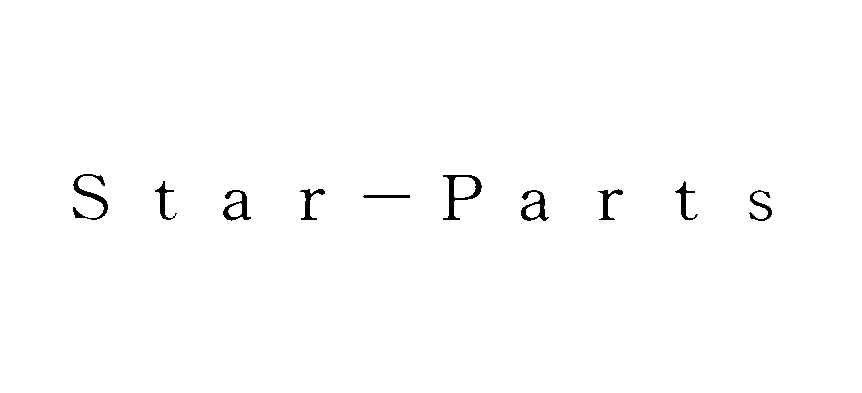
On December 5, 2019, the JPO examiner refused the applied mark based on Article 4(1)(xi) of the Trademark Law due to a conflict with senior trademark registration no. 5806962 for word mark “Star-Parts” in standard character which designates retail services or wholesale services for automobiles, parts, and accessories thereof in class 35.

Daimler AG filed an appeal against the refusal on March 4, 2019.

JPO Appeal Board’s decision

The Appeal Board overturned the examiner’s rejection by stating that the respective element of the applied mark shall be separably conceivable in view of a low degree of phonetic and conceptual association between figurative and literal elements. In the meantime, “StarParts” shall not be perceived as a dominant portion appealing its source of origin of goods, given “Mercedes-Benz” unquestionably plays an impressive role in identifying the source known for Germany luxury car maker. If so, it is not permissible to assess the similarity between the cited mark “Star-Parts” and the applied mark by dissecting the literal portion of “StarParts” from the applied mark.

Based on the foregoing, the Board concluded the refusal shall be disaffirmed since the examiner erroneously assessed the similarity between the marks.


I am of the view that the JPO’s decision looks unreasonable. From this viewpoint, any composite mark containing a famous or strong source indicator can be deemed dissimilar and eligible for registration.

PGA

In a recent administrative decision, the Appeal Board of Japan Patent Office (JPO) disaffirmed the examiner’s refusal and held a composite mark, consisting of words “PERFECT GEAR AGENCY” and a monogram “PGA”, is dissimilar to the senior registered word mark “PGA” owned by Professional Golf Association.
[Appeal case no. 2019-10638, Gazette issued date: September 25, 2020]

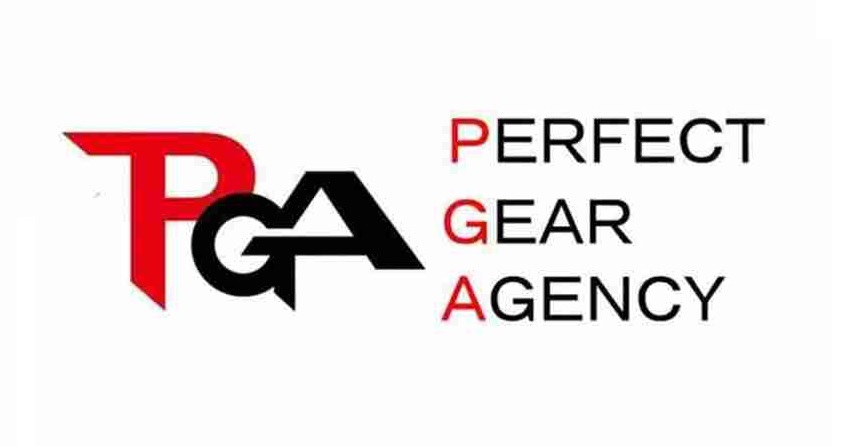
“PGA/ PERFECT GEAR AGENCY”

Disputed mark, see below, was applied for registration in relation to retail or wholesale services for various goods, e.g. foods and beverages, footwear, bags, automobiles in class 35 on January 24, 2018.

The disputed mark consists of the “PGA” monogram and the words “PERFECT GEAR AGENCY” on the right. The initial letter of the respective term is colored in red. Apparently, the monogram comes from an initial letter of each word “PERFECT”, “GEAR” and “AGENCY”.

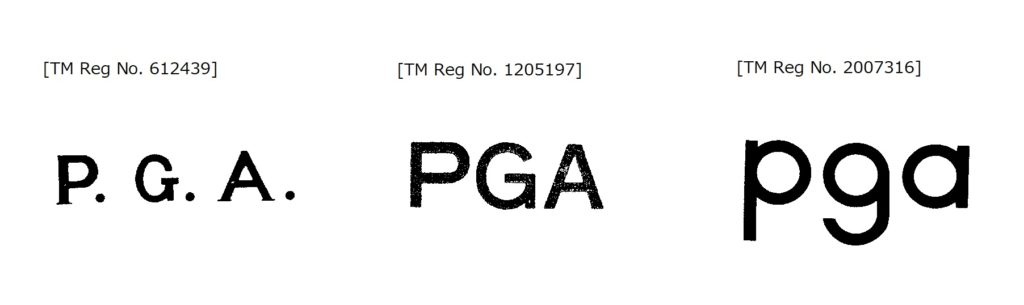
JPO Examiner rejected the disputed mark by citing several senior trademark registrations for a wordmark “PGA” in various classes owned by Professional Golf Association.

In Japan, retail or wholesale service in respect of specific goods is deemed similar to the goods or its equivalent. For example, retail service in respect of sporting goods (class 35) and sporting goods (class 28) is deemed similar.

That being the case, the applicant filed an appeal against the refusal and contended dissimilarity of the mark.

JPO decision

The Appeal Board found that the “PGA” monogram and words “PERFECT GEAR AGENCY” can be separably seen from a visual point of view. Besides, the “PGA” monogram per se does not give rise to any specific meaning. It is unknown whether relevant Japanese consumers have been familiar with the words “PERFECT GEAR AGENCY” as a whole. If so, the words do not give rise to a specific meaning as well.

By taking account of the above, the Board pointed out the disputed mark shall be pronounced as “PERFECT GEAR AGENCY”, but has no meaning.

Based on the foregoing, the Board concluded the refusal shall be disaffirmed since the examiner erroneously found that the disputed mark gives rise to a pronunciation of “PGA” from the “PGA” monogram.

Japan IP High Court ruling: “I♡JAPAN” lacks distinctiveness as a trademark

On June 17, 2020, the Japan IP High Court affirmed the JPO’s rejection of the “I♡JAPAN” mark in relation to various goods of class 14,16,18 and 24 due to a lack of distinctiveness.
[Judicial case no. Reiwa 1(Gyo-ke)10164]

I♡JAPAN

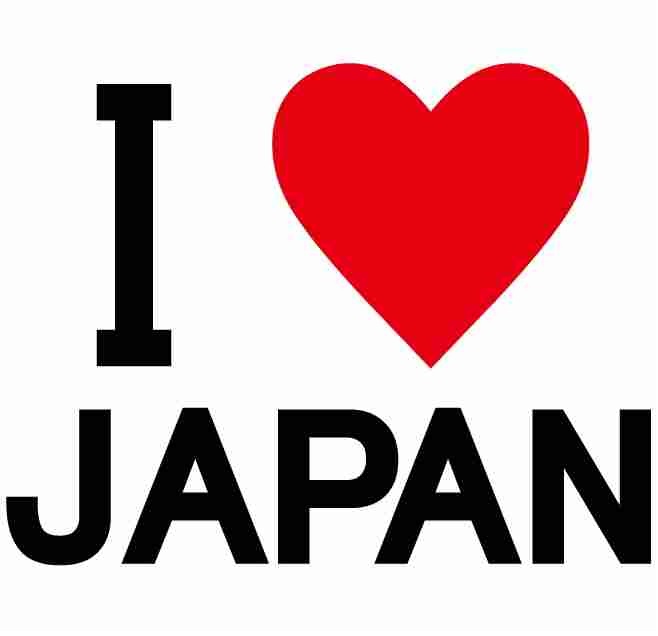
The disputed mark consists of the capital letter “I”, followed by a red heart symbol, below which are the capital letters “JAPAN” (see below). The mark filed by CREWZ COMPANY, a Japanese merchant on April 17, 2018, over various goods in class 14, 16, 18, and 24 [TM application no. 2018-049161].

Noticeably, the JPO already allowed trademark registration for the same mark on apparels in class 25 on March 27, 2015, filed by the applicant [TM Registration no. 5752985]. Regardless of it, the examiner refused disputed mark in contravention of Article 3(1)(vi) of the Trademark Law.

Article 3(1)(vi) is a provision to comprehensively prohibit from registering any mark lacking inherent distinctiveness.

Any trademark to be used in connection with goods or services pertaining to the business of an applicant may be registered, unless the trademark:
(vi) is in addition to those listed in each of the preceding items, a trademark by which consumers are not able to recognize the goods or services as those pertaining to a business of a particular person.

JPO decision

The JPO Appeal Board sustained the examiner’s refusal and decided to reject disputed mark by stating that we are nowadays accustomed to finding goods bearing the “I♡” logo followed by a geographical indication, which represents a strong devotion or attachment to the area/city in its entirety. In fact, the “I♡JAPAN” design is commonly used on several goods as a symbol to support the Japanese sports team or souvenirs for tourists. If so, the design shall not be exclusively occupied by a specific entity. Under the circumstances, relevant consumers are unlikely to conceive the disputed mark as a source indicator of the applicant. Thus, the mark shall be rejected in contravention of Article 3(1)(vi) and the examiner did not error. [Appeal case no. 2018-16957]

To contend against the decision, the applicant filed an appeal to the IP High Court.

IP High Court ruling

The IP High Court dismissed the applicant’s allegation entirely, stating that the disputed mark gives rise to the meaning of “I love JAPAN”. The court found the “I♡” logo followed by a geographical indication is commonly used to appeal a strong devotion or attachment to the area/city. Inter alia, various merchants promote goods bearing the “I♡JAPAN” design as a sign of their support to Japan or the Japanese sports team. If so, relevant consumers and traders would not conceive disputed mark as a source indicator of goods in question, but merely a symbol to represent their devotion and support to Japan. Therefore, the disputed mark shall not be registrable under n contravention of Article 3(1)(vi).

Besides, the court found the fact of a precedent registration for the same mark in a different class would not affect the distinctiveness of disputed mark since it does not have a legal effect to bind subsequent examination in assessing registrability of a junior mark under Article 3(1)(vi).

BRIDGESTONE Victorious in Trademark Dispute for B Mark Logo

The Japan Patent Office (JPO) upheld an invalidation petition by the world’s largest tire and rubber company, Bridgestone Corporation against TM Reg. no. 5664068 for the “SB NAGAMOCHI” mark due to a likelihood of confusion with its well-known B mark logo.
[Invalidation case no. 2018-890068, Gazette issue date: March 27, 2020]

TM Registration no. 5664068

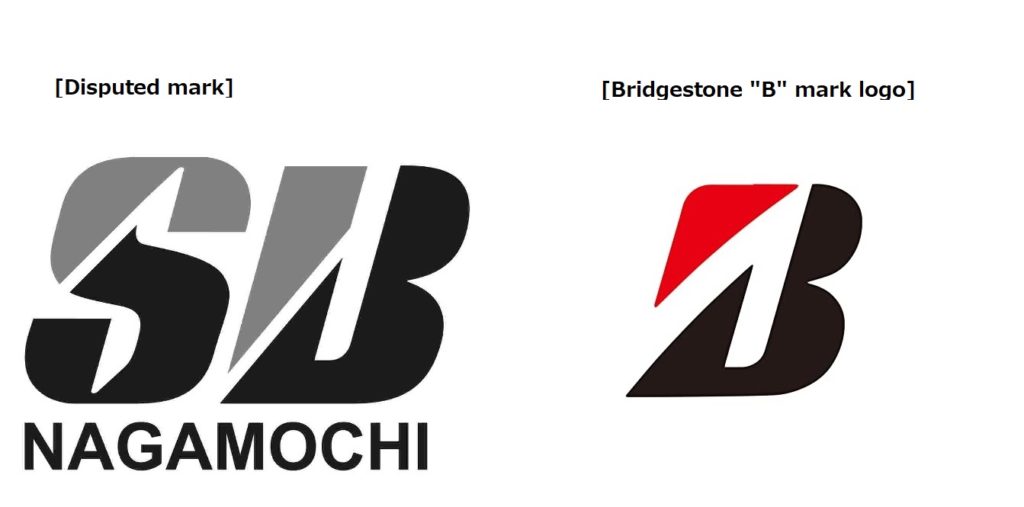
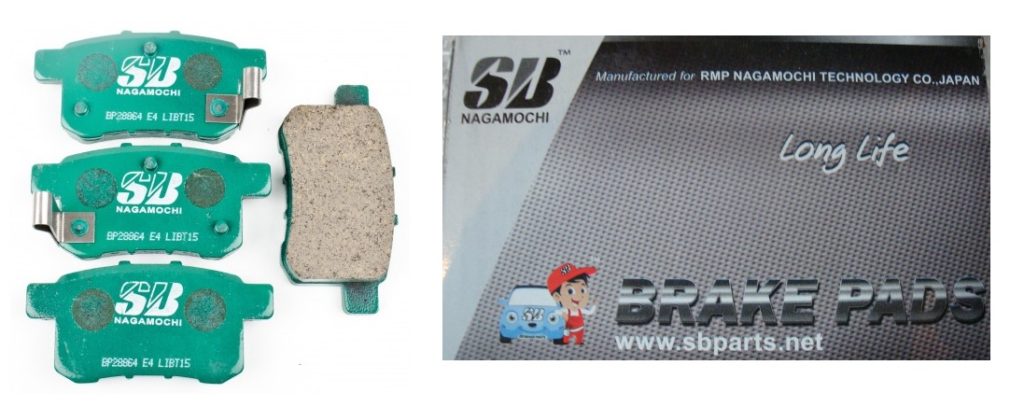
Disputed mark, consisting of “SB” logo and a word “NAGAMOCHI” in a smaller plain letter (see below left), was applied for registration on September 13, 2013 in respect of non-electric prime movers for land vehicles, not including their parts; AC motors or DC motors for land vehicles, not including their parts; automobiles and their parts and fittings; two-wheeled motor vehicles, bicycles and their parts and fittings; adhesive rubber patches for repairing tubes or tires in class 12.

Without confronting with a refusal during substantive examination, disputed mark was registered on April 18, 2014.

Applicant of disputed mark, RMP NAGAMOCHI Technology Japan Ltd promotes various structural parts for automobiles, e.g. cylinders, brakes and clutch hoses, brake calipers, brake pads, rubber parts, filters, gaskets. Disputed mark was actually used on brake pads (see below).

Petition for invalidation

Japan Trademark Law has a provision to retroactively invalidate trademark registration for certain restricted reasons specified under Article 46 (1) provided that interested party files an invalidation petition within five-year statute of limitations.

Bridgestone Corporation, a Japanese tire and rubber company, filed a petition for invalidation against disputed mark on September 5, 2018. Bridgestone argued the mark shall be invalidated due to a likelihood of confusion with its famous “B” mark logo (see above right) when used on all goods in class 12 based on Article 4(1)(xv) of the Trademark Law.

Article 4(1)(xv) provides that a mark shall not be registered where it is likely to cause confusion with other business entity’s well-known goods or services, to the benefit of brand owner and users.

Board Decision

In the decision, JPO Trial Board sided with Bridgestone by finding that:

  1. In 2016, Bridgestone holds top-ranked market share (14.6%) of automobiles tires in the world, the largest market share (55.9%) of tires and rubber products in Japan.
  2. Bridgestone has consecutively used “B” mark logo on goods and promotions as a symbolic house mark of Bridgestone group since 1984 and even when announcing sponsorship partnership with the Olympic Games and Tokyo2020 Paralympic Games Gold Partner.
  3. Based on the foregoing, it is unquestionable that “B” mark logo has acquired strong and considerable reputation as a source indicator of Bridgestone tires and rubber products among relevant traders and consumers of goods in question.
  4. “B” logo is a ‘strong’ mark because it is depicted with distinctive figurative element so that the mark as a whole can be seen sufficiently distinguishable from an ordinary “B” letter.
  5. Both marks look different when compared in its entirety, however, 2nd letter of “SB” logo is considered highly similar to “B” mark logo from visual point of view.
  6. Disputed goods “automobiles and their parts and fittings; two-wheeled motor vehicles, bicycles and their parts and fittings” and “tires” have the potential to be connected in the minds of the consumers. Since respective products share distributors or can be found in the same stores, there finds proximity in channels of trade and marketing of the products on which the marks are used.
  7. Foregoing weighs in favor of finding confusion. Thus, disputed mark shall be invalidated in violation of Article 4(1)(xv) of the Trademark Law.

No Success for Monster Energy Claws

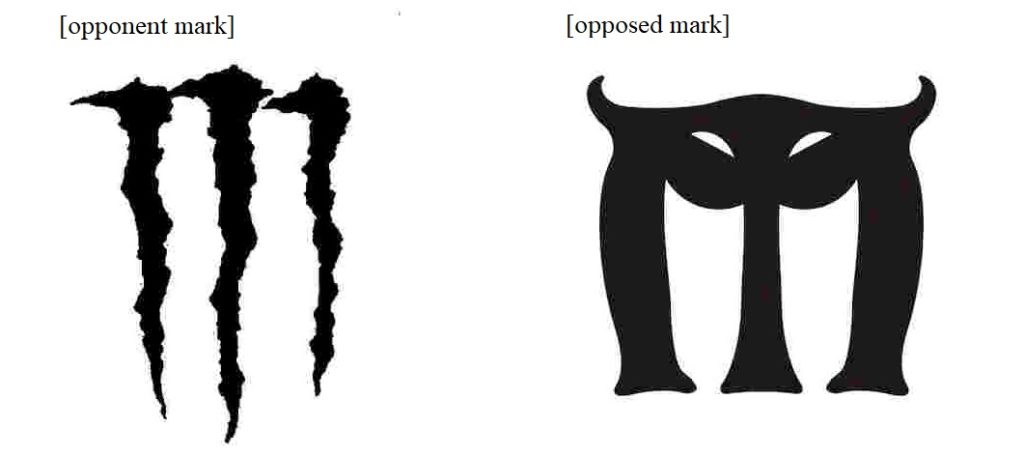
The Japan Patent Office (JPO) dismissed a trademark opposition claimed by MONSTER ENERGY COMPANY against trademark registration no. 6091273 for “M” logo design on goods/services in class 3,5,35 and negated the likelihood of confusion with Monster Energy Claws.
[Opposition case no. 2018-900390, Gazette issue date: February 28, 2020]

MONSTER HAIR

Opposed mark, “M” logo design (see below), was filed by AND BEAUTY JAPAN Co., Ltd. on June 12, 2018 on goods of hair nourishers; cosmetics; soaps and detergents in class 3, medicinal preparations for stimulating hair growth; pharmaceutical preparations; dietary supplements for humans in class 5, retail services and wholesale services for above goods in class 35, and registered for publication on November 13, 2018.

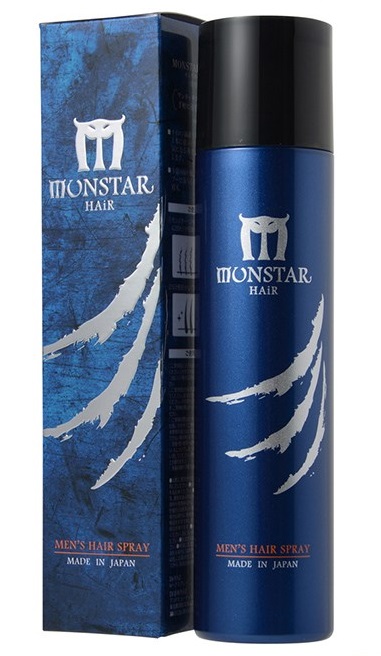
AND BEAUTY JAPAN promotes MONSTER HAiR sprays for men. Opposed mark is actually represented on the spray can.

Opposition by Monster Energy

On December 26, 2018, Monster Energy Company filed an opposition and argued opposed mark shall be revocable under Article 4(1)(xv) of the Japan Trademark Law due to a likelihood of confusion with Monster Energy Claws.

Article 4(1)(xv)

Article 4(1)(xv) prohibits to register a trademark which is likely to cause confusion with a business of other entity.

Monster Energy argued that opponent has used the mark Monster Energy Claws on energy drinks since 2002. In Japan, since its debut in May 2012, approximately 236 million cans were sold in three years which amount 175 million USD or more. Monster Energy has been aggressively promoting the energy drinks in sports and music events, and grants license to supply bracelets, key holders, T-shirts, headgears, racing jackets, gloves, helmets for sports, stickers, umbrellas, videogames. According to a survey of popular energy drinks, Monster Energy holds a 25% market share in Japan, 2013. These facts suggest Monster Energy Claws has acquired substantial reputation and popularity among relevant consumers as a source indicator of opponent. Besides, both marks give rise to visual, phonetical, and conceptual impression relating to an alphabetical letter “M”. Given energy drinks are closely associated with pharmaceutical preparations and dietary supplements for humans, relevant consumers are likely to misconceive the source of goods using opposed mark with Monster Energy or an entity systematically or economically connected with opponent.

Board Decision

At the outset, JPO provided a viewpoint that Monster Energy drinks belong to carbonated drinks [refreshing beverages] in class 32. If so, opponent failed to demonstrate its market share in carbonated drinks. From the produced evidences, the Board admits relevant traders and the young generation would recognize Monster Energy Claws as a source indicator of opponent to some extent, however, it is doubtful whether opponent mark has been highly known among general consumers of carbonated drinks.

In the assessment of similarity of mark, the Board found opponent mark shows three vertical parallel black shaky lines of different lengths whose upper parts is broader and which, from the perspective of the relevant public, might resemble three ‘claws’ or a very abstract depiction to which no specific and clear meaning can be attributed. With regard to the phonetic and conceptual aspect, the signs at issue are incomparable. From appearance, it is obvious that both marks are sufficiently distinguishable. Thus, the Board held the signs at issues are dissimilar and unlikely to cause confusion.

Besides, the Board negated close relation between energy drinks and pharmaceutical preparations, dietary supplements for humans in view of its nature, purpose, usage, distribution channel and manufacturers.

In respect of the overall assessment of the likelihood of confusion, having regard to all the relevant factors, the Based found there was no likelihood of confusion on the part of the relevant public and decided opposed mark shall not be revocable under Article 4(1)(xv).

Adidas defeated in 3-stripe trademark dispute

The Japan Patent Office (JPO) held in an opposition filed by Adidas AG that trademark registration no. 6085087 for horizontal three-stripes (Opposed mark) shall remain as valid as ever and entirely dismissed Adidas’ claims based on its famous three stripes.
[Opposition case no. 2018-900382, Gazette issued on February 28, 2020]

ULTRA MUSIC FESTIVAL

Opposed mark (see below) was applied for registration on October 10, 2017 over clothing, headwear, footwear in class 25, advertisement and promotion of music festival, concert in class 35, arrangement and conducting of musical performances, music festival, concerts in class 41 by Ultra Enterprises Inc., a U.S. business entity organizing outdoor electronic music event “ULTRA MUSIC FESTIVAL (UML)”, and published for registration on October 23, 2018.

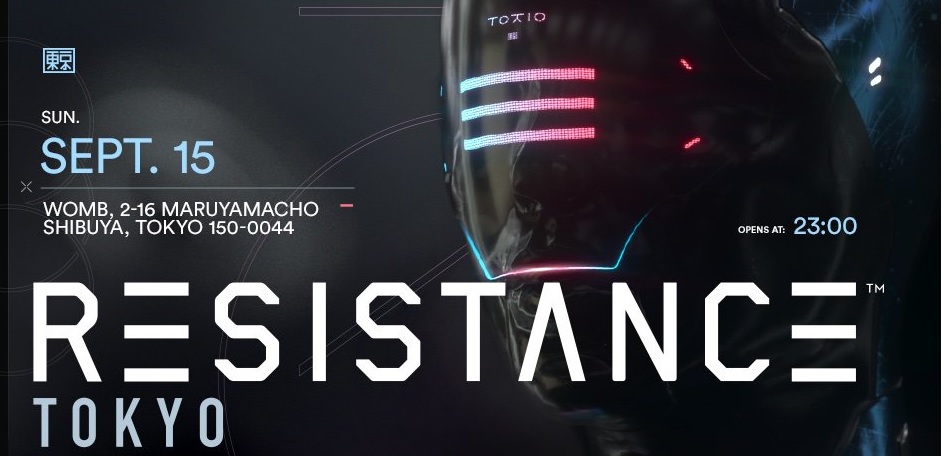
Apparently, opposed mark is used as a symbolic logo for Ultra Music Festival’s RESISTANCE set.

Opposition by Adidas

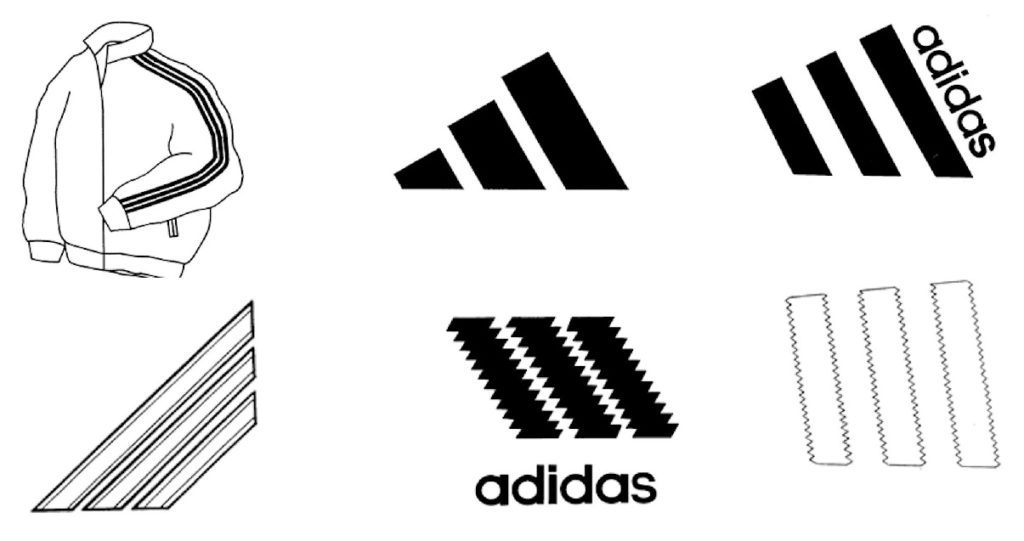
On December 21, 2018, Adidas AG filed an opposition and argued opposed mark is revocable under Article 4(1)(vii) and 4(1)(xv) of the Japan Trademark Law in relation to its famous three stripes (see below).

Article 4(1)(vii)

Article 4(1)(vii) prohibits any mark likely to offend public order and morals from registering.

Based on a remarkable degree of reputation and popularity to Adidas three stripes, opponent asserted, applicant must have been aware of Adidas three stripes and filed opposed mark with a malicious intention to take advantage of the reputation and credit of opponent’s famous trademark and impair the goodwill embodied on its iconic three stripes.

Article 4(1)(xv)

Article 4(1)(xv) prohibits to register a trademark which is likely to cause confusion with a business of other entity.

Adidas argued that, from appearance and concept, opposed mark evidently gives rise to a same impression with Adidas three stripes since each stripe of the mark is depicted in the same direction, width and shape, besides a space between stripe also has the same width with the stripe.

Average consumers with an ordinary care of goods/services in question who have been quite familiar with Adidas are likely to associate opposed mark with Adidas’ three-stripes. Inter alia, when opposed mark is used on apparels with a smaller configuration printed in one spot, so-called ‘one-point mark’, it must be difficult for relevant consumers to distinguish opposed mark with Adidas three-stripes because of its resemblance. Besides, goods/services in question are closely related to opponent business, namely sportswear, sports shoes, sports events. If so, it is highly anticipated that relevant consumers would confuse a source of opposed mark with opponent.

JPO Decision

The Opposition Board admitted a high degree of reputation and popularity to Adidas three stripes in relation to sport shoes, sportswear, sports gear at the time of initial filing and registration of opposed mark.

In the meantime, the Board found a low degree of originality of three stripes and similarity between the marks, from visual, phonetic, and conceptual points of view. The Board stated opposed mark can be perceived as ‘three-stripes’ deployed inside a vertically long rectangle. On the other hand, opponent’s marks consist of ‘three-stripes’ deployed inside a triangle or parallelogram. Even if Adidas three stripes have acquired remarkable reputation, because of a low degree of similarity and the originality, relevant consumers at the sight of opposed mark would not hesitate to consider a source of opposed mark unrelated to Adidas.
Thus, the Board held it is unlikely that relevant consumers confuse or associate opposed mark with Adidas.

The Board also negated opponent’s allegation of ‘one-point mark’ theory by stating that even if average consumers have tendency to pay less attention to details of a mark when used on apparels with smaller configuration, due to dissimilar impression caused by a different outline (vertically long rectangle, triangle, and parallelogram) of respective mark, opposed mark shall be undoubtedly perceived as a distinctive three-stripes unrelated to Adidas by relevant consumers with an ordinary care.

Besides, from the produced evidences, the Board found it was not foreseen a circumstance to offend public order and morals from registering opposed mark and give harmful effect to the international faith.

Based on the foregoing, the Board concluded opposed mark shall be irrevocable under Article 4(1)(vii) as well as (xv) and granted registration a status quo.

KUMAMON triumphs over bear mascot trademark battle

The Japan Patent Office (JPO) sided with Kumamon and declared invalidation of trademark registration no. 5997141 for a bear-like design mark due to a likelihood of confusion with Kumamon.
[Invalidation case no. 2019-890004, Gazette issue date: February 28, 2020]

KUMAMON

Have you ever heard of “Kumamon”?

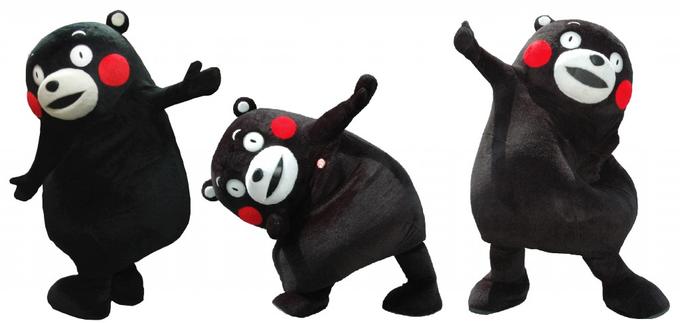
Nowadays, we are accustomed to see there are many organizations that create and use mascots to further their brands. Kumamon is a cuddly character with its pitch-black fur, red cheeks and white eyes designed as the official mascot (see below) of the Kumamoto Prefecture, a small prefecture in western Japan.

Kumamon made its debut in 2011 as part of a tourism promotion campaign for the Kyushu high-speed railway line. At the time a wave of local municipalities and companies sought to use ‘yuru-kyara’, or ‘relaxing characters’, to promote local products and attractions. Kumamon was hired as a part-time civil servant at Kumamoto before being elevated to sales manager. Such topics generated headlines and helped push Kumamon’s popularity beyond Kumamoto.

As an iconic symbol of ‘relaxing characters’, Kumamon has become a social and cultural phenomenon nationwide. Sales of goods using the Kumamon mascot topped 150 billion yen ($1.4 billion) in 2018.

To protect and promote the mascot, the Kumamoto Prefecture has registered its figurative image reproduced in 2D for various classed of goods and services in Japan as well as neighboring countries.

Disputed Mark

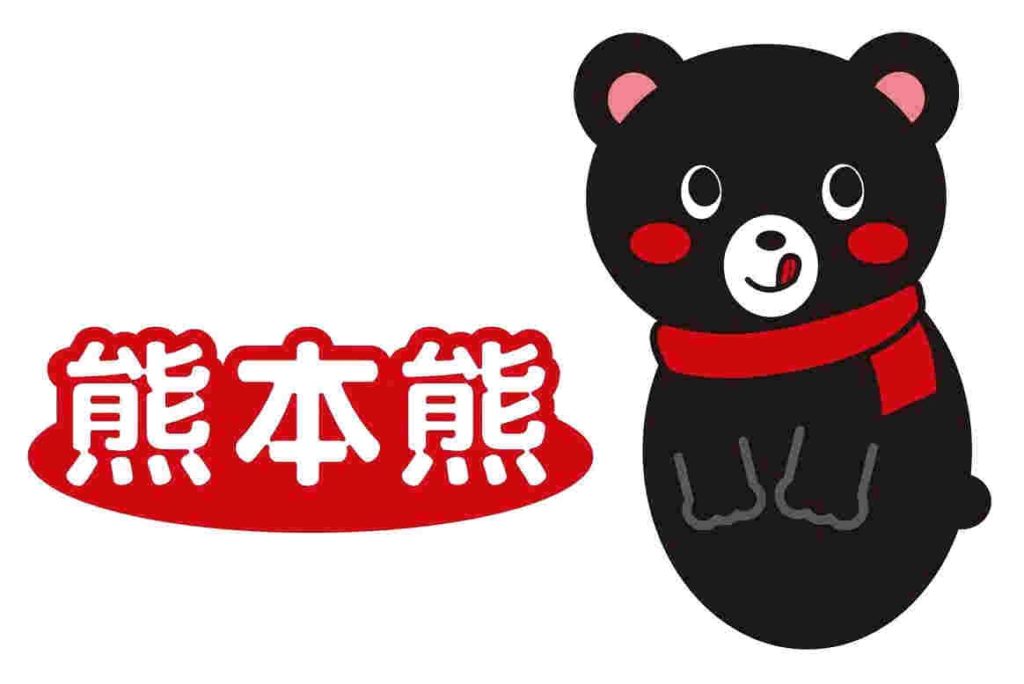
On March 21, 2017, Unique Design Company Limited (Belize) , sought to register the mark consisting of a bear-like design and three Chinese characters “熊本熊” which mean Kumamoto’s bear (see below) to be used on goods in class 11. The JPO granted protection of opposed mark on October 27, 2017.

Invalidation Trial

To challenge the validity of disputed mark, on January 25, 2019, the Kumamoto Prefecture filed an invalidation action to the JPO based on Article 4(1)(vi), (vii), (xi), (xv) and (xix) of the Japan Trademark Law. Kumamoto Prefecture argued that the figurative element of disputed mark closely resembles to the Kumamon character well-known for the official mascot of the Kumamoto Prefecture from appearance. Besides, the literal element of disputed mark gives rise to a similar meaning related to the Kumamoto Prefecture and Kumamon. If so, disputed mark as a whole shall be invalid due to a likelihood of confusion with Kumamon.

JPO Decision

The Invalidation Board of JPO found that:

  1. Unquestionably, Kumamon has acquired a remarkable degree of reputation and popularity nationwide as the official mascot of the Kumamoto Prefecture well before the filing date of disputed mark through continuous activities, promotions, and actual use on various goods since 2011. In addition, it becomes public among relevant consumers that the literal element of disputed mark “熊本熊” gets to be known as a Chinese name of Kumamon in China and neighboring countries.
  2. Since Kumamon has distinctive features visually different from wild bear, the mascot shall be deemed unique, creative, and impressive in itself.
  3. From appearance the bear-like design of disputed mark is confusingly similar to Kumamon. It gives rise to a similar meaning to Kumamon, the mascot originated from bear in the Kumamoto Prefecture. Likewise, the literal element of disputed mark gives rise to the same meaning. If so, both marks are considered highly similar.
  4. Due to free-use policy for brand promotion to domestic merchants (Kumamoto lets domestic companies use the character for free, but charges a license fee of a few percent on product sales by foreign companies), Kumamon mascot has been commercially used on wide range of goods over 10,000 items. 7-year cumulative sales exceed 510 billion JP-yen. If so, disputed goods in class 11, e.g. oil stoves, heaters, pocket warmers, electric foot warmers, shall be closely associated with the Kumamon goods in channels and consumers.

Based on the above findings, the Board concluded that relevant consumers and traders are likely to confuse disputed mark with Kumamon or misconceive a source from any entity systematically or economically connected with the Kumamoto Prefecture. Thus, disputed mark shall be invalidated in violation of Article 4(1)(xv) of the Trademark Law.