SERAPIAN Successful in Registering iconic MOSAICO braided pattern as trademark

The Italian-based fashion house Stefano Serapian S.r.l. was successful in an appeal to overturn the examiner’s rejection of TM App no. 2022-131488 for the Serapian’s signature “Mosaico” leather pattern in Class 18.
[Appeal case no. 2023-16337, decided on December 17, 2025]


SERAPIAN MOSAICO

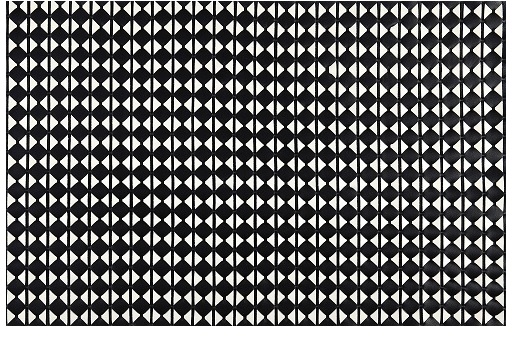
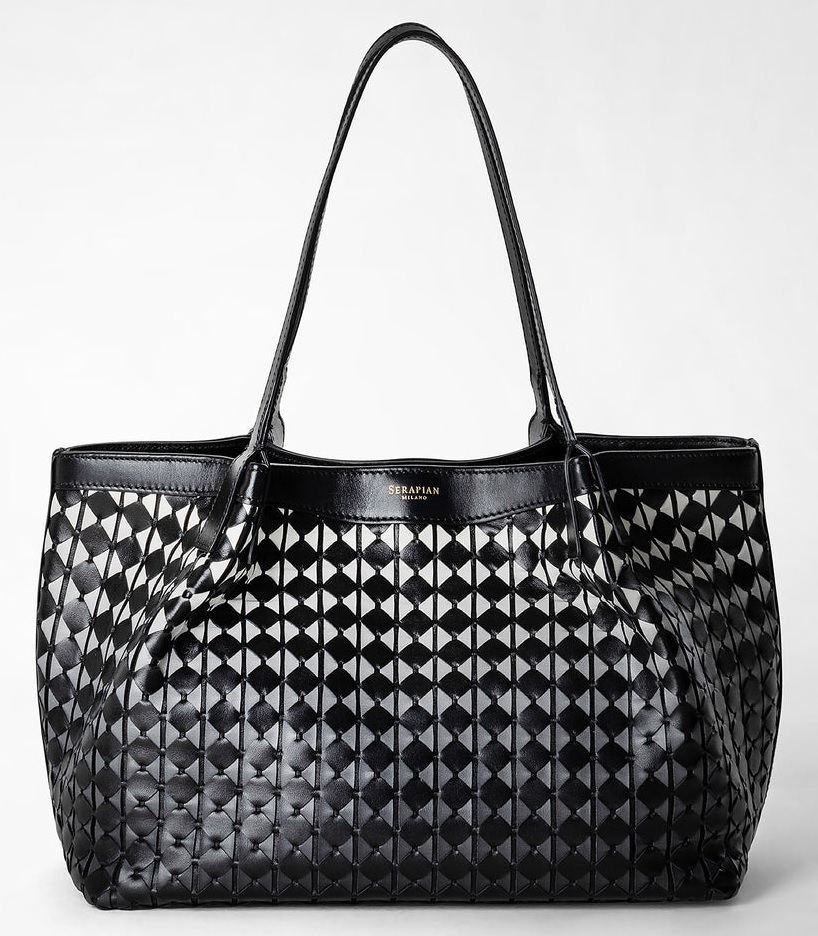
Stefano Serapian S.r.l. filed a trademark application for a braided pattern (see below) for use on bags, suitcases, tote bags, backpacks, key cases, porches, wallets, coin cases, and handbags in Class 18 with the JPO on November 17, 2022 [TM App no. 2022-131488].

The Serapian Mosaico pattern is known for its iconic hand-weaving technique, which dates back to 1947 and serves as an emblem of the Italian luxury brand, Serapian.


JPO Examination

On June 26, 2023, the examiner rejected the mark based on Article 3(1)(vi) of the Japan Trademark Law by finding that:

The applied-for mark represents a continuous and repetitive geometric pattern consisting of a white square with a vertical line in the middle and a black square in a diagonal position. As a whole, it will be perceived merely as a decorative background design. Besides, there is no distinctive element that identifies the source of the goods in question. Consequently, consumers are unable to recognize it as a source indicator due to its lack of inherent distinctiveness.

Serapian filed an appeal against the rejection on September 27, 2023, to dispute the inherent distinctiveness of the mark based on substantial use and advertising of the Mosaico collection in Japan since 2014.


JPO Appeal Board Decision

The JPO Appeal Board noted the following facts.

  • Founded in 1928, the applicant is known for its line of bags favored by the late British actress Audrey Hepburn. The applicant’s bags, which depict the applied-for mark and were designed in 1947, have been sold nationwide in Japan for over 10 years and have been distributed in Japan since 2014.
  • Major fashion magazines and online articles have featured the bags and their iconic “MOSAICO” pattern design.
  • The bags are also sold in major department stores and online malls. Despite being expensive and high-end goods, annual sales exceeded JPY 50 million in 2023 and JPY 9 million in 2024.
  • A discretionary survey by the Board did not reveal the actual use of a similar pattern by others.

Based on the foregoing, the Board found that relevant consumers and traders can distinguish the applicant’s goods from others based solely on the Mosaico pattern.

Therefore, since the applied-for mark is not subject to Article 3(1)(vi) of the Japan Trademark Law, the Board overturned the examiner’s rejection.

YONEX Scored Win in Registering Color mark

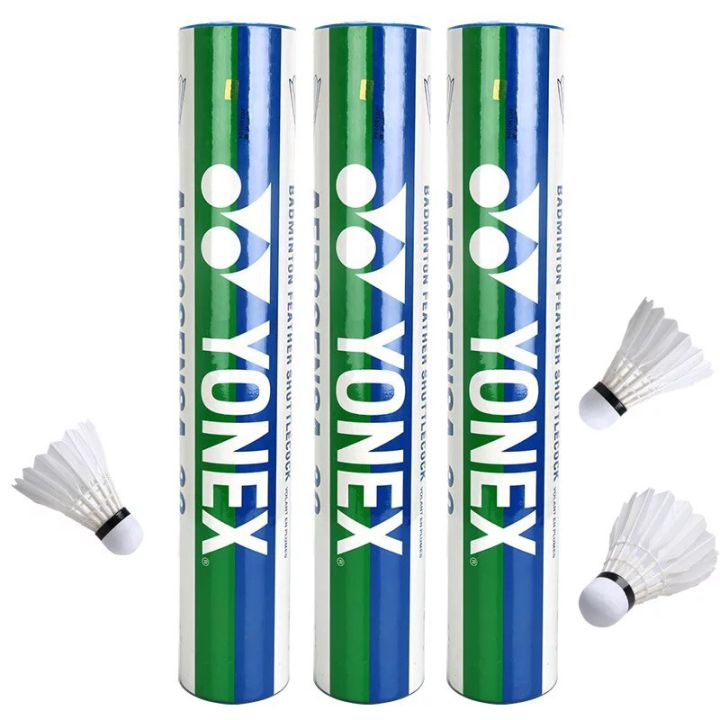
On October 21, 2025, the Japan Patent Office (JPO) granted registration of a color mark that consists of blue and green colors, filed by Yonex Co., Ltd. to use on badminton shuttlecocks by finding acquired distinctiveness of the color combination.
[Appeal case no. 2022-17481]


YONEX Color Mark

Yonex Co., Ltd. filed a trademark application with the Japan Patent Office on September 6, 2019, for a mark that consists of a combination of blue (Pantone 2935C) and green (Pantone 355C) (color ratio 50%:50%), designating “sports equipment; badminton equipment” and other goods in Class 28 [TM App no. 2019-118815].


Rejection by JPO examiner

On July 27, 2022, the JPO examiner rejected the mark under Article 3(1)(iii) of the Japan Trademark Law, due to a lack of inherent distinctive character. Furthermore, while acknowledging that a certain number of traders and consumers recognize the color combination perse as an indicator of the applicant’s goods in view of the applicant’s extensive use of the mark on badminton shuttlecocks for years, and its leading market share, the examiner had an opinion that a significant number of people do not recognize it as a source indicator to distinguish from others. Accordingly, the examiner concluded that the mark does not satisfy the requirements to apply Article 3(2) since the applicant failed to demonstrate acquired distinctiveness of the mark in relation to the goods in question.

Subsequently, the applicant filed an appeal against the rejection on November 1, 2022, and then restricted the designated goods to “Shuttlecocks” in Class 28.


JPO Appeal Board decision

The JPO Appeal Board observed that the evidence submitted by the applicant would sufficiently demonstrate that the color combination has played a role in identifying the specific source of Shuttlecocks by taking into account the following facts.

  1. The mark has been used continuously for over 48 years, since at least 1976, on Yonex Badminton shuttlecocks. The color combination appears on the applicant’s website, in product catalogs, internet articles, magazines, newspapers, and television programs. The shuttlecocks bearing the mark have been officially used at numerous international badminton tournaments, including the Olympic Games and World Championships.
  2. Yonex shuttlecocks ranked first in the domestic market for 11 consecutive years from 2009 to 2019, with a market share of approximately 70% to 80% during that period.
  3. According to survey results targeting 1,053 men and women aged 15 to 59 who currently play or have played badminton or tennis, 57.87% of the respondents who have played both tennis (including soft tennis) and badminton could associate the color combination with the applicant in the answer to an open or closed (multiple choice) question. For those who have experienced badminton, but not tennis, 56.59% could associate it with the applicant in either question.

Based on the foregoing, the Board found that the examiner erred in applying Article 3(2), and thus decided to register the color combination as a trademark.

JPO Rejected 3D shape of KitKat 2 Finger Mini Chocolate Wafers as Trademark

The Japan Patent Office (JPO) Appeal Board upheld the examiner’s decision to reject TM App no. 2020-121513 for the 3D shape of Nestle’s KitKat 2 Finger Mini Chocolate Wafers, due to a lack of inherent and acquired distinctiveness.
[Appeal case no. 2024-75, decided on September 29, 2025]


KitKat 2 Finger Mini Chocolate Wafers

Société des Produits Nestlé S.A. filed a trademark application for the 3D shape of KitKat 2 Finger Mini Chocolate Wafers (see below) in connection with chocolate confections (Cl. 30) with the JPO on October 1, 2020. [TM App no. 2020-121513]

The JPO examiner gave Nestle a notice of grounds for refusal on August 30, 2021, based on Article 3(1)(iii) of the Japan Trademark Law due to a lack of inherent distinctiveness.

As a response, Nestle argued not only the inherent distinctiveness of the 3D shape, but also acquired distinctiveness since the shape has been used since 2011 on their world-famous chocolate wafers “KitKat 2 Finger Mini”. To demonstrate the acquired distinctiveness, Nestle conducted market research targeting 1,001 men and women aged 15 to 64 residing in Tokyo or Osaka, or these neighboring areas, and who have purchased and eaten chocolate confections more than once a month. 85% of respondents, when shown the 3D shape of the KitKat 2 Finger Mini chocolate wafers without any accompanying text, identified it as “KitKat” in response to an open-ended question.

However, the examiner considered the market research biased by excluding children aged under 15 and over 65, who are unquestionably relevant consumers, and limiting respondents who reside in the Tokyo or Osaka areas and have purchased and eaten chocolate confections more than once a month.

On October 2, 2023, the examiner decided to reject the mark based on Article 3(1)(iii), and noted that the evidence is insufficient to find 3D shape perse has already played a role in identifying the source of the KitKat 2 Finger Chocolate Wafers.

To contest, Nestle filed an appeal with the JPO on January 4, 2024.

Subsequently, Nestle conducted 2nd market research targeting 1,080 men and women aged 15 to 99 without restricting their residence and preference to chocolate confections. The result shows that 72.9% of respondents, when shown the 3D shape of the KitKat 2 Finger Mini chocolate wafers without any accompanying text, identified it as “KitKat” in response to an open-ended question.


JPO Appeal Board decision

The JPO Appeal Board recognized the high popularity and recognition of KitKats sold in Japan since 1973, which holds a 17% market share — the top ranking in Japan. Annual sales exceeded 27 billion JPY in 2019.

In the meantime, the Board questioned whether the applied 3D shape perse has acquired distinctiveness in connection with the KitKat 2 Finger Mini chocolate wafers by stating that:

  1. KitKats come in various shapes, such as spherical or stick-shaped, as well as the ‘2 Finger Mini’. Therefore, the applied 3D shape would not be identical to all KitKat chocolates.
  2. KitKats are sold in individually wrapped pieces that are then packed in boxes or bags for display and sale. This suggests that the 3D shape would not be distinctive enough to catch consumers’ attention at the time of purchase.
  3. Of the sixty KitKats, only two represent an image of the 3D mark on their packaging.
  4. There is insufficient evidence to conclude that relevant consumers can securely identify the source of KitKats by relying solely on the 3D mark in question.
  5. Advertising for KitKats has not prominently featured the 3D shape to the extent that it could be perceived as a source indicator by consumers. Even if market research shows that many consumers associate the 3D shape with KitKats, it cannot be concluded that consumers distinguish KitKats based solely on the shape of the goods.

Based on the above findings, the JPO upheld the examiner’s decision, and declared rejection of the 3D shape due to a lack of inherent and acquired distinctiveness.

The JPO’s decision is appealable until February 11, 2026.

JPO Found Tissa Fontaneda’s Bubble Pattern Descriptive of Bags

The Japan Patent Office (JPO) sustained the examiner’s decision rejecting International Registration No. 1599413 for a three-dimensional, rounded “bubble” pattern in Class 18, known as the Tissa Fontaneda “Bubble Bag,” on the ground that the mark lacks inherent distinctiveness.
[Appeal Case no. 2023-650049, decided on August 26, 2025]


Tissa Fontaneda “Bubble Bag”

TISSA FONTANEDA, S.L. sought protection in Japan, via the Madrid Protocol, for a mark consisting of a repetitive pattern formed by the arrangement of a plurality of three-dimensional elements placed in a staggered manner on the surface of goods, in respect of “bags; tote bags; handbags; shoulder bags; clutch bags; traveling bags; pouches; trunks; suitcases; hip bags; rucksacks; purses; pocket wallets; wallets; credit card sleeves; traveling sets [leatherware]; credit card cases [wallets]; vanity cases, not fitted; tie cases,” in Class 18. [IR No. 1599413, filed on April 19, 2021]


Examiner’s Decision

On February 24, 2023, the examiner rejected the application under Article 3(1)(vi) of the Japan Trademark Law, on the following grounds:

A pattern can be perceived as an indication of origin only when it has acquired a certain degree of recognition among consumers. Although it appears that goods bearing the applied-for mark have been used by certain celebrities, the applicant did not establish the scale of sales, the duration of use, or the market share of such goods. Accordingly, it cannot be concluded that the applied-for mark has, through use, acquired nationwide recognition or come to be recognized by consumers as an indication of origin.

The applicant filed an appeal on June 20, 2023, asserting that the applied-for mark is inherently distinctive.


Appeal Board’s Findings

The Board finds as follows:

(1) In the representation of the applied-for mark, no distinctive element can be identified beyond the form of the pattern that would enable the mark to function as an indication of origin. Accordingly, the applied-for mark is perceived merely as a decorative background pattern.

(2) Even if competitors have not produced bags decorated with a three-dimensional rounded “bubble” pattern, this fact is insufficient to establish inherent distinctiveness, since bags bearing repetitive patterns formed by regularly arranging three-dimensional elements on their surfaces are commonly distributed.

(3) The fact that the applied-for mark is registered in other jurisdictions, such as the United States, Spain, Ireland, the Benelux, Brazil, Italy, and Mexico, is irrelevant, as distinctiveness must be assessed based on consumers and trade practices in Japan.

Consequently, the Board finds the examiner made no error in applying Article 3(1)(vi) of the Trademark Law.

JPO Said No to Register Kawasaki Green Color Mark

On March 19, 2025, the Japan Patent Office (JPO) finally decided to reject a color mark application filed a decade ago by Kawasaki Heavy Industries, Ltd., which sought to register a green color used on the world-famous Kawasaki motorcycles.
[Appeal case no. 2022-11189]


Narrow gate to color mark registration

On April 1, 2015, the Japan Trademark Law has opened the door to the registration of marks consisting solely of a color or colors. To date, 589 color marks have been filed with the JPO, and only 11 have been granted registration. This represents a success rate of only 1.9%.


Kawasaki Green

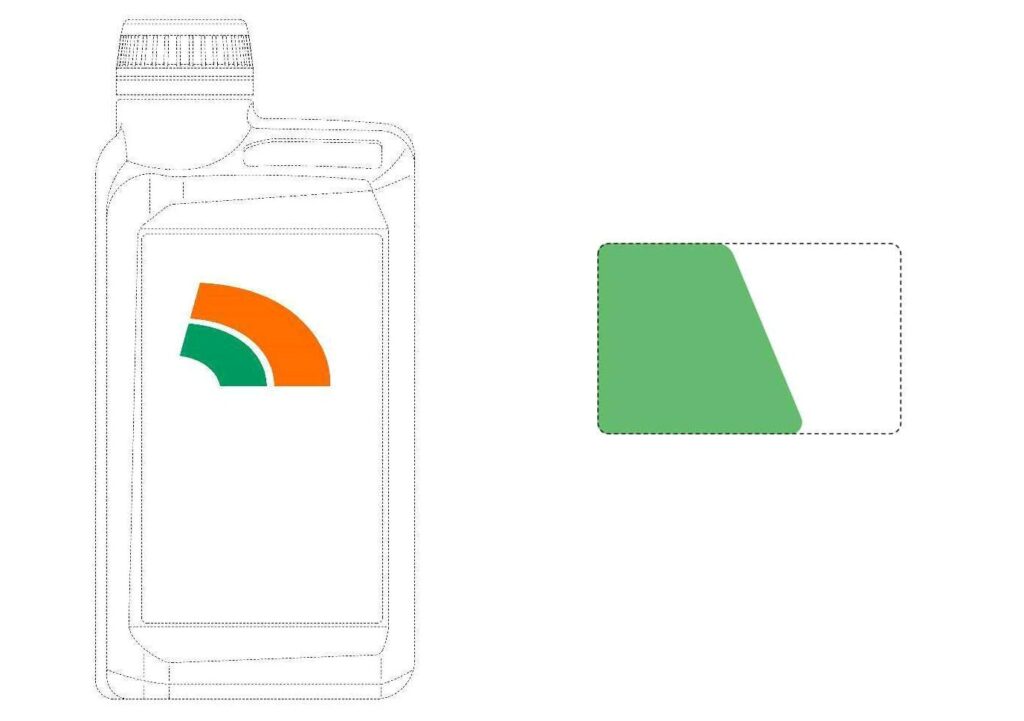
On the very first day, Kawasaki Heavy Industries, Ltd., famous for sports and racing bikes, sought for registration of a color mark consisting solely of light green (R105, G190, B40) in connection with motorcycles (cl.12). [TM App no. 2015-30667]

In addition, Kawasaki filed two color mark applications for a single light green color represented on fuel tank (position) and a color combination of light green and black as shown below for use on motorcycles (cl. 12) with the JPO on the same day, but these were all withdrawn or rejected due to a lack of inherent and acquired distinctiveness. [TM App nos. 2015-30668, 2015-30696]

Allegedly, Kawasaki has been using the light green color on their Ninja, KX, KLX and other motorcycles since 1975, but, according to the catalogs, the color was used on less than 40 % of the total Kawasaki motorcycles. Besides, annual sales of the motorcycles using the light green color averaged approximately 23.4%.

On April 19, 2022, the JPO examiner rejected the color mark based on Article 3(1)(iii) of the Japan Trademark Law.

Kawasaki filed an appeal against the rejection and agued acquired distinctiveness of the light green in connection to motorcycles on July 19, 2022.

In order to demonstrate the acquired distinctiveness of the light color as a source indicator of Kawasaki motorcycles, Kawasaki conducted the market research that targeted a total of 1,000 men and women aged from 16 to 79 who has a motorcycle driver’s license, 90.5% of the interviewees who answered that they had seen the color in connection with motorcycles or motorcycle shops (66.1% of the total interviewees) could associate the color with Kawasaki.


JPO decision

The JPO Appeal Board noted the light green has acquired a certain degree of recognition among relevant consumers as a source indicator of Kawasaki motorcycles in view of substantial use for the past five decades.

However, the Board found that the market research was insufficient to objectively assess the acquired distinctiveness of the applied mark, as it was only targeted at motorcycle license holders. Moreover, competitors also manufacture many motorcycles with a similar green color.

According to the IP High Court’s decision, a mark consisting of a single color is not registrable unless it has acquired an extremely high degree of recognition as an indication of a particular source as a result of substantial use, to the extent that the exclusive use of the color would not cause detriment to the public in general.

In light of the fact that the light green color was used on less than 40 % of Kawasaki’s motorcycles, and the annual sales of the motorcycles using the light green color averaged approximately 23.4%, the Board has no reason to believe that the applied color has acquired a high degree of secondary meaning to outweigh the detrimental effect on the public at large if registered.

Based on the foregoing, the Board affirmed the examiner’s rejection and decided to refuse the applied mark based on Article 3(1)(iii) of the Japan Trademark Law.

It is appealable to the IP High Court until May 8, 2025.

Is “WEBmetaverse” registrable as a trademark?

The Japan Patent Office (JPO) affirmed the examiner’s rejection to TM App no. 2022-131131 for wordmark “WEBmetaverse” by finding a lack of inherent distinctiveness in relation to the designated goods and services in classes 9, 35, 38, 41 and 42.
[Appeal case no. 2024-1154, decided on February 13, 2025]


WEBmetaverse

COLOPL, Inc. filed a trademark application for mark “WEBmetavese” in standard character with the JPO on November 16, 2022 (TM App no. 2022-131131).

The mark covers various goods and services in classes 9, 35, 38, 41, and 42 relating to computer programs, virtual reality, SaaS, and others.

The applied mark has been in use on their platform for users to experience the metaverse.

On October 24, 2023, the JPO examiner rejected the mark based on Article 3(1)(vi) of the Japan Trademark Law by finding that:

“WEB” is an abbreviation of World Wide Web. “metaverse” means a virtual-reality space in which users can interact with a computer-generated environment and other users. Therefore, the applied mark is recognized just to indicate ‘a virtual-reality space provided on internet’ as a whole. If so, the relevant consumers will not be able to identify a specific source of the goods and services from the mark applied for.

Article 3(1)(vi) is a provision to comprehensively prohibit from registering any mark lacking inherent distinctiveness.

Any trademark to be used in connection with goods or services pertaining to the business of an applicant may be registered, unless the trademark:

(vi) is in addition to those listed in each of the preceding items, a trademark by which consumers are not able to recognize the goods or services as those pertaining to a business of a particular person.

The applicant filed an appeal against the examiner’s refusal on January 23, 2024, contesting the inherent distinctiveness of the mark “WEBmetaverse” based on the fact that the mark applied for was not actually used by any entity other than the applicant.


JPO decision

The JPO Appeal Board stated that:

Recently, “Metaverse” has been at the center of attention in the public. There is a circumstance that the metaverse accessible from a web browser without specific devices or applications is referred to as a “Web-type Metaverse”.

Therefore, the mark applied for just gives rise to a meaning of “Metaverse using the Web” as a whole. If so, relevant consumers at the sight of the mark used on the goods and services in question would simply recognize it to indicate the purpose or function of the goods and services for “Metaverse using the Web”. It is reasonable to say that the mark applied for cannot play a role in distinguishing goods and services with competitors.

A fact that plenty of mark containing the term “Metaverse” have been registered would not be binding and relevant because these registrations are different from the mark applied for. 

Article 3(1)(vi) of the Trademark Law should be applied on a case-by-case basis, with due consideration given to the configuration of the mark as well as the common practices of transactions at the time of examination or trial decision.

Based on the foregoing, the Board decided to dismiss an appeal entirely and found “WEBmetaverse” unregistrable as a trademark.

JPO Decision: Trademark “Dear U plus” dissimilar to “dear U”

The Japan Patent Office (JPO) overturned the examiner’s refusal and granted registration of TM App no. 2023-99199 for wordmark “Dear U plus” by finding dissimilarity to earlier marks, “dear U” and “DEAR YOU”.
[Appeal Case no. 2024-13602, decided on December 12, 2024]


TM App no. 2023-99199

Fanplus, Inc. filled a trademark application for wordmark “Dear U plus” in standard character for use on goods and services in classes 9, 35, 41 and 42 with the JPO on September 6, 2023.


Article 4(1)(xi)

On June 3, 2024, the JPO examiner rejected the applied mark based on Article 4(1)(xi) of the Japan Trademark Law by citing earlier TM Reg nos. 6570375 “dear U” (classes 9, 38, 41, and 45) and 6756169 “DEAR YOU” (classes 20, 21, 24, 27, 29, 30, 35, and 43).

In the refusal, the examiner asserted that the word “plus” is often used in conjunction with a source indicator to represent that the quality of the goods or services offered is more advanced or improved than that of existing goods or services. Under the circumstances, relevant consumers would consider the word “plus” less distinctive in connection with the goods and services in question. Therefore, the “Dear U” element is dominant in the applied mark. If so, it is reasonable to conclude that the applied mark is aurally and conceptually similar to the cited marks.


JPO Appeal Board decision

The applicant filed an appeal against the examiner’s refusal with the JPO on August 23, 2024, and argued dissimilarity of mark.

The JPO Appeal Board found that the applied mark “Dear U plus” did not have a specific meaning and would be recognized as a whole, taking into account a visual configuration represented by the same font and a less redundant pronunciation.

In assessing similarity of mark, the Board held:

The applied mark is visually distinguishable from the cited marks because of the presence of the term “plus” and the difference between the letter “U” and “YOU”. Furthermore, there are differences in the upper and lower case of the words “Dear,” “dear,” and “DEAR”.

Aurally, even though the applied mark and the cited marks contain the same sound “dɪr-juː”, the whole sounds are distinguishable because the difference in the suffix sound “plʌs” makes the overall tone and nuance of respective mark significantly different.

The conceptual aspect does not have impact on the assessment as the applied mark has no specific meaning.

Based on the foregoing, the Board found both marks dissimilar and held that the examiner erroneously applied Article 4(1)(xi). Consequently, the JPO decided to overturn the examiner’s refection.

Top 10 Trademark News in Japan, 2024

As the year 2024 comes to an end, it is a good time to share the top 10 trademark news in Japan by counting the total number of likes on the Linkedin “Like” Button.


1: Japan IP High Court said No to registering the color of Hermes packaging

The Japan IP High Court ruled to dismiss Herme’s appeal against the JPO decision that rejected Hermes packaging color due to a lack of inherent and acquired distinctiveness.


2: Can a ‘Letter of Consent’ guarantee successful trademark registration in Japan?

The revised Japan Trademark Law will come into effect on April 1, 2024, introducing the “Letter of Consent” as a means to overcome conflicts with earlier trademark registrations.


3: COCO vs. KOKO

In a recent administrative decision, the Japan Patent Office (JPO) found that the trademarks “CoCo” and “koko” are dissimilar and unlikely to cause confusion.


4: CHANEL defeated in Trademark Opposition against “COCOCHI”

The Japan Patent Office (JPO) handed a loss to Chanel SARL in trademark opposition against TM Reg no. 6674710 for the “COCOCHI” mark by finding unlikelihood of confusion with “COCO”.


5: ZARA Unsuccessful Opposition against TM “LAZARA”

On April 22, 2024, the Japan Patent Office (JPO) dismissed an opposition filed by Industria de Diseño Textil, SA (INDITEX), owner of the fashion brand “ZARA”, against TM Reg no. 6699667 for word mark “LAZARA” in classes 25 due to dissimilar marks and unlikelihood of confusion with “ZARA”.


6: CHANEL Lost in Trademark opposition against “COCOBABY”

The Japan Patent Office (JPO) did not side with CHANEL in an opposition against TM Reg no. 6650252 for wordmark “COCOBABY” in class 25 by finding dissimilarity of mark between “COCOBABY” and “COCO”.


7: Trademark Dispute: Chateau Mouton Rothschild vs MOUTON

The Japan Patent Office (JPO) declared invalidation of TM Reg no. 6090508 for wordmark “MOUTON” in classes 35 and 43 due to a likelihood of confusion with famous mark “Mouton” as a source indicator of Chateau Mouton Rothschild, one of the most famous wine estates in the world.


8: Hermes Victory with Invalidating Birkin Lookalike Design

The Japan IP High Court has ruled in favor of Hermes in a dispute over the validity of Design Reg no. 1606558 by finding a likelihood of confusion with Hermes.


9: Trademark dispute: VALENTINO GARAVANI vs GIANNI VALENTINO

In a trademark opposition claimed by Valentino S.p.A. against TM Reg no. 6550051 for the GIANNI VALENTINO mark, the Japan Patent Office (JPO) decided to cancel the registration due to a conflict with earlier IR no. 975800 for the VALENTINO GARAVANI mark.


10: Japan IP High Court gives Green Light to 3D “Godzilla” shape as Trademark

On October 30, 2024, the Japan IP High Court disaffirmed the administrative decision by the Japan Patent Office (JPO) not to register the 3D shape of the eponymous character from the film “Shin Godzilla” as a trademark.

Trademark dispute: UNITED vs UNITED GOLD

In a dispute over the similarity of the marks “UNITED” and “UNITED GOLD” in connection with apparel, the Japan IP High Court upheld the JPO decision and found that both marks were dissimilar.
[Court case no. Reiwa6(Gyo-ke)10066, decided on December 10, 2024]


UNITED GOLD

Nishitomi Shoji Co., Ltd. filed a trademark application with the Japan Patent Office (JPO) on January 17, 2022 for the word mark “UNITED GOLD” in standard character for use on apparel in class 25 and retail services for apparel in class 35.

The applicant promotes men’s suits bearing the applied mark via internet.

In accordance with a request for accelerated examination from the applicant based on the actual use of the mark on any one of the designated goods and services, the JPO carried out a substantive examination and registered the mark on March 25, 2022 [TM Reg No. 6534957].


Invalidation action

On December 15, 2023, Howard Corporation, an owner of earlier TM Reg no. 2053119 “UNITED” in class 25, filed an application for a declaration of invalidity against the mark “UNITED GOLD” with the JPO in contravention of Article 4(1)(xi) of the Japan Trademark Law due to its similarity to earlier trademark “UNITED”.

However, the JPO Invalidation Board found “UNITED GOLD” to be dissimilar to “UNITED” and therefore dismissed the invalidation action on June 17, 2024 [Invalidation Case No. 2023-890089].

To challenge the JPO decision, Howard filed an appeal with the IP High Court on July 10, 2024, claiming that the JPO erred in finding that the contested mark “UNITED GOLD” should be assessed in its entirety.

In the compliant, Howard argued that the term “GOLD” has a low degree of distinctiveness in relation to the goods and services in question. On the other hand, the term “UNITED” is highly distinctive because of its meaning. If so, the term “UNITED” plays a dominant role in identifying a source of the contested mark


IP High Court ruling

The IP High Court, at the outset, referred to the Supreme Court ruling in 2008 which established the criterion to grasp a composite mark in its entirety in the assessment of similarity of the mark.

“Where a mark in dispute is recognized as a composite mark consisting of two elements or more, it is not permissible to assess the similarity of mark simply by means of taking out an element of the composite mark and then comparing such element with the other mark, unless consumers or traders are likely to perceive the element as a dominant portion indicating its source of origin of goods/service, or remaining elements truly lack inherent distinctiveness as a source indicator in view of sound and concept.”

Based on the criteria, the court found that contested mark shall be assessed in its entirety on the following grounds:

  1. From appearance and meaning, there is no reasonable ground to find “UNITED” and “GOLD” shall be recognized individual and separable.
  2. In conjunction with clothing of class 25, more than 150 trademarks that contain the term “UNITED”, e.g. “UNITED ARROWS”, “UNITED COLORS OF BENETTON”, “UNITED TOKYO”, “UNITED DOORS”, are registered with the JPO in the name of third party. These facts suggest that the term “UNITED” is also lowly distinctive in relation to apparel.
  3. Even if there are actual examples in which the term ‘GOLD’, when combined with another distinctive term, implies a high quality of the goods, it would be anything but convincing to find that the term ‘UNITED’ plays a dominant role in identifying the goods and services bearing the contested mark, given that, as stated above, the term ‘UNITED’ has a low degree of distinctiveness.

Based on the foregoing, the judges concluded that the JPO did neither err in comparing both marks as a whole nor applying Article 4(1)(xi).

No Green Light to Kawasaki Green Color Mark

On November 15, 2024, Kawasaki Heavy Industries, Ltd. dropped their nine-year fight with the Japan Patent Office (JPO) over a green color mark used on the Kawasaki motorcycles.


Narrow gate to color mark registration

On April 1, 2015, the JPO commenced registration of marks consisting solely of a color or colors. To date, 585 color marks have been filed with the JPO, and only 11 have been granted registration. This equates to a success rate of just 1.9%.


Kawasaki Green

On the very first day, Kawasaki Heavy Industries, Ltd., famous for sports and racing bikes in Japan, filed an application for a color mark consisting of light green (R105, G190, B40) represented on fuel tank as shown below in connection with motorcycles (cl.12).

[TM App no. 2015-30696]

JPO decision

As anticipated, the JPO examiner rejected the mark due to a lack of inherent and acquired distinctiveness on April 18, 2022 based on Article 3(1)(iii) of the Japan Trademark Law in seven years after the initial filing.

In the refusal decision, the examiner found from the produced evidence that Kawasaki has used the applied color on fuel tank of motorcycles since 1998, however, more than 70% of the Kawasaki motorcycles in average have a fuel tank painted in other color.

The results of the interview, which targeted men and women aged 16 to 79 who own motorcycles or a license to drive one, indicate that 54.7% of license holders and 67.5% of bike owners were able to recognize Kawasaki from the color. In this respect, the examiner had a view that the results were not persuasive to find acquired distinctiveness of the applied mark given Honda, Yamaha, Suzuki, and Kawasaki, the four major motorcycle manufacturers, have held a near monopoly of the market for years, and each manufacturer is known to have its own distinctive color.

Accordingly, the examiner held the applied mark shall not be registrable under Article 3(2) of the Japan Trademark Law.

Kawasaki filed an appeal against the examiner’s rejection on July 19, 2022 and argued acquired distinctiveness of the color “green” to indicate a source of the Kawasaki motorcycles. After two years of dispute with the JPO Appeal Board, Kawasaki voluntarily withdrew the appeal on November 15, 2024.