Trademark registration for Kikkoman’s Soy sauce 3D Bottle

In October 11, 2016, Kikkoman Corporation, the world’s leading producer of soy sauce, filed an application for trademark registration at the Japan Patent Office (JPO) for the following three-dimensional colored mark for soy sauce in class 30.
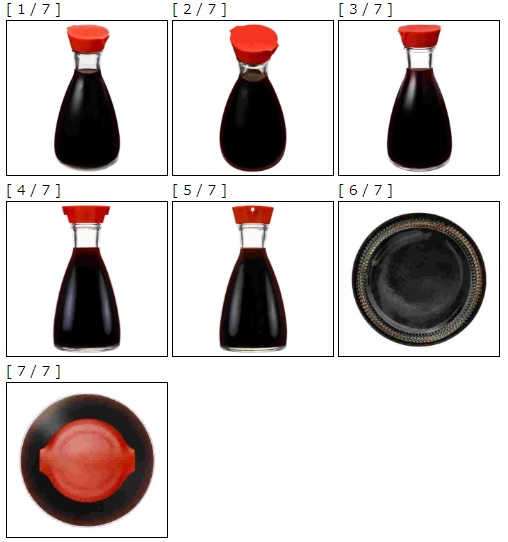
Red-capped Kikkoman soy sauce dispenser

Iconic red-capped Kikkoman soy sauce dispenser was introduced in 1961 and has been in continuous production ever since. It was developed by Kenji Ekuan, a Japanese Navy sailor former naval academy student who dedicated his life to design when he left the service. Its unique shape took three years and over a hundred prototypes to perfect, but the teardrop design and dripless spout have become a staple of restaurant condiments all around the world. The bottle’s design hasn’t changed over the past 50 years.

JPO Examination/Acquired distinctiveness

The JPO examiner initially notified her refusal due to a lack of inherent distinctiveness in relation to say sauce.

In a response to the office action, Kikkoman argued acquired distinctiveness of the 3D bottle arising from uniqueness of its shape and substantial use for over five decades.

According to news release from Kikkoman, over 500 million of the bottles have been sold since the design was first introduced and distributed in approximately a hundred countries worldwide. Red-capped Kikkoman soy sauce dispenser has already been registered as 3D mark in US, EU, Ukraine, Norway, Russia, Australia.

In March 30, 2018, the JPO granted trademark registration based on Article 3(2) of the Trademark Law by finding acquired distinctiveness of the 3D color mark as a source indicator of Kikkoman.
[TM Registration No. 6031041]

 

Never trademark “BON GOÛT” in food-service business

The Appeal Board of the Japan Patent Office (JPO) decided to register a term of “bon goût” in relation to various foods of class 30 and restaurant service of class 43 by finding that the term is deemed a coined word to relevant public in Japan.
[Appeal case no. 2017-7985]

“BON GOÛT”

Disputed mark (see below), written in a common font design, was filed in December 14 by designating various foods of class 30, e.g. buns and breads, confectioneries, hamburgers, pizza, hot dogs, spices, noodles, pasta, coffee, tea, and restaurant service, rental of cooking apparatus and microwave ovens and others of class 43 in the ultimate.

Lack of distinctiveness

JPO examiner entirely refused the mark due to lack of distinctiveness based on Article 3(1)(iii) of the Trademark Law. In refusal decision, examiner asserted the term of “bon goût” is a French term to mean “good taste” in English.

If so, relevant consumers and traders are likely to conceive the term in association with quality of goods and services.

Besides, given the mark is written in a common font design, it shall be objectionable under Article 3(1)(iii) since the mark is solely composed of elements just to indicate, in a common manner, the place of origin, place of sale, quality, raw materials, efficacy, intended purpose, quantity, shape (including shape of packages), price, the method or time of production or use.


Appeal Board decision

In the meantime, the Appeal Board overruled examiner’s rejection and granted registration of “bon goût”.

The Board admitted the terms of “bon” and “goût” are French words meaning good and taste respectively by referring to French dictionary, but, in contrast, considered a combined word of “bon goût” is unfamiliar to Japanese public with an ordinary care.
If so, disputed mark shall be deemed a coined word in its entirety and relevant consumers are unlikely to conceive any specific meaning from the mark.

Besides, the Board held, as a result of ex officio examination, there found no circumstance to convince “bon goût” is ordinarily used as a mere descriptive indication in food-service business.

Consequently, it is groundless to reject the trademark “bon goût” based on Article 3(1)(iii) since it does not give rise to any descriptive meaning in relation to the goods and services in question.


This case gives us a lesson.
Descriptive term in foreign language has a potential risk to be registered in Japan if we are unfamiliar to the term.