Fashion Designer Lost Trademark Dispute Over His Name

On July 29, 2020, the Japan IP High Court ruled to dismiss an appeal by Kabushiki Kaisha Soloist, founded by Takahiro Miyashita, a Japanese fashion designer, who contested a decision by the Japan Patent Office (JPO) to deny trademark registration for a compound mark consisting of “TAKAHIROMIYASHITA” and “TheSoloist.” under Article 4(1)(viii) of the Trademark Law.
[Judicial case no. Reiwa2(Gyo-ke)10006]

TAKAHIROMIYASHITATheSoloist.

Disputed mark (see below) was filed by Kabushiki Kaisha Soloist, founded by Takahiro Miyashita, on September 21, 2017, covering various fashion items in class 14, 18, and 25. [TM application no. 2017-126259]

In 2010, immediately after starting a company ‘Kabushiki Kaisha Soloist’, Takahiro Miyashita allegedly has launched his new brand “TAKAHIROMIYASHITATheSoloist.” and used the disputed mark on clothing, sandals, sunglass, eyewear, accessories designed by him since then and the disputed mark has become famous for his fashion brand. Consequently, relevant consumers and traders would not associate the disputed mark with any individual other than him.

Refusal decision by JPO

The Japan Patent Office (JPO) refused the mark in contravention of Article 4(1)(viii) of the Trademark Law, on the ground that the disputed mark contains a full name of private individual named “Takahiro Miyashita”. It is obvious that there are several Japanese people with the same name.

Article 4(1)(viii)

Article 4(1)(viii) of the Trademark Law prohibits registration of trademarks which contain the representation or name of any person, famous pseudonym, professional name or pen name of another person, or famous abbreviation thereof for the purpose of protecting personal rights of a living individual. Notwithstanding the provision, the article is not applicable where the applicant of the disputed mark produces the written consent of the person.

The Supreme Court of Japan has ruled the article shall be interpreted to protect the personal rights of a living individual. In line with the Supreme Court ruling, Trademark Examination Manuals (TEM) set forth that the article is applicable not only to natural persons (including foreigners) and corporations but also associations without capacity.

On January 29, 2019, the Appeal Board of JPO decided to affirm the examiner’s refusal on the same ground. [Appeal case no. 2019-1138]

To contest the administrative decision, the applicant filed an appeal to the IP High Court.

IP High Court Ruling

The court dismissed the allegation entirely, by stating that:

  1. Even though the disputed mark contains literal elements unrelated to the name of a living person, Article 4(1)(viii) is still applicable since relevant consumers would conceive the literal portions of “TAKAHIROMIYASHITA” as a name of a Japanese person.
  2. It is indisputable that there are several Japanese with the same name as Takahiro Miyashita and some of their names are written in different Chinese characters.
  3. The applicant failed to prove that he obtained consent from them.
  4. Alleged facts that the founder of the applicant has become famous as a fashion designer and because of it, relevant consumers and traders are unlikely to connect the disputed mark with any individual other than the designer would be construed irrelevant in applying Article 4(1)(viii).

Based on the foregoing, the IP High Court sided with the JPO and upheld the refusal decision.

Click here to see the Court’s official ruling (Japanese only)

Is “MAHARAJA” a generic term in relation to Indian restaurants?

On July 8, 2020, the Japan IP High Court affirmed the JPO’s rejection in a trademark dispute over the “MAHARAJA” mark for Indian restaurant services in class 43. [Judicial case no. Reiwa2(Gyo-ke)10022]

Disputed mark

The disputed mark prominently consists of “Maharaja” with stylization in red (see below).

The mark was filed by MAHARAJA.CO., LTD, on December 25, 2017, designating the services of providing Indian cuisine; providing alcoholic beverages, tea, coffee, or juices; providing hotel accommodation in class 43 [TM application no. 2017-168406].

The applicant allegedly opened the first “Maharaja” Indian restaurant at Shinjuku (Tokyo) in 1968 and now operates the “Maharaja” restaurants at some places in Japan.

JPO decision

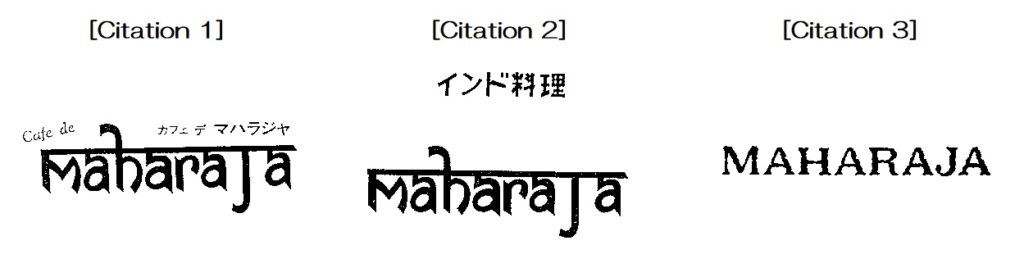
The Japan Patent Office (JPO) rejected the disputed mark in contravention of Article 4(1)(xi) of the Japan Trademark Law by citing the following senior registrations.

Article 4(1)(xi) is a provision to prohibit registering a junior mark which is identical with, or similar to, any senior registered mark.

The JPO found that the stylized “Maharaja” term, due to its position, larger font, and color, dominates the perception of the disputed mark. If so, the disputed mark obviously gives rise to the same sound and meaning with the Citations. “MAHARAJA” means the head of one of the royal families that used to rule parts of India (Collins English Dictionary). Because of a high degree of phonetic and conceptual similarity, the mere difference in appearance is not sufficient to neutralize the similarity.

Besides, it is unquestionable that the disputed mark designates identical or similar services with the Citations.

For the reader’s reference, I had better explain that the Citations are respectively co-existing on similar services of providing Indian cuisine; providing alcoholic beverages in the same class. It is because these were filed just after the implementation of Servicemark in 1992 and the Trademark Law exceptionally secured for registration to protect the existing business status even if similar marks are filed by other entities on the condition that business owners apply for registration within a statutory period for the implementation.

To contest the JPO decision [Appeal case no. 2019-4961], the applicant appealed to the IP High Court on February 19, 2020.

IP High Court ruling

Applicant argued that since “MAHARAJA” has become a generic term in relation to Indian restaurant services, relevant consumers would find the appearance of the “MAHARAJA” mark rather than sound and meaning as a material clue to distinguish such restaurants. To bolster the argument, the applicant referred to the fact that 14 (fourteen) restaurants managed by an entity other than the applicant provide Indian foods using tradename “MAHARAJA” in Japan.

Given relevant consumers are accustomed to seeing the term “MAHARAJA” in close connection with Indian foods, it would likely be a generic term in relation to the service in question. If so, the aural and conceptual elements of generic term shall not be taken into consideration in assessing the similarity of the mark. The JPO errored in finding the background of the case appropriately.

The court, however, did deny the applicant’s allegation, stating that the on-line database of NTT telephone directory (town page) shows 2162 Indian restaurants exist in Japan as of 2017. It means more than 2,100 Indian restaurants use a tradename other than “MAHARAJA”. Under the circumstances, the court would not find a reasonable reason to believe “MAHARAJA” has become a generic term in relation to the service.

Even though there are plenty of Indian restaurants under the tradename of “MAHARAJA” in Japan as the applicant argues, the court would not be convinced if relevant consumers distinguish such restaurants simply by means of the visual elements of a mark (tradename). Because the court finds it commercial practice for shop owners to modify the font and color of mark (tradename) depending on its place and venue.

Based on the foregoing, the court decided that the JPO did not error in finding similarity of the mark and dismissed the appeal entirely.

Japan IP High Court ruling: “I♡JAPAN” lacks distinctiveness as a trademark

On June 17, 2020, the Japan IP High Court affirmed the JPO’s rejection of the “I♡JAPAN” mark in relation to various goods of class 14,16,18 and 24 due to a lack of distinctiveness.
[Judicial case no. Reiwa 1(Gyo-ke)10164]

I♡JAPAN

The disputed mark consists of the capital letter “I”, followed by a red heart symbol, below which are the capital letters “JAPAN” (see below). The mark filed by CREWZ COMPANY, a Japanese merchant on April 17, 2018, over various goods in class 14, 16, 18, and 24 [TM application no. 2018-049161].

Noticeably, the JPO already allowed trademark registration for the same mark on apparels in class 25 on March 27, 2015, filed by the applicant [TM Registration no. 5752985]. Regardless of it, the examiner refused disputed mark in contravention of Article 3(1)(vi) of the Trademark Law.

Article 3(1)(vi) is a provision to comprehensively prohibit from registering any mark lacking inherent distinctiveness.

Any trademark to be used in connection with goods or services pertaining to the business of an applicant may be registered, unless the trademark:
(vi) is in addition to those listed in each of the preceding items, a trademark by which consumers are not able to recognize the goods or services as those pertaining to a business of a particular person.

JPO decision

The JPO Appeal Board sustained the examiner’s refusal and decided to reject disputed mark by stating that we are nowadays accustomed to finding goods bearing the “I♡” logo followed by a geographical indication, which represents a strong devotion or attachment to the area/city in its entirety. In fact, the “I♡JAPAN” design is commonly used on several goods as a symbol to support the Japanese sports team or souvenirs for tourists. If so, the design shall not be exclusively occupied by a specific entity. Under the circumstances, relevant consumers are unlikely to conceive the disputed mark as a source indicator of the applicant. Thus, the mark shall be rejected in contravention of Article 3(1)(vi) and the examiner did not error. [Appeal case no. 2018-16957]

To contend against the decision, the applicant filed an appeal to the IP High Court.

IP High Court ruling

The IP High Court dismissed the applicant’s allegation entirely, stating that the disputed mark gives rise to the meaning of “I love JAPAN”. The court found the “I♡” logo followed by a geographical indication is commonly used to appeal a strong devotion or attachment to the area/city. Inter alia, various merchants promote goods bearing the “I♡JAPAN” design as a sign of their support to Japan or the Japanese sports team. If so, relevant consumers and traders would not conceive disputed mark as a source indicator of goods in question, but merely a symbol to represent their devotion and support to Japan. Therefore, the disputed mark shall not be registrable under n contravention of Article 3(1)(vi).

Besides, the court found the fact of a precedent registration for the same mark in a different class would not affect the distinctiveness of disputed mark since it does not have a legal effect to bind subsequent examination in assessing registrability of a junior mark under Article 3(1)(vi).

Japan IP High Court sided with Apple Inc. in “CORE ML” trademark dispute

On May 20, 2020, the Japan IP High Court denied the JPO decision and sided with Apple Inc. by finding the “CORE ML” mark is dissimilar to senior trademark registration no. 5611369 for word mark “CORE” in connection with computer software of class 9.
[Case no. Reiwa1(Gyo-ke)10151]

CORE ML

Apple Inc. filed a trademark application for word mark “CORE ML” in standard character by designating computer software in class 9 on November 6, 2017 (TM App no. 2017-145606).

Apple’s Core ML is its own framework for Machine Learning used across Apple products for performing fast prediction or inference with easy integration of pre-trained machine learning models on the edge, which allows you to perform real-time predictions of live images or video on the device.

JPO decision

The Japan Patent Office (JPO) rejected “CORE ML” in contravention of Article 4(1)(xi) of the Trademark Law due to a conflict with senior trademark registration no. 5611369 for word mark “CORE” in standard character over electronic machines, computer software, and other goods in class 9 owned by Seiko Holdings Corporation.

Article 4(1)(xi) is a provision to prohibit from registering a junior mark that is deemed identical with, or similar to, any senior registered mark.

In the decision, the JPO stated applied mark apparently consists of two words, “CORE” and “ML”. The term “CORE”, a familiar English word meaning ‘a central and foundational part’, would play a role of source indicator in connection with the goods in question. In the meantime, “ML” is a descriptive term since it is commonly used as an abbreviation of ‘Machine Learning’ in the computer software industry. If so, it is permissible to select the term “CORE” as a dominant portion of applied mark and compare it with the cited mark “CORE”.

To contend against the decision, Apple Inc. filed an appeal to the IP High Court.

IP High Court ruling

The IP High Court, at the outset, referred to the Supreme Court ruling in 2008 which established the criterion to grasp a composite mark in its entirety in the assessment of similarity of the mark.

“Where a mark in dispute is recognized as a composite mark consisting of two elements or more, it is not permissible to assess the similarity of mark simply by means of taking out an element of the composite mark and then comparing such element with the other mark, unless consumers or traders are likely to perceive the element as a dominant portion indicating its source of origin of goods/service, or remaining elements truly lack inherent distinctiveness as a source indicator in view of sound and concept.”

Based on the criteria, the court found that applied mark shall be assessed in its entirety on the following grounds:

  1. “CORE” would be merely recognized as a term to mean ‘a central and foundational part’ in connection with goods in question.
  2. It is unlikely that relevant consumers at the sight of “CORE ML” used on computer software conceive the term “ML” as an abbreviation of ‘machine learning’. If so, “ML” would not give rise to any specific meaning.
  3. The above facts suggest that “CORE” would never play a dominant role and “ML” shall not be considered less distinctive than “CORE” as a source indicator in view of the concept.
  4. From appearance and sound, there is no reasonable ground to believe “CORE” and “ML” shall be recognized individual and separable.

Based on the foregoing, the court pointed out the JPO erred in finding applied mark appropriately and decided that the applied mark “CORE ML” is deemed dissimilar to the cited mark “CORE” as a whole given the remarkable difference in sound and appearance, even if both marks resemble in concept.

LEPUS vs. LEPS

In an appeal decision, the Japan Patent Office (JPO) overturned the examiner’s rejection and decided to register trademark “LEPS” by finding dissimilarity to senior registration for mark “LEPUS” even if both marks designate similar goods in class 12.
[Appeal case no. 2019-6626, Gazette issued date: March 27, 2020]

LEPS

Applicant, GS Yuasa Corporation, filed a trademark application for term “LEPS” in standard character over solar batteries, power distribution or control machines, and apparatus, rotary converters, phase modifiers of class 12 on December 18, 2017 (TM application no. 2017-165431).

JPO examiner rejected the applied mark in contravention of Article 4(1)(xi) of the Trademark Law by citing senior trademark registration no. 3194818 for mark “LEPUS”

Article 4(1)(xi) is a provision to prohibit registering a junior mark which is identical with, or similar to, any senior registered mark.

LEPUS

Cited mark “LEPUS” (see below), owned by Mitsubishi Motors Corporation, has been registered since September 1996 over automobiles and their parts and fittings, two-wheeled motor vehicles, bicycles, and their parts and fittings, AC motors or DC motors for land vehicles in class 12.

On April 25, 2019, GS Yuasa filed an appeal against the rejection and argued dissimilarity of the marks.

Appeal Board decision

In the decision, the Appeal Board held that:

From appearance, even if both marks start with “LEP” and end with “S”, with or without “U” in the middle of a short word consisting of four or five letters would be anything but negligible. Because of it, the marks as a whole give rise to a distinctive visual impression in the minds of relevant consumers. Accordingly, both marks are unlikely to cause confusion from appearance.

Applied mark “LEPS” is pronounced as “le-ps”. In the meantime, cited mark “LEPUS” shall be “le-pəs”. The difference in the 2nd sound, “p” and “pə”, would be influential in the overall pronunciation given both marks aurally consist of just three sounds. Due to the difference, both sounds can be distinguishable in tone and linguistic feeling when pronounced at a time.

Conceptually, applied mark is incomparable with cited mark since both marks would not give rise to any specific meaning at all.

Based on the foregoing, the Board concluded: “applied mark “LEPS” would be deemed dissimilar to cited mark “LEPUS” from the global appreciation of the visual, aural and conceptual similarity of the marks in question, and based on the overall impression and association given by the marks to relevant traders and consumers with ordinary care“.

Consequently, the Board reversed the examiner’s rejection due to the dissimilarity of the marks even if the goods in question are similar and allowed registration of the applied mark (TM registration no. 6234714).

JPO decided “Antithesis” dissimilar to a mark consisting of it and other eight terms placed in 9 rows

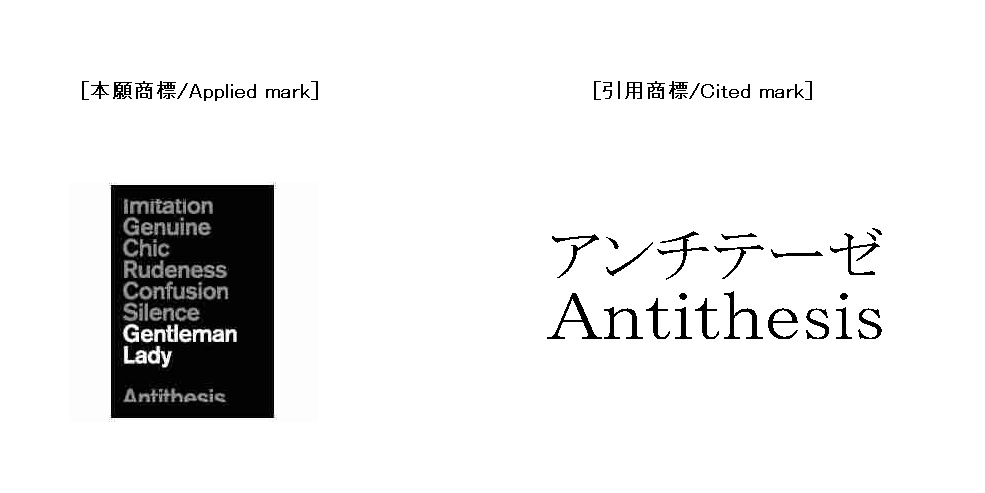
In an administrative appeal disputing trademark similarity between TM registration no. 5661343 for word mark “Antithesis” with its transliteration in Japanese katakana and junior application no. 2017-101730 for a mark consisting of “Antithesis” and the other eight English terms placed in 9 rows, JPO found both marks dissimilar and reversed the examiner’s rejection.
[Appeal case no. 2019-652, Gazette issued date: March 27, 20]

TM Registration no. 5661343

Cited mark, the term “Antithesis” with its transliteration in a Japanese katakana character (see below) has been registered over clothing, footwear, and other goods in class 25 since April 4, 2014.

Junior Application no. 2017-101730  

Applied mark, consisting of nine English terms “Imitation”, “Genuine”, “Chic”, “Rudeness”, “Confusion”, “Silence”, “Gentleman”, “Lady”, and “Antithesis” placed in 9 rows inside a black rectangle (see right), was applied for registration on August 1, 2017, over clothing, footwear, and other goods in class 25 by Element Rule Co., Ltd.

JPO examiner entirely rejected applied mark on the ground that the term “Antithesis” on the bottom row can play a role of source indicator independently because of overall configuration and space above the bottom row. If so, the applied mark as a whole shall be deemed similar to the cited mark.

The applicant filed an appeal against the rejection on May 20, 2019, and argued dissimilarity of both marks.

Appeal Board decision

In the decision, the Board found that:

“From the appearance, “Antithesis” on the bottom row shall not be separable since the term is written in the same font, color, size with other terms “Imitation”, “Genuine”, “Chic”, “Rudeness”, “Confusion”, “Silence” even if there is space in the trademark.
Besides, nine terms do not give rise to any specific meaning in its entirety.  Neither do eight terms except “Antithesis”.
If so, there is no reasonable reason to believe that relevant consumers consider the term “Antithesis” on the bottom row or any other terms a dominant part of the applied mark.
It rather does mark sense that applied mark shall be perceived as a whole displaying respective English word in a different row inside a black rectangle.”

Based on the foregoing, the Board held that the Examiner erred in finding the term “Antithesis” separable as an independent source indicator of the applied mark, and decided to reverse the examiner’s rejection.


I don’t quite agree with the Appeal Board decision. In my view, the respective term contained in a junior mark shall be considered separable unless it gives rise to different meanings in a tight combination with other distinctive terms.

OKLOK vs OKLOCK

In a trademark dispute, similarity between “OKLOK” and “OKLOCK”, the Appeal Board of the Japan Patent Office found both marks dissimilar and reversed examiner’s rejection.
[Appeal case no. 2019-16781, Gazette issued date: March 27, 2020]

OKLOK

A senior mark, consisting of a word “OKLOK” in standard character, was registered on September 21, 2018 (TM Reg no. 6083192) over electric locks; electronic key fobs being remote control apparatus; anti-theft warning apparatus; other goods in class 9 by a Chinese business entity, 深圳市龙兄弟数码锁有限公司 (Shenzhen Longbrothers Digital Co., Ltd.).

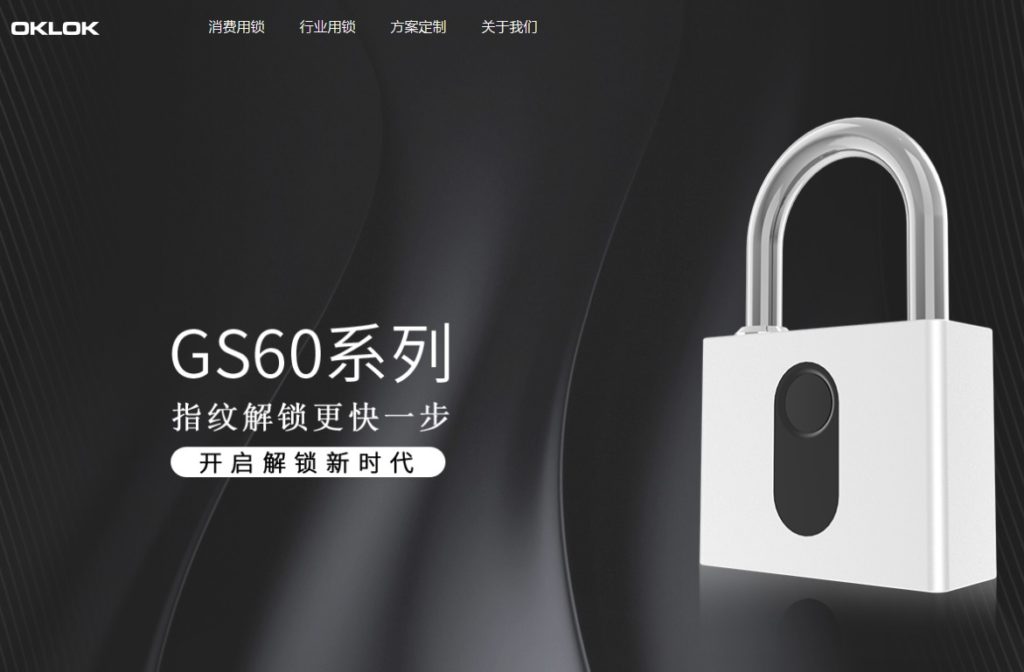
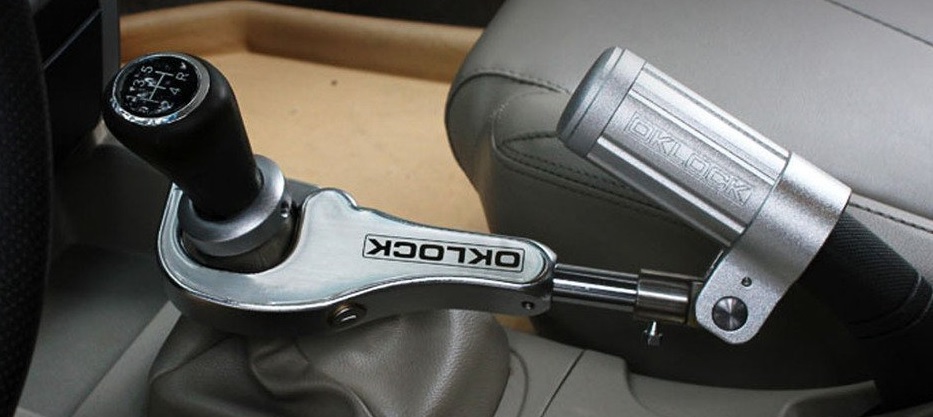
Owner has used “OKLOK” on fingerprint key less padlock, Smart Bluetooth Security Lock with USB Charge and other intelligent anti-theft devices (see below).

[Capture shot of OKLOK official site]

OKLOCK

Applied junior mark, consisting of a word “OKLOCK” in standard character, was applied for registration on April 3, 2019 over anti-theft locks for use on automobile steering wheels and other goods in class 12 [TM application no. 2019-47122].

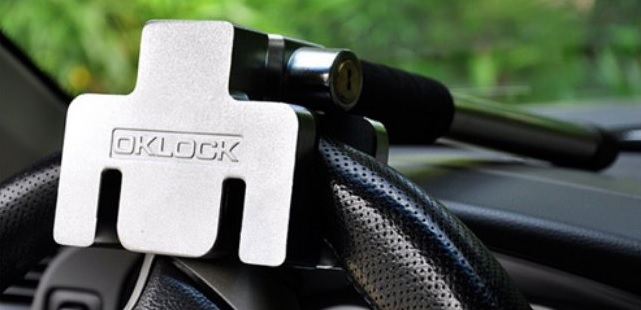
Applicant uses “OKLOCK” on car steering wheel locks and anti-theft car hand brake and gear lock (see below).

The JPO examiner rejected “OKLOCK” because of confusing similarity to “OKLOK” based on Article 4(1)(xi) of the Trademark Law.

Article 4(1)(xi) is a provision to prohibit registering a junior mark which is identical with, or similar to, any senior registered mark.

There is criterion that the examiner is checking when assessing the similarity between the marks:

  • visual similarity
  • aural similarity
  • conceptual similarity

and taking into account all these three aspects examiner makes a decision if a mark is similar (at least to some extent) with the earlier mark and if there is a likelihood of confusion for the consumers.

Applicant filed an appeal against the rejection on December 11, 2019 and argued dissimilarity of both marks.

Appeal Board decision

In the decision, the Appeal Board held that:

From appearance, applied mark “OKLOCK” contains a letter “C” unlike the cited mark “OKLOK”. This gives rise to a distinctive impression visually in the mind of relevant consumers where respective mark consists of five or six-letter words, anything but long.

Next, applied mark is pronounces as [oʊˈkeɪ lɑːk]. In the meantime, the cited mark just gives rise to a pronunciation of [oʊˈkeɪ el ə keɪ] because relevant consumers are likely to see “OKLOK” as a combination of five alphabets and read it as each letter sounds since “OKLOK” does not appear in dictionary.

Thirdly, applied mark does not give rise to any specific meaning in its entirety even though it is perceived as a combination of “OK” and “LOCK”. Likewise, relevant consumers would not conceive any meaning from “OKLOK” and just see it as a coined word. If so, both marks are incomparable from concept.

Based on the foregoing, the Board found no reasonable ground to affirm examiner’s rejection from visual, phonetic, and conceptual points of view and decided to reverse examiner’s rejection.

JPO registers PUERTA DEL SOL as trademark

In a recent appeal decision, the Japan Patent Office (JPO) overturned examiner’s refusal and decided to register trademark “PUERTA DEL SOL” in connection with jewels, accessories, clothing and other goods of class 14, 18, 25 and 34 by finding the term shall not be recognized as a geographical indication, one of the most famous sites in Madrid, Spain.[Appeal case no. 2019-7624, Gazette issued date: January 31, 2020]

PUERTA DEL SOL

PUERTA DEL SOL Co., Ltd., a Japanese jewels and accessories company, applied for registration of word mark “PUERTA DEL SOL” in relation to jewels, accessories, bags, clothing, shoes and other various goods of class 14, 18, 25 and 34 on January 23, 2018.

On March 19, 2019, JPO examiner refused applied mark due to lack of distinctiveness based on Article 3(1)(iii) of the Trademark Law. Examiner found that PUERTA DEL SOL, a public square in Madrid (the capital and largest city of Spain), one of the best known and busiest places in the city, the heart of Madrid’s historic center used to be on the eastern border of the city, has been known for a famous tourist spot in Madrid. Since relevant traders and consumers in Japan are familiar with circumstances that variety of souvenirs and gifts are on sale at tourist spot, it is presumed that consumers will merely conceive the applied mark just as a geographical indication in connection with the designated goods, not a source indicator.

Article 3(1)(iii)

Article 3(1) of the Trademark Law is a provision to prohibit descriptive marks from registering.

Section (iii) of the article aims to remove any mark merely or directly suggesting quality of goods and services.

“Article 3(1) Any trademark to be used in connection with goods or services pertaining to the business of an applicant may be registered, unless the trademark:

(iii) consists solely of a mark indicating, in a common manner, in the case of goods, the place of origin, place of sale, quality, raw materials, efficacy, intended purpose, quantity, shape (including shape of packages), price, the method or time of production or use, or, in the case of services, the location of provision, quality, articles to be used in such provision, efficacy, intended purpose, quantity, modes, price or method or time of provision;”

To dispute the refusal, applicant filed an appeal on June 10, 2019.

Applicant argued “PUERTA DEL SOL” shall be sufficiently distinctive in connection with the goods in question by citing facts that the term is legitimately registered even in the territory of Spain and less familiarity to Spanish language among relevant consumers with an ordinary care, Google search by a keyword “PUERA DEL SOL” reveals most of websites refer to applicant’s goods and business.
If so, it is groundless to find that relevant consumers would conceive applied mark as a geographical indication name when used on goods in question.

Appeal Board’s decision

The Appeal Board overturned the examiner’s decision by stating that relevant consumers and traders at the sight of applied mark are unlikely to see the mark to indicate the place of origin or sale when used on goods in question. Because the Board has no reason to believe the term “PUERTA DEL SOL” is known for a famous tourist square in Madrid even though Spanish dictionary and encyclopedia mention so by taking into account less familiarity to Spanish language among relevant consumers in Japan. Furthermore, there is no clue to find that the square is commonly indicated to represent a place of origin and sale in connection with the goods in question.

Criteria for Trademark Examination Guideline

Trademark Examination Guideline (TEG) pertinent to Article 3(1)(iii) provides that where a trademark is merely composed of a geographical name in foreign country or sightseeing area, the mark is deemed as “the place of origin” of goods or “the place of their sale”, provided that consumers or traders generally recognize that the designated goods will be produced or sold at the place indicated by the geographical name.

Trademark Examination Manual413.103.01 sets forth criteria to examine trademarks related to foreign geographical name.

In the cases of (a) the name of a capital, (b) the name of a state, (c) the name of a prefecture, (d) the name of a state capital, (e) the name of a province, (f) the name of the capital of a province, (g) the name of a county, (h) the name of the capital of a prefecture, (i) a former country name, (j) an old regional name, (k) the name of a district, (l) the name of a city, or special district, (m) the name of a busy downtown street, and (n) the name of a sightseeing area, even though these names may not be directly described in a dictionary or other documents/material as the place of origin, the place of sales (location of transaction) of the goods, or the location of provision of services (location of transaction), if a factor exists that establishes a connection between the goods and the name as the place of sales (location of transaction), or the location of the provision of services (location of transaction), in principle, the trademark will be refused on the grounds that it indicates the location where the goods are sold (location of transaction) or the location of provision of services (location of transaction)

Empire Steak House loses to trademark its restaurant name in Japan IP High Court battle

On December 26, 2019, the Japan IP High Court ruled to uphold a rejection by the Japan Patent Office (JPO) to International Registration no. 1351134 for the mark “EMPIRE STEAK HOUSE” in class 43 due to a conflict with senior trademark registration no. 5848647 for word mark “EMPIRE”. [Judicial case no. Reiwa1(Gyo-ke)10104]

EMPIRE STEAK HOUSE

The case was brought into the IP High Court after the JPO decided to dismiss an appeal (case no. 2018-650052) filed by RJJ Restaurant LLC (Plaintiff), an owner of IR no.1351134 for mark consisting of stylized-words “EMPIRE STEAK HOUSE” in two lines and a golden cow design (see below) on restaurant services; carry-out restaurant services; catering services in class 43.

EMPIRE STEAK HOUSE, one of the top steakhouses in New York City since 2010, has opened their first restaurant aboard on the first floor of the new Candeo Hotel in Roppongi, Tokyo (JPN) on October 17, 2017. To secure the restaurant name in Japan, RJJ Restaurant LLC applied for registration of disputed mark via the Madrid Protocol with a priority date of March 2, 2017 in advance of the opening.

Senior registered mark “EMPIRE”

The JPO rejected disputed mark by citing senior trademark registration no. 5848647 for word mark “EMPIRE” in standard character on grilled meat and sea foods restaurant services in class 43 based on Article 4(1)(xi) of the Trademark Law.

Article 4(1)(xi) is a provision to prohibit from registering a junior mark which is deemed identical with, or similar to, any senior registered mark.

Senior registered mark was applied for registration on December 8, 2015 and registered on May 13 ,2016. Apparently, senior mark is actually used as a name of restaurant, “Dining Bar Empire”, located in the city of Ueda, Nagano Prefecture (JPN).

To contend against the decision, plaintiff filed an appeal to the IP High Court on July 19, 2019.

IP High Court Decision

Plaintiff argued the literal elements of disputed mark “EMPIRE STEAK HOUSE” shall be assessed in its entirety by citing web articles relating to applicant’s restaurant which referred to the restaurant as Empire Steak House in full. Like ‘Empire State Building’ and ‘Empire Hotel’, the term “EMPIRE” gives rise to unique meaning and plays a role of source indicator as a whole when used in combination with other descriptive word. Besides, disputed mark contains an eye-catching golden cow which attracts attention to relevant consumers. If so, it is evident that the JPO erred in assessing similarity of mark between “EMPIRE STEAK HOUSE” and “EMPIRE”.

The IP High Court, at the outset, mentioned the Supreme Court decision rendered in 2008 which established general rule to grasp a composite mark in its entirety in the assessment of similarity of mark.

“Where a mark in dispute is recognized as a composite mark consisting of two elements or more, it is not permissible to decide similarity of mark as a whole simply by picking out an element of the composite mark and then comparing such element with other mark, unless consumers or traders are likely to perceive the element as a dominant portion appealing its source of origin of goods/service, or remaining elements truly lack inherent ability to serve as a source indicator in view of sound and concept.”

Next, the court analyzed the configuration of disputed mark and found it is allowed to grasp a literal element “EMPIRE” of disputed mark as dominant portion in light of the criteria applied by the Supreme Court by stating that:

  1. A term “STEAK HOUSE” is commonly used to indicate steak restaurant even in Japan.
  2. Where the term is included in restaurant name, it sometimes happens that relevant consumers over leap the term to shorten the name.
  3. In restaurants, it becomes common practice to display cucina and foodstuffs to be served on signboard or advertisement. Likewise, there are many steak and grilled meat restaurants displaying cow design. If so, relevant consumers at the sight of disputed mark would perceive the cow design as a mere indication to represent foodstuffs at the restaurant.
  4. From appearance, given the configuration of disputed mark, respective element can be considered separable.

Finally, based on the above findings, the court dismissed plaintiff’s arguments and concluded the JPO was correctly assessing similarity of mark. Given dominant portion of disputed mark is identical with the cited mark “EMPIRE” and both marks designate the same or similar services in class 43, disputed mark shall be unregistrable under Article 4(1)(xi) of the Trademark Law.

JPO rejects 3D Shape Mark of Giant Cotton Candy

In a dispute of registrability to a unique three-dimensional shape of giant cotton candy, the Appeal Board of Japan Patent Office (JPO) refused protection of the 3D mark due to lack of distinctiveness.  
[Appeal case no. 2017-9666, Gazette issue date: September 27, 2019]

TOTTI CANDY FACTORY

If you ever visit Harajuku (Tokyo) chances are you will spot people carrying around gigantic pastel-colored cotton candy. When you think of cotton candy, a balloon-size blob of sticky blue or pink fluff probably comes to mind. But this cotton candy is here to rewrite any preconceptions you have about the treat, because not only does it come in the most beautiful shades of pastel you’ve ever seen, it’s also legitimately larger than your head. It’s so big, it’s actually hard to take a cute picture holding it — because it blocks your entire face with its pretty rainbow hues.

You can find this giant rainbow cotton candy at a sweet shop popular with young people in Harajuku, Totti Candy Factory.

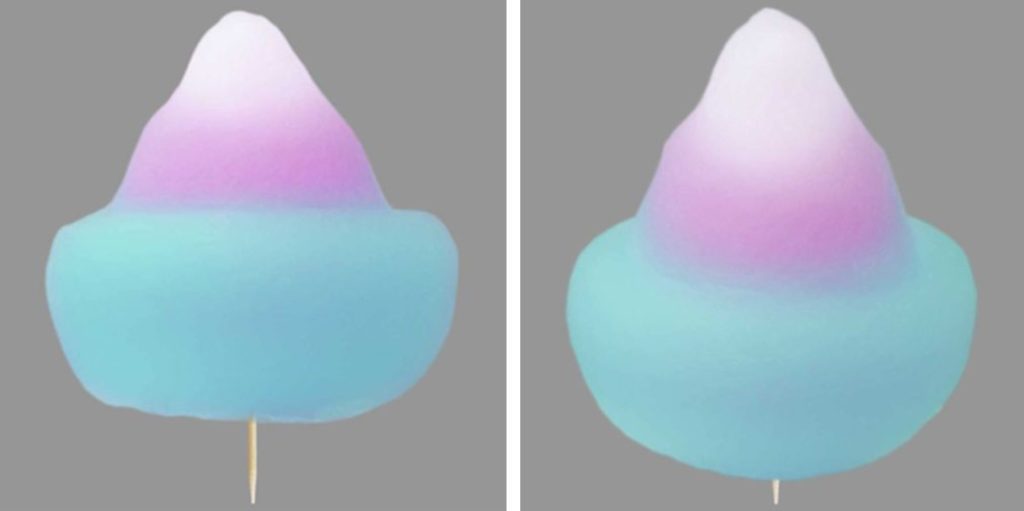
3D shape of the cotton candy was applied for registration with JPO in respect of confectionery (class 30) on May 20, 2016. [TM application no. 2016-54840]

Registrability of 3D shape mark

The shape of a product can be an important element that generates value for a company. For this reason, the protection of three-dimensional forms is of commercial interest. Three-dimensional trademarks include the shape of a product or its packaging. Prior to 1996, there was no proper statutory provision that recognized three-dimensional shapes as trademarks. 1996 revision to the Trademark Law recognized 3D shape trademarks such as the shape of the packaging and specific product shapes. Now, a Trademark Registration can be attained for any distinctive three-dimensional shapes, that discern the goods or services of one business from those of other businesses, under the Japan Trademark law.

JPO Examination

JPO examiner entirely rejected the 3D shape mark by stating that:

“Appearance of the applied mark in color can be perceived merely as an ordinary three-dimensional shape of cotton candy. If so, the shape is deemed equivalent to a configuration solely consisting of the shape of goods in a common manner to the extent that relevant traders and/or consumers are unlikely to recognize the shape as a source indicator. Hence, the mark is subject to Article 3(1)(iii) of the Trademark Law. From the produced evidence, it is questionable whether the shape has acquired distinctiveness as a result of substantial use.”

Article 3(1)(iii) is a provision to prohibit any mark from registering where the mark solely consists of elements just to indicate, in a common manner, the place of origin, place of sale, quality, raw materials, efficacy, intended purpose, quantity, shape (including shape of packages), price, the method or time of production or use.

To dispute the refusal, applicant, an owner of Totti Candy Factory, filed an appeal on June 30, 2017.

Appeal Board’s decision

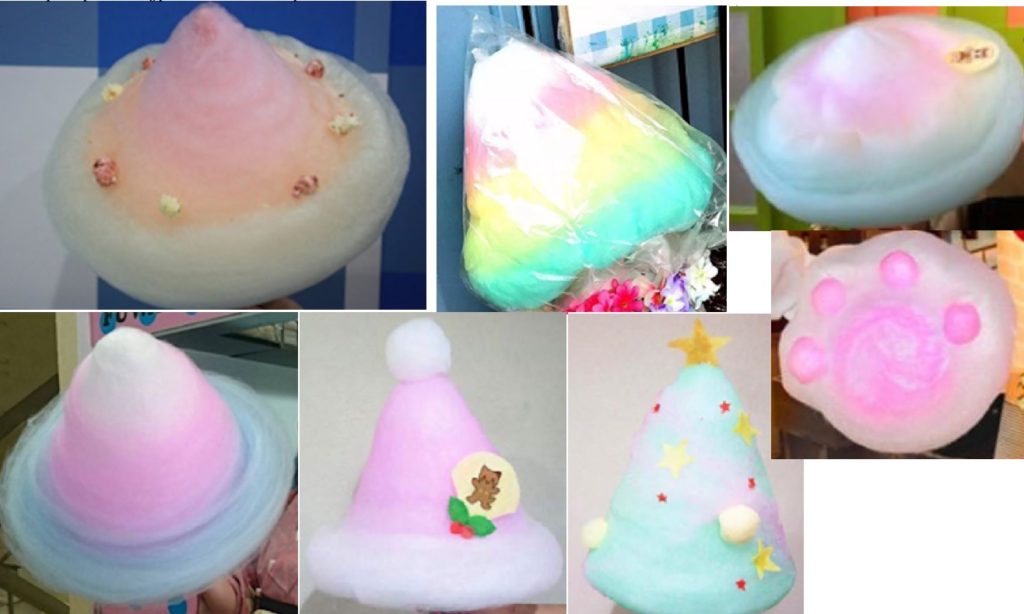
The Appeal Board affirmed examiner’s rejection of the 3D shape based on lack of distinctiveness. As grounds for rejection, Board cited following conical cotton candies in several colors distributed by third parties.

In addition, the Board negated acquired distinctiveness of the 3D shape by stating that:

  1. Allegedly applicant has used applied mark on cotton candy since February 2015, however, he failed to produce objective evidence of its first use.
  2. In general, cotton candy is consumed by individuals in a wide age range. If so, three brick-and-mortar shops at Harajuku (Tokyo), Shinsaibashi (Osaka), Nagoya PARCO (Aichi) are insufficient to demonstrate increased publicity among relevant consumers all over the country.
  3. According to the produced sales record, from the period of February 2015 through June 2017 applicant sold 370,302 pieces of Giant Rainbow Cotton Candy, amounting to 200 million JP-yen in total sales. However, its market share remains unclear.
  4. A fact that Totti Giant Cotton Candy has gotten popular with young women in their teens and early 20’s is insufficient to admit acquire distinctiveness of the 3D shape since consumers of cotton candy are not limited to young women.
  5. Advertisement and publications of Giant Rainbow Cotton Candy contains a term “TOTTI CANDY FACTORY” or “Totti” adjacent to the 3D shape. From these evidences, it is questionable whether relevant consumers would conceive the 3D shape in itself as a source indicator of Totti Candy Factory.

Based on the foregoing, the Board consequently refused to register the mark based on Article 3(1)(iii) of the Trademark Law.