Trademark registration for Tasaki’s Akoya pearls ring

In March 17, 2017, Japanese jewelry house TASAKI & Co., Ltd., the Japanese leading producer of Akoya pearls, filed an application for trademark registration at the Japan Patent Office (JPO) for the following three-dimensional mark for rings in class 14.

Signature ring featuring a row of five seemingly identical Akoya pearls

Applied mark represents a signature ring featuring a row of five seemingly identical Akoya pearls, one of Tasaki’s bestsellers.


Tasaki commenced sales of the ring in the name of “balancing signature ring” in April, 2010 and has been continuously promoting the sales since then.


JPO Examination/Acquired distinctiveness

The JPO examiner totally refused the mark due to a lack of inherent distinctiveness in relation to rings [jewelery].

Tasaki filed an appeal against the decision and argued acquired distinctiveness of the 3D configuration of the ring arising from uniqueness of its shape and substantial advertisement.

According to the filed evidences to the JPO, Tasaki installed a large signboard for advertisement at busy places, Ginza (Tokyo), Kobe, Osaka and made various promotional activities via internet, direct mails and events. The ring was appeared and published in magazines more than 130 times for the last eight years.

In March 1, 2019, the Appeal Board of JPO granted trademark registration based on Article 3(2) of the Trademark Law by finding acquired distinctiveness of the 3D configuration of the ring as a source indicator of Tasaki regardless of a fact that only 2,242 rings were purchased by consumers in fact .
[Appeal case no. 2018-9531, TM Registration No. 6125506]

Article 3(2) is a provision to allow registration of applied mark if, as a result of substantial use of the mark in fact, consumers are able to connect the mark with a source indicator of designated goods or services.

JPO decision: TESLA is dissimilarly pronounced to Tesla

In a recent appeal decision over trademark dispute, the Appeal Board of Japan Patent Office (JPO) overturned the Examiner’s refusal and held the stylized TESLA mark is dissimilarly pronounced to a senior trademark registration for the “Tesla” word mark.

[Appeal case no. 2017-650037, Gazette issue date: February 22, 2019]


Stylized TESLA mark

U.S. electric automaker Tesla, Inc. (formerly Tesla Motors, Inc.) filed an application with the Japan Patent Office to register stylized TESLA mark as a trademark for “Articles of clothing, namely, t-shirts, shirts, jackets, hats; headgear, namely, sports hats, caps, sun visors.” in class 25 and “Providing financial services relating to automobiles, namely, automobile financing and lease-purchase financing; financing services for the purchase and leasing of motor vehicles; lease-purchase financing; credit services, namely, providing financing for motor vehicles; providing financial advice in the field of motor vehicles.” in class 36.


Senior TM registration for “Tesla”

Going through substantive examination by the JPO examiner, applied mark was completely refused registration based on Article 4(1)(xi) of the Trademark Law due to a conflict with a senior trademark registration no. 5533558 for word mark “Tesla” in standard character for clothing, caps and foot wears in class 25 owned by a Korean individual.

There is criterion that the examiner is checking when assessing the similarity between the marks:

  • visual similarity
  • aural similarity
  • conceptual similarity

and taking into account all these three aspects examiner makes a decision if a mark is similar (at least to some extent) with the earlier mark and if there is a likelihood of confusion for the consumers.

Applicant filed an appeal against the refusal on June 30, 2017 and argued dissimilarity of the marks.


Appeal Board decision

The Board reversed the examiner’s refusal and admitted applied mark to registration by stating that:

From appearance, both marks are sufficiently distinguishable because the 2nd and last letter of applied mark are too indecipherable to be perceived as a specific term in its entirety.

As long as applied mark does not give rise to any specific sound and meaning as a whole, applied mark is incomparable with cited mark “Tesla” in the aspects of pronunciation and connotation.

Based on the foregoing and criterion to assess similarity of mark, the Board is of a view that the stylized TESLA mark shall be dissimilar to senior registration for the word mark “Tesla” even if the designated goods are deemed identical or similar in class 25.

HISAMITSU unsuccessful in registering a shape of “Salonpas”

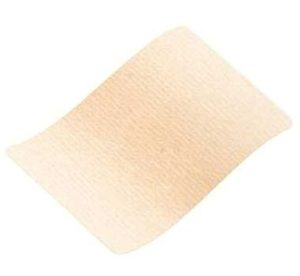
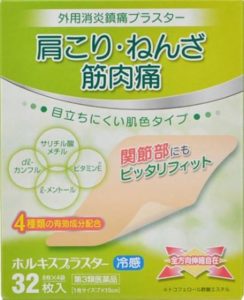
The Appeal Board of Japan Patent Office (JPO) disallowed registration of a shape of famous Japanese pain relief patches in the name of “Salonpas” manufactured by Hisamitsu Pharmaceutical Co., Inc. due to lack of inherent distinctiveness in relation to poultices, class 5. [Appeal case no. 2017-12694]


Salonpas

Hisamitsu Pharmaceutical Co., Inc. filed a trademark application for a shape of Over-The-Counter Topical Pain Patch known for “Salonpas” (see below) by designating pharmaceutical preparations, gauze for dressings, bandages for dressings, adhesive plasters and other goods in class 5 [TM application no. 2015-7479].

Salonpas is a product of Hisamitsu Pharmaceutical, a company whose history dates back to the mid-1800s. Salonpas was introduced in 1934 and was first distributed in Asia. The FDA approved the Salonpas Pain Relief Patch for the US market in 2008. Approximately 20 billion Salonpas transdermal patches have been sold in the last 20 years. Salonpas has been acknowledged as World’s No.1 OTC Topical Analgesics in patch format.


JPO Examination

The JPO examiner totally refused the application based on Article 3(1)(iii) of the Japan Trademark Law stating that the applied mark can be easily seen as a shape of poultices and the shape does solely consist of a common configuration to achieve the basic function of poultices. If so, the applied mark lacks distinctiveness as a source indicator.

Article 3(1)(iii) is a provision to prohibit any mark from registering where the mark solely consists of elements just to indicate, in a common manner, the place of origin, place of sale, quality, raw materials, efficacy, intended purpose, quantity, shape (including shape of packages), price, the method or time of production or use.


To dispute the refusal, Hisamitsu filed an appeal on August 28, 2017.


Appeal Board’s decision

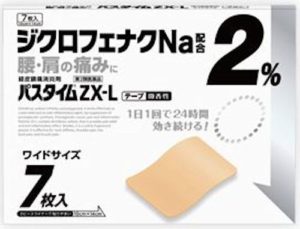
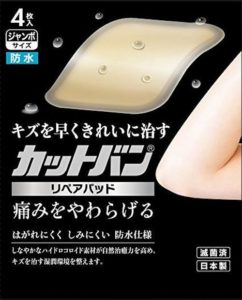
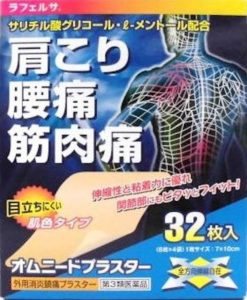
The Appeal Board, however, upheld the examiner’s decision on the ground and dismissed Hisamitsu’s allegation by stating that relevant consumers and traders shall conceive of a mere qualitative representation to indicate the shape of poultices and plasters at the sight of applied mark given similar indications are depicted on the packages of other supplier’s goods on the market (see below).


Based on the foregoing, the Board consequently refused to register the mark based on Article 3(1)(iii) of the Trademark Law.

JPO denied registering GRAND CANYON as trademark

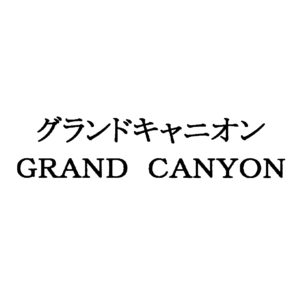
In a recent appeal decision, the Japan Patent Office (JPO) upheld examiner’s refusal and decided to reject trademark “GRAND CANYON” in connection with clothing and shoes of class 25 due to lack of distinctiveness. [Appeal case no. 2017-16166]


GRAND CANYON

UNITIKA LTD., a Japanese textile company, applied for registration of word mark “GRAND CANYON” in relation to clothing, shoes and other goods of class 25 on September 26, 2016.
JPO examiner totally refused the application due to lack of distinctiveness based on Article 3(1)(iii) of the Trademark Law by stating that THE GRAND CANYON, a steep-sided canyon carved by the Colorado River in Arizona, one of America’s most famous and awe-inspiring natural attractions, recognized by UNESCO as a World Heritage Site, has been known for a famous tourist spot. Since relevant traders and consumers in Japan are familiar with circumstances that variety of souvenirs and gifts are on sale at tourist spot, presumably consumers will consider the applied mark just as a geographical indication in connection with the designated goods, not a source indicator.


Article 3(1)(iii)

Article 3(1) of the Trademark Law is a provision to prohibit descriptive marks from registering.

Section (iii) of the article aims to remove any mark merely or directly suggesting quality of goods and services.

“Article 3(1) Any trademark to be used in connection with goods or services pertaining to the business of an applicant may be registered, unless the trademark:

(iii) consists solely of a mark indicating, in a common manner, in the case of goods, the place of origin, place of sale, quality, raw materials, efficacy, intended purpose, quantity, shape (including shape of packages), price, the method or time of production or use, or, in the case of services, the location of provision, quality, articles to be used in such provision, efficacy, intended purpose, quantity, modes, price or method or time of provision;”


To dispute the refusal, UNITIKA filed an appeal on May 12, 2017.

UNITIKA argued “GRAND CANYON” shall be registrable in connection with clothing by citing several trademark registrations of the name granted by the JPO. In fact, UNITIKA is an owner of trademark registration for the same mark on goods of class 24 and 25 since 2005.


Appeal Board’s decision

The Appeal Board, however, upheld the examiner’s decision on the ground and dismissed UNITIKA’s allegation by stating that relevant consumers and traders at the sight of applied mark depicted on clothing shall conceive of a famous World Heritage Site in US.

Existing trademark registrations for the mark “GRAND CANYON” will not affect the decision since distinctiveness of trademark is variable as time goes by – with the lapse of time.


Criteria for Trademark Examination Guideline

Trademark Examination Guideline (TEG) pertinent to Article 3(1)(iii) provides that where a trademark is composed of a geographical name in foreign country or sightseeing area, the mark is deemed as “the place of origin” of goods or “the place of their sale”, provided that consumers or traders generally recognize that the designated goods will be produced or sold at the place indicated by the geographical name.

Trademark Examination Manual, 413.103.01 sets forth criteria to examine trademarks related to foreign geographical name.

In the cases of (a) the name of a capital, (b) the name of a state, (c) the name of a prefecture, (d) the name of a state capital, (e) the name of a province, (f) the name of the capital of a province, (g) the name of a county, (h) the name of the capital of a prefecture, (i) a former country name, (j) an old regional name, (k) the name of a district, (l) the name of a city, or special district, (m) the name of a busy downtown street, and (n) the name of a sightseeing area, even though these names may not be directly described in a dictionary or other documents/material as the place of origin, the place of sales (location of transaction) of the goods, or the location of provision of services (location of transaction), if a factor exists that establishes a connection between the goods and the name as the place of sales (location of transaction), or the location of the provision of services (location of transaction), in principle, the trademark will be refused on the grounds that it indicates the location where the goods are sold (location of transaction) or the location of provision of services (location of transaction)

Is GRAND HOME dissimilar or similar to GRAN HOME?

In a recent appeal trial over trademark dispute, the Appeal Board of Japan Patent Office (JPO) overturned the Examiner’s determination and held that a word mark “GRAND HOME” is dissimilar to, and unlikely to cause confusion with a senior trademark registration for the “GRAN HOME” mark in connection with construction, reform or repair service for residential homes and buildings.

[Appeal case no. 2017-13251, Gazette issue date: November 30, 2018]

GRAND HOME

Kabushiki Kaisha GRAND HOME, a Japanese business entity filed a trademark application for a word mark “GRAND HOME” in standard character covering services of reform, repair, maintenance, cleaning and construction for residential homes and buildings in class 37 on May 17, 2016 [TM application no. 2016-53226].

Going through substantive examination by the JPO examiner, applied mark was completely refused registration based on Article 4(1)(xi) of the Trademark Law due to a conflict with senior trademark registration no. 5534717 for word mark “GRAN HOME” written in Japanese character(katakana) for the same services in class 37.

There are basic rules that the examiner is checking when evaluating the similarity between the marks:

  • visual similarity
  • aural similarity
  • conceptual similarity

and taking into account all these three aspects examiner makes a decision if a mark is similar (at least to some extent) with the earlier mark and if there is a likelihood of confusion for the consumers.

Applicant filed an appeal against the refusal on September 6, 2017 and argued dissimilarity of the marks.

Appeal Board decision

The Board reversed the examiner’s refusal and admitted applied mark to registration by stating that:

  1. From appearance, both marks are distinguishable because of a difference in literal elements. Applied mark consists of alphabetical letters. Meanwhile, the earlier mark consists of Japanese character.
  2. Having compared the sound of applied mark “ɡrænd hoʊm” and earlier mark “ɡræn hoʊm”, there evidently exists a difference in the middle sound. The difference shall not be negligible from overall sound composition as long as the sound “D” in the middle of applied mark is pronounced in a clear and intelligible manner. If so, both marks are aurally distinctive.
  3. Applied mark gives rise to a meaning of ‘large house’. In the meantime, the earlier mark “GRAN HOME” does not give rise to any specific meaning. Hence, both marks are dissimilar from conceptual point of view.
  4. Based on the foregoing, it is unlikely that relevant consumers confuse or misconceive a source of “GRAND HOME” with the earlier mark “GRAN HOME”.

AI SCAN ROBO

In a recent administrative decision, the Appeal Board of Japan Patent Office (JPO) allowed registration for a word mark of “AI SCAN ROBO”, finding that the mark could function as a source indicator.
[Appeal case no. 2018-5433, Gazette issue date: November 30, 2018]


AI SCAN ROBO

Disputed mark, consisting of “AI SCAN ROBO” in a standard character, was applied for registration on April 13, 2017 in connection with computer programs of class 9 and data processing in computer files for others of class 42.

The JPO examiner totally refused the mark due to lack of distinctiveness by stating that:

“AI” is known for an abbreviation of Artificial Intelligence. “SCAN” is a verb to use a machine to make a copy of a document or picture and put it into a computer. “ROBO” is equivalent to “robot”. Besides, the term of “SCAN ROBO” becomes generic in connection with Robotic Process Automation (RPA) robot to capture data and manipulate applications automatically. If so, disputed mark shall fall under Article 3(1)(vi) of the Japan Trademark Law since relevant consumers are likely to conceive disputed mark as a mere description of RPA robot to capture data automatically by making use of Artificial Intelligence.


Article 3(1)(vi) is a comprehensive provision to prohibit any mark lacking inherent distinctiveness from being registered.

Any trademark to be used in connection with goods or services pertaining to the business of an applicant may be registered, unless the trademark:
(vi)
 is in addition to those listed in each of the preceding items, a trademark by which consumers are not able to recognize the goods or services as those pertaining to a business of a particular person.


Applicant filed an appeal against the refusal and argued inherent distinctiveness of applied mark “AI SCAN ROBO” in its entirety.


Appeal Board decision

The Board set aside the refusal, finding that disputed mark shall not fall under Article 3(1)(vi) on following grounds.

  1. “AI” is known for an abbreviation of Artificial Intelligence.
  2. In the meantime, the Board opines the term “SCAN ROBO” per se does not represent a specific meaning. Rather it shall be considered as a coined word.
  3. If so, “AI SCAN ROBO” does not give rise to any descriptive meaning as a whole.
  4. Besides, there found no circumstances in commerce to support the term “AI SCAN ROBO” has been commonly used in connection with designated goods and service.
  5. Based on the foregoing, it shall be concluded that disputed mark is distinctive and relevant consumers and traders recognize it as a source indicator.

IP High Court denied registering 3D Shape of Nursing Care Bed

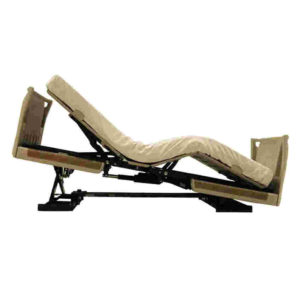
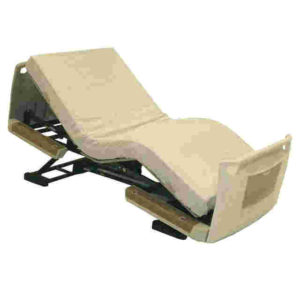
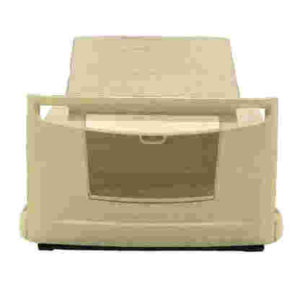
The Japan IP High Court, in its ruling on November 29, 2018, did not side with Paramount Bed Co., Ltd., a Japanese manufacturer and distributor of medical and nursing care product, who filed an appeal against refusal decision by JPO to TM Application no. 2015-29155 for 3D mark representing the shape of home care bed.
[Case No. Heisei 30 (Gyo-ke) 10060]


3D shape of home care bed

Disputed mark, representing three-dimensional shape of nursing care bed, was filed on March 31, 2015 by designating nursing care bed and mattress in class 20. The Japan Patent Office (JPO) refused the mark due to a lack of distinctiveness.

Paramount Bed argued acquired distinctiveness as a source indicator of Paramount nursing care bed through substantial use of the mark and its unique shape.
According to the argument, Paramount has distributed more than 145,000 sets of nursing care bed and mattress which 3D shape is identical with the applied mark. The company spent USD 2,400,000 to advertise the bed in newspaper and USD 20,000,000 in TV commercial during the past five years. Paramount produced on-line questionnaire results which showed more than 60 % of relevant traders have recognized the shape as a series of Paramount Bed.


IP High Court ruling

The IP High Court dismissed the allegation entirely, stating that the produced evidences are unpersuasive to conclude the 3D shape acquired distinctiveness as a source indicator of Paramount Bed’s business because of below-mentioned reasons.

  1. As long as nursing care beds are likely to be used by general public, questionnaire results answered by traders are insufficient to demonstrate acquired distinctiveness among relevant consumers.
  2. Given the shape of applied mark occasionally appears while nursing care bed is in operation and the bed has coverlet on it in ordinary days, it is questionable whether relevant consumers have perceived the shape of applied mark per se as a source indicator.
  3. Besides, catalogs and advertisements pertinent to Paramount nursing care bed show configurations of the bed other than the shape of applied mark.

Based on the foregoing, the court upheld JPO decision.

JPO decision over POWER TECH trademark

In an administrative appeal disputing trademark similarity between TM registration no. 4015750 for word mark “POWERTECH” and a junior application no. 2016-137853 for the “AC POWERTECH” device mark represented as below, the Appeal Board of the Japan Patent Office decided that both marks are deemed dissimilar and reversed examiner’s rejection.
[Appeal case no. 2018-6124, Gazette issued date: October 26, 2018]


TM Registration no. 4015750

The cited mark, consisting of a word “POWERTECH” colored in red (see below), was registered on June 20, 1997 by designating various vehicles in class 12.

Junior Application no. 2016-137853

Applied junior mark consists of the following “AC POWERTECH” device mark (see below).

It was applied for registration on December 7, 2016 by designating vehicles in class 12.

The JPO examiner refused the applied mark due to a conflict with senior TM registration no. 4015750 based on Article 4(1)(xi) of the Trademark Law.

Article 4(1)(xi) is a provision to refrain from registering a junior mark which is deemed identical with, or similar to, any senior registered mark.


Subsequently, the applicant filed an appeal against the rejection and disputed dissimilarity of both marks.


Board decision

In the decision, the Appeal Board held that:

Applied mark is a composite mark mainly consisting of two words of “AC” and “POWERTECH” written in two lines and a black hexagon.

Even if the term “AC” is likely to be used as an indication of type and mode of vehicles in commerce, from appearance of applied mark as a whole, the Board opines that relevant consumers would not conceive the term as indication of type or model. If so, it is questionable whether consumers ignore “AC” in the applied mark and pay considerable attention to the term “POWERTECH”. Thus, it is reasonable to conclude that applied mark shall give rise to a pronunciation nothing but “AC POWERTECH” and no specific meaning.

Based on the foregoing, in the assessment of trademark similarity, the Board decided that:

Obviously, both marks are distinguishable in appearance. Given applied mark does give rise to a pronunciation of “AC POWERTECH” and no meaning, the Board finds no ground to affirm examiner’s rejection from visual, phonetic, and conceptual point of view.


Astonishingly, JPO viewed the applied mark “AC POWERTECH” in its entirety irrespective of significant difference in font size between “AC” and “POWERTECH”.

“Teddy Bear” versus “Rose Teddy Bear”

The Appeal Board of Japan Patent Office (JPO) ruled that senior trademark registrations for the mark “Teddy Bear” in standard character over goods of trees, flowers, dried flowers, plants, seedlings, saplings in class 21 is unlikely to cause confusion with a junior mark “Rose Teddy Bear” in plain letters even if the mark is used on rose and rose bushes in class 21. [Appeal case no. 2017-18006, Gazette issue date: October 26, 2018]


Senior registrations for the “Teddy Bear” mark

“TEDDY BEAR”, a children’s toy, made from soft or furry material, which looks like a friendly bear, has its origin after Teddy, nickname for Theodore Roosevelt who was well known as a hunter of bears.

In Japan, name of the toy bear has been registered in the name of Nisshin OilliO Group. Ltd. on various goods in class 29, 30, 31 and 32 since 1986.


Junior application for “Rose Teddy Bear”

Junior mark for “Rose Teddy Bear” was applied for registration by a French company on August 10, 2016 over goods of rose, rose trees and other items relating to rose in class 31.

JPO examiner rejected junior mark due to a conflict with the “Teddy Bear” mark based on Article 4(1)(xi) of the Trademark Law on September 5. 2017.

Article 4(1)(xi) is a provision to refrain from registering a junior mark which is deemed identical with, or similar to, any senior registered mark.

To seek for registration, applicant filed an appeal against the refusal on December 5, 2017.


Appeal Board decision

The Appeal Board set aside a refusal on the grounds that:

(1) From appearance and pronunciation, the term of “Rose Teddy Bear” shall be recognized as one mark in its entirety.
(2) Relevant consumers and traders are likely to conceive the term as a coined word since it does not give rise to any specific meaning as a whole.
(3) Therefore, the refusal based on the assumption that literal portions of “Teddy Bear” in junior mark plays a dominant role made a factual mistake and shall be cancelled consequently.

It seems that the Board decision is not consistent with the Trademark Examination Guidelines (TEG) criteria.

[Chapter III, Part 10 of TEG] A composite trademark having characters representing an adjective (characters indicating the quality, raw materials, etc. of goods or characters indicating the quality of services, the location of its provision, quality, etc.) is judged as similar to a trademark without the adjective as a general rule.

In this respect, as long as the junior mark designates rose in class 21 and the term “Rose” in the mark further impresses the concept of rose in mind of consumers, the portion of “Rose” should be considered descriptive in relation to designated goods. Otherwise, any combined mark composed of registered mark and a generic term pertinent to the designated goods is deemed dissimilar to the registered mark.

I suppose the Board signaled a narrower scope of right where trademark has evidently its origin from other entity or meaning unrelated to senior registrant.

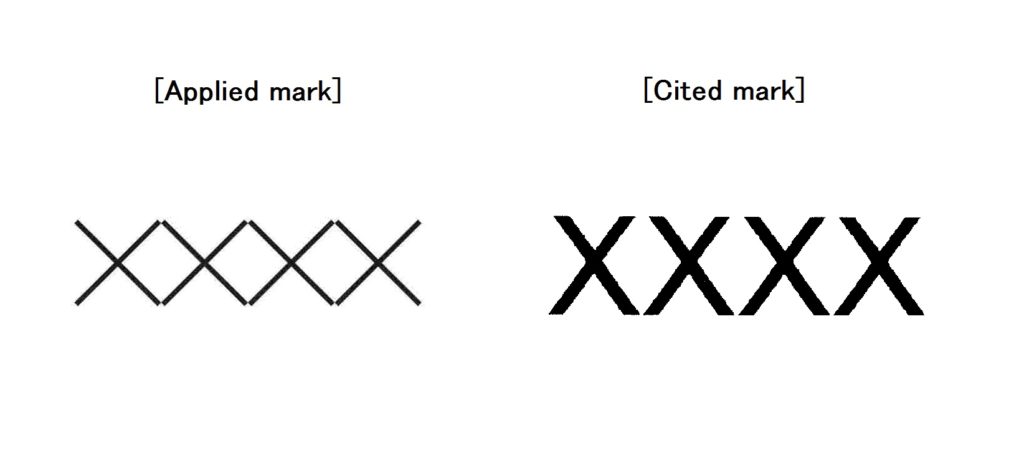
Trademark dispute for XXXX

In a recent trademark appeal trial to seek dismissal of examiner’s refusal, the Appeal Board of Japan Patent Office (JPO) set aside the refusal and allowed registration of TM Application no. 2017-21396 for the XXXX mark because of dissimilarity to a senior registration for “XXXX” mark.
[Appeal case no. 2018-5881, Gazette issue date: October 26, 2018]


Applied mark

The mark in dispute (see below left) was applied for registration in the name of Mitsukoshi Isetan, Japan’s largest department store group, on February 22, 2017 by designating goods of clothing; belts in class 25 and retail or wholesale services for clothing, bags and pouches, handkerchief and hair ornaments in class 35.


Cited TM registration for “XXXX”

The JPO examiner refused the applied mark due to a conflict with senior TM registration no. 4147840 for the mark “XXXX” (see above right) based on Article 4(1)(xi) of the Trademark Law.

Article 4(1)(xi) is a provision to refrain from registering a junior mark which is deemed identical with, or similar to, any senior registered mark.

Cited mark has been registered since 1998 over goods of clothing, garters, sock suspenders, suspenders [braces], waistbands, belts for clothing, footwear, clothes for sports, special footwear for sports in class 25.

Applicant filed an appeal against the decision on April 27, 2018 and disputed dissimilarity of the marks.


Appeal Board decision

The Appeal Board sided with the applicant and negated similarity of both marks by stating that:

Applied mark shall be seen to represent a certain geometric figure. It appears that cited mark represents four alphabetical letters of “X” in line. It means there finds distinguishable gap between geometric figure and alphabetical letters from appearance.
Applied mark does not give rise to any specific pronunciation. In the meantime, cited mark shall have pronunciations of “eks eks eks eks” and “four eks”. Likewise, both marks are sufficiently distinguishable in pronunciation.
Besides, as long as both marks do not give rise to any specific meaning, it is not feasible to compare them in concept.
In view of above aspects, it unlikely happens confusion between the marks and thus deemed dissimilar.


Based on the foregoing, the Board decided applied mark is not subject to Article 4(1)(xi), and admitted registration.