In a recent administrative decision, the Appeal Board of Japan Patent Office (JPO) disaffirmed the examiner’s refusal and held a composite mark, consisting of words “PERFECT GEAR AGENCY” and a monogram “PGA”, is dissimilar to the senior registered word mark “PGA” owned by Professional Golf Association. [Appeal case no. 2019-10638, Gazette issued date: September 25, 2020]
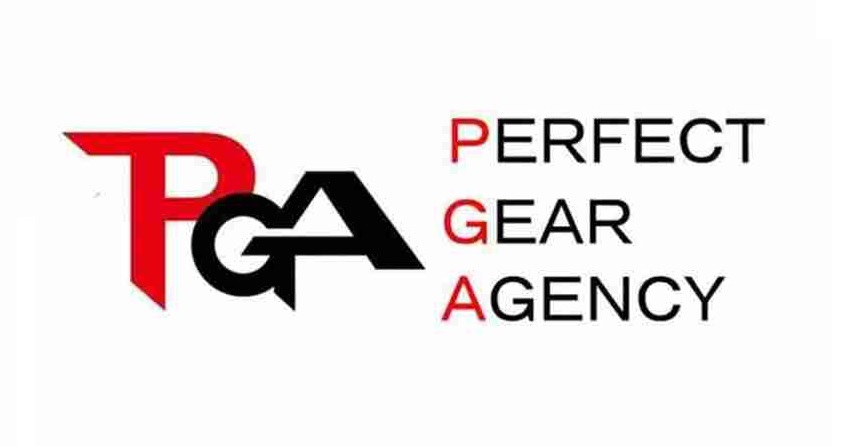
“PGA/ PERFECT GEAR AGENCY”
Disputed mark, see below, was applied for registration in relation to retail or wholesale services for various goods, e.g. foods and beverages, footwear, bags, automobiles in class 35 on January 24, 2018.
The disputed mark consists of the “PGA” monogram and the words “PERFECT GEAR AGENCY” on the right. The initial letter of the respective term is colored in red. Apparently, the monogram comes from an initial
letter of each word “PERFECT”, “GEAR” and “AGENCY”.
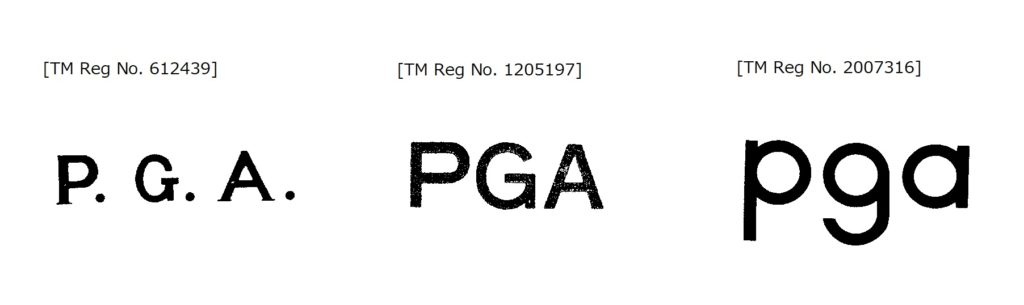
JPO Examiner rejected the disputed mark by citing several senior trademark registrations for a wordmark “PGA” in various classes owned by Professional Golf Association.
In Japan, retail or wholesale service in
respect of specific goods is deemed similar to the goods or its equivalent. For
example, retail service in respect of sporting goods (class 35) and sporting
goods (class 28) is deemed similar.
That being the case, the applicant filed an appeal against the refusal and contended dissimilarity of the mark.
JPO decision
The Appeal Board found that the “PGA” monogram and words “PERFECT GEAR AGENCY” can be separably seen from a visual point of view. Besides, the “PGA” monogram per se does not give rise to any specific meaning. It is unknown whether relevant Japanese consumers have been familiar with the words “PERFECT GEAR AGENCY” as a whole. If so, the words do not give rise to a specific meaning as well.
By taking account of the above, the Board pointed out the disputed mark shall be pronounced as “PERFECT GEAR AGENCY”, but has no meaning.
Based on the foregoing, the Board concluded the refusal shall be disaffirmed since the examiner erroneously found that the disputed mark gives rise to a pronunciation of “PGA” from the “PGA” monogram.
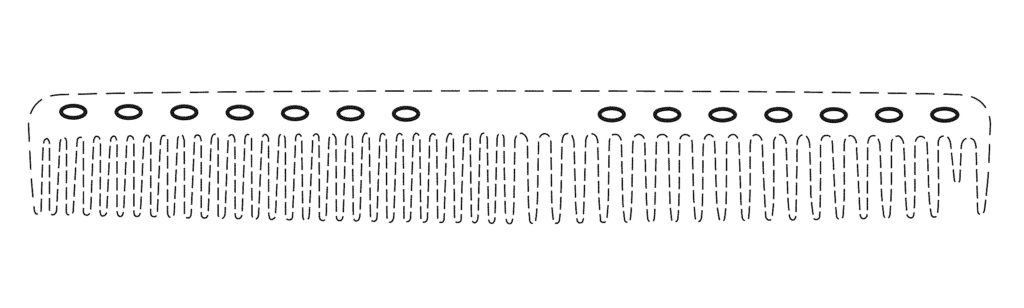
On August 27, 2020, the Japan IP High Court ruled to affirm the Japan Patent Office (JPO) decision and rejected TM application no. 2016-34650 for a position mark consisting of fourteen open ellipses built-in grip section of cutting combs in class 21 due to a lack of inherent distinctiveness. [Court case no. Reiwa1(Gyo-ke)10143]
YS Park Cutting Comb
The YS Park Cutting Comb features a non-slip grip section with fourteen air ellipses spaced in 1cm intervals to allow for great flexibility and sectioning.
Allegedly, the comb has been distributed in
many countries and its annual sales increased to 170,000~27,000 pieces for the
last five years.
Position Mark
Plaintiff, a Japanese corporation to distribute the YS Park Cutting Comb since 1989, sought for registration for fourteen open ellipses built-in grip section of the Cutting Comb as a Position Mark (see below) on March 28, 2016.
In Japan, by an enactment of the New Trademark Law in 2014, new types of mark, namely, color, sound, position, motion, hologram, was allowed for trademark registration since April 2015.
JPO decision
On September 17, 2019, the JPO refused the position mark under Article 3(1)(vi) of the Trademark Law by finding that there are plenty of competitor’s combs with a design, pattern, hole, or pit in short intervals on the grip section and it gives rise to an impression of the decorative or functional linear pattern as a whole. If so, relevant consumers at the sight of cutting comb bearing the position mark would just conceive it as a pattern for decorative or functional indication, not as a source indicator. Besides, consecutive use on the YS Park Cutting Comb over a decade would be insufficient to acquire secondary meaning from the produced evidence and business practice in relation to cutting comb. [Appeal case no. 2018-8775]
Article 3(1)(vi) is a provision to
comprehensively prohibit from registering any mark lacking inherent
distinctiveness.
Any trademark to be used in connection with goods or services pertaining to the business of an applicant may be registered, unless the trademark: (vi) is in addition to those listed in each of the preceding items, a trademark by which consumers are not able to recognize the goods or services as those pertaining to a business of a particular person.
To contend, the applicant filed a lawsuit to the IP High Court on October 29, 2019, and demanded cancellation of the decision.
IP High Court Ruling
This is the 2nd court case for the IP High Court to hear the registrability of Position Mark.
At the outset, the court stated the distinctiveness of Position Mark shall be assessed as a whole by taking account of a constituent of the mark and its position on goods or services.
The court upheld fact-findings by the JPO that plenty of competitors advertise and provide cutting combs with a pattern, pit, or open holes in short intervals on the grip section to enhance its function. In this regard, it is unlikely that relevant consumers (general consumers on the case) would consider the whole pattern as a source indicator of the comb. The court pointed that plaintiff has promoted features of fourteen open ellipses on YS Park Cutting Comb with an advertisement of “Air Suspension Function” in fact. If so, consumers would find the open holes as a functional indication.
Plaintiff produced interviews and statements by beauticians, hairstylists, school officials/staff of Cosmetology and Beauty school and argued the secondary meaning of the Position mark, however, the court negated the allegation on the ground that such evidence is insufficient and irrelevant to demonstrate acquired distinctiveness since the goods in question shall be broadly targeted to general consumers. Thus, the court decided the JPO did not error in finding secondary meaning in the case.
The Appeal Board of the Japan Patent Office (JPO) affirmed Examiner’s refusal to register the wordmark “U.S. POLO ASSN.” due to similarity to and a likelihood of confusion with earlier registered mark “POLO” owned by The Polo/Lauren Company, L.P. [Appeal case no. 2018-5222, Gazette issued date: July 31, 2020]
“U.S. POLO ASSN.”
United States POLO Association filed a trademark registration for wordmark “U.S. POLO ASSN.” in standard character on January 13, 2016, over various kinds of bags, leather products, and other goods in class 18. [TM application no. 2016-3277]
On January 12, 2018, the JPO Examiner rejected the applied mark in contravention of Article 4(1)(xi) and (xv) of the Japan Trademark Law on the grounds that “U.S. POLO ASSN.” contains a term “POLO” which has become famous as a source indicator of The Polo/Lauren Company, L.P in connection with clothing and home décor. Relevant consumers with ordinary care would conceive the term as a prominent portion of the applied mark. If so, both marks shall be deemed similar or likely to cause confusion when used on the goods in question.
Article 4(1)(xi) is a provision to prohibit from registering a junior mark that is
deemed identical with, or similar to, any senior registered mark.
Article 4(1)(xv) is a provision to prohibit any mark from being registered where it
is likely to cause confusion with other business entity’s well-known goods or
services, to the benefit of brand owner and users’ benefits.
U.S. POLO ASSN filed an appeal against
Examiner’s refusal on April 16, 2018.
JPO decision
JPO admitted a high degree of reputation
and popularity of “POLO” as a source indicator of The Polo/Lauren Company, L.P
in connection with clothing as well as bags based on following fact-findings.
American company Polo Ralph Lauren was founded in 1967 in New-York by fashion designer Ralph Lauren. The 1980s and 90s saw massive expansion for the Ralph Lauren brand and it became a worldwide phenomenon.
“POLO” appears with definitions of ‘trademark of US designer, Ralph Lauren’ and ‘leather products designed by Ralph Lauren’ in some dictionaries which clearly demonstrate “POLO” is known as an abbreviation of ‘POLO RALPH LAUREN’.
“POLO” has been substantially used adjacent to “RAPLH LAUREN” on various goods and frequently advertised as a famous brand of RALPH LAUREN in the media.
A customer survey conducted in January 2010 from 900 adults age 20 years and older revealed that RALPH LAUREN has ranked 3rd-most popular brand in clothing after Burberry and UNIQLO.
Annual sales exceed USD4,800 million in 2008, USD7,450 in 2013.
The Board found the applied mark “U.S. POLO
ASSN.” shall be seen as a composite mark consisting of “U.S.”, “POLO” and “ASSN.”
Since the last word “ASSN.” is too unfamiliar to average Japanese consumers to see
it as an abbreviation of ‘association’, the applied mark would not give rise to
any specific meaning as a whole. Besides, its pronunciation ‘ˌjuː.es poʊ.loʊ eɪeɪesén’
sounds redundant. Even if the second word “POLO” means ‘a game played on
horseback by two teams of four players each’, given a high reputation of the
word as a source indicator or an abbreviation of ‘POLO RALPH LAUREN’ the Board can’t
overlook the fact that it has the same spelling as RALPH LAUREN’s famous
apparel brand.
If so, relevant consumers would consider “POLO” as a prominent portion of the applied mark and it shall be permissible to compare the portion with the cited mark in assessing similarity of mark.
In this viewpoint, the applied mark would give rise to a sound of ‘poʊ.loʊ’ and the meaning of “RALPH LAUREN’s famous apparel brand”. Therefore, the applied mark shall be deemed confusingly similar to senior registered mark “POLO” owned by The Polo/Lauren Company, L.P in class 18, and others (TM Registration no. 4040052, 4931614, and 4931615).
Based on the foregoing, the Board found that
Examiner didn’t error in fact-finding nor applying Article 4(1)(xi) and (xv) of
the Trademark Law and decided to refuse the applied mark accordingly.
On July 8, 2020, the Japan IP High Court affirmed the JPO’s rejection in a trademark dispute over the “MAHARAJA” mark for Indian restaurant services in class 43. [Judicial case no. Reiwa2(Gyo-ke)10022]
Disputed mark
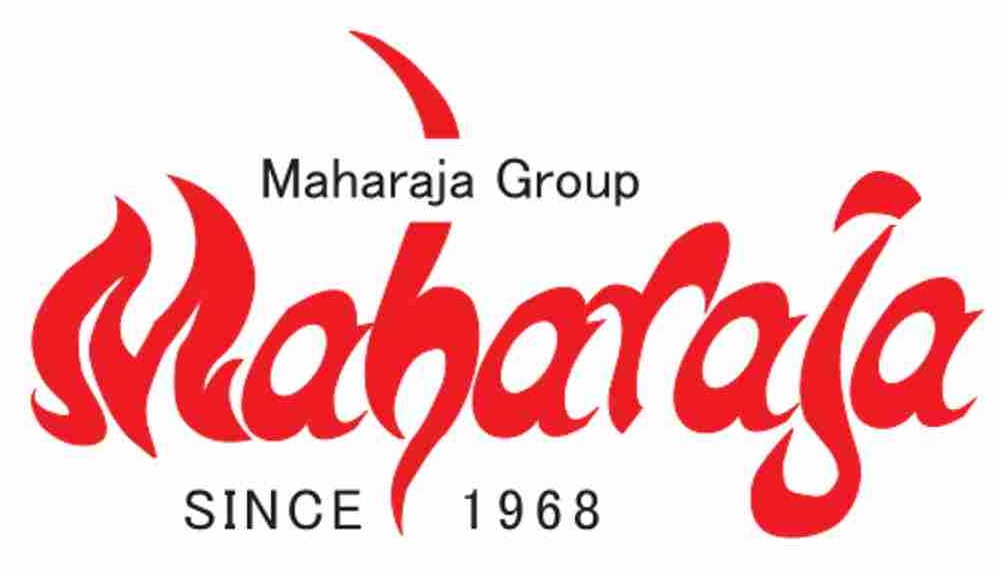
The disputed mark prominently consists of “Maharaja” with stylization in red (see below).
The mark was filed by MAHARAJA.CO., LTD, on December 25, 2017, designating the services of providing Indian cuisine; providing alcoholic beverages, tea, coffee, or juices; providing hotel accommodation in class 43 [TM application no. 2017-168406].
The applicant allegedly opened the first “Maharaja” Indian restaurant at Shinjuku (Tokyo) in 1968 and now operates the “Maharaja” restaurants at some places in Japan.
JPO decision
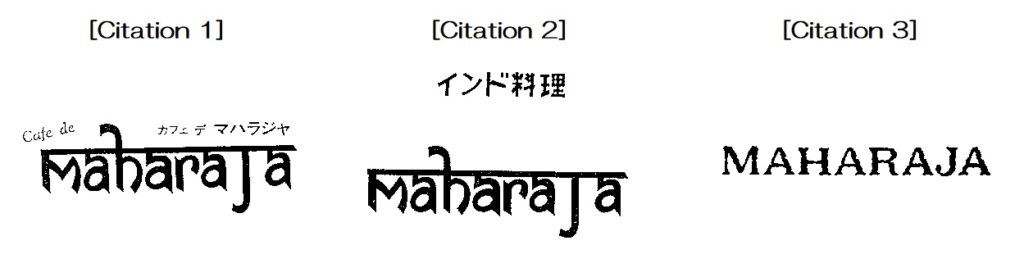
The Japan Patent Office (JPO) rejected the disputed mark in contravention of Article 4(1)(xi) of the Japan Trademark Law by citing the following senior registrations.
Article 4(1)(xi) is a provision to prohibit registering a junior mark which is
identical with, or similar to, any senior registered mark.
The JPO found that the stylized “Maharaja” term, due to its position, larger font, and color, dominates the perception of the disputed mark. If so, the disputed mark obviously gives rise to the same sound and meaning with the Citations. “MAHARAJA” means the head of one of the royal families that used to rule parts of India (Collins English Dictionary). Because of a high degree of phonetic and conceptual similarity, the mere difference in appearance is not sufficient to neutralize the similarity.
Besides, it is unquestionable that the
disputed mark designates identical or similar services with the Citations.
For the reader’s reference, I had better explain that the Citations are respectively co-existing on similar services of providing Indian cuisine; providing alcoholic beverages in the same class. It is because these were filed just after the implementation of Servicemark in 1992 and the Trademark Law exceptionally secured for registration to protect the existing business status even if similar marks are filed by other entities on the condition that business owners apply for registration within a statutory period for the implementation.
To contest the JPO decision [Appeal case no. 2019-4961], the applicant appealed to the IP High Court on February 19, 2020.
IP High Court ruling
Applicant argued that since “MAHARAJA” has become a generic term in relation to Indian restaurant services, relevant consumers would find the appearance of the “MAHARAJA” mark rather than sound and meaning as a material clue to distinguish such restaurants. To bolster the argument, the applicant referred to the fact that 14 (fourteen) restaurants managed by an entity other than the applicant provide Indian foods using tradename “MAHARAJA” in Japan.
Given relevant consumers are accustomed to seeing the term “MAHARAJA” in close connection with Indian foods, it would likely be a generic term in relation to the service in question. If so, the aural and conceptual elements of generic term shall not be taken into consideration in assessing the similarity of the mark. The JPO errored in finding the background of the case appropriately.
The court, however, did deny the applicant’s allegation, stating that the on-line database of NTT telephone directory (town page) shows 2162 Indian restaurants exist in Japan as of 2017. It means more than 2,100 Indian restaurants use a tradename other than “MAHARAJA”. Under the circumstances, the court would not find a reasonable reason to believe “MAHARAJA” has become a generic term in relation to the service.
Even though there are plenty of Indian restaurants under the tradename of “MAHARAJA” in Japan as the applicant argues, the court would not be convinced if relevant consumers distinguish such restaurants simply by means of the visual elements of a mark (tradename). Because the court finds it commercial practice for shop owners to modify the font and color of mark (tradename) depending on its place and venue.
Based on the foregoing, the court decided that the JPO did not error in finding similarity of the mark and dismissed the appeal entirely.
On 23 June 2020, the Japan IP High Court decided a case concerning a single color mark that was rejected for registration by the Appeal Board of the Japan Patent Office (“JPO”).
Single Color Mark
On 1 April 2015, Hitachi Construction Machinery (“Hitachi”) filed an application for trademark registration with JPO consisting of a single color per se, namely orange (Munsell: 0.5YR5.6/11.2) over the goods of hydraulic excavators, wheel loaders, road loaders, loaders [earch moving machines] in class 7, and rigid dump trucks in class 12 (TM Application no. 2015-29999).
TM Application No. 2015-29999
By the decision of 19 September 2019, the Appeal
Board of JPO declared the applied color mark to be refused in contravention of Article
3(1)(iii) and Article 3(2) of the Trademark Law, finding that the
graphic representation of the color mark constituted the “mere single orange
color, without contours”. If so, the mark is not inherently distinctive
and it is lacking acquired distinctiveness. In the course of the appeal trial,
Hitachi amended and restricted the designated goods to “hydraulic excavators”.
Article 3(2) is a provision to allow registration of any mark with which the relevant public will associate a particular source, manufacturer, or producer over time through the trademark owner’s usage.
On 30 October 2019, Hitachi appealed
against the JPO decision.
IP High Court decision
At the outset, the court stated it is inevitable
on the case concerning single color mark to take the interest of competitors who
deal with the goods in question into consideration since allowing one trader to
exclusively use this color would likely to cause unjust competitive practice in
form of monopolistic power of use in favor of one trader only.
From the produced evidence, Hitachi has allegedly used the color in question on hydraulic excavators and other construction machines since 1974.
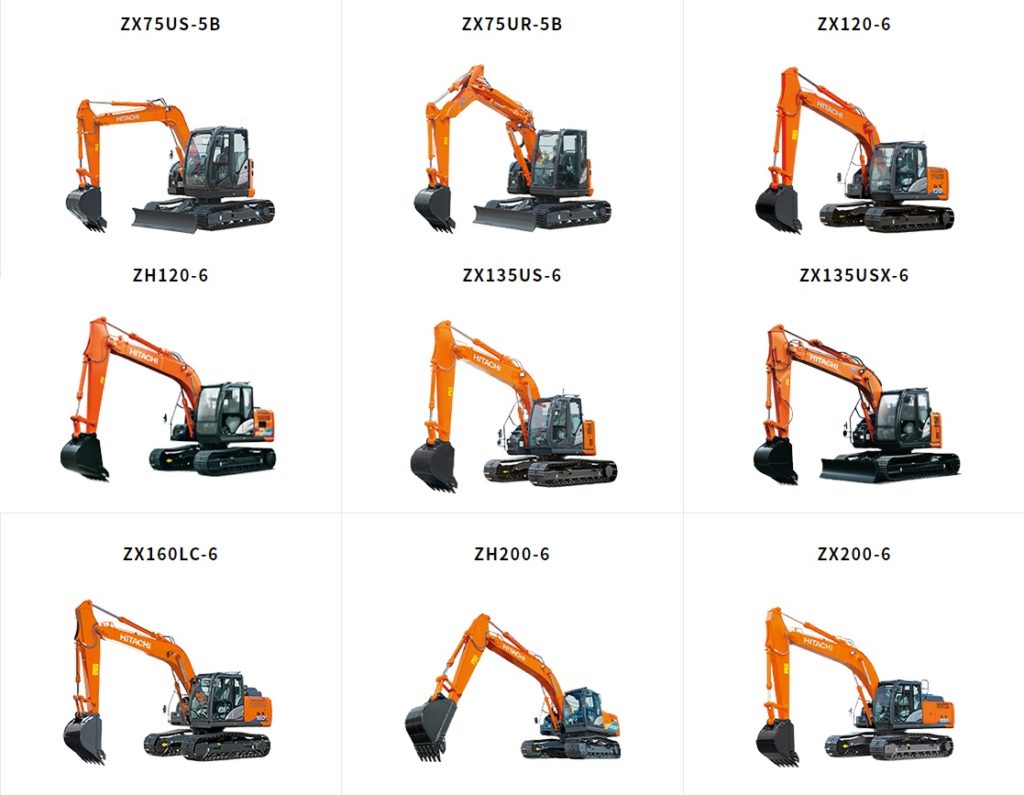
Hitachi Hydraulic Excavators
Hitachi consecutively holds a 20% market share (14.6%) of hydraulic excavators over the past four decades in Japan. The research showed that approx. 95.9 % (185 out of 193) of traders in the construction industry were able to associate the color with Hitachi.
In the meantime, several competitors use similar color on hydraulic excavators
In the decision, the court found orange color is one of the colors commonly seen in our daily life. Besides, the Japan Industrial Standard (JIS) adopts orange as a safety sign-color aiming to prevent harm to the human body and damage to properties. Because of it, at construction sites, we often see several items colored in orange, e.g. helmets, rain suits, guard fens, work clothes, tower cranes, construction vehicles.
Hitachi Hydraulic Excavators have other colors, in fact, namely, a house mark “HITACHI” colored in white, buckets (attachments), cockpits, and crawlers colored in black. If so, the applied mark shall be capable of playing the role of source indicator in combination with these. Thus, the court would not find reasonable grounds to believe that the orange color per se acquired distinctiveness as a source indicator of Hitachi’s Hydraulic Excavators.
The court even suspected credibility of the research by finding that it narrowly targeted traders or consumers who own more than 10 hydraulic excavators, precisely it showed 36.8% in light of initial research number of targets, 502 persons, and the questionnaire ‘Please answer. What maker do you think hydraulic excavator is?” was insufficient to conclude acquired distinctiveness since its answer may simply suggest one of the colors of Hitachi’s Hydraulic Excavators.
Even if hydraulic excavators market in Japan is an oligopoly with five makers accounting for 90 % of the industry share, and the orange color has been consecutively used by Hitachi only, it does not mean every competitor agreed to refrain from using the color given orange has been used on various goods in the construction and agriculture industry in general.
Based on the foregoing, the court affirmed the JPO decision and dismissed Hitachi’s allegations in contravention of Article 3(1)(iii) and 3(2).
Thus, it is obvious that a very high standard of distinctiveness needs to be attached to a single-color mark if the same has to be claimed for trademark protection.
This case was a second court decision concerning a single color mark. The first case, Reiwa1(Gyo-ke)10119 ruled on March 11, 2020, also ended with the rejection of a single orange color mark in contravention of other ground, Article 3(1)(vi).
How JPO Examines Color Marks
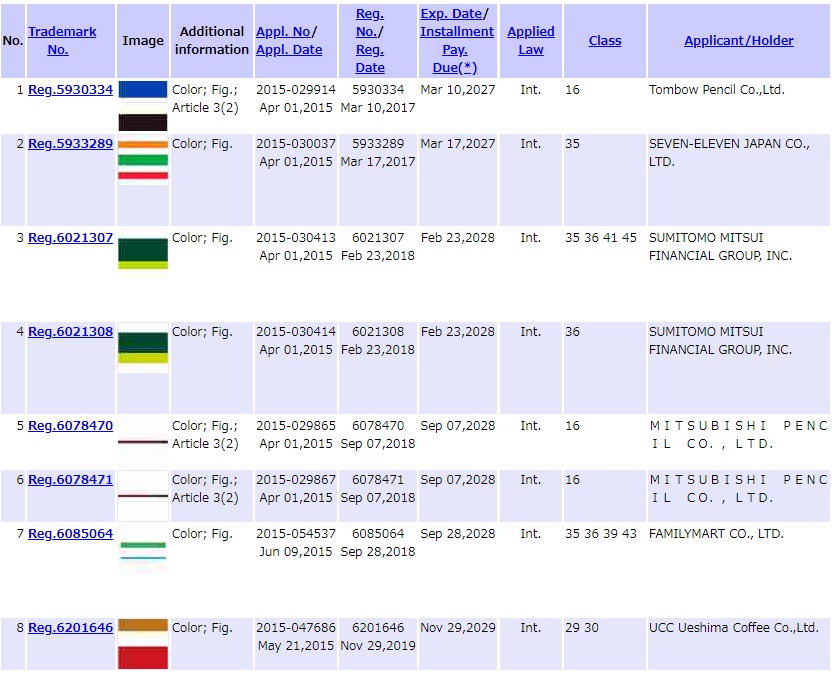
As of now (12 July 2020), 543 color marks were applied for registration with JPO since the commencement of the Non-Traditional trademark application in April 2015. So far, only 8 marks are successfully registered. See below.
In sum, the registration rate of color mark is barely 1.5%! It is noteworthy none of a ‘single’ color mark has been granted to registration.
On June 17, 2020, the Japan IP High Court affirmed the JPO’s rejection of the “I♡JAPAN” mark in relation to various goods of class 14,16,18 and 24 due to a lack of distinctiveness. [Judicial case no. Reiwa 1(Gyo-ke)10164]
I♡JAPAN
The disputed mark consists of the capital letter “I”, followed by a red heart symbol, below which are the capital letters “JAPAN” (see below). The mark filed by CREWZ COMPANY, a Japanese merchant on April 17, 2018, over various goods in class 14, 16, 18, and 24 [TM application no. 2018-049161].
Noticeably, the JPO already allowed trademark registration for the same mark on apparels in class 25 on March 27, 2015, filed by the applicant [TM Registration no. 5752985]. Regardless of it, the examiner refused disputed mark in contravention of Article 3(1)(vi) of the Trademark Law.
Article 3(1)(vi) is a provision to comprehensively prohibit from registering
any mark lacking inherent distinctiveness.
Any trademark to be used in connection with goods or services pertaining to the business of an applicant may be registered, unless the trademark: (vi) is in addition to those listed in each of the preceding items, a trademark by which consumers are not able to recognize the goods or services as those pertaining to a business of a particular person.
JPO decision
The JPO Appeal Board sustained the examiner’s refusal and decided to reject disputed mark by stating that we are nowadays accustomed to finding goods bearing the “I♡” logo followed by a geographical indication, which represents a strong devotion or attachment to the area/city in its entirety. In fact, the “I♡JAPAN” design is commonly used on several goods as a symbol to support the Japanese sports team or souvenirs for tourists. If so, the design shall not be exclusively occupied by a specific entity. Under the circumstances, relevant consumers are unlikely to conceive the disputed mark as a source indicator of the applicant. Thus, the mark shall be rejected in contravention of Article 3(1)(vi) and the examiner did not error. [Appeal case no. 2018-16957]
To contend against the decision, the applicant filed an appeal to the IP High Court.
IP High Court ruling
The IP High Court dismissed the applicant’s allegation entirely, stating that the disputed mark gives rise to the meaning of “I love JAPAN”. The court found the “I♡” logo followed by a geographical indication is commonly used to appeal a strong devotion or attachment to the area/city. Inter alia, various merchants promote goods bearing the “I♡JAPAN” design as a sign of their support to Japan or the Japanese sports team. If so, relevant consumers and traders would not conceive disputed mark as a source indicator of goods in question, but merely a symbol to represent their devotion and support to Japan. Therefore, the disputed mark shall not be registrable under n contravention of Article 3(1)(vi).
Besides, the court found the fact of a precedent registration for the same mark in a different class would not affect the distinctiveness of disputed mark since it does not have a legal effect to bind subsequent examination in assessing registrability of a junior mark under Article 3(1)(vi).
On May 20, 2020, the Japan IP High Court denied the JPO decision and sided with Apple Inc. by finding the “CORE ML” mark is dissimilar to senior trademark registration no. 5611369 for word mark “CORE” in connection with computer software of class 9. [Case no. Reiwa1(Gyo-ke)10151]
CORE ML
Apple Inc. filed a trademark application
for word mark “CORE ML” in standard character by designating computer software
in class 9 on November 6, 2017 (TM App no. 2017-145606).
Apple’s Core ML is its own framework for
Machine Learning used across Apple products for performing fast prediction or
inference with easy integration of pre-trained machine learning models on the
edge, which allows you to perform real-time predictions of live images or video
on the device.
JPO decision
The Japan Patent Office (JPO) rejected “CORE ML” in contravention of Article 4(1)(xi) of the Trademark Law due to a conflict with senior trademark registration no. 5611369 for word mark “CORE” in standard character over electronic machines, computer software, and other goods in class 9 owned by Seiko Holdings Corporation.
Article 4(1)(xi) is a provision to prohibit from registering a junior mark that is deemed identical with, or similar to, any senior registered mark.
In the decision, the JPO stated applied mark apparently consists of two words, “CORE” and “ML”. The term “CORE”, a familiar English word meaning ‘a central and foundational part’, would play a role of source indicator in connection with the goods in question. In the meantime, “ML” is a descriptive term since it is commonly used as an abbreviation of ‘Machine Learning’ in the computer software industry. If so, it is permissible to select the term “CORE” as a dominant portion of applied mark and compare it with the cited mark “CORE”.
To contend against the decision, Apple Inc.
filed an appeal to the IP High Court.
IP High Court ruling
The IP High Court, at the outset, referred to the Supreme Court ruling in 2008 which established the criterion to grasp a composite mark in its entirety in the assessment of similarity of the mark.
“Where a mark in dispute is recognized as a composite mark consisting of two elements or more, it is not permissible to assess the similarity of mark simply by means of taking out an element of the composite mark and then comparing such element with the other mark, unless consumers or traders are likely to perceive the element as a dominant portion indicating its source of origin of goods/service, or remaining elements truly lack inherent distinctiveness as a source indicator in view of sound and concept.”
Based on the criteria, the court found that applied mark
shall be assessed in its entirety on the following grounds:
“CORE” would be merely recognized as a term to mean ‘a central and foundational part’ in connection with goods in question.
It is unlikely that relevant consumers at the sight of “CORE ML” used on computer software conceive the term “ML” as an abbreviation of ‘machine learning’. If so, “ML” would not give rise to any specific meaning.
The above facts suggest that “CORE” would never play a dominant role and “ML” shall not be considered less distinctive than “CORE” as a source indicator in view of the concept.
From appearance and sound, there is no reasonable ground to believe “CORE” and “ML” shall be recognized individual and separable.
Based on the foregoing, the court pointed out the JPO erred in finding applied mark appropriately and decided that the applied mark “CORE ML” is deemed dissimilar to the cited mark “CORE” as a whole given the remarkable difference in sound and appearance, even if both marks resemble in concept.
The Japan Patent Office (JPO) allowed trademark registration of “Ghana” in connection with chocolates of class 30 by finding acquired distinctiveness as a source indicator of Lotte Co., Ltd., a Korea-based confectionary company. [Appeal case no. 2019-8784, Gazette issued date: May 29, 2020]
Lotte “Ghana” Chocolates
Ghana chocolate is Lotte’s signature product and one of the most beloved chocolate in Japan for many years.
Lotte Co., Ltd. launched chocolates bearing the “Ghana” mark in 1964. Since then, the mark has been prominently indicated on the packages.
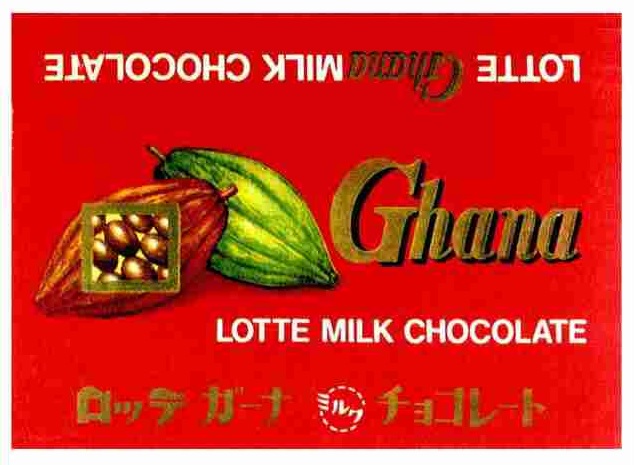
[“Ghana” chocolate package back in 1970’s – TM Reg no. 892507]
In 1994 of the 30th anniversary, Lotte slightly changed the design of its package and the mark and added different tastes of “Ghana” chocolates, e.g. milk chocolates, white chocolates. On new packages, the “Ghana” mark is much conspicuously and largely indicated than before.
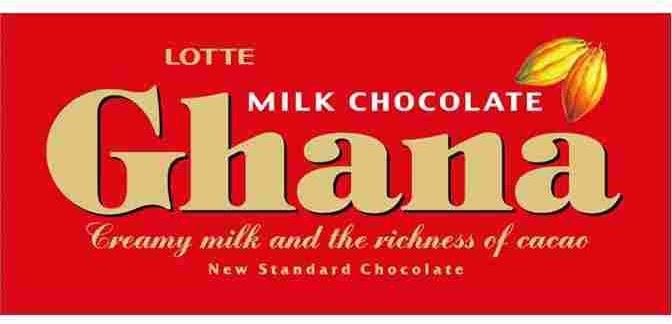
[Current package – TM Reg no. 5405402, registered on April 8, 2011]
On December 8, 2017, Lotte sought trademark registration for the current “Ghana” logo (see below) over chocolates in class 30. [TM application no. 2017-161593]
Article 3(1)(iii) & 4(1)(xvi)
The JPO rejected the “Ghana” mark in contravention of Article 3(1)(iii) and 4(1)(xvi) of the Japan Trademark Law by stating that “Ghana” is a geographical indication corresponding to Republic of Ghana, a country of western Africa, situated on the coast of the Gulf of Guinea, one of the major producers of high-quality cocoa beans. Therefore, relevant consumers and traders at the sight of chocolates bearing the “Ghana” mark would merely conceive it of the origin of cocoa beans. Besides, whenever the mark is used on chocolates not made from Ghana cocoa beans, it inevitably misleads the quality of goods.
Acquired distinctiveness
Lotte argued the “Ghana” mark shall be protectable based on Article 3(2), even if nominally unregistrable under Article 3(1)(iii) because it has acquired distinctiveness as a result of substantial and continuous use on chocolates in Japan.
Article 3(2) of the Trademark Law
Notwithstanding the preceding paragraph, a trademark that falls under any of items (iii) to (v) of the preceding paragraph may be registered if, as a result of the use of the trademark, consumers are able to recognize the goods or services as those pertaining to a business of a particular person.
Appeal Board decision
The Appeal Board affirmed examiner’s
rejection pertinent to lack of distinctiveness in connection with goods in
question, however, the Board held that the “Ghana” mark would function as a
source indicator of Lotte chocolates consequently and thus registrable based on
the acquired distinctiveness under Article 3(2).
Allegedly Lotte “Ghana” chocolates hold
top-ranked market share in Japan since 2017. In 2008, Lotte sold more than 100
million bars of “Ghana” chocolates. The annual sales exceeded 1.2 billion JP-yen
in 2017.
Lotte has long been aggressive not only to advertise “Ghana” chocolates in newspapers, TV commercials, trains, and stations, but also to launch lots of chocolate events and campaigns on Valentine’s Day or Mother’s Day nationwide, and collaborations with retailers, hotels restaurants featuring ‘Ghana’ chocolates.
Due to their marketing efforts, Lotte “Ghana”
brand chocolates could win several awards, e.g. Monde Selection ‘Gold Award’
(2008, 2009, 2010), D2C ‘Marketing Award’ (2002), The Japan Food Journal ‘Long
Seller Award’ (2008), DENTSU ‘Excellent Award’ (2009, 2010, 2011), JR East ‘Excellent
Advertisement Award’’.
Besides, “Ghana” chocolates ranked top in the
brand survey published by Nikkei Research in 2016.
Lotte could eventually achieve registration of the “Ghana” mark on chocolates, but it spent more than five decades to that end.
Interestingly. Lotte has registered the “GANA” mark on goods of class 30 including chocolates since 1990. It must aim to prevent a third party from registering any mark similar to “Ghana”.
In an appeal decision, the Japan Patent Office (JPO) overturned the examiner’s rejection and decided to register trademark “LEPS” by finding dissimilarity to senior registration for mark “LEPUS” even if both marks designate similar goods in class 12. [Appeal case no. 2019-6626, Gazette issued date: March 27, 2020]
LEPS
Applicant, GS Yuasa Corporation, filed a trademark application for term “LEPS” in standard character over solar batteries, power distribution or control machines, and apparatus, rotary converters, phase modifiers of class 12 on December 18, 2017 (TM application no. 2017-165431).
JPO examiner rejected the applied mark in
contravention of Article 4(1)(xi) of the Trademark Law by citing senior trademark
registration no. 3194818 for mark “LEPUS”
Article 4(1)(xi) is a provision to prohibit registering a junior mark which is
identical with, or similar to, any senior registered mark.
LEPUS
Cited mark “LEPUS” (see below), owned by Mitsubishi Motors Corporation, has been registered since September 1996 over automobiles and their parts and fittings, two-wheeled motor vehicles, bicycles, and their parts and fittings, AC motors or DC motors for land vehicles in class 12.
On April 25, 2019, GS Yuasa filed an appeal
against the rejection and argued dissimilarity of the marks.
Appeal Board decision
In the decision, the Appeal Board held
that:
“From appearance, even if both marks start with “LEP” and end with “S”, with or without “U” in the middle of a short word consisting of four or five letters would be anything but negligible. Because of it, the marks as a whole give rise to a distinctive visual impression in the minds of relevant consumers. Accordingly, both marks are unlikely to cause confusion from appearance.
Applied mark “LEPS” is pronounced as “le-ps”. In the meantime, cited mark “LEPUS” shall be “le-pəs”. The difference in the 2nd sound, “p” and “pə”, would be influential in the overall pronunciation given both marks aurally consist of just three sounds. Due to the difference, both sounds can be distinguishable in tone and linguistic feeling when pronounced at a time.
Conceptually, applied mark is incomparable with cited mark since both marks would not give rise to any specific meaning at all.”
Based on the foregoing, the Board concluded: “applied mark “LEPS” would be deemed dissimilar to cited mark “LEPUS” from the global appreciation of the visual, aural and conceptual similarity of the marks in question, and based on the overall impression and association given by the marks to relevant traders and consumers with ordinary care“.
Consequently, the Board reversed the examiner’s rejection due to the dissimilarity of the marks even if the goods in question are similar and allowed registration of the applied mark (TM registration no. 6234714).
In an administrative appeal disputing trademark similarity between TM registration no. 5661343 for word mark “Antithesis” with its transliteration in Japanese katakana and junior application no. 2017-101730 for a mark consisting of “Antithesis” and the other eight English terms placed in 9 rows, JPO found both marks dissimilar and reversed the examiner’s rejection. [Appeal case no. 2019-652, Gazette issued date: March 27, 20]
TM
Registration no. 5661343
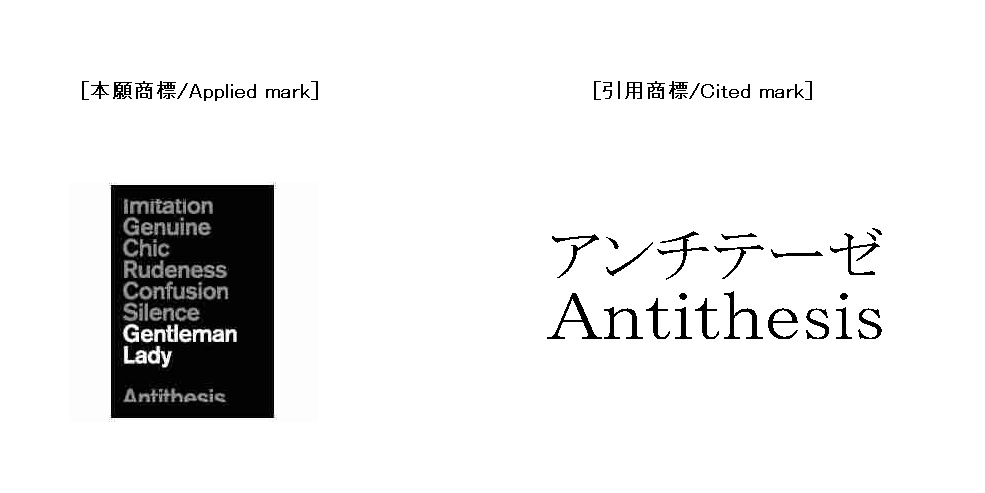
Cited mark, the term “Antithesis” with its transliteration in a Japanese katakana character (see below) has been registered over clothing, footwear, and other goods in class 25 since April 4, 2014.
Junior
Application no. 2017-101730
Applied mark, consisting of nine English terms “Imitation”, “Genuine”, “Chic”, “Rudeness”, “Confusion”, “Silence”, “Gentleman”, “Lady”, and “Antithesis” placed in 9 rows inside a black rectangle (see right), was applied for registration on August 1, 2017, over clothing, footwear, and other goods in class 25 by Element Rule Co., Ltd.
JPO examiner entirely rejected applied mark on the ground that the term “Antithesis” on the bottom row can play a role of source indicator independently because of overall configuration and space above the bottom row. If so, the applied mark as a whole shall be deemed similar to the cited mark.
The applicant filed an appeal against the rejection on May 20, 2019, and argued dissimilarity of both marks.
Appeal
Board decision
In
the decision, the Board found that:
“From the appearance, “Antithesis” on the bottom row shall not be separable since the term is written in the same font, color, size with other terms “Imitation”, “Genuine”, “Chic”, “Rudeness”, “Confusion”, “Silence” even if there is space in the trademark. Besides, nine terms do not give rise to any specific meaning in its entirety. Neither do eight terms except “Antithesis”. If so, there is no reasonable reason to believe that relevant consumers consider the term “Antithesis” on the bottom row or any other terms a dominant part of the applied mark. It rather does mark sense that applied mark shall be perceived as a whole displaying respective English word in a different row inside a black rectangle.”
Based on the foregoing, the Board held that the Examiner erred in finding the term “Antithesis” separable as an independent source indicator of the applied mark, and decided to reverse the examiner’s rejection.
I don’t quite agree with the Appeal Board decision. In my view, the respective term contained in a junior mark shall be considered separable unless it gives rise to different meanings in a tight combination with other distinctive terms.