Coronavirus Impact on Trademark Procedures in Japan

The Japan Patent Office (JPO) has announced the measures it has taken to help foreign users for trademarks during the coronavirus outbreak.

Response to the office action

JPO takes flexible approaches to allow a delayed response on the condition that the applicant requests for remedy either in the following ways:

  1. To file a written request and its reason before the lapse of a deadline in advance.
  2. To file the response with an additional written explanation within a certain period after the deadline.
[Example of reasons]

Due to the negative effects of the COVID-19, Company ____ for which applicants work/Office ___ where representatives of applicants work had been closed from _____ to _____ in 2020, and the applicants/the representatives are (were) not able to implement the prescribed procedures. Nonetheless, since it has become possible to implement the procedures from ____, 2020, please accept ____ as a valid procedure.

Priority documents

JPO allows submitting priority documents within two months after deadline, namely five months from the application date, provided that the applicant simultaneously files a statement of reasons for the failure to meet its original deadline.

Appeal to refusal decision

JPO considers a request for appeal against the examiner’s decision of refusal valid if appealed within two months after foreign users go back to normal life impacted by COVID-19, but before the lapse of six months after the original deadline. It is required to state delayed reasons in the appeal brief.

Payment of registration fee

JPO considers payment of registration fee valid if appealed within two months after foreign users go back to normal life impacted by COVID-19, but before the lapse of six months after the original deadline. It is required to file a statement of delayed reasons simultaneously.

Application for renewal

JPO accepts application for renewal of trademark registration valid if appealed within two months after foreign users go back to normal life impacted by COVID-19, but before the lapse of six months after the expiry date. It is required to file a statement of delayed reasons simultaneously.

New transformed Application after revocation of international registration

JPO considers a newly transformed application for Japanese trademark application after the revocation of International Registration valid if appealed within two months after foreign users go back to normal life impacted by COVID-19, but before the lapse of six months after the original deadline. It is required to file a statement of delayed reasons simultaneously.

More and latest information is available on the JPO website. Click here.
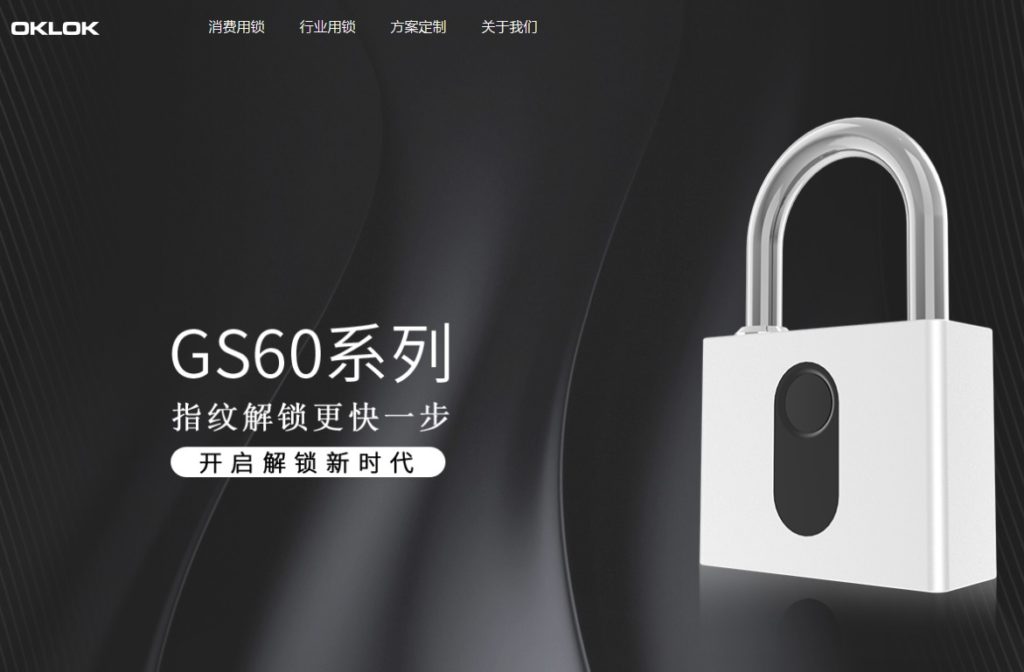
OKLOK vs OKLOCK

In a trademark dispute, similarity between “OKLOK” and “OKLOCK”, the Appeal Board of the Japan Patent Office found both marks dissimilar and reversed examiner’s rejection.
[Appeal case no. 2019-16781, Gazette issued date: March 27, 2020]

OKLOK

A senior mark, consisting of a word “OKLOK” in standard character, was registered on September 21, 2018 (TM Reg no. 6083192) over electric locks; electronic key fobs being remote control apparatus; anti-theft warning apparatus; other goods in class 9 by a Chinese business entity, 深圳市龙兄弟数码锁有限公司 (Shenzhen Longbrothers Digital Co., Ltd.).

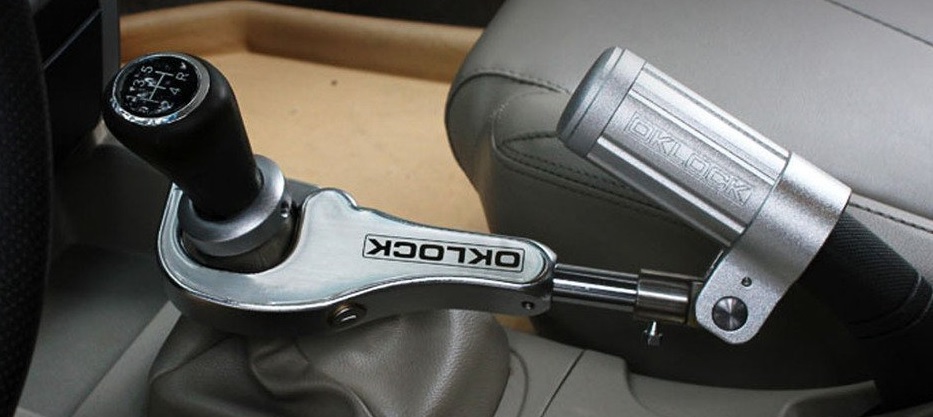
Owner has used “OKLOK” on fingerprint key less padlock, Smart Bluetooth Security Lock with USB Charge and other intelligent anti-theft devices (see below).

[Capture shot of OKLOK official site]

OKLOCK

Applied junior mark, consisting of a word “OKLOCK” in standard character, was applied for registration on April 3, 2019 over anti-theft locks for use on automobile steering wheels and other goods in class 12 [TM application no. 2019-47122].

Applicant uses “OKLOCK” on car steering wheel locks and anti-theft car hand brake and gear lock (see below).

The JPO examiner rejected “OKLOCK” because of confusing similarity to “OKLOK” based on Article 4(1)(xi) of the Trademark Law.

Article 4(1)(xi) is a provision to prohibit registering a junior mark which is identical with, or similar to, any senior registered mark.

There is criterion that the examiner is checking when assessing the similarity between the marks:

  • visual similarity
  • aural similarity
  • conceptual similarity

and taking into account all these three aspects examiner makes a decision if a mark is similar (at least to some extent) with the earlier mark and if there is a likelihood of confusion for the consumers.

Applicant filed an appeal against the rejection on December 11, 2019 and argued dissimilarity of both marks.

Appeal Board decision

In the decision, the Appeal Board held that:

From appearance, applied mark “OKLOCK” contains a letter “C” unlike the cited mark “OKLOK”. This gives rise to a distinctive impression visually in the mind of relevant consumers where respective mark consists of five or six-letter words, anything but long.

Next, applied mark is pronounces as [oʊˈkeɪ lɑːk]. In the meantime, the cited mark just gives rise to a pronunciation of [oʊˈkeɪ el ə keɪ] because relevant consumers are likely to see “OKLOK” as a combination of five alphabets and read it as each letter sounds since “OKLOK” does not appear in dictionary.

Thirdly, applied mark does not give rise to any specific meaning in its entirety even though it is perceived as a combination of “OK” and “LOCK”. Likewise, relevant consumers would not conceive any meaning from “OKLOK” and just see it as a coined word. If so, both marks are incomparable from concept.

Based on the foregoing, the Board found no reasonable ground to affirm examiner’s rejection from visual, phonetic, and conceptual points of view and decided to reverse examiner’s rejection.

JPO protects 3D shape of cherry design bottle for soy sauce dispenser

In a recent administrative decision, the Japan Patent Office (JPO) found 3D shape of cherry design bottle is inherently distinctive in relation to soy sauce dispensers in class 21 even without secondary meaning.
[Appeal case no. 2019-7188, Gazette issue date: March 27, 2020]

3D shape of cherry design bottle

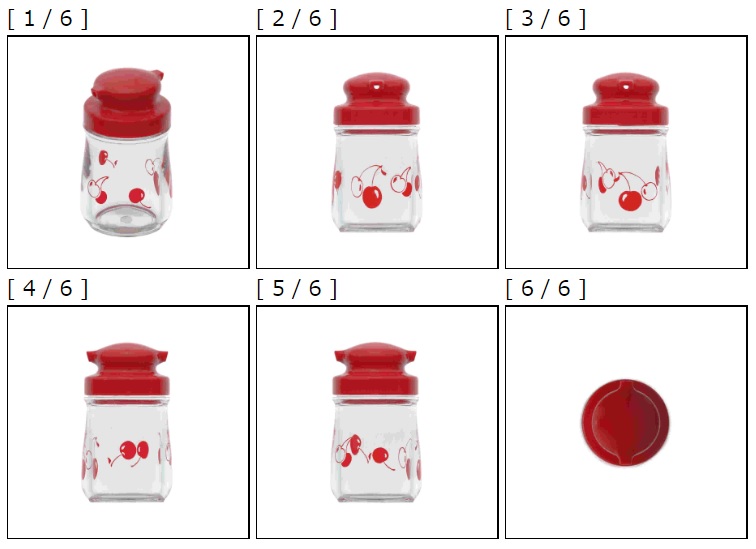
RISU Co., Ltd. filed a trademark application for three-dimensional shape of soy sauce bottle featuring cherry designs (see below) in relation to say sauce dispensers of class 21 on July 20, 2017 (TM Application no. 2017-96914).

From appearance, the 3D shape does not differentiate from an ordinary soy sauce dispenser except cherry designs in red encircling a clear cylindrical plastic bottle.

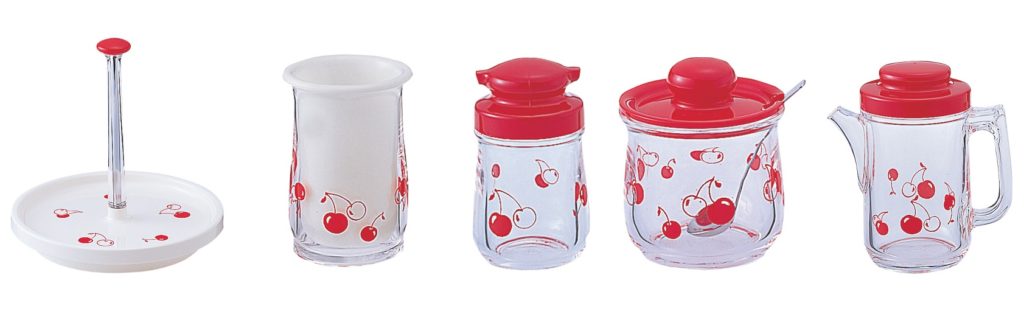
As a matter of fact, RISU Co., Ltd. has produced various plastic products for home use as well as cherry patterned table top condiment containers.

Article 3(1)(iii)

The JPO examiner rejected registration of the 3D mark on the ground that relevant consumers would not conceive the shape as a source indicator in relation to soy sauce dispensers since there exists similar goods depicting decorative patterns and colors to aim at attracting their attentions. The mark merely represents a shape of designated goods in a common manner and thus is not eligible for registration based on Article 3(1)(iii) of the Trademark Law.

Article 3(1)(iii) is a provision to prohibit any mark from registering where the mark solely consists of elements just to indicate, in a common manner, the place of origin, place of sale, quality, raw materials, efficacy, intended purpose, quantity, shape (including shape of packages), price, the method or time of production or use.

To dispute the refusal, applicant, applicant filed an appeal on June 3, 2019.

Appeal Board’s decision

The Appeal Board disaffirmed examiner’s rejection of the 3D shape by stating that:

Figurative elements depicted on a clear plastic cylindrical bottle would be rather perceived as a distinctive device created on a cherry motif, than a decoration for the purpose of enhancing function or aesthetic appeal of goods in question. If so, the 3D shape per se is deemed to play a role of source indicator sufficiently. It is obvious that examiner errored in finding distinctiveness of the 3D shape.

Thus, the 3D mark is eligible for registration in connection with soy sauce dispensers of class 21 even without finding secondary meaning because of inherent distinctiveness of the shape.

First ruling by IP High Court on New Type of Trademark in Japan

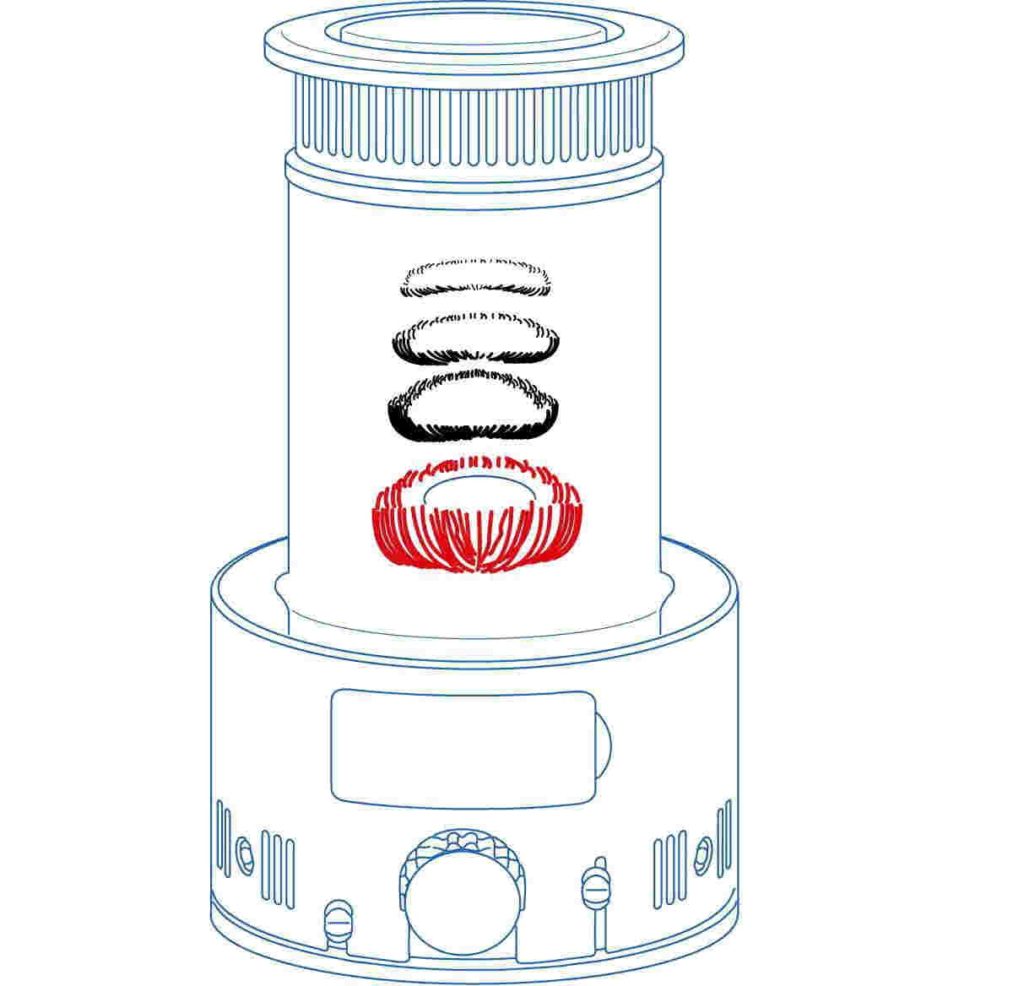
On February 14 2020, the Japan IP High Court ruled to uphold the Japan Patent Office (JPO) decision and rejected TM application no. 2016-009831 for a 3D position mark consisting of three virtual images of oil stove flame due to a lack of inherent and acquired distinctiveness.
[Case no. Reiwa1(Gyo-ke)10125]

TOYOTOMI Oil Stove “Rainbow”

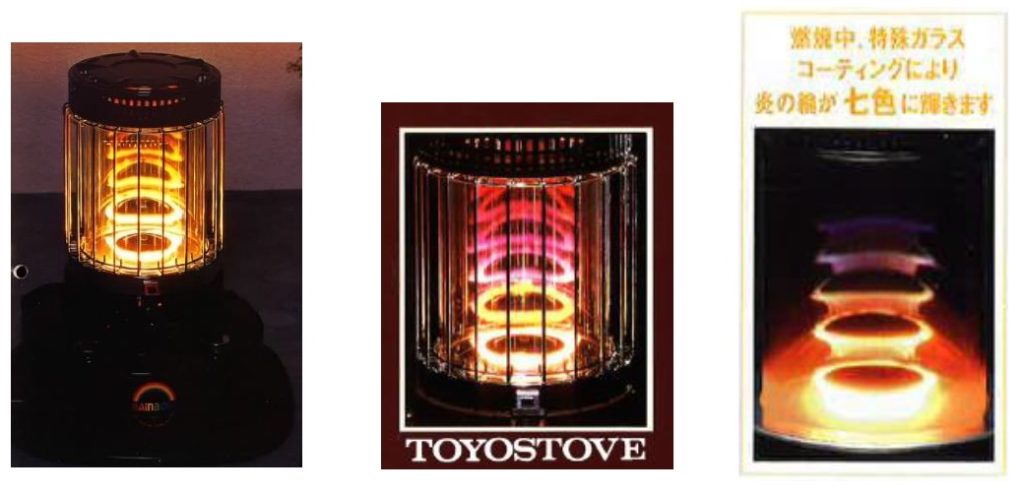
TOYOTOMI CO., LTD., a Japanese company, the world’s first manufacturer of kerosene-fired portable cooking stove in 1952, has allegedly produced their convection type lantern-like design oil stoves in the name of “Rainbow” since 1980.

By means of a heat-resistant glass coated on the inner surface of vertical cylindrical heat chamber of the Rainbow stoves, virtual images of orange flame appear floatingly above actual flame when stoves are in use (see below).

3D Position mark

TOYOTOMI sought for registration for its virtual images of flame in connection with convection type oil stoves in class 11 as a 3D Position mark (see below) on January 29, 2016.

In a description of the mark, applicant specified:

applied mark is a position mark consisting of 3D virtual image of three flame rings appeared floatingly above the flame burning on stove at the inside of vertical cylindrical heat chamber. Devices colored in blue and red would not constitute an element of applied mark.

In Japan, by enactment of the New Trademark Law in 2014, new type of mark, namely, color, sound, position, motion, hologram, was allowed for trademark registration since April 2015.

According to the JPO database, more than 480 position marks were applied for registration under the New Trademark Law and 78 position marks are successfully registered as of now (Feb 29, 2020).

JPO decision

On March 2, 2018, the JPO examiner refused applied mark under Article 3(1)(iii) of the Trademark Law based on the fact that mechanism of 3D virtual shape of three flame rings was exclusively protected under Patent No. 1508319 which was expired on July 25, 2000. According to technical specifications of the patent, it is admitted that the 3D shape was purely achieved as a result of utilitarian functionality and aesthetic functionality. If so, the JPO finds it inappropriate to register the shape as a trademark because of unfair and detrimental effect to the public caused by prospective perpetual exclusivity to the shape itself that should have been a public domain under the Patent Law.

Besides, the JPO considered applied mark has not acquired distinctiveness (secondary meaning) as a source indicator of applicant’s products regardless of substantial use for more than three decades.

Subsequently, JPO dismissed an appeal on the same ground. [Appeal case no. 2018-007479, on August 30, 2019]

To contend, applicant filed a lawsuit to the IP High Court on September 26, 2019 and demanded cancellation of the decision.

IP High Court ruling

This lawsuit was the very first case for the IP High Court to take up new type of trademark at the open court.

The court held a shape of goods shall not be protectable as a source indicator if it just aims to achieve function of the goods from utilitarian and aesthetic viewpoints. If such shape per se is apparently destined to achieve functions of goods, it shall be refused for registration under Article 3(1)(iii) of the Trademark Law.

In this regard, the court found, applied mark simply consists of a shape destined to achieve utilitarian and aesthetic functions of goods in question, since it is considered virtual images of floating flame ring aim to increase heating effect of convection type oil stoves.

A mere fact that none of competitors have used identical or similar shape with applied mark on oil stoves would be irrelevant to assess distinctiveness of mark under Article 3(1)(iii).

Even if three flame rings do not physically constitute a shape of oil stoves, the court would see the JPO did not error in adapting Article 3(1)(iii) on the case.

As for acquired distinctiveness, the court had no reason to believe applied mark acquired secondary meaning through actual use based on the produced evidence. TOYOTOMI allegedly held top-rank market share (22.5%) of convection type oil stoves in Japan and annually delivered 29,000 stoves on average for the last seven years. However, the court pointed out the TOYOTOMI Rainbow stoves share just 2% when radiation type oil stoves are counted. Besides, provided that applied mark is not visible to consumers who visit shops to purchase oil stoves from appearance of the goods when turned off, it is questionable whether average consumers would conceive the 3D shape as a source indicator, rather than a functional shape of oil stoves.

Based on the foregoing, the IP High Court upheld JPO decision.

Empire Steak House loses to trademark its restaurant name in Japan IP High Court battle

On December 26, 2019, the Japan IP High Court ruled to uphold a rejection by the Japan Patent Office (JPO) to International Registration no. 1351134 for the mark “EMPIRE STEAK HOUSE” in class 43 due to a conflict with senior trademark registration no. 5848647 for word mark “EMPIRE”. [Judicial case no. Reiwa1(Gyo-ke)10104]

EMPIRE STEAK HOUSE

The case was brought into the IP High Court after the JPO decided to dismiss an appeal (case no. 2018-650052) filed by RJJ Restaurant LLC (Plaintiff), an owner of IR no.1351134 for mark consisting of stylized-words “EMPIRE STEAK HOUSE” in two lines and a golden cow design (see below) on restaurant services; carry-out restaurant services; catering services in class 43.

EMPIRE STEAK HOUSE, one of the top steakhouses in New York City since 2010, has opened their first restaurant aboard on the first floor of the new Candeo Hotel in Roppongi, Tokyo (JPN) on October 17, 2017. To secure the restaurant name in Japan, RJJ Restaurant LLC applied for registration of disputed mark via the Madrid Protocol with a priority date of March 2, 2017 in advance of the opening.

Senior registered mark “EMPIRE”

The JPO rejected disputed mark by citing senior trademark registration no. 5848647 for word mark “EMPIRE” in standard character on grilled meat and sea foods restaurant services in class 43 based on Article 4(1)(xi) of the Trademark Law.

Article 4(1)(xi) is a provision to prohibit from registering a junior mark which is deemed identical with, or similar to, any senior registered mark.

Senior registered mark was applied for registration on December 8, 2015 and registered on May 13 ,2016. Apparently, senior mark is actually used as a name of restaurant, “Dining Bar Empire”, located in the city of Ueda, Nagano Prefecture (JPN).

To contend against the decision, plaintiff filed an appeal to the IP High Court on July 19, 2019.

IP High Court Decision

Plaintiff argued the literal elements of disputed mark “EMPIRE STEAK HOUSE” shall be assessed in its entirety by citing web articles relating to applicant’s restaurant which referred to the restaurant as Empire Steak House in full. Like ‘Empire State Building’ and ‘Empire Hotel’, the term “EMPIRE” gives rise to unique meaning and plays a role of source indicator as a whole when used in combination with other descriptive word. Besides, disputed mark contains an eye-catching golden cow which attracts attention to relevant consumers. If so, it is evident that the JPO erred in assessing similarity of mark between “EMPIRE STEAK HOUSE” and “EMPIRE”.

The IP High Court, at the outset, mentioned the Supreme Court decision rendered in 2008 which established general rule to grasp a composite mark in its entirety in the assessment of similarity of mark.

“Where a mark in dispute is recognized as a composite mark consisting of two elements or more, it is not permissible to decide similarity of mark as a whole simply by picking out an element of the composite mark and then comparing such element with other mark, unless consumers or traders are likely to perceive the element as a dominant portion appealing its source of origin of goods/service, or remaining elements truly lack inherent ability to serve as a source indicator in view of sound and concept.”

Next, the court analyzed the configuration of disputed mark and found it is allowed to grasp a literal element “EMPIRE” of disputed mark as dominant portion in light of the criteria applied by the Supreme Court by stating that:

  1. A term “STEAK HOUSE” is commonly used to indicate steak restaurant even in Japan.
  2. Where the term is included in restaurant name, it sometimes happens that relevant consumers over leap the term to shorten the name.
  3. In restaurants, it becomes common practice to display cucina and foodstuffs to be served on signboard or advertisement. Likewise, there are many steak and grilled meat restaurants displaying cow design. If so, relevant consumers at the sight of disputed mark would perceive the cow design as a mere indication to represent foodstuffs at the restaurant.
  4. From appearance, given the configuration of disputed mark, respective element can be considered separable.

Finally, based on the above findings, the court dismissed plaintiff’s arguments and concluded the JPO was correctly assessing similarity of mark. Given dominant portion of disputed mark is identical with the cited mark “EMPIRE” and both marks designate the same or similar services in class 43, disputed mark shall be unregistrable under Article 4(1)(xi) of the Trademark Law.

Trademark Dispute – SNOOPY vs. SNOOPY COUNSELOR

The Appeal Board of Japan Patent Office (JPO) held “SNOOPY COUNSELOR” is unlikely to cause confusion with “SNOOPY”, one of the most iconic and beloved comic-strip character by Charles M. Schulz, the pet beagle of the hapless Peanuts character Charlie Brown when used in connection with psychological counseling services.
[Appeal case no. 2019-8241, Gazette issued date: November 29, 2019]

SNOOPY COUNSELOR

Veriteworks Inc., a Japanese company, filed a trademark application for work mark “SNOOPY COUNSELOR” written in Japanese Katakana character (see below) by designating ‘psychological counseling instruction; arranging, conducting and organization of counseling seminars’ (class 41) and ‘psychological counseling’ (class 44) to the JPO on August 14, 2018.

Refusal by JPO examiner

The JPO examiner refused the mark under Article 4(1)(xv) of the Japan Trademark Law by stating that the mark contains a term “SNOOPY” which has been famous as a fictional character, the pet beagle of Charlie Brown in the comic strip Peanuts by Charles M. Schulz. The character has long been licensed for use on merchandise by Peanuts Worldwide LLC and considerable licensed goods in addition to comics have been distributed in Japan by its licensee, Sony Creative Products Inc. so far.

If so, relevant consumers and traders are likely to connect and associate the mark with services from Peanuts Worldwide LLC or its licensee and thus confuse its source of origin.

Article 4(1)(xv) provides that a mark shall not be registered where it is likely to cause confusion with other business entity’s well-known goods or services, to the benefit of brand owner and users.

To contend, applicant filed an appeal against the refusal on June 20, 2019.

Appeal Board’s decision

The Appeal Board reversed the examiner’s refusal and admitted applied mark “SNOOPY COUNSELOR” to registration by finding that:

  1. It is unquestionable that “SNOOPY” has been well-known for a character, the pet beagle of Charlie Brown in the comic strip Peanuts by Charles M. Schulz. However, the Board has an opinion that it is unclear from the produced materials and information whether relevant consumers connect or associate the licensed goods and services pertinent to “SNOOPY” with any specific business entity.
  2. From appearance, the term “SNOOPY” of applied mark can be perceived as a dominant portion given “COUNSELOR” lacks distinctiveness in relation to the designated services in class 41 and 44. If so, both marks remarkably resemble from visual and phonetic aspects.
  3. Since it is also unknown whether Peanuts Worldwide LLC is likely to engage in its licensing business on psychological counseling, the Board considers relatedness with the services in question is incomparable and relatively low.
  4. Provided that relevant consumers are unlikely to perceive the “SNOOPY” as a source indicator of Peanuts Worldwide LLC or its licensees, even if both marks resemble, the Board finds applied mark “SNOOPY COUNSELOR” would not cause confusion with goods or services from Peanuts Worldwide LLC or its licensees.

It is noteworthy that the JPO denied a likelihood of confusion between “SNOOPY COUNSELOR” and “SNOOPY” regardless of finding famousness of “SNOOPY” as an iconic and beloved comic-strip character.

Acquired distinctiveness for 3D shape of OMRON digital thermometer

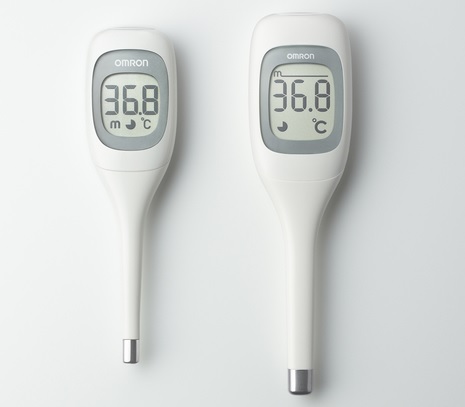
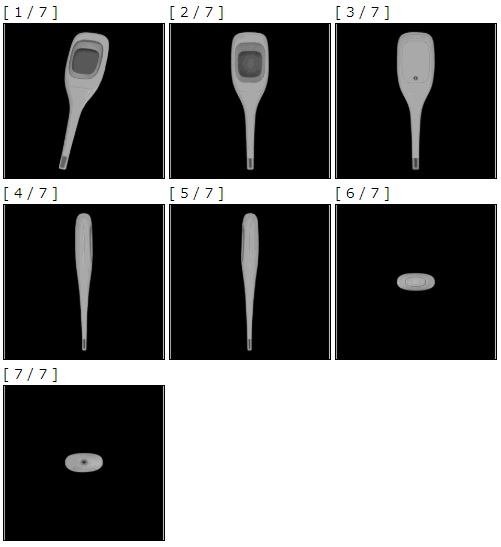
The Japan Patent Office recently admitted trademark registration for a three-dimensional shape of digital thermometers ‘MC-670’ and ‘MC-681’ manufactured by Omron Healthcare Co., Ltd. by finding acquired distinctiveness in relation to thermometers (cl.10) under Article 3(2) of the Japan Trademark Law.
[Appeal case no. 2019-10386, Gazette issued date: October 29, 2019]

3D shape of the Omron digital thermometer

Omron Healthcare Co., Ltd. filed a trademark solely consisting of three-dimensional shape of its digital thermometers ‘MC-670’ and ‘MC-681’ (see below) in relation to thermometers in class 10 on August 28, 2018.
[TM application no. 2018-108289]

JPO examiner entirely rejected the application on the ground that in general pen-shape digital thermometers have a similar configuration with the applied mark. If so, it is unlikely that relevant consumers and traders conceive the shape as a source indicator of the goods. Hence, the mark is subject to Article 3(1)(iii) of the Trademark Law.

Article 3(1)(iii) is a provision to prohibit any mark from registering where the mark solely consists of elements just to indicate, in a common manner, the place of origin, place of sale, quality, raw materials, efficacy, intended purpose, quantity, shape (including shape of packages), price, the method or time of production or use.

To dispute the refusal, applicant, Omron filed an appeal on August 6, 2019.

Appeal Board’s decision – Acquired Distinctiveness

The Appeal Board affirmed examiner’s rejection of the 3D shape based on lack of distinctiveness. In the meantime, the Board granted protection of the 3D shape by finding acquired distinctiveness under Article 3(2).

Article 3(2) of the Trademark Law

Notwithstanding the preceding paragraph, a trademark that falls under any of items (iii) to (v) of the preceding paragraph may be registered if, as a result of the use of the trademark, consumers are able to recognize the goods or services as those pertaining to a business of a particular person.

Allegedly Omron has continuously used the 3D shape on its digital thermometers ‘MC-670’ and ‘MC-681’ since November 2004. Omron holds top-ranked market share (43.9%) of digital thermometers in Japan. ‘MC-670’ and ‘MC-681’ have been sold more than 4million sets over the last decade and maintains the 2nd market share (8.7%) in 2018.

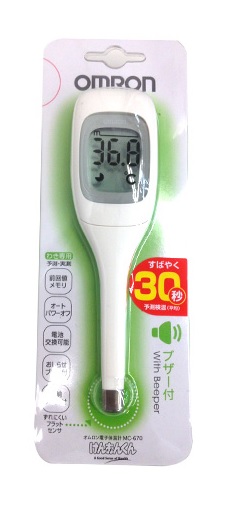
The Board took a favorable view of the package design to appeal its 3D shape in an impression and conspicuous manner (see below), advertisements and award-winning.

According to the produced interview report, 60% of the interviewees (total of one thousand people who have digital thermometer or use it more than once a year ranging in age from 20 to 69) associated the shape with Omron or its digital thermometers.

Since Omron has been aggressive to stop competitors using resembled shape on their thermometers, the Board considered that the 3D shape is distinguishable to achieve its role as a source indicator consequently even if the “OMRON” mark is represented on the thermometers.

Based on the above findings, the Board held that the 3D shape would be conceived as a source indicator of Omron thermometers and thus registrable based on the acquired distinctiveness under Article 3(2).
[TM Registration no. 6197317]

Trademark Dispute Over Cigarette Sub-Brand “SIGNATURE”

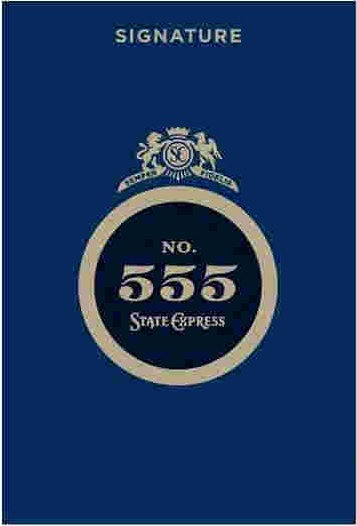
In a decision dated September 12, 2019, the Japan IP High Court affirmed the Japan Patent Office’s (JPO) determination to refuse registration for the STATE EXPRESS 555 “SIGNATURE” cigarette package design due to a conflict with senior Trademark Registration No. 4658792 for word mark “SIGNATURE”.
[Court case no. Heisei31(Gyo-ke)10020]

STATE EXPRESS 555 “SIGNATURE” cigarette package design

CTBAT International Company Limited, a joint investment of subsidiaries of China National Tobacco Corporation and British American Tobacco and incorporated in Hong Kong, filed a trademark application for device mark representing cigarette package design (see below) by designating cigarette, tobacco, electronic cigarette and others in class 34 on November 28, 2016 (TM application No. 2016-134074).

It the center, “No. 555 STATE EXPRESS” is written in three lines inside a circle. “SIGNATURE” is written independently on the upper side of the design.

Senior trademark “SIGNATURE”

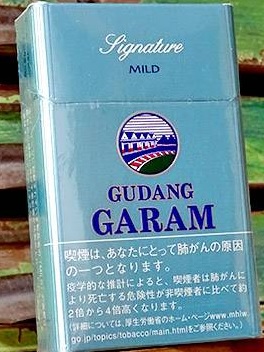
The JPO examiner refused registration by citing a senior Trademark Registration No. 4658792 for word mark “SIGNATURE” in standard character overt the goods of cigarette in class 34 owned by PT Gudang Garam TBK, one of Indonesia’s leading cigarette manufacturers, best known for its kretek clove cigarettes, headquartered in Kediri, Indonesia, which was acquired by Philip Morris in 2005.

PT Gudang Garam TBK has used the registered mark as a cigarette sub-brand of Gudang Garam.

CTBAT filed an appeal against the JPO examiner’s refusal and argued dissimilarity between the marks, but in vain. [Appeal case no. 2018-002007]
Subsequently, CTBAT appealed to the IP High Court and demanded cancellation of the administrative decision to refuse registration for plaintiff’s mark.

Qualitative description

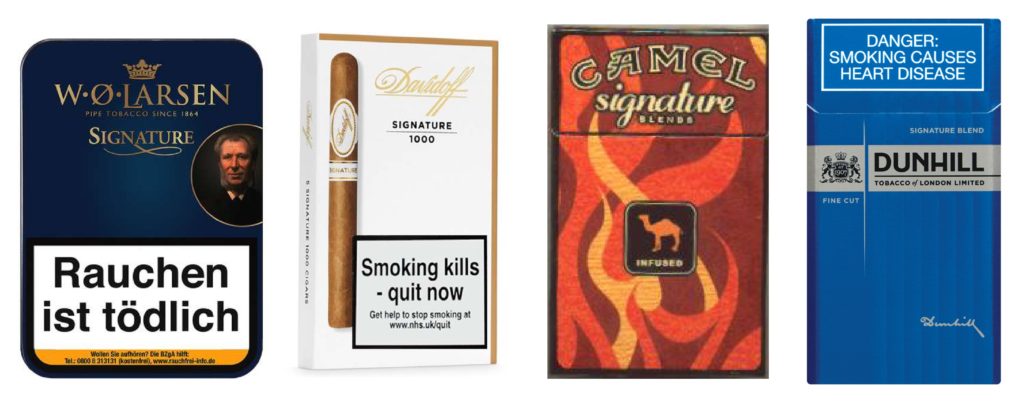
CTBAT argued the term ‘SIGNATURE’ lacks distinctiveness in relation to cigarette because several cigarette manufacturers, e.g. Dunhill, Camel, Davidoff, W.O.Larsen, have been using it as a qualitative term to indicate the cigarette has a specific feature of symbolic brand.

Besides, plaintiff’s mark contains distinctive terms, “No. 555 STATE EXPRESS”, which has acquired a certain degree of popularity of the cigarette brand through substantial use for more than 100 years. If so, it is unlikely that relevant consumers and traders would recognize the term “SIGNATURE” on the upper side as a source indicator in itself.

IP High Court Ruling

The court dismissed the allegation entirely, by stating that:

  1. From overall appearance of plaintiff’s mark, the term “SIGNATURE” shall not be perceived to combine with other figurative and literal elements.
  2. From the produced evidences, it is unclear if “No. 555 STATE EXPRESS” and “555” has acquired a certain degree of popularity because the cigarette brand has never been distributed in Japan so far.
  3. It is questionable that relevant Japanese consumers fully understand the term “SIGNATURE” and associated words, “Signature model”, “Signature Blends” have a qualitative or descriptive meaning in connection with cigarette.
  4. It has been often seen that a sub-brand is used on cigarette package separable from its main brand.
  5. The court finds the cited mark is used as a source indicator (sub-brand) on its cigarette package as well.
  6. Given the term “SIGNATURE” does not inseparably combine with other elements of plaintiff’s mark, it shall be permissible to cut out the portion and assess similarity of both marks based on the portion as long as it does meet with trade practice.

Based on the foregoing, the IP High Court sided with the JPO and upheld the refusal decision.

The Japan IP High Court Finds “EQ” Entitled to Trademark Registration Belonging to Mercedes Benz

On July 3, 2019, the Japan IP High Court reversed a decision of the Japan Patent Office (JPO) finding that the company Daimler AG was entitled to registration of “EQ” for Motor vehicles in class 12, even though the term “EQ” by itself is descriptive for the goods.
[Case no. Heisei31(Gyo-ke)10004, Daimler AG vs the JPO Commissioner]

The EQ Application

The JPO has refused registration to an application for EQ in standard characters (word only, see below) on the basis that the mark was descriptive for the goods “Motor vehicles” in class 12 based on Article 3(1)(v) of the Trademark Law.

The article prohibits an applied mark from registering if it consists solely of a very simple and common mark. Trademark Examination Guidelines (TEG) stipulates that a mark consisting of one or two alphabetical letters is not eligible for registration under the article. Click here.

A mark consisting of two alphabetical letters is not capable of identifying the source of the goods due to a lack of distinctiveness because a combination of two alphabetical letters is limited on quantity and currently used to represent a model name of vehicle, e.g. BMW XS, TOYOTA Carina ED, Ferrari FX, Nissan GT-R.

Descriptive terms falling under the article are only capable for registration based on Article 3(2) if they have “acquired distinctiveness”, which means the term has taken on a meaning in the public view so that people see the term as a trademark identifying the goods rather than simply describing the goods.

In this regard, Daimler AG argued the EQ mark, a coined term originating from “Electric Intelligence” to appeal design, extraordinary driving pleasure, high levels of everyday suitability and maximum safety of electric car by Mercedes-Benz, has acquired distinctiveness since launching the brand at the Paris Motor Show in September 2016.

JPO Decision

However, the JPO dismissed the argument on the grounds that:

  1. Daimler has neither used the EQ mark by itself as a name of electric car nor produced evidences of its plan to sell electric car named “EQ”.
  2. Daimler uses the EQ mark in a stylized design in press releases. If so, it is questionable whether relevant consumers conceive the EQ mark in standard characters as a source indicator of Mercedes-Benz.
  3. According to the produced evidences, Daimler uses the EQ mark in combination with other literal elements, e.g. “Generation EQ Concept”, “Concept EQA”, “EQC”, “smart vision EQ for two”, “EQ POWER”, “EQ POWER+”.
  4. There are no actual domestic sales of the electric car using the applied mark during the past two years from the date Daimler launched the brand in fact.
  5. A combination of two alphabetical letters, “E” and “Q”, has been generally used as a mode name in association with vehicles, e.g. TOYOTA electric car “eQ”, HYUNDAI luxury sedan “EQ900”, Zhengzhou Nissan truck “EQ1060”, Laufenn tyre “S FIT EQ”, ALPINE car navigation “EX11Z-EQ”, SPECIALLIZED bicycle “ALIBI SPORT EQ”. If so, the EQ term shall not be eligible for monopoly by a specific entity any longer.

The Appeal Board of JPO also upheld the refusal.
[Appeal case no. 2018-650016]

To contest the administrative decision, Daimler AG filed an appeal to the IP High Court on January 15, 2019.

IP High Court Ruling

The court first found the EQ mark in standard characters is not eligible for registration under Article 3(1)(v) of the Trademark Law.

In the meantime, the court found Daimler has newly released, promoted, and used the EQ mark with a combination of “POWER” as a new brand concept of electric car by Mercedes-Benz. Given a space for single letter between “EQ” and “POWER”, relevant consumers at the sight of promotional materials, advertisements and car magazines pertinent to Mercedes-Benz’s new electric car brand would perceive “EQ” as a specific source indicator. Taking account of enormous number of circulation of magazines (approx. 230,000) and advertisements for users (170,000 per year), the court held the EQ mark has been well known for a source indicator of Daimler electric car among relevant consumers and traders even if the duration of actual use and sales amount are not sufficient by themselves.

Notably, the court also negated fact-finding by JPO regarding ordinary use of the term EQ in association with vehicles by stating that since competitors use the term in a tight combination with other literal elements, they can be simply perceived as a mode name. If so, such use shall not be construed to negate acquired distinctiveness of the EQ mark by Daimler.

Based on the foregoing, the court ruled the EQ mark is entitled to trademark registration based on Article 3(2) of the Trademark Law and reversed a decision by the JPO on that account.

Trademark dispute over Shogun Emblem of the Samurai Era

In a recent appeal trial over trademark dispute, the Trademark Appeal Board within the Japan Patent Office (JPO) overturned the Examiner’s determination and held that a combination mark with Tokugawa crest image and literal elements written in Chinese characters is dissimilar to, and unlikely to cause confusion with a senior trademark registration for the “TOKUGAWA CREST” device mark in connection with pickled plums of class 29.
[Appeal case no. 2018-6893, Gazette issue date: March 29, 2019]


TOKUGAWA CREST

The Tokugawa clan was the family that established the Edo shogunate, also known as the Tokugawa shogunate, (1603–1867), the final period of traditional Japan, a time of internal peace, political stability, and economic growth under the shogunate (military dictatorship) founded by Tokugawa Ieyasu. The Tokugawa shogunate continued to rule Japan for a remarkable 250 years and ended in 1868, with the Meiji Restoration when the Emperor regained power.

The Tokugawa crest was a circle in closing three leaves of the awoi (a species of mallow, found in Central Japan) joined at the tips, the stalks touching the circle (see below).

This gilded trefoil is gleaming on the property of the shogun and mausoleum even now in Japan.


YUME-AWOI

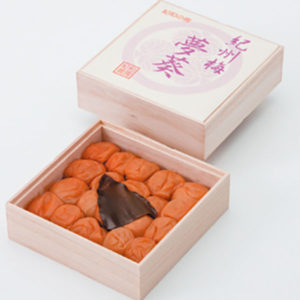
Kabushiki Kaisha Kiwa-Nouen Products, a Japanese merchant dealing with plums and its products filed a trademark application for a combination mark with Tokugawa crest image and literal elements written in Chinese characters (see below) covering pickled plums in class 29 on June 21, 2016 [TM application no. 2016-72127].

Three Chinese characters “紀州梅” in the upper right of the mark lacks distinctive since the term means plums made in Kishu, the name of a province in feudal Japan (the area corresponds to nowadays Wakayama Prefecture and southern Mie Prefecture), as a whole. Two characters “夢葵” in the center of the mark to be pronounces as “yume-awoi” is obviously a coined word and distinctive in relation to pickled plums.

The mark is actually in use on high-class pickled plums produced by applicant.

Tokugawa Museum

Going through substantive examination by the JPO examiner, applied mark was totally refused registration based on Article 4(1)(vi), (vii), (xv) of the Trademark Law on the ground that the mark contains a device resembling the Tokugawa crest which becomes famous as a source indicator of ‘Public Interest Incorporated Foundation The Tokugawa Museum’.
If so, using the mark on the designated goods by an unauthorized entity may free-ride goodwill vested in the Tokugawa crest and anything but conductive to the public interest. Besides, relevant consumers are likely to confuse or misconceive pickled plums using applied mark with goods from The Tokugawa Museum or any business entity systematically or economically connected with the museum.

Article 4(1)(vi) is a provision to refuse any mark which is identical with, or similar to, a famous mark indicating the State, a local government, an agency thereof, a non-profit organization undertaking a business for public interest, or a non-profit enterprise undertaking a business for public interest.

Article 4(1)(vii) of the Trademark Law prohibits any mark likely to cause damage to public order or morality from registration.

Article 4(1)(xv) provides that a mark shall not be registered where it is likely to cause confusion with other business entity’s well-known goods or services, to the benefit of brand owner and users’ benefits.


Applicant filed an appeal against the refusal on May 21, 2018 and argued dissimilarity of the marks.


Appeal Board decision

The Board reversed the examiner’s refusal and admitted applied mark to registration by stating that:

It becomes trade practice to print family crest on the packaging of food products. Especially, trefoil awoi crest has been commonly used on the packaging of specialty products or souvenir from Aichi (Owari), Wakayama (Kishu) and Ibaragi (Mito) Prefectures where descendants from clan founder Tokugawa Ieyasu’s three youngest sons governed during the Edo shogunate. Besides, from appearance, Tokugawa crest image in applied mark looks like a background pattern and thus relevant consumers are unlikely to aware that the pattern serves the legally defined role of a trademark because the image is colored washier than literal elements. If so, two Chinese characters “夢葵” of the mark functions primarily as a source indicator.

Based on the foregoing, the Board considered, given the Tokugawa crest image in the applied mark does not play a role of source indicator at all, both marks are dissimilar and unlikely to cause confusion from visual, phonetic and conceptual points of view even if the Tokugawa crest becomes famous as a source indicator of Public Interest Incorporated Foundation The Tokugawa Museum in fact. Likewise, the Board found no specific reason to cause damage to public order or morality from applied mark.