JPO Annual Report 2021

The Japan Patent Office (JPO) released its 2021 Annual Report (in Japanese only) on July 14, 2021, which contain informative figures and statistics relating to IP applications in Japan and on all other activities of the JPO.


Trademark applications filed in 2020

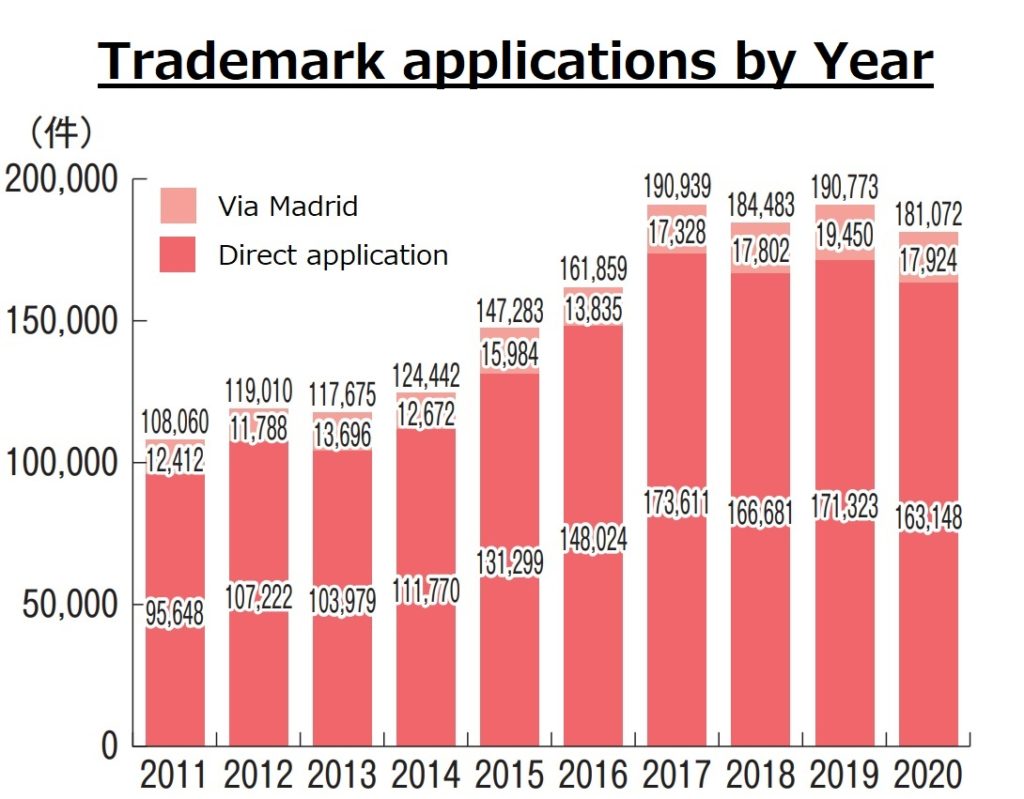
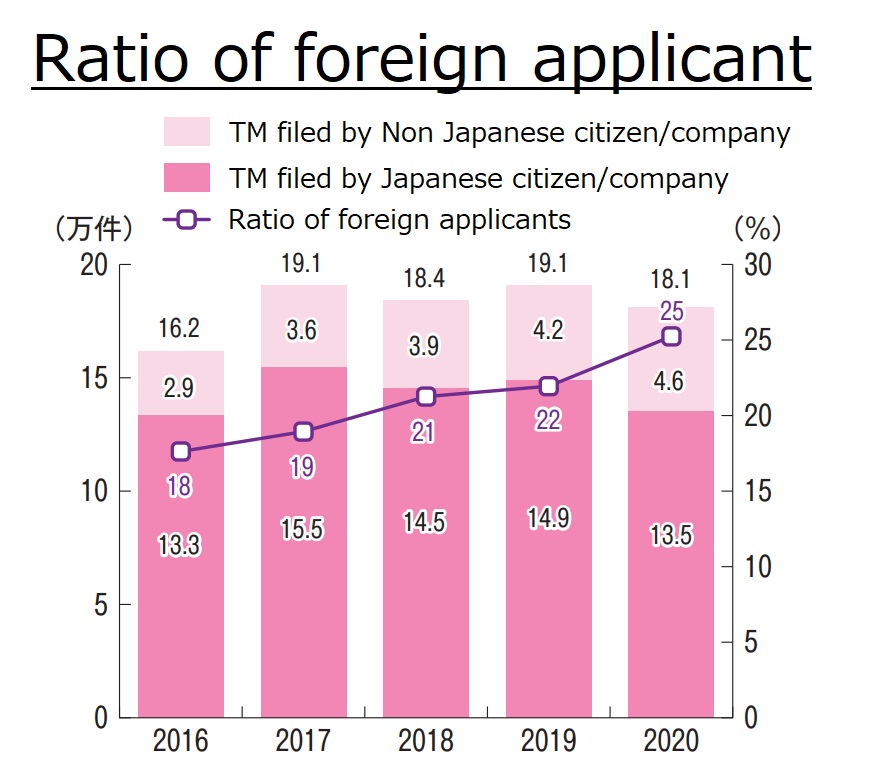
Presumably because of the prolonged pandemic, the number of trademark applications in Japan decreased to 181,072 by 5 % in 2020.

TM application via Madrid Protocol also decreased to 17,924 by 7.8% compared to the previous year. Direct application decreased to 163,148 by 4.7 %.


Pendency time for trademark prosecution

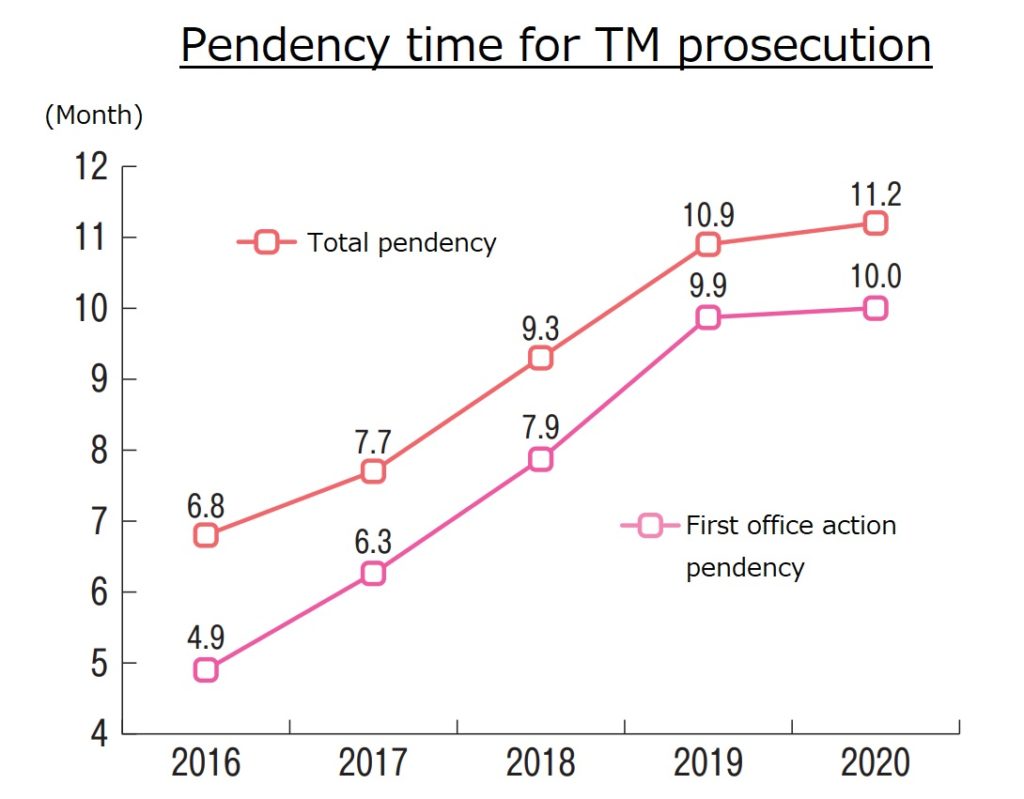
Regardless of the decreased number of trademark applications, first office action pendency, the average number of months from the date of application filing to the JPO examiner’s first office action, was getting longer for the last five years in a row. First Action Pendency was 10.0 months in 2020.

Total pendency, the average number of months from date of filing to registration in 2020 was extended to 11.2 months, two months longer than 2019 (9.3 months).


TM applications to JPO by Foreign Company/ Non-resident

45,697 trademark applications, which account for 25.2 % of the total, were filed by foreign company or non-resident in 2020. The ratio was increased by 3.3 % since last year.

The statistic shows China was leading the ranking with about 18,181 trademark applications in 2020, increased by 45 % from the previous year.

Hummel scores win in a trademark dispute over Chevron

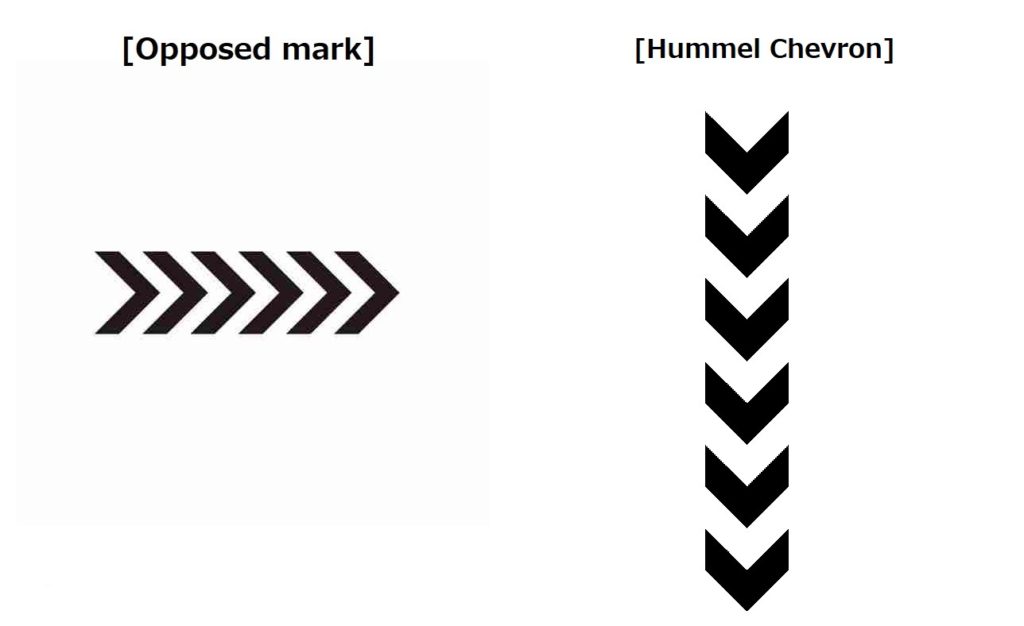
Hummel gained a victory in a trademark opposition against Japanese TM registration no. 6190746 for sixfold chevron right device mark due to a conflict with Hummel Chevron.
[Opposition case no. 2020-90007, Gazette issued date: May 28, 2021]


TM Reg no. 6190746

Opposed mark, consisting of a sixfold Chevron right device, was filed by a Japanese company for use on apparel and shoes in class 25 on November 14, 2018.

The JPO examiner did not raise her objection to the opposed mark and granted protection on September 27, 2019.


Hummel Chevron

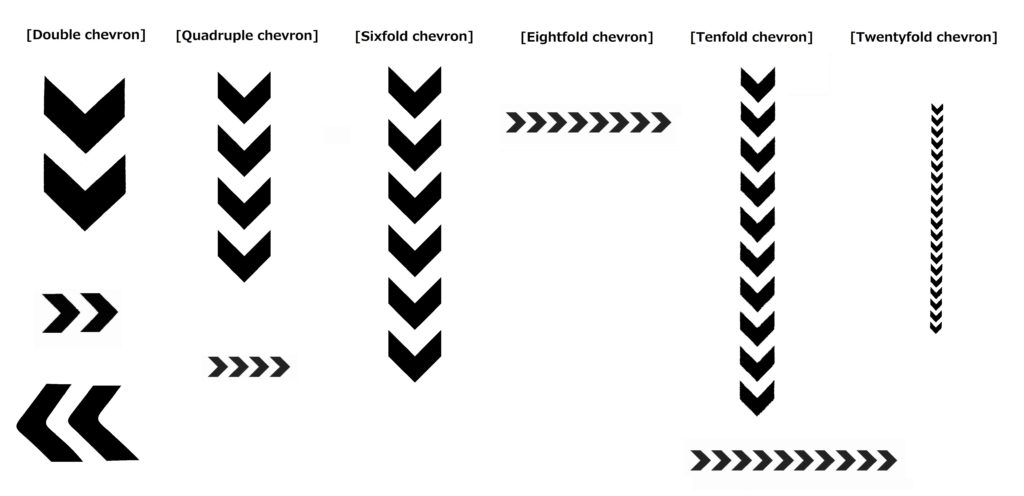
On January 14, 2020, Hummel Holding A/S, the leading sportswear company from Denmark, filed an opposition and argued the opposed mark shall be canceled in contravention of Article 8(1) of the Trademark Law because of similarity to senior trademarks that consist of multiple Chevron right, left or down devices (see below) in class 25 owned by Hummel.

Article 8(1) is a provision to prohibit registration of any junior mark that is identical with, or similar to earlier applied marks based on the “first-to-file” principle.

Apparently, Hummel has been eager to claim broader protection of the Hummel Chevron.


JPO decision

Among the citations, the JPO Opposition Board found the opposed mark is confusingly similar to the sixfold Chevron down mark from a visual point of view regardless of dissimilar in direction of Chevron based on the finding that both marks would not give rise to any specific meaning and different pronunciation. Besides, the goods in question are deemed identical or similar respectively.

Since the opponent mark was applied for one month before the opposed mark on October 17, 2018, Hummel is entitled to claim a prior application right under the article.

Based on the foregoing, the JPO side with Hummel and decided to cancel the opposed mark entirely in contravention of Article 8(1).

The Opposition Board did not mention whether the opposed mark is deemed similar to the Hummel Chevron other than the sixfold down.

JPO found Italian word “Panetteria” distinctive in relation to restaurant service

In a recent administrative decision, the Appeal Board of the Japan Patent Office (JPO) disaffirmed the examiner’s refusal and found “Panetteria ARIETTA” and “ARIETTA” are dissimilar by virtue of distinctiveness of the term “Panetteria.”

[Appeal case no. 2020-9688, Gazette issued date: May 28, 2021]

Panetteria ARIETTA

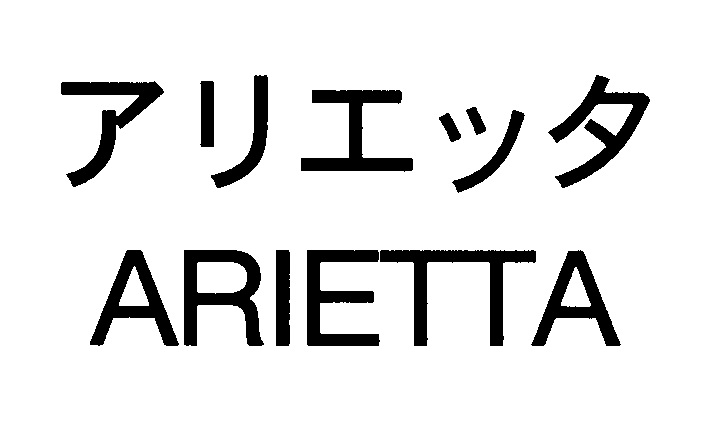
FOOD ENGINEERING DESIGN INC., a Japanese commercial bakery and restaurant, filed a trademark registration for word mark consisting of the term “Panetteria ARIETTA” in a gothic type and its transliteration written in a Japanese katakana character (see below) for use on confectionery and bread in class 30 and restaurant service in class 43 on January 15, 2019 [TM App no. 2019-8176].

The applicant has used the applied mark as a shop name on bakeries located in Tokyo.


ARIETTA

The JPO examiner raised her objection on the ground that the applied mark is deemed similar to senior trademark registration no. 5106118 for word mark consisting of the term “ARIETTA” and its transliteration written in a Japanese katakana character (see below) on restaurants and other services in class 43.

In the refusal decision dated May 7, 2020, the examiner asserted the term “Panetteria” is an Italian word meaning ‘bakery’ and thus lacks distinctiveness in relation to bread and restaurant service. If so, other term “ARIETTA” of the applied mark would play a dominant role of its source indicator. Accordingly, the examiner rejected the applied mark in contravention of Article 4(1)(xi) of the Japan Trademark Law.

The applicant filed an appeal against the refusal on July 10, 2020.


JPO Appeal Board decision

The Appeal Board questioned whether an Italian word “Panetteria” is commonly used as a descriptive indication in relation to restaurant service in Japan. The Board found the term as well as its meaning is not familiar among the general public. Under the circumstance, the examiner errored in assessing distinctiveness of the word. A mere fact that the term “Panetteria” appears in an Italian language dictionary is insufficient to conclude a portion of the term “ARIETTA” per se plays a role of source indicator of the applied mark.

Provided that relevant consumers would not conceive any specific meaning from the term “Panetteria”, the Board held the applied mark “Panetteria ARIETTA” and cited mark “ARIETTA” are obviously dissimilar as a whole from visual, phonetic, and conceptual points of view.

Based on the foregoing, the JPO Appeal Board disaffirmed the examiner’s rejection and decided to register the applied mark accordingly.

Trademark Similarity: APLAY vs applay

In a trademark dispute pertinent to the similarity between “APLAY” and “applay”, the Appeal Board of the Japan Patent Office found both marks dissimilar and reversed the examiner’s rejection.
[Appeal case no. 2020-6380, Gazette issued date: April 30, 2021]

APLAY

A senior mark, consisting of the word “APLAY” in standard character, was registered on April 28, 2017 (TM Reg no. 5943175) over computer programs; application software; game programs for home video game machines; electronic circuits, and CD-ROMS recorded with programs for hand-held games with liquid crystal displays; electronic publications; earphones; headphones in class 9, and software as a service [SaaS]; other related computer services in class 42 by Nain Inc.

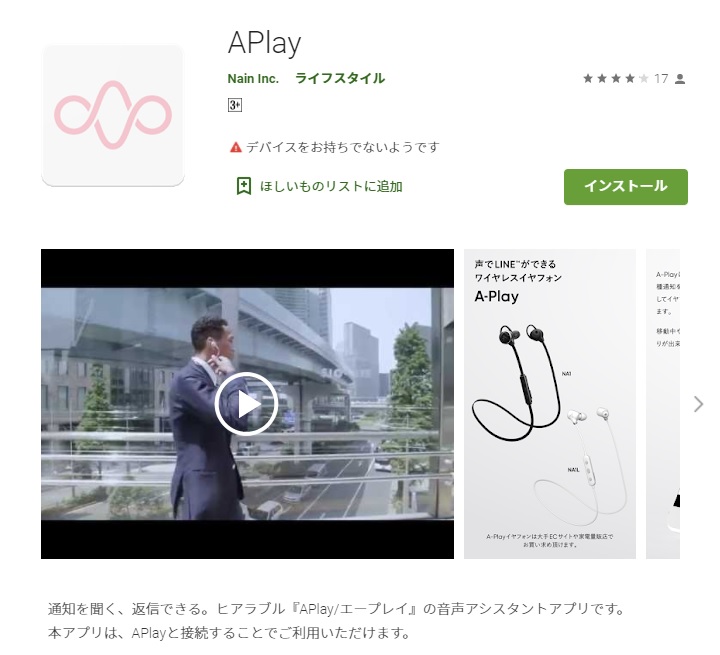
Apparently, Nain has used “APLAY” on wireless earphones and connect app for android (see below).

applay

Applied junior mark, consisting of the word “applay”, was sought for registration on August 7, 2019, over toys in class 28 [TM application no. 2019-107218] by Ed. Inter Co., Ltd.

The applicant uses the mark on wooden toys for kids (see below).

The JPO examiner rejected “applay” because of similarity to “APLAY” based on Article 4(1)(xi) of the Trademark Law.

Article 4(1)(xi) is a provision to prohibit registering a junior mark that is identical with, or similar to, any senior registered mark.

There is the criterion that the examiner is checking when assessing the similarity between the marks:

  • visual similarity
  • aural similarity
  • conceptual similarity

and taking into account all these three aspects, the examiner would decide if a mark is similar (at least to some extent) to the earlier mark and if there is a likelihood of confusion for the consumers.

Applicant filed an appeal against the rejection on May 12, 2020, and argued dissimilarity of the marks.

Appeal Board decision

In the decision, the Appeal Board held that:

In appearance, there are differences in the third letter ‘p’, and lower case or upper-case letters. These would give rise to a distinctive impression visually in the mind of relevant consumers where the respective mark consists of five or six-letter words, anything but long.

Next, assessing the pronunciation between applied mark [ˈæpleɪ] and the cited mark [əˈpleɪ], the difference in the first sound would be anything but negligible in view of a few phonetic compositions of four sounds in total. Relevant consumers would be unlikely to confuse each sound when pronounced because of phonetical distinction in overall nuance and tone as a whole

Thirdly, the respective mark does not give rise to any specific meaning at all. If so, both marks are incomparable from the concept.

Based on the foregoing, the Board found no reasonable reason to affirm the JPO examiner’s rejection from visual, phonetic, and conceptual points of view as well as consumer perception and decided to reverse the examiner’s rejection.

Transferring Trademark Ownership in Japan

Trademark owners can freely sell their trademark or transfer it without any compensation. Transfers of trademark ownership happen when the owner of trademark rights is changed. Examples of when transfers of trademark rights might happen include when a company is buying another company, or when a business buys product rights from another company or individual.

Deed of Assignment

A deed of assignment is used where the trademark owner (the “assignor”) transfers all or part of their right, title, and interest in a trademark to another entity (the “assignee”). A deed of assignment can be done in one transaction, by transferring all ownership rights of trademarks detailed in the deed. No payment is required for it to be valid.

A deed of assignment must be in writing and should include:

  • The names and addresses of the assignor and assignee
  • A description of the trademark right, i.e., Japanese trademark registration number to be transferred
  • A statement that the assignor transfers the trademark right to the assignee
  • Seals/Signatures of the parties and the date of the agreement execution

Recording Trademark Assignment

Although a deed of assignment transfers ownership in trademark right, it does not change the registration of the ownership. To be valid and enforced, the trademark assignment must be recorded with the Japan Patent Office (“JPO”). The parties must submit a deed of trademark assignment along with a statutory request to change the ownership.

Joint Application Rule

It is noteworthy that the Japanese law provides the request to change trademark ownership with relevant administrative authority should be applied jointly by assignor and assignee even though assignor agrees to assign their interest in the property to the assignee in the deed.

Consequently, mere signatures of both parties on the deed of the assignment are insufficient to meet this requirement.

To record the assignment of trademark registration with the JPO requested solely in the name of the assignee, which often happens, as a matter of fact, the deed should contain a declaration that the assignor would agree and never oppose assignee to solely request the transfer of trademark right with the JPO. (Article 8 of Japan Trademark Registration Order)

Taxes

It is mandatory to pay an official fee, JPY30,000 per registration in order to register the change in ownership with the JPO.

Meanwhile, where the transfer arises from general succession, e.g., inheritance, M&A, it costs JPY3,000 per registration.