The Japan Patent Office (JPO) did not side with Abercrombie & Fitch in an appeal against the JPO examiner’s rejection of the mark “A&F” with an iconic moose silhouette in Class 9 due to a conflict with the earlier mark “A&F” in Class 35.
[Appeal case no. 2025-9982, decided on December 23, 2025]
Abercrombie & Fitch
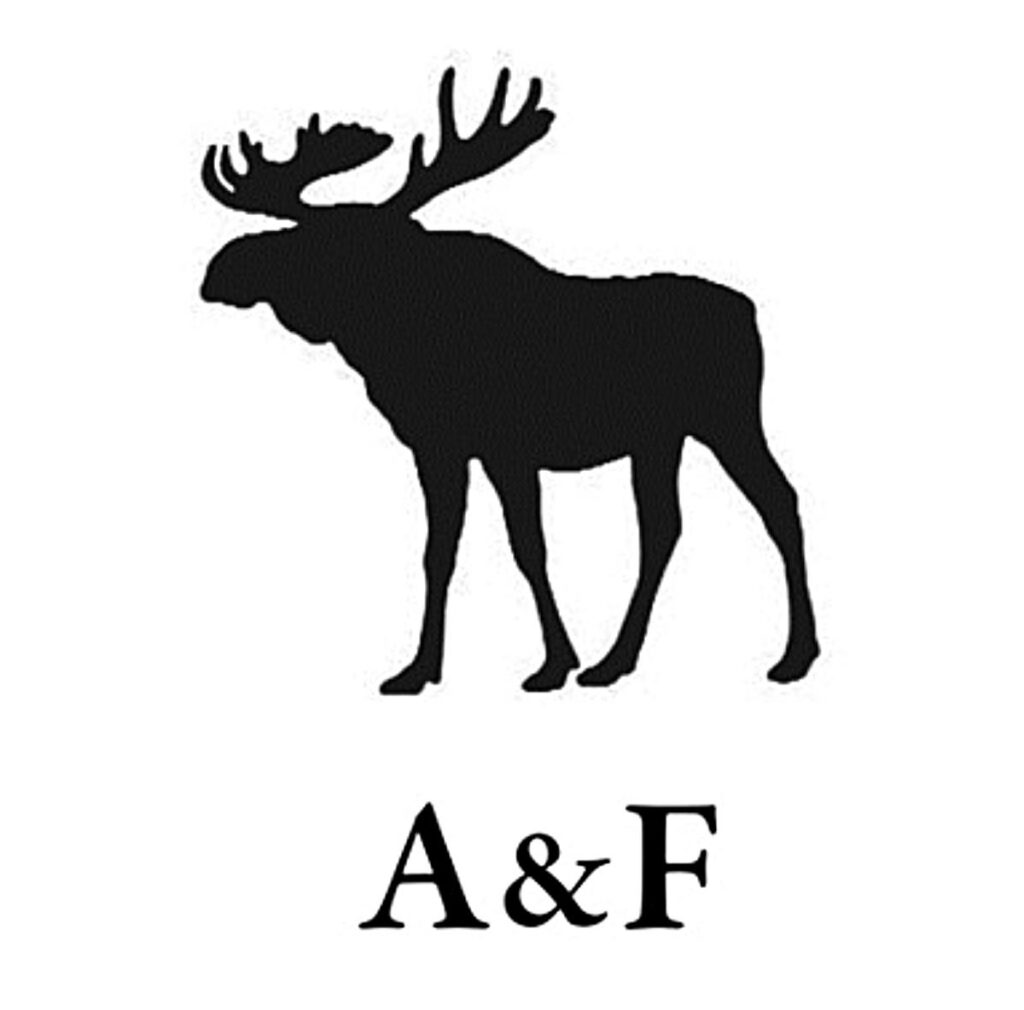
Abercrombie & Fitch filed a trademark application for the mark consisting of the term “A&F” and their iconic Moose silhouette (see below) for use on eyeglasses, sunglasses, googles for sports, earphones, headphones, telecommunication machines and apparatus, personal digital assistants, cases for smartphones in class 9 with the JPO on February 26, 2024 [TM App no. 2024-18531].
Rejection laid down in Article 4(1)(xi)
On May 7, 2025, the JPO examiner rejected the mark applied for lain down in Article 4(1)(xi) of the Japan Trademark Law by citing two earlier TM Reg Nos. 5218488 and 5588154 for the mark “A&F” owned by A&F Corporation.
Article 4(1)(xi) is a provision that prohibits the registration of a junior mark that is deemed identical with, or similar to, any earlier registered mark.
The cited marks designate retail or wholesale services for telecommunication machines and apparatus, and eyeglasses in Class 35.
Under the JPO practice, goods and retail or wholesale services for the goods are deemed similar.
JPO Appeal Board decision
Abercrombie & Fitch filed an appeal to request that the examiner’s rejection be set aside on June 26, 2025.
In the appeal brief, Abercrombie & Fitch argued that the figurative element is dominant in the contested mark as the Moose silhouette has acquired a certain degree of recognition among the relevant consumers in Japan.
However, the Board observed the examiner did not err in finding facts relevantly and dismissed the appeal by stating that:
- The figurative element does not engender any specific meaning or sound. The literal element, “A&F,” is also recognized as a coined word, as it does not appear in ordinary dictionaries. There is no reasonable basis to consider these elements as a whole due to the significant space gap and lack of conceptual association between them. Therefore, it is appropriate to find that the literal element “A&F” of the contested mark plays an independent role in identifying the source of the goods bearing the contested mark.
- Even if a conceptual comparison is neutral, as neither the contested mark nor the cited marks have a clear meaning, the relevant consumers are likely to confuse the source of the goods in question with the cited owner because of the close resemblance in appearance and pronunciation.
- Based on the evidence submitted by Abercrombie & Fitch to demonstrate the popularity of the moose design, the Board found it unpersuasive that the design plays a dominant role as a source indicator.