iPad vs MI PAD

JPO sided with Apple Inc. in a dispute with a China-based consumer electronics company, Xiaomi that registers and uses the “MI PAD” trademark on tablet computers by finding that “MI PAD” is likely to cause confusion with “iPad”.
[Opposition case no. 2019-685002, Gazette issued date: November 27, 2020]

Xiaomi “MI PAD”

Xiaomi, a China-based electronics manufacturer headquartered in Beijing, filed a trademark application for word mark “MI PAD” via the Madrid Protocol (IR 1223839) in respect of various goods including table computers, downloadable music files, downloadable image files in class 9, and telecommunication access services and others in class 38 on August 22, 2017.

Prior to filing the application, Xiaomi newly introduced its first tablet, the Tegra K1-powered “Mi Pad” in 2014.

The JPO admitted registration of the MI PAD mark on December 7, 2018.

Opposition by Apple “iPad”

The Opponent, whose earlier ‘iPad’ trademark for its computer tablet products was also registered in Classes 9 and 38, is the U.S. tech giant, Apple Inc.

The heart of this dispute concerned the grounds of opposition raised by Apple Inc. against Xiaomi’s ‘MI PAD’ mark registration in Japan under Article 4(1)(xv) of the Japan Trademark Law.

Article 4(1)(xv) is a provision to prohibit any mark from registering if it is likely to cause confusion with other business entities ’ well-known goods or services.

The Opponent argued the “MI PAD” mark shall cause confusion with Apple “iPad” when used tablet computers and related goods and services, given a remarkable reputation of “iPad” holding a top market share (42% in 2017, 43.2% 2018) in Japan and the close resemblance between “iPad” and “MI PAD”.

JPO decision

The Opposition Board admitted a remarkable degree of reputation and popularity of opponent trademark “iPad” based on the produced evidence boasting the top market share consecutively for the past nine years in Japan. Besides, the Board found “iPad”, consisting of “i” and “Pad”, is highly unique because the term “Pad” is anything but descriptive in relation to tablet computers.

In the assessment of mark, the Board held the dissimilarity between the signs at issue, resulting from the presence of the additional letter ‘m’ at the beginning of “MI PAD”, is not sufficient to offset the high degree of visual and phonetic similarity between the two signs. It is unquestionable that the designated goods and services are closely associated with tablet computers and consumed by the same consumers.

If so, it is likely that the consumers at the sight of disputed goods and services bearing the “MI PAD” mark would confuse or misconceive its source with Apple Inc. or any entity systematically or economically connected with the opponent.

Based on the foregoing, the Board decided opposed mark shall be canceled in contravention of Article 4(1)(xv).

Google’s Trademark Battle over Street View

The Opposition Board of the Japan Patent Office (JPO) sided with Google LLC and decided to cancel trademark registration no. 6086044 for word mark “STREET VIEW MODEL (SVM)” due to a likelihood of confusion with Google’s “STREET VIEW”.
[Opposition case no. 2018-900391, Gazette issued on September 25, 2020]

Opposed mark

A Japanese individual filed a trademark application for word mark “STREET VIEW MODEL (SVM)” written in Japanese Katakana character (see below) by designating the service of ‘providing online non-downloadable videos and photographs’ in class 41 with the JPO on December 27, 2017.

The opposed mark was registered and published for opposition on October 30, 2018.

Google “Street View”

On December 28, 2018, Google LLC filed an opposition against “STREET VIEW MODEL (SVM)” and argued that the opposed mark shall be canceled in contravention of Article 4(1)(xv) and (xix) of the Trademark Law based on its owned senior registration for the STREET VIEW mark (IR no. 12138361) in class 9 and 42 because both marks resemble and relevant consumers would confuse or associate the opposed mark, containing “STREET VIEW” famous for the service featured on Google map enabling to provide panoramic 360-degree views from the designated street, with the opponent when used on the designated service in question.

IR no. 12138361

Article 4(1)(xv) prohibits registering a trademark which is likely to cause confusion with the business of other entities.

Board Decision

The Board did not question the famousness of the STREET VIEW mark as a source indicator of Google’s service for providing digital images on a map at the time of both initial filing and registration of the opposed mark.

In the assessment of similarity between the marks, the Board found that the average consumers would likely pay considerable attention to the term “STREET VIEW” of the opposed mark because of its fame. If so, a high degree of similarity exists between the opposed mark and “STREET VIEW”.

It is true that the “STREET VIEW” mark is anything but a fancy or invented word since it consists of two common English words that the relevant consumers are familiar with, however, given the designated service in question and Google “STREET VIEW” are related to providing digital images via the internet, these are supposedly purchased or consumed by the same consumers. If so, the Board considers the opponent business, and the service in question are closely associated.

Based on the foregoing, the Board concluded that relevant traders and consumers are likely to confuse or misconceive a source of the opposed mark when used in relation to the service (class 41) with Google or any entity systematically or economically connected with the opponent and thus decided cancellation in contravention of Article 4(1)(xv).
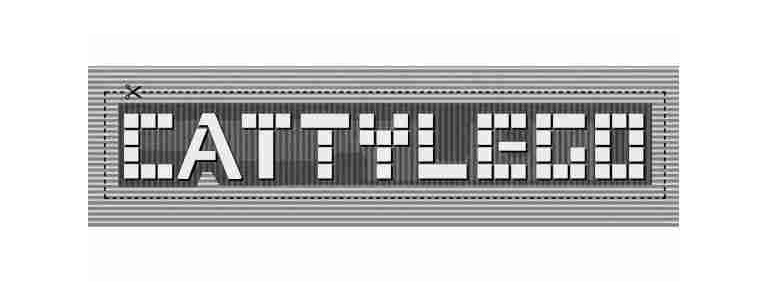
LEGO Triumphs In ‘CATTYLEGO’ Trademark Battle at JPO

LEGO eventually scored a win over PETSWEET CO., Ltd., a Taiwanese company, in a trademark dispute against ‘CATTYLEGO’ thanks to the JPO’s finding a likelihood of confusion with “LEGO” famous for toy brick.
[Invalidation case no. 2018-890084, Gazette issued date: September 25, 2020]

CATTY LEGO

PETSWEEY Co. (派斯威特國際有限公司), Ltd., a Taiwanese company, applied for trademark registration in Japan for the mark consisting of a word “CATTYLEGO” and rectangle device (see below) on June 15, 2016, over toy boxes and chests, dog kennels, fodder racks, pet cushions, pet house in class 20 and toys for pets in class 28.

The Japan Patent Office (JPO) registered the mark on December 2, 2016 (TM Registration no. 5902786) and published for opposition on January 10, 2017.

LEGO

LEGO Juris A/S, the world’s largest Danish toy manufacturer, filed an opposition against the mark ‘CATTYLEGO’ on the final day of a two-month duration for the opposition, and argued it shall be canceled in contravention of Article 4(1)(viii), (xi), (xv) and (xix) of the Japan Trademark Law, but in vain. Click here to read more about the opposition.

Subsequently, LEGO lodged a trademark invalidation trial with the JPO on October 31, 2018, based on the same grounds.

JPO Decision

The Invalidation Board did not question a high degree of reputation and popularity of the LEGO trademark as a source indicator of toy brick by finding consecutive promotion of LEGO bricks in Japan for more than five decades, annual sales amounting to over 8 billion yen (Approx. USD 74 million ), its remarkable share in the sector of kids toys, and almost half of preschools in Japan have adopted the bricks for educational purpose.

Given the remarkable reputation of the LEGO mark, the Board held relevant consumers/traders at the sight of the ‘CATTYLEGO’ mark would inevitably conceive the term “LEGO” as a dominant portion. If so, both marks may give rise to a similar sound and concept pertinent to “LEGO”.

The Board also affirmed toy brick and the goods in question are closely associated in view of suppliers, commercial channels, usage, consumers.

Consequently, by taking into consideration the totality of the circumstances, the Board found relevant consumers with an ordinary care would confuse or associate the goods in question bearing the ‘CATTYLEGO’ mark with LEGO or any entity systematically or economically connected with LEGO, and thus the mark shall be invalidated based on Article 4(1)(xv) of the trademark law.

Coffee Trademark Battle

Colombian Coffee Federation (FNC) failed a fight for invalidation of Japanese TM Registration no. 5901554 for word mark “EMERALD” in class 30 owned by The Coca-Cola Company, one of the world’s largest beverage company in the US.
[Invalidation case no. 2018-890017, Gazette issued date: August 28, 2020]

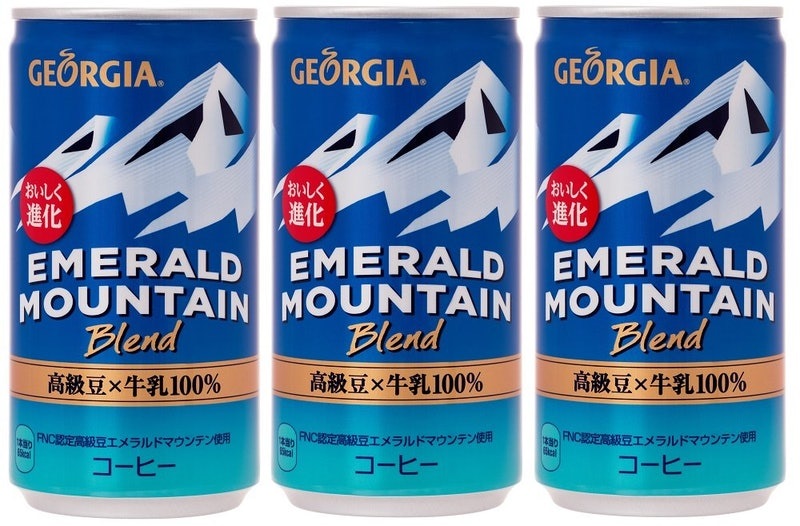
EMERALD MOUNTAIN

Emerald Mountain is a top brand name of Colombian coffee approved by FNC (NGO organization, the union of coffee producer established in 1927 joining over 560,000 members for enhancing quality, production, and export) guaranteed hand-picked and hand-screened beans of which quantity is only 3 –1% of the total production of Colombia coffee beans.

The FNC owns several trademark registrations for “EMERALD MOUNTAIN” in Japan.

In the early 90s, Emerald Mountain began to be sold by Coca-Cola as canned liquid coffee under the Georgia brand in thousands of vending machines across Japan. Since 1997 it has become the most sold coffee in Japanese history as well as the #1 beverage sold by Coca-Cola in Japan. Every can of Georgia Emerald Mountain coffee has an explanation of the Colombian origin of the coffee as well as the high-quality certification of the FNCS. With annual sales of more than 630 million cans, Georgia Emerald Mountain Blend is undoubtedly Emerald Mountain’s leading product within the Japanese market.

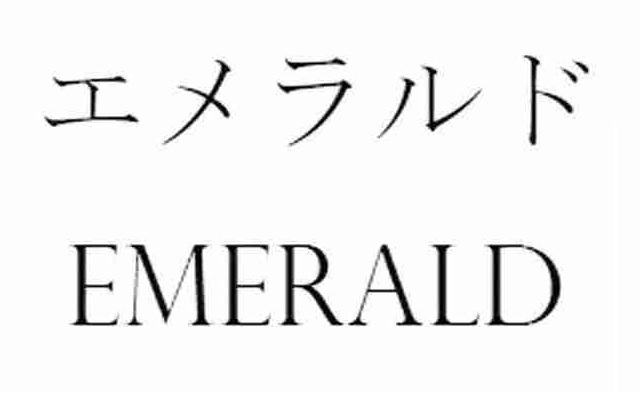
EMERALD

Irrespective of a long-standing relationship, The Coca Cola Company, in 2011, sought registration for a wordmark “EMERALD” over artificial coffee, coffee-based beverages, prepared coffee and cocoa, tea, ice in class 30 which confronted with a severe objection from FNC.

FNC was successful in removing the registration by means of a non-use cancellation in 2017. However, The Coca Cola Company deliberately filed a new trademark application for the same mark in 2015 immediately when the registered mark was vulnerable for cancellation on grounds of non-use. The JPO allowed registration of the new application in December 2016.

To contend, FNC filed an invalidation action against the EMERALD mark in March 2018.

Invalidation petition by FNC

FNC argued the EMERALD mark shall be invalidated in contravention of Article 4(1)(vii), (x), (xi), (xv), and (xix) of the Trademark Law by stating that “EMERALD MOUNTAIN” has acquired substantial reputation and popularity as an indicator of high-quality Columbian coffee as a result of continuous sales promotion in Japan since 1970. In the coffee industry, coffee beans grown in highland are often named with the term “MOUNTAIN”, e.g. “BLUE MOUNTAIN”, “CRYSTAL MOUNTAIN”, “CARRIBERAN MOUNTAIN”, “CORAL MOUNTAIN”. In this respect, “EMERALD” shall play a prominent role in “EMERALD MOUNTAIN”. If so, both marks are deemed similar and it is likely that relevant consumers confuse or associate artificial coffee, coffee-based beverages, prepared coffee and cocoa, tea, ice bearing the EMERALD mark with “EMERALD MOUNTAIN”.

Besides, The Coca Cola Company has been using “EMERALD MOUNTAIN” on canned-liquid coffee under license from FNC. Presumably, the disputed mark was filed in anticipation of non-use cancellation claimed by FNC. In the cancellation proceeding, The Coca-Cola Company did neither answer nor respond. These facts clearly show the disputed mark was filed just to avoid cancellation even if The Coca-Cola Company had no intention to use it. It is really annoyance and free-riding on the famous marks with a fraudulent intention.

JPO decision

From the totality of evidence and circumstances, the JPO admitted a high degree of reputation and popularity of EMERALD MOUNTAIN as a source indicator of FNC’s high-quality Columbian coffee beans. In the meantime, the JPO questioned if relevant consumers connect the term “EMERALD” with FNC when used on coffee since the evidence did not disclose EMERALD MOUNTAIN is actually abbreviated to “EMERALD” in commerce. Likewise, it is suspicious whether “BLUE MOUNTAIN”, “CRYSTAL MOUNTAIN”, “CARRIBERAN MOUNTAIN”, “CORAL MOUNTAIN” are recognized with its short name, namely, “BLUE”, “CRYSTAL”, “CARRIBEAN”, “CORAL”.

In assessing the similarity of the mark, the JPO found “EMERALD MOUNTAIN” and “EMERALD” are dissimilar from visual, phonetic, and conceptual points of view. Given both marks are distinctively dissimilar, it is unlikely to find a likelihood of confusion in connection with the goods in dispute.

Even if The Coca-Cola Company filed the disputed mark with an intention to avoid the non-use cancellation, it would be anything but punishable in view of dissimilarity between marks. Besides, from the produced evidence, the JPO was unable to find fraudulent intention by Coca Cola to be blamed for invalidation.

Based on the foregoing, the JPO decided to dismiss the invalidation action.

Starbucks defeated in trademark battle to defend the logo

On September 16, 2020, the Japan IP High Court dismissed an appeal by the American multinational coffee house chain, Starbucks Corporation, challenging the unfavorable decision made by the Japan Patent Office (JPO) that did not find a likelihood of confusion with the previous Starbucks logo. [Court case no. Reiwa1(Gyo-ke)10170]

BULL PULU TAPIOCA LOGO

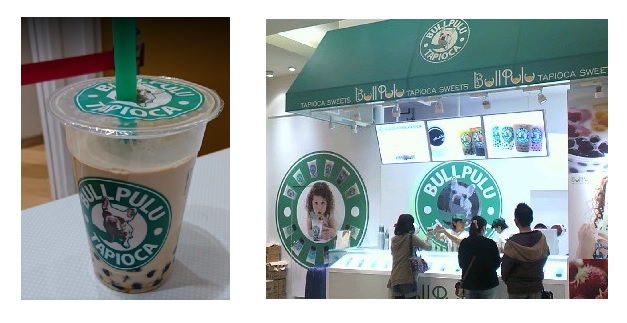
Starbucks has been eagerly struggling to invalidate trademark registration for BULL PULU TAPIOKA logo (see below) because it contains a green circular frame with white lettering inside.

Disputed mark was applied for registration over tapioca-based milk products in class 29, tapioca-flavored coffee, cocoa, confectionery; tapioca powder for foods in class 30, and restaurant service in class 43 on March 9, 2016, by a Japanese Company who operates tapioca drink parlors bearing the disputed mark in Japan. JPO registered the mark on December 9, 2016.

Invalidation action to JPO

On September 15, 2017, Starbucks Corporation filed a petition for invalidation and alleged among others the disputed mark shall be invalidated in contravention of Article 4(1)(xi) and (xv) of the Trademark Law due to similarity to, or a likelihood of confusion with senior trademark registration no. 4806987 for the previous Starbucks logo.

The third version of the Starbucks logo design, used from 1992 to 2010, consists of a black and white two-tailed siren wearing a starred crown and framed around a green circle in which the words “Starbucks Coffee” are written.

The JPO Invalidation Board questioned given five years have already passed since Starbucks redesigned its iconic emblem to the new logo whether the previous logo has continuously retained a substantial degree of reputation and popularity in Japan at the time of filing the disputed mark. Besides, the Board did see both marks are totally dissimilar and the configuration of a green circular frame with white lettering inside per se would never be known for a source indicator of Starbucks. If so, the Board found that relevant consumers are unlikely to confuse the source of goods and services in question bearing the disputed mark with Starbucks and decided to dismiss the invalidation action on August 21, 2019. [Invalidation case no. 2017-890065]

On December 19, 2019, Starbucks brought the case to the IP High Court and demanded the cancellation of the JPO decision.

IP High Court ruling

Starbucks argued the JPO erred in finding a likelihood of confusion based on the interview report which indicated more than 70% of the interviewees (total of 552 people ranging in age from 20 to 69) associated the following image of a green circular frame with white lettering inside with Starbucks.

The IP High Court held the previous logo has become remarkably famous as a source indicator of Starbucks in 2011 when it was replaced with the new logo. The Court also found the portion of a green circular frame with white lettering inside shall be impressive to consumers at the sight of the previous Starbucks logo. However, the court raised the same question if relevant consumers conceive Starbucks even when different words other than “STARBUCKS” and “COFFEE” appear inside the frame. If so, there is no reasonable ground to believe a mere image of a green circular frame with white lettering inside has played a significant role in the source indicator of Starbucks by taking account of the fact that the disputed mark was filed four years after the redesign to the new logo.

As for the interview report, the court strictly viewed that the image was not precisely identical to the previous Starbucks logo. It just focused on extracting the generic concept of the frame with lettering. In addition, interviewees were notified in advance that the image originally contained a design in the center and words to represent a company inside the frame. Such information shall be misleading and biased. If so, the report would be anything but appropriate and relevant to assess the high recognition of the frame as well as a likelihood of confusion on the case.

Based on the foregoing, the IP High Court upheld the JPO decision.

ZARA successful in invalidating the Zarbleu mark

The Japan Patent Office (JPO) sided with Industria de Diseño Textil, SA (INDITEX), owner of the fashion brand “ZARA” in an invalidation action against Japanese TM Registration no. 6110359 for word mark “Zarbleu” in class 25 by finding a likelihood confusion with “ZARA”.
[Invalidation case no. 2019-890038, Gazette issued date: August 28, 2020]

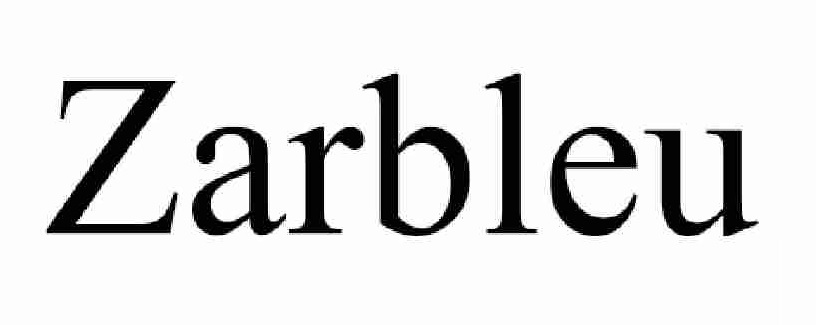
Zarbleu

Disputed mark “Zarbleu” was applied for registration by a Chinese corporation on January 24, 2018, by designating sweaters, shirts, trousers, outers, skirts, dresses, T-shirts, underwear, headgear, gloves, coats, and other clothing in class 25, and registered on December 28, 2018, without confronting with office action from the JPO.

Invalidation action by Inditex

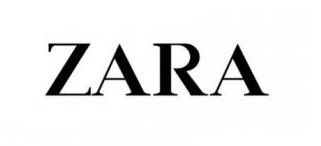
INDITEX, one of the world’s largest fashion retailers and owner of the fashion brand “ZARA”, filed an invalidation action on July 20, 2019, and claimed “Zarbleu” shall be retroactively invalidated in contravention of Article 4(1)(xv) of the Japan Trademark Law by citing senior trademark registrations for word mark “ZARA” in relation with clothing in class 25 and 35.

Article 4(1)(xv) prohibits registering a trademark which is likely to cause confusion with the business of other entities.

INDITEX argued, given “ZARA” has acquired a remarkable reputation among relevant consumers and the close resemblance between the marks and goods, relevant consumers are likely to confuse or misconceive opposed mark with “ZARA”.

JPO Decision

It would not surprise us that the JPO Invalidation Board admitted a high degree of reputation and popularity of “ZARA” among relevant consumers and traders as a source indicator of INDITEX in connection with clothing based on the facts that (i) “ZARA” launched fashion business in Japan since 1998 and increased the number of its stores in Japan to 100 as of December 2019, (ii) worldwide sales in excess of EUR 18 billion. (iii) ZARA has been ranked No.24(2017), No.25(2018) on Interbrand’s list of the most valuable global brands.

Astonishingly, the Board found a certain degree of similarity between “ZARA” and “Zarbleu” by stating that relevant consumers have a tendency to pay higher attention to the prefix of a mark and “Zarbleu” incorporates the same prefix “Zar” with “ZARA” which has acquired a high degree of reputation among the consumers in connection with clothing.

In addition, addressing sufficient strength of the ZARA mark as a fanciful term and close relatedness of goods in dispute, the Board concluded that relevant consumers and traders are likely to confuse clothing bearing the disputed mark “Zarbleu” with ZARA or misconceive a source from any entity systematically or economically connected with INDITEX. Thus, the disputed mark shall be invalidated in contravention of Article 4(1)(xv) of the Trademark Law.

Based on the foregoing, the JPO decided in favor of INDITEX and declared invalidation of the disputed mark “Zarbleu”.

Failed Opposition by ESPRIT against trademark registration “ESPRIT SELECTION”

The Japan Patent Office (JPO) dismissed a trademark opposition claimed by fashion company Esprit against trademark registration no. 6155147 for a work mark consisting of “ESPRIT” and “SELECTION” over retail service in class 35 by finding dissimilarity and less likelihood of confusion with “ESPRIT”.
[Opposition case no. 2019-900260, Gazette issued date: July 31, 2020]

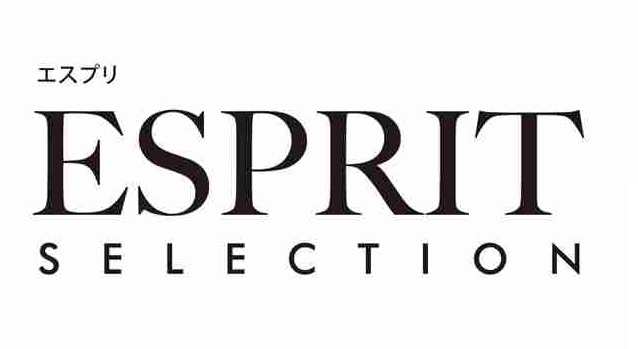
“ESPRIT SELECTION”

Opposed mark, a wordmark consisting of “ESPRIT” with larger font size and “SELECTION” with smaller font size in two lines (see below), was filed by a Japanese business entity, Harmonick Co., Ltd., on November 19, 2018, by designating ‘retail services or wholesale services for a variety of goods in each field of clothing, foods and beverages, and living ware, carrying all goods together’ in class 35.

Applicant commercially provides gift catalogs bearing the opposed mark so that shoppers can find a great selection of products from the catalogs.

The JPO admitted registration on June 21, 2019, and published for opposition on July 16, 2019.

Opposition by ESPRIT

To oppose registration within a statutory period of two months counting from the publication date, Esprit International filed an opposition on September 11, 2019.

In the opposition, Esprit asserted the opposed mark shall be canceled in contravention of Article 4(1)(xv) and (xix) of the Japan Trademark Law because of a high degree of popularity and reputation of owned senior trademark registrations nos. 2097119 and 2187153 for the “ESPRIT” logo (see below) as an international fashion brand and close resemblance with the opposed mark “ESPRIT SELECTION”.

Article 4(1)(xv) provides that a mark shall not be registered where it is likely to cause confusion with other business entities ’ well-known goods or services, to the benefit of brand owners and consumers.

Article 4(1)(xix) prohibits registering a trademark that is identical with, or similar to, other entity’s famous mark, if such trademark is aimed for unfair purposes, e.g. gaining unfair profits, or causing damage to the entity.

Esprit argued the term “SELECTION” is descriptive in relation to the retail service in question since it is commonly used to indicate ‘the things chosen or selected’ or ‘an assortment of things from which a choice can be made’. If so, relevant consumers would conceive the term “ESPRIT” as a prominent portion of the opposed mark and thus both marks shall be unquestionably deemed similar as a whole.

Besides, the service in question is closely related to the opponent business since Esprit offers affordable fashion and lifestyle with a huge selection of ladies’, men’s, and kids’ clothing as well as accessories.

Board Decision

The Opposition Board of JPO denied a high degree of popularity and reputation of “ESPRIT”, stating that the opponent failed to produce evidence to demonstrate actual and substantial use of the opponent mark, advertisement, sales record, and market share in Japan. A mere fact that opponent is a global company doing business in more than 40 countries and operates more than 440 “ESPRIT” shops in European and neighboring Asian countries are insufficient and irrelevant to find whether the opponent mark becomes famous among relevant consumers and traders in Japan.

Besides, the term “SELECTION” shall not be taken to explicitly indicate the quality of the service in question. Even if it is depicted with smaller font size than “ESPRIT”, the Board would not find a reasonable ground to believe the term “ESPRIT” solely plays a role of source indicator in the configuration of the opposed mark. If so, the opposed mark shall be assessed in its entirety.

Based on the foregoing, the Board concluded “ESPRIT SELECTION” and “ESPRIT” are dissimilar as a whole from visual, phonetical, and conceptual points of view. Provided that the opponent mark has not acquired a certain degree of reputation and popularity among relevant consumers in Japan, it unlikely happens that the consumers confuse or misconceive a source of the opposed mark with Esprit or any entity systematically or economically connected with the opponent. Thus, the opposed mark shall not be canceled on the grounds of Article 4(1)(xv) and (xix).

POLO RALPH LAUREN vs. US POLO ASSN

The Appeal Board of the Japan Patent Office (JPO) affirmed Examiner’s refusal to register the wordmark “U.S. POLO ASSN.” due to similarity to and a likelihood of confusion with earlier registered mark “POLO” owned by The Polo/Lauren Company, L.P.
[Appeal case no. 2018-5222, Gazette issued date: July 31, 2020]

“U.S. POLO ASSN.”

United States POLO Association filed a trademark registration for wordmark “U.S. POLO ASSN.” in standard character on January 13, 2016, over various kinds of bags, leather products, and other goods in class 18. [TM application no. 2016-3277]

On January 12, 2018, the JPO Examiner rejected the applied mark in contravention of Article 4(1)(xi) and (xv) of the Japan Trademark Law on the grounds that “U.S. POLO ASSN.” contains a term “POLO” which has become famous as a source indicator of The Polo/Lauren Company, L.P in connection with clothing and home décor. Relevant consumers with ordinary care would conceive the term as a prominent portion of the applied mark. If so, both marks shall be deemed similar or likely to cause confusion when used on the goods in question.

Article 4(1)(xi) is a provision to prohibit from registering a junior mark that is deemed identical with, or similar to, any senior registered mark.

Article 4(1)(xv) is a provision to prohibit any mark from being registered where it is likely to cause confusion with other business entity’s well-known goods or services, to the benefit of brand owner and users’ benefits.

U.S. POLO ASSN filed an appeal against Examiner’s refusal on April 16, 2018.

JPO decision

JPO admitted a high degree of reputation and popularity of “POLO” as a source indicator of The Polo/Lauren Company, L.P in connection with clothing as well as bags based on following fact-findings.

  1. American company Polo Ralph Lauren was founded in 1967 in New-York by fashion designer Ralph Lauren. The 1980s and 90s saw massive expansion for the Ralph Lauren brand and it became a worldwide phenomenon.
  2. “POLO” appears with definitions of ‘trademark of US designer, Ralph Lauren’ and ‘leather products designed by Ralph Lauren’ in some dictionaries which clearly demonstrate “POLO” is known as an abbreviation of ‘POLO RALPH LAUREN’.
  3. “POLO” has been substantially used adjacent to “RAPLH LAUREN” on various goods and frequently advertised as a famous brand of RALPH LAUREN in the media.
  4. A customer survey conducted in January 2010 from 900 adults age 20 years and older revealed that RALPH LAUREN has ranked 3rd-most popular brand in clothing after Burberry and UNIQLO.
  5. Annual sales exceed USD4,800 million in 2008, USD7,450 in 2013.

The Board found the applied mark “U.S. POLO ASSN.” shall be seen as a composite mark consisting of “U.S.”, “POLO” and “ASSN.” Since the last word “ASSN.” is too unfamiliar to average Japanese consumers to see it as an abbreviation of ‘association’, the applied mark would not give rise to any specific meaning as a whole. Besides, its pronunciation ‘ˌjuː.es poʊ.loʊ eɪeɪesén’ sounds redundant. Even if the second word “POLO” means ‘a game played on horseback by two teams of four players each’, given a high reputation of the word as a source indicator or an abbreviation of ‘POLO RALPH LAUREN’ the Board can’t overlook the fact that it has the same spelling as RALPH LAUREN’s famous apparel brand.

If so, relevant consumers would consider “POLO” as a prominent portion of the applied mark and it shall be permissible to compare the portion with the cited mark in assessing similarity of mark.

In this viewpoint, the applied mark would give rise to a sound of ‘poʊ.loʊ’ and the meaning of “RALPH LAUREN’s famous apparel brand”. Therefore, the applied mark shall be deemed confusingly similar to senior registered mark “POLO” owned by The Polo/Lauren Company, L.P in class 18, and others (TM Registration no. 4040052, 4931614, and 4931615).

Based on the foregoing, the Board found that Examiner didn’t error in fact-finding nor applying Article 4(1)(xi) and (xv) of the Trademark Law and decided to refuse the applied mark accordingly.

Is “You Tuber” a source indicator of Google?

The Japan Patent Office (JPO) recently dismissed Google LLC’s invalidation petition against TM Reg. no. 5999063 for word mark “NYAN TUBER” by finding “YouTuber” would be famous, but not as a source indicator of Google.
[Invalidation case no. 2018-890081, Gazette issued date: June 26, 2020]

Disputed mark

PECO Co., Ltd., a Japanese business entity working on the health benefits of the human-animal bond, filed a trademark application for word mark “NYAN TUBER” written in Japanese Katakana character (see below) on pet-related services in class 35 and 42 to the JPO on April 3, 2017.

“Nyan” is the sound cats make in Japan. Cats don’t make the same sounds in other countries. In the United States, it sounds like meow. In Germany, it’s miau; and, in France, it’s miaou.

So, “NYAN TUBER” easily reminds Japanese consumers of a person who frequently uploads videos of cats to ‘YouTube’.

The disputed mark was registered on November 24, 2017 (TM Registration no. 5999063).

Invalidation petition by Google

On October 24, 2018, Google LLC filed a petition for invalidation and alleged among others the disputed mark shall be invalidated in contravention of Article 4(1)(vii),(x),(xi),(xv),(xix) of the Trademark Law due to similarity to, or a likelihood of confusion with “YouTuber”

Google argued “YouTuber” has become famous as an indication closely associated with Google’s well-known online video sharing services ‘YouTube’. Because of it, relevant consumers and traders at sights of the disputed mark would connect or associate it with ‘YouTuber’.

YOU TUBER

According to recent polls, becoming a YouTuber or vlogger becomes the most popular career goal for Japanese children and teenagers.

TOP 5 JOBS BOYS WANT (2019)
1. Youtuber/Vlogger, 2. Soccer player, 3. Baseball player, 4. Driver, 5. Policeman

PECO counterargued that it becomes usual for YouTubers to use him/her YouTube name “___Tuber”. If so, relevant consumers at the sight of “NYAN TUBER” videos would just consider the disputed mark represents the video or a person who uploaded it and never conceive the mark as a source indicator of Google or YouTube.

Invalidation Board decision

The JPO Invalidation Board did not question a high degree of popularity and reputation of “YouTube” as a source indicator of Google’s online video sharing services.

In the meantime, the Board found “YouTuber” would be recognized as a generic term to represent ‘a person who creates and uploads videos on the YouTube online video sharing service’ by referring to some dictionaries. In fact, Google does not register the term over any goods and services at all, and thus the Board denied the famousness of “YouTuber” as a source indicator of Google’s service.

With regard to the assessment of the similarity between “YouTuber” and “NYAN TUBER”, the Board found that both marks are dissimilar as a whole even though they have partially the same in the suffix. The difference in the prefix, “NYAN” and “YOU” substantially gives rise to a distinctive impression from appearance, sound, and concept as a whole in the minds of relevant consumers. Accordingly, both marks would be anything but confusingly similar.

Based on the foregoing, the Board dismissed Google’s allegations entirely and declared validation of the disputed mark.