Trademark dispute over Shogun Emblem of the Samurai Era

In a recent appeal trial over trademark dispute, the Trademark Appeal Board within the Japan Patent Office (JPO) overturned the Examiner’s determination and held that a combination mark with Tokugawa crest image and literal elements written in Chinese characters is dissimilar to, and unlikely to cause confusion with a senior trademark registration for the “TOKUGAWA CREST” device mark in connection with pickled plums of class 29.
[Appeal case no. 2018-6893, Gazette issue date: March 29, 2019]


TOKUGAWA CREST

The Tokugawa clan was the family that established the Edo shogunate, also known as the Tokugawa shogunate, (1603–1867), the final period of traditional Japan, a time of internal peace, political stability, and economic growth under the shogunate (military dictatorship) founded by Tokugawa Ieyasu. The Tokugawa shogunate continued to rule Japan for a remarkable 250 years and ended in 1868, with the Meiji Restoration when the Emperor regained power.

The Tokugawa crest was a circle in closing three leaves of the awoi (a species of mallow, found in Central Japan) joined at the tips, the stalks touching the circle (see below).
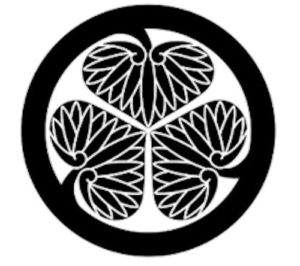
This gilded trefoil is gleaming on the property of the shogun and mausoleum even now in Japan.


YUME-AWOI

Kabushiki Kaisha Kiwa-Nouen Products, a Japanese merchant dealing with plums and its products filed a trademark application for a combination mark with Tokugawa crest image and literal elements written in Chinese characters (see below) covering pickled plums in class 29 on June 21, 2016 [TM application no. 2016-72127].
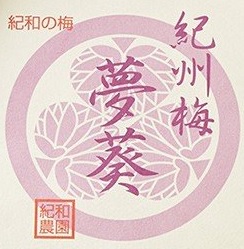
Three Chinese characters “紀州梅” in the upper right of the mark lacks distinctive since the term means plums made in Kishu, the name of a province in feudal Japan (the area corresponds to nowadays Wakayama Prefecture and southern Mie Prefecture), as a whole. Two characters “夢葵” in the center of the mark to be pronounces as “yume-awoi” is obviously a coined word and distinctive in relation to pickled plums.

The mark is actually in use on high-class pickled plums produced by applicant.
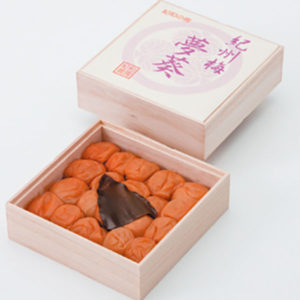
Tokugawa Museum

Going through substantive examination by the JPO examiner, applied mark was totally refused registration based on Article 4(1)(vi), (vii), (xv) of the Trademark Law on the ground that the mark contains a device resembling the Tokugawa crest which becomes famous as a source indicator of ‘Public Interest Incorporated Foundation The Tokugawa Museum’.
If so, using the mark on the designated goods by an unauthorized entity may free-ride goodwill vested in the Tokugawa crest and anything but conductive to the public interest. Besides, relevant consumers are likely to confuse or misconceive pickled plums using applied mark with goods from The Tokugawa Museum or any business entity systematically or economically connected with the museum.

Article 4(1)(vi) is a provision to refuse any mark which is identical with, or similar to, a famous mark indicating the State, a local government, an agency thereof, a non-profit organization undertaking a business for public interest, or a non-profit enterprise undertaking a business for public interest.

Article 4(1)(vii) of the Trademark Law prohibits any mark likely to cause damage to public order or morality from registration.

Article 4(1)(xv) provides that a mark shall not be registered where it is likely to cause confusion with other business entity’s well-known goods or services, to the benefit of brand owner and users’ benefits.


Applicant filed an appeal against the refusal on May 21, 2018 and argued dissimilarity of the marks.


Appeal Board decision

The Board reversed the examiner’s refusal and admitted applied mark to registration by stating that:

It becomes trade practice to print family crest on the packaging of food products. Especially, trefoil awoi crest has been commonly used on the packaging of specialty products or souvenir from Aichi (Owari), Wakayama (Kishu) and Ibaragi (Mito) Prefectures where descendants from clan founder Tokugawa Ieyasu’s three youngest sons governed during the Edo shogunate. Besides, from appearance, Tokugawa crest image in applied mark looks like a background pattern and thus relevant consumers are unlikely to aware that the pattern serves the legally defined role of a trademark because the image is colored washier than literal elements. If so, two Chinese characters “夢葵” of the mark functions primarily as a source indicator.

Based on the foregoing, the Board considered, given the Tokugawa crest image in the applied mark does not play a role of source indicator at all, both marks are dissimilar and unlikely to cause confusion from visual, phonetic and conceptual points of view even if the Tokugawa crest becomes famous as a source indicator of Public Interest Incorporated Foundation The Tokugawa Museum in fact. Likewise, the Board found no specific reason to cause damage to public order or morality from applied mark.

Giorgio Armani defeated with trademark battle over V-shaped wing device

In a recent administrative trademark decision , the Opposition Board of Japan Patent Office (JPO) dismissed an opposition filed by Giorgio Armani S.p.A against trademark registration no. 5983697 for V-shaped wing device mark on bags in class 18 due to unlikelihood of confusion.

[Opposition case no. 2017-900384, Gazette issued date: April 26, 2019]

Opposed mark

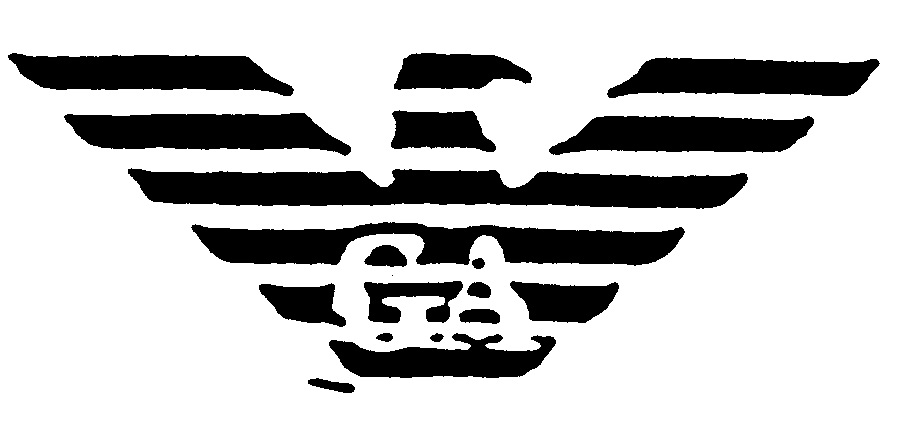
Disputed mark (see below) was applied for registration on April 24, 2017, by designating bags, wallets, suitcases, hang bags, backpacks and others of class 18 in the name of a Chinese individual.

Going through substantive examination at the Japan Patent Office (JPO), the mark was registered on September 29 of that year (TM Reg no. 5983697).


Armani Opposition

To oppose the mark, Giorgio Amani filed an opposition on December 22, 2017.
In the opposition brief, Armani contended that opposed mark is confusingly similar to its registered famous V-shaped wing logo in the shape of “V” letter (see below) by citing its owned IR no. 695685 and thus shall be cancelled in violation of Article 4(1)(xi), (xv) and (xix) of the Japan Trademark Law.

Article 4(1)(xi) is a provision to refrain from registering a junior mark which is deemed identical with, or similar to, any senior registered mark.
Article 4(1)(xv) prohibits to register a trademark which is likely to cause confusion with a business of other entity.
Article 4(1)(xix) prohibits to register a trademark which is identical with, or similar to, other entity’s famous mark, if such trademark is aimed for unfair purposes, e.g. gaining unfair profits, or causing damage to the entity.


Board decision

To my surprise, the Opposition Board of JPO negated a certain degree of popularity and reputation of Armani V-shaped wing device mark – Armani logo, stating that produced materials are insufficient and non-objective to demonstrate famousness of the cited mark.

Besides, the Board found that both marks are sufficiently distinguishable from appearance in view of overall configuration. From phonetic and conceptual points of view, opposed mark is unlikely to give rise to any specific meaning and pronunciation as well as cited mark.If so, both marks would not be comparable from visual and conceptual points of view. By taking into consideration of above fact findings, the Board found dissimilarity of both marks and held less likelihood of confusion between the marks even if used on bags in class 18.
Based on the foregoing, the Board decided opposed mark is not subject to Article 4(1)(xi), (xv) and (xix) of the Trademark Law and dismissed the opposition totally.

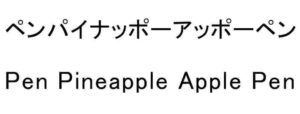
Who associates “Pen-Pineapple-Apple-pen” with Apple Inc.?

The Japan Patent Office (JPO) dismissed an opposition filed by Apple Incorporated, a US corporation, against TM Registration no. 6031236 for word mark “Pen Pineapple Apple Pen” written in alphabets and Katakana characters, and allowed the mark to remain valid. [case no. 2018-900165]


Opposed mark : Pen-Pineapple-Apple-Pen

Avex Inc., a Japanese company, filed the mark to the JPO on February 24, 2017 over various kinds of goods/services in class 3,9,14,16,18,20,21,24,25,28,30,32,41,43 (14 classes in total). The JPO admitted registration on March 30, 2018.


Opposition by Apple Inc.

Apple Inc., an US multinational IT company, filed an opposition based on Article 4(1)(xi), (xv) and (xix) of the Trademark Law by asserting opposed mark is deemed similar to opponent famous trademark “Apple”, “Apple Pay” and “Apple Pencil”, likely to cause confusion with opponent’s business when used on designated goods and services. Besides, opposed mark was seemingly adopted with an intention to freeride good-will bestowed on opponent famous trademarks.

Article 4(1)(xi) prohibits from registering a junior mark identical or similar to senior registered mark on identical or similar goods/service.
Article 4(1)(xv) prohibits any junior mark likely to cause confusion with others.
Article 4(1)(xix)
  prohibits a junior mark identical or similar to others’ famous mark with a malicious intention.
The provisions are available as cause of claims underlying  an opposition when registered in error.


JPO decision

The Opposition Board of JPO held opposed mark shall NOT be revocable in accordance with the articles by stating that:

“Opposed mark, solely consisting of literal elements with same size and same font, gives rise to a pronunciation of ‘pen pineapple apple pen’ as a whole. Regardless of slight verbosity, relevant consumers will surely connect the mark with viral hit song “Pen-Pineapple-Apple-Pen or PPAP” by PIKOTARO, internet sensation from Japan, which has become known among the general public remarkably. If so, opposed mark merely gives rise to a meaning of PIKOTARO’s song.  Therefore, opposed mark shall be deemed dissimilar to opponent trademarks from visual, phonetic and conceptual points of view.

The Board admits a high degree of reputation or popularity of “APPLE” as a source indicator of opponent’s business in connection with PC, its accessories, software and smartphones, however, provided that both marks are distinctively dissimilar and ‘APPLE’ is a dictionary word commonly known among relevant public to mean the round, red or yellow, edible fruit of a small tree, the Board considers it is unlikely that relevant consumers and traders would confuse or associate opposed mark with opponent’s mark “APPLE”.

Besides, opponent alleged that PIKOTARO might compose the song inspired by “APPLE PENCIL” and ludicrously promoted with an intention of free-riding opponent’s goodwill. However, the Board was unable to find out any fact to assume malicious intention of the free-riding by applicant from the totality of the circumstances.”


Trademark Opposition: “DISCOVERY” vs. “DISCOVERER”

In a recent administrative decision to trademark opposition filed by Jaguar Land Rover Limited who alleged trademark registration no. 6011666 for word mark “DISCOVERER” designating goods of “batteries and cells, telecommunication machines and apparatus, recorded video discs, and other goods” belonging to class 9 owned by a Japanese business entity is confusingly similar to “DISCOVERY” famous for four-wheel-drive vehicles produced by the opponent, the Opposition Board of Japan Patent Office (JPO) dismissed the opposition due to an unlikelihood of confusion.

[Opposition case no. 2018-900086, Gazette issue date: January 25, 2019]


Opposed mark – DISCOVERER

Opposed mark (trademark registration no. 6100666) just consists of a term “DISCOVERER” in a plain roman type and its transliteration in a Japanese katakana character.

The mark was filed on April 24, 2017 by designating “batteries and cells, telecommunication machines and apparatus, recorded video discs, and other goods” belonging to class 9.

JPO, going through substantive examination, admitted registration and published for opposition on February 13, 2018.


Opposition by Land Rover “DISCOVERY”

On April 6, 2018, before the lapse of a two-months opposition period, Jaguar Land Rover Limited filed an opposition, stating that relevant consumers are likely to confuse or misconceive opposed mark with opponent or any business entity systematically or economically connected with Land Rover due to high popularity of “DISCOVERY” for Land Rover SUV and similarity between “DISCOVERY” and “DISCOVERER”.


Article 4(1)(xv)

Jaguar Land Rover sought to retroactively cancel opposed mark in relation to all designated goods in class 9 based on Article 4(1)(xv) of the Trademark Law.

Article 4(1)(xv) provides that a mark shall not be registered where it is likely to cause confusion with other business entity’s well-known goods or services, to the benefit of brand owner and users’ benefits.


Board decision

The Board negated a certain degree of popularity and reputation of opponent mark “DISCOVERY”, stating that produced materials are insufficient and non-objective to demonstrate famousness of the cited mark.

Besides, the Board found that both marks are sufficiently distinguishable from visual, phonetic and conceptual points of view and deemed dissimilar.

Even if car makers are looking at ways to speed up development of self-driving and recent cars consist of batteries and telecommunication apparatus in fact, given non-originality of opponent “DISCOVERY” mark and remoteness between opposed goods and vehicles, the Board held that relevant consumers of opposed goods are unlikely to confuse or associate “DISCOVERER” with opponent or any business entity systematically or economically connected with Jaguar Land Rover Limited.

Thus, opposed mark shall not be revocable to Article 4(1)(xv) of the Trademark Law and dismissed the opposition entirely.

Serapian Loses Trademark Opposition against S device mark

The Italian-based fashion house Stefano Serapian S.r.l., known for its briefcases, handbags and purses opposed the registration in Japan of the trademark S logo owned by the Japanese company, Kabushiki Kaisha Overseas.


Opposed mark

Overseas filed an application to register S logo (see below) designating, among others, bags, purses, pouches and leather goods in class 18 on April 27, 2017. Going through substantive examination at the Japan Patent Office (JPO), it was registered on October 20 of that year (TM Reg no. 5990450).

Serapian Opposition

A trademark opposition proceeding filed on January 15, 2018, Serapian contended that opposed mark is confusingly similar to its registered famous “S” device mark (see below) by citing its owned IR no. 1117130 and thus shall be cancelled in violation of Article 4(1)(xi) and (xv) of the Japan Trademark Law.


Article 4(1)(xi) is a provision to refrain from registering a junior mark which is deemed identical with, or similar to, any senior registered mark.

Article 4(1)(xv) provides that a mark shall not be registered where it is likely to cause confusion with other business entity’s well-known goods or services, to the benefit of brand owner and consumers.

Theoretically, Article 4(1)(xv) is applicable to the case where a mark in question is deemed dissimilar to well-known brand, but still likely to cause confusion because of a high degree of popularity and reputation of the brand.


The Ruling

The Opposition Board of JPO negated a certain degree of popularity and reputation of Serapian’s “S” device mark, stating that produced materials are insufficient and non-objective to demonstrate famousness of the cited mark.

Besides, the Board found that both marks are sufficiently distinguishable from appearance in view of overall configuration. From phonetic and conceptual points of view, it is apparent that respective mark would not be perceived as an alphabetical letter ‘S’, but a geometric figure device without any specific concept and pronunciation. If so, both marks would not give rise to similar appearance, sound and meaning at all.

Even if taking account of originality of “S” device mark, as long as it remains unclear whether Serapian “S” device mark has become popular among relevant consumers in Japan, the Board had no reason to admit a likelihood of confusion.

As a conclusion, the Board decided opposed mark is not subject to Article 4(1)(xi) and (xv) of the Trademark Law and dismissed the opposition accordingly.

[Opposition case no. 2018-900017, Gazette issue date December 28, 2018]

POLO BCS defeated in trademark battle with POLO RALPH LAUREN

In a ruling on the merits of whether or not an applied mark “POLO HOME / BRITISH COUNTRY SPIRIT” is likely to cause confusion with a world-famous trademark “POLO” by the fashion house Ralph Lauren, the Japan IP High Court sided with the JPO and ruled in favor of Ralph Lauren on December 10, 2018.

[Court case no. H30(Gyo-ke)10067]


“POLO HOME / BRITISH COUNTRY SPIRIT”

POLO BCS Co., Ltd., plaintiff of the case, is a Japanese business entity, promoting apparel products bearing trademarks of “POLO BRITISH COUNTRY SPIRIT”, “POLO BCS”, and “POLO HOME”.


POLO BCS filed a trademark registration for the mark “POLO HOME / BRITISH COUNTRY SPIRIT” as shown in below on January 5, 2015 by designating clothing and other goods in class 25. [TM application no. 2015-305]


In fact, POLO BCS, a registrant of the word mark “POLO” on class 25 in Japan since 1997 (TM registration no. 1434359 and 2721189), granted trademark license to Ralph Lauren in the year of 1987 and since then continuously allows RL to use the mark “POLO” in Japan.


JPO decision

The Japan Patent Office (JPO) rejected the applied mark based on Article 4(1)(xv) of the Trademark Law on June 3, 2016. The refusal relies on a prominent portion of the mark “POLO” is likely to cause confusion with RALPH LAUREN when used on apparel products, being that “POLO” becomes remarkably well-known for an abbreviation of POLO RALPH LAUREN among relevant consumers with an ordinary care.

Article 4(1)(xv) is a provision to prohibit any mark from being registered where it is likely to cause confusion with other business entity’s well-known goods or services, to the benefit of brand owner and users’ benefits.

POLO BCS filed an appeal against the refusal on August 16, 2016, but its attempt resulted in failure [Appeal case no. 2016-12344].
To contest the JPO decision, POLO BCS appealed to the IP High Court filed immediately.


IP High Court decision

The court admitted a high degree of reputation and popularity of Ralph Lauren and “POLO” as an abbreviation of Polo Ralph Lauren in connection with apparel products by taking account of following fact findings.

  1. The first collection for Polo brand was launched in the US by a designer Mr. Ralph Lauren in 1967.
  2. Annual sales of Ralph Lauren exceed 7 billion USD in 2013 around the globe.
  3. In 1976, Ralph Lauren launched Polo brand and shops in Japan.
  4. According to brand perception survey of 900 randomly selected Japanese consumers ages 20 to 69 conducted in 2010, 81.8% of consumers recognize Ralph Lauren.
  5. Annual sales of 26.7 billion JPY in Japan (fiscal year 2008) accounts for 6% of global sales of Ralph Lauren.


Besides, the court found close similarity between applied mark and “POLO” by Ralph Lauren given a tiny font size of “BRITISH COUNTRY SPIRIT” in the configuration of applied mark and less distinctiveness of the word “HOME” in relation to apparel for home use.

Plaintiff argued to consider the fact that RL has used the “POLO” mark in Japan under license from plaintiff. But the court negated the argument stating that such fact would not mean consumers recognize the mark as a source indicator of plaintiff. In addition, plaintiff argued originality and fame of the word “POLO” as a source indicator of Ralph Lauren by citing Polo Game, organizations for the game, e.g. US POLO ASSOCIATION, HURLINGHAM POLO, and a generic name of Polo shirts. Court considered such circumstances would mean less originality of the mark “POLO”, but never deny fame of the mark as a source indicator of Ralph Lauren as long as consumers doubtlessly connect it with Ralph Lauren.

Based on the foregoing, the IP High Court concluded it is obvious that relevant consumers are likely to confuse or misconceive a source of the applied mark with Ralph Lauren or any entity systematically or economically connected with RL when used on clothing in class 25.

Apple successful in a trademark opposition to block “PriPhone”

Apple Inc. achieved a victory over trademark battle involving famous “iPhone”.
In a recent trademark opposition, case no. 2017-900319, the Opposition Board of Japan Patent Office (JPO) decided in favor of Apple Inc. to cancel trademark registration no. 5967983 for word mark “PriPhone” due to a likelihood of confusion with Apple’s famous “iPhone”.

“PriPhone”

Opposed mark “PriPhone” was filed by a Japanese business entity on December 26, 2016 by designating the goods of “mobile phones; smart phones; downloadable image and music files; telecommunication machines and apparatus; electronics machines, apparatus and their parts” in class 9.
The JPO admitted registration on July 28, 2017 and published for registration on August 22, 2017.

Apple’s Opposition

To oppose the registration, Apple Inc. filed an opposition against “PriPhone” on October 20, 2017.

In the opposition brief, Apple Inc. asserted the opposed mark shall be cancelled in violation of Article 4(1)(xv) of the Japan Trademark Law given a remarkable reputation of opponent mark “iPhone” since nearly a quarter of Japanese have favorably used iPhone as a personal device to connect with internet.
Apple argued the opposed registrant knowingly included famous “iPhone” trademark on the ground that the company promotes protective cases, covers for iPhone.

Article 4(1)(xv) provides that a mark shall not be registered where it is likely to cause confusion with other business entity’s well-known goods or services, to the benefit of brand owner and consumers. Theoretically, Article 4(1)(xv) is applicable to the case where both marks are dissimilar, but likely to cause confusion among relevant consumers because of a related impression attributable to reputation of the well-known mark.

Board Decision

The Opposition Board admitted a remarkable degree of reputation and popularity of opponent trademark “iPhone” among general consumers which occupies the highest share (54.1% in 2012) of the smart phone market for past five years consecutively.

In the assessment of mark similarity, the Board found “PriPhone” would be perceived containing “iPhone” in the mark, provided that “iPhone”, as a coined word, is deemed a unique and famous trademark. Besides, in view of close connection between smart phones and the goods in question, similarity with respect to consumers, it is undeniable that relevant consumers with an ordinary care are likely to conceive “iPhone” from opposed mark when used on goods in question.

Based on the foregoing, the Board decided that relevant consumers are likely to confuse or misconceive a source of the opposed mark with Apple Inc. or any entity systematically or economically connected with the opponent.
If so, opposed mark shall be cancelled in violation Article 4(1)(xv) of the trademark law.

Apple Inc. Lost Trademark Opposition to “SMAPPLE” in Japan

The Japan Patent Office dismissed a trademark opposition claimed by the U.S. tech giant, Apple Inc. against trademark registration no. 5987344 for word mark “SMAPPLE” in class 9 and 37 by finding less likelihood of confusion with Apple.
[Opposition case no. 2018-900006]

“SMAPPLE”

Opposed mark “SMAPPLE” was filed by a Japanese business entity on March 13, 2017 by designating mobile phones in class 9 and repair or maintenance service of mobile phones in class 37.
Going through substantive examination, the JPO admitted registration on September 15, 2017 and published for registration on November 7, 2017.

Apple’s Opposition

To oppose against registration, Apple Inc. filed an opposition on January 5, 2018.

In the opposition brief, Apple Inc. asserted the opposed mark shall be cancelled in violation of Article 4(1)(xv) of the Japan Trademark Law given a remarkable reputation of opponent mark “APPLE” in the business field of computers, smart phones, tablets, and any related business.
Apple argued the first two letters of “SM” is descriptive in connection with repair and maintenance service since it is conceived as an abbreviation of “service mark”, to my surprise. In addition, as long as the term “SMAPPLE” is not a dictionary word, relevant consumers at the sight of the term are likely to consider that the opposed mark consists of “SM” and “APPLE”.

Article 4(1)(xv) provides that a mark shall not be registered where it is likely to cause confusion with other business entity’s well-known goods or services, to the benefit of brand owner and consumers. Theoretically, Article 4(1)(xv) is applicable to the case where both marks are dissimilar, but likely to cause confusion among relevant consumers because of a related impression attributable to reputation of the well-known mark.

Board Decision

The Opposition Board admitted a remarkable degree of reputation and popularity of opponent trademark “Apple” in the business field to manufacture and distribute computers, smart phones, audio devices and mobiles phones etc., however, gave a negative view in relation to repair or maintenance service of mobile phones by taking account of insufficient evidences Apple Inc. produced to the Board.

Besides, in the assessment of mark similarity, the Board found “SMAPPLE” and “Apple” are totally dissimilar since they are sufficiently distinguishable in visual, phonetic, and conceptual point of view. The Board also questioned Apple’s argument the first two letters of “SM” does imply a meaning of service mark. If so, it is not permissible to separate a element of “APPLE” from the opposed mark. The mark shall be compared in its entirety. As long as “APPLE” is a familiar English term among relevant public to mean a round fruit with red or green skin and a whitish inside, the term shall not be deemed a coined word.

Based on the foregoing, the Board decided that relevant consumers are unlikely to confuse or misconceive a source of the opposed mark with Apple Inc. or any entity systematically or economically connected with the opponent.