Top 10 Trademark News in Japan, 2025

As the year 2025 comes to an end, it is a good time to share the top 10 trademark news in Japan by counting the total number of likes on the Linkedin “Like” Button.


1: JPO Grants TM Registration for 3D Shape of the Popular Pocky Cookie

The Japan Patent Office (JPO) granted trademark registration for the three-dimensional (3D) shape of Ezaki Glico’s iconic “Pocky” cookie, recognizing that the shape had acquired distinctiveness in relation to chocolate confections in Class 30 [TM Reg. No. 6951539].


2: UNIQLO Lost in Trademark Opposition against UNIPRO

UNIQLO lost in its attempt to oppose TM Reg no. 6746724 for the mark “UNIPRO” in class 28 due to dissimilarity and unlikelihood of confusion with a world-famous Japanese clothing brand “UNIQLO”.


3: STARBUCKS Unsuccessful Invalidation Action against Trademark “STARBOSS”

The Japan Patent Office (JPO) dismissed an invalidation action claimed by Starbucks Inc. against TM Reg no. 6595964 for wordmark “STARBOSS” in class 32 due to dissimilarity to and unlikelihood of confusion with the world’s largest coffee chain “STARBUCKS”.


4: IP High Court ruling: STARBUCKS vs STARBOSS

The Japan IP High Court did not side with Starbucks Corporation in a trademark dispute between “STARBUCKS” and “STARBOSS”, and affirmed the JPO decision that found “STARBOSS” dissimilar to, and less likelihood of confusion with “STARBUCKS when used on beverages.


5: Trademark dispute: SONY vs SONIMART

The Japan Patent Office (JPO) sided with SONY in a trademark invalidation action against TM Reg no. 6162062 for word mark “SONIMARK” in classes 35 and 42 by finding a likelihood of confusion with famous mark “SONY”.


6: MONSTER STRIKE vs MONSTER ENERGY

The Japan Patent Office (JPO) did not decide in favour of Monster Energy Company in its opposition to Defensive Mark Reg. No. 5673517 for the word mark “MONSTER STRIKE” in Classes 29, 30, and 32.


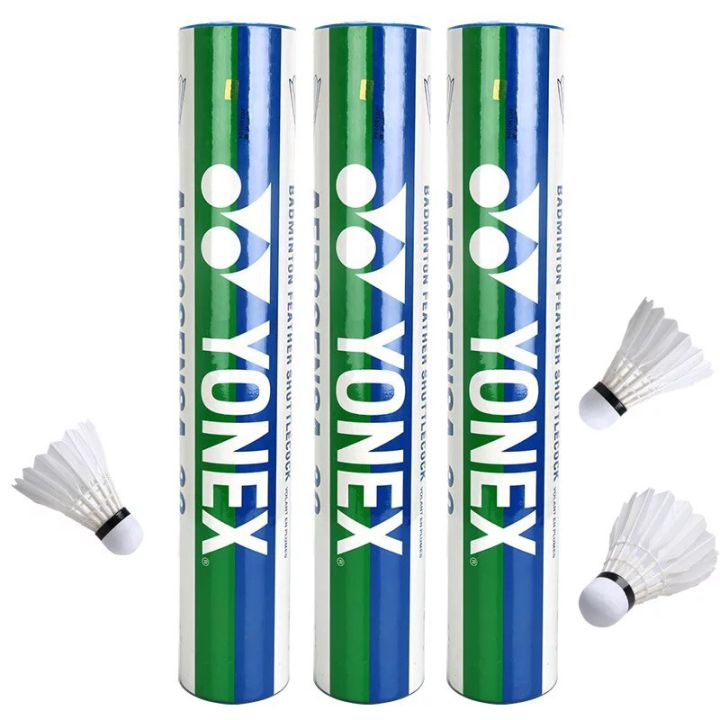
7: YONEX Scored Win in Registering Color mark

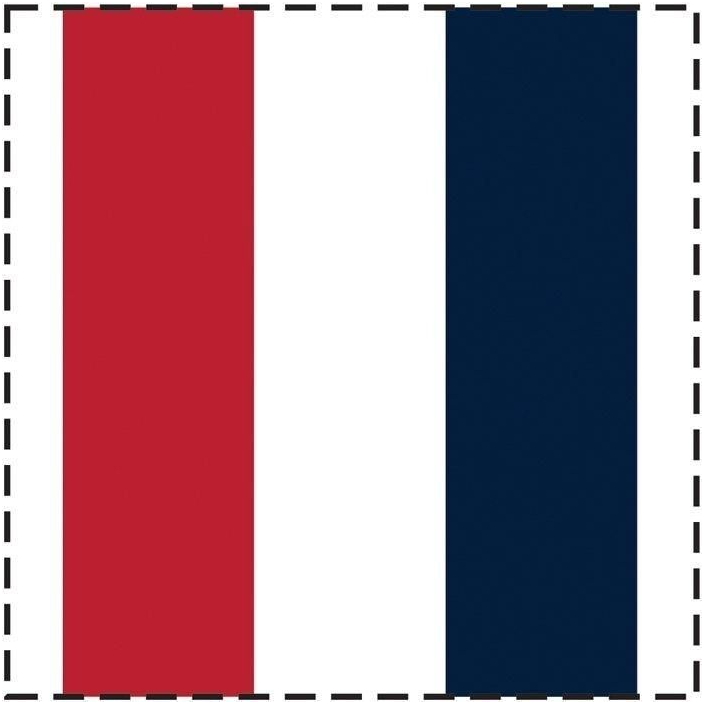
On October 21, 2025, the Japan Patent Office (JPO) granted registration of a color mark that consists of blue and green colors, filed by Yonex Co., Ltd. to use on badminton shuttlecocks by finding acquired distinctiveness of the color combination.


8: HERMES Defeated with Trademark Opposition against KIMONO TWILLY

The Japan Patent Office (JPO) dismissed an opposition filed by Hermes International against TM Reg no. 6753650 for the word mark “KIMONO TWILLY” in Class 18, claiming a likelihood of confusion with the Hermes scarves “TWILLY”.


9: JPO Said No to Register Kawasaki Green Color Mark

On March 19, 2025, the Japan Patent Office (JPO) finally decided to reject a color mark application filed a decade ago by Kawasaki Heavy Industries, Ltd., which sought to register a green color used on the world-famous Kawasaki motorcycles.


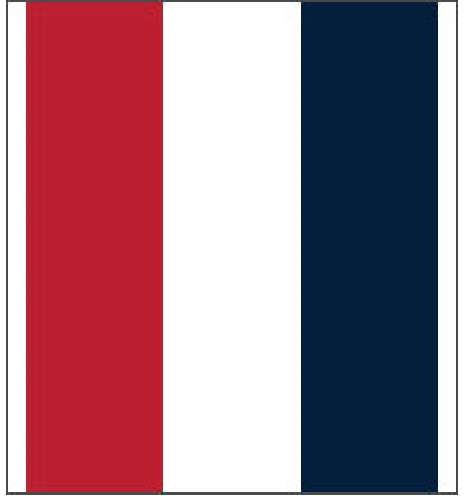
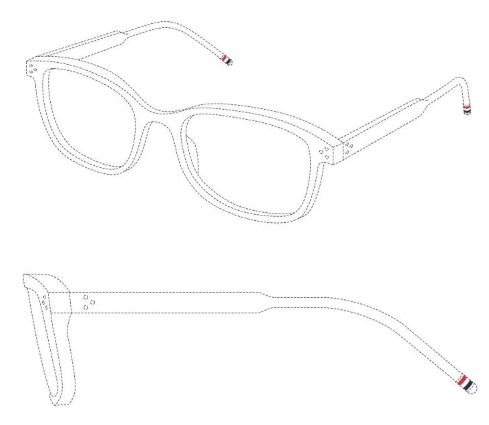
10: TOMMY HILFIGER vs TOMTOMMY

The Japan Patent Office (JPO) did not side with Tommy Hilfiger Licensing B.V. in an opposition against TM Reg no. 6604265 “TOMTOMMY” due to dissimilarity and unlikelihood of confusion with “TOMMY” and “TOMMY HILFIGER”.

YONEX Scored Win in Registering Color mark

On October 21, 2025, the Japan Patent Office (JPO) granted registration of a color mark that consists of blue and green colors, filed by Yonex Co., Ltd. to use on badminton shuttlecocks by finding acquired distinctiveness of the color combination.
[Appeal case no. 2022-17481]


YONEX Color Mark

Yonex Co., Ltd. filed a trademark application with the Japan Patent Office on September 6, 2019, for a mark that consists of a combination of blue (Pantone 2935C) and green (Pantone 355C) (color ratio 50%:50%), designating “sports equipment; badminton equipment” and other goods in Class 28 [TM App no. 2019-118815].


Rejection by JPO examiner

On July 27, 2022, the JPO examiner rejected the mark under Article 3(1)(iii) of the Japan Trademark Law, due to a lack of inherent distinctive character. Furthermore, while acknowledging that a certain number of traders and consumers recognize the color combination perse as an indicator of the applicant’s goods in view of the applicant’s extensive use of the mark on badminton shuttlecocks for years, and its leading market share, the examiner had an opinion that a significant number of people do not recognize it as a source indicator to distinguish from others. Accordingly, the examiner concluded that the mark does not satisfy the requirements to apply Article 3(2) since the applicant failed to demonstrate acquired distinctiveness of the mark in relation to the goods in question.

Subsequently, the applicant filed an appeal against the rejection on November 1, 2022, and then restricted the designated goods to “Shuttlecocks” in Class 28.


JPO Appeal Board decision

The JPO Appeal Board observed that the evidence submitted by the applicant would sufficiently demonstrate that the color combination has played a role in identifying the specific source of Shuttlecocks by taking into account the following facts.

  1. The mark has been used continuously for over 48 years, since at least 1976, on Yonex Badminton shuttlecocks. The color combination appears on the applicant’s website, in product catalogs, internet articles, magazines, newspapers, and television programs. The shuttlecocks bearing the mark have been officially used at numerous international badminton tournaments, including the Olympic Games and World Championships.
  2. Yonex shuttlecocks ranked first in the domestic market for 11 consecutive years from 2009 to 2019, with a market share of approximately 70% to 80% during that period.
  3. According to survey results targeting 1,053 men and women aged 15 to 59 who currently play or have played badminton or tennis, 57.87% of the respondents who have played both tennis (including soft tennis) and badminton could associate the color combination with the applicant in the answer to an open or closed (multiple choice) question. For those who have experienced badminton, but not tennis, 56.59% could associate it with the applicant in either question.

Based on the foregoing, the Board found that the examiner erred in applying Article 3(2), and thus decided to register the color combination as a trademark.

JPO Said No to Register Kawasaki Green Color Mark

On March 19, 2025, the Japan Patent Office (JPO) finally decided to reject a color mark application filed a decade ago by Kawasaki Heavy Industries, Ltd., which sought to register a green color used on the world-famous Kawasaki motorcycles.
[Appeal case no. 2022-11189]


Narrow gate to color mark registration

On April 1, 2015, the Japan Trademark Law has opened the door to the registration of marks consisting solely of a color or colors. To date, 589 color marks have been filed with the JPO, and only 11 have been granted registration. This represents a success rate of only 1.9%.


Kawasaki Green

On the very first day, Kawasaki Heavy Industries, Ltd., famous for sports and racing bikes, sought for registration of a color mark consisting solely of light green (R105, G190, B40) in connection with motorcycles (cl.12). [TM App no. 2015-30667]

In addition, Kawasaki filed two color mark applications for a single light green color represented on fuel tank (position) and a color combination of light green and black as shown below for use on motorcycles (cl. 12) with the JPO on the same day, but these were all withdrawn or rejected due to a lack of inherent and acquired distinctiveness. [TM App nos. 2015-30668, 2015-30696]

Allegedly, Kawasaki has been using the light green color on their Ninja, KX, KLX and other motorcycles since 1975, but, according to the catalogs, the color was used on less than 40 % of the total Kawasaki motorcycles. Besides, annual sales of the motorcycles using the light green color averaged approximately 23.4%.

On April 19, 2022, the JPO examiner rejected the color mark based on Article 3(1)(iii) of the Japan Trademark Law.

Kawasaki filed an appeal against the rejection and agued acquired distinctiveness of the light green in connection to motorcycles on July 19, 2022.

In order to demonstrate the acquired distinctiveness of the light color as a source indicator of Kawasaki motorcycles, Kawasaki conducted the market research that targeted a total of 1,000 men and women aged from 16 to 79 who has a motorcycle driver’s license, 90.5% of the interviewees who answered that they had seen the color in connection with motorcycles or motorcycle shops (66.1% of the total interviewees) could associate the color with Kawasaki.


JPO decision

The JPO Appeal Board noted the light green has acquired a certain degree of recognition among relevant consumers as a source indicator of Kawasaki motorcycles in view of substantial use for the past five decades.

However, the Board found that the market research was insufficient to objectively assess the acquired distinctiveness of the applied mark, as it was only targeted at motorcycle license holders. Moreover, competitors also manufacture many motorcycles with a similar green color.

According to the IP High Court’s decision, a mark consisting of a single color is not registrable unless it has acquired an extremely high degree of recognition as an indication of a particular source as a result of substantial use, to the extent that the exclusive use of the color would not cause detriment to the public in general.

In light of the fact that the light green color was used on less than 40 % of Kawasaki’s motorcycles, and the annual sales of the motorcycles using the light green color averaged approximately 23.4%, the Board has no reason to believe that the applied color has acquired a high degree of secondary meaning to outweigh the detrimental effect on the public at large if registered.

Based on the foregoing, the Board affirmed the examiner’s rejection and decided to refuse the applied mark based on Article 3(1)(iii) of the Japan Trademark Law.

It is appealable to the IP High Court until May 8, 2025.

No Green Light to Kawasaki Green Color Mark

On November 15, 2024, Kawasaki Heavy Industries, Ltd. dropped their nine-year fight with the Japan Patent Office (JPO) over a green color mark used on the Kawasaki motorcycles.


Narrow gate to color mark registration

On April 1, 2015, the JPO commenced registration of marks consisting solely of a color or colors. To date, 585 color marks have been filed with the JPO, and only 11 have been granted registration. This equates to a success rate of just 1.9%.


Kawasaki Green

On the very first day, Kawasaki Heavy Industries, Ltd., famous for sports and racing bikes in Japan, filed an application for a color mark consisting of light green (R105, G190, B40) represented on fuel tank as shown below in connection with motorcycles (cl.12).

[TM App no. 2015-30696]

JPO decision

As anticipated, the JPO examiner rejected the mark due to a lack of inherent and acquired distinctiveness on April 18, 2022 based on Article 3(1)(iii) of the Japan Trademark Law in seven years after the initial filing.

In the refusal decision, the examiner found from the produced evidence that Kawasaki has used the applied color on fuel tank of motorcycles since 1998, however, more than 70% of the Kawasaki motorcycles in average have a fuel tank painted in other color.

The results of the interview, which targeted men and women aged 16 to 79 who own motorcycles or a license to drive one, indicate that 54.7% of license holders and 67.5% of bike owners were able to recognize Kawasaki from the color. In this respect, the examiner had a view that the results were not persuasive to find acquired distinctiveness of the applied mark given Honda, Yamaha, Suzuki, and Kawasaki, the four major motorcycle manufacturers, have held a near monopoly of the market for years, and each manufacturer is known to have its own distinctive color.

Accordingly, the examiner held the applied mark shall not be registrable under Article 3(2) of the Japan Trademark Law.

Kawasaki filed an appeal against the examiner’s rejection on July 19, 2022 and argued acquired distinctiveness of the color “green” to indicate a source of the Kawasaki motorcycles. After two years of dispute with the JPO Appeal Board, Kawasaki voluntarily withdrew the appeal on November 15, 2024.

Japan IP High Court said No to registering the color of Hermes packaging.

The Japan IP High Court ruled to dismiss Herme’s appeal against the JPO decision that rejected Hermes packaging color due to a lack of inherent and acquired distinctiveness.
[Court case no. Reiwa5 (Gyo-ke) 10095, ruled on March 11, 2024]


Color mark of Hermes box

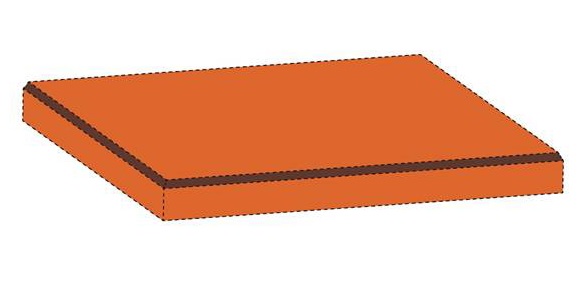
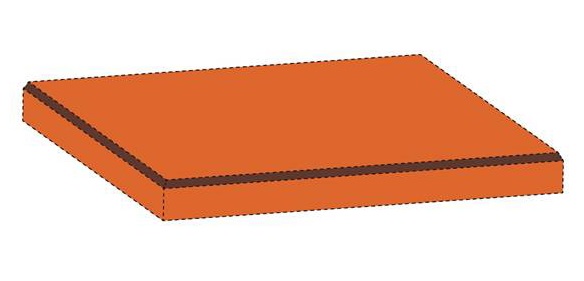
On August 23, 2023, HERMES INTERNARTIONAL filed an appeal with the Japan IP High Court to seek the cancellation of the JPO refusal decision (Appeal case no. 2021-13743) that denied registration of TM App no. 2018-133223 for a color mark consisting of orange on the entire box and brown on the upper outline of the box. (see below)

The application designates various goods in classes 3, 14, 16, 18, and retail services for the goods in class 35.


Second Market Research

HERMES conducted a second market research study in August 2023 to demonstrate acquired distinctiveness of its packaging color. The study targeted men and women in their 30s to 50s residing in nine prefectures who expressed interest in bags, accessories, watches, cosmetics, or perfume and had purchased either of these items within the past six months.

According to the second research report, 39.2% of respondents (2,060 in total) answered Hermes when shown three Hermes boxes in different shapes. 44.4% chose Hermes from the ten options (It is notable that 27.2% of respondents selected “Louis Vuitton” as their answer).


IP High Court decision

In their ruling, the judges pointed out the applied mark is classified into a mark consisting of colors, but from descriptions of mark, it is considered a two-color mark combined with a three-dimensional shape (a box).

The judges also noted the submitted evidence did not demonstrate the actual use of the applied mark in relation to perfumery of class 3 and paper boxes, paper bags, paper packages and wrapping papers of class 16, nor did it substantiate the use of the mark in relation to retail services for these goods in class 35.

The judge recognized that the “Hermes” brand has gained significant recognition in Japan, and its degree of renown is considered to be one of the most prominent among all fashion brands. From the submitted advertisement and publications, the applied mark evidently has been used as a symbolic color to indicate “Hermes” in a marketing tactic designed to enhance brand value. It is clear that the Hermes box is a well-known and important identifier for consumers interested in or who have purchased luxury fashion items.

The issue is whether relevant consumers can identify Hermes from the colors per se on Hermes box, without the word “Hermes” and the horse and carriage emblem. In this respect, the court said it useful to review brand recognition research especially in a case for color mark. The judges said the result of two market researches are sufficient (Recognition rate: approximately 40%) to admit acquired distinctiveness in general. However, two researches do not target general consumers by excluding age under 29 and over 60, and limiting their incomes JPY10,000,000 and above (1st research) or those who expressed interest in bags, accessories, watches, cosmetics, or perfume and had purchased either of these items within the past six months (2nd research).

Given the applied mark covers various goods that are regularly consumed by the general public, the researches with such limitations are inadequate and insufficient as evidence to demonstrate acquired distinctiveness of the color mark in question.

Therefore, the court has a reason to believe the JPO did not make an error in denying inherent and acquired distinctiveness of the applied mark and rejecting it based on Article 3(1)(iii) and 3(2) of the Trademark Law.

Based on the foregoing, the court decided to dismiss the entire appeal by Hermes.

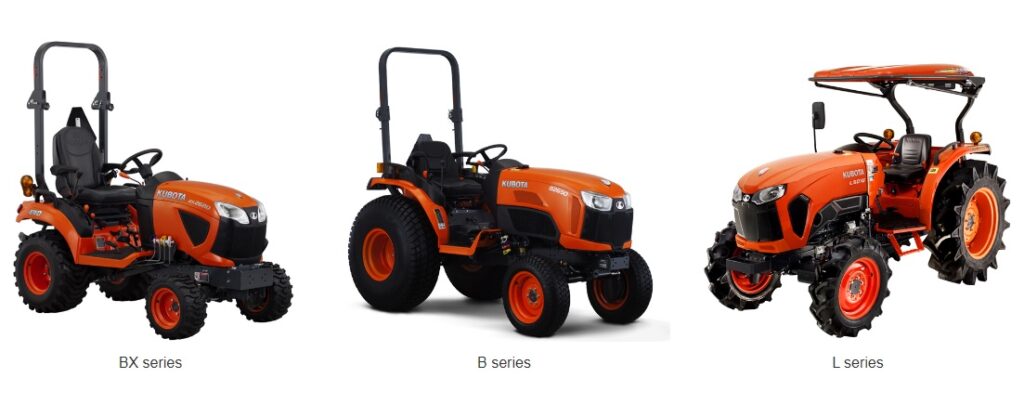
JPO rejection to Kubota Tractors’ Color Marks

On October 31, 2023, the Japan Patent Office (JPO) rejected color marks for use on farm tractors by KUBOTA Corporation due to a lack of inherent and acquired distinctiveness in relation to farm tractors in class 12.


Kubota farm tractors

KUBOTA Corporation, established in 1890, a Japanese company manufacturing a wide range of agricultural machines, launched its farm tractors in 1960. According to the allegations, KUBOTA has used an orange color and black-and-orange colors on its farm tractors since 1980. In recent years, the tractors have occupied top market share of around 50% in Japan.

https://www.kubota.com/products/tractor/index.html

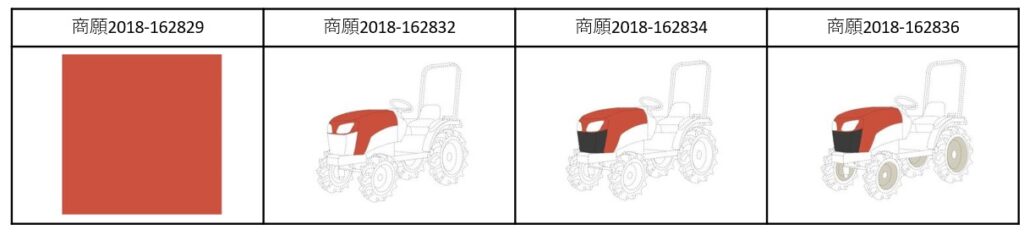
On December 26, 2018, KUBOTA applied for registration of color marks (see below) consisting of an orange color and color combinations (orange and black / orange, black and white) with the JPO in relation to farm tractors of class 12.


JPO rejection

The JPO examiner rejected the applications based on Article 3(1)(iii) of the Japan Trademark Law and found every color mark does not satisfy requirements of Article 3(2) by stating that:

  1. Farm tractors with similar color have been distributed by several competitors. Orange color has been commonly used on other agricultural machinery. Under the circumstances, there is no distinctive character to apply and use the applied color(s) on body, front grill, wheels of farm tractors. If so, the color marks are deemed descriptive in relation to the designated goods and shall be rejected based on Article 3(1)(iii).
  2. The market research that targeted 589 consumers resulted in approx. 30% of the interviewees answering “KUBOTA”. The result is insufficient to admit the color(s) per se has acquired distinctiveness as a source indicator because more than 30% associated the mark with other competitors in spite that Kubota’s tractors have occupied top market share for long years.
  3. In view of the fact that orange corresponds to one of safety colors determined by the Japan Industrial Standards (JIS), there is a high demand to freely use the color in our society.
  4. Based on the foregoing, the examiner has no reason to believe the applied color marks have acquired a secondary meaning and played a role in identifying the source of Kubota’s farm tractors by itself.

JPO Appeal Board Rejects Hermes Packaging Colors

On April 25, 2023, the JPO Appeal Board dismissed an appeal filed by HERMES INTERNATIONAL, a French luxury fashion house, and upheld the examiner’s rejection of TM App no. 2018-133223 for a color mark of Hermes box due to lack of inherent and acquired distinctiveness.

[Appeal case no. 2021-13743]

Color mark of Hermes box

On October 25, 2018, HERMES INTERNATIONAL filed a trademark application for its iconic packaging colors, orange and brown (see below), as a color mark to be used on various goods in class 3, 14, 16, 18, and retail services in class 35 with the Japan Patent Office (JPO) [TM application no. 2018-133223].

On July 9, 2021, the JPO examiner rejected the applied mark based on Articles 3(1)(iii) and 3(1)(vi) of the Japan Trademark Law by stating that colors per se would not have any distinctive character. It has been inherently selected to produce aesthetic function or psychological effect on all goods and services. Because of this reason, relevant consumers at the sight of goods or services bearing the applied combination of colors, orange and brown are unlikely to recognize it as a source indicator.


Appeal against the examiner’s rejection by Hermes

Hermes filed an appeal against the rejection on October 8, 2022, and argued inherent distinctiveness as well as acquired distinctiveness of the color mark.

In addition to the evidence regarding the substantial use of Hermes box for the past six decades, in order to bolster the acquired distinctiveness of the packaging color per se, Hermes conducted market research that targeted men and women in their 30s to 50s with incomes JPY10,000,000 and above residing in 9 prefectures. According to the research report, 36.9% of the interviewees answered Hermes when shown three boxes in different shapes with the color mark. 43.1% chose Hermes from the ten options.


JPO Appeal Board decision

The Appeal Board did not find any error in the examiner’s findings. The Board held “Colors are selected to enhance the impression and aesthetics of goods and services. Some colors are obtained naturally or inevitably to ensure the function of goods or services. Therefore, colors are not recognized to indicate the origin of goods or services and distinguish them from competitors.

The Board finds no particular reason to treat the case differently in the circumstances that competitors have used similar combinations of colors including orange and brown in the relevant industries. If so, the examiner’s findings are adequate and would not error in applying Article 3(1)(iii) and (vi) of the Trademark Law.

With respect to the acquired distinctiveness of Hermes box, the Board questioned the relevance of the market research to the issue by stating that relevant consumers of the goods and service in question shall not be restricted to “men and women in their 30s to 50s with incomes JPY10,000,000 and above”. Presumably, 43.1% would be much lower if general consumers nationwide are included in the research. If so, it would be anything but unreasonable to find the applied mark has yet to acquire distinctiveness among relevant consumers.

Based on the foregoing, the Board accordingly upheld the examiner’s rejection and decided to refuse the color mark of the Hermes box under Article 3(1)(iii) and (vi) as well as 3(2) of the Trademark Law.

Hermes is entitled to file an appeal to the IP High Court by August 23, 2023.

Tragic End of Trademark Challenge for Louboutin

In a series of Louboutin’s legal challenge to claim exclusive right over red soles, the Japan IP High Court, on the heels of the dismissal of Louboutin’s infringement claim on December 26, 2022, affirmed the JPO rejection to TM Application no. 2015-29921 for a red colored mark in sole and ruled Louboutin’s red soles shall be unregistrable under the Trademark Law on January 30, 2023.

[Court case no. Reiwa 4(Gyo-ke)10089]

Louboutin’s Red Soles

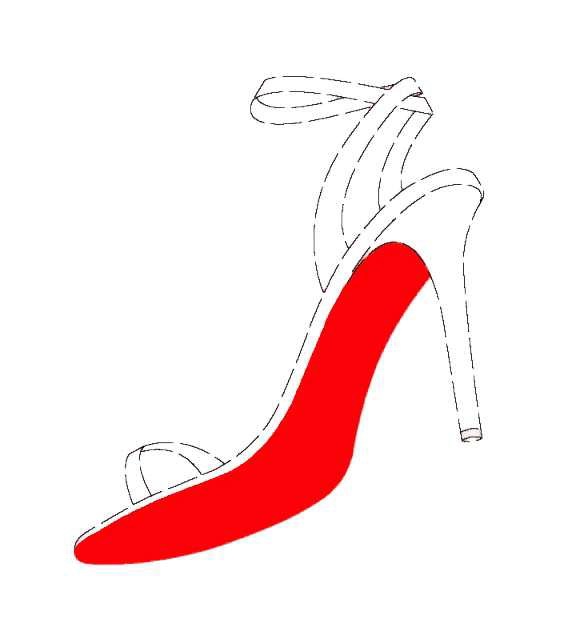
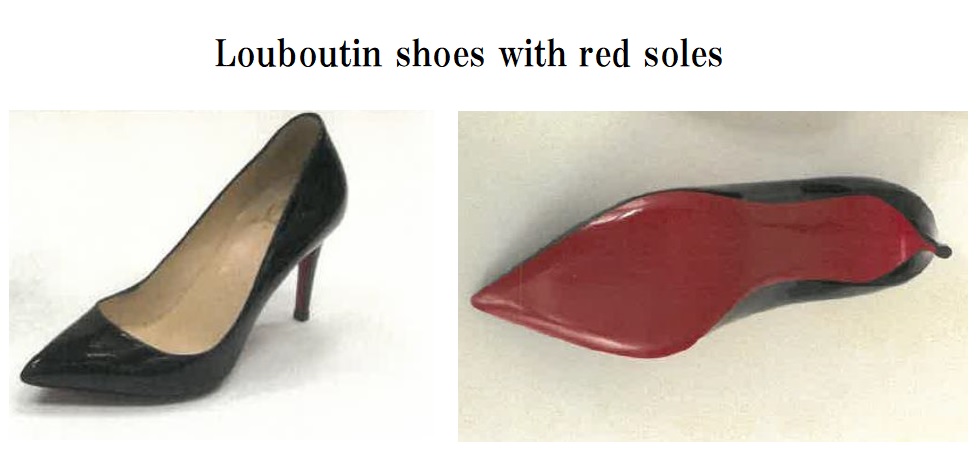
Fast on the heels of the introduction to register color marks in Japan, Christian Louboutin filed a trademark application for a color mark consisting of a red (Pantone 18-1663TP) colored in soles (see below) for use on high heels in class 25 on April 1, 2015 (TM App no. 2015-29921).


JPO Rejection

The JPO Appeal Board found the color mark perse lacks distinctiveness in relation to the goods in question by taking into account the fact that a lot of shoes with red-colored soles have been distributed by other shoemakers in Japan.

Besides, under the current trade practice, the Board considered it will inevitably cause a severe disorder and excessive restriction to competitors if it allows registration of a red color that has been freely used in the relevant industry to enhance the aesthetic appearance of shoes. Based on the foregoing, the JPO concluded the color mark shall not be registrable under Article 3(2) as well.

Louboutin brought the case to the IP High Court and appealed to cancel the JPO decision.


IP High Court decision

In the decision, the IP High Court expressed a view that a trademark consisting of a single color shall not be registrable unless it has acquired an extremely high degree of recognition to indicate a specific source as a result of substantial use to the extent that exclusive use of the color would not cause detrimental effect to the public in general.

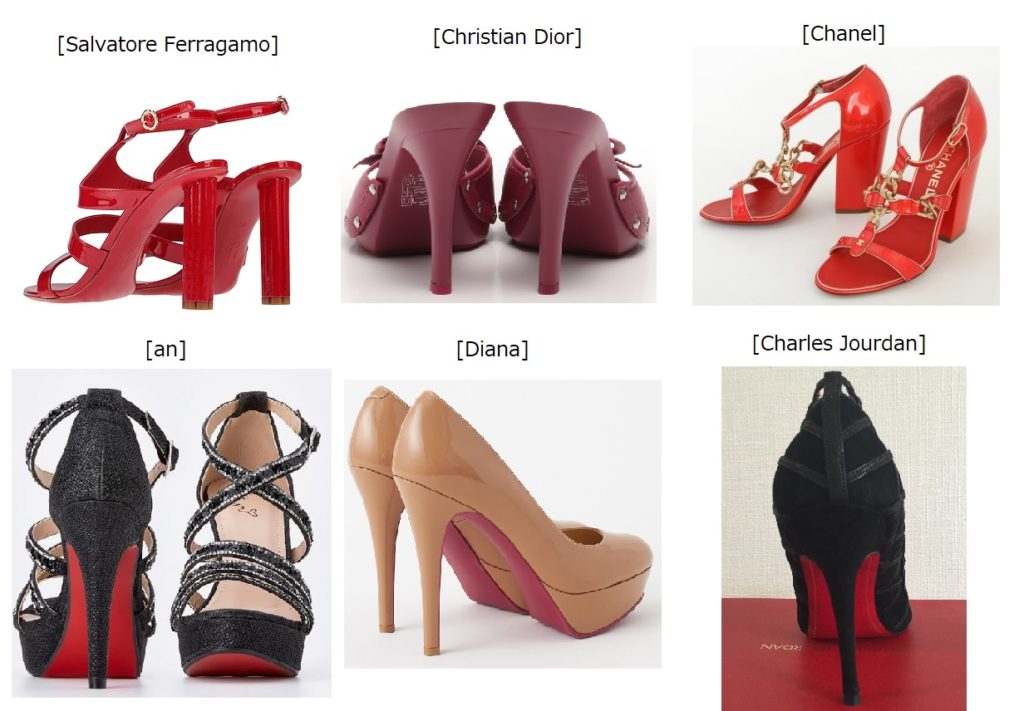
In this respect, the court affirmed the JPO findings that a lot of heels with red-colored soles have been distributed by other shoemakers in Japan for years and negated the inherent distinctiveness of the red-colored mark.

In the assessment of acquired distinctiveness, the court found the survey that demonstrated 51.6% of the interviewees (3,149 females, aged from 20 to 50) having a domicile in three big cities (Tokyo, Osaka, or Nagoya) was insufficient to find acquired distinctiveness of the red soles among relevant consumers, assuming that the percentage would become lower if the survey targets more females residing in other cities nationwide.

Even if Louboutin’s red soles have become famous among consumers who have a high interest in luxury brands, the Court has no reason to believe that the red colored mark has acquired an extremely high degree of recognition as a source indicator to the extent that general public would tolerate its exclusive use on soles.

Based on the foregoing, the IP High Court affirmed the JPO decision and dismissed entire allegations by Louboutin.


Consequently, Louboutin’s legal challenge was decisively blown off by two IP High Court rulings unless the Supreme Court holds out its hand on Louboutin.

Louboutin 2nd Defeat in Litigation over Red Soles

By order of December 26, 2022, the IP High Court ruled to dismiss an appeal taken by Louboutin against the Tokyo District Court ruling that denied a source-indicating function of Louboutin’s red soles.

[Appeal court case no. Reiwa4(ne)10051]

Appellant, Christian Louboutin SAS, brought an appeal against the Tokyo District Court ruling decided on March 11, 2022.

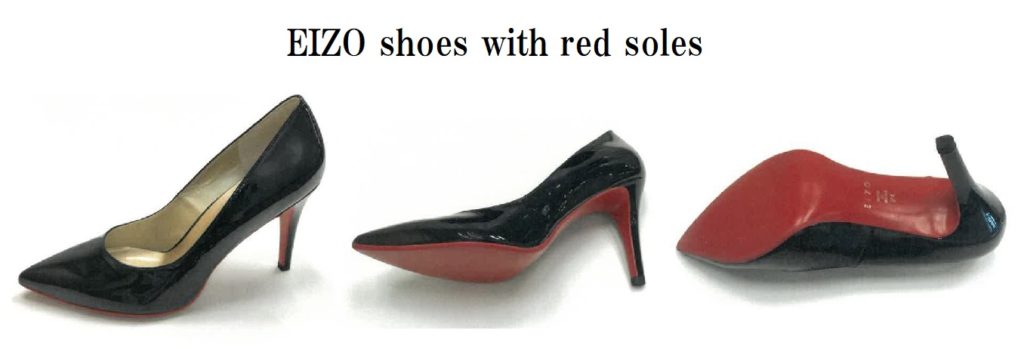
In May 2019, Louboutin sued Eizo Collection Co., Ltd., a Japanese company that produced ladies’ shoes with red-colored rubber soles, and sought a permanent injunction as well as damages in the amount of JPY4,208,000 under the Unfair Competition Prevention Law. The Tokyo District Court did not side with Louboutin by finding an insufficient reputation of Louboutin’s red soles perse as a source indicator and thus unlikelihood of confusion.
See details here.


The IP High Court paid attention to the following factors to assess the likelihood of confusion in the case.

  1. Relevant consumers of high-heels (women from their 20s to 50s) are most likely to try on multiple pairs of shoes at a physical store and select the ones that fit them prior to the purchase.
  2. The market for women’s high heels can be divided into three categories: (1) luxury brand products, (2) affordable brand products, and (3) inexpensive no-name products. Undoubtedly, Louboutin’s high-heels priced at JPY80,000 and over are classified into category (1). In the meantime, Eizo’s shoes priced at JPY17,000 or less belong to category (2).
  3. Every high-heel bears a brand name or logo on the insole so that consumers can easily distinguish its supplier.
  4. E-commerce websites post not only images of ladies’ shoes but also the brand and condition of respective goods in advertisements.

Based on the foregoing, the judge found, irrespective of the resemblance in color on the outsole, no likelihood of confusion between both shoes.


As for the reputation of Louboutin’s red soles, the IP High Court admitted certain consumers may recognize the red soles as a source indicator of Louboutin, however, the judge questioned if the soles have acquired a remarkable reputation among relevant consumers in general based on the research targeted women, in their 20s to 50s accustomed to wearing high-heels, residing in major cities that revealed only 51.6 % of the interviewees answered Louboutin at the sight of a high-heel with red-colored sole and a fact that Louboutin has not been an exclusive supplier of red sole shoes for women.

Update of Colormark in Japan – Who awarded the 9th registration?

On March 25, 2022, the Japan Patent Office (JPO) granted protection of a color mark that has been used on the package of the first and a long-selling Japanese instant ramen “Nissin Chicken Ramen”. It is the 9th case for JPO to admit registration since opening the gate to color mark in April 2015.


Nissin Chicken Ramen

In 1958, NISSIN FOODS founder Momofuku Ando invented the world’s first instant noodles: Chicken Ramen, paired with a rich broth made of chicken and vegetables.

Nissin Chicken Ramen is a long-selling Japanese instant ramen loved by many generations and considered the world’s first instant noodles. According to the company’s release, more than 5 billion packages of Chicken Ramen had been sold.


Color mark on Package

The JPO opened the gate to Non-Traditional trademarks, namely, color, sound, position, motion, and hologram, in April 2015.

On July 12, 2018, Nissin Foods sought for registration of color combination on the Chicken Ramen package on instant noodles in class 30.

JPO examiner raised his objection because of a lack of distinctiveness based on Article 3(1)(iii) of the Trademark Law. However, the examiner eventually granted protection by finding acquired distinctiveness of the color mark (TM Reg no. 6534071).


Low Success rate -1.6%

563 color marks have participated in a race for trademark registration at the JPO as of now (May 14, 2022). 9 color marks could manage to award registration.

It is noteworthy that none of them is a mark consisting of a single color.


A previous post relating to colormark is accessible from here.