Hermes Challenge to Register Packaging Colors

HERMES INTERNATIONAL, a French luxury fashion house, is in a legal battle to register its iconic packaging colors, orange and brown, as a color mark in Japan.


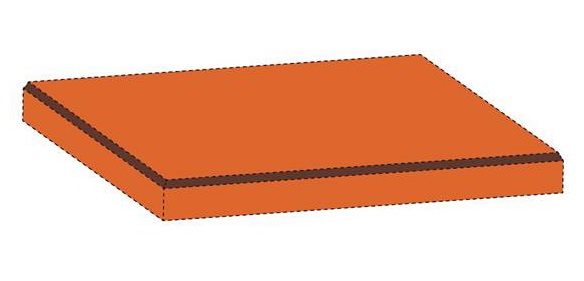
Color mark of Hermes box

On October 25, 2018, HERMES INTERNATIONAL filed a trademark application for its iconic packaging colors, orange and brown (see below), as a color mark to be used on various goods in class 3, 14, 16, 18, and retail services in class 35 with the Japan Patent Office (JPO) [TM application no. 2018-133223].


Article 3(1)(iii) and 3(1)(vi)

The JPO examiner rejected the color mark under Article 3(1)(iii) and 3(1)(vi) of the Japan Trademark Law by stating that colors per se are unlikely to play a role in source indicator because they are frequently aimed to attract consumers in association with function or quality of goods and services. Because of it, relevant consumers at the sight of goods or services bearing the applied color would not see the combination of colors, orange and brown, as a source indicator.


Acquired Distinctiveness

Hermes argued acquired distinctiveness of the color combination as a result of substantial use on Hermes box for the past six decades from the 1960s onward.

A bottleneck is that the Hermes box contains its name “HERMES” and horse and carriage logo as a conspicuous source indicator. Hermes conducted market research to demonstrate the acquired distinctiveness of the packaging color per se. The research targeted high-income men and women in their 30s to 50s with incomes JPY10,000,000 and above. According to the research report, 36.9% of the interviewees answered Hermes when shown three boxes in different shapes with the color mark. 43.1% chose Hermes from ten options.


JPO Rejection

The JPO examiner did not find the research persuasive to support acquired distinctiveness among relevant consumers of the goods and services in question.

The examiner stated the relevant consumers shall not be limited to the high-income class. Besides, even among high-income consumers, more than half of them did not link the color to Hermes. From the research, it is doubtful if relevant consumers would conceive the color per se as a source indicator.

Based on the above findings, the examiner totally rejected the applied color mark under Article 3(1)(iii) and (vi) on July 9, 2021.

HERMES INTERNATIONAL filed an appeal against the rejection on October 8, 2021.

Formula One Successful in Registering “F1”

In a recent decision, the Appeal Board of Japan Patent Office (JPO) overturned the examiner’s rejection and decided to register the wordmark “F1” in standard character by finding acquired distinctiveness as a source indicator in relation to automobile races in class 41.

[Appeal case no. 2021-1819, Decision date: November 5, 2021]

F1

Formula One Licensing BV, managing the trademarks for the FIA Formula One World Championship, applied wordmark “F1” in standard character for use on ‘organization, arranging and conducting of automobile races; providing information relating to automobile races’ in class 41 on May 7, 2018 (TM App no. 2018-58985).


Article 3(1)(v)

The JPO examiner rejected the mark “F1” because of lack of inherent distinctiveness based on Article 3(1)(v) of the Japan Trademark Law on the grounds that a sign consisting of a digit and an alphabet is commonly used in transactions to represent article number, model number or standards. If so, the applied mark shall not play a role in a specific source indicator.

Article 3(1)(v) prohibits any mark from registering if it solely consists of a very simple and common sign.

Trademark Examination Guidelines (TEG) sets forth that a mark consisting of one or two alphabetical letters followed by a numeral, e.g. “A2”, “AB2”, is unregistrable under the article.

Followings are also enumerated as unregistrable marks under the article.

Numerals

One or two alphabetical letters, e.g. “AA”

Two alphabetical letters combined with “-” or “&”, e.g. “A-B”, “C&D”

One or two alphabetical letters accompanied by “Co.”, e.g. “AB Co.”

A numeral followed by one or two alphabetical letters, e.g. “2A”

The applicant filed an appeal against the refusal and argued the distinctiveness of the “FS12” mark.

Formula One Licensing BV filed an appeal against the refusal and argued acquired distinctiveness of the “F1” mark on February 9, 2021.


JPO Appeal Board decision

The Appeal Board affirmed the examiner’s finding that the applied mark “F1” inherently lacks distinctiveness as a source indicator and shall not be registered under Article 3(1)(v).

In the meantime, the Board found the mark has acquired distinctiveness as a result of substantial use in relation to automobile races to indicate Formula One for more than seven decades. The Board could not find a single fact that the term “F1” has been used in relation to the services in question by any entity unrelated to the applicant. If so, the Board has a reasonable ground to believe that relevant consumers and traders would conceive the mark “F1” as a source indicator of Formula One and shall be exceptionally registered under Article 3(2).

Article 3(2)

Notwithstanding the preceding paragraph, a trademark that falls under any of items (iii) to (v) of the preceding paragraph may be registered if, as a result of the use of the trademark, consumers are able to recognize the goods or services as those pertaining to a business of a particular person.

Based on the above findings, the Board overturned the examiner’s rejection and granted protection of the wordmark “F1” in standard character for use on services relating to automobile races in class 41.

“FS12” can’t be registered due to a lack of distinctiveness

The Japan Patent Office (JPO) affirmed the examiner’s refusal and decided to reject a wordmark “FS12” due to a lack of inherent distinctiveness.
[Appeal case no. 2019-650019, Gazette issued date: January 29, 2021]

“FS12”

Fette Compacting GmbH filed a trademark application with the JPO via the Madrid Protocol (IR no. 1349196) for word mark “FS12” (see below) for use on goods of ‘Compression tools (parts of machines for the pharmaceutical industry, chemical industry, food industry, and metal industry) for producing pellets and tablets; die-table segments (parts of machines for the pharmaceutical industry, chemical industry, food industry, and metal industry) for rotary presses’ in class 7

Article 3(1)(v) of the Trademark Law


The JPO examiner refused the “FS12” mark in contravention of Article 3(1)(v) of the Trademark Law.

The article prohibits any mark from registering if it consists solely of a very simple and common mark.

Trademark Examination Guidelines (TEG) stipulates that a mark consisting of one or two alphabetical letters followed by a numeral, e.g. “A2”, “AB2”, is unregistrable under the article.

Followings are also enumerated as unregistrable marks under the article.

  • Numerals
  • One or two alphabetical letters, e.g. “AA”
  • Two alphabetical letters combined with “-” or “&”, e.g. “A-B”, “C&D”
  • One or two alphabetical letters accompanied by “Co.”, e.g. “AB Co.”
  • A numeral followed by one or two alphabetical letters, e.g. “2A”

The applicant filed an appeal against the refusal and argued distinctiveness of the “FS12” mark.

Appeal Board decision

However, the JPO Appeal Board dismissed the entire allegations and held that a mark consisting of a numeral and one or two alphabetical letters is incapable of identifying the source of the goods since the relevant public would perceive, without further thought, it to indicate a value, code, type, model or standard of the goods in question.

As a matter of fact, the Board found the combination of alphabetical letters, and a numeral is frequently used to indicate a value, code, type, model, or standard of the goods in relevant industries.

Given the mark “FS12” consists of two alphabetical letters and two digits written in regular font, the Board considers it is unlikely to play a role of source indicator and shall be unregistrable in contravention of Article 3(1)(v) of the Trademark Law.

To my knowledge, “FS12” would be mostly considered distinctive in other jurisdictions. Please be noted that a combination of one or two alphabetical letters and the numeral is deemed descriptive in relation to any kind of goods in Japan. 
To register such a mark, it is required to add a descriptive element or demonstrate acquired distinctiveness as a result of substantial use in Japan.

Japan IP High Court Ruling on Distinctiveness of Position Mark

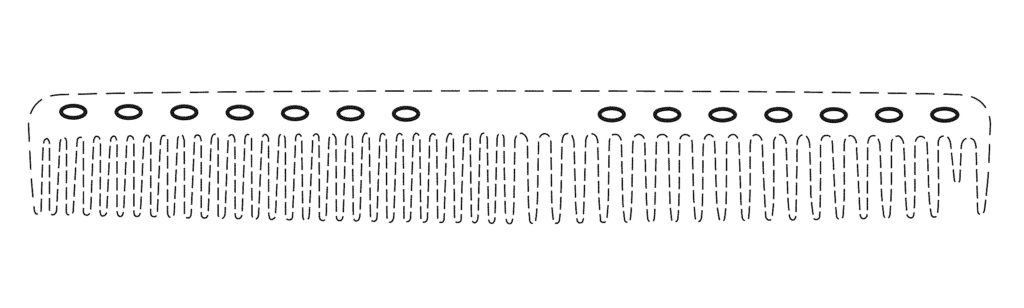
On August 27, 2020, the Japan IP High Court ruled to affirm the Japan Patent Office (JPO) decision and rejected TM application no. 2016-34650 for a position mark consisting of fourteen open ellipses built-in grip section of cutting combs in class 21 due to a lack of inherent distinctiveness. [Court case no. Reiwa1(Gyo-ke)10143]

YS Park Cutting Comb

The YS Park Cutting Comb features a non-slip grip section with fourteen air ellipses spaced in 1cm intervals to allow for great flexibility and sectioning.

Allegedly, the comb has been distributed in many countries and its annual sales increased to 170,000~27,000 pieces for the last five years.

Position Mark

Plaintiff, a Japanese corporation to distribute the YS Park Cutting Comb since 1989, sought for registration for fourteen open ellipses built-in grip section of the Cutting Comb as a Position Mark (see below) on March 28, 2016.

In Japan, by an enactment of the New Trademark Law in 2014, new types of mark, namely, color, sound, position, motion, hologram, was allowed for trademark registration since April 2015.

JPO decision

On September 17, 2019, the JPO refused the position mark under Article 3(1)(vi) of the Trademark Law by finding that there are plenty of competitor’s combs with a design, pattern, hole, or pit in short intervals on the grip section and it gives rise to an impression of the decorative or functional linear pattern as a whole. If so, relevant consumers at the sight of cutting comb bearing the position mark would just conceive it as a pattern for decorative or functional indication, not as a source indicator. Besides, consecutive use on the YS Park Cutting Comb over a decade would be insufficient to acquire secondary meaning from the produced evidence and business practice in relation to cutting comb. [Appeal case no. 2018-8775]

Article 3(1)(vi) is a provision to comprehensively prohibit from registering any mark lacking inherent distinctiveness.

Any trademark to be used in connection with goods or services pertaining to the business of an applicant may be registered, unless the trademark:
(vi) is in addition to those listed in each of the preceding items, a trademark by which consumers are not able to recognize the goods or services as those pertaining to a business of a particular person.

To contend, the applicant filed a lawsuit to the IP High Court on October 29, 2019, and demanded cancellation of the decision.

IP High Court Ruling

This is the 2nd court case for the IP High Court to hear the registrability of Position Mark.

At the outset, the court stated the distinctiveness of Position Mark shall be assessed as a whole by taking account of a constituent of the mark and its position on goods or services.

The court upheld fact-findings by the JPO that plenty of competitors advertise and provide cutting combs with a pattern, pit, or open holes in short intervals on the grip section to enhance its function. In this regard, it is unlikely that relevant consumers (general consumers on the case) would consider the whole pattern as a source indicator of the comb. The court pointed that plaintiff has promoted features of fourteen open ellipses on YS Park Cutting Comb with an advertisement of “Air Suspension Function” in fact. If so, consumers would find the open holes as a functional indication.

Plaintiff produced interviews and statements by beauticians, hairstylists, school officials/staff of Cosmetology and Beauty school and argued the secondary meaning of the Position mark, however, the court negated the allegation on the ground that such evidence is insufficient and irrelevant to demonstrate acquired distinctiveness since the goods in question shall be broadly targeted to general consumers. Thus, the court decided the JPO did not error in finding secondary meaning in the case.

Japan IP High Court Refuses Trademark Protection for Orange Color Mark

On 23 June 2020, the Japan IP High Court decided a case concerning a single color mark that was rejected for registration by the Appeal Board of the Japan Patent Office (“JPO”).

Single Color Mark

On 1 April 2015, Hitachi Construction Machinery (“Hitachi”) filed an application for trademark registration with JPO consisting of a single color per se, namely orange (Munsell: 0.5YR5.6/11.2) over the goods of hydraulic excavators, wheel loaders, road loaders, loaders [earch moving machines] in class 7, and rigid dump trucks in class 12 (TM Application no. 2015-29999).

TM Application No. 2015-29999

By the decision of 19 September 2019, the Appeal Board of JPO declared the applied color mark to be refused in contravention of Article 3(1)(iii) and Article 3(2) of the Trademark Law, finding that the graphic representation of the color mark constituted the “mere single orange color, without contours”. If so, the mark is not inherently distinctive and it is lacking acquired distinctiveness. In the course of the appeal trial, Hitachi amended and restricted the designated goods to “hydraulic excavators”.

Article 3(2) is a provision to allow registration of any mark with which the relevant public will associate a particular source, manufacturer, or producer over time through the trademark owner’s usage.

On 30 October 2019, Hitachi appealed against the JPO decision.

IP High Court decision

At the outset, the court stated it is inevitable on the case concerning single color mark to take the interest of competitors who deal with the goods in question into consideration since allowing one trader to exclusively use this color would likely to cause unjust competitive practice in form of monopolistic power of use in favor of one trader only.

From the produced evidence, Hitachi has allegedly used the color in question on hydraulic excavators and other construction machines since 1974.

Hitachi Hydraulic Excavators

Hitachi consecutively holds a 20% market share (14.6%) of hydraulic excavators over the past four decades in Japan. The research showed that approx. 95.9 % (185 out of 193) of traders in the construction industry were able to associate the color with Hitachi.

In the meantime, several competitors use similar color on hydraulic excavators

In the decision, the court found orange color is one of the colors commonly seen in our daily life. Besides, the Japan Industrial Standard (JIS) adopts orange as a safety sign-color aiming to prevent harm to the human body and damage to properties. Because of it, at construction sites, we often see several items colored in orange, e.g. helmets, rain suits, guard fens, work clothes, tower cranes, construction vehicles.

Hitachi Hydraulic Excavators have other colors, in fact, namely, a house mark “HITACHI” colored in white, buckets (attachments), cockpits, and crawlers colored in black. If so, the applied mark shall be capable of playing the role of source indicator in combination with these. Thus, the court would not find reasonable grounds to believe that the orange color per se acquired distinctiveness as a source indicator of Hitachi’s Hydraulic Excavators.

The court even suspected credibility of the research by finding that it narrowly targeted traders or consumers who own more than 10 hydraulic excavators, precisely it showed 36.8% in light of initial research number of targets, 502 persons, and the questionnaire ‘Please answer. What maker do you think hydraulic excavator is?” was insufficient to conclude acquired distinctiveness since its answer may simply suggest one of the colors of Hitachi’s Hydraulic Excavators.

Even if hydraulic excavators market in Japan is an oligopoly with five makers accounting for 90 % of the industry share, and the orange color has been consecutively used by Hitachi only, it does not mean every competitor agreed to refrain from using the color given orange has been used on various goods in the construction and agriculture industry in general.

Based on the foregoing, the court affirmed the JPO decision and dismissed Hitachi’s allegations in contravention of Article 3(1)(iii) and 3(2).

Click here to see the court decision in Japanese.

Thus, it is obvious that a very high standard of distinctiveness needs to be attached to a single-color mark if the same has to be claimed for trademark protection.

This case was a second court decision concerning a single color mark.
The first case, Reiwa1(Gyo-ke)10119 ruled on March 11, 2020, also ended with the rejection of a single orange color mark in contravention of other ground, Article 3(1)(vi).

How JPO Examines Color Marks

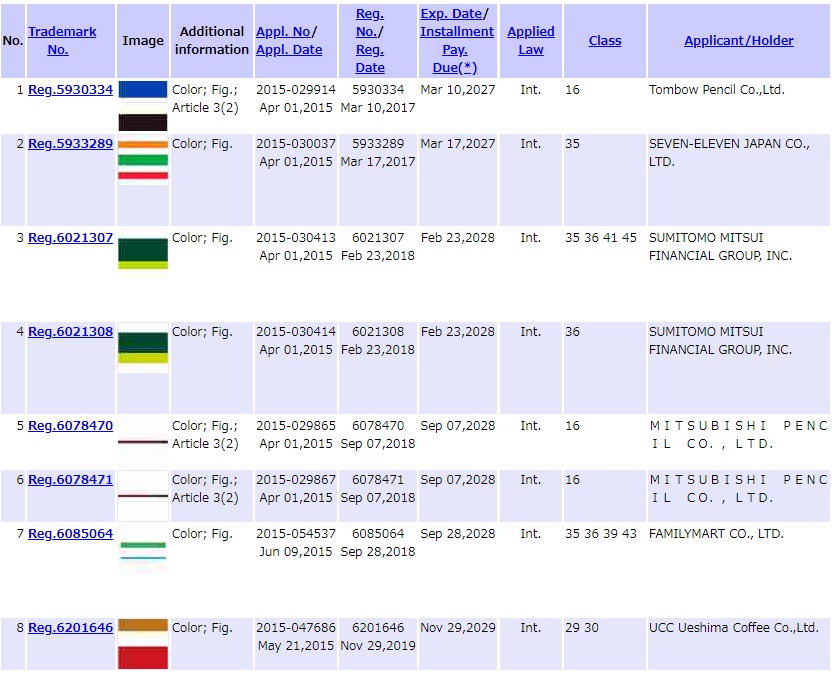
As of now (12 July 2020), 543 color marks were applied for registration with JPO since the commencement of the Non-Traditional trademark application in April 2015.
So far, only 8 marks are successfully registered. See below.

In sum, the registration rate of color mark is barely 1.5%!
It is noteworthy none of a ‘single’ color mark has been granted to registration.

Japan IP High Court ruling: “I♡JAPAN” lacks distinctiveness as a trademark

On June 17, 2020, the Japan IP High Court affirmed the JPO’s rejection of the “I♡JAPAN” mark in relation to various goods of class 14,16,18 and 24 due to a lack of distinctiveness.
[Judicial case no. Reiwa 1(Gyo-ke)10164]

I♡JAPAN

The disputed mark consists of the capital letter “I”, followed by a red heart symbol, below which are the capital letters “JAPAN” (see below). The mark filed by CREWZ COMPANY, a Japanese merchant on April 17, 2018, over various goods in class 14, 16, 18, and 24 [TM application no. 2018-049161].

Noticeably, the JPO already allowed trademark registration for the same mark on apparels in class 25 on March 27, 2015, filed by the applicant [TM Registration no. 5752985]. Regardless of it, the examiner refused disputed mark in contravention of Article 3(1)(vi) of the Trademark Law.

Article 3(1)(vi) is a provision to comprehensively prohibit from registering any mark lacking inherent distinctiveness.

Any trademark to be used in connection with goods or services pertaining to the business of an applicant may be registered, unless the trademark:
(vi) is in addition to those listed in each of the preceding items, a trademark by which consumers are not able to recognize the goods or services as those pertaining to a business of a particular person.

JPO decision

The JPO Appeal Board sustained the examiner’s refusal and decided to reject disputed mark by stating that we are nowadays accustomed to finding goods bearing the “I♡” logo followed by a geographical indication, which represents a strong devotion or attachment to the area/city in its entirety. In fact, the “I♡JAPAN” design is commonly used on several goods as a symbol to support the Japanese sports team or souvenirs for tourists. If so, the design shall not be exclusively occupied by a specific entity. Under the circumstances, relevant consumers are unlikely to conceive the disputed mark as a source indicator of the applicant. Thus, the mark shall be rejected in contravention of Article 3(1)(vi) and the examiner did not error. [Appeal case no. 2018-16957]

To contend against the decision, the applicant filed an appeal to the IP High Court.

IP High Court ruling

The IP High Court dismissed the applicant’s allegation entirely, stating that the disputed mark gives rise to the meaning of “I love JAPAN”. The court found the “I♡” logo followed by a geographical indication is commonly used to appeal a strong devotion or attachment to the area/city. Inter alia, various merchants promote goods bearing the “I♡JAPAN” design as a sign of their support to Japan or the Japanese sports team. If so, relevant consumers and traders would not conceive disputed mark as a source indicator of goods in question, but merely a symbol to represent their devotion and support to Japan. Therefore, the disputed mark shall not be registrable under n contravention of Article 3(1)(vi).

Besides, the court found the fact of a precedent registration for the same mark in a different class would not affect the distinctiveness of disputed mark since it does not have a legal effect to bind subsequent examination in assessing registrability of a junior mark under Article 3(1)(vi).

Sweet, but long road to register “Ghana” on chocolates

The Japan Patent Office (JPO) allowed trademark registration of “Ghana” in connection with chocolates of class 30 by finding acquired distinctiveness as a source indicator of Lotte Co., Ltd., a Korea-based confectionary company.
[Appeal case no. 2019-8784, Gazette issued date: May 29, 2020]

Lotte “Ghana” Chocolates

Ghana chocolate is Lotte’s signature product and one of the most beloved chocolate in Japan for many years.

Lotte Co., Ltd. launched chocolates bearing the “Ghana” mark in 1964. Since then, the mark has been prominently indicated on the packages.

[“Ghana” chocolate package back in 1970’s – TM Reg no. 892507]

In 1994 of the 30th anniversary, Lotte slightly changed the design of its package and the mark and added different tastes of “Ghana” chocolates, e.g. milk chocolates, white chocolates. On new packages, the “Ghana” mark is much conspicuously and largely indicated than before.

[Current package – TM Reg no. 5405402, registered on April 8, 2011]

On December 8, 2017, Lotte sought trademark registration for the current “Ghana” logo (see below) over chocolates in class 30. [TM application no. 2017-161593]

Article 3(1)(iii) & 4(1)(xvi)

The JPO rejected the “Ghana” mark in contravention of Article 3(1)(iii) and 4(1)(xvi) of the Japan Trademark Law by stating that “Ghana” is a geographical indication corresponding to Republic of Ghana, a country of western Africa, situated on the coast of the Gulf of Guinea, one of the major producers of high-quality cocoa beans. Therefore, relevant consumers and traders at the sight of chocolates bearing the “Ghana” mark would merely conceive it of the origin of cocoa beans. Besides, whenever the mark is used on chocolates not made from Ghana cocoa beans, it inevitably misleads the quality of goods.

Acquired distinctiveness

Lotte argued the “Ghana” mark shall be protectable based on Article 3(2), even if nominally unregistrable under Article 3(1)(iii) because it has acquired distinctiveness as a result of substantial and continuous use on chocolates in Japan.

Article 3(2) of the Trademark Law

Notwithstanding the preceding paragraph, a trademark that falls under any of items (iii) to (v) of the preceding paragraph may be registered if, as a result of the use of the trademark, consumers are able to recognize the goods or services as those pertaining to a business of a particular person.

Appeal Board decision

The Appeal Board affirmed examiner’s rejection pertinent to lack of distinctiveness in connection with goods in question, however, the Board held that the “Ghana” mark would function as a source indicator of Lotte chocolates consequently and thus registrable based on the acquired distinctiveness under Article 3(2).

Allegedly Lotte “Ghana” chocolates hold top-ranked market share in Japan since 2017. In 2008, Lotte sold more than 100 million bars of “Ghana” chocolates. The annual sales exceeded 1.2 billion JP-yen in 2017.

Lotte has long been aggressive not only to advertise “Ghana” chocolates in newspapers, TV commercials, trains, and stations, but also to launch lots of chocolate events and campaigns on Valentine’s Day or Mother’s Day nationwide, and collaborations with retailers, hotels restaurants featuring ‘Ghana’ chocolates.

Due to their marketing efforts, Lotte “Ghana” brand chocolates could win several awards, e.g. Monde Selection ‘Gold Award’ (2008, 2009, 2010), D2C ‘Marketing Award’ (2002), The Japan Food Journal ‘Long Seller Award’ (2008), DENTSU ‘Excellent Award’ (2009, 2010, 2011), JR East ‘Excellent Advertisement Award’’.

Besides, “Ghana” chocolates ranked top in the brand survey published by Nikkei Research in 2016.

Lotte could eventually achieve registration of the “Ghana” mark on chocolates, but it spent more than five decades to that end.

Interestingly. Lotte has registered the “GANA” mark on goods of class 30 including chocolates since 1990. It must aim to prevent a third party from registering any mark similar to “Ghana”.

JPO protects 3D shape of cherry design bottle for soy sauce dispenser

In a recent administrative decision, the Japan Patent Office (JPO) found 3D shape of cherry design bottle is inherently distinctive in relation to soy sauce dispensers in class 21 even without secondary meaning.
[Appeal case no. 2019-7188, Gazette issue date: March 27, 2020]

3D shape of cherry design bottle

RISU Co., Ltd. filed a trademark application for three-dimensional shape of soy sauce bottle featuring cherry designs (see below) in relation to say sauce dispensers of class 21 on July 20, 2017 (TM Application no. 2017-96914).

From appearance, the 3D shape does not differentiate from an ordinary soy sauce dispenser except cherry designs in red encircling a clear cylindrical plastic bottle.

As a matter of fact, RISU Co., Ltd. has produced various plastic products for home use as well as cherry patterned table top condiment containers.

Article 3(1)(iii)

The JPO examiner rejected registration of the 3D mark on the ground that relevant consumers would not conceive the shape as a source indicator in relation to soy sauce dispensers since there exists similar goods depicting decorative patterns and colors to aim at attracting their attentions. The mark merely represents a shape of designated goods in a common manner and thus is not eligible for registration based on Article 3(1)(iii) of the Trademark Law.

Article 3(1)(iii) is a provision to prohibit any mark from registering where the mark solely consists of elements just to indicate, in a common manner, the place of origin, place of sale, quality, raw materials, efficacy, intended purpose, quantity, shape (including shape of packages), price, the method or time of production or use.

To dispute the refusal, applicant, applicant filed an appeal on June 3, 2019.

Appeal Board’s decision

The Appeal Board disaffirmed examiner’s rejection of the 3D shape by stating that:

Figurative elements depicted on a clear plastic cylindrical bottle would be rather perceived as a distinctive device created on a cherry motif, than a decoration for the purpose of enhancing function or aesthetic appeal of goods in question. If so, the 3D shape per se is deemed to play a role of source indicator sufficiently. It is obvious that examiner errored in finding distinctiveness of the 3D shape.

Thus, the 3D mark is eligible for registration in connection with soy sauce dispensers of class 21 even without finding secondary meaning because of inherent distinctiveness of the shape.

First ruling by IP High Court on New Type of Trademark in Japan

On February 14 2020, the Japan IP High Court ruled to uphold the Japan Patent Office (JPO) decision and rejected TM application no. 2016-009831 for a 3D position mark consisting of three virtual images of oil stove flame due to a lack of inherent and acquired distinctiveness.
[Case no. Reiwa1(Gyo-ke)10125]

TOYOTOMI Oil Stove “Rainbow”

TOYOTOMI CO., LTD., a Japanese company, the world’s first manufacturer of kerosene-fired portable cooking stove in 1952, has allegedly produced their convection type lantern-like design oil stoves in the name of “Rainbow” since 1980.

By means of a heat-resistant glass coated on the inner surface of vertical cylindrical heat chamber of the Rainbow stoves, virtual images of orange flame appear floatingly above actual flame when stoves are in use (see below).

3D Position mark

TOYOTOMI sought for registration for its virtual images of flame in connection with convection type oil stoves in class 11 as a 3D Position mark (see below) on January 29, 2016.

In a description of the mark, applicant specified:

applied mark is a position mark consisting of 3D virtual image of three flame rings appeared floatingly above the flame burning on stove at the inside of vertical cylindrical heat chamber. Devices colored in blue and red would not constitute an element of applied mark.

In Japan, by enactment of the New Trademark Law in 2014, new type of mark, namely, color, sound, position, motion, hologram, was allowed for trademark registration since April 2015.

According to the JPO database, more than 480 position marks were applied for registration under the New Trademark Law and 78 position marks are successfully registered as of now (Feb 29, 2020).

JPO decision

On March 2, 2018, the JPO examiner refused applied mark under Article 3(1)(iii) of the Trademark Law based on the fact that mechanism of 3D virtual shape of three flame rings was exclusively protected under Patent No. 1508319 which was expired on July 25, 2000. According to technical specifications of the patent, it is admitted that the 3D shape was purely achieved as a result of utilitarian functionality and aesthetic functionality. If so, the JPO finds it inappropriate to register the shape as a trademark because of unfair and detrimental effect to the public caused by prospective perpetual exclusivity to the shape itself that should have been a public domain under the Patent Law.

Besides, the JPO considered applied mark has not acquired distinctiveness (secondary meaning) as a source indicator of applicant’s products regardless of substantial use for more than three decades.

Subsequently, JPO dismissed an appeal on the same ground. [Appeal case no. 2018-007479, on August 30, 2019]

To contend, applicant filed a lawsuit to the IP High Court on September 26, 2019 and demanded cancellation of the decision.

IP High Court ruling

This lawsuit was the very first case for the IP High Court to take up new type of trademark at the open court.

The court held a shape of goods shall not be protectable as a source indicator if it just aims to achieve function of the goods from utilitarian and aesthetic viewpoints. If such shape per se is apparently destined to achieve functions of goods, it shall be refused for registration under Article 3(1)(iii) of the Trademark Law.

In this regard, the court found, applied mark simply consists of a shape destined to achieve utilitarian and aesthetic functions of goods in question, since it is considered virtual images of floating flame ring aim to increase heating effect of convection type oil stoves.

A mere fact that none of competitors have used identical or similar shape with applied mark on oil stoves would be irrelevant to assess distinctiveness of mark under Article 3(1)(iii).

Even if three flame rings do not physically constitute a shape of oil stoves, the court would see the JPO did not error in adapting Article 3(1)(iii) on the case.

As for acquired distinctiveness, the court had no reason to believe applied mark acquired secondary meaning through actual use based on the produced evidence. TOYOTOMI allegedly held top-rank market share (22.5%) of convection type oil stoves in Japan and annually delivered 29,000 stoves on average for the last seven years. However, the court pointed out the TOYOTOMI Rainbow stoves share just 2% when radiation type oil stoves are counted. Besides, provided that applied mark is not visible to consumers who visit shops to purchase oil stoves from appearance of the goods when turned off, it is questionable whether average consumers would conceive the 3D shape as a source indicator, rather than a functional shape of oil stoves.

Based on the foregoing, the IP High Court upheld JPO decision.

JPO registers PUERTA DEL SOL as trademark

In a recent appeal decision, the Japan Patent Office (JPO) overturned examiner’s refusal and decided to register trademark “PUERTA DEL SOL” in connection with jewels, accessories, clothing and other goods of class 14, 18, 25 and 34 by finding the term shall not be recognized as a geographical indication, one of the most famous sites in Madrid, Spain.[Appeal case no. 2019-7624, Gazette issued date: January 31, 2020]

PUERTA DEL SOL

PUERTA DEL SOL Co., Ltd., a Japanese jewels and accessories company, applied for registration of word mark “PUERTA DEL SOL” in relation to jewels, accessories, bags, clothing, shoes and other various goods of class 14, 18, 25 and 34 on January 23, 2018.

On March 19, 2019, JPO examiner refused applied mark due to lack of distinctiveness based on Article 3(1)(iii) of the Trademark Law. Examiner found that PUERTA DEL SOL, a public square in Madrid (the capital and largest city of Spain), one of the best known and busiest places in the city, the heart of Madrid’s historic center used to be on the eastern border of the city, has been known for a famous tourist spot in Madrid. Since relevant traders and consumers in Japan are familiar with circumstances that variety of souvenirs and gifts are on sale at tourist spot, it is presumed that consumers will merely conceive the applied mark just as a geographical indication in connection with the designated goods, not a source indicator.

Article 3(1)(iii)

Article 3(1) of the Trademark Law is a provision to prohibit descriptive marks from registering.

Section (iii) of the article aims to remove any mark merely or directly suggesting quality of goods and services.

“Article 3(1) Any trademark to be used in connection with goods or services pertaining to the business of an applicant may be registered, unless the trademark:

(iii) consists solely of a mark indicating, in a common manner, in the case of goods, the place of origin, place of sale, quality, raw materials, efficacy, intended purpose, quantity, shape (including shape of packages), price, the method or time of production or use, or, in the case of services, the location of provision, quality, articles to be used in such provision, efficacy, intended purpose, quantity, modes, price or method or time of provision;”

To dispute the refusal, applicant filed an appeal on June 10, 2019.

Applicant argued “PUERTA DEL SOL” shall be sufficiently distinctive in connection with the goods in question by citing facts that the term is legitimately registered even in the territory of Spain and less familiarity to Spanish language among relevant consumers with an ordinary care, Google search by a keyword “PUERA DEL SOL” reveals most of websites refer to applicant’s goods and business.
If so, it is groundless to find that relevant consumers would conceive applied mark as a geographical indication name when used on goods in question.

Appeal Board’s decision

The Appeal Board overturned the examiner’s decision by stating that relevant consumers and traders at the sight of applied mark are unlikely to see the mark to indicate the place of origin or sale when used on goods in question. Because the Board has no reason to believe the term “PUERTA DEL SOL” is known for a famous tourist square in Madrid even though Spanish dictionary and encyclopedia mention so by taking into account less familiarity to Spanish language among relevant consumers in Japan. Furthermore, there is no clue to find that the square is commonly indicated to represent a place of origin and sale in connection with the goods in question.

Criteria for Trademark Examination Guideline

Trademark Examination Guideline (TEG) pertinent to Article 3(1)(iii) provides that where a trademark is merely composed of a geographical name in foreign country or sightseeing area, the mark is deemed as “the place of origin” of goods or “the place of their sale”, provided that consumers or traders generally recognize that the designated goods will be produced or sold at the place indicated by the geographical name.

Trademark Examination Manual413.103.01 sets forth criteria to examine trademarks related to foreign geographical name.

In the cases of (a) the name of a capital, (b) the name of a state, (c) the name of a prefecture, (d) the name of a state capital, (e) the name of a province, (f) the name of the capital of a province, (g) the name of a county, (h) the name of the capital of a prefecture, (i) a former country name, (j) an old regional name, (k) the name of a district, (l) the name of a city, or special district, (m) the name of a busy downtown street, and (n) the name of a sightseeing area, even though these names may not be directly described in a dictionary or other documents/material as the place of origin, the place of sales (location of transaction) of the goods, or the location of provision of services (location of transaction), if a factor exists that establishes a connection between the goods and the name as the place of sales (location of transaction), or the location of the provision of services (location of transaction), in principle, the trademark will be refused on the grounds that it indicates the location where the goods are sold (location of transaction) or the location of provision of services (location of transaction)