OKLOK vs OKLOCK

In a trademark dispute, similarity between “OKLOK” and “OKLOCK”, the Appeal Board of the Japan Patent Office found both marks dissimilar and reversed examiner’s rejection.
[Appeal case no. 2019-16781, Gazette issued date: March 27, 2020]

OKLOK

A senior mark, consisting of a word “OKLOK” in standard character, was registered on September 21, 2018 (TM Reg no. 6083192) over electric locks; electronic key fobs being remote control apparatus; anti-theft warning apparatus; other goods in class 9 by a Chinese business entity, 深圳市龙兄弟数码锁有限公司 (Shenzhen Longbrothers Digital Co., Ltd.).

Owner has used “OKLOK” on fingerprint key less padlock, Smart Bluetooth Security Lock with USB Charge and other intelligent anti-theft devices (see below).
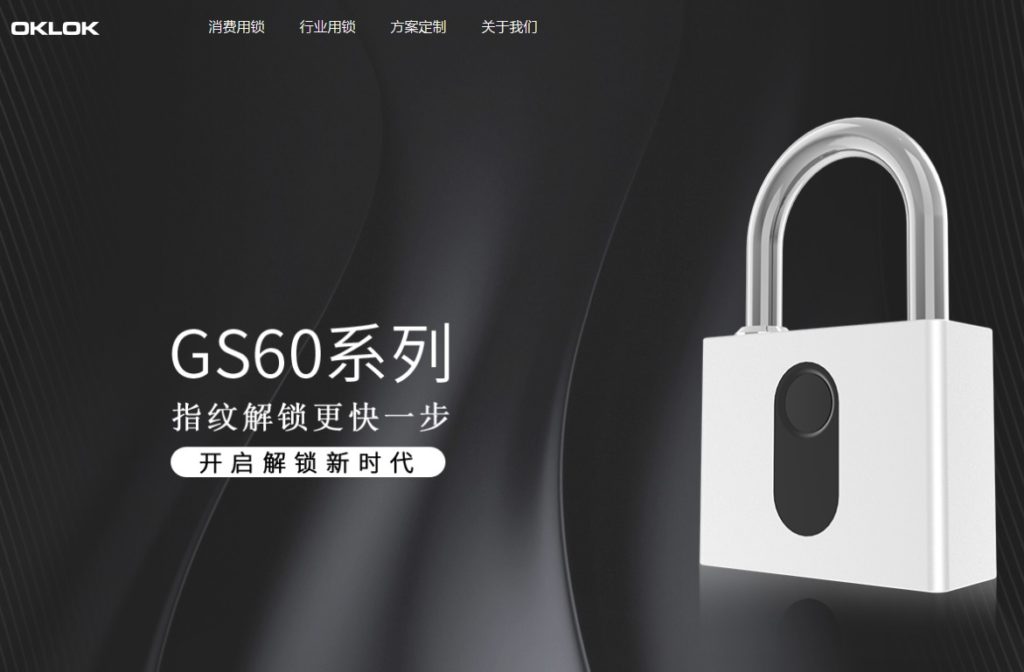
[Capture shot of OKLOK official site]

OKLOCK

Applied junior mark, consisting of a word “OKLOCK” in standard character, was applied for registration on April 3, 2019 over anti-theft locks for use on automobile steering wheels and other goods in class 12 [TM application no. 2019-47122].

Applicant uses “OKLOCK” on car steering wheel locks and anti-theft car hand brake and gear lock (see below).
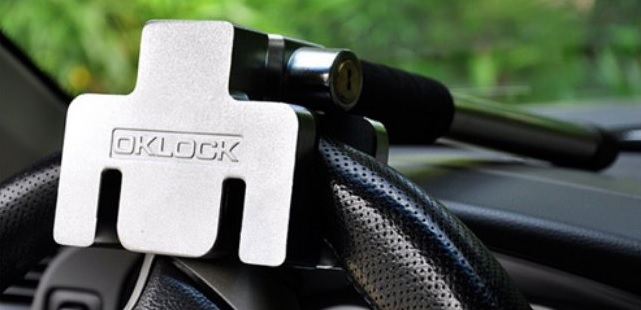
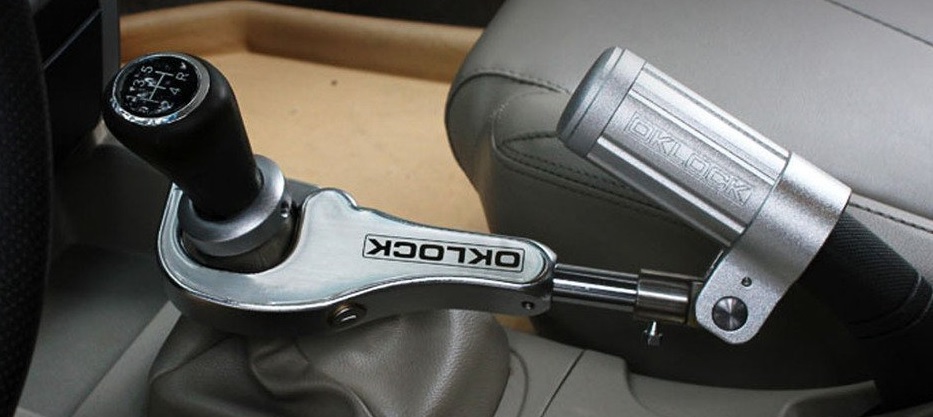
The JPO examiner rejected “OKLOCK” because of confusing similarity to “OKLOK” based on Article 4(1)(xi) of the Trademark Law.

Article 4(1)(xi) is a provision to prohibit registering a junior mark which is identical with, or similar to, any senior registered mark.

There is criterion that the examiner is checking when assessing the similarity between the marks:

  • visual similarity
  • aural similarity
  • conceptual similarity

and taking into account all these three aspects examiner makes a decision if a mark is similar (at least to some extent) with the earlier mark and if there is a likelihood of confusion for the consumers.

Applicant filed an appeal against the rejection on December 11, 2019 and argued dissimilarity of both marks.

Appeal Board decision

In the decision, the Appeal Board held that:

From appearance, applied mark “OKLOCK” contains a letter “C” unlike the cited mark “OKLOK”. This gives rise to a distinctive impression visually in the mind of relevant consumers where respective mark consists of five or six-letter words, anything but long.

Next, applied mark is pronounces as [oʊˈkeɪ lɑːk]. In the meantime, the cited mark just gives rise to a pronunciation of [oʊˈkeɪ el ə keɪ] because relevant consumers are likely to see “OKLOK” as a combination of five alphabets and read it as each letter sounds since “OKLOK” does not appear in dictionary.

Thirdly, applied mark does not give rise to any specific meaning in its entirety even though it is perceived as a combination of “OK” and “LOCK”. Likewise, relevant consumers would not conceive any meaning from “OKLOK” and just see it as a coined word. If so, both marks are incomparable from concept.

Based on the foregoing, the Board found no reasonable ground to affirm examiner’s rejection from visual, phonetic, and conceptual points of view and decided to reverse examiner’s rejection.
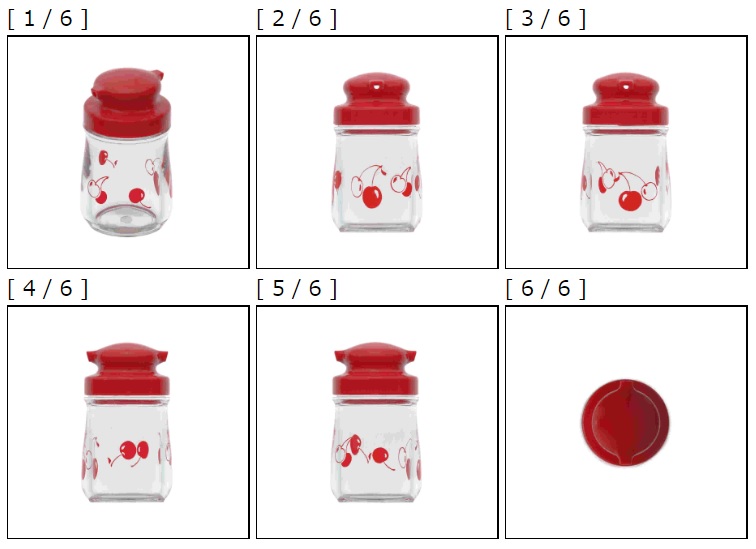
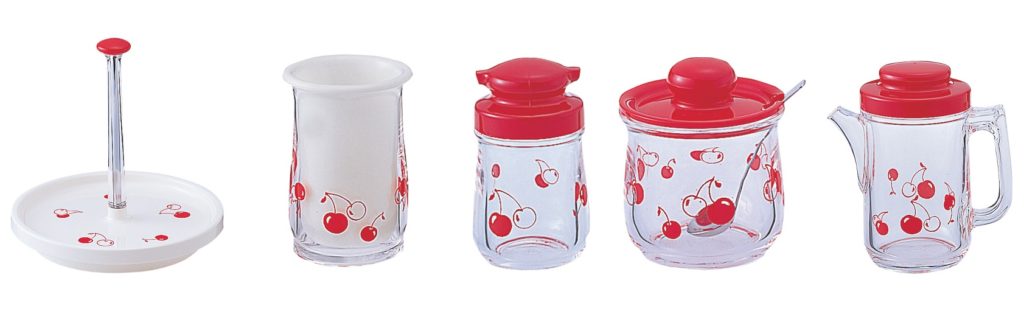
JPO protects 3D shape of cherry design bottle for soy sauce dispenser

In a recent administrative decision, the Japan Patent Office (JPO) found 3D shape of cherry design bottle is inherently distinctive in relation to soy sauce dispensers in class 21 even without secondary meaning.
[Appeal case no. 2019-7188, Gazette issue date: March 27, 2020]

3D shape of cherry design bottle

RISU Co., Ltd. filed a trademark application for three-dimensional shape of soy sauce bottle featuring cherry designs (see below) in relation to say sauce dispensers of class 21 on July 20, 2017 (TM Application no. 2017-96914).

From appearance, the 3D shape does not differentiate from an ordinary soy sauce dispenser except cherry designs in red encircling a clear cylindrical plastic bottle.

As a matter of fact, RISU Co., Ltd. has produced various plastic products for home use as well as cherry patterned table top condiment containers.

Article 3(1)(iii)

The JPO examiner rejected registration of the 3D mark on the ground that relevant consumers would not conceive the shape as a source indicator in relation to soy sauce dispensers since there exists similar goods depicting decorative patterns and colors to aim at attracting their attentions. The mark merely represents a shape of designated goods in a common manner and thus is not eligible for registration based on Article 3(1)(iii) of the Trademark Law.

Article 3(1)(iii) is a provision to prohibit any mark from registering where the mark solely consists of elements just to indicate, in a common manner, the place of origin, place of sale, quality, raw materials, efficacy, intended purpose, quantity, shape (including shape of packages), price, the method or time of production or use.

To dispute the refusal, applicant, applicant filed an appeal on June 3, 2019.

Appeal Board’s decision

The Appeal Board disaffirmed examiner’s rejection of the 3D shape by stating that:

Figurative elements depicted on a clear plastic cylindrical bottle would be rather perceived as a distinctive device created on a cherry motif, than a decoration for the purpose of enhancing function or aesthetic appeal of goods in question. If so, the 3D shape per se is deemed to play a role of source indicator sufficiently. It is obvious that examiner errored in finding distinctiveness of the 3D shape.

Thus, the 3D mark is eligible for registration in connection with soy sauce dispensers of class 21 even without finding secondary meaning because of inherent distinctiveness of the shape.

BRIDGESTONE Victorious in Trademark Dispute for B Mark Logo

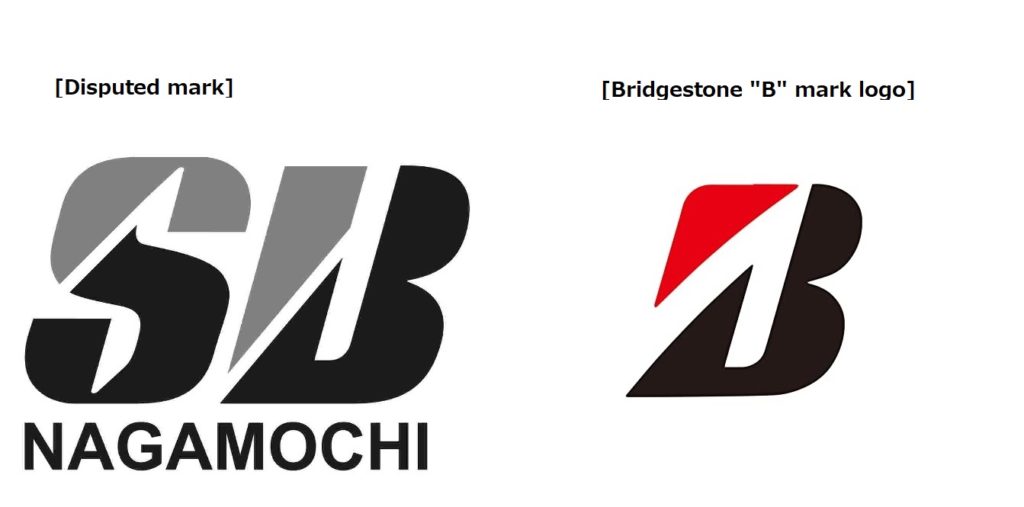
The Japan Patent Office (JPO) upheld an invalidation petition by the world’s largest tire and rubber company, Bridgestone Corporation against TM Reg. no. 5664068 for the “SB NAGAMOCHI” mark due to a likelihood of confusion with its well-known B mark logo.
[Invalidation case no. 2018-890068, Gazette issue date: March 27, 2020]

TM Registration no. 5664068

Disputed mark, consisting of “SB” logo and a word “NAGAMOCHI” in a smaller plain letter (see below left), was applied for registration on September 13, 2013 in respect of non-electric prime movers for land vehicles, not including their parts; AC motors or DC motors for land vehicles, not including their parts; automobiles and their parts and fittings; two-wheeled motor vehicles, bicycles and their parts and fittings; adhesive rubber patches for repairing tubes or tires in class 12.

Without confronting with a refusal during substantive examination, disputed mark was registered on April 18, 2014.

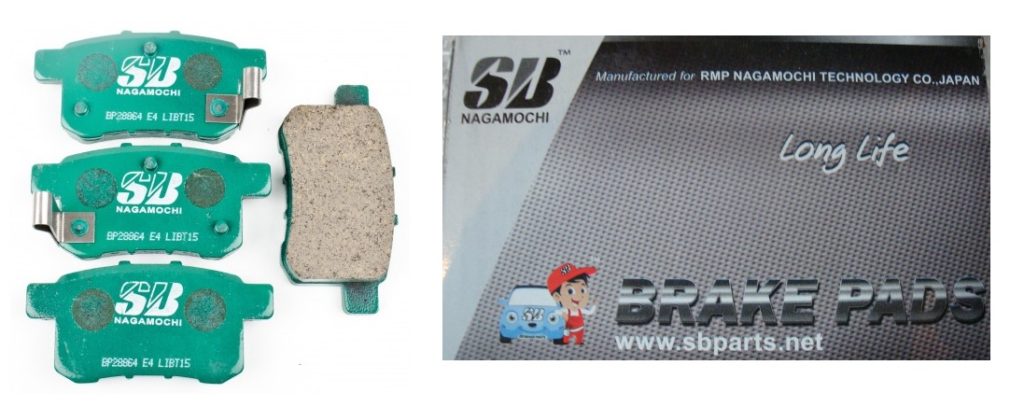
Applicant of disputed mark, RMP NAGAMOCHI Technology Japan Ltd promotes various structural parts for automobiles, e.g. cylinders, brakes and clutch hoses, brake calipers, brake pads, rubber parts, filters, gaskets. Disputed mark was actually used on brake pads (see below).

Petition for invalidation

Japan Trademark Law has a provision to retroactively invalidate trademark registration for certain restricted reasons specified under Article 46 (1) provided that interested party files an invalidation petition within five-year statute of limitations.

Bridgestone Corporation, a Japanese tire and rubber company, filed a petition for invalidation against disputed mark on September 5, 2018. Bridgestone argued the mark shall be invalidated due to a likelihood of confusion with its famous “B” mark logo (see above right) when used on all goods in class 12 based on Article 4(1)(xv) of the Trademark Law.

Article 4(1)(xv) provides that a mark shall not be registered where it is likely to cause confusion with other business entity’s well-known goods or services, to the benefit of brand owner and users.

Board Decision

In the decision, JPO Trial Board sided with Bridgestone by finding that:

  1. In 2016, Bridgestone holds top-ranked market share (14.6%) of automobiles tires in the world, the largest market share (55.9%) of tires and rubber products in Japan.
  2. Bridgestone has consecutively used “B” mark logo on goods and promotions as a symbolic house mark of Bridgestone group since 1984 and even when announcing sponsorship partnership with the Olympic Games and Tokyo2020 Paralympic Games Gold Partner.
  3. Based on the foregoing, it is unquestionable that “B” mark logo has acquired strong and considerable reputation as a source indicator of Bridgestone tires and rubber products among relevant traders and consumers of goods in question.
  4. “B” logo is a ‘strong’ mark because it is depicted with distinctive figurative element so that the mark as a whole can be seen sufficiently distinguishable from an ordinary “B” letter.
  5. Both marks look different when compared in its entirety, however, 2nd letter of “SB” logo is considered highly similar to “B” mark logo from visual point of view.
  6. Disputed goods “automobiles and their parts and fittings; two-wheeled motor vehicles, bicycles and their parts and fittings” and “tires” have the potential to be connected in the minds of the consumers. Since respective products share distributors or can be found in the same stores, there finds proximity in channels of trade and marketing of the products on which the marks are used.
  7. Foregoing weighs in favor of finding confusion. Thus, disputed mark shall be invalidated in violation of Article 4(1)(xv) of the Trademark Law.

No Success for Monster Energy Claws

The Japan Patent Office (JPO) dismissed a trademark opposition claimed by MONSTER ENERGY COMPANY against trademark registration no. 6091273 for “M” logo design on goods/services in class 3,5,35 and negated the likelihood of confusion with Monster Energy Claws.
[Opposition case no. 2018-900390, Gazette issue date: February 28, 2020]

MONSTER HAIR

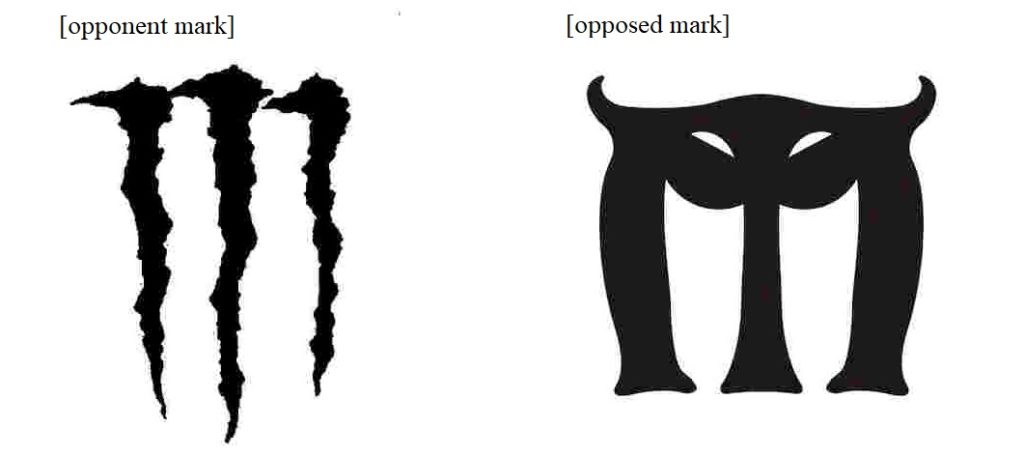
Opposed mark, “M” logo design (see below), was filed by AND BEAUTY JAPAN Co., Ltd. on June 12, 2018 on goods of hair nourishers; cosmetics; soaps and detergents in class 3, medicinal preparations for stimulating hair growth; pharmaceutical preparations; dietary supplements for humans in class 5, retail services and wholesale services for above goods in class 35, and registered for publication on November 13, 2018.

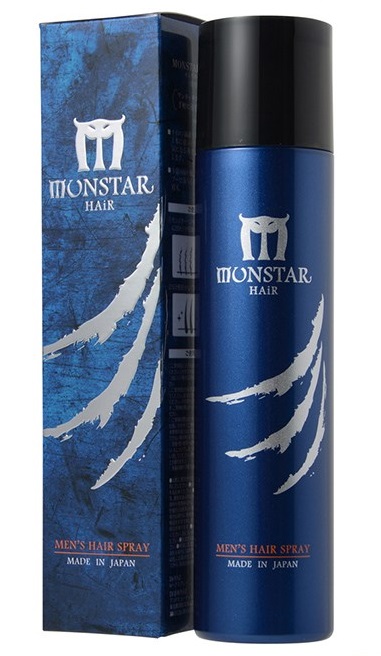
AND BEAUTY JAPAN promotes MONSTER HAiR sprays for men. Opposed mark is actually represented on the spray can.

Opposition by Monster Energy

On December 26, 2018, Monster Energy Company filed an opposition and argued opposed mark shall be revocable under Article 4(1)(xv) of the Japan Trademark Law due to a likelihood of confusion with Monster Energy Claws.

Article 4(1)(xv)

Article 4(1)(xv) prohibits to register a trademark which is likely to cause confusion with a business of other entity.

Monster Energy argued that opponent has used the mark Monster Energy Claws on energy drinks since 2002. In Japan, since its debut in May 2012, approximately 236 million cans were sold in three years which amount 175 million USD or more. Monster Energy has been aggressively promoting the energy drinks in sports and music events, and grants license to supply bracelets, key holders, T-shirts, headgears, racing jackets, gloves, helmets for sports, stickers, umbrellas, videogames. According to a survey of popular energy drinks, Monster Energy holds a 25% market share in Japan, 2013. These facts suggest Monster Energy Claws has acquired substantial reputation and popularity among relevant consumers as a source indicator of opponent. Besides, both marks give rise to visual, phonetical, and conceptual impression relating to an alphabetical letter “M”. Given energy drinks are closely associated with pharmaceutical preparations and dietary supplements for humans, relevant consumers are likely to misconceive the source of goods using opposed mark with Monster Energy or an entity systematically or economically connected with opponent.

Board Decision

At the outset, JPO provided a viewpoint that Monster Energy drinks belong to carbonated drinks [refreshing beverages] in class 32. If so, opponent failed to demonstrate its market share in carbonated drinks. From the produced evidences, the Board admits relevant traders and the young generation would recognize Monster Energy Claws as a source indicator of opponent to some extent, however, it is doubtful whether opponent mark has been highly known among general consumers of carbonated drinks.

In the assessment of similarity of mark, the Board found opponent mark shows three vertical parallel black shaky lines of different lengths whose upper parts is broader and which, from the perspective of the relevant public, might resemble three ‘claws’ or a very abstract depiction to which no specific and clear meaning can be attributed. With regard to the phonetic and conceptual aspect, the signs at issue are incomparable. From appearance, it is obvious that both marks are sufficiently distinguishable. Thus, the Board held the signs at issues are dissimilar and unlikely to cause confusion.

Besides, the Board negated close relation between energy drinks and pharmaceutical preparations, dietary supplements for humans in view of its nature, purpose, usage, distribution channel and manufacturers.

In respect of the overall assessment of the likelihood of confusion, having regard to all the relevant factors, the Based found there was no likelihood of confusion on the part of the relevant public and decided opposed mark shall not be revocable under Article 4(1)(xv).

Fast Track Trademark Examination – Japan Patent Office

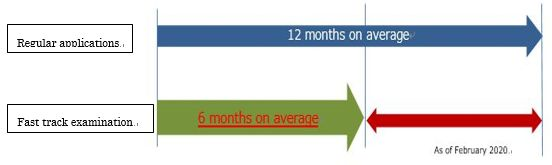
At present, applicant will wait at least 12 months from when trademark is filed until it becomes registered by the Japan Patent Office (JPO).

Accelerated Trademark Examination

To meet a need of earlier registration, JPO has introduced “Accelerated Trademark Examination” which enables trademark application to be registered in two or three months.
However, since it requires applicant to demonstrate actual use of applied mark on at least one of designated goods and services, if applicant has yet to use the mark, such applications have no way but to be in a long queue for JPO examination.

Fast Track Trademark Examination

Newly introduced “Fast Track Trademark Examination” provides an option to achieve earlier registration for non-use trademark owners. According to announcement from JPO, the Fast Track Examination shortens trademark examination period to 6 (six) months on average.

Excerpt from the JPO website

If trademark application meets with following conditions, your trademark will be freely on the fast track without request.

  1. Good and services initially designated under the application are all listed on the “Examination Guidelines for Similar Goods and Services”, “Regulation for Enforcement of the Trademark Act”, or “International Classification of Goods and Services (Nice Classification)”; and
  2. No amendment has been made with respect to goods and services by the time JPO commences examination; and
  3. Applied mark does not belong to non-traditional trademark, international applications under the Madrid system, or partial 3D (three dimensional) mark.

JPO adopts the Fast Track Examination to trademark application filed on or after February 1, 2020.

Further information is available from here.

Adidas defeated in 3-stripe trademark dispute

The Japan Patent Office (JPO) held in an opposition filed by Adidas AG that trademark registration no. 6085087 for horizontal three-stripes (Opposed mark) shall remain as valid as ever and entirely dismissed Adidas’ claims based on its famous three stripes.
[Opposition case no. 2018-900382, Gazette issued on February 28, 2020]

ULTRA MUSIC FESTIVAL

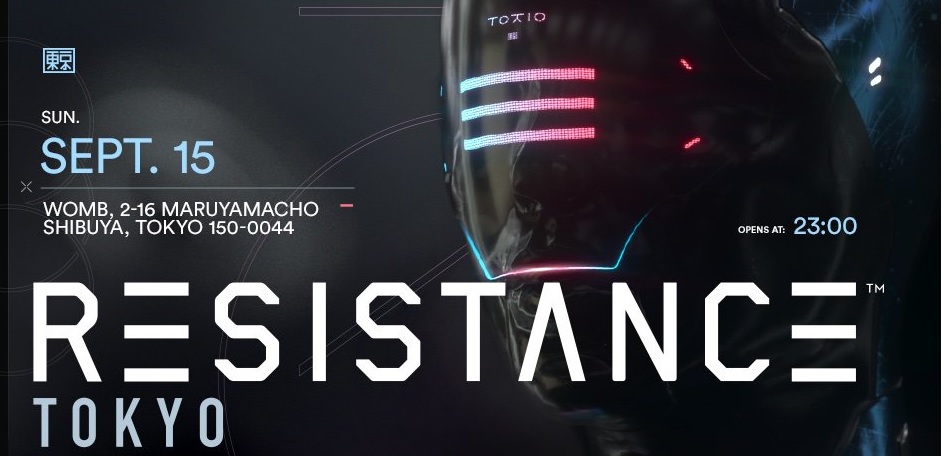
Opposed mark (see below) was applied for registration on October 10, 2017 over clothing, headwear, footwear in class 25, advertisement and promotion of music festival, concert in class 35, arrangement and conducting of musical performances, music festival, concerts in class 41 by Ultra Enterprises Inc., a U.S. business entity organizing outdoor electronic music event “ULTRA MUSIC FESTIVAL (UML)”, and published for registration on October 23, 2018.

Apparently, opposed mark is used as a symbolic logo for Ultra Music Festival’s RESISTANCE set.

Opposition by Adidas

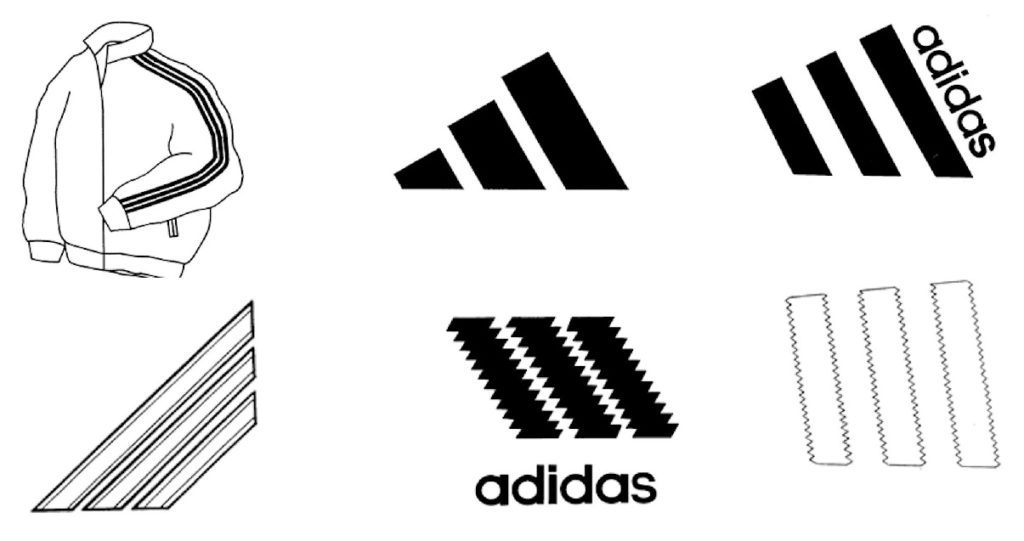
On December 21, 2018, Adidas AG filed an opposition and argued opposed mark is revocable under Article 4(1)(vii) and 4(1)(xv) of the Japan Trademark Law in relation to its famous three stripes (see below).

Article 4(1)(vii)

Article 4(1)(vii) prohibits any mark likely to offend public order and morals from registering.

Based on a remarkable degree of reputation and popularity to Adidas three stripes, opponent asserted, applicant must have been aware of Adidas three stripes and filed opposed mark with a malicious intention to take advantage of the reputation and credit of opponent’s famous trademark and impair the goodwill embodied on its iconic three stripes.

Article 4(1)(xv)

Article 4(1)(xv) prohibits to register a trademark which is likely to cause confusion with a business of other entity.

Adidas argued that, from appearance and concept, opposed mark evidently gives rise to a same impression with Adidas three stripes since each stripe of the mark is depicted in the same direction, width and shape, besides a space between stripe also has the same width with the stripe.

Average consumers with an ordinary care of goods/services in question who have been quite familiar with Adidas are likely to associate opposed mark with Adidas’ three-stripes. Inter alia, when opposed mark is used on apparels with a smaller configuration printed in one spot, so-called ‘one-point mark’, it must be difficult for relevant consumers to distinguish opposed mark with Adidas three-stripes because of its resemblance. Besides, goods/services in question are closely related to opponent business, namely sportswear, sports shoes, sports events. If so, it is highly anticipated that relevant consumers would confuse a source of opposed mark with opponent.

JPO Decision

The Opposition Board admitted a high degree of reputation and popularity to Adidas three stripes in relation to sport shoes, sportswear, sports gear at the time of initial filing and registration of opposed mark.

In the meantime, the Board found a low degree of originality of three stripes and similarity between the marks, from visual, phonetic, and conceptual points of view. The Board stated opposed mark can be perceived as ‘three-stripes’ deployed inside a vertically long rectangle. On the other hand, opponent’s marks consist of ‘three-stripes’ deployed inside a triangle or parallelogram. Even if Adidas three stripes have acquired remarkable reputation, because of a low degree of similarity and the originality, relevant consumers at the sight of opposed mark would not hesitate to consider a source of opposed mark unrelated to Adidas.
Thus, the Board held it is unlikely that relevant consumers confuse or associate opposed mark with Adidas.

The Board also negated opponent’s allegation of ‘one-point mark’ theory by stating that even if average consumers have tendency to pay less attention to details of a mark when used on apparels with smaller configuration, due to dissimilar impression caused by a different outline (vertically long rectangle, triangle, and parallelogram) of respective mark, opposed mark shall be undoubtedly perceived as a distinctive three-stripes unrelated to Adidas by relevant consumers with an ordinary care.

Besides, from the produced evidences, the Board found it was not foreseen a circumstance to offend public order and morals from registering opposed mark and give harmful effect to the international faith.

Based on the foregoing, the Board concluded opposed mark shall be irrevocable under Article 4(1)(vii) as well as (xv) and granted registration a status quo.

SWATCH Defeated in SWATCH vs iWATCH Trademark Dispute

The Trial Board of Japan Patent Office (JPO) dismissed an invalidation petition by Swiss watch giant, Swatch against TM Reg. no. 5849925 for word mark “iWATCH” owned by U.S. tech giant, Apple Inc.
[Invalidation case no. 2017-890071, Gazette issue date: January 31,2020]

iWATCH

Disputed mark, consisting of a word “iWATCH” in plain block letters (see below), was applied for registration in the name of Apple Inc. on April 25, 2014 in respect of watches, clocks and other goods in class 14.

Immediately after registration on May 13, 2016, Swatch filed an opposition to challenge registrability of disputed mark based on Article 3(1)(iii), 3(1)(vi), 4(1)(xi), 4(1)(xv), 4(1)(xvi) of the Japan Trademark Law, but in vain. [Opposition case no. 2016-900234]

Article 3(1)(iii) is a provision to prohibit any mark from registering where the mark solely consists of elements just to indicate, in a common manner, the place of origin, place of sale, quality, materials, efficacy, intended purpose, quantity, shape (including shape of packages), price, the method or time of production or use.

Article 3(1)(vi) is a comprehensive provision to prohibit any mark lacking inherent distinctiveness from being registered.

Article 4(1)(xi) is a provision to refrain from registering a junior mark which is deemed identical with, or similar to, any senior registered mark.

Article 4(1)(xv) provides that a mark shall not be registered where it is likely to cause confusion with other business entity’s well-known goods or services, to the benefit of brand owner and users’ benefits.

Article 4(1)(xvi) is a provision to prohibit registration of any mark likely to mislead quality of goods or services.

Invalidation Trial

Japan Trademark Law provides a provision to retroactively invalidate trademark registration for specific grounds under Article 46 (1).

In an effort to argue against the opposition decision, Swatch filed a petition for invalidation against disputed mark on October 23, 2017. Swatch argued disputed mark “iWATCH” shall be invalid because of following reasons:

  1. Given disputed mark consists of an alphabet letter “i” and a generic term in relation to a designated goods ‘watch’, the mark can be merely perceived to indicate a value, code, type, mode or standard of ‘watch’. If so, disputed mark shall be lack of distinctiveness and revocable under Article 3(1)(vi) in relation to the goods.
  2. Likewise, relevant consumers would misconceive quality of goods when disputed mark is used on goods other than ‘watch’ in class 14, e.g. jewelry, key holders, jewelry boxes, accessories. If so, disputed mark shall be revocable under Article 4(1)(xvi) in relation to goods other than ‘watch’.
  3. Disputed mark “iWATCH” resembles “SWATCH” from visual and phonetic points of view. It is unquestionable SWATCH has become remarkably famous for watches and fashion items of Swatch Group. If so, a likelihood of confusion will arise between “iWATCH” and “SWATCH” when disputed mark is used on goods in class 14. Thus, disputed mark is revocable under Article 4(1)(xi).

Board Decision

In the decision, the Board sided with Apple Inc. and found that:

  • The Board considers the term “iWATCH” is a coined word in its entirety which does not give rise to any specific meaning at all. Therefore, it is unlikely that relevant consumers conceive disputed mark just as a qualitative indication of goods in question.
  • The Board admits “SWATCH” has been acquired a high degree of reputation and popularity among relevant consumers and traders as famous watch of Swatch Group. In the meantime, the term appears less unique and creative since it is a dictionary word meaning ‘a sample piece (as of fabric) or a collection of samples’.
  • Difference on initial letter of both marks shall not be negligible on the case. The Board has no good reason to believe both marks are deemed similar from visual, phonetic and conceptual points of view.
  • If so, it is unlikely to happen that relevant consumers with an ordinary care would associate or misconceive disputed mark with Swatch or any entity systematically or economically connected with claimant even when used on ‘watch’.

Based on the foregoing, the Board concluded “iWATCH” shall be irrevocable in relation to “SWATCH” and dismissed Swatch’s invalidation petition wholly.

KUMAMON triumphs over bear mascot trademark battle

The Japan Patent Office (JPO) sided with Kumamon and declared invalidation of trademark registration no. 5997141 for a bear-like design mark due to a likelihood of confusion with Kumamon.
[Invalidation case no. 2019-890004, Gazette issue date: February 28, 2020]

KUMAMON

Have you ever heard of “Kumamon”?

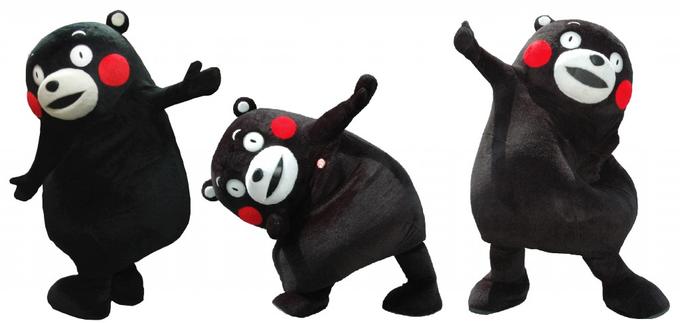
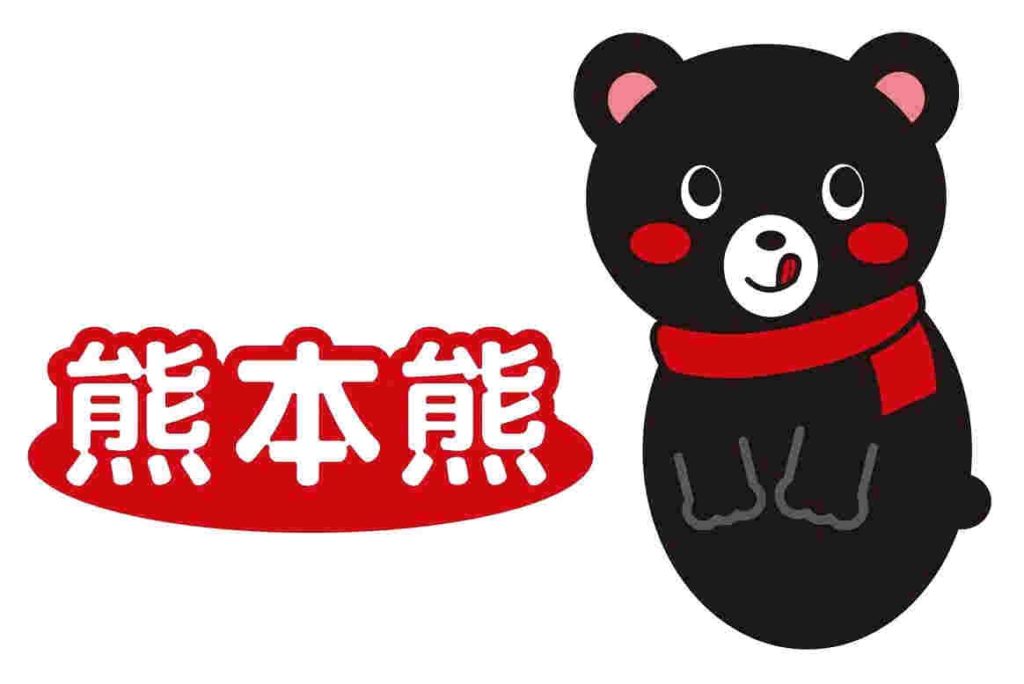
Nowadays, we are accustomed to see there are many organizations that create and use mascots to further their brands. Kumamon is a cuddly character with its pitch-black fur, red cheeks and white eyes designed as the official mascot (see below) of the Kumamoto Prefecture, a small prefecture in western Japan.

Kumamon made its debut in 2011 as part of a tourism promotion campaign for the Kyushu high-speed railway line. At the time a wave of local municipalities and companies sought to use ‘yuru-kyara’, or ‘relaxing characters’, to promote local products and attractions. Kumamon was hired as a part-time civil servant at Kumamoto before being elevated to sales manager. Such topics generated headlines and helped push Kumamon’s popularity beyond Kumamoto.

As an iconic symbol of ‘relaxing characters’, Kumamon has become a social and cultural phenomenon nationwide. Sales of goods using the Kumamon mascot topped 150 billion yen ($1.4 billion) in 2018.

To protect and promote the mascot, the Kumamoto Prefecture has registered its figurative image reproduced in 2D for various classed of goods and services in Japan as well as neighboring countries.

Disputed Mark

On March 21, 2017, Unique Design Company Limited (Belize) , sought to register the mark consisting of a bear-like design and three Chinese characters “熊本熊” which mean Kumamoto’s bear (see below) to be used on goods in class 11. The JPO granted protection of opposed mark on October 27, 2017.

Invalidation Trial

To challenge the validity of disputed mark, on January 25, 2019, the Kumamoto Prefecture filed an invalidation action to the JPO based on Article 4(1)(vi), (vii), (xi), (xv) and (xix) of the Japan Trademark Law. Kumamoto Prefecture argued that the figurative element of disputed mark closely resembles to the Kumamon character well-known for the official mascot of the Kumamoto Prefecture from appearance. Besides, the literal element of disputed mark gives rise to a similar meaning related to the Kumamoto Prefecture and Kumamon. If so, disputed mark as a whole shall be invalid due to a likelihood of confusion with Kumamon.

JPO Decision

The Invalidation Board of JPO found that:

  1. Unquestionably, Kumamon has acquired a remarkable degree of reputation and popularity nationwide as the official mascot of the Kumamoto Prefecture well before the filing date of disputed mark through continuous activities, promotions, and actual use on various goods since 2011. In addition, it becomes public among relevant consumers that the literal element of disputed mark “熊本熊” gets to be known as a Chinese name of Kumamon in China and neighboring countries.
  2. Since Kumamon has distinctive features visually different from wild bear, the mascot shall be deemed unique, creative, and impressive in itself.
  3. From appearance the bear-like design of disputed mark is confusingly similar to Kumamon. It gives rise to a similar meaning to Kumamon, the mascot originated from bear in the Kumamoto Prefecture. Likewise, the literal element of disputed mark gives rise to the same meaning. If so, both marks are considered highly similar.
  4. Due to free-use policy for brand promotion to domestic merchants (Kumamoto lets domestic companies use the character for free, but charges a license fee of a few percent on product sales by foreign companies), Kumamon mascot has been commercially used on wide range of goods over 10,000 items. 7-year cumulative sales exceed 510 billion JP-yen. If so, disputed goods in class 11, e.g. oil stoves, heaters, pocket warmers, electric foot warmers, shall be closely associated with the Kumamon goods in channels and consumers.

Based on the above findings, the Board concluded that relevant consumers and traders are likely to confuse disputed mark with Kumamon or misconceive a source from any entity systematically or economically connected with the Kumamoto Prefecture. Thus, disputed mark shall be invalidated in violation of Article 4(1)(xv) of the Trademark Law.

First ruling by IP High Court on New Type of Trademark in Japan

On February 14 2020, the Japan IP High Court ruled to uphold the Japan Patent Office (JPO) decision and rejected TM application no. 2016-009831 for a 3D position mark consisting of three virtual images of oil stove flame due to a lack of inherent and acquired distinctiveness.
[Case no. Reiwa1(Gyo-ke)10125]

TOYOTOMI Oil Stove “Rainbow”

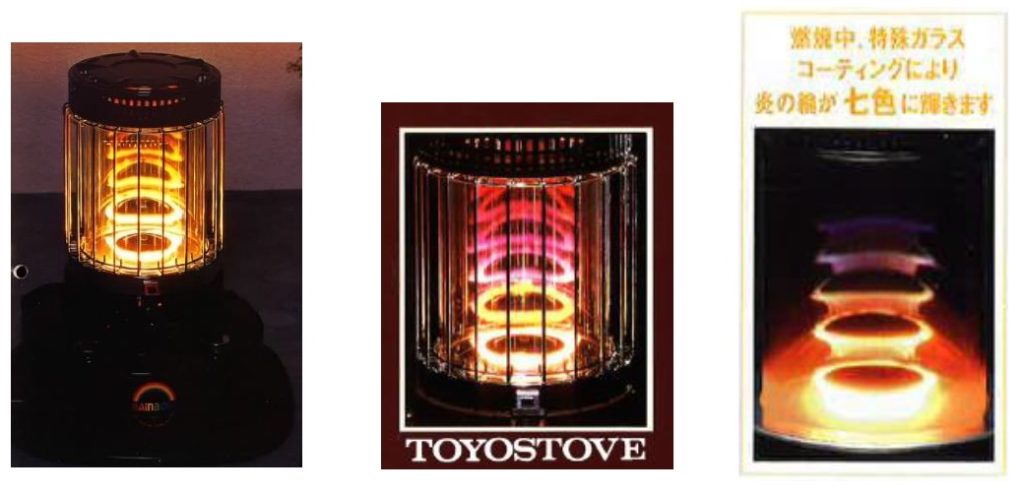
TOYOTOMI CO., LTD., a Japanese company, the world’s first manufacturer of kerosene-fired portable cooking stove in 1952, has allegedly produced their convection type lantern-like design oil stoves in the name of “Rainbow” since 1980.

By means of a heat-resistant glass coated on the inner surface of vertical cylindrical heat chamber of the Rainbow stoves, virtual images of orange flame appear floatingly above actual flame when stoves are in use (see below).

3D Position mark

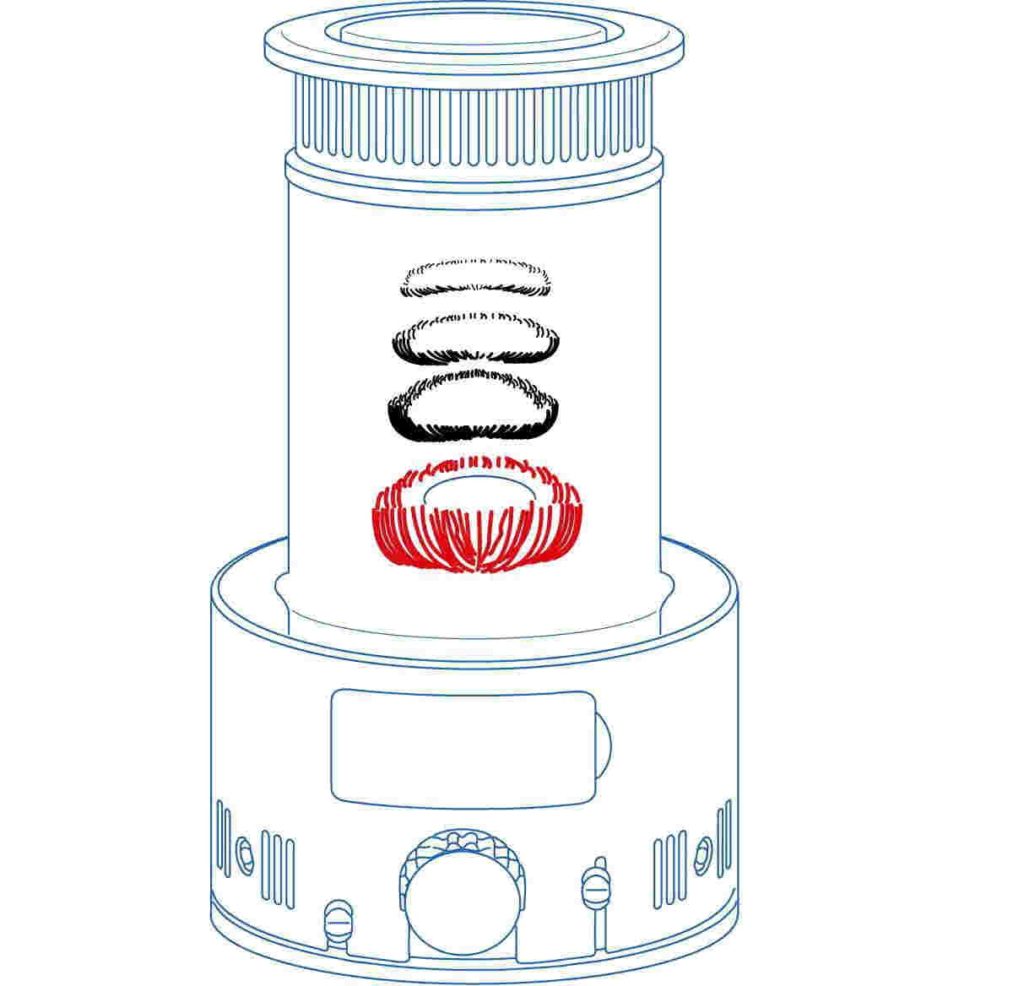
TOYOTOMI sought for registration for its virtual images of flame in connection with convection type oil stoves in class 11 as a 3D Position mark (see below) on January 29, 2016.

In a description of the mark, applicant specified:

applied mark is a position mark consisting of 3D virtual image of three flame rings appeared floatingly above the flame burning on stove at the inside of vertical cylindrical heat chamber. Devices colored in blue and red would not constitute an element of applied mark.

In Japan, by enactment of the New Trademark Law in 2014, new type of mark, namely, color, sound, position, motion, hologram, was allowed for trademark registration since April 2015.

According to the JPO database, more than 480 position marks were applied for registration under the New Trademark Law and 78 position marks are successfully registered as of now (Feb 29, 2020).

JPO decision

On March 2, 2018, the JPO examiner refused applied mark under Article 3(1)(iii) of the Trademark Law based on the fact that mechanism of 3D virtual shape of three flame rings was exclusively protected under Patent No. 1508319 which was expired on July 25, 2000. According to technical specifications of the patent, it is admitted that the 3D shape was purely achieved as a result of utilitarian functionality and aesthetic functionality. If so, the JPO finds it inappropriate to register the shape as a trademark because of unfair and detrimental effect to the public caused by prospective perpetual exclusivity to the shape itself that should have been a public domain under the Patent Law.

Besides, the JPO considered applied mark has not acquired distinctiveness (secondary meaning) as a source indicator of applicant’s products regardless of substantial use for more than three decades.

Subsequently, JPO dismissed an appeal on the same ground. [Appeal case no. 2018-007479, on August 30, 2019]

To contend, applicant filed a lawsuit to the IP High Court on September 26, 2019 and demanded cancellation of the decision.

IP High Court ruling

This lawsuit was the very first case for the IP High Court to take up new type of trademark at the open court.

The court held a shape of goods shall not be protectable as a source indicator if it just aims to achieve function of the goods from utilitarian and aesthetic viewpoints. If such shape per se is apparently destined to achieve functions of goods, it shall be refused for registration under Article 3(1)(iii) of the Trademark Law.

In this regard, the court found, applied mark simply consists of a shape destined to achieve utilitarian and aesthetic functions of goods in question, since it is considered virtual images of floating flame ring aim to increase heating effect of convection type oil stoves.

A mere fact that none of competitors have used identical or similar shape with applied mark on oil stoves would be irrelevant to assess distinctiveness of mark under Article 3(1)(iii).

Even if three flame rings do not physically constitute a shape of oil stoves, the court would see the JPO did not error in adapting Article 3(1)(iii) on the case.

As for acquired distinctiveness, the court had no reason to believe applied mark acquired secondary meaning through actual use based on the produced evidence. TOYOTOMI allegedly held top-rank market share (22.5%) of convection type oil stoves in Japan and annually delivered 29,000 stoves on average for the last seven years. However, the court pointed out the TOYOTOMI Rainbow stoves share just 2% when radiation type oil stoves are counted. Besides, provided that applied mark is not visible to consumers who visit shops to purchase oil stoves from appearance of the goods when turned off, it is questionable whether average consumers would conceive the 3D shape as a source indicator, rather than a functional shape of oil stoves.

Based on the foregoing, the IP High Court upheld JPO decision.

Trademark Battle – PUMA vs KUMA

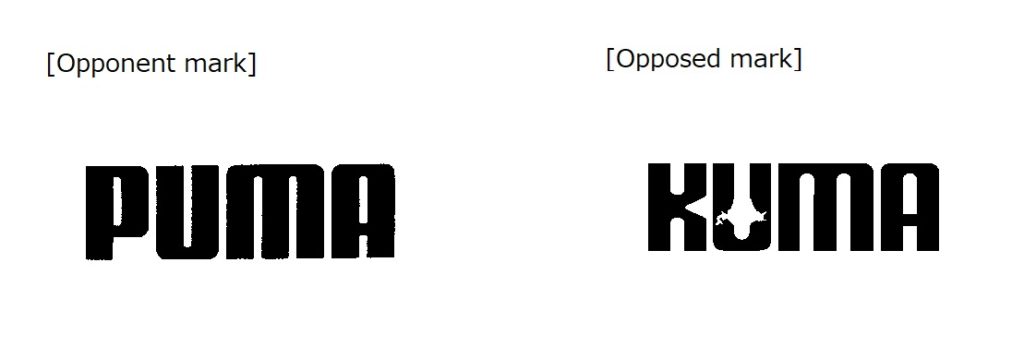
The Japan Patent Office (JPO) decided to invalidate trademark registration no. 5661816 for a stylized word “KUMA”, which means ‘bear’ in Japanese, due to similarity to, and a likelihood of confusion with a world-renowned sports brand, PUMA. [Invalidation case no. 2019-890021, Gazette issue date: January 31,2020]

KUMA mark

Disputed mark (see below),consisting of a stylized word “KUMA” with a partial island shape of Hokkaido, Japan’s most northerly main island, depicted on the inside of letter “U”, was filed on October 24, 2013 by a Japanese business entity having its principal place of business in Hokkaido over various goods in class 25 including sportswear and shoes.

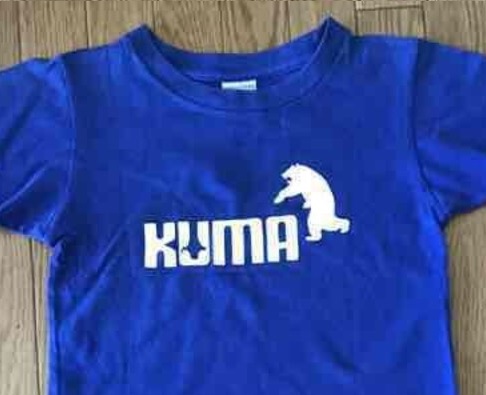
It was found Applicant has used the KUMA mark on T-shirts and other goods with a bear silhouette facing left in the upper right of the mark.

The JPO admitted registration on April 4, 2014 and published for opposition on May 13, 2014.

PUMA’s Opposition / Invalidation Trial

On June 13, 2014, PUMA SE filed an opposition against the KUMA mark based on Article 4(1)(vii) and 4(1)(xv) of the Trademark Law. PUMA argued relevant consumers or traders are likely to confuse or misconceive a source of disputed mark with PUMA when used on designated goods in class 25 because of a high reputation and close resemblance between PUMA word logo and the KUMA mark.

The Opposition Board admitted a high degree of popularity and reputation of PUMA word logo, however, Board dismissed the opposition entirely due to unlikelihood of confusion because of a low degree of similarity between the marks (Opposition case no. 2014-900177).

Subsequently, PUMA SE entrusted the case to us. On April 3, 2019, just one day before the lapse of five-year Statute of limitations, MARKS IP LAW FIRM on behalf of PUMA SE requested for an invalidation trial and challenged invalidating the KUMA mark based on Article 4(1)(vii), (xi), (xv) and (xix) of the Japanese Trademark Law.

Article 4(1)(vii) of the Trademark Law prohibits any mark likely to cause damage to public order or morality from registration.

Article 4(1)(xi) is a provision to refrain from registering a junior mark which is deemed identical with, or similar to, any senior registered mark on identical or similar goods/service.

Article 4(1)(xv) prohibits to register a trademark which is likely to cause confusion with a business of other entity.

Article 4(1)(xix) prohibits to register a trademark which is identical with, or similar to, other entity’s famous mark, if such trademark is aimed for unfair purposes, e.g. gaining unfair profits, or causing damage to the entity.

Invalidation Decision

The Invalidation Board reversed the opposition decision and decided in favor of PUMA on all grounds by finding that:

  1. PUMA word logo has been continuously well-known in Japan for a source indicator of PUMA in connection with sports shoes, sportswear and others among relevant consumers and traders.
  2. A mere difference on initial letter of both marks and the Hokkaido island shape shall be insufficient to overturn an overall impression of the mark from visual and phonetic points of view. Conceptually, the KUMA mark, having a meaning of bears in Japanese, would give rise to a similar meaning with PUMA word logo, four-footed mammal. If so, by taking into consideration a high degree of reputation and popularity of PUMA word logo, both marks shall be deemed similar.
  3. Configuration of PUMA word logo looks unique, creative, and impressive in itself.
  4. Besides, given close association between designated goods in class 25 and PUMA’s business, relevant consumers of the goods in question with an ordinary care are likely to confuse its source with PUMA.
  5. It has good reasons to believe that the applicant of disputed mark did fraudulently apply the KUMA mark for registration with an aim to free-ride and dilute PUMA’s goodwill based on totality of the circumstances.
  6. If so, applicant must have filed disputed mark with a malicious intention to dilute or do harm to PUMA’s goodwill, which was impermissible to protect public order and morals

Based on the foregoing, the JPO decided to invalidate the KUMA mark based on Article 4(1)(vii), (xi), (xv) as well as 4(1)(xix) of the Japan Trademark Law.