HERMES scores victory in trademark battle over KELLY

In a trademark opposition at the Japan Patent Office (JPO), French luxury brand HERMES achieved victory to stop the registration of a word mark “D. KELLY” over bags and pouches in class 18.
[Opposition case no. 2018-900177, Gazette issue date: March 27, 2020]

Opposed mark

Opposed mark, “D.KELLY” was applied for registration on August 25, 2017 by designating bags and pouches in class 18, and published for registration on May 22, 2018 without any office action from the JPO examiner.

Applicant, a Japanese individual, apparently operates brick-and -mortar shops in Japan and on-line shop to promote hand bags, shoulder bags, tote bags, rucksacks/backpacks and other fashion items.
“D.KELLY” is used on the bags and as its shop name.

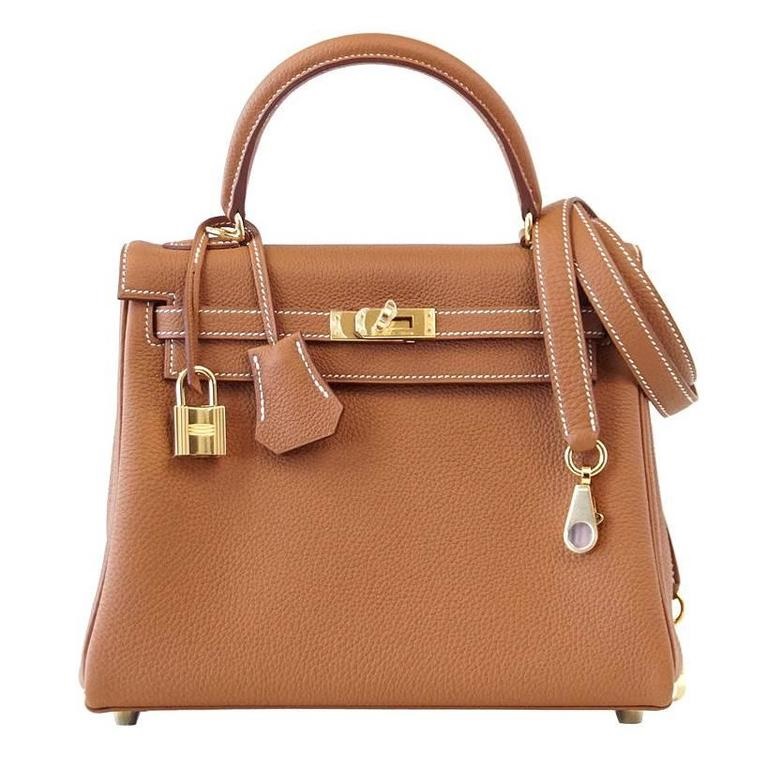
Hermes Kelly Bag

Opponent, HERMES INTERNATIONAL, a French luxury fashion house, claimed that the opposed mark “D.KELLY” shall be liable for cancellation under Article 4(1)(xi) and (xv) of the Japan Trademark Law by citing the Hermes Kelly Bag and an owned senior trademark registration no. 4341534 for word mark “KELLY” in standard character over bags, pouches and other goods in class 18.
Article 4(1)(xi) is a provision to prohibit from registering a junior mark which is deemed identical with, or similar to, any senior registered mark.

Hermes argued opposed mark is perceived as a combination of “D.” and “KELLLY”. The prefix “D.” per se lacks distinctiveness in relation to the goods in question. The mark as a whole does not give rise to any specific meaning at all. As a consequence, the literal portion of “KELLY” shall play a dominant role as a source indicator. If so, opposed mark is deemed confusingly similar to “KELLY” owned by Hermes. Besides, both marks designate same goods in class 18.

Article 4(1)(xv) provides that a mark shall not be registered where it is likely to cause confusion with other business entity’s well-known goods or services, to the benefit of brand owner and consumers.

Given a remarkable degree of reputation of Hermes “Kelly” Bag in relation to bags, relevant consumers with an ordinary care would associate “D.KELLY” with Hermes and confuse its source when used on bags and pouches because “KELLY” is not a common surname in Japan and thus the term is more distinctive than “D.”.

JPO decision

The Opposition Board of JPO sided with Hermes and decided to cancel opposed mark by stating that:

  1. From the produced evidences, Hermes has continuously used the cited mark on bag since 1956, inspired by an icon, Princess Grace Kelly of Monaco. The bag has been advertised or publicized in fashion magazines and internet frequently. Annual sales consecutively reach in the range of JPY 1.6 to 4.6 billion, which amounts 2,000 to 4,000 bags in quantity, for the past fifteen years. The Board admits a high degree of reputation and popularity of opponent mark “KELLY” as a source indicator of Hermes bag.
  2. The Board considers opposed mark is a compound mark of “D” and “KELLY” placing dot(.) in-between. Since an alphabetical letter “D” lacks distinctiveness, relevant consumers would conceive the portion of “KELLY” as a dominant source indicator. If so, opposed mark may give rise to a meaning of Hermes brand bag, identical pronunciation and appearance with opponent’s mark. It is unquestionable that goods in question belongs to that of the citation.
  3. Provided that Hermes “Kelly Bag” has been rather known for in a name of “Kelly Bag” than “Kelly”, the Board finds a high degree of similarity between the marks in relation to bags. If so, it is undeniable that relevant consumers and traders are likely to confuse opposed mark with Hermes “Kelly Bag” or misconceive a source from any entity systematically or economically connected with Hermes International.
  4. Based on the foregoing, opposed mark shall be liable for cancellation based on Article 4(1)(xi) and (xv).

OKLOK vs OKLOCK

In a trademark dispute, similarity between “OKLOK” and “OKLOCK”, the Appeal Board of the Japan Patent Office found both marks dissimilar and reversed examiner’s rejection.
[Appeal case no. 2019-16781, Gazette issued date: March 27, 2020]

OKLOK

A senior mark, consisting of a word “OKLOK” in standard character, was registered on September 21, 2018 (TM Reg no. 6083192) over electric locks; electronic key fobs being remote control apparatus; anti-theft warning apparatus; other goods in class 9 by a Chinese business entity, 深圳市龙兄弟数码锁有限公司 (Shenzhen Longbrothers Digital Co., Ltd.).

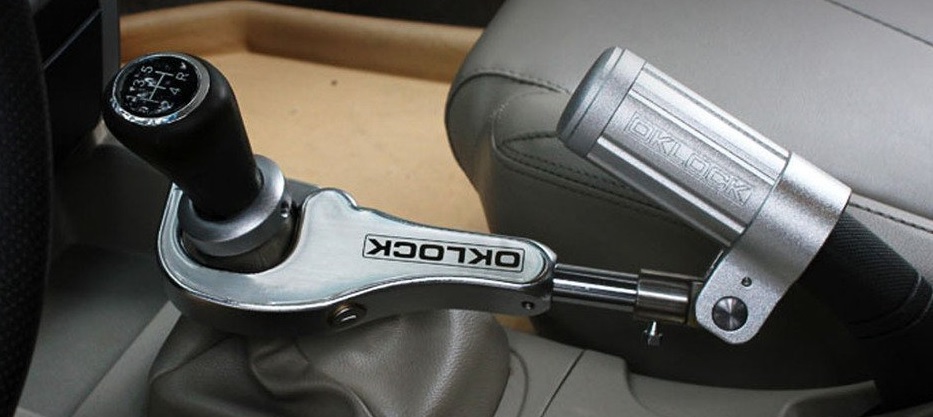
Owner has used “OKLOK” on fingerprint key less padlock, Smart Bluetooth Security Lock with USB Charge and other intelligent anti-theft devices (see below).

[Capture shot of OKLOK official site]

OKLOCK

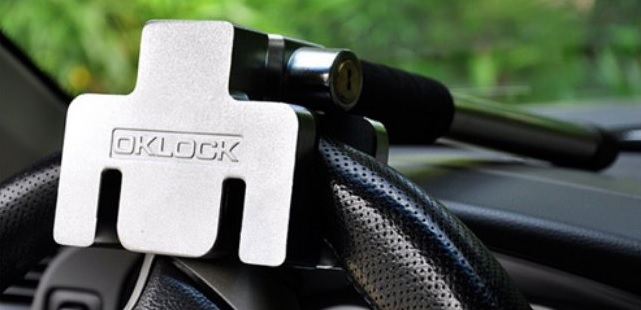
Applied junior mark, consisting of a word “OKLOCK” in standard character, was applied for registration on April 3, 2019 over anti-theft locks for use on automobile steering wheels and other goods in class 12 [TM application no. 2019-47122].

Applicant uses “OKLOCK” on car steering wheel locks and anti-theft car hand brake and gear lock (see below).

The JPO examiner rejected “OKLOCK” because of confusing similarity to “OKLOK” based on Article 4(1)(xi) of the Trademark Law.

Article 4(1)(xi) is a provision to prohibit registering a junior mark which is identical with, or similar to, any senior registered mark.

There is criterion that the examiner is checking when assessing the similarity between the marks:

  • visual similarity
  • aural similarity
  • conceptual similarity

and taking into account all these three aspects examiner makes a decision if a mark is similar (at least to some extent) with the earlier mark and if there is a likelihood of confusion for the consumers.

Applicant filed an appeal against the rejection on December 11, 2019 and argued dissimilarity of both marks.

Appeal Board decision

In the decision, the Appeal Board held that:

From appearance, applied mark “OKLOCK” contains a letter “C” unlike the cited mark “OKLOK”. This gives rise to a distinctive impression visually in the mind of relevant consumers where respective mark consists of five or six-letter words, anything but long.

Next, applied mark is pronounces as [oʊˈkeɪ lɑːk]. In the meantime, the cited mark just gives rise to a pronunciation of [oʊˈkeɪ el ə keɪ] because relevant consumers are likely to see “OKLOK” as a combination of five alphabets and read it as each letter sounds since “OKLOK” does not appear in dictionary.

Thirdly, applied mark does not give rise to any specific meaning in its entirety even though it is perceived as a combination of “OK” and “LOCK”. Likewise, relevant consumers would not conceive any meaning from “OKLOK” and just see it as a coined word. If so, both marks are incomparable from concept.

Based on the foregoing, the Board found no reasonable ground to affirm examiner’s rejection from visual, phonetic, and conceptual points of view and decided to reverse examiner’s rejection.

Trademark Battle – PUMA vs KUMA

The Japan Patent Office (JPO) decided to invalidate trademark registration no. 5661816 for a stylized word “KUMA”, which means ‘bear’ in Japanese, due to similarity to, and a likelihood of confusion with a world-renowned sports brand, PUMA. [Invalidation case no. 2019-890021, Gazette issue date: January 31,2020]

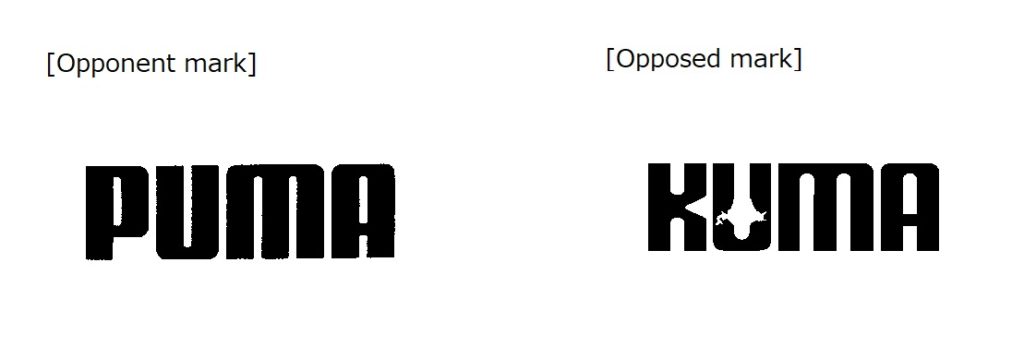
KUMA mark

Disputed mark (see below),consisting of a stylized word “KUMA” with a partial island shape of Hokkaido, Japan’s most northerly main island, depicted on the inside of letter “U”, was filed on October 24, 2013 by a Japanese business entity having its principal place of business in Hokkaido over various goods in class 25 including sportswear and shoes.

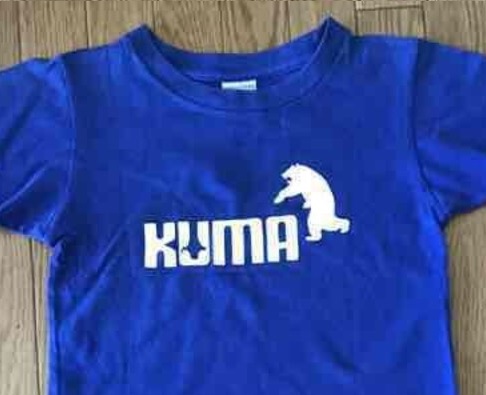
It was found Applicant has used the KUMA mark on T-shirts and other goods with a bear silhouette facing left in the upper right of the mark.

The JPO admitted registration on April 4, 2014 and published for opposition on May 13, 2014.

PUMA’s Opposition / Invalidation Trial

On June 13, 2014, PUMA SE filed an opposition against the KUMA mark based on Article 4(1)(vii) and 4(1)(xv) of the Trademark Law. PUMA argued relevant consumers or traders are likely to confuse or misconceive a source of disputed mark with PUMA when used on designated goods in class 25 because of a high reputation and close resemblance between PUMA word logo and the KUMA mark.

The Opposition Board admitted a high degree of popularity and reputation of PUMA word logo, however, Board dismissed the opposition entirely due to unlikelihood of confusion because of a low degree of similarity between the marks (Opposition case no. 2014-900177).

Subsequently, PUMA SE entrusted the case to us. On April 3, 2019, just one day before the lapse of five-year Statute of limitations, MARKS IP LAW FIRM on behalf of PUMA SE requested for an invalidation trial and challenged invalidating the KUMA mark based on Article 4(1)(vii), (xi), (xv) and (xix) of the Japanese Trademark Law.

Article 4(1)(vii) of the Trademark Law prohibits any mark likely to cause damage to public order or morality from registration.

Article 4(1)(xi) is a provision to refrain from registering a junior mark which is deemed identical with, or similar to, any senior registered mark on identical or similar goods/service.

Article 4(1)(xv) prohibits to register a trademark which is likely to cause confusion with a business of other entity.

Article 4(1)(xix) prohibits to register a trademark which is identical with, or similar to, other entity’s famous mark, if such trademark is aimed for unfair purposes, e.g. gaining unfair profits, or causing damage to the entity.

Invalidation Decision

The Invalidation Board reversed the opposition decision and decided in favor of PUMA on all grounds by finding that:

  1. PUMA word logo has been continuously well-known in Japan for a source indicator of PUMA in connection with sports shoes, sportswear and others among relevant consumers and traders.
  2. A mere difference on initial letter of both marks and the Hokkaido island shape shall be insufficient to overturn an overall impression of the mark from visual and phonetic points of view. Conceptually, the KUMA mark, having a meaning of bears in Japanese, would give rise to a similar meaning with PUMA word logo, four-footed mammal. If so, by taking into consideration a high degree of reputation and popularity of PUMA word logo, both marks shall be deemed similar.
  3. Configuration of PUMA word logo looks unique, creative, and impressive in itself.
  4. Besides, given close association between designated goods in class 25 and PUMA’s business, relevant consumers of the goods in question with an ordinary care are likely to confuse its source with PUMA.
  5. It has good reasons to believe that the applicant of disputed mark did fraudulently apply the KUMA mark for registration with an aim to free-ride and dilute PUMA’s goodwill based on totality of the circumstances.
  6. If so, applicant must have filed disputed mark with a malicious intention to dilute or do harm to PUMA’s goodwill, which was impermissible to protect public order and morals

Based on the foregoing, the JPO decided to invalidate the KUMA mark based on Article 4(1)(vii), (xi), (xv) as well as 4(1)(xix) of the Japan Trademark Law.

Trademark Dispute ROOT vs ROOTS

The Japan Patent Office (JPO) decided in a trademark opposition that ROOT is dissimilar to ROOTS in appearance, pronunciation and meaning.
[Opposition case no. 2017-900326, Gazette issue date: June 29, 2018]

Opposed mark

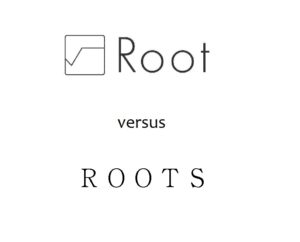
Opposed mark consists of the square root design and a word “ROOT” (see below). It was applied for registration on February 9, 2017 by designating bags in class 18 and retail or whole sale services in relation to bags and clothing in class 35.
JPO granted registration in August 4, 2017 (TM registration no. 5969604).

Opposition

Opponent, Roots Corporation, a Canadian business entity, filed an opposition against opposed mark based on a self-owned senior trademark registration no. 5947860 for the work mark “ROOTS” (see above) in class 35 for on-line retail or wholesale services in relation to bags and clothing.

Opponent argued opposed mark shall be canceled in violation of Article 4(1)(xi) of the Trademark Law because “ROOT” and “ROOTS” are confusingly similar.

Article 4(1)(xi) is a provision to refrain from registering a junior mark which is deemed identical with, or similar to, any senior registered mark.


Board decision

The Opposition Board of JPO negated similarity between the ROOT mark and ROOTS, stating that:

“From appearance, both marks are distinguishable since opponent mark does not contain the square root device and “S” in the suffix position. Besides there exist differences in font design and case sensitivity. 
Regarding pronunciation of the marks, opposed mark gives rise to a sound of “ruːt”. In the meantime, opponent mark sounds “ruːts”. Given the short sound of three syllables, a different pronunciation in the suffix position is not in any way ignorable. If so, both marks can be phonetically distinctive. 
Conceptually, opposed mark gives rise to a meaning of the square root. Meanwhile, opponent mark can be perceived as a word to mean the parts of plant that grow under the ground or ancestor. Hence, both marks are distinctive in concept as well.”

Based on the foregoing, the Board concluded that it is unlikely to consider relevant consumers at the sight of opposed mark would connect a word “Root” adjacent to the square root device with opponent mark. Therefore, the Board dismissed opposition and allowed opposed mark to survive.