El Clasico Scores a Goal in Trademark Race

The Japan Patent Office (JPO) overturned the examiner’s refusal and decided to register the “El Clasico” mark in connection with sporting activities, production of sports events, sports information services, and other services of class 41 by finding the term shall not be recognized as football matches between FC Barcelona and Real Madrid C.F.
[Appeal case no. 2019-650060, Gazette issued date: October 30, 2020]

El Clasico

“El Clasico” is a magical phrase to make football fans passionate, emotional, and excited. The meaning of El Clasico is the Spanish name that is given to any football match between fierce Spanish rivals Real Madrid and Barcelona FC. The literal translation of El Clasico is ‘The Classic’. According to the Cambridge Dictionary, “El Clasico” is defined as ‘any of the games played between the football teams Real Madrid and Barcelona’. Being that this rivalry can be dated back to the 1930s and ever since then, it is one of the most viewed annual sporting events.

Liga Nacional de Fútbol Profesional, the administrator of the Spanish football league, aka LaLiga, applied for registration of the “El Clasico” mark (see below) in relation to sporting activities, production of sports events, sports information services, and other services of class 41 via the Madrid Protocol (IR No. 1379292).

On August 15, 2019, the JPO examiner refused the applied mark due to a lack of distinctiveness in contravention of Article 3(1)(iii) of the Trademark Law. Examiner asserted that the term “El Clasico” gets to be known as football matches between FC Barcelona and Real Madrid C.F. If so, relevant consumers would conceive that services bearing the applied mark just relate to football matches between two teams. In this respect, the applied mark shall not be registrable based on Article 4(1)(xvi) as well since the consumers would mistake its nature when used on service unrelated to football matches between two teams.

LaLiga filed an appeal against the refusal on November 15, 2019.

JPO Appeal Board’s decision

The Appeal Board overturned the examiner’s decision by stating that relevant consumers and traders at the sight of the applied mark are unlikely to see the mark to represent football matches between indicate FC Barcelona and Real Madrid C.F. immediately when used on services in question.

Taking into account less familiarity with the Spanish language among relevant consumers in Japan and the literal meaning of ‘The Classic’, the Board found the term “El Clasico” would be conceived as a coined word in its entirety. Furthermore, the Board could not identify any fact that the term is commonly used to represent a specific nature or quality in connection with the services in question.

Based on the foregoing, the Board concluded the refusal shall be disaffirmed since the examiner erroneously found the applied mark “El Clasico”.

PGA

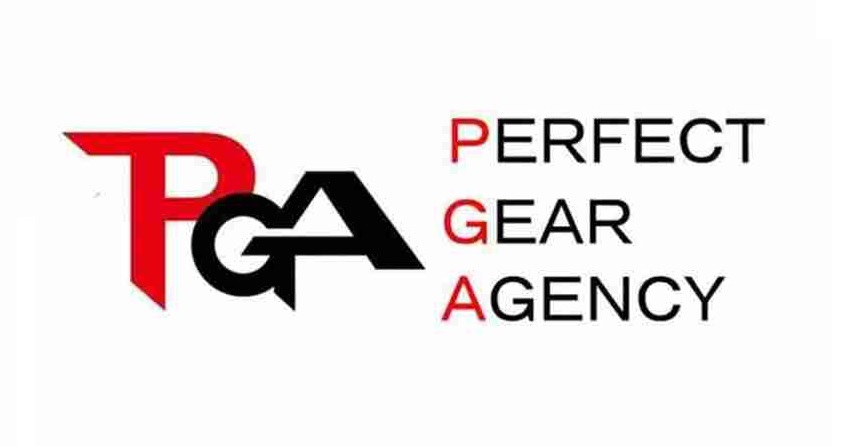
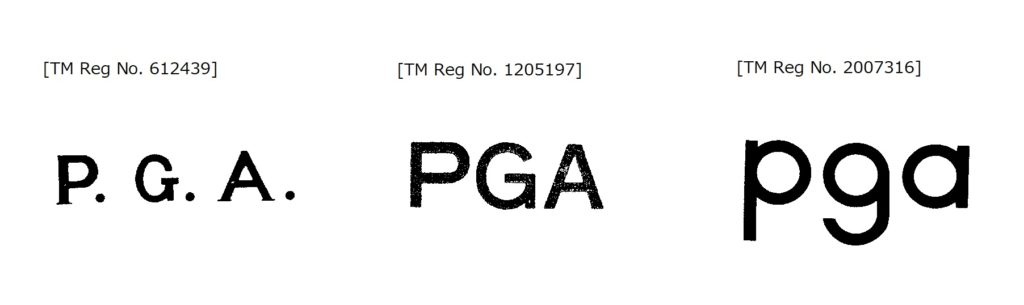
In a recent administrative decision, the Appeal Board of Japan Patent Office (JPO) disaffirmed the examiner’s refusal and held a composite mark, consisting of words “PERFECT GEAR AGENCY” and a monogram “PGA”, is dissimilar to the senior registered word mark “PGA” owned by Professional Golf Association.
[Appeal case no. 2019-10638, Gazette issued date: September 25, 2020]

“PGA/ PERFECT GEAR AGENCY”

Disputed mark, see below, was applied for registration in relation to retail or wholesale services for various goods, e.g. foods and beverages, footwear, bags, automobiles in class 35 on January 24, 2018.

The disputed mark consists of the “PGA” monogram and the words “PERFECT GEAR AGENCY” on the right. The initial letter of the respective term is colored in red. Apparently, the monogram comes from an initial letter of each word “PERFECT”, “GEAR” and “AGENCY”.

JPO Examiner rejected the disputed mark by citing several senior trademark registrations for a wordmark “PGA” in various classes owned by Professional Golf Association.

In Japan, retail or wholesale service in respect of specific goods is deemed similar to the goods or its equivalent. For example, retail service in respect of sporting goods (class 35) and sporting goods (class 28) is deemed similar.

That being the case, the applicant filed an appeal against the refusal and contended dissimilarity of the mark.

JPO decision

The Appeal Board found that the “PGA” monogram and words “PERFECT GEAR AGENCY” can be separably seen from a visual point of view. Besides, the “PGA” monogram per se does not give rise to any specific meaning. It is unknown whether relevant Japanese consumers have been familiar with the words “PERFECT GEAR AGENCY” as a whole. If so, the words do not give rise to a specific meaning as well.

By taking account of the above, the Board pointed out the disputed mark shall be pronounced as “PERFECT GEAR AGENCY”, but has no meaning.

Based on the foregoing, the Board concluded the refusal shall be disaffirmed since the examiner erroneously found that the disputed mark gives rise to a pronunciation of “PGA” from the “PGA” monogram.

POLO RALPH LAUREN vs. US POLO ASSN

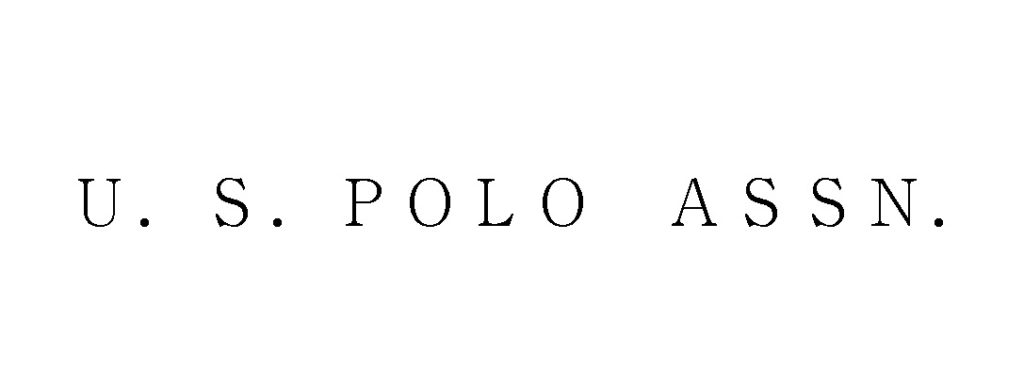
The Appeal Board of the Japan Patent Office (JPO) affirmed Examiner’s refusal to register the wordmark “U.S. POLO ASSN.” due to similarity to and a likelihood of confusion with earlier registered mark “POLO” owned by The Polo/Lauren Company, L.P.
[Appeal case no. 2018-5222, Gazette issued date: July 31, 2020]

“U.S. POLO ASSN.”

United States POLO Association filed a trademark registration for wordmark “U.S. POLO ASSN.” in standard character on January 13, 2016, over various kinds of bags, leather products, and other goods in class 18. [TM application no. 2016-3277]

On January 12, 2018, the JPO Examiner rejected the applied mark in contravention of Article 4(1)(xi) and (xv) of the Japan Trademark Law on the grounds that “U.S. POLO ASSN.” contains a term “POLO” which has become famous as a source indicator of The Polo/Lauren Company, L.P in connection with clothing and home décor. Relevant consumers with ordinary care would conceive the term as a prominent portion of the applied mark. If so, both marks shall be deemed similar or likely to cause confusion when used on the goods in question.

Article 4(1)(xi) is a provision to prohibit from registering a junior mark that is deemed identical with, or similar to, any senior registered mark.

Article 4(1)(xv) is a provision to prohibit any mark from being registered where it is likely to cause confusion with other business entity’s well-known goods or services, to the benefit of brand owner and users’ benefits.

U.S. POLO ASSN filed an appeal against Examiner’s refusal on April 16, 2018.

JPO decision

JPO admitted a high degree of reputation and popularity of “POLO” as a source indicator of The Polo/Lauren Company, L.P in connection with clothing as well as bags based on following fact-findings.

  1. American company Polo Ralph Lauren was founded in 1967 in New-York by fashion designer Ralph Lauren. The 1980s and 90s saw massive expansion for the Ralph Lauren brand and it became a worldwide phenomenon.
  2. “POLO” appears with definitions of ‘trademark of US designer, Ralph Lauren’ and ‘leather products designed by Ralph Lauren’ in some dictionaries which clearly demonstrate “POLO” is known as an abbreviation of ‘POLO RALPH LAUREN’.
  3. “POLO” has been substantially used adjacent to “RAPLH LAUREN” on various goods and frequently advertised as a famous brand of RALPH LAUREN in the media.
  4. A customer survey conducted in January 2010 from 900 adults age 20 years and older revealed that RALPH LAUREN has ranked 3rd-most popular brand in clothing after Burberry and UNIQLO.
  5. Annual sales exceed USD4,800 million in 2008, USD7,450 in 2013.

The Board found the applied mark “U.S. POLO ASSN.” shall be seen as a composite mark consisting of “U.S.”, “POLO” and “ASSN.” Since the last word “ASSN.” is too unfamiliar to average Japanese consumers to see it as an abbreviation of ‘association’, the applied mark would not give rise to any specific meaning as a whole. Besides, its pronunciation ‘ˌjuː.es poʊ.loʊ eɪeɪesén’ sounds redundant. Even if the second word “POLO” means ‘a game played on horseback by two teams of four players each’, given a high reputation of the word as a source indicator or an abbreviation of ‘POLO RALPH LAUREN’ the Board can’t overlook the fact that it has the same spelling as RALPH LAUREN’s famous apparel brand.

If so, relevant consumers would consider “POLO” as a prominent portion of the applied mark and it shall be permissible to compare the portion with the cited mark in assessing similarity of mark.

In this viewpoint, the applied mark would give rise to a sound of ‘poʊ.loʊ’ and the meaning of “RALPH LAUREN’s famous apparel brand”. Therefore, the applied mark shall be deemed confusingly similar to senior registered mark “POLO” owned by The Polo/Lauren Company, L.P in class 18, and others (TM Registration no. 4040052, 4931614, and 4931615).

Based on the foregoing, the Board found that Examiner didn’t error in fact-finding nor applying Article 4(1)(xi) and (xv) of the Trademark Law and decided to refuse the applied mark accordingly.

Japan IP High Court ruling: “I♡JAPAN” lacks distinctiveness as a trademark

On June 17, 2020, the Japan IP High Court affirmed the JPO’s rejection of the “I♡JAPAN” mark in relation to various goods of class 14,16,18 and 24 due to a lack of distinctiveness.
[Judicial case no. Reiwa 1(Gyo-ke)10164]

I♡JAPAN

The disputed mark consists of the capital letter “I”, followed by a red heart symbol, below which are the capital letters “JAPAN” (see below). The mark filed by CREWZ COMPANY, a Japanese merchant on April 17, 2018, over various goods in class 14, 16, 18, and 24 [TM application no. 2018-049161].

Noticeably, the JPO already allowed trademark registration for the same mark on apparels in class 25 on March 27, 2015, filed by the applicant [TM Registration no. 5752985]. Regardless of it, the examiner refused disputed mark in contravention of Article 3(1)(vi) of the Trademark Law.

Article 3(1)(vi) is a provision to comprehensively prohibit from registering any mark lacking inherent distinctiveness.

Any trademark to be used in connection with goods or services pertaining to the business of an applicant may be registered, unless the trademark:
(vi) is in addition to those listed in each of the preceding items, a trademark by which consumers are not able to recognize the goods or services as those pertaining to a business of a particular person.

JPO decision

The JPO Appeal Board sustained the examiner’s refusal and decided to reject disputed mark by stating that we are nowadays accustomed to finding goods bearing the “I♡” logo followed by a geographical indication, which represents a strong devotion or attachment to the area/city in its entirety. In fact, the “I♡JAPAN” design is commonly used on several goods as a symbol to support the Japanese sports team or souvenirs for tourists. If so, the design shall not be exclusively occupied by a specific entity. Under the circumstances, relevant consumers are unlikely to conceive the disputed mark as a source indicator of the applicant. Thus, the mark shall be rejected in contravention of Article 3(1)(vi) and the examiner did not error. [Appeal case no. 2018-16957]

To contend against the decision, the applicant filed an appeal to the IP High Court.

IP High Court ruling

The IP High Court dismissed the applicant’s allegation entirely, stating that the disputed mark gives rise to the meaning of “I love JAPAN”. The court found the “I♡” logo followed by a geographical indication is commonly used to appeal a strong devotion or attachment to the area/city. Inter alia, various merchants promote goods bearing the “I♡JAPAN” design as a sign of their support to Japan or the Japanese sports team. If so, relevant consumers and traders would not conceive disputed mark as a source indicator of goods in question, but merely a symbol to represent their devotion and support to Japan. Therefore, the disputed mark shall not be registrable under n contravention of Article 3(1)(vi).

Besides, the court found the fact of a precedent registration for the same mark in a different class would not affect the distinctiveness of disputed mark since it does not have a legal effect to bind subsequent examination in assessing registrability of a junior mark under Article 3(1)(vi).

Japan IP High Court sided with Apple Inc. in “CORE ML” trademark dispute

On May 20, 2020, the Japan IP High Court denied the JPO decision and sided with Apple Inc. by finding the “CORE ML” mark is dissimilar to senior trademark registration no. 5611369 for word mark “CORE” in connection with computer software of class 9.
[Case no. Reiwa1(Gyo-ke)10151]

CORE ML

Apple Inc. filed a trademark application for word mark “CORE ML” in standard character by designating computer software in class 9 on November 6, 2017 (TM App no. 2017-145606).

Apple’s Core ML is its own framework for Machine Learning used across Apple products for performing fast prediction or inference with easy integration of pre-trained machine learning models on the edge, which allows you to perform real-time predictions of live images or video on the device.

JPO decision

The Japan Patent Office (JPO) rejected “CORE ML” in contravention of Article 4(1)(xi) of the Trademark Law due to a conflict with senior trademark registration no. 5611369 for word mark “CORE” in standard character over electronic machines, computer software, and other goods in class 9 owned by Seiko Holdings Corporation.

Article 4(1)(xi) is a provision to prohibit from registering a junior mark that is deemed identical with, or similar to, any senior registered mark.

In the decision, the JPO stated applied mark apparently consists of two words, “CORE” and “ML”. The term “CORE”, a familiar English word meaning ‘a central and foundational part’, would play a role of source indicator in connection with the goods in question. In the meantime, “ML” is a descriptive term since it is commonly used as an abbreviation of ‘Machine Learning’ in the computer software industry. If so, it is permissible to select the term “CORE” as a dominant portion of applied mark and compare it with the cited mark “CORE”.

To contend against the decision, Apple Inc. filed an appeal to the IP High Court.

IP High Court ruling

The IP High Court, at the outset, referred to the Supreme Court ruling in 2008 which established the criterion to grasp a composite mark in its entirety in the assessment of similarity of the mark.

“Where a mark in dispute is recognized as a composite mark consisting of two elements or more, it is not permissible to assess the similarity of mark simply by means of taking out an element of the composite mark and then comparing such element with the other mark, unless consumers or traders are likely to perceive the element as a dominant portion indicating its source of origin of goods/service, or remaining elements truly lack inherent distinctiveness as a source indicator in view of sound and concept.”

Based on the criteria, the court found that applied mark shall be assessed in its entirety on the following grounds:

  1. “CORE” would be merely recognized as a term to mean ‘a central and foundational part’ in connection with goods in question.
  2. It is unlikely that relevant consumers at the sight of “CORE ML” used on computer software conceive the term “ML” as an abbreviation of ‘machine learning’. If so, “ML” would not give rise to any specific meaning.
  3. The above facts suggest that “CORE” would never play a dominant role and “ML” shall not be considered less distinctive than “CORE” as a source indicator in view of the concept.
  4. From appearance and sound, there is no reasonable ground to believe “CORE” and “ML” shall be recognized individual and separable.

Based on the foregoing, the court pointed out the JPO erred in finding applied mark appropriately and decided that the applied mark “CORE ML” is deemed dissimilar to the cited mark “CORE” as a whole given the remarkable difference in sound and appearance, even if both marks resemble in concept.

Sweet, but long road to register “Ghana” on chocolates

The Japan Patent Office (JPO) allowed trademark registration of “Ghana” in connection with chocolates of class 30 by finding acquired distinctiveness as a source indicator of Lotte Co., Ltd., a Korea-based confectionary company.
[Appeal case no. 2019-8784, Gazette issued date: May 29, 2020]

Lotte “Ghana” Chocolates

Ghana chocolate is Lotte’s signature product and one of the most beloved chocolate in Japan for many years.

Lotte Co., Ltd. launched chocolates bearing the “Ghana” mark in 1964. Since then, the mark has been prominently indicated on the packages.

[“Ghana” chocolate package back in 1970’s – TM Reg no. 892507]

In 1994 of the 30th anniversary, Lotte slightly changed the design of its package and the mark and added different tastes of “Ghana” chocolates, e.g. milk chocolates, white chocolates. On new packages, the “Ghana” mark is much conspicuously and largely indicated than before.

[Current package – TM Reg no. 5405402, registered on April 8, 2011]

On December 8, 2017, Lotte sought trademark registration for the current “Ghana” logo (see below) over chocolates in class 30. [TM application no. 2017-161593]

Article 3(1)(iii) & 4(1)(xvi)

The JPO rejected the “Ghana” mark in contravention of Article 3(1)(iii) and 4(1)(xvi) of the Japan Trademark Law by stating that “Ghana” is a geographical indication corresponding to Republic of Ghana, a country of western Africa, situated on the coast of the Gulf of Guinea, one of the major producers of high-quality cocoa beans. Therefore, relevant consumers and traders at the sight of chocolates bearing the “Ghana” mark would merely conceive it of the origin of cocoa beans. Besides, whenever the mark is used on chocolates not made from Ghana cocoa beans, it inevitably misleads the quality of goods.

Acquired distinctiveness

Lotte argued the “Ghana” mark shall be protectable based on Article 3(2), even if nominally unregistrable under Article 3(1)(iii) because it has acquired distinctiveness as a result of substantial and continuous use on chocolates in Japan.

Article 3(2) of the Trademark Law

Notwithstanding the preceding paragraph, a trademark that falls under any of items (iii) to (v) of the preceding paragraph may be registered if, as a result of the use of the trademark, consumers are able to recognize the goods or services as those pertaining to a business of a particular person.

Appeal Board decision

The Appeal Board affirmed examiner’s rejection pertinent to lack of distinctiveness in connection with goods in question, however, the Board held that the “Ghana” mark would function as a source indicator of Lotte chocolates consequently and thus registrable based on the acquired distinctiveness under Article 3(2).

Allegedly Lotte “Ghana” chocolates hold top-ranked market share in Japan since 2017. In 2008, Lotte sold more than 100 million bars of “Ghana” chocolates. The annual sales exceeded 1.2 billion JP-yen in 2017.

Lotte has long been aggressive not only to advertise “Ghana” chocolates in newspapers, TV commercials, trains, and stations, but also to launch lots of chocolate events and campaigns on Valentine’s Day or Mother’s Day nationwide, and collaborations with retailers, hotels restaurants featuring ‘Ghana’ chocolates.

Due to their marketing efforts, Lotte “Ghana” brand chocolates could win several awards, e.g. Monde Selection ‘Gold Award’ (2008, 2009, 2010), D2C ‘Marketing Award’ (2002), The Japan Food Journal ‘Long Seller Award’ (2008), DENTSU ‘Excellent Award’ (2009, 2010, 2011), JR East ‘Excellent Advertisement Award’’.

Besides, “Ghana” chocolates ranked top in the brand survey published by Nikkei Research in 2016.

Lotte could eventually achieve registration of the “Ghana” mark on chocolates, but it spent more than five decades to that end.

Interestingly. Lotte has registered the “GANA” mark on goods of class 30 including chocolates since 1990. It must aim to prevent a third party from registering any mark similar to “Ghana”.

JPO decided “Antithesis” dissimilar to a mark consisting of it and other eight terms placed in 9 rows

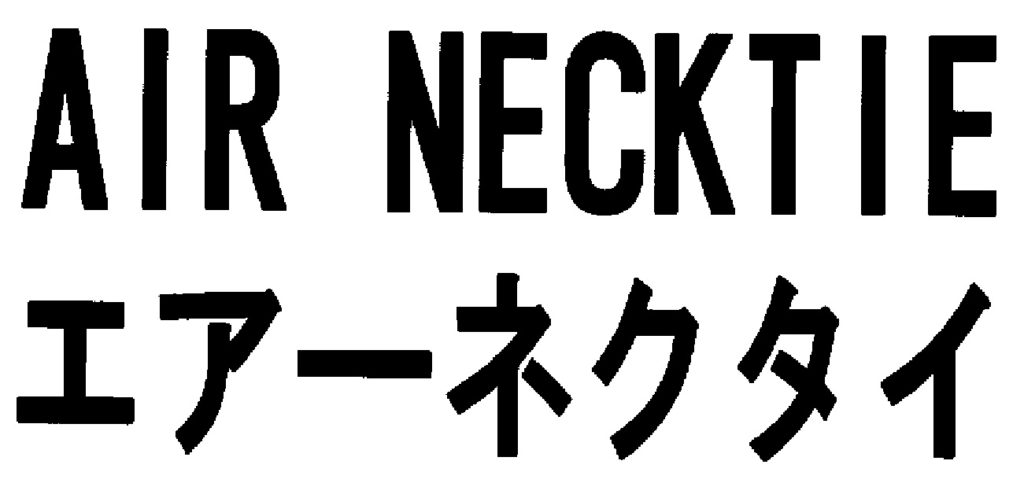
In an administrative appeal disputing trademark similarity between TM registration no. 5661343 for word mark “Antithesis” with its transliteration in Japanese katakana and junior application no. 2017-101730 for a mark consisting of “Antithesis” and the other eight English terms placed in 9 rows, JPO found both marks dissimilar and reversed the examiner’s rejection.
[Appeal case no. 2019-652, Gazette issued date: March 27, 20]

TM Registration no. 5661343

Cited mark, the term “Antithesis” with its transliteration in a Japanese katakana character (see below) has been registered over clothing, footwear, and other goods in class 25 since April 4, 2014.

Junior Application no. 2017-101730  

Applied mark, consisting of nine English terms “Imitation”, “Genuine”, “Chic”, “Rudeness”, “Confusion”, “Silence”, “Gentleman”, “Lady”, and “Antithesis” placed in 9 rows inside a black rectangle (see right), was applied for registration on August 1, 2017, over clothing, footwear, and other goods in class 25 by Element Rule Co., Ltd.

JPO examiner entirely rejected applied mark on the ground that the term “Antithesis” on the bottom row can play a role of source indicator independently because of overall configuration and space above the bottom row. If so, the applied mark as a whole shall be deemed similar to the cited mark.

The applicant filed an appeal against the rejection on May 20, 2019, and argued dissimilarity of both marks.

Appeal Board decision

In the decision, the Board found that:

“From the appearance, “Antithesis” on the bottom row shall not be separable since the term is written in the same font, color, size with other terms “Imitation”, “Genuine”, “Chic”, “Rudeness”, “Confusion”, “Silence” even if there is space in the trademark.
Besides, nine terms do not give rise to any specific meaning in its entirety.  Neither do eight terms except “Antithesis”.
If so, there is no reasonable reason to believe that relevant consumers consider the term “Antithesis” on the bottom row or any other terms a dominant part of the applied mark.
It rather does mark sense that applied mark shall be perceived as a whole displaying respective English word in a different row inside a black rectangle.”

Based on the foregoing, the Board held that the Examiner erred in finding the term “Antithesis” separable as an independent source indicator of the applied mark, and decided to reverse the examiner’s rejection.

I don’t quite agree with the Appeal Board decision. In my view, the respective term contained in a junior mark shall be considered separable unless it gives rise to different meanings in a tight combination with other distinctive terms.

OKLOK vs OKLOCK

In a trademark dispute, similarity between “OKLOK” and “OKLOCK”, the Appeal Board of the Japan Patent Office found both marks dissimilar and reversed examiner’s rejection.
[Appeal case no. 2019-16781, Gazette issued date: March 27, 2020]

OKLOK

A senior mark, consisting of a word “OKLOK” in standard character, was registered on September 21, 2018 (TM Reg no. 6083192) over electric locks; electronic key fobs being remote control apparatus; anti-theft warning apparatus; other goods in class 9 by a Chinese business entity, 深圳市龙兄弟数码锁有限公司 (Shenzhen Longbrothers Digital Co., Ltd.).

Owner has used “OKLOK” on fingerprint key less padlock, Smart Bluetooth Security Lock with USB Charge and other intelligent anti-theft devices (see below).

[Capture shot of OKLOK official site]

OKLOCK

Applied junior mark, consisting of a word “OKLOCK” in standard character, was applied for registration on April 3, 2019 over anti-theft locks for use on automobile steering wheels and other goods in class 12 [TM application no. 2019-47122].

Applicant uses “OKLOCK” on car steering wheel locks and anti-theft car hand brake and gear lock (see below).

The JPO examiner rejected “OKLOCK” because of confusing similarity to “OKLOK” based on Article 4(1)(xi) of the Trademark Law.

Article 4(1)(xi) is a provision to prohibit registering a junior mark which is identical with, or similar to, any senior registered mark.

There is criterion that the examiner is checking when assessing the similarity between the marks:

  • visual similarity
  • aural similarity
  • conceptual similarity

and taking into account all these three aspects examiner makes a decision if a mark is similar (at least to some extent) with the earlier mark and if there is a likelihood of confusion for the consumers.

Applicant filed an appeal against the rejection on December 11, 2019 and argued dissimilarity of both marks.

Appeal Board decision

In the decision, the Appeal Board held that:

From appearance, applied mark “OKLOCK” contains a letter “C” unlike the cited mark “OKLOK”. This gives rise to a distinctive impression visually in the mind of relevant consumers where respective mark consists of five or six-letter words, anything but long.

Next, applied mark is pronounces as [oʊˈkeɪ lɑːk]. In the meantime, the cited mark just gives rise to a pronunciation of [oʊˈkeɪ el ə keɪ] because relevant consumers are likely to see “OKLOK” as a combination of five alphabets and read it as each letter sounds since “OKLOK” does not appear in dictionary.

Thirdly, applied mark does not give rise to any specific meaning in its entirety even though it is perceived as a combination of “OK” and “LOCK”. Likewise, relevant consumers would not conceive any meaning from “OKLOK” and just see it as a coined word. If so, both marks are incomparable from concept.

Based on the foregoing, the Board found no reasonable ground to affirm examiner’s rejection from visual, phonetic, and conceptual points of view and decided to reverse examiner’s rejection.

JPO protects 3D shape of cherry design bottle for soy sauce dispenser

In a recent administrative decision, the Japan Patent Office (JPO) found 3D shape of cherry design bottle is inherently distinctive in relation to soy sauce dispensers in class 21 even without secondary meaning.
[Appeal case no. 2019-7188, Gazette issue date: March 27, 2020]

3D shape of cherry design bottle

RISU Co., Ltd. filed a trademark application for three-dimensional shape of soy sauce bottle featuring cherry designs (see below) in relation to say sauce dispensers of class 21 on July 20, 2017 (TM Application no. 2017-96914).

From appearance, the 3D shape does not differentiate from an ordinary soy sauce dispenser except cherry designs in red encircling a clear cylindrical plastic bottle.

As a matter of fact, RISU Co., Ltd. has produced various plastic products for home use as well as cherry patterned table top condiment containers.

Article 3(1)(iii)

The JPO examiner rejected registration of the 3D mark on the ground that relevant consumers would not conceive the shape as a source indicator in relation to soy sauce dispensers since there exists similar goods depicting decorative patterns and colors to aim at attracting their attentions. The mark merely represents a shape of designated goods in a common manner and thus is not eligible for registration based on Article 3(1)(iii) of the Trademark Law.

Article 3(1)(iii) is a provision to prohibit any mark from registering where the mark solely consists of elements just to indicate, in a common manner, the place of origin, place of sale, quality, raw materials, efficacy, intended purpose, quantity, shape (including shape of packages), price, the method or time of production or use.

To dispute the refusal, applicant, applicant filed an appeal on June 3, 2019.

Appeal Board’s decision

The Appeal Board disaffirmed examiner’s rejection of the 3D shape by stating that:

Figurative elements depicted on a clear plastic cylindrical bottle would be rather perceived as a distinctive device created on a cherry motif, than a decoration for the purpose of enhancing function or aesthetic appeal of goods in question. If so, the 3D shape per se is deemed to play a role of source indicator sufficiently. It is obvious that examiner errored in finding distinctiveness of the 3D shape.

Thus, the 3D mark is eligible for registration in connection with soy sauce dispensers of class 21 even without finding secondary meaning because of inherent distinctiveness of the shape.

Trademark dispute over Shogun Emblem of the Samurai Era

In a recent appeal trial over trademark dispute, the Trademark Appeal Board within the Japan Patent Office (JPO) overturned the Examiner’s determination and held that a combination mark with Tokugawa crest image and literal elements written in Chinese characters is dissimilar to, and unlikely to cause confusion with a senior trademark registration for the “TOKUGAWA CREST” device mark in connection with pickled plums of class 29.
[Appeal case no. 2018-6893, Gazette issue date: March 29, 2019]


TOKUGAWA CREST

The Tokugawa clan was the family that established the Edo shogunate, also known as the Tokugawa shogunate, (1603–1867), the final period of traditional Japan, a time of internal peace, political stability, and economic growth under the shogunate (military dictatorship) founded by Tokugawa Ieyasu. The Tokugawa shogunate continued to rule Japan for a remarkable 250 years and ended in 1868, with the Meiji Restoration when the Emperor regained power.

The Tokugawa crest was a circle in closing three leaves of the awoi (a species of mallow, found in Central Japan) joined at the tips, the stalks touching the circle (see below).

This gilded trefoil is gleaming on the property of the shogun and mausoleum even now in Japan.


YUME-AWOI

Kabushiki Kaisha Kiwa-Nouen Products, a Japanese merchant dealing with plums and its products filed a trademark application for a combination mark with Tokugawa crest image and literal elements written in Chinese characters (see below) covering pickled plums in class 29 on June 21, 2016 [TM application no. 2016-72127].

Three Chinese characters “紀州梅” in the upper right of the mark lacks distinctive since the term means plums made in Kishu, the name of a province in feudal Japan (the area corresponds to nowadays Wakayama Prefecture and southern Mie Prefecture), as a whole. Two characters “夢葵” in the center of the mark to be pronounces as “yume-awoi” is obviously a coined word and distinctive in relation to pickled plums.

The mark is actually in use on high-class pickled plums produced by applicant.

Tokugawa Museum

Going through substantive examination by the JPO examiner, applied mark was totally refused registration based on Article 4(1)(vi), (vii), (xv) of the Trademark Law on the ground that the mark contains a device resembling the Tokugawa crest which becomes famous as a source indicator of ‘Public Interest Incorporated Foundation The Tokugawa Museum’.
If so, using the mark on the designated goods by an unauthorized entity may free-ride goodwill vested in the Tokugawa crest and anything but conductive to the public interest. Besides, relevant consumers are likely to confuse or misconceive pickled plums using applied mark with goods from The Tokugawa Museum or any business entity systematically or economically connected with the museum.

Article 4(1)(vi) is a provision to refuse any mark which is identical with, or similar to, a famous mark indicating the State, a local government, an agency thereof, a non-profit organization undertaking a business for public interest, or a non-profit enterprise undertaking a business for public interest.

Article 4(1)(vii) of the Trademark Law prohibits any mark likely to cause damage to public order or morality from registration.

Article 4(1)(xv) provides that a mark shall not be registered where it is likely to cause confusion with other business entity’s well-known goods or services, to the benefit of brand owner and users’ benefits.


Applicant filed an appeal against the refusal on May 21, 2018 and argued dissimilarity of the marks.


Appeal Board decision

The Board reversed the examiner’s refusal and admitted applied mark to registration by stating that:

It becomes trade practice to print family crest on the packaging of food products. Especially, trefoil awoi crest has been commonly used on the packaging of specialty products or souvenir from Aichi (Owari), Wakayama (Kishu) and Ibaragi (Mito) Prefectures where descendants from clan founder Tokugawa Ieyasu’s three youngest sons governed during the Edo shogunate. Besides, from appearance, Tokugawa crest image in applied mark looks like a background pattern and thus relevant consumers are unlikely to aware that the pattern serves the legally defined role of a trademark because the image is colored washier than literal elements. If so, two Chinese characters “夢葵” of the mark functions primarily as a source indicator.

Based on the foregoing, the Board considered, given the Tokugawa crest image in the applied mark does not play a role of source indicator at all, both marks are dissimilar and unlikely to cause confusion from visual, phonetic and conceptual points of view even if the Tokugawa crest becomes famous as a source indicator of Public Interest Incorporated Foundation The Tokugawa Museum in fact. Likewise, the Board found no specific reason to cause damage to public order or morality from applied mark.