
Coronavirus Force Japan to Eliminate Signature on POA

Both Hanko seals and paper documents have long been regarded as important parts of Japan’s working or administrative culture. Along with this, it has been an established practice that the country’s authority requires the original document signed by a foreigner to be submitted. By virtue of the COVID-19 pandemic, Japan has taken its latest step to bring government at all levels further into the digital age.
Recently, the Japanese parliament enacted six laws to promote electronic government, with steps such as ending Hanko seals on official documents and allow digital data to be used instead of paper documents.


On June 11, 2021, the new governmental and ministerial ordinances concerning registration procedures of intellectual property were promulgated.

Based on the new ordinances, from June 12, 2021, the Japan Patent Office (JPO) would not require an original Power of Attorney (POA) with the signature of a foreign company or individual who entrusts the case to an IP attorney in Japan anymore. As long as the POA clearly specifies the name and address of the foreign company and its representative, the JPO would accept it genuine and consider the entrusted attorney as an agent of subsequent action with the JPO even if the POA does not have a signature on it.


It should be noted that, as a result of the new ordinances, the JPO decided to eliminate Hanko seals or signatures on 764 paper documents among 797 in total. The remaining 33 documents pertaining to the ownership or license of IP right still require an original with inked-signature or Hanko seals to prevent harm by document falsification.

Trademark Similarity: APLAY vs applay

In a trademark dispute pertinent to the similarity between “APLAY” and “applay”, the Appeal Board of the Japan Patent Office found both marks dissimilar and reversed the examiner’s rejection.
[Appeal case no. 2020-6380, Gazette issued date: April 30, 2021]

APLAY

A senior mark, consisting of the word “APLAY” in standard character, was registered on April 28, 2017 (TM Reg no. 5943175) over computer programs; application software; game programs for home video game machines; electronic circuits, and CD-ROMS recorded with programs for hand-held games with liquid crystal displays; electronic publications; earphones; headphones in class 9, and software as a service [SaaS]; other related computer services in class 42 by Nain Inc.

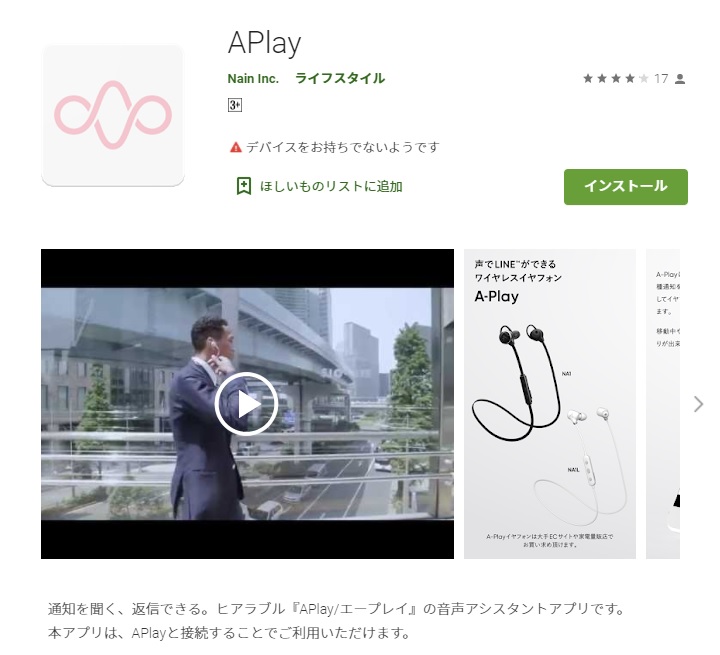
Apparently, Nain has used “APLAY” on wireless earphones and connect app for android (see below).

applay

Applied junior mark, consisting of the word “applay”, was sought for registration on August 7, 2019, over toys in class 28 [TM application no. 2019-107218] by Ed. Inter Co., Ltd.

The applicant uses the mark on wooden toys for kids (see below).

The JPO examiner rejected “applay” because of similarity to “APLAY” based on Article 4(1)(xi) of the Trademark Law.

Article 4(1)(xi) is a provision to prohibit registering a junior mark that is identical with, or similar to, any senior registered mark.

There is the criterion that the examiner is checking when assessing the similarity between the marks:

  • visual similarity
  • aural similarity
  • conceptual similarity

and taking into account all these three aspects, the examiner would decide if a mark is similar (at least to some extent) to the earlier mark and if there is a likelihood of confusion for the consumers.

Applicant filed an appeal against the rejection on May 12, 2020, and argued dissimilarity of the marks.

Appeal Board decision

In the decision, the Appeal Board held that:

In appearance, there are differences in the third letter ‘p’, and lower case or upper-case letters. These would give rise to a distinctive impression visually in the mind of relevant consumers where the respective mark consists of five or six-letter words, anything but long.

Next, assessing the pronunciation between applied mark [ˈæpleɪ] and the cited mark [əˈpleɪ], the difference in the first sound would be anything but negligible in view of a few phonetic compositions of four sounds in total. Relevant consumers would be unlikely to confuse each sound when pronounced because of phonetical distinction in overall nuance and tone as a whole

Thirdly, the respective mark does not give rise to any specific meaning at all. If so, both marks are incomparable from the concept.

Based on the foregoing, the Board found no reasonable reason to affirm the JPO examiner’s rejection from visual, phonetic, and conceptual points of view as well as consumer perception and decided to reverse the examiner’s rejection.

ENRICO COVERI failed to remove “COVERI” from trademark registration

The Opposition Board of Japan Patent Office (JPO) held in an opposition filed by Enrico Coveri Società a Responsabilità Limitata (Opponent) that trademark registration no. 5874843 for a word mark “COVERI” (Opposed mark) shall remain as valid as ever and dismissed claims in the opposition entirely.
[Opposition case no. 2016-900368]


Opposed mark (see below) was applied for registration on November 27, 2015 by designating various kinds of goods in class 25 including apparels and shoes, and published for registration on September 20, 2016without any office action from the JPO examiner.


Opponent claimed that the opposed mark “COVERI” shall be cancelled on the basis of Article 4(1)(vii), (viii), (x), (xi), (xv) and (xix) of the Japan Trademark Law by citing senior trademark registrations for word mark “ENRICO COVERI”, a name of the late Italian fashion designer, in class 18, 24 and 25.


In the opposition decision, the Board concluded that “ENRICO COVERI” and “COVERI” are both dissimilar in appearance, pronunciation and concept.

Besides, the Board did not admit a high degree of popularity and recognition to “ENRICO COVERI” among relevant public in Japan because of insufficient evidence to demonstrate amount of sales, number of stores and expenditure for promotion and advertisement (Opponent has just produced some photographs or articles appeared in fashion magazines).

Based on the fact finding, the Board concluded that opposed mark was not filed in a malicious intent to do harm to the designer’s fame, and “COVERI” shall not be deemed as an abbreviation of “ENRICO COVERI”. Therefore, there finds less likelihood of confusion between “COVERI” and “ENRICO COVERI” even if both marks are used on apparels or shoes.


It is highly advisable to an owner of high-end or luxurious brand, consisting of two or more alphabetical words, to have each word registered as well for the purpose of preventing free-riding and enjoying a broader scope of protection against use by others.

V&W is unlikely to cause confusion with VW emblem

In a recent trademark opposition involving the circular Volkswagen logo, the Opposition Board of Japan Patent Office (JPO) decided that famous VW emblem is entirely dissimilar to, or unlikely to cause confusion with, the word mark “V&W” in standard character when used on retail services for automobiles [Opposition Case no. 2017-900009].


Trademark opposition

German car giant Volkswagen AG filed an opposition against TM registration no. 5888513 for word mark “V&W” written in standard character (Opposed mark) on the grounds that Opposed mark violates Article 4(1)(xi), 4(1)(xv) and 8(1) of the Trademark Law based on senior trademark registrations for the VW emblems and a word mark “VW”.
The opposed mark designates retail services or wholesale services for automobiles and various other goods in class 35.

Volkswagen argued Opposed mark gives rise to a pronunciation of “vi: dʌb·l·juː” by omitting “&” since the prevalent symbol representing a word of “AND” is just to connect “V” and “W”, and relevant traders and consumers are prone to omit the symbol in pronouncing the entire mark in light of transactional customs at present. If so, Opposed mark is deemed similar to the VW emblem as well as “VW” in visual, phonetical and conceptual point of view.

Besides, the VW emblem has acquired substantial popularity and reputation as a source indicator of famous automobile maker, Volkswagen. Thus, it is highly likely that relevant traders and consumers confuse the source of retail service for automobiles and its parts using Opposed mark “V&W” with opponent or a business entity systematically or economically connected with the opponent.


Board decision

The Board admitted the VW emblem has become famous for a source indicator of opponent by taking into consideration of the facts that opponent’s cars with the VW emblem have been continuously imported to Japan since 1978 at the latest and ranked in the top 3 of new imported automobile registrations for the past three years.

In the meantime, the Board denied high awareness of the word mark “VW” as a source indicator of opponent. A mere definition of VW to indicate the opponent in a dictionary is insufficient since the term is often seen in conjunction with corporation name “Volkswagen” in newspaper, magazines and newsarticle on a website.

In the assessment of trademark similarity, the Board concluded that “V&W” is obviously dissimilar to the VW emblem and “VW” in appearance, pronunciation and meaning. Due to substantial distinction between the marks, relevant traders and consumers are less likely to confuse or associate “V&W” with opponent and any business entity systematically or economically connected with opponent.

Based on the foregoing, the Board dismissed opposition and allowed “V&W” to survive.


It is noteworthy that a mark consisting of two alphabetical letters written in a plain font design is considered less distinctive in Japan. In this respect, IR no. 1272004 for the word mark “VW” did not function to broadly protect the VW emblem in favor of Volkswagen.