“FS12” can’t be registered due to a lack of distinctiveness

The Japan Patent Office (JPO) affirmed the examiner’s refusal and decided to reject a wordmark “FS12” due to a lack of inherent distinctiveness.
[Appeal case no. 2019-650019, Gazette issued date: January 29, 2021]

“FS12”

Fette Compacting GmbH filed a trademark application with the JPO via the Madrid Protocol (IR no. 1349196) for word mark “FS12” (see below) for use on goods of ‘Compression tools (parts of machines for the pharmaceutical industry, chemical industry, food industry, and metal industry) for producing pellets and tablets; die-table segments (parts of machines for the pharmaceutical industry, chemical industry, food industry, and metal industry) for rotary presses’ in class 7

Article 3(1)(v) of the Trademark Law


The JPO examiner refused the “FS12” mark in contravention of Article 3(1)(v) of the Trademark Law.

The article prohibits any mark from registering if it consists solely of a very simple and common mark.

Trademark Examination Guidelines (TEG) stipulates that a mark consisting of one or two alphabetical letters followed by a numeral, e.g. “A2”, “AB2”, is unregistrable under the article.

Followings are also enumerated as unregistrable marks under the article.

  • Numerals
  • One or two alphabetical letters, e.g. “AA”
  • Two alphabetical letters combined with “-” or “&”, e.g. “A-B”, “C&D”
  • One or two alphabetical letters accompanied by “Co.”, e.g. “AB Co.”
  • A numeral followed by one or two alphabetical letters, e.g. “2A”

The applicant filed an appeal against the refusal and argued distinctiveness of the “FS12” mark.

Appeal Board decision

However, the JPO Appeal Board dismissed the entire allegations and held that a mark consisting of a numeral and one or two alphabetical letters is incapable of identifying the source of the goods since the relevant public would perceive, without further thought, it to indicate a value, code, type, model or standard of the goods in question.

As a matter of fact, the Board found the combination of alphabetical letters, and a numeral is frequently used to indicate a value, code, type, model, or standard of the goods in relevant industries.

Given the mark “FS12” consists of two alphabetical letters and two digits written in regular font, the Board considers it is unlikely to play a role of source indicator and shall be unregistrable in contravention of Article 3(1)(v) of the Trademark Law.

To my knowledge, “FS12” would be mostly considered distinctive in other jurisdictions. Please be noted that a combination of one or two alphabetical letters and the numeral is deemed descriptive in relation to any kind of goods in Japan. 
To register such a mark, it is required to add a descriptive element or demonstrate acquired distinctiveness as a result of substantial use in Japan.

“COSTA COFFEE” vs “Caffè la Costa”

The Japan Patent Office (JPO) dismissed a trademark opposition claimed by Costa Limited, operating the UK’s largest and the World’s second-largest International chain of coffee shops “COSTA COFFEE”, against trademark registration no. 6230027 for the “Caffè la Costa” mark for use on coffee, coffee beans in class 30 and restaurant services in class 43 by finding both marks are dissimilar and less likely to cause confusion.
[Opposition case no. 2020-900137, Gazette issued date: December 25, 2020]

Opposed mark

The mark “Caffè la Costa” (see below) was filed by a Japanese individual on March 11, 2019, for use on tea; coffee; cocoa; coffee beans; confectionery, and bread in class 30 and restaurant service in class 43, and published for opposition on May 17, 2020, after registration on February 27, 2020.

Opposition by Costa Limited

On May 14, 2020, Costa Limited filed an opposition and alleged the opposed mark shall be revocable in contravention of Article 4(1)(xi) of the Japan Trademark Law due to close resemblance to senior trademark registration for a wordmark “COSTA” and the “COSTA COFFEE” logo (see below) in class 30 and 43.

Article 4(1)(xi) is a provision to prohibit registering a junior mark that is identical with, or similar to, any senior registered mark.

Costa Limited argued that relevant consumers are accustomed to discriminating coffee shops by means of a distinctive literal element contained in their name. As a universal habit of shortening the full name, “Starbucks Coffee” is referred to as “Starbucks.” Likewise, “Doutor Coffee” as “Doutor”, “Excelsior Caffè” as “Excelsior”, “Tully’s Coffee” as “Tully’s”. Because the term “Coffee” and “Caffè” lack distinctiveness as a source indicator in relation to coffee; coffee beans and restaurant services.

In this respect, the consumers would consider the term “Costa” to be a dominant portion of the opposed mark when used on the goods and services in question. Therefore, “Caffè la Costa” shall be deemed confusingly similar to a wordmark “COSTA” and the “COSTA COFFEE” logo mark owned by Costa Limited.

Board Decision

The Opposition Board found the opposed mark does not give rise to any particular meaning as a whole. The mere fact that the respective word of the opposed mark (“Caffè”, “la”, “Costa”), is in the Italian dictionary would not change the finding since relevant consumers are unfamiliar with these Italian words. If so, the consumers would perceive the opposed mark as a coined word in its entirety and pronounce the entire mark as it sounds. In this regard, the Board doubted whether the term “Costa” is considered the dominant portion of the opposed mark by stating the facts show no evidence.

Based on the findings, the Board assessed the similarity of both marks as follows.

It looks obvious that the opposed mark is distinguishable from the cited marks, “COSTA” and the “COSTA COFFEE” logo, in appearance and sound, on account of different term and position of “Caffè la” and “COFFEE” combined with “Costa” and other distinction of figurative elements.
Provided that “COSTA” is an Italian word unfamiliar to relevant consumers with ordinary care, the Board believes both marks are incomparable in concept.
Even if both marks are incomparable in concept, the low level of similarity in appearance and sound would suffice to conclude that the consumers are unlikely to associate, connect the opposed mark with “COSTA COFFEE” when used on the goods and services in question.

Accordingly, the Board decided the opposed mark wasn’t revocable in contravention of Article 4(1)(xi) of the Trademark Law.

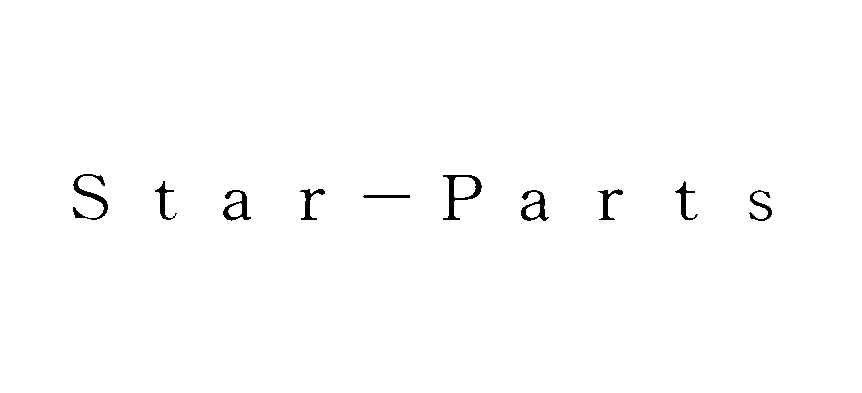
Mercedes-Benz StarParts vs Star-Parts

In an administrative decision, the Japan Patent Office (JPO) held the “Mercedes-Benz Star Parts” with a car device mark is dissimilar to the “Star-Parts” word mark.
[Appeal case no. 2020-650009, Gazette issued date: November 27, 2020]

Mercedes-Benz StarParts

Daimler AG applied for registration of a composite mark consisting of “Mercedes-Benz StarParts” in two lines, a car device overlapping with checkmark icon, and a blue horizontal line in between (see below), in relation to ‘Parts for vehicles for locomotion by land, air, water or rail’ of class 12 via the Madrid Protocol (IR No. 1402813).

On December 5, 2019, the JPO examiner refused the applied mark based on Article 4(1)(xi) of the Trademark Law due to a conflict with senior trademark registration no. 5806962 for word mark “Star-Parts” in standard character which designates retail services or wholesale services for automobiles, parts, and accessories thereof in class 35.

Daimler AG filed an appeal against the refusal on March 4, 2019.

JPO Appeal Board’s decision

The Appeal Board overturned the examiner’s rejection by stating that the respective element of the applied mark shall be separably conceivable in view of a low degree of phonetic and conceptual association between figurative and literal elements. In the meantime, “StarParts” shall not be perceived as a dominant portion appealing its source of origin of goods, given “Mercedes-Benz” unquestionably plays an impressive role in identifying the source known for Germany luxury car maker. If so, it is not permissible to assess the similarity between the cited mark “Star-Parts” and the applied mark by dissecting the literal portion of “StarParts” from the applied mark.

Based on the foregoing, the Board concluded the refusal shall be disaffirmed since the examiner erroneously assessed the similarity between the marks.


I am of the view that the JPO’s decision looks unreasonable. From this viewpoint, any composite mark containing a famous or strong source indicator can be deemed dissimilar and eligible for registration.

iPad vs MI PAD

JPO sided with Apple Inc. in a dispute with a China-based consumer electronics company, Xiaomi that registers and uses the “MI PAD” trademark on tablet computers by finding that “MI PAD” is likely to cause confusion with “iPad”.
[Opposition case no. 2019-685002, Gazette issued date: November 27, 2020]

Xiaomi “MI PAD”

Xiaomi, a China-based electronics manufacturer headquartered in Beijing, filed a trademark application for word mark “MI PAD” via the Madrid Protocol (IR 1223839) in respect of various goods including table computers, downloadable music files, downloadable image files in class 9, and telecommunication access services and others in class 38 on August 22, 2017.

Prior to filing the application, Xiaomi newly introduced its first tablet, the Tegra K1-powered “Mi Pad” in 2014.

The JPO admitted registration of the MI PAD mark on December 7, 2018.

Opposition by Apple “iPad”

The Opponent, whose earlier ‘iPad’ trademark for its computer tablet products was also registered in Classes 9 and 38, is the U.S. tech giant, Apple Inc.

The heart of this dispute concerned the grounds of opposition raised by Apple Inc. against Xiaomi’s ‘MI PAD’ mark registration in Japan under Article 4(1)(xv) of the Japan Trademark Law.

Article 4(1)(xv) is a provision to prohibit any mark from registering if it is likely to cause confusion with other business entities ’ well-known goods or services.

The Opponent argued the “MI PAD” mark shall cause confusion with Apple “iPad” when used tablet computers and related goods and services, given a remarkable reputation of “iPad” holding a top market share (42% in 2017, 43.2% 2018) in Japan and the close resemblance between “iPad” and “MI PAD”.

JPO decision

The Opposition Board admitted a remarkable degree of reputation and popularity of opponent trademark “iPad” based on the produced evidence boasting the top market share consecutively for the past nine years in Japan. Besides, the Board found “iPad”, consisting of “i” and “Pad”, is highly unique because the term “Pad” is anything but descriptive in relation to tablet computers.

In the assessment of mark, the Board held the dissimilarity between the signs at issue, resulting from the presence of the additional letter ‘m’ at the beginning of “MI PAD”, is not sufficient to offset the high degree of visual and phonetic similarity between the two signs. It is unquestionable that the designated goods and services are closely associated with tablet computers and consumed by the same consumers.

If so, it is likely that the consumers at the sight of disputed goods and services bearing the “MI PAD” mark would confuse or misconceive its source with Apple Inc. or any entity systematically or economically connected with the opponent.

Based on the foregoing, the Board decided opposed mark shall be canceled in contravention of Article 4(1)(xv).

Katakana to prevent mispronunciation of brands

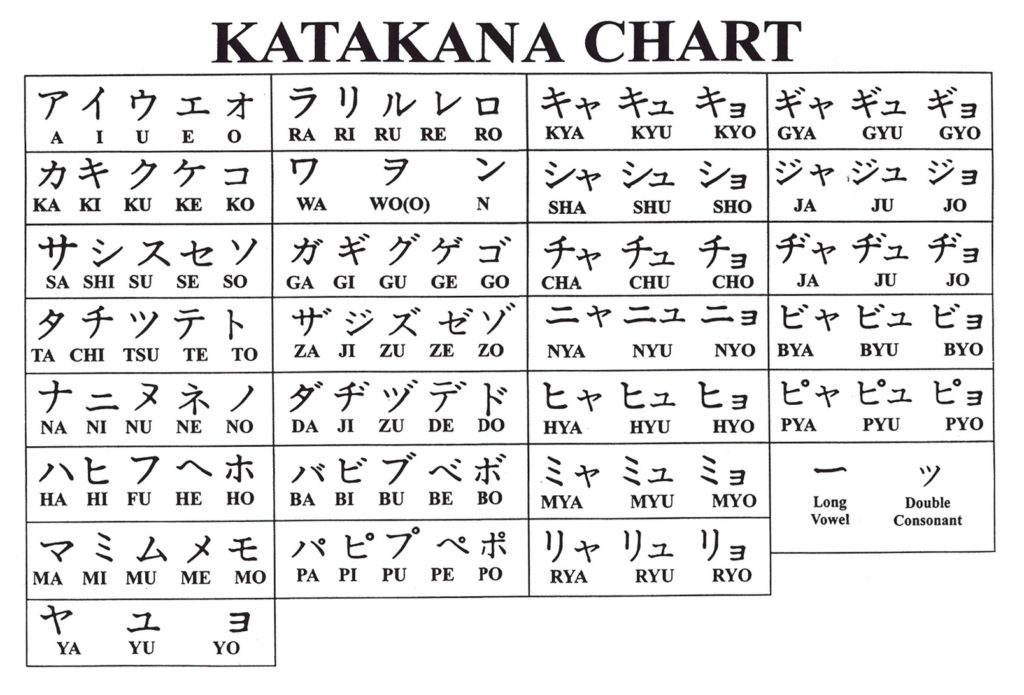
The unique writing system of the Japanese language consists of three different character sets: Kanji (several thousands of Chinese characters), and Hiragana and Katakana (two syllabaries of 46 characters each).

Specifically, Katakana gets used to writing foreign loanwords phonetically.

By virtue of Katakana, we get a clue to learn the proper pronunciation of unpronounceable alphabetical words. In this regard, Katakana is obviously of great help to avoid phonetic slip-ups and mispronouncing high-profile brand names in Japan.

For instance, when we come across the word “YVES SAINT LAURENT” for the first time, we most likely call it “i-bes-sein-to-lo-ren-to”.
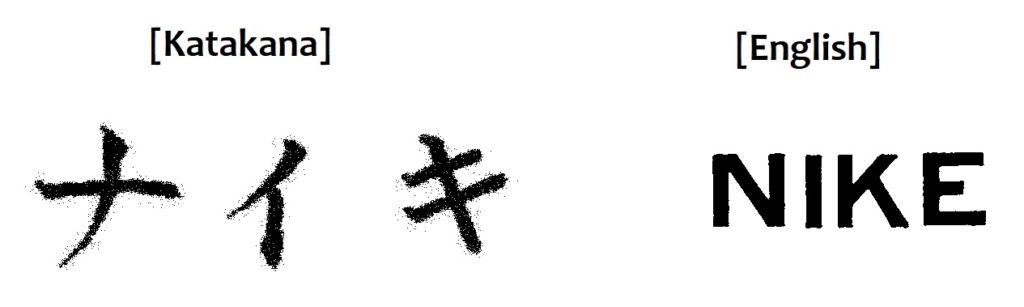
Likewise, we are likely to call “Uber” as “yu-be:ru”, “Google” as “go:gu-lu”, “NIKE” as “ni-ke”, “Levis” as “le-vi-su”, “XLARGE” as “eks-la:ji”, “Michelin” as “mi-sye-lin”, “XXIO” as “eks-esk-ai-ou”.

In other words, less attention to Katakana in promoting alphabetical brand names is likely to result in mispronunciation among the relevant public in Japan as you can see from the above instances.

What’s worse, it may give rise to a tragedy that trademark registration for the alphabetical name is insufficient to force an unauthorized entity to cease its use of a mark consisting of Katakana to represent the correct pronunciation of the name due to dissimilarity of the marks.

Provided that trademark registration is solely composed of alphabetical words, the pronunciation of the mark is construed based on the most natural, logical way to pronounce it.

In this regard, it was a bit surprised that the Supreme Court judged a wordmark written in Katakana to be read as “reeru-dyu-tan” is phonetically identical with a registered mark “L’Air du Temps” in Case 1998 (Gyo-Hi) 85. Undoubtedly the judgment was based on the facts that “L’Air du Temps” had become well-known as a brand of perfume and the registered mark had been advertised accompanying a Katanaka “reeru-dyu-tan” as well.

When we come across the word “L’Air du Temps” for the first time, little thought is given to call it “reeru-dyu-tan”. The most natural way to pronounce it is “lu-ea:-dyu-ten-po-su” indeed. Thus, the Supreme Court judgment should not be considered to negate the necessity of Katakana in avoiding mispronounced marks.

It is advisable to use and register a Katakana character representing the correct pronunciation of the brand name as well as the alphabetical letters, especially where the letters are unpronounceable to the Japanese and thus natural pronunciation is not what a brand owner expects the Japanese to call it.

NIKE uses and registers its corporate name in both respectively.