Trademark dispute: UNITED vs UNITED GOLD

In a dispute over the similarity of the marks “UNITED” and “UNITED GOLD” in connection with apparel, the Japan IP High Court upheld the JPO decision and found that both marks were dissimilar.
[Court case no. Reiwa6(Gyo-ke)10066, decided on December 10, 2024]


UNITED GOLD

Nishitomi Shoji Co., Ltd. filed a trademark application with the Japan Patent Office (JPO) on January 17, 2022 for the word mark “UNITED GOLD” in standard character for use on apparel in class 25 and retail services for apparel in class 35.

The applicant promotes men’s suits bearing the applied mark via internet.

In accordance with a request for accelerated examination from the applicant based on the actual use of the mark on any one of the designated goods and services, the JPO carried out a substantive examination and registered the mark on March 25, 2022 [TM Reg No. 6534957].


Invalidation action

On December 15, 2023, Howard Corporation, an owner of earlier TM Reg no. 2053119 “UNITED” in class 25, filed an application for a declaration of invalidity against the mark “UNITED GOLD” with the JPO in contravention of Article 4(1)(xi) of the Japan Trademark Law due to its similarity to earlier trademark “UNITED”.

However, the JPO Invalidation Board found “UNITED GOLD” to be dissimilar to “UNITED” and therefore dismissed the invalidation action on June 17, 2024 [Invalidation Case No. 2023-890089].

To challenge the JPO decision, Howard filed an appeal with the IP High Court on July 10, 2024, claiming that the JPO erred in finding that the contested mark “UNITED GOLD” should be assessed in its entirety.

In the compliant, Howard argued that the term “GOLD” has a low degree of distinctiveness in relation to the goods and services in question. On the other hand, the term “UNITED” is highly distinctive because of its meaning. If so, the term “UNITED” plays a dominant role in identifying a source of the contested mark


IP High Court ruling

The IP High Court, at the outset, referred to the Supreme Court ruling in 2008 which established the criterion to grasp a composite mark in its entirety in the assessment of similarity of the mark.

“Where a mark in dispute is recognized as a composite mark consisting of two elements or more, it is not permissible to assess the similarity of mark simply by means of taking out an element of the composite mark and then comparing such element with the other mark, unless consumers or traders are likely to perceive the element as a dominant portion indicating its source of origin of goods/service, or remaining elements truly lack inherent distinctiveness as a source indicator in view of sound and concept.”

Based on the criteria, the court found that contested mark shall be assessed in its entirety on the following grounds:

  1. From appearance and meaning, there is no reasonable ground to find “UNITED” and “GOLD” shall be recognized individual and separable.
  2. In conjunction with clothing of class 25, more than 150 trademarks that contain the term “UNITED”, e.g. “UNITED ARROWS”, “UNITED COLORS OF BENETTON”, “UNITED TOKYO”, “UNITED DOORS”, are registered with the JPO in the name of third party. These facts suggest that the term “UNITED” is also lowly distinctive in relation to apparel.
  3. Even if there are actual examples in which the term ‘GOLD’, when combined with another distinctive term, implies a high quality of the goods, it would be anything but convincing to find that the term ‘UNITED’ plays a dominant role in identifying the goods and services bearing the contested mark, given that, as stated above, the term ‘UNITED’ has a low degree of distinctiveness.

Based on the foregoing, the judges concluded that the JPO did neither err in comparing both marks as a whole nor applying Article 4(1)(xi).

Trademark Parody case : Champion vs Nyanpion

On Novem 20, 2024, the Japan Patent Office (JPO) handed a win to HBI Branded Apparel Enterprises, LLC in trademark invalidation action against TM Reg no. 6368388 for the mark “Nyanpion” with a cat face logo due to similarity to the famous apparel brand “Champion.”
[Invalidation case no. 2022-890045]


Contested mark

A Japanese individual applied a composite mark consisting of a stylized word “Nyanpion” and a cat face logo (see below) for use on apparel, headgear, footwear, sports shoes, and sportswear in class 25 with the JPO on August 25, 2020. “Nyan” is the sound cats make in Japan. Because of it, “Nyanpion” easily reminds us of a combination of cat sounds and “Champion”.

T-shirts, sweats, hoodies, and tote bags bearing the Nyanpion mark have been promoted for sale with a catchword of “Champion” parody.

As the JPO published the Nyanpion mark for a post-grant opposition on April 13, 2021, HBI Branded Apparel Enterprises, LLC filed an opposition against the opposed mark on June 14 of that year. However, the JPO Opposition Board dismissed the entire opposition by finding dissimilarity to and unlikelihood of confusion with famous “Champion” mark on March 16, 2022. [Opposition case no. 2021-900230]


Invalidation action by Champion

On June 17, 2022, HBI Branded Apparel Enterprises, LLC filed an invalidation action against the Nyanpion mark with the JPO.

HBI repeatedly argued the opposed mark shall be canceled in contravention of Article 4(1)(vii), (x), (xi), (xv), and (xix) of the Japan Trademark Law because of the remarkable reputation and popularity of the Champion brand in relation to apparels and a high degree of similarity between the contested mark and its owned trademark registrations (see below) to the extent that relevant consumers are likely to confuse a source of the goods in question bearing the contested mark with “Champion”.


JPO Decision

The JPO Invalidation Board acknowledged that the “Champion” mark has acquired a high degree of reputation as a result of substantial use in Japan for more than four decades and has become remarkably famous as a source indicator of the opponent.

In assessing similarity, the Board found that:

The design portion of two marks have in common that the inside of the horizontal oval, which is drawn with a thick blue line and has an opening, is divided vertically into three parts, the middle colored in blue, the side with the opening colored in white and the side without the opening colored in red.

Differences in the presence of a face motif and two triangles placed at the top of the horizontal oval, in the direction of the opening of the horizontal oval and in the position of the red color within the horizontal oval would be less impressive given the resemblance in the overall configuration and the high degree of reputation and popularity of the cited marks.

Besides, the Board found no evidence to suggest that relevant consumers would consider the literal element “Nyanpion” to be a relatively as a prominent part of the contested mark. If so, the contested mark is confusingly similar to the cited mark as a whole, even if the cited mark does not contain the term “Nyanpion.”

Therefore, notwithstanding the fact that both marks have a distinctive sound, taking into account the visual and conceptual similarities, as well as the notable reputation of the cited mark, the Board has reason to believe that the contested mark, when used on the goods in question, will cause confusion with the cited mark


Based on the foregoing, the JPO declared invalidation of the contested mark in contravention of Article 4(1)(xi) and (xv).

Trademark dispute: VALENTINO GARAVANI vs GIANNI VALENTINO

In a trademark opposition claimed by Valentino S.p.A. against TM Reg no. 6550051 for the GIANNI VALENTINO mark, the Japan Patent Office (JPO) decided to cancel the registration due to a conflict with earlier IR no. 975800 for the VALENTINO GARAVANI mark.
[Opposition case no. 2022-900274, decided on August 23, 2024]


GIANNI VALENTINO

YOUNG SANGYO CO., LTD filed a trademark application with the JPO on November 10, 2021 for a mark consisting of a “V” device in a circle and the word “GIANNI VALENTINO” (see below) for use on footwear in class 25 [TM App no. 2021-140169].

The applicant, as one of the official licensees, has been distributing bags and pouches bearing the applied mark in the Japanese market.

The JPO examiner granted registration of the applied mark on April 19, 2022. The mark was published for a post-grant opposition on May 11, 2022 [TM Reg no. 6550051].


Opposition by Valentino S.p.A.

Valentino S.p.A. filed an opposition on July 6, 2022 and claimed cancellation of the GIANNI VALENTINO mark in contravention of Article 4(1)(xi) of the Japan Trademark Law on the ground that the contested mark is confusingly similar to earlier IR no. 975800 for a mark consisting of an iconic “V” device in a circle and the words “VALENTINO” and “GARAVANI” arranged in two lines (see below), which designates footwear and other goods in class 25.

Valentino argued that the literal element “VALENTINO” was dominant in the cited mark because of a high degree of recognition as a source indicator of the opponent’s business as a result of substantial and continuous use in relation to fashion industries. Therefore, relevant consumers with an ordinary care are likely to consider the term “VALENTINO” as a prominent portion of the contested mark when used on the goods in question. If so, the contested mark shall be deemed similar to the cited mark from visual, aural and conceptual points of view.


JPO decision

The JPO Opposition Board found that the mark “VALENTINO” is famous among relevant consumers and traders in Japan for apparel.

The Board noted the contested mark can be dissected into individual parts on account of its appearance and famousness of the term “VALENTINO”. Given the mark “GIANNE VALENTINO” as a whole has not been recognized among relevant consumers as a source indicator of the applicant, it is reasonable to consider the literal element “VALENTINO” as a dominant part of the contested mark, which plays a role in identifying the source of the goods in question.

Similarly, the literal element “VALENTINO” of the cited mark can be considered as a dominant part because of its famousness to indicate the opponent’s business.

It is obvious that the dominant part of both marks has the same appearance, sound and meaning. If this is the case, the Board has a reason to believe that the contested mark, even as a whole, is confusingly similar to the cited mark from a visual, aural and conceptual point of view.

Based on the above findings, the JPO sided with Valentino S.p.A. and decided to cancel the contested mark in its entirety in contravention of Article 4(1)(xi).

Trademark dispute: “Ⓗ REWARDS” vs “REWARDS”

In a recent decision, the Japan Patent Office (JPO) found that a junior mark consisting of Circled “H” and a word “REWARDS” is dissimilar to earlier trademark “REWARDS” and decided to overturn the examiner’s refusal.
[Appeal case no. 2024-1366, decided on August 6, 2024]


Applied mark

H WORLD HOLDINGS SINGAPORE PTE. LTD. filed a trademark application with the JPO on August 2, 2022. for a mark consisting of a circled “H” device and the word “REWARDS” (see below) in connection with various services of Classes 35 and 43.


Cited mark

On December 5, 2023, the JPO examiner decided to reject the applied mark due to a conflict with earlier TM Reg no. 5017950 for wordmark “REWARDS” in standard character for use on various services in classes 35 and 39 based on Article 4(1)(xi) of the Japan Trademark Law.

Article 4(1)(xi) is a provision to prohibit registration of a junior mark that is identical with, or similar to, any senior registered mark.

The applicant filed an appeal against the rejection with the JPO on January 25, 2024.


JPO decision

Astonishingly, the JPO Appeal Board found the applied mark is dissimilar to the cited mark by stating that:

The applied mark is composed of the alphabet “H” in circle and a word “REWARDS”. Despite the slight separation between “H” and “REWARDS”, as these letters are represented in the same typeface and alphabets in a horizontal line, it rather gives a coherent impression in appearance.

 Although the word “REWARDS” is an English word denoting the plural form of “REWARD,” in a coherent composition like the applied mark, the applied mark will be simply recognized as representing a coined word consisting of the words “H REWARDS.”

If so, the applied mark would give rise to a sound of ‘H REWARDS’, but no specific meaning as a whole.

Comparing the applied mark with the cited mark, regardless of the fact that both marks share the word “REWARDS,” two marks are visually distinguishable by virtue of the presence or absence of the circled letter “H”.

Likewise, both marks are distinguishable in sound because of the presence or absence of the initial component sound that remarkably alters the overall tone and nuance.

From a conceptual point of view, the applied mark does not give rise to a specific meaning, whereas the cited mark has a meaning of “ something given in exchange for good behavior or good work, etc.” There is no room to find conceptual similarity between the marks.

Based on the above findings, the Board noted that the applied mark is sufficiently distinguishable from the cited mark and unlikely to cause confusion with the cited mark when used in relation to the services in question.

Therefore, even though the services sought for registration by the applied mark are deemed similar to the service designated under the cited mark, given the applied mark is dissimilar to the cited mark, it is inappropriate to apply Article 4(1)(xi) of the Trademark Law.

Accordingly, the Board decided to overturn the examiner’s rejection and granted protection of the applied mark.

TRILITH STUDIOS vs TRILITH

The Japan Patent Office (JPO) declared the invalidation of TM Reg no. 6371496 “TRILITH” due to similarity with earlier IR no. 1534597 “TRILITH STUDIOS” owned by Trilith IP Holdings, LLC.
[Invalidation case no. 2022-890066, decide on July 8, 2024]


TRILITH

On January 5, 2021, GAIAMOND Inc., a Japanese company, filed an application for registration of wordmark “TRILITH” (‘the contested mark’) with the JPO (TM app no. 2021-745), designating, inter alia, “game trading cards; toys” in Class 28.

Immediately after the filing, the applicant requested an accelerated examination based on the fact the company uses the contested mark in relation to display frame for game trading cards.

https://ginzo-shop.com/items/62a42b262bf901166cb94227

Accordingly, the JPO examiner granted protection of the contested mark in two months on March 15, 2021 (TM Reg no. 6371496).


TRILITH STUDIOS

Trilith IP Holdings, LLC, a holder of IR no. 1534597 for word mark “TRILITH STUDIOS” that is known as one of the largest purpose-built movie studios in North America and home to blockbuster films and independent shows like Avengers: Endgame, Zombieland: Double Tap, and Moon and Me, filed a notice of opposition to registration of the contested mark in respect of game trading cards and toys with the JPO on June 18, 2021. The ground relied on in support of the opposition was that set out in Article 8(1) of the Trademark Law.

Article 8(1) is a provision to prohibit registration of a junior mark that is identical with, or similar to any earlier applied mark which is pending before the substantive examination at the time of registration of the junior mark in accordance with the “first-to-file” principle.

The opposition applicant argued that the contested mark “TRILITH” is not eligible for registration under Article 8(1) because of similarity to earlier IR no. 1534597 “TRILITH STUDIOS”, and the goods in question is deemed similar to “downloadable video game software; recorded video game software” in Class 9 designated under the cited mark.

However, the JPO Opposition Board dismissed the opposition on the ground that there is no similarity between the mark “TRILITH STUDIOS” and “TRILITH” on April 7, 2022 (Opposition case no. 2021-900241).

On August 10, 2022, MARKS IP LAW FIRM, on behalf of Trilith IP Holdings, LLC, filed an application for a declaration of invalidity to the contested mark with the JPO based on the same ground.

To bolster the arguments, the invalidity applicant presented evidence to show a low degree of distinctiveness of the word “STUDIOS” in connection with the goods in question. Bearing in mind that the term “TRILITH” is a coined word unfamiliar to the relevant consumers in Japan, it is obvious that the term “TRILITH” is dominant in the cited mark. If so, the contested mark should be invalidated in contravention of Article 8(1).


JPO decision

Noticeably, the Invalidation Board found that the literal element “TRILITH” to be dominant in the cited mark by stating that:

 A space separates the terms “TRILITH” and “STUDIOS.” The word “STUDIOS” is commonly known as a term to indicate ” a film or video production facility.” or “workshop for painters or cameramen, recording room for radio or television, recording studio for music.” Therefore, the cited mark is easily recognizable as a combination of the terms “TRILITH” and “STUDIOS.

In light of the fact that the term “GAME STUDIOS” has been generally used to indicate workplaces where games are created in the relevant industry, the word “STUDIOS” would be less distinctive in connection with the cited goods.

Meanwhile, the term “TRILITH” is a coined and highly distinctive word with no specific meaning. Accordingly, the Board has a reason to believe that the term to be dominant in the cited mark.

Based on the above finding, the Board compared the dominant portion of the cited mark with the contested mark and found that both marks are similar from visual and aural points of view in spite that a conceptual comparison is neutral as neither the contested mark nor the cited mark have any clear meaning.

Given that the goods in question is similar to “downloadable video game software; recorded video game software” in Class 9 designated under the cited mark, the invalidation applicant is successful in proving the requirements of Article 8(1).

Consequently, in light of the foregoing, the Board decided to invalidate the contested mark in relation to “game trading cards; toys” in Class 28.

RIMOWA Unsuccessful in Trademark Opposition

On February 26, 2024, the Japan Patent Office (JPO) dismissed an opposition filed by Rimowa GmbH against TM Reg no. 6701836 for wordmark “RIMOWA” written in Japanese character in class 38 and 42 by finding dissimilarity to earlier IR no. 1303010 “Rimowa Electronic Tag”.
[Opposition case no. 2023-900179]


Opposed mark

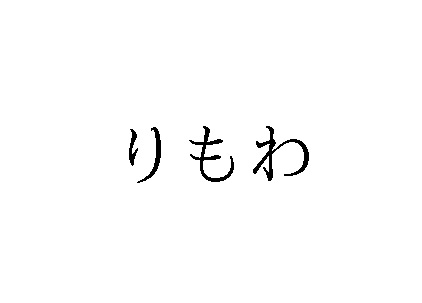
Opposed mark, consisting of three Japanese hiragana character “りもわ” that corresponds to the Japanese transliteration of “RIMOWA”, was flied with the JPO by Computer Engineering & Consulting Ltd. (CEC) a Japanese company, for use on ‘Telecommunication; Providing online forums; Communications by mobile phones; Streaming of data; Electronic bulletin board services [telecommunications services]; Video-on-demand transmission; Videoconferencing services’ in class 38 and ‘Providing computer programs on data networks; Software as a service [SaaS]; Platform as a service [PaaS]; Providing virtual computer systems through cloud computing; Providing computer software for virtual reality’ in class 42 on Nov 21, 2022 (TM App no. 2022-133281).

The JPO examiner issued an office action based on Article 4(1)(xi) of the Japan Trademark Law by citing IR no. 1452467 “RIMOWA” (cl. 9) owned by Rimowa GmbH.

As the applicant deleted the services in class 42 that conflict with the goods in class 9 designated under IR no. 1452467, the examiner granted protection of the mark on May 12, 2023.

The applicant uses the mark in relation to virtual office services. If this is the case, the mark indicates an abbreviation of ‘Remote working’.


Opposition by RIMOWA

Rimowa GmbH, the renowned German luxury luggage-maker, filed an opposition with the JPO on August 7, 2023 and claimed cancellation of the opposed mark in contravention of Article 4(1)(xi) by citing IR no. 1303010 for wordmark “Rimowa Electronic Tag” that covers services in class 38 and 42.

Rimowa argued that the term ‘Rimowa’ is well-known among relevant consumers as a high-end luggage brand and should play a significant role in identifying the source of services in classes 38 and 42. This is because the term ‘Electronic Tag’ is less distinctive in relation to these services. Therefore, the opposed mark may be confusingly similar to the cited mark from a visual point of view.


JPO decision

The JPO Opposition Board found the opposed mark is not an ordinary word in dictionaries and has a sound of “Rimowa” but does not give rise to any specific meaning.

Regarding the cited mark, the Board determined that it should be evaluated as a whole, rather than based on the individual words ‘Electronic Tag’. This approach considers the tight combination of all the letters in the cited mark.

If so, the Board stated that there is no reason to believe that the term ‘Rimowa’ is a significant part of the cited mark as a source indicator.

When comparing the opposed mark to the cited mark in terms of appearance, it is easy to distinguish between them due to the obvious differences in characters (hiragana and alphabets) and the number of letters. In terms of pronunciation, the term ‘Electronic Tag’ makes a clear difference in the overall sound of two marks. Therefore, it is easily distinguishable when pronounced, even though the initial sound is the same. Furthermore, in terms of concept, neither of the two marks produces a specific meaning, making them incomparable. Therefore, considering these findings and circumstances, there is no risk of confusion regarding the origin, even when they are used for the same or similar services.

Based on the above, the Board found that both marks were dissimilar and decided to dismiss all allegations.

Trademark dispute over Elk design

In an advisory opinion on trademark dispute over elk design, the Japan Patent Office (JPO) did not side with MOZ Sweden AB.
[Case no. 2023-600017, decide on December 15, 2023]


TM Reg no. 6582775

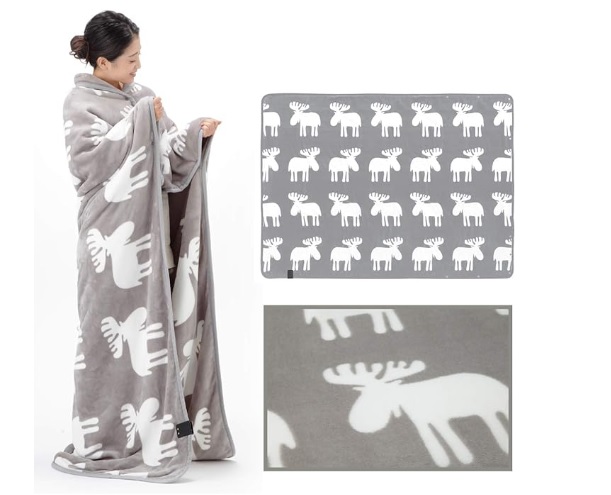
MOZ Sweden AB, an owner of Japanese trademark registration no. 6582775 for the MOZ mark with its iconic elk design (see below) in relation to electric blankets and other goods of class 11, attempted to stop distribution of wearable electric blankets (“disputed goods”) depicting 20 or 28 elk-motif silhouettes (“disputed design”) on the entire surface by NAKAMURA Co., Ltd.

Allegedly, MOZ sent a C&D letter to NAKAMURA on November 29, 2022 and demanded immediate cease and disposal of the wearable blankets based by claiming trademark infringement. NAKAMURA, for the purpose of settling the dispute, asked the JPO for an advisory opinion on April 14, 2023.

A screen capture from amazon.co.jp

Advisory Opinion Procedure

The Japan Trademark Law has provision for the Japan Patent Office to give advisory opinions about the scope of trademark right upon request under Article 28.

Proceedings of the advisory opinion system are almost the same as invalidation trials. Upon request from either party, the JPO appoints three examiners and orders the opposite party to answer the request in writing. Board seldom holds an oral hearing to investigate the case. In general, all proceedings are based on written statements and documentary evidence.

The advisory opinion by JPO does not have a binding effect, unlike the judicial decision. Accordingly, less than 10 trademark cases have been lodged with the JPO to seek the advisory opinion annually.


JPO Advisory Opinion

The JPO provided its advisory opinion to the case and decided the disputed goods would not be within the scope of right for TM Reg no. 6582775 by stating that:

  1. Unquestionably, the literal portion “MOZ” is dissimilar to the disputed design from visual, aural and conceptual points of view.
  2. Comparing the MOZ elk design with that of the disputed design, even though they share the same “elk” motif, there is a clear difference in the shape of the antlers, the outline of the face, the presence or absence of ears, eyes, and mouth. These differences give rise to a distinctive impression in the mind of viewers. Because of it, two designs are sufficiently distinguishable from appearance.
  3. Being that both “MOZ” and the elk design are respectively dissimilar to the disputed design, there is no reason to believe that the disputed goods shall be within the scope of trademark right and subject to enforcement even if both goods are identical.

Unsuccessful trademark opposition over LXR Hotels & Resorts by Hilton

In a bid to oppose TM Reg nos. 6668894 “LX RESORT” and 6668893 “LX HOTEL”, the Japan Patent Office (JPO) dismissed the oppositions filed by Hilton Worldwide Manage Limited due to dissimilarity to and unlikelihood of confusion with Hilton’s earlier trademark registration for “LXR HOTELS & RESORTS”.

[Opposition case nos. 2023-900082 and 2023-900083, decided on December 1, 2023]

Opposed mark

Hack Japan Holdings Co., Ltd. filed trademark applications for wordmark “LX HOTEL” and “LX RESORT” in standard character over services in classes 35 and 43 including hotel services with the JPO on August 29, 2022.

The JPO granted protection of the opposed marks on February 3, 2023, and published it for post-grant opposition on February 13, 2023.


Opposition by Hilton

Hilton Worldwide Manage Limited filed an opposition on April 12, 2023 just before the lapse of two-month opposition period.

Hilton claimed the opposed marks shall be cancelled in contravention of Article 4(1)(xi) and (xv) of the Japan Trademark Law by citing earlier TM Reg no. 6117133 for wordmark “LXR HOTELS & RESORTS”. Given both “LX” and “LXR” imply a meaning of “luxury”, there is a high degree of similarity in meaning.

By taking into consideration the cited mark “LXR HOTELS & RESORTS” has been recognized among consumers of the Hilton hotels, relevant consumers are likely to confuse a source of hotel in the name of “LX HOTEL” and “LX RESPRT” with Hilton’s luxury hotels when used on the services in question.


JPO decision

The JPO Opposition Board did not admit a high degree of recognition of the Hilton “LXR HOTELS & RESORTS” among relevant consumers in Japan because of insufficient evidence to find such recognition objectively.

The Board found the opposed marks shall be assessed in its entirety and would not give rise to any specific meaning at all. Obviously, there is no similarity in appearance and sound between two marks. The Board has no reason to believe relevant consumers would consider the term “LX” of the opposed marks as an abbreviation of “luxury”. If so, the opposed marks shall be dissimilar to the cited mark “LXR HOTELS & RESORTS”.

In view of a low degree of similarity, it is unlikely that relevant consumers confuse a source of hotel in the name of “LX HOTEL” and “LX RESORT” with the opponent or any business entity systematically or economically connected with Hilton.

Based on the foregoing, the Board found the oppositions groundless and upheld validity of the opposed marks.

French fashion magazine “ELLE” Lost in trademark opposition against “elLle HOTEL”

The Japan Patent Office (JPO) dismissed an opposition filed by HACHETTE FILIPACCHI PRESSE, Société Anonyme (FR) against Japanese TM Reg no. 6681746 for the “elLle HOTEL” mark in class 43 by finding dissimilarity to and less likelihood of confusion with French fashion magazine “ELLE”.
[Opposition case no. 2023-900123, decided on November 29, 2023]


elLle HOTEL

Opposed mark, consisting of a stylized term “elLle” placed above strikethrough word “HOTEL” (see below), was filed on November 25, 2022, for use on hotel and restaurant services in class 43 by Yugen Kaisha Yamaguchi Jitsugo, a Japanese company.

The JPO granted registration of the mark on March 16, 2023, and published it for post-grant opposition on March 27, 2023.

According to the allegations, the applicant newly opened a fashion hotel named “HOTEL elLle” in 2022.

captured from https://www.hotel-ellle.com/

Opposition by ELLE

On May 26, 2023, before the lapse of a two-month opposition period, HACHETTE FILIPACCHI PRESSE, Société Anonyme (hereinafter referred to as HFP), a French company responsible for the well-known women’s magazine ELLE, which had the largest readership of any fashion magazine in the world, with culturally specific editions published on six continents in the early 21st century, filed an opposition to the “elLle HOTEL” mark.

In the opposition, HFP contended that the opposed mark shall be canceled in contravention of Article 4(1)(vii), (xi), (xv) and (xix) of the Japan Trademark Law.

Article 4(1)(xi) is a provision to refrain from registering a junior mark that is identical with, or similar to, any senior registered mark.

Article 4(1)(xv) provides that a mark shall not be registered where it is likely to cause confusion with other business entities’ well-known goods or services, to the benefit of the brand owner and users.

HFP argued that the opposed mark is similar to HFP’s earlier registrations for the mark “ELLE” and relevant consumers are likely to confuse or misconceive the opposed mark with HFP or any business entity systematically or economically connected with the opponent due to a remarkable reputation of opponent’s fashion brand “ELLE” and the close resemblance between the opposed mark and “ELLE”.


JPO decision

The Board admitted the “ELLE” mark has become famous among relevant consumers and traders as a source indicator of the opponent in connection with magazines, online magazines as well as fashion and daily items.

In the meantime, the Board questioned whether the mark “ELLE” has acquired a certain recognition in relation to the service in question.

Besides, the Board found the literal portion “elLle” would play a significant role in indicating a source of the opposed mark when used in the services of class 43. However, the Board held the term “elLle” shall be assessed in its entirety, and there is no reason to find relevant consumers consider it as “elle”. If so, the opposed mark is dissimilar to the “ELLE” mark even though respective concept is not to be compared.

Taking into consideration a low degree of similarity between the marks, the Board had no reason to believe that relevant consumers would mistakenly assume the opposed goods originate from the same source as or are associated with, the opponent when used on services in question.

Based on the foregoing, the Board decided to dismiss the opposition entirely.

JPO decision to trademark dissimilarity, Unbelievable or Believable?

On November 9, 2023, the JPO Appeal Board reversed the examiner’s rejection to TM Application no. 2021-98849 for word mark “ADEAM/ICHI” by finding dissimilarity to earlier trademark registrations for word mark “ICHI”.
[Appeal case no. 2022-19409]


Earlier TM registrations “ICHI”

Following trademarks have been effectively registered since 2015 at the latest.

  • TM Reg no. 4736544 (soaps and detergent, incense, cosmetics in class 3)
  • TM Reg no. 5756228 (clothing, waistbands, belts [clothing] in class 25)
  • TM Reg no. 5991461 (bags and pouches, wallets, umbrella, walking sticks in class 18)

Junior mark “ADEAM/ICHI”

On August 6, 2021, FOXY Corporation filed a word mark consisting of “ADEAM” with larger roman-font and “ICHI” with smaller gothic-font in two lines (see below) for use on various goods and services in classes 3,14,16,18,24,25, and 35.

The JPO examiner rejected the applied mark due to a conflict with the earlier TM registrations for the mark “ICHI” owned by other entity based on Article 4(1)(xi) of the Japan Trademark Law on September 6, 2022.

Subsequently, the applicant filed an appeal against the rejection on December 1, 2022 and disputed dissimilarity of mark.


JPO Appeal Board decision

To my surprise, the Appeal Board found the applied mark is dissimilar to the cited marks and decided to cancel the examiner’s rejection by stating that:

Since the term “ICHI” of the applied mark is placed just beneath the term “ADEAM” in the middle about a quarter of the font size, from appearance, the term “ADEAM” occupies a large portion of the applied mark in its entirety. Thus, relevant consumers would have an impression that the term “ADEAMN” is considered as a dominant portion to identify a source of goods and service.

Besides, the term “ADEAM” is apparently a coined word. The term “ICHI” also does not give rise to a clear meaning. Therefore, conceptually there is no particular difference in assessing distinctiveness of respective term.

The Board has no reason to believe that relevant consumers would focus only on the portion “ICHI” of the applied mark as a source indicator by separating the dominant element “ADEAM”.

If so, it shall not be permissible to compare the literal portion “ICHI” of the applied mark with the cited marks.

In this respect, the examiner made an error in applying Article 4(1)(xi).

Based on the foregoing, the Board granted registration of the applied mark